

The sharp, persistent pain at the base of your spine can make everyday activities like sitting at a desk, driving, or even resting feel unbearable. When this discomfort, known medically as coccyx pain, disrupts your life and fails to respond to simple pain relief, it is natural to feel concerned and unsure of the next steps. This constant ache can be isolating and deeply frustrating, leaving many searching for a reliable and effective solution to reclaim their comfort and mobility.
Exploring holistic therapies can be an effective way to manage the stress component of chronic pain. For those in London, for example, the Battersea Park Clinic is a wellness centre that offers a range of treatments designed to support the mind-body connection and promote overall healing.
This comprehensive guide is designed to provide clarity and a clear path toward recovery. We will explain the common causes of tailbone pain, from acute injury to chronic conditions, helping you understand the source of your discomfort. We will then detail a range of effective strategies, from practical at-home measures for immediate relief to the advanced, evidence-based clinical treatments available for persistent cases. Our goal is to provide the expert information you need to manage your symptoms, reduce pain, and return to your daily life with lasting comfort.
Key Takeaways
- Understand the common causes of coccydynia (tailbone pain), from acute injury to postural strain, to better identify the source of your discomfort.
- Implement practical at-home relief strategies, including specific seating modifications and gentle exercises, to significantly reduce daily pain and improve comfort.
- Explore advanced, non-surgical treatments like targeted physiotherapy and guided injections that can provide lasting relief for persistent coccyx pain.
- Learn the key signs that indicate when to seek professional assessment and discover proactive strategies to prevent recurrence and maintain long-term spinal health.
Understanding Coccyx Pain (Coccydynia): Causes and Symptoms
Coccydynia is the medical term for persistent pain localised to the coccyx, more commonly known as the tailbone. The coccyx is the final segment of the vertebral column, comprising three to five small vertebrae, and it serves as an attachment point for ligaments and muscles of the pelvic floor. While it is a common condition that affects more women than men, the impact of coccyx pain can be significant, disrupting daily activities such as sitting, driving, and even standing up.
The discomfort can range from a dull, persistent ache to a sharp, intense pain that makes simple movements challenging. For a comprehensive overview, Wikipedia provides a detailed entry on Understanding Coccyx Pain (Coccydynia), which can be a useful starting point. At GB Clinic, our specialists focus on accurate diagnosis to create an effective, personalised treatment plan to reduce your pain and restore function.
Key Symptoms of Coccydynia
The primary symptom is pain and tenderness at the very bottom of your spine. Patients typically report specific characteristics that help in diagnosing the condition. These include:
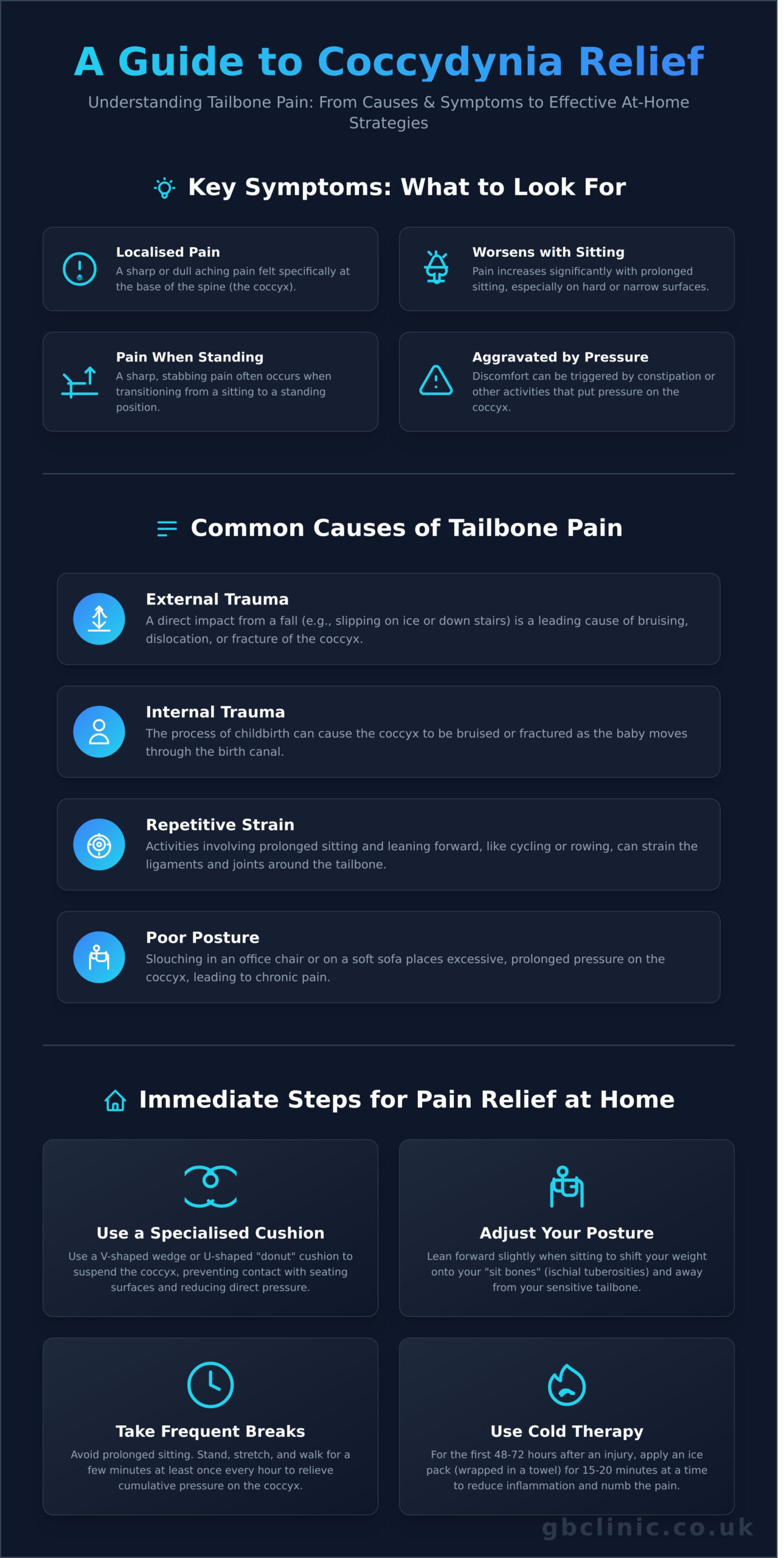
- A localised, sharp or dull aching pain at the base of the spine.
- Pain that worsens significantly with prolonged sitting, especially on hard or narrow surfaces.
- A sharp, stabbing pain when moving from a sitting to a standing position.
- Discomfort that can be aggravated by activities that put pressure on the area, such as constipation or sexual intercourse.
Common Causes of Tailbone Pain
The onset of coccydynia is often linked to a specific event or activity that puts undue stress on the coccyx. Our clinical experience shows the most frequent causes are:
- External Trauma: A direct impact from a fall, such as slipping on ice or falling down stairs, is a leading cause of bruising, dislocation, or fracture of the coccyx.
- Internal Trauma: The process of childbirth can cause the coccyx to be bruised or fractured as the baby moves through the birth canal.
- Repetitive Strain: Activities that involve prolonged sitting and leaning forward, such as cycling or rowing, can strain the ligaments and joints around the coccyx.
- Poor Posture: Slouching while sitting on a sofa or in an office chair places excessive and prolonged pressure on the tailbone, leading to chronic pain.
Other Contributing Factors
In some cases, the cause of coccyx pain is not immediately obvious. A thorough assessment may reveal other factors that contribute to the condition. These can include being overweight, which increases pressure on the coccyx when sitting, or being underweight, which may reduce the natural cushioning around the bone. Additionally, issues such as hypermobility (too much movement) or stiffness in the sacro-coccygeal joint can lead to pain. Less common causes, such as bone spurs, cysts, or infections, require a professional diagnosis to rule out.
At-Home Management: Immediate Steps for Coccyx Pain Relief
When experiencing acute tailbone discomfort, implementing immediate at-home strategies is the foundational first step towards recovery. These evidence-based techniques are designed to reduce pressure, manage inflammation, and alleviate pain. Consistent application of these methods can provide significant relief while your body heals and is an essential precursor to seeking further medical treatment. The goal is to create an environment that supports natural recovery and minimises irritation to the affected area.
Modify Your Sitting Habits
The most significant trigger for coccyx pain is direct pressure from sitting. Modifying how and where you sit is critical for pain management. Focus on offloading the tailbone to allow the inflamed tissues to recover.
- Use a Specialised Cushion: A V-shaped wedge or U-shaped “donut” cushion is highly effective. These are specifically designed to suspend the coccyx, preventing it from making contact with the seating surface.
- Adjust Your Posture: When sitting, lean forward slightly. This simple adjustment shifts your weight onto your “sit bones” (ischial tuberosities) and away from the tailbone.
- Take Frequent Breaks: Avoid sitting for prolonged periods. Set a reminder to stand, stretch, and walk for a few minutes at least once every hour.
- Choose Supportive Seating: Firm, supportive chairs are preferable to soft sofas or armchairs, which can cause you to slouch and place more pressure on your coccyx.
Pain and Inflammation Control
Managing the acute symptoms of pain and swelling is key to improving comfort. A combination of temperature therapy and appropriate medication can be highly effective in the initial stages.
- Cold Therapy: For the first 48-72 hours, apply an ice pack wrapped in a thin towel to the area for 15-20 minutes, several times a day. This helps to reduce inflammation and numb the pain.
- Heat Therapy: After the initial acute phase, applying a warm pack can help relax tight muscles in the surrounding gluteal and pelvic regions, which may be tensing up in response to the pain.
- Over-the-Counter Medication: Non-steroidal anti-inflammatory drugs (NSAIDs) like ibuprofen can help reduce both pain and inflammation. Always consult with your GP or a pharmacist in the UK before starting any new medication to ensure it is safe for you.
Gentle Stretches and Exercises
While direct pressure should be avoided, gentle mobilisation of the surrounding muscles can alleviate tension that contributes to discomfort. A comprehensive overview of at-home management for coccyx pain relief often includes targeted stretches to improve flexibility. Focus on movements that do not strain the lower back or tailbone.
- Piriformis Stretch: Gently stretching the piriformis muscle in the buttocks can relieve pressure on the sciatic nerve and surrounding tissues.
- Cat-Cow Pose: This yoga stretch gently mobilises the spine and pelvis, encouraging flexibility without direct pressure on the coccyx.
- Pelvic Floor Relaxation: Consciously relaxing the pelvic floor muscles can reduce tension around the tailbone. Avoid exercises that tighten these muscles, such as Kegels, until the pain subsides.
- Exercises to Avoid: Refrain from activities that put direct pressure on the area, such as sit-ups, crunches, or cycling.
When to Seek Professional Treatment for Tailbone Pain
While many cases of tailbone pain resolve with self-care strategies, persistent or severe discomfort requires a professional diagnosis to ensure effective, long-term recovery. Seeking expert help is a proactive step towards understanding the root cause of your pain and accessing targeted treatments. While your GP can be a useful first point of contact, a specialist physiotherapist with experience in pelvic and musculoskeletal conditions can offer a more detailed assessment and advanced therapeutic options for your coccyx pain.
Signs You Need to See a Specialist
It is important to seek a professional evaluation if your symptoms do not improve or if certain red flags appear. We recommend booking a consultation if you experience any of the following:
- The pain is severe or has not improved after two to three weeks of consistent self-care.
- Your pain is worsening or beginning to spread to the hips, lower back, or down your legs.
- You develop numbness, tingling, or weakness in your legs, which could indicate nerve involvement.
- The pain is accompanied by a fever, chills, or other signs of infection.
The Diagnostic Process at a Specialist Clinic
A specialist consultation is designed to provide a precise diagnosis. The process begins with a detailed discussion of your medical history, symptoms, and the nature of your coccyx pain. This is followed by a thorough physical examination to assess the coccyx, pelvic floor muscles, and surrounding joints. To gain a clear view of the soft tissues, we use advanced diagnostic ultrasound, which helps visualise inflammation or damage and accurately guide treatment. This comprehensive approach, informed by established clinical research like Advanced Physiotherapy and Clinical Treatments for Coccydynia, allows us to rule out other potential causes and confirm the source of your discomfort.
What to Expect from Your First Consultation
Our primary goal is to provide you with clarity and a clear path forward. During your initial appointment at our clinic, you can expect:
- A clear, understandable diagnosis and a full explanation of your condition.
- A personalised treatment plan designed to address your specific symptoms and recovery goals.
- A professional and reassuring environment where all your questions are answered thoroughly.
Taking control of your recovery starts with a proper diagnosis. Book a free consultation to discuss your coccyx pain with our experts.
Advanced Physiotherapy and Clinical Treatments for Coccydynia
When conservative measures at home do not provide adequate relief, a specialist clinical approach is the next step. Our focus is on moving beyond temporary symptom management to identify and address the underlying cause of your coccydynia. We utilise advanced diagnostics and targeted, non-surgical treatments to create a clear and effective path towards long-term recovery.
Specialist Manual Therapy
This is a highly targeted, hands-on approach delivered by an experienced musculoskeletal physiotherapist. It involves much more than simple exercises. The goal is to restore normal function to the coccyx and the surrounding tissues that influence its position and movement. This comprehensive treatment includes:
- Gentle Mobilisation: Careful, precise movements of the coccyx and sacro-coccygeal joint to restore mobility and reduce stiffness.
- Myofascial Release: Releasing tension in the tight gluteal, pelvic floor, and piriformis muscles that can contribute to coccyx pain and pull the tailbone out of alignment.
- Soft Tissue Massage: To decrease muscular guarding, reduce pain, and improve local blood flow to promote healing.
- Tailored Rehabilitation: A specific exercise programme designed to strengthen core and pelvic muscles, providing lasting stability.
Ultrasound-Guided Injections
For persistent inflammation, ultrasound-guided injections offer a powerful and precise solution. Using real-time ultrasound imaging, our clinicians can deliver a corticosteroid injection directly to the source of inflammation around the sacro-coccygeal joint. This precision ensures maximum therapeutic benefit while minimising exposure to surrounding healthy tissue. This treatment can significantly reduce local inflammation, providing a crucial window of pain relief that allows for more effective physiotherapy.
Innovative Therapies like Shockwave (ESWT)
For chronic cases of coccydynia that have not responded to other conservative treatments, Extracorporeal Shockwave Therapy (ESWT) presents an advanced, non-invasive option. This modern therapy uses acoustic energy waves to stimulate the body’s natural healing processes. It promotes increased blood flow and tissue regeneration in the affected area, helping to break the cycle of chronic pain and facilitate recovery in persistent, stubborn conditions. To discover how our specialist team can assist you, explore our advanced physiotherapy services.
Preventing Recurrence and Living Pain-Free
Following successful treatment, the focus shifts to long-term management and preventing a recurrence of your symptoms. A proactive approach to your spinal and pelvic health is the most effective strategy to remain pain-free. By integrating small, consistent lifestyle adjustments, you can significantly reduce the risk of future flare-ups and maintain your hard-won mobility and comfort.
Strengthen Your Core and Glutes
A strong core acts as a natural corset for your spine, providing essential stability to the pelvis and lower back. Similarly, well-conditioned gluteal muscles are crucial for proper biomechanics during walking, running, and lifting. Incorporating simple, controlled exercises like bridging and the bird-dog pose into your routine can fortify these key muscle groups, reducing undue stress on your tailbone and surrounding structures.
Optimise Your Ergonomics
Your daily environment plays a significant role in managing and preventing pain. Optimising your ergonomics involves making conscious adjustments to reduce cumulative strain on your spine and pelvis. Key strategies include:
- Workspace Setup: Ensure your desk, chair, and monitor are positioned to promote a neutral spine, with your feet flat on the floor and your screen at eye level.
- Seating Support: Use a lumbar support cushion or a small rolled towel in your office chair and car to maintain the natural curve of your lower back.
- Avoid Imbalances: Refrain from sitting on a bulky wallet kept in a back pocket, as this can misalign the pelvis and contribute to nerve irritation and coccyx pain.
Listen to Your Body
Developing an awareness of your body’s signals is a vital skill for long-term wellness. Pay attention to activities that trigger discomfort and modify them accordingly. If prolonged sitting is unavoidable, use a specialised coccyx cushion to offload pressure and take frequent standing breaks. When reintroducing activities like cycling or rowing, start gradually and monitor your body’s response to prevent re-aggravation.
Living pain-free is an achievable goal supported by these preventative measures. By strengthening your body, optimising your environment, and listening to its needs, you empower yourself to maintain the results of your treatment. Should you have any concerns or experience a return of symptoms, our team of specialists is here to provide further guidance. For a personal consultation, please visit gbclinic.co.uk.
Your Path to Lasting Relief from Coccyx Pain
Navigating the challenges of tailbone pain begins with understanding its causes and implementing effective at-home care. However, for chronic or severe discomfort, these initial steps may not be sufficient for full recovery. Living with persistent coccyx pain is not an inevitability; a clear path to relief exists with the right professional guidance and a targeted treatment strategy.
When you are ready to move beyond temporary solutions, our team at GB Clinics provides a definitive path forward. We offer specialist-led physiotherapy and advanced treatments, using on-site diagnostic ultrasound to ensure an accurate diagnosis from your very first visit. You can trust in the expertise that has helped hundreds of satisfied patients in the Oxford area find lasting relief and regain their quality of life.
Do not let tailbone pain dictate your life any longer. Book your assessment at our Oxford clinic and start your journey to recovery. A pain-free future is achievable, and we are here to guide you.
Frequently Asked Questions
How long does it take for coccyx pain to go away?
The recovery time for tailbone pain varies significantly based on the underlying cause. For acute injuries, such as from a fall, the pain may resolve within a few weeks to a couple of months with appropriate care. However, if the pain is chronic or related to repetitive strain, it can persist for longer. Seeking a professional assessment is crucial to identify the root cause and create a targeted treatment plan to accelerate your recovery and restore function.
What is the best sleeping position for tailbone pain?
The best sleeping position to alleviate tailbone pain is on your side. This position removes direct pressure from the coccyx, allowing the area to rest and recover overnight. Placing a pillow between your knees can further improve spinal alignment and reduce strain on the lower back and pelvis. We advise against sleeping on your back, as this places maximum pressure on the tailbone and can significantly worsen discomfort and disrupt your sleep.
Can being stressed or anxious make my coccyx pain worse?
Yes, stress and anxiety can exacerbate coccyx pain. When you are stressed, your body’s muscles tend to tense, including the pelvic floor muscles which attach to the coccyx. This increased tension can create more pressure and irritation in the area. Furthermore, emotional stress can heighten your perception of pain, making existing discomfort feel more intense. Managing stress is therefore an important component of a comprehensive pain management strategy.
Is walking good for coccyx pain?
Gentle walking can be beneficial as it promotes blood flow to the pelvic region, which aids in healing and can help prevent stiffness. However, it is essential to maintain good posture and avoid overly long walks that may aggravate the condition. Listen to your body; if walking increases your pain, reduce the duration or stop. A physiotherapist can provide specific guidance on appropriate exercise levels and techniques to support your recovery without causing further irritation.
Will I need surgery for my tailbone pain?
Surgery for tailbone pain, known as a coccygectomy, is very rare and considered only as a last resort. The vast majority of cases respond well to conservative, non-invasive treatments. These typically include specialised physiotherapy, activity modification, use of ergonomic cushions, and targeted, ultrasound-guided injections to reduce inflammation and pain. A thorough assessment is required to determine the most effective treatment pathway for your specific condition before surgery would ever be considered.
Can a chiropractor help with coccyx pain?
A chiropractor may be able to help with some types of coccyx pain, particularly if it is caused by a misalignment of the sacroiliac joints or the coccyx itself. They use manual adjustments to restore mobility and proper alignment. However, it is important to have a correct diagnosis first, as not all tailbone pain originates from joint issues. A comprehensive approach, often involving physiotherapy to address associated muscle tension and biomechanics, typically yields the best long-term results.