

What if the secret to restoring your knee’s natural glide isn’t a single magic number, but a measurement of your joint’s unique thirst for lubrication? If you’re living with chronic stiffness, you’ve likely wondered exactly how many HA injections are needed for knee pain relief before you can walk comfortably through Summertown, Headington, or Central Oxford again. It’s a common concern for many of our patients across Oxfordshire who are eager to avoid invasive surgery but feel overwhelmed by the different treatment options available.
We understand that you want a clear path to recovery without the guesswork. Whether you’re visiting us from Abingdon, Witney, or Didcot, our goal is to provide a professional, expert-led assessment that prioritizes your long-term mobility. This 2026 guide explains the clinical factors that dictate your treatment timeline, from single-injection convenience to multi-session series. You’ll discover how we use diagnostic tools to create a tailored plan that helps residents from Eynsham, Farmoor, and Kennington return to the activities they love.
We will break down the differences between various hyaluronic acid brands and explain how your specific level of joint wear determines your schedule. By focusing on evidence-based outcomes, we ensure patients from West Oxford, Faringdon, and Marcham receive the precise care needed for lasting physical restoration and improved quality of life.
Key Takeaways
- Understand how hyaluronic acid acts as a natural lubricant to restore smooth joint movement and reduce chronic stiffness.
- Learn how modern clinical protocols determine exactly how many HA injections are needed for knee pain relief based on your specific level of joint wear.
- Discover the role of diagnostic ultrasound in creating a precise treatment plan for patients in Summertown, Headington, and Central Oxford.
- Identify the expected timeline for recovery and long-term management, with results typically lasting between 6 and 12 months.
- Explore the accessibility of expert-led care for residents throughout Oxfordshire, from Abingdon and Witney to Didcot and Faringdon.
Understanding Hyaluronic Acid Injections for Knee Osteoarthritis
Hyaluronic acid is a substance your body produces naturally to keep joints moving smoothly. It acts as a lubricant and a primary component of synovial fluid. For residents across Oxfordshire dealing with the early stages of osteoarthritis, the loss of this natural “grease” often leads to the stiffness and grinding sensations that make walking through Abingdon or Headington painful. When patients ask how many HA injections are needed for knee relief, they’re often looking for a way to restore this lost function without resorting to surgery.
To better understand how these treatments interact with your joint, watch this clinical overview:
What is Viscosupplementation?
This procedure involves introducing a concentrated gel into the joint capsule to replenish what age or injury has depleted. Unlike steroid injections, which primarily focus on suppressing inflammation, hyaluronic acid injections aim to restore the mechanical properties of the joint fluid. It provides a protective layer for the meniscus and cartilage, functioning as a biological shock absorber. This process helps your body produce its own high-quality synovial fluid again, supporting long-term joint health rather than just offering a temporary chemical mask for pain. It’s an effective way to improve mobility for those living in Summertown or Central Oxford who want to stay active.
Why the Number of Injections Varies
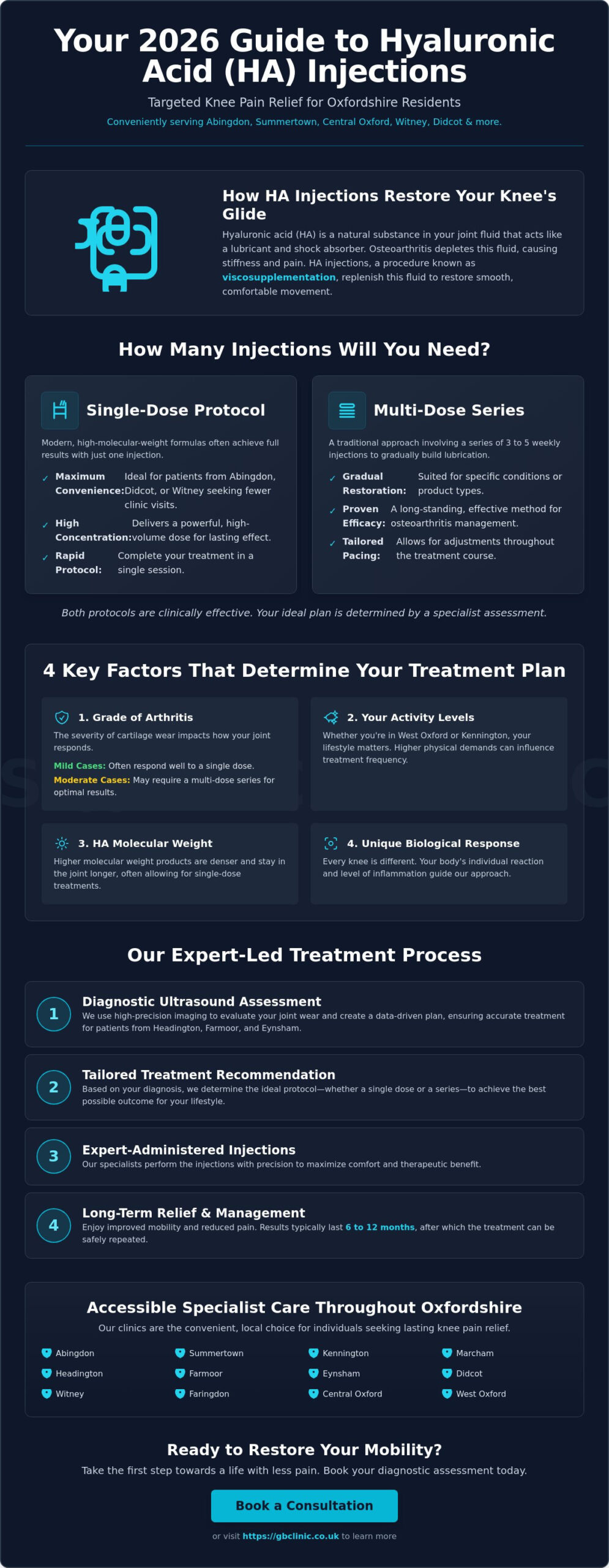
The specific treatment protocol often depends on the “thirst” of the joint. Some individuals in Witney or Didcot may find relief with a single, high-molecular-weight dose, while others with more advanced wear might require a series of three sessions. Several factors influence this decision:
- The grade of arthritis: Mild cases often respond well to single doses, while moderate cases might need a sequence.
- Activity levels: Patients in West Oxford or Kennington with high physical demands may require more frequent support.
- Molecular weight: High-molecular-weight products stay in the joint longer, often reducing the total number of visits.
- Biological response: Every joint reacts differently to the supplement based on existing inflammation.
Whether you’re traveling from Farmoor, Eynsham, or Marcham, our Oxfordshire-based specialists assess these factors during your initial consultation. We don’t believe in a one-size-fits-all approach. For some patients in Faringdon, a higher volume of “top-up” fluid is necessary to achieve the desired level of physical restoration. Understanding how many HA injections are needed for knee mobility starts with a precise look at your unique anatomy and daily lifestyle needs.
Determining the Number of HA Injections for Your Knee
Modern clinical advancements have streamlined the process of joint lubrication, offering more flexibility than ever before. While patients often ask how many HA injections are needed for knee relief, the answer has evolved significantly with the introduction of high-concentration formulas. Previously, most protocols required a series of three to five weekly visits. Today, many modern treatments achieve comparable results with a single, high-volume dose. This shift provides a high level of convenience for patients traveling from surrounding areas like Abingdon, Witney, or Didcot, as it minimizes clinical visits while maximizing the therapeutic impact on the joint.
Clinical research, including data referenced by the Mayo Clinic, indicates that both single-dose and multi-dose regimens are effective at reducing pain and improving function. The choice typically depends on the specific product used and the severity of the osteoarthritis. At our Oxfordshire clinics, we analyze your diagnostic findings to recommend the most efficient protocol for your recovery, ensuring you don’t spend more time in treatment than necessary.
Single Injection vs. Multi-Injection Courses
High-volume single injections are designed for efficiency and immediate mechanical support. They’re often the preferred choice for busy individuals in Summertown or Headington who need a quick return to their routine. Conversely, a traditional three-week course may be recommended for chronic, long-standing inflammatory conditions. This multi-session approach allows for a gradual “layering” of the hyaluronic acid, which can help stabilize the biological environment of a severely dehydrated joint. This method allows the clinician to monitor the joint’s response closely over 21 days, ensuring the lubrication is integrating effectively for residents in Marcham, Farmoor, or Eynsham.
Factors Influencing Your Treatment Plan
Several clinical variables dictate the final recommendation. We look closely at the degree of joint space narrowing identified during a diagnostic ultrasound scan. If you’ve had a previous steroid injection with limited success, we may opt for a more intensive hyaluronic acid injection protocol to deeply hydrate the synovial space. Your personal goals also play a vital role in our decision-making process. A resident in Kennington wanting to walk pain-free in the local park might achieve their goals with a single session, while an athlete in Faringdon or West Oxford aiming for high-impact sports might benefit from a more comprehensive series. Understanding your unique joint health is the first step toward lasting comfort. If you’re unsure which path is right for you, our specialists in Central Oxford can help you determine the best treatment plan for your needs.
The Role of Diagnostic Ultrasound in Treatment Planning
Determining the appropriate treatment volume requires more than a standard physical exam. We begin by assessing the internal environment of the joint to understand its unique requirements. Precision imaging identifies specific areas of inflammation or pockets of fluid loss that a manual examination might miss. This visual data is critical when deciding how many HA injections are needed for knee recovery, as it reveals the actual capacity and “thirst” of the joint capsule. For residents in Summertown, Marcham, or Farmoor, this means a treatment plan built on clear visual evidence rather than a generic protocol.
A diagnostic ultrasound scan allows us to see the state of your synovial fluid in real-time. If the imaging shows significant depletion or widespread wear, we may recommend a multi-dose series to ensure the joint is fully saturated and protected. Conversely, if the wear is localized or mild, a single high-concentration injection might be sufficient to restore glide. This level of detail ensures that patients from Eynsham, Didcot, and Witney receive exactly what their joint requires for optimal mobility without unnecessary clinical visits.
Precision Injections for Optimal Results
Landmark-guided or “blind” injections carry a higher risk of the lubricant being placed into fat pads or surrounding soft tissues instead of the joint space. When the substance doesn’t reach the synovial capsule, the clinical benefit is lost, which often results in the need for more frequent repeat visits. Using ultrasound guidance ensures the hyaluronic acid is delivered with pinpoint accuracy, which is essential for the Viscosupplementation Treatment for Knee Arthritis to be effective. This precision minimizes procedural discomfort for our patients from Abingdon and Kennington, as the clinician can navigate around sensitive structures with ease while ensuring the HA stays within the capsule for maximum effect.
Identifying the Severity of Knee Wear
We use imaging to grade the severity of osteoarthritis from Stage 1 to Stage 4. Seeing the thickness of the cartilage and the presence of bone spurs helps us manage expectations for your recovery timeline. While HA is highly effective for mild to moderate wear, Stage 4 arthritis often presents a “bone-on-bone” environment that might require a more intensive approach. During your consultation in Central Oxford or West Oxford, we review these images with you directly. This transparency helps individuals from Headington, Faringdon, and West Oxford understand the clinical reasoning behind their specific injection schedule and their long-term recovery goals.
Frequency and Long-Term Management of Knee Pain
The duration of relief following your treatment is a primary factor in long-term joint management. Most patients experience significant pain reduction and improved mobility for 6 to 12 months. Because hyaluronic acid is a naturally occurring substance, it’s safe to repeat the procedure once the effects begin to diminish. Clinical data suggests that there’s no cumulative damage from “over-injecting” HA. In fact, regular lubrication can support joint preservation by reducing the mechanical friction that accelerates cartilage wear. When determining how many HA injections are needed for knee pain management in the long term, we look at your lifestyle and diagnostic history.
For residents in Abingdon, Witney, or Didcot, maintaining a consistent lubrication schedule can prevent the return of the debilitating stiffness that limits daily activities. Our specialists in Central Oxford work with you to monitor these changes and adjust your plan as needed. This proactive approach ensures that your recovery remains on track without the delays often associated with more invasive options.
How Often Can You Repeat HA Injections?
A six-month interval is the standard clinical recommendation for repeat doses. This timeframe allows the joint to benefit from the initial viscosupplementation while providing a predictable window for follow-up care. You might notice it’s time for an appointment at our Oxfordshire clinic if you experience a gradual return of specific symptoms:
- Increased stiffness after periods of rest.
- A return of “grinding” or “clicking” sensations during movement.
- Difficulty walking long distances or navigating stairs.
We serve patients from Kennington, Marcham, and Farmoor who find that regular top-ups provide cumulative benefits. This consistency helps maintain a baseline of comfort that prevents sudden flare-ups and keeps you mobile throughout the year.
Combining Injections with Physiotherapy
The most effective way to extend the life of your injection is through a holistic approach. While the HA restores glide, expert physiotherapy focuses on strengthening the muscles that support and unload the joint. By building strength in the quadriceps and glutes, you reduce the direct pressure on the knee cartilage. This integrated strategy is particularly beneficial for active individuals in Headington and Summertown who want to stay on their feet. Understanding how many HA injections are needed for knee relief is only half the battle; strengthening the joint is the other.
Our clinicians create a bespoke recovery plan that combines exercise rehabilitation with the mechanical benefits of lubrication. For those in Eynsham, Faringdon, or West Oxford, this means you aren’t just treating the symptoms; you’re improving the overall mechanics of your leg. If you want to maximize your mobility and ensure your results last as long as possible, book a comprehensive assessment at GB Clinic to start your tailored recovery journey today.
Accessing Specialist HA Injections in Oxfordshire
GB Clinic provides expert-led hyaluronic acid injections in the heart of Oxfordshire. We recognize that chronic knee pain doesn’t wait, so we’ve structured our services to avoid long waiting lists. Our streamlined patient journey moves efficiently from a diagnostic ultrasound scan to the delivery of the treatment itself. This ensures you receive rapid access to pain relief in a clinical environment designed for your comfort and recovery.
During your initial consultation, we address the common question of how many HA injections are needed for knee relief based on your clinical presentation. Our specialists provide a clear, evidence-based timeline so you know exactly what to expect. This professional and patient-focused approach is available to those living in Central Oxford and West Oxford, positioning us as the local choice for advanced musculoskeletal care.
Convenient Care for Oxfordshire Residents
Our clinics are strategically located to serve the wider region with ease. We offer excellent travel links for patients visiting from Didcot, Faringdon, or Marcham. The accessibility of our facilities means that residents in Kennington, Farmoor, and Eynsham can access specialist care without the need for long-distance travel or the stress of navigating complex hospital systems.
We also support the growing communities in Abingdon and Witney, providing a local alternative for those seeking effective joint treatments. By choosing a specialist clinic within Oxfordshire, you benefit from practitioners who understand the specific needs of active individuals in our area. Whether you’re a commuter or a local resident, our goal is to make your path to restored mobility as straightforward as possible.
Your Consultation at GB Clinic
Your first visit begins with a comprehensive MSK assessment. This isn’t a generic check-up; it’s a detailed investigation into your joint’s function and the severity of your discomfort. We use this time to explain how many HA injections are needed for knee mobility in your specific case, ensuring you feel informed and confident in the proposed plan. Our clinical environment is professional, reassuring, and led by experts who prioritize your long-term health.
The practitioners at GB Clinic are noted for their interpersonal warmth and clinical excellence. We focus on physical restoration, helping you return to a mobile state without unnecessary delays. To start your journey toward long-term relief, you can book your assessment through our website. We are proud to serve patients across the county, including those in Summertown and Headington, providing a clear and competent path to recovery for the entire Oxfordshire community.
Start Your Journey to Pain-Free Movement
Restoring your knee mobility doesn’t have to be a confusing process. We’ve explored how modern clinical protocols and expert-led MSK diagnostic ultrasound provide a clear answer to how many HA injections are needed for knee relief based on your unique joint condition. Whether you require a high-concentration single dose or a tailored series, the path to recovery is now more accessible than ever for residents across Oxfordshire.
Our clinics provide no-delay access to advanced viscosupplementation for individuals in Abingdon, Summertown, and Kennington. We’re proud to have dozens of 5-star patient reviews from neighbors in Marcham, Headington, and Farmoor who’ve successfully returned to their active lifestyles. If you live in Eynsham, Didcot, or Witney, you don’t need to travel far for specialist care. Our facilities in Central Oxford and West Oxford are conveniently located for those in Faringdon and surrounding areas.
Don’t let chronic stiffness dictate your daily routine any longer. Book Your Specialist Knee Assessment in Oxford Today and take the first step toward lasting comfort. We look forward to helping you move with confidence again.
Frequently Asked Questions
How many injections will I need for my first course of treatment?
The total number depends on the specific product concentration and your diagnostic findings. Many modern protocols utilize a high-volume single dose to provide immediate lubrication and mechanical support. However, some clinical cases require a traditional series of three injections spaced one week apart to achieve full joint saturation. During your assessment in Central Oxford or West Oxford, we determine how many HA injections are needed for knee relief based on your individual level of cartilage wear.
How long does it take for hyaluronic acid to start working in the knee?
Most patients in Headington or Summertown notice a gradual improvement in joint glide within the first two weeks. While the mechanical lubrication provides some immediate cushioning, the biological benefits of reduced inflammation and improved synovial fluid quality typically peak between four and six weeks post-injection. This timeframe allows the substance to integrate fully with your natural joint environment, leading to the physical restoration and comfort required for long-term mobility.
Can I drive home to Abingdon or Witney immediately after the injection?
You can typically drive yourself home to Abingdon or Witney following the procedure. The injection is an outpatient treatment with minimal downtime, and local anesthetic is often used to ensure the process is comfortable. We advise a short period of rest in the clinic immediately afterward to ensure you feel stable. While most residents return to their daily routines quickly, we recommend avoiding long, strenuous drives or heavy clutch use for the remainder of the day.
Is there a limit to how many HA injections I can have over my lifetime?
There is no established clinical limit to the number of hyaluronic acid treatments you can receive over your lifetime. Unlike corticosteroid injections, which can potentially weaken connective tissues if used excessively, HA is a natural component of healthy joint fluid. Patients from Kennington and Marcham often use these treatments as a long-term management tool. You can safely repeat the process every six to twelve months to maintain the protective cushioning within the joint capsule.
What happens if one HA injection doesn’t provide enough relief?
If a single dose doesn’t achieve the desired outcome, we use diagnostic imaging to re-evaluate the joint’s “thirst” for lubrication. In some cases, a follow-up session is necessary to reach the required volume for full symptomatic relief. We analyze how many HA injections are needed for knee stability by looking at existing fluid levels. For residents in Farmoor or Eynsham, we may also discuss combining the treatment with exercise rehabilitation to better support the joint’s internal mechanics.
Are HA injections covered by private health insurance in Oxford?
Many private health insurance providers cover viscosupplementation when it’s deemed medically necessary for managing osteoarthritis. Coverage varies between policies, so we recommend that patients in Oxford contact their insurer to confirm their specific level of benefit. Our clinical team provides the necessary diagnostic evidence and treatment coding to support your claim. This ensures that individuals seeking expert-led care can access advanced treatments with confidence and clarity regarding their insurance support.
How do HA injections compare to PRP for knee arthritis?
Hyaluronic acid focuses primarily on mechanical lubrication and shock absorption, while Platelet-Rich Plasma (PRP) utilizes biological growth factors to support tissue repair. HA is often the first choice for patients in Didcot or Faringdon who experience significant joint “grinding” or dryness. PRP is frequently used when the goal is to address underlying cellular health. Both are evidence-based options, and our specialists help you decide which intervention best aligns with your current stage of arthritis and lifestyle goals.
What should I avoid doing after my knee injection?
We advise avoiding high-impact activities, such as running or heavy lifting, for approximately 48 hours following your treatment. This brief rest period allows the hyaluronic acid to settle within the synovial space without being displaced by excessive pressure. You can continue with light walking and daily tasks around your home or office. Patients returning to active routines in Oxfordshire should gradually reintroduce exercise under professional guidance to ensure the joint remains stable and protected during the initial recovery phase.