

What Are Hyaluronic Acid Injections? The Science of Joint Lubrication
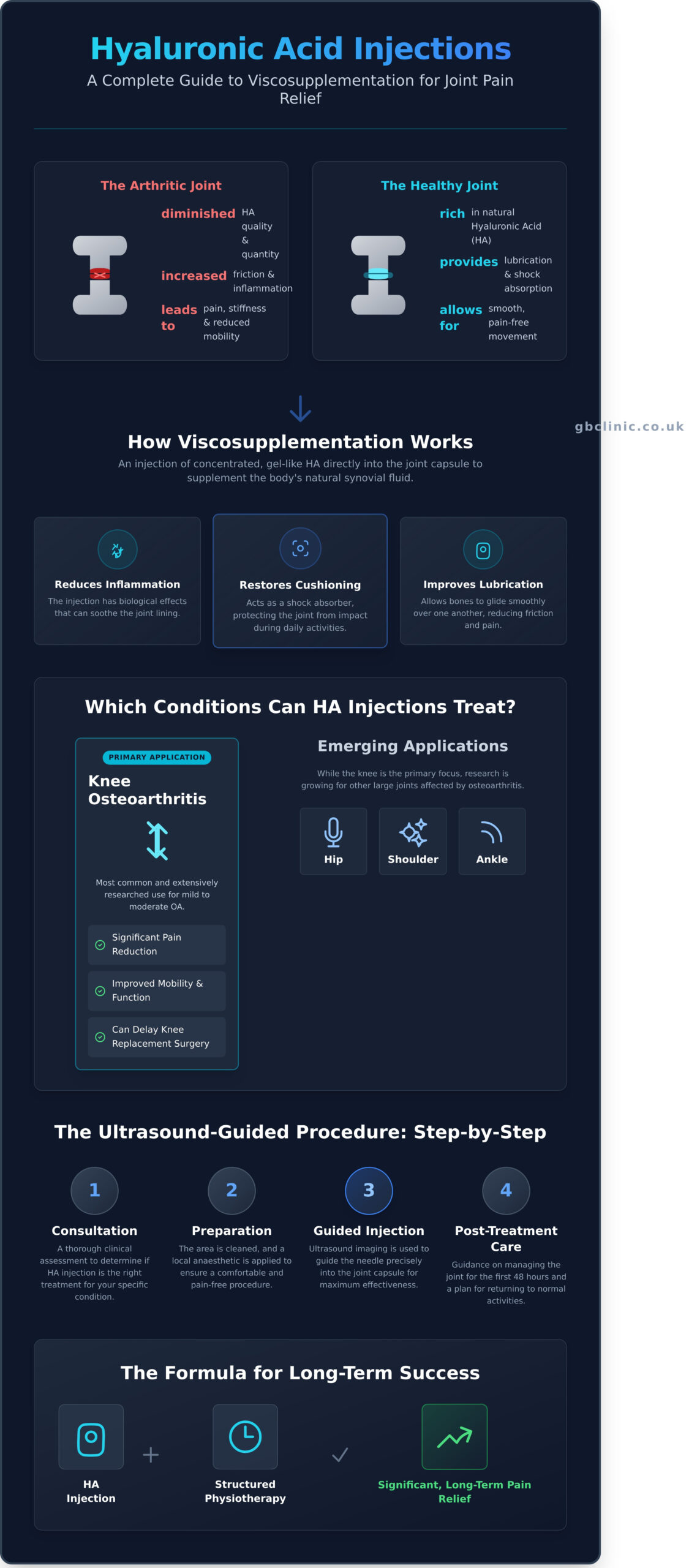
A healthy joint relies on synovial fluid to move smoothly and without pain. A key component of this fluid is hyaluronic acid (HA), a naturally occurring substance that provides essential lubrication and shock absorption. In conditions such as osteoarthritis, the concentration and quality of HA within the joint diminish, leading to increased friction, inflammation, and stiffness. A hyaluronic acid injection, a procedure known as viscosupplementation, is a targeted treatment designed to replenish this vital substance, reduce pain, and restore joint function.
Understanding Hyaluronic Acid’s Role in the Body
It is helpful to think of hyaluronic acid as the ‘motor oil’ for your joints. To understand its function, it helps to first know What is Hyaluronic Acid?. In essence, this remarkable molecule creates a thick, viscous fluid that performs two critical jobs within the joint:
- Lubrication: It coats the cartilage surfaces, allowing the bones to glide smoothly over one another with minimal friction during movement.
- Shock Absorption: It provides essential cushioning, protecting the joint from the impact and stress of daily activities like walking, running, or climbing stairs.
While it is most concentrated in our joints, HA is a natural substance found throughout the body, including in the skin and eyes, where it helps to retain moisture and provide structural integrity.
How Viscosupplementation Works to Relieve Pain
Viscosupplementation is the clinical procedure of injecting a concentrated, gel-like hyaluronic acid substance directly into the affected joint capsule, most commonly the knee. The primary goal is to supplement the joint’s depleted synovial fluid, directly restoring its natural lubricating and cushioning properties. Beyond this mechanical benefit, a hyaluronic acid injection can also have biological effects, such as reducing inflammation and potentially stimulating the body to produce more of its own natural HA. It is important to understand that this treatment is designed to manage the symptoms of joint degeneration, offering significant pain relief and improved mobility. It is a highly effective management tool, not a cure for the underlying arthritis itself.
Which Conditions Can HA Injections Treat? A Joint-by-Joint Guide
Hyaluronic acid (HA) injections are a highly effective, evidence-based treatment for managing the symptoms of osteoarthritis (OA), particularly in the knee. However, their application is expanding as research grows. The suitability of a hyaluronic acid injection depends on the specific joint affected, the severity of the condition, and the patient’s individual health profile. A thorough clinical assessment is always the first step to determine if this treatment is the right path forward for you.
Knee Osteoarthritis: The Primary Application
Knee osteoarthritis is the most common and extensively researched condition treated with HA injections. When the natural hyaluronic acid in the knee joint thins due to OA, it leads to increased friction, pain, and stiffness. HA injections work directly to replenish this vital substance, restoring lubrication and shock absorption within the joint capsule.
This treatment is typically recommended for patients with mild to moderate knee OA who have not found sufficient relief from conservative treatments like physiotherapy, exercise, or oral pain medication. The primary benefits include:
- Pain Reduction: Directly cushions the joint, reducing painful bone-on-bone friction.
- Improved Mobility: Restores lubrication, allowing for smoother and more comfortable movement during daily activities.
- Delayed Surgery: For many, it can be an effective way to manage symptoms and postpone the need for knee replacement surgery.
Treating Other Joints: Hips, Shoulders, and Ankles
While the knee remains the primary focus, the benefits of HA are being explored for other large joints affected by osteoarthritis. The use of a hyaluronic acid injection in joints like the hip and shoulder is often considered ‘off-label’ but is a growing area of clinical practice. Emerging evidence suggests it can provide similar pain relief and functional improvement.
The ankle joint, which bears significant weight, can also benefit from HA’s lubricating properties when affected by arthritis. While extensive clinical data supports its use in the knee, the American College of Rheumatology provides guidance on the various Conditions HA Injections Treat, and evidence is steadily growing for these other applications. Effectiveness can vary, but for suitable candidates, it offers a valuable, minimally invasive option for managing pain and preserving joint function.
Find out if HA is right for your joint pain.
The Injection Procedure: What to Expect Step-by-Step
Understanding the procedure for a hyaluronic acid injection can significantly reduce any anxiety and help you feel prepared. At our clinic, we prioritise patient comfort, safety, and clarity at every stage. The entire process is designed to be efficient, precise, and minimally invasive, from your initial assessment to your post-treatment care.
Your Initial Consultation and Assessment
Your journey begins with a comprehensive consultation with one of our specialists. This includes a thorough physical examination of the affected joint and a detailed review of your medical history and symptoms. To ensure an accurate diagnosis, we may use advanced diagnostic tools like an ultrasound scan to visualise the joint structures. This allows us to confirm that osteoarthritis is the source of your pain and determine if a hyaluronic acid injection is the most suitable treatment for your specific condition, alongside discussing all other available options.
The Ultrasound-Guided Injection Process
We perform all injections under ultrasound guidance to ensure maximum precision and effectiveness. This modern technology allows our clinician to see the needle in real-time and guide it to the exact location within the joint capsule, avoiding sensitive structures like nerves and blood vessels. The process itself is straightforward: the skin over the joint is sterilised, and a local anaesthetic is applied to numb the area and minimise discomfort. The specialist then injects the hyaluronic acid gel, a substance that supplements your body’s natural joint fluid. For a deeper understanding of its function, you can review The Science of Joint Lubrication. The entire injection is typically completed in just a few minutes.
Aftercare and Immediate Recovery
Following the procedure, you will be given clear instructions to ensure the best possible outcome. While recovery is quick, proper aftercare during the first 48 hours is important for maximising the benefits of the treatment.
- Rest the Joint: Avoid strenuous, high-impact activities such as running, heavy lifting, or sports for at least two days.
- Encourage Light Movement: Gentle, non-weight-bearing movement is encouraged to help distribute the hyaluronic acid throughout the joint.
- Manage Discomfort: It is normal to experience some temporary soreness or mild swelling at the injection site. An ice pack can be applied for 15-20 minutes at a time to help manage this.
Most patients can resume their normal daily activities after 48 hours. You will be advised on a specific timeline based on your individual circumstances and the joint that was treated.
Benefits, Risks, and Success Rates: An Honest Assessment
When considering any medical procedure, it is essential to have a clear and balanced understanding of the potential outcomes. A hyaluronic acid injection is a highly effective treatment for managing the symptoms of osteoarthritis, offering significant benefits for many patients. However, like any intervention, it is important to weigh these advantages against the potential risks to make an informed decision about your care.
Our clinical approach is rooted in transparency, ensuring you have all the information you need regarding the success rates and safety of this treatment.
Key Benefits: Pain Relief and Improved Mobility
The primary objective of HA injections is to reduce pain and restore function to the affected joint. Patients who undergo this treatment can typically expect a range of positive outcomes that improve their quality of life. The main benefits include:
- Sustained Pain Relief: Many patients experience a significant reduction in joint pain that can last for up to six months, and in some cases, even longer.
- Improved Joint Function: By restoring lubrication and cushioning, the treatment helps improve mobility for daily activities such as walking, climbing stairs, and standing from a seated position.
- A Safe Alternative to NSAIDs: For individuals who cannot take non-steroidal anti-inflammatory drugs (NSAIDs) due to stomach, kidney, or heart-related issues, HA injections offer a valuable and well-tolerated alternative.
- Delaying Major Surgery: For some patients, successful treatment can postpone the need for more invasive procedures, such as total joint replacement surgery.
Potential Side Effects and Risks
The safety profile for a hyaluronic acid injection is excellent, with most side effects being mild and temporary. The most common reaction is a localised response at the injection site, which may include minor pain, warmth, or swelling that typically resolves within 48 hours. More serious complications, such as an allergic reaction or infection, are very rare. At GB Clinics, we minimise these risks by adhering to strict sterile protocols and using ultrasound guidance to ensure precise and safe placement of every injection.
How HA Compares to Corticosteroid Injections
While both are common treatments for joint pain, HA and corticosteroid injections work in fundamentally different ways. Corticosteroids provide rapid, powerful anti-inflammatory relief, making them effective for acute pain flare-ups, but their effects are often shorter-term. In contrast, HA provides more gradual relief by supplementing the joint’s natural fluid, focusing on lubrication and shock absorption. This effect often builds over several weeks but tends to last significantly longer. The best choice depends entirely on your specific symptoms, condition, and treatment goals, which can be determined during an expert clinical assessment.
Beyond the Injection: Creating a Comprehensive Treatment Plan
A hyaluronic acid injection is a highly effective tool for reducing joint pain and improving mobility, but its true potential is unlocked when it is part of a broader, holistic treatment strategy. At GB Clinics, we view this treatment not as an isolated solution, but as a catalyst for long-term recovery. By providing a window of significant pain relief, the injection creates the ideal opportunity to address the underlying biomechanical issues contributing to your condition. Taking an active role in your recovery is essential for achieving lasting results.
The Crucial Role of Physiotherapy Post-Injection
Following your injection, engaging in a structured physiotherapy programme is the most critical step you can take to maximise its benefits. Physiotherapy works in synergy with the hyaluronic acid to restore joint function. A specialist will guide you through targeted exercises designed to build strength in the muscles surrounding the treated joint. This increased support reduces stress on the joint cartilage, enhances stability, and can significantly extend the duration of pain relief. It also focuses on improving your flexibility and range of motion, helping you return to your daily activities with confidence. Explore our advanced physiotherapy services in Oxford.
Lifestyle Adjustments to Maximise Your Results
Simple, consistent changes to your daily routine can protect your joint and enhance the effects of your treatment. Our clinical team will provide personalised advice, which often includes a focus on three key areas:
- Low-Impact Exercise: Activities like swimming, cycling, or using a cross-trainer maintain cardiovascular health and muscle tone without placing excessive strain on your joints. Regular, gentle movement helps keep the joint lubricated and flexible.
- Maintaining a Healthy Weight: Every extra pound of body weight exerts several pounds of additional pressure on weight-bearing joints like the knees and hips. Reaching and maintaining a healthy weight is one of the most effective ways to reduce joint stress and slow the progression of osteoarthritis.
- Activity Modification: Learning to perform daily tasks in a way that protects your joint is crucial. This may involve using assistive devices, avoiding high-impact movements, or simply pacing your activities throughout the day to prevent overuse and flare-ups.
By combining a hyaluronic acid injection with expert-led physiotherapy and sensible lifestyle adjustments, you create a powerful, multi-faceted approach to managing your joint pain and reclaiming an active, comfortable life.
Your Next Step Towards Joint Pain Relief
Hyaluronic acid injections offer a clinically proven solution for managing the pain and stiffness associated with conditions like osteoarthritis. By replenishing the natural lubricant in your joints, this treatment can significantly improve mobility and provide lasting relief. For many patients, a well-administered hyaluronic acid injection is a key component of a comprehensive, long-term care plan designed to restore joint function.
At GB Clinics, our specialist musculoskeletal team is dedicated to providing precise and effective treatments. We perform all injections with ultrasound guidance for superior accuracy and have on-site diagnostics to ensure a swift, comprehensive assessment. Our commitment to clinical excellence is reflected in hundreds of positive patient testimonials for our effective, modern therapies.
If you are ready to explore your options for lasting joint pain relief, we invite you to book a consultation to discuss your joint pain with our Oxford specialists. Let our expert team help you create a personalised plan to restore your mobility and return to a more active, comfortable life.
Frequently Asked Questions About Hyaluronic Acid Injections
How long does it take for hyaluronic acid injections to work?
Patients typically experience a gradual reduction in pain and stiffness. While some may notice an early improvement, the full benefits of the treatment are often realised between 8 to 12 weeks after the final injection. This period allows the hyaluronic acid to effectively supplement the joint’s natural synovial fluid, enhancing lubrication and shock absorption. Our clinicians will monitor your progress to ensure the treatment is providing the expected relief for your condition.
How long do the effects of a hyaluronic acid injection last?
The pain-relieving effects are long-lasting, with many patients reporting improved joint function and comfort for six to twelve months. The exact duration of relief can vary depending on the severity of your osteoarthritis, the joint being treated, and your activity levels. When the benefits begin to diminish, the treatment course can often be safely repeated to maintain your mobility and manage discomfort, offering a reliable, long-term solution for joint pain.
Are hyaluronic acid injections painful?
The procedure is designed to involve minimal discomfort. We administer a local anaesthetic to numb the skin and tissue around the injection site, ensuring you remain as comfortable as possible. You may feel a brief scratch from the anaesthetic, followed by a sensation of pressure as the gel is administered. Any post-injection soreness at the site is typically mild and resolves within 48 hours. Our expert clinicians perform these injections with precision to minimise discomfort.
What is the typical cost of a hyaluronic acid injection course in the UK?
The cost of treatment in the UK varies depending on the specific product used and the number of injections required for your condition. As a guide, a single injection typically ranges from £300 to £500. During your initial consultation, we will provide a clear and transparent breakdown of all costs associated with your recommended treatment plan. This price generally includes the consultation, the product, and the specialist administration of the injection.
Can I exercise or return to work after a hyaluronic acid injection?
We advise you to rest the treated joint and avoid high-impact or strenuous activity for at least 48 hours after your hyaluronic acid injection. This allows the solution to settle within the joint and minimises the risk of inflammation. Most patients can return to desk-based work immediately, but if your job is physically demanding, we may recommend taking a day off. Your clinician will provide specific aftercare instructions tailored to you.
How many hyaluronic acid injections will I need for my condition?
The number of injections required is determined by the specific formulation used and the severity of your joint condition. Some advanced products are designed as a single-injection treatment, providing sustained relief from one administration. Other protocols may involve a course of three to five injections, usually spaced one week apart. Following a thorough assessment, our specialist will recommend the most effective protocol to achieve optimal pain relief and restore function.
Is there anyone who should not get hyaluronic acid injections?
This treatment is not suitable for everyone. Individuals with an active infection in or around the joint, or those with a known allergy to hyaluronic acid products, should not receive these injections. It is also generally avoided if there is a skin disease or infection at the proposed injection site. A comprehensive medical history will be taken during your consultation to confirm that this treatment is a safe and appropriate option for your specific circumstances.