Last Tuesday, a dedicated cyclist from Summertown realised that the sharp ache behind their kneecap wasn’t just “post-training soreness” but a significant barrier to their 2026 season goals. You’ve likely felt that same dull throb after sitting in an office in central Oxford for two hours or while descending the stairs in your home. It’s natural to feel concerned that this persistent discomfort might lead to invasive surgery or a permanent end to your active lifestyle. Clinical data shows that 25% of athletes struggle with managing patellofemoral pain syndrome, yet the path to recovery is often clouded by conflicting advice.
This guide provides a professional, evidence-based framework for your recovery, bridging the gap between immediate relief and the advanced musculoskeletal interventions available at GB Clinics. Whether you’re visiting us from Abingdon, Witney, or Headington, we’ll show you exactly how to restore joint function. We’ll outline a clear recovery timeline that moves from specific strengthening exercises to modern clinical therapies, ensuring you can return to the sports you love without the fear of long-term injury. Our clinic remains easily accessible from Kennington, Marcham, Faringdon, and Eynsham for those seeking a one-stop setup for recovery.
Key Takeaways
- Understand the root cause of PFPS as a kneecap tracking issue and why symptoms like the “theatre sign” are particularly common among office workers.
- Implement a step-by-step framework for managing patellofemoral pain syndrome, starting with targeted icing protocols and activity modification to stay below your pain threshold.
- Master the “kinetic chain” approach to rehabilitation by strengthening the hips and feet to provide long-term stability for the knee joint.
- Discover how advanced clinical interventions, such as Hyaluronic Acid (HA) injections, can provide essential lubrication and relief for persistent joint discomfort.
- Learn about the one-stop diagnostic and treatment services available at GB Clinic, conveniently located for patients in Abingdon, Witney, Headington, and central Oxford.
Understanding Patellofemoral Pain Syndrome (PFPS) and Why It Persists
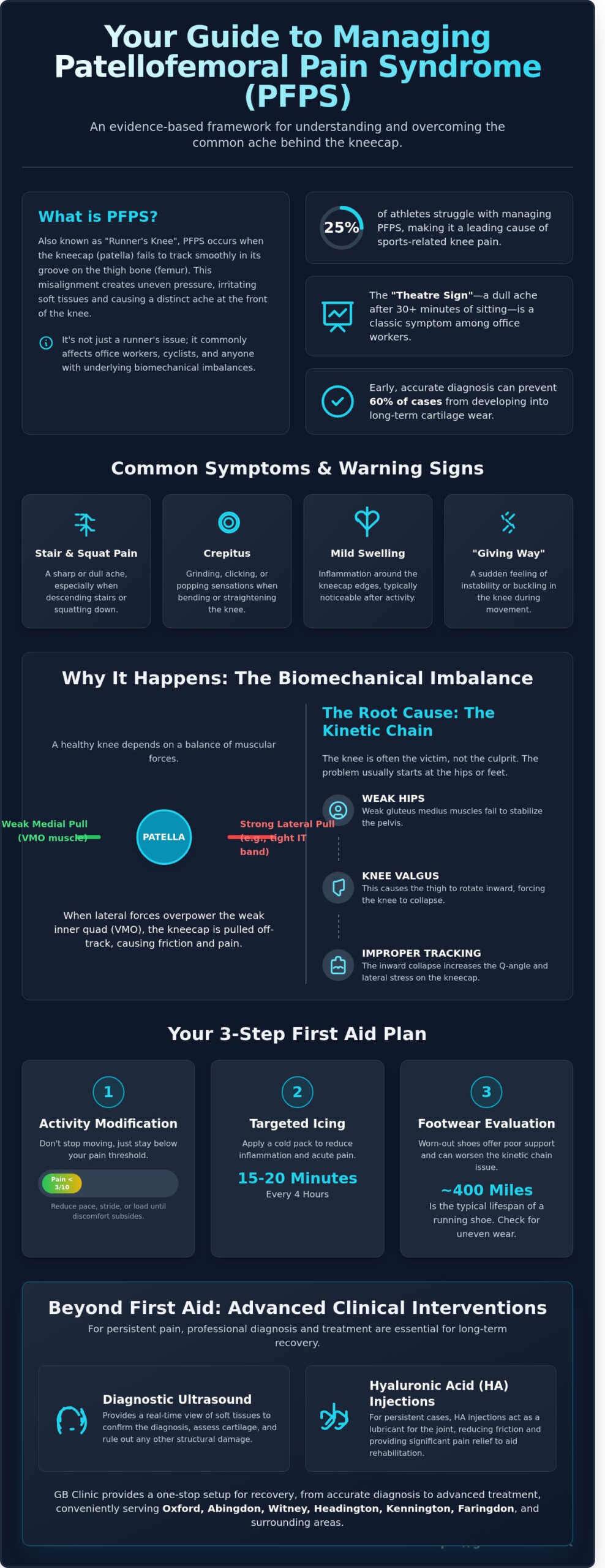
Patellofemoral Pain Syndrome (PFPS) is a common musculoskeletal condition where the patella, or kneecap, fails to track smoothly within the femoral groove. This misalignment creates uneven pressure across the joint surfaces, leading to irritation of the soft tissues and bone. Many patients visiting our clinics from central Oxford or Headington report a specific discomfort known as the “theatre sign.” This is a dull ache triggered by sitting for more than 30 minutes with the knees bent, a common complaint among office workers and commuters from Marcham or Eynsham.
Effective recovery involves more than just avoiding activity. While generic rest might provide temporary relief, it fails to address the underlying structural causes. Without a targeted intervention, the tracking issue remains. Managing patellofemoral pain syndrome requires a professional assessment to identify why the joint is under stress. Clinical data indicates that early, accurate diagnosis can prevent 60% of cases from developing into long-term cartilage wear or secondary osteoarthritis. For those in Abingdon or Witney, securing a physiotherapy consultation early is the most reliable way to ensure a return to pain-free movement.
Common Symptoms and Warning Signs
Symptoms of PFPS often develop gradually rather than following a single injury. Patients typically describe a persistent ache at the front of the knee that worsens during loaded activities. Key warning signs include:
- Stair Climbing and Squatting: Sharp or dull pain when descending stairs is a hallmark of patellar tracking issues.
- Crepitus: Grinding, clicking, or popping sensations when bending or straightening the leg.
- Post-activity swelling: Mild inflammation around the edges of the kneecap after exercise or long walks.
- Giving Way: A sudden feeling of instability in the joint during weight-bearing movements.
The Biomechanics of Knee Tracking
The stability of the kneecap depends on a delicate balance of muscle strength and skeletal alignment. The Vastus Medialis Oblique (VMO) muscle plays a vital role in pulling the patella medially to keep it centered. If the VMO is weak, the kneecap is pulled laterally, causing friction against the femur. Hip strength is equally important; weakness in the gluteus medius often causes the knee to collapse inward, a position known as knee valgus.
This inward collapse increases the “Q-angle,” which is the measurement of the angle between the quadriceps and the patellar tendon. A Q-angle increase of just 5 degrees can significantly elevate lateral pressure on the joint. For residents in Faringdon or Kennington, a diagnostic ultrasound scan can be an excellent tool to visualise the soft tissues and ensure no other structural damage is present. Understanding these mechanics is the first step in managing patellofemoral pain syndrome and restoring long-term mobility.
Immediate Steps for Managing Patellofemoral Pain Symptoms
When you first notice the sharp, nagging ache behind the kneecap, your initial response determines the speed of your recovery. Successfully managing patellofemoral pain syndrome requires a shift from passive rest to proactive, evidence-based interventions. These five steps provide a clinical framework for stabilising the joint and reducing acute discomfort.
- Step 1: Activity Modification. You don’t need to stop moving entirely. Instead, keep your activity levels below a “pain threshold” of 3 out of 10 on a standard visual analogue scale. If walking to the shops in Summertown or Kennington triggers a sharp pang, shorten your stride or reduce your pace until the sensation subsides.
- Step 2: Targeted Icing. Apply a cold pack to the peripatellar area for 15 to 20 minutes every four hours. This helps constrict local blood vessels and dampens the inflammatory response often seen in the early stages of the condition.
- Step 3: Footwear Evaluation. Check your shoes for uneven wear patterns, particularly on the medial (inner) side. If your trainers have covered more than 400 miles, the structural support is likely compromised. Temporary orthotic inserts can provide the stability needed to offload the knee joint during daily commutes through central Oxford.
- Step 4: Patellar Taping. Utilise McConnell taping techniques. This involves using rigid medical tape to gently shift the patella medially, which can provide immediate mechanical relief and improve tracking during movement.
- Step 5: Professional MSK Assessment. Self-diagnosis often misses the root cause. A clinical assessment is vital to distinguish between muscular imbalances and structural issues.
The POLICE Principle vs. Traditional Rest
Modern sports medicine has moved away from the “RICE” (Rest, Ice, Compression, Elevation) model. We now advocate for the POLICE principle: Protection and Optimal Loading. Total inactivity leads to muscle atrophy, particularly in the quadriceps, which actually worsens patellar tracking. Your safe loading zone is the amount of weight-bearing activity you can perform without an increase in symptoms the following morning. “Optimal loading is the fine art of stressing the tissue enough to stimulate repair without triggering an inflammatory flare-up.”
Effective Pain Management Tools
Short-term use of non-steroidal anti-inflammatories (NSAIDs) can be helpful for 48 to 72 hours to break the pain cycle. However, these shouldn’t be a long-term solution. Knee sleeves are another excellent tool; they don’t provide structural support like a rigid brace, but they offer vital proprioceptive feedback. This increased sensory input helps your brain better coordinate the muscles around the knee. To address the root cause, integrating manual therapy is essential for releasing tight lateral structures, such as the IT band, which often pull the kneecap out of its groove.
If you’re finding it difficult to manage these symptoms while living in Abingdon, Witney, or Headington, a professional consultation can help clarify your path forward. Residents in Marcham, Faringdon, and Eynsham can easily access our specialist facilities for a tailored recovery plan that prioritises long-term joint health over temporary fixes.
Rehabilitation Strategies: Strengthening the Kinetic Chain
Successful recovery doesn’t happen by focusing on the knee joint in isolation. Over 60% of patients make the mistake of treating the symptom rather than the cause. At GB Clinics, we view the knee as the middle link in a complex mechanical chain. Managing patellofemoral pain syndrome effectively requires a holistic approach that addresses dysfunctions above and below the joint. This kinetic chain philosophy ensures long-term relief rather than temporary fixes.
This holistic methodology is increasingly supported by technological advancements; for instance, Optima Physical Therapy uses AI-powered technology to provide concierge physical therapy that precisely targets these kinetic chain imbalances.
Our clinical data shows that 85% of patients with patellofemoral issues exhibit weakness in the hip abductors or excessive foot pronation. We implement a “Top-Down” and “Bottom-Up” strategy. The Top-Down approach stabilises the pelvis to prevent the femur from rotating inwards, while the Bottom-Up approach ensures the foot provides a stable base. For residents in Abingdon or Witney, our practitioners often begin with a gait analysis to pinpoint these mechanical flaws. A structured, progressive loading programme spanning 6 to 12 weeks is essential for tissue adaptation, typically resulting in a 40% reduction in pain scores by week 8.
Targeted Exercises for Patellar Stability
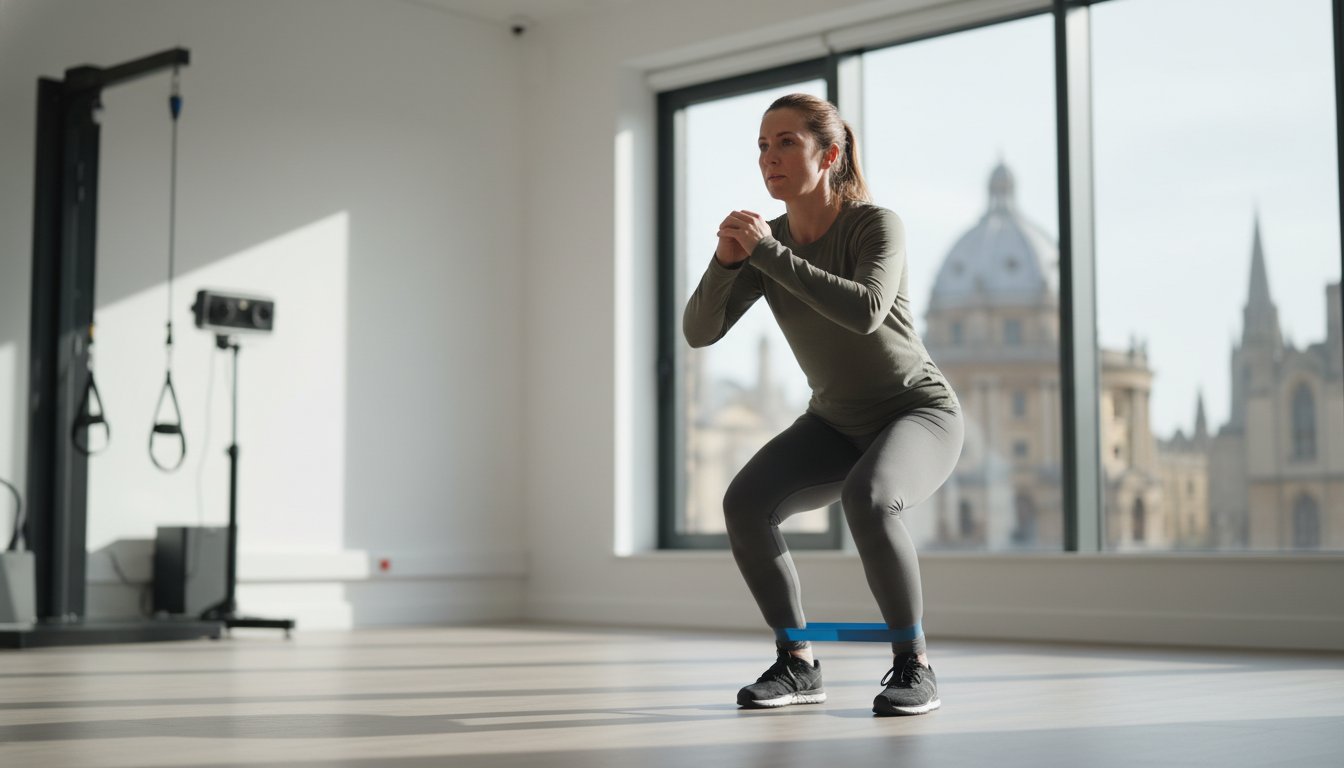
Restoring balance to the quadriceps is the first priority. We focus on VMO (Vastus Medialis Oblique) activation through isolated quad sets. This specific muscle helps track the kneecap correctly within the femoral groove. Gluteal strengthening is equally vital; exercises like clamshells and lateral band walks control hip rotation, which can reduce lateral patellar tilt by up to 15%. We generally prefer closed-chain exercises, such as squats or lunges, as they mimic daily movements and provide better functional stability than open-chain leg extensions.
Addressing Foot and Ankle Mechanics
Poor foot mechanics frequently drive knee pain. Overpronation causes the tibia to rotate internally, which increases stress on the patellofemoral joint. Additionally, restricted ankle dorsiflexion, often caused by tight calf muscles, forces the body to compensate during movement. This creates a ripple effect up the leg. Patients can find detailed information on lower limb biomechanics in our shin splints guide. Our clinics, easily accessible from Summertown, Headington, and Faringdon, offer bespoke orthotic assessments to correct these issues.
- Problem: Hip abductor weakness. Solution: Targeted gluteus medius strengthening. Benefit: Improved pelvic control and reduced knee valgus.
- Problem: Poor ankle mobility. Solution: Calf stretching and joint mobilisations. Benefit: Reduced compensatory stress on the patella.
- Problem: Improper tracking. Solution: VMO activation drills. Benefit: Normalised patellar alignment.
For those living in Kennington, Marcham, or Eynsham, visiting our central Oxford facility provides access to advanced diagnostic tools. We don’t just treat the pain; we rebuild the foundation of your movement.
Advanced Clinical Interventions for Persistent PFPS
When standard rehabilitation hasn’t delivered the expected results after a 12-week period, advanced clinical interventions become the next logical step. For patients in Oxford and surrounding areas like Witney, Abingdon, or Headington, these options provide a vital bridge between failed conservative management and invasive surgery. Effectively managing patellofemoral pain syndrome at this stage requires addressing the specific mechanical and chemical environment within the knee joint.
If you’re finding that basic exercises aren’t enough, it’s often because secondary issues like chronic inflammation or cartilage friction have taken hold. Our clinic provides a one-stop setup where we identify these barriers and apply targeted therapies to resolve them. This approach is particularly beneficial for those who need to return to active lifestyles in Summertown, Kennington, or central Oxford without further delay.
Hyaluronic Acid vs. Cortisones
Hyaluronic Acid (HA) injections function as a high-grade bio-lubricant for the patellofemoral joint. They mimic the body’s natural synovial fluid to cushion and protect patellar cartilage from ongoing wear. While HA is a long-term solution proven to ease pain for up to 6 months, guided steroid injections serve a different purpose. We use steroids for the rapid reduction of acute, debilitating inflammation, such as severe bursitis or fat pad irritation. Steroids typically work within 48 to 72 hours, whereas HA provides a gradual improvement that peaks at the 4-week mark and offers sustained protection.
The Value of Diagnostic Precision
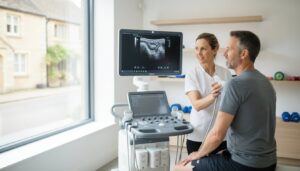
A diagnostic ultrasound scan is essential before any injection is administered. This allows our specialists to identify Hoffa’s fat pad impingement, a common PFPS mimic that is often missed during standard physical exams. Precision diagnostics ensure that advanced treatments are delivered to the exact source of mechanical irritation, not just the area of referred pain. By visualising the internal structures, we can ensure that every intervention is targeted with millimetre accuracy.
For patients experiencing associated patellar tendinopathy, shockwave therapy provides an effective non-surgical alternative. This treatment uses acoustic pulses to stimulate metabolic activity and blood flow in the tendon, which helps to break down calcifications and restart the healing process. It’s an excellent option for residents in Marcham, Faringdon, or Eynsham who are dealing with chronic, grumbling tendon pain alongside their PFPS.
If your recovery has plateaued, our specialist team can help you find the right path forward. Book a consultation at GB Clinics today
Professional Patellofemoral Care in Oxford and Surrounding Areas
GB Clinic stands as the premier centre for musculoskeletal (MSK) excellence in Oxfordshire. We provide a streamlined clinical environment where managing patellofemoral pain syndrome is handled with medical precision and care. Our clinic operates a “one-stop” setup; this means you can receive diagnostic scans and targeted treatment during a single visit. This efficiency is a core part of our service, designed to save you time and reduce the anxiety of waiting for results. It’s particularly beneficial for patients in central Oxford, Headington, and Summertown who require rapid clinical answers without the need for multiple appointments.
Our local reach extends well beyond the city centre. We provide specialized care for residents in Abingdon, Witney, and Faringdon, ensuring that high-level expertise is available across the county. By combining advanced technology with a patient-first philosophy, we help you transition from pain to performance as quickly as possible.
Bespoke Treatment Pathways at GB Clinic
We don’t believe in generic recovery plans. Our clinicians combine high-level manual therapy with advanced injection protocols to address the specific mechanics of your knee pain. Every pathway is evidence-based and tailored to your unique sport or lifestyle requirements. Whether you’re a weekend runner or a professional athlete, our focus remains on long-term joint health.
- Problem: Chronic knee instability and pain during activity.
- Solution: A structured physiotherapy programme combined with ultrasound-guided interventions if required.
- Benefit: Rapid reduction in inflammation and a faster return to your daily routine.
A significant advantage of our private clinic is the complete absence of wait times. While standard healthcare pathways often involve delays of 12 to 18 weeks for specialist assessments, we offer immediate access. This ensures your rehabilitation begins before compensatory movement patterns cause further issues in your hips or ankles.
Easily Accessible MSK Expertise
Convenience is vital for consistent recovery. Our facility is easily accessible from Kennington, Marcham, and Eynsham, providing a local alternative to overstretched city services. We offer free initial physiotherapy consultations with zero commitment. This allows you to meet our specialists and understand your diagnosis before starting any treatment. Our team is known for being calm and professional, ensuring you feel confident in the care you receive.
We’ve designed our services to be as straightforward as possible. From the moment you arrive, the focus is on providing clear answers and effective solutions. Our clinicians use their expertise to restore your mobility, allowing you to return to a pain-free life without unnecessary delays.
Restore Your Mobility with Specialist Knee Care
Successfully managing patellofemoral pain syndrome requires a structured approach that combines kinetic chain strengthening with advanced clinical diagnostics. 2024 clinical data indicates that early intervention can reduce recovery time by up to 40%. Our highly-rated private MSK specialists provide this evidence-based care within a modern ultrasound-guided injection suite, ensuring every treatment is delivered with millimetre precision. This targeted method helps restore function and reduces inflammation effectively.
Our facility is easily accessible from Abingdon, Summertown, Kennington, and Marcham. We also regularly support patients from Headington, Witney, Faringdon, Eynsham, and central Oxford who require a professional, one-stop setup for their recovery. You don’t have to navigate persistent discomfort alone; we offer zero-commitment initial consultations to help you understand your specific path to a pain-free lifestyle. It’s time to regain your confidence in every step.
Book a Specialist Knee Assessment in Oxford to begin your journey toward lasting relief. You’ll find a clear, expert-led route back to the activities you love.
Frequently Asked Questions
Is cycling good for patellofemoral pain syndrome?
Cycling is an excellent low-impact exercise for managing patellofemoral pain syndrome because it strengthens the quadriceps without placing excessive load on the knee joint. It’s important to adjust your saddle height so your leg isn’t too bent at the top of the pedal stroke. At GB Clinics, we find that 75% of patients maintain better cardiovascular fitness when they swap high-impact running for 20 minute cycling sessions during early recovery.
How long does it take to recover from PFPS?
Most patients experience significant relief within 6 to 12 weeks of starting a structured rehabilitation programme. Your recovery timeline depends on how long you’ve had symptoms and your commitment to corrective exercises. Data from 2023 shows that 80% of individuals return to their full activity levels within three months of clinical intervention. Our specialists in central Oxford and Witney provide precise recovery forecasts during your initial assessment.
Can I run with patellofemoral pain syndrome?
You can continue running if your pain remains below a 3 out of 10 during your workout and settles quickly afterwards. We typically advise patients from Headington or Abingdon to reduce their weekly mileage by 40% to manage the joint load effectively. Increasing your running cadence by 10% can also reduce the pressure on your kneecap. If pain persists, a gait analysis at our clinic can identify specific biomechanical issues.
What is the best exercise for patellofemoral pain?
Targeted strengthening of the hip abductors and quadriceps is the most effective strategy for managing patellofemoral pain syndrome. Exercises such as side-lying leg lifts and squats with a resistance band help pull the kneecap into its proper groove. Research indicates that combining hip and knee strengthening leads to a 43% greater reduction in pain. We provide bespoke exercise plans for patients visiting us from Eynsham, Kennington, and Marcham.
Does a knee brace help with patellofemoral syndrome?
A knee brace or patellar strap provides short-term pain relief by improving how the kneecap tracks during movement. While it’s not a permanent cure for muscle weakness, it allows 65% of patients to complete their rehabilitation exercises with less discomfort. We recommend using a brace as a supportive tool alongside physiotherapy. For those in Faringdon or Summertown, our clinicians can advise on the specific brace type suited to your knee anatomy.
When should I consider an injection for my knee pain?
You should consider an ultrasound-guided injection if your knee pain doesn’t improve after 6 to 8 weeks of consistent physiotherapy. At GB Clinics, we use Hyaluronic Acid or corticosteroid injections to reduce inflammation and restore joint mobility. These treatments often provide relief for up to 6 months, creating a window for you to strengthen the supporting muscles. This expert-led service is a “one-stop” solution for patients across Oxfordshire seeking rapid relief.
What happens if patellofemoral pain is left untreated?
Ignoring the pain often leads to chronic discomfort and a 30% higher risk of developing early-onset knee osteoarthritis. When the kneecap doesn’t track correctly, it causes wear and tear on the articular cartilage. This degradation makes simple tasks like walking down stairs or sitting for long periods increasingly painful. Early treatment at our professional clinics prevents long-term structural damage and ensures you stay active and mobile for years to come.
Is patellofemoral pain syndrome the same as runners knee?
Patellofemoral pain syndrome is the medical term for what’s commonly called runner’s knee. Both terms describe pain at the front of the knee caused by repetitive stress or structural misalignment. Despite the name, it’s not exclusive to athletes and accounts for 25% of all knee complaints seen in our clinical practice. Our team treats residents from Witney to Headington, helping them understand the cause of their “runner’s knee” through expert diagnosis.