The sharp, persistent pain along your shin bone can be a significant setback, forcing a halt to your training and creating uncertainty about the underlying cause. Many active individuals experience frustration with the recurring nature of shin splints, often questioning whether the pain indicates a more serious condition like a stress fracture, or why previous attempts at rest have not provided a lasting solution. This cycle of pain, rest, and re-injury can be disheartening, leaving you unsure of the most effective path forward.
This comprehensive guide is designed to provide the clarity you require. We will explore the specific biomechanical and training-related factors that contribute to this common overuse injury. Our objective is to equip you with a complete understanding, from accurate diagnosis and immediate relief strategies to the advanced treatment options available. Most importantly, we will provide a structured, evidence-based plan to help you prevent recurrence, allowing you to return to your activities safely and with confidence.
Key Takeaways
- Recognise that lower leg pain is rarely from a single cause; it typically involves a combination of training errors and your body’s unique mechanics.
- Learn the critical differences in pain symptoms that help distinguish between common shin splints and a potential stress fracture, ensuring you seek the right care.
- Discover a structured treatment plan, starting with immediate at-home care for initial relief and progressing to professional assessment for lasting recovery.
- Adopt a proactive prevention strategy by addressing training load, footwear, and targeted exercises to significantly reduce your risk of future injury.
What Are Shin Splints? Understanding the Pain in Your Lower Leg
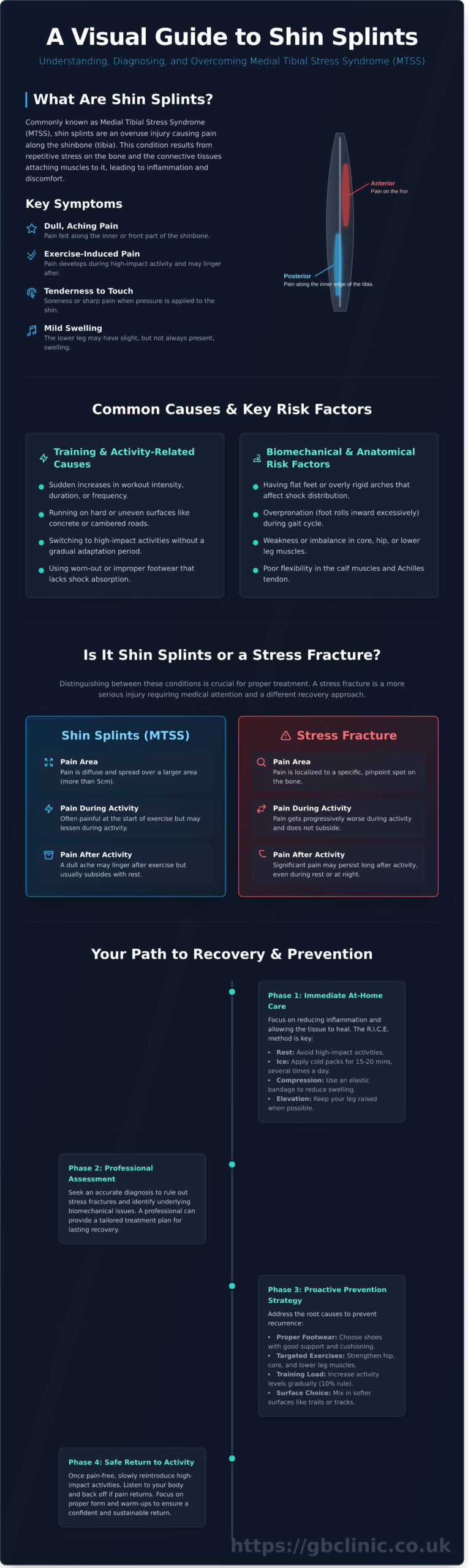
Shin splints is the common term for pain felt along the shinbone (tibia). Medically known as Medial Tibial Stress Syndrome (MTSS), this condition is an overuse injury resulting from repetitive stress on the shinbone and the connective tissues that attach your muscles to the bone. To understand what are shin splints in greater depth, it is helpful to recognise them as an inflammatory response common among runners, dancers, and military personnel. While disruptive, it is a highly treatable condition with the correct diagnosis and management plan.
For a clear visual guide on this condition, please see the video below:
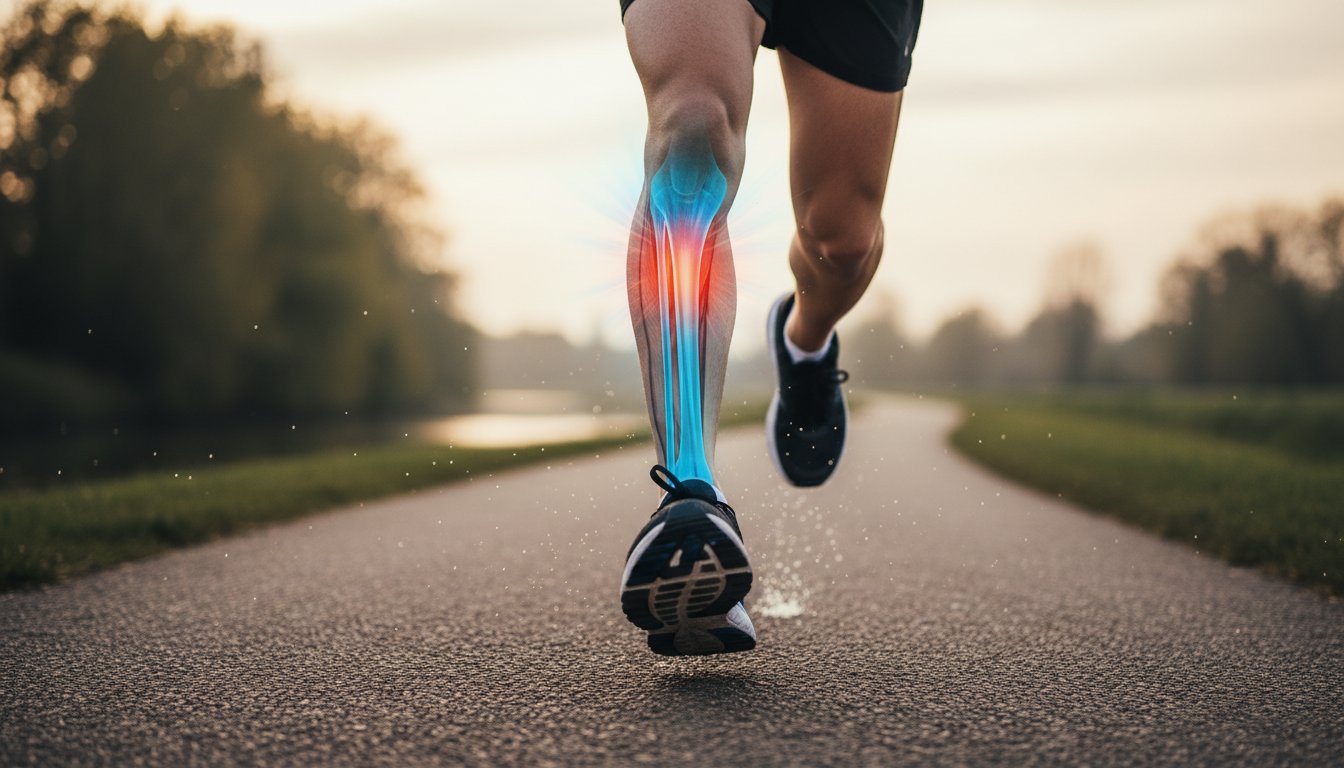
The pain associated with shin splints typically manifests in one of two areas. Anterior shin splints involve pain on the front, outer part of the lower leg, affecting the tibialis anterior muscle. Posterior shin splints cause pain along the inner edge of the tibia, where the tibialis posterior muscle is located.
Recognising the Key Symptoms
Identifying the symptoms of shin splints is the first step towards effective treatment. Patients commonly report a combination of the following:
- A dull, aching pain along the front (anterior) or inner (posterior) part of the shinbone.
- Pain that develops during high-impact exercise, such as running, and may linger afterwards.
- Tenderness, soreness, or pain when pressure is applied to the affected area of the shin.
- Mild swelling in the lower leg, although this is not always present.
How Shin Splints Develop
Shin splints are fundamentally a repetitive stress injury. When the muscles and bone tissue in the lower leg are overworked by repetitive activity, the body’s ability to repair itself is overwhelmed. This leads to inflammation of the periosteum, a thin sheath of tissue that wraps around the tibia. The constant pulling of the muscles on this sheath can also cause microscopic tears in the muscle fibres where they attach to the bone. Over time, this cumulative stress results in the characteristic pain and discomfort of the condition.
Common Causes and Key Risk Factors for Shin Splints
Medial tibial stress syndrome, commonly known as shin splints, is rarely the result of a single isolated issue. Instead, it typically develops from a combination of factors, primarily related to physical activity and an individual’s unique biomechanics. The condition arises when the muscles, tendons, and bone tissue around the tibia become overworked by repetitive stress. This makes certain groups, such as runners, dancers, and military recruits, particularly susceptible due to the high-impact nature of their activities. A sudden and significant increase in the intensity or duration of exercise is one of the most common triggers for this painful condition.
Training and Activity-Related Causes
The way you train places direct stress on your lower legs. Overloading the musculoskeletal system without allowing adequate time for recovery is a primary cause of shin splints. Key training errors include:
- Sudden increases in activity: Progressing too quickly with workout intensity, duration, or frequency without building a proper foundation.
- Hard or uneven running surfaces: Consistently training on surfaces like concrete or cambered roads increases the impact forces absorbed by the shins.
- Changes in training type: Switching from a low-impact activity like swimming to a high-impact one like running without a gradual adaptation period.
- Worn-out or improper footwear: Shoes that lack adequate support and cushioning fail to absorb shock effectively, transferring more stress to the lower legs.
Biomechanical and Anatomical Risk Factors
In addition to training habits, your body’s unique structure and movement patterns can predispose you to developing this condition. The Mayo Clinic outlines several key risk factors for shin splints related to anatomy and gait. These biomechanical inefficiencies can create excessive stress on the tibia and surrounding soft tissues. Common factors include:
- Foot structure: Individuals with flat feet (pes planus) or abnormally high, rigid arches are at greater risk.
- Overpronation: This occurs when the foot rolls inward excessively upon landing, causing the arch to flatten and placing rotational stress on the lower leg.
- Poor movement mechanics: Inefficient running form or gait can lead to an uneven distribution of force through the legs.
- Muscular imbalances: Weakness in the core, hip, or ankle muscles can compromise stability and increase the load on the shin.
Is It Shin Splints or a Stress Fracture? Getting an Accurate Diagnosis
Persistent pain in the lower leg can be a significant concern, often leading to the question: is this shin splints or a more serious tibial stress fracture? While the symptoms can feel similar, the conditions require different management strategies. Obtaining an accurate, professional diagnosis is therefore the most critical step toward a successful and safe recovery.
The key difference often lies in how the pain presents. Understanding this distinction is the first step, but it does not replace a clinical assessment.
- Shin Splint Pain: The discomfort from medial tibial stress syndrome (MTSS), the medical term for shin splints, is typically diffuse. It is felt along a broader area of the inner part of the shin bone (tibia), often spanning several centimetres.
- Stress Fracture Pain: This pain is characteristically localized and sharp. You can often pinpoint the exact spot of maximum tenderness on the bone with just one finger. The pain may be intense during activity and even present when at rest.
The Professional Assessment Process
Your journey to a clear diagnosis begins with a thorough physical evaluation. A musculoskeletal specialist will discuss your training history, recent changes in activity levels, and the specific nature of your symptoms. The physical assessment involves gentle palpation along the shin bone to precisely locate the source of the pain. This hands-on approach provides vital clues to differentiate between diffuse inflammation and a focal point of stress on the bone.
Advanced Diagnostic Tools for Certainty
In cases where a physical examination is inconclusive, or a stress fracture is strongly suspected, advanced imaging provides definitive answers. As detailed in a comprehensive review of shin splints, differentiating the condition from other pathologies is crucial for correct treatment. A diagnostic ultrasound scan can effectively assess soft tissue inflammation around the bone associated with shin splints. To confirm or rule out a stress fracture, an X-ray or a more sensitive MRI scan may be recommended.
Securing a clear diagnosis is essential. It prevents you from continuing activities that could worsen a fracture and ensures your treatment plan is tailored specifically to your injury, paving the way for a faster, more effective recovery.
Effective Treatment for Shin Splints: From Home Care to Advanced Therapy
Successfully treating shin splints requires a structured approach that moves from immediate pain management to addressing the root cause of the issue. The primary goal is not just temporary relief but a long-term solution that allows you to return to your activities safely and without fear of recurrence. A tailored plan is essential for a faster, more effective recovery.
Immediate First Aid: The RICE Method
For initial pain and inflammation, the RICE method is a proven first-line defence. This simple protocol can be performed at home to manage symptoms in the first 24-72 hours:
- Rest: Immediately stop or significantly reduce the activity causing the pain. This is crucial to prevent further damage to the muscle and bone tissue.
- Ice: Apply a cold pack wrapped in a thin towel to the affected area for 15-20 minutes, several times a day, to reduce swelling and numb the pain.
- Compression: Use an elastic compression bandage around the shin. This helps to minimise swelling and provide support.
- Elevation: Whenever possible, raise your leg above the level of your heart to help reduce inflammation.
When to Seek Professional Physiotherapy
If your pain persists for more than a week despite self-care, or if you suffer from recurring episodes, it is vital to seek professional assessment. Our expert physiotherapy programmes are designed to diagnose and correct the underlying biomechanical issues contributing to your condition. A specialist will develop a personalised plan that may include manual therapy, targeted stretching, and specific strengthening exercises to restore function and build resilience against future injury.
Advanced Treatment Options for Persistent Pain
For chronic or stubborn cases, we offer advanced therapies to break the cycle of injury. Extracorporeal Shockwave Therapy (ESWT) can stimulate the body’s natural healing processes in long-standing cases. A detailed gait analysis may be used to identify and correct inefficiencies in your running or walking pattern. In instances of severe inflammation, ultrasound-guided steroid injections can provide targeted relief. These modern treatments are focused on resolving persistent pain and facilitating a complete, pain-free recovery. To learn more about our comprehensive approach, contact our clinic today.
Preventing Shin Splints: A Proactive Approach to Staying Pain-Free
While effective treatments are available, prevention remains the most powerful long-term strategy for avoiding the pain and disruption caused by shin splints. By adopting a proactive approach that focuses on smart training principles, appropriate equipment, and targeted body conditioning, you can significantly reduce your risk of injury and maintain your active lifestyle without interruption.
Incorporating simple, consistent habits is the key to building resilience against this common overuse injury. A physiotherapist can perform a detailed assessment of your biomechanics and training load to create a personalised prevention plan.
Smart Training Principles
Overloading the muscles and bones of the lower leg is a primary cause of shin splints. A structured and sensible training plan is fundamental to prevention. Key principles include:
- Follow the 10% Rule: Increase your weekly training volume or intensity by no more than 10%. This gradual progression allows your body’s tissues to adapt and strengthen.
- Incorporate Cross-Training: Integrate low-impact activities such as swimming, cycling, or using an elliptical trainer to maintain cardiovascular fitness while giving your shins a rest from high-impact forces.
- Prioritise Warm-ups and Cool-downs: Always begin with a dynamic warm-up to prepare your muscles for activity and end with a cool-down featuring static stretches to improve flexibility.
- Schedule Adequate Rest: Recovery is when your body repairs itself. Ensure you schedule regular rest days to prevent overtraining and allow for tissue regeneration.
The Right Gear and Surface
The equipment you use and the surfaces you train on have a direct impact on the forces transmitted through your lower legs. Making informed choices can provide crucial protection.
- Choose Appropriate Footwear: Wear shoes designed for your specific sport and foot type. A professional gait analysis can help identify if you need footwear for overpronation or a neutral stride.
- Replace Worn Shoes: Running shoes lose their cushioning and support over time. A good guideline is to replace them every 300-500 miles to ensure optimal shock absorption.
- Consider Orthotics: If you have biomechanical issues like flat feet, custom or over-the-counter insoles can help correct alignment and distribute pressure more evenly.
- Vary Your Running Surfaces: Alternate between hard surfaces like concrete and softer options like grass, trails, or a running track to reduce repetitive impact stress.
Essential Strengthening and Flexibility Exercises
Addressing muscular imbalances in the lower leg, hips, and core is crucial for building a resilient foundation. A targeted exercise programme should include:
- Calf Stretches: Regularly stretch the gastrocnemius (straight-leg) and soleus (bent-knee) muscles to relieve tightness, which can pull on the shin bone.
- Tibialis Anterior Strengthening: Perform exercises like toe raises and heel walks to strengthen the muscle on the front of the shin, improving its ability to manage impact.
- Hip and Core Stability: Weakness in the hips and core can lead to poor running mechanics. Exercises like bridges and planks help stabilise your entire kinetic chain.
For a tailored assessment and a personalised prevention strategy, the specialist team at GB Clinic can provide the expert guidance you need to stay active and pain-free.
Your Path to a Full Recovery from Shin Splints
Understanding the causes of shin splints is the first step toward lasting relief. While initial home care can be effective, a proactive approach focused on correct diagnosis and targeted rehabilitation is essential for preventing recurrence and returning to your activities safely. Ignoring persistent pain can delay recovery and may mask more serious underlying conditions.
At GB Clinics, we provide a clear and effective route back to pain-free movement. Our process begins with advanced diagnostics for an accurate diagnosis, ensuring your treatment plan is precisely targeted. Our specialist-led physiotherapy incorporates advanced treatments to reduce pain and restore function, creating a personalised recovery and prevention plan tailored to your unique biomechanics and goals. Don’t let lower leg pain dictate your life.
Take the definitive step towards recovery. Book your personal physiotherapy consultation in Oxford today.
Frequently Asked Questions About Shin Splints
How long does it take for shin splints to heal?
The healing time for shin splints varies depending on severity and adherence to a recovery plan. Mild cases may resolve in a few weeks with adequate rest and management. However, more severe cases can take several months to fully heal. It is crucial to address the underlying causes, such as biomechanics or training errors, to prevent recurrence. A physiotherapist can provide a personalised recovery timeline and guide you through a safe return to activity, ensuring a long-term solution.
Is it okay to walk with shin splints?
Walking is generally permissible with mild shin splints, provided it does not cause pain. Short, gentle walks on soft surfaces are preferable to long distances on hard pavement. If you experience any sharp or increasing pain during or after walking, it is a sign to stop and rest. The primary goal is to avoid aggravating the inflammation. For persistent pain, seeking a professional assessment is recommended to ensure you are not delaying your recovery or causing further damage.
When can I start running again after having shin splints?
You can consider a gradual return to running once you have been completely pain-free for at least two weeks during normal daily activities, including brisk walking. The key is to reintroduce running slowly, starting with short intervals of running and walking. For example, begin with one minute of running followed by four minutes of walking, and gradually increase the running duration. A structured return-to-run programme guided by a physiotherapist is the safest way to prevent re-injury.
Can massage help relieve shin splint pain?
Yes, massage can be an effective component of a treatment plan for shin splints. A targeted sports massage can help release tension in the calf muscles and the tibialis anterior muscle along the shin. This reduces the strain on the tibia and can alleviate pain. By improving blood flow and reducing muscular tightness, massage therapy can accelerate healing and improve flexibility. It should be combined with rest, ice, and corrective exercises for optimal, long-term results.
What are the best stretches for preventing shin splints?
To prevent shin splints, focus on stretches that improve the flexibility of the lower leg muscles. Key stretches include the calf stretch (both with a straight and bent knee to target the gastrocnemius and soleus muscles) and the tibialis anterior stretch, performed by pointing your toe and gently pulling it towards you. Consistently performing these stretches, particularly after a run or workout, helps to reduce muscle tightness and decrease the repetitive strain placed upon the shin bone.
Do compression socks help with shin splints?
Compression socks can provide supportive relief for shin splints by improving blood circulation and reducing muscle oscillation during impact activities like running. This can help manage swelling and may alleviate some discomfort. While they are a useful aid for managing symptoms during and after activity, they do not correct the underlying biomechanical issues causing the condition. They should be used as part of a comprehensive treatment plan that includes rest, strengthening, and addressing training errors.