Understanding Extracorporeal Shockwave Therapy (ESWT)
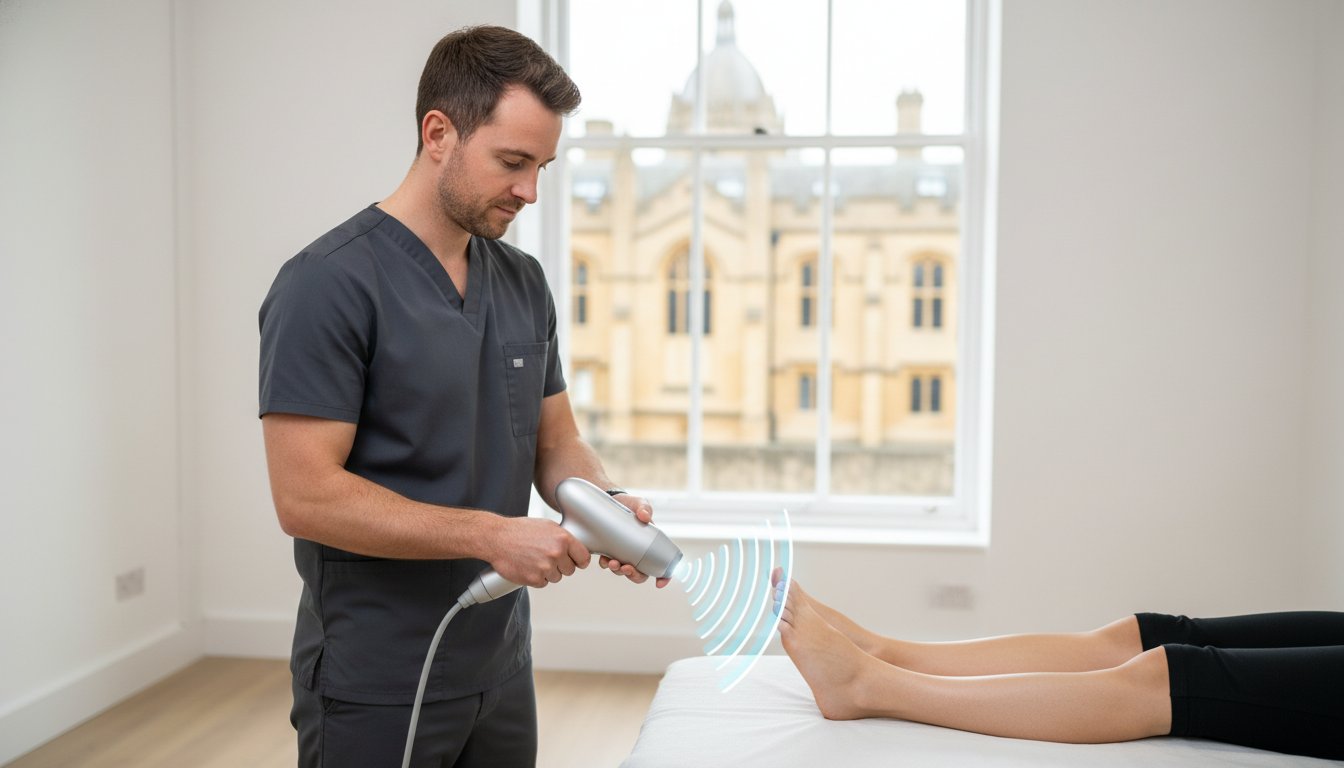
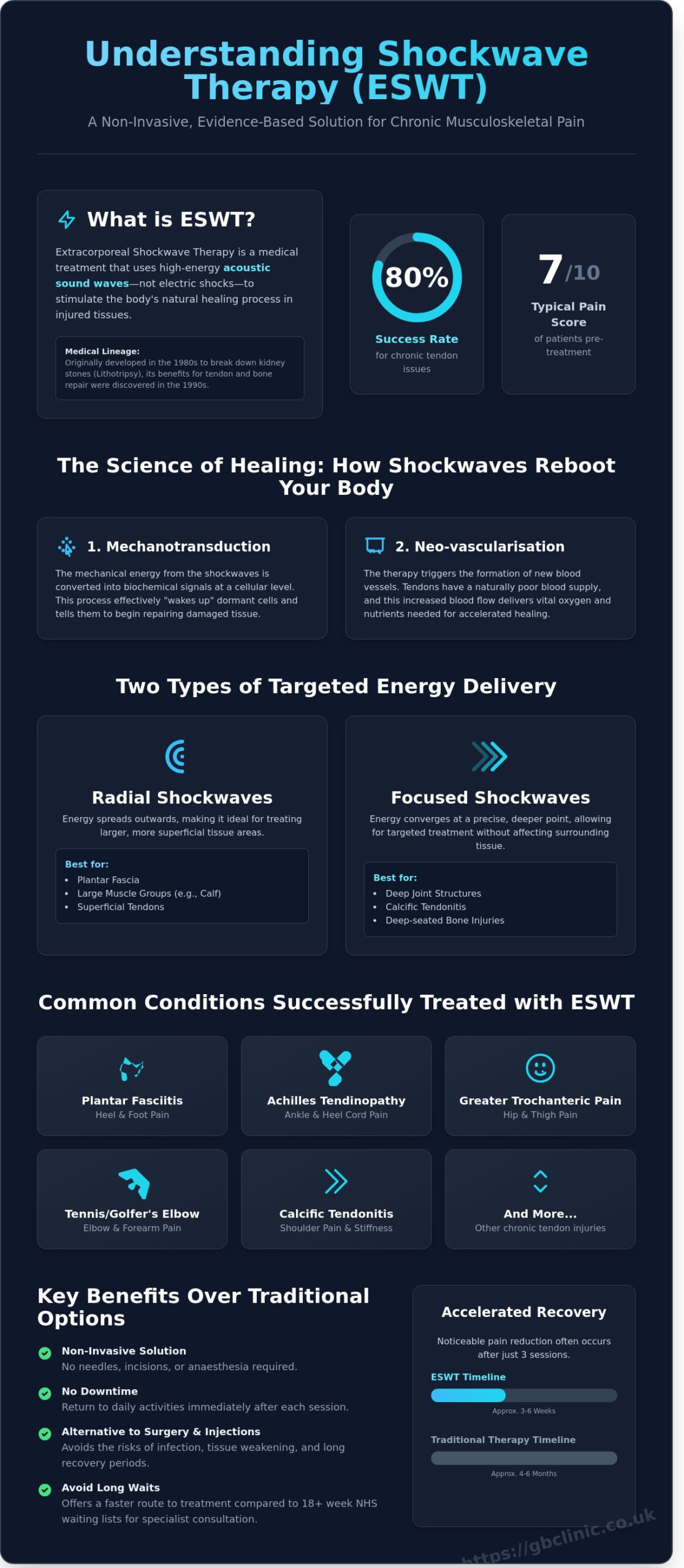
Understanding what is shockwave therapy begins with its formal medical name: Extracorporeal Shockwave Therapy (ESWT). At its core, this is a non-invasive medical treatment that delivers high-energy acoustic pulses directly into injured soft tissues. These pulses are mechanical in nature, not electrical. Many patients feel anxious when they hear the word “shock,” but it’s vital to clarify that this treatment doesn’t involve electricity. Instead, the device generates physical sound waves, similar to the sonic boom created by an aircraft, which travel through the skin to initiate a healing response in the underlying structures.
The technology has a robust medical lineage. It was first developed in the 1980s as a method for breaking down kidney stones without surgery, a process known as lithotripsy. By the early 1990s, clinicians observed that these same waves could stimulate bone growth and repair chronic tendon injuries. Today, it’s a cornerstone of modern musculoskeletal medicine. We primarily use it as a targeted “second-line” treatment. If you’ve spent 12 weeks on a standard physiotherapy programme without seeing the results you expected, ESWT provides the necessary stimulus to restart the body’s natural recovery process.
Interestingly, the applications of this healing technology are expanding across different fields of medicine. The same core principles of stimulating tissue repair are used in advanced veterinary care for pets and even in aesthetic treatments. For example, doctor-led clinics such as Terra Medical apply regenerative principles to address complex hair and scalp conditions, showcasing just how versatile this focus on the body’s natural healing can be.
Clinical data supports its efficacy for chronic conditions. Studies indicate a 70% to 80% success rate for patients suffering from persistent issues like plantar fasciitis or calcific tendonitis. It’s particularly effective for those who want to avoid invasive procedures. Because it’s a non-surgical intervention, there’s no downtime required after a session. You can walk out of the clinic and continue with your daily activities immediately.
The Difference Between Radial and Focused Shockwaves
There are two primary ways we deliver this energy depending on the depth and nature of your injury. Radial shockwaves are characterised by an aspherical spread of energy that dissipates as it moves deeper into the body. This makes them ideal for treating larger, more superficial areas such as the calf muscles or the plantar fascia on the sole of the foot. In contrast, focused shockwaves are precision-engineered to converge at a specific point deep within the body. This allows us to target joint structures or deep-seated bone injuries with high intensity without affecting the surrounding healthy tissue.
Why ESWT is Gaining Popularity in Private MSK Clinics
Patients are increasingly seeking out ESWT because it offers a significantly faster route to recovery than traditional methods alone. While standard exercise therapy is essential, it can often take 4 to 6 months to see meaningful changes in chronic tendon pain. ESWT can accelerate this timeline, often providing noticeable pain reduction after just 3 sessions. It also offers a viable alternative to surgery or steroid injections, which carry risks of infection or tissue weakening. Many of our patients choose this path to avoid NHS waiting lists for orthopaedic consultations, which currently exceed 18 weeks in many regions.
Our Oxford centre provides a streamlined “one-stop” diagnostic approach that’s easily accessible from Abingdon, Summertown, and Kennington. We combine clinical expertise with advanced technology to ensure you receive an accurate diagnosis and treatment plan in a single visit. This efficiency is why residents from Marcham, Headington, and Witney travel to our clinic. By integrating diagnostic ultrasound with shockwave therapy, we provide a clear path to recovery for those in Faringdon and Eynsham who are tired of managing pain with temporary fixes. When people ask what is shockwave therapy at GB Clinics, they find it’s a precise, evidence-based solution for long-term relief.
The Science of Healing: How Shockwaves Stimulate Tissue Repair
Understanding what is shockwave therapy requires a look at the cellular level. At its core, the treatment relies on mechanotransduction. This biological process occurs when the body converts mechanical energy from acoustic pulses into biochemical signals. These signals tell your cells to stop resting and start repairing. It’s a sophisticated way of “talking” to your tissues to jumpstart a stalled healing process.
When patients ask what is shockwave therapy and why it’s effective for chronic pain, the answer often lies in neo-vascularisation. The high-energy pulses create microscopic “insults” to the treated area. This isn’t damage in the traditional sense; instead, it’s a controlled stimulus that triggers the growth of new blood vessels. Better blood flow means more oxygen and nutrients reach the site of injury, which is essential for repairing tendons that naturally have a poor blood supply.
Many chronic injuries, such as Achilles tendinopathy or tennis elbow, get stuck in a non-healing state. The body essentially gives up on trying to fix the problem. Shockwave therapy provides a “re-boot” effect. It converts a stagnant, chronic condition back into an acute healing state. This forces the immune system to pay attention to the area again, initiating a fresh inflammatory response that actually leads to resolution rather than just persistent discomfort.
To understand how shockwave therapy works, you must also consider its impact on pain neurotransmitters. The treatment significantly reduces the concentration of “Substance P.” This is a neuropeptide that acts as a pain messenger to the central nervous system. By lowering these levels, patients often experience an immediate reduction in pain after their session. Over the long term, this depletion helps desensitise the area, allowing for more intensive physiotherapy and a faster return to daily activities.
Breaking Down Calcifications and Scar Tissue
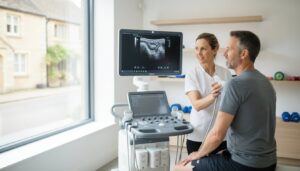
Acoustic pulses are particularly effective at disrupting calcified deposits in tendons. These deposits are often hard and brittle; the physical energy of the shockwave creates a “cavitation” effect that breaks them into smaller fragments. Once these deposits are disrupted, your body’s mast cells go to work. These cells act as a biological cleaning crew, absorbing and removing the debris left behind. At GB Clinic, we use diagnostic ultrasound scans to identify the exact location and size of these deposits before beginning treatment. This ensures the energy is delivered with millimetre precision.
Stimulating Collagen Production for Structural Integrity
Collagen acts as the primary scaffolding for your tendons and ligaments. When an injury occurs, this scaffolding becomes tangled or weak. Extracorporeal Shockwave Therapy (ESWT) triggers fibroblasts, the specific cells responsible for creating new collagen fibres. This isn’t an overnight fix. While the pain relief can be swift, the biological repair of the tissue structure continues for 8 to 12 weeks after your final session. This timeline is why we focus on long-term recovery rather than just temporary masking of symptoms.
Our clinic is easily accessible from Abingdon, Summertown, Kennington, and Marcham. We also regularly treat patients from Headington, Witney, Faringdon, and Eynsham, providing a central Oxford hub for advanced musculoskeletal care. If you’re struggling with a stubborn injury that hasn’t responded to traditional rest, you can book a physiotherapy consultation to see if this technology is right for your recovery.
What to Expect During Your Shockwave Therapy Appointment
Your appointment at GB Clinics follows a precise, evidence-based protocol designed to ensure safety and clinical efficacy. Our practitioners provide a structured environment for patients visiting from Abingdon, Summertown, and Kennington, ensuring every session is focused on measurable recovery outcomes. To understand what is shockwave therapy in a practical sense, it helps to view the appointment as a focused, four-step medical procedure.
- Step 1: Clinical Assessment and Palpation. The clinician begins by physically examining the area of discomfort. Through precise palpation, they identify the exact trigger point or the most sensitive part of the tendon. This ensures the energy is directed exactly where it’s needed for maximum benefit.
- Step 2: Application of Coupling Gel. A clear ultrasound gel is applied to the skin over the target area. This is a critical step; the gel acts as a medium that allows the acoustic waves to travel into your tissues without being reflected by the air. Without this, the energy transfer would be inefficient.
- Step 3: The Delivery of Pulses. The clinician places the handheld probe against your skin. You’ll hear a distinctive rhythmic “tapping” or “clicking” sound as the device generates acoustic energy. The Science of Healing: How Shockwaves Stimulate Tissue Repair demonstrates that these pulses create micro-trauma that restarts the body’s natural healing response.
- Step 4: Post-Treatment Guidance. Once the 5 to 10-minute application is finished, the gel is wiped away. Your clinician will provide specific advice on activity modification. You’ll be advised to avoid high-impact exercise or heavy loading of the treated area for at least 48 hours to allow the cellular response to stabilise.
Our clinics are conveniently located for those looking for expert care that’s easily accessible from Marcham, Headington, and Witney. We maintain a calm, professional atmosphere to ensure you feel confident throughout your recovery journey.
Does Shockwave Therapy Hurt?
It’s natural to feel apprehensive about a treatment involving “shocks,” but the experience is generally described as uncomfortable rather than painful. We use a “calm and clinical” approach, starting with low energy levels and gradually increasing the intensity as you habituate. Most patients describe the sensation as a deep, rhythmic throb. A significant benefit is the natural numbing effect that typically occurs within the first 120 seconds of the session. If the sensation feels too intense, the clinician can adjust the settings instantly to keep the treatment “uncomfortable but tolerable.”
The Recommended Treatment Programme
While some patients notice a reduction in pain after one visit, a single session isn’t enough to achieve long-term tissue remodelling. A standard clinical programme usually consists of 3 to 6 sessions. These are spaced 7 to 10 days apart to give your body sufficient time to respond to the mechanical stimulus. At GB Clinics, we don’t view this as a standalone “quick fix.” To ensure the best results for patients in Faringdon, Eynsham, and central Oxford, targeted physiotherapy exercises are often integrated into your plan. This combined approach addresses the underlying cause of your injury while the shockwave therapy manages the immediate symptoms.
Conditions Treated: From Plantar Fasciitis to Tennis Elbow
Extracorporeal Shockwave Therapy (ESWT) serves as a primary intervention for chronic musculoskeletal conditions that haven’t responded to traditional physiotherapy or rest. When patients ask what is shockwave therapy, they’re typically looking for a solution to persistent pain in the tendons or fascia. At GB Clinics, we use this technology to treat Achilles tendinopathy, Patellar tendonitis, and calcific shoulder pain. These conditions often involve a failed healing response where the tissue remains stuck in a cycle of inflammation and degeneration. ESWT restarts the body’s natural repair mechanisms by creating micro-trauma in the affected area, which stimulates blood flow and collagen production.
Greater Trochanteric Pain Syndrome (GTPS) is another area where shockwave therapy excels. This condition causes significant lateral hip pain and affects approximately 15% of women over the age of 50. It severely limits hip mobility and makes side-sleeping nearly impossible. Clinical data suggests that ESWT provides a 74% success rate in reducing pain for GTPS patients compared to 34% for those receiving steroid injections alone. For residents in the wider Oxfordshire area, this treatment offers a reliable path back to pain-free movement without the risks associated with invasive surgery.
Plantar Fasciitis remains one of the most “stubborn” conditions we treat. It often persists for 12 months or longer despite stretching and orthotics. We recommend ESWT for cases that have lasted more than six months because it directly addresses the thickening of the fascia. Clinical trials show that 80% of patients experience a significant reduction in heel pain after just three to five sessions. It’s a targeted approach that physically breaks down scar tissue and desensitises local pain receptors.
Shockwave for Lower Limb Injuries
Runners from Abingdon and Witney often visit our clinic struggling with shin splints or chronic heel pain that disrupts their training cycles. If you’re preparing for the Oxford Half Marathon, a sudden onset of Achilles issues can be devastating. We provide shockwave therapy to help local athletes return to their training schedules within 14 days of starting treatment. For hikers who spend their weekends in the Cotswolds, ESWT is highly effective at managing the mechanical stress placed on the feet and ankles. Our clinic is easily accessible from Kennington and Marcham, ensuring that patients can receive specialist care without a long commute. We focus on restoring full function so you can tackle the trails again without discomfort.
Upper Limb and Occupational Overuse
Upper limb pain isn’t reserved for athletes; it’s a common complaint for residents in Summertown and Headington who work in high-pressure office environments. Professionals in central Oxford often suffer from “mouse elbow,” a form of lateral epicondylitis caused by repetitive clicking and typing. This occupational overuse leads to micro-tears in the forearm tendons. Similarly, golfer’s elbow affects those frequenting local courses who experience pain on the inner side of the joint. We also treat calcific tendonitis in the shoulder, a condition where calcium deposits form within the rotator cuff. These deposits cause sharp, stabbing pain that disrupts sleep and makes simple tasks like dressing difficult. Shockwave therapy works to fragment these deposits, allowing the body to reabsorb them naturally. This process helps restore shoulder function and comfort for those living in Faringdon or Eynsham.
If you’re struggling with a persistent injury that isn’t improving, our specialist team can help you determine if ESWT is the right path forward. Book a consultation at GB Clinics to start your recovery today.
Why Choose GB Clinic for Shockwave Therapy in Oxfordshire?
GB Clinic serves as a primary hub for musculoskeletal recovery in the heart of Oxfordshire. Our facility is strategically positioned for patients seeking relief from chronic pain, making us easily accessible from Kennington, Marcham, and Faringdon. We understand that travelling for multiple appointments is a significant burden when you’re in pain; therefore, we’ve designed a “one-stop” clinical pathway. Patients often receive their diagnostic ultrasound scan and their first treatment session within a single 45-minute visit. This efficiency reduces wait times by up to 14 days compared to traditional referral routes.
When people ask what is shockwave therapy, they’re usually looking for a clinical solution to persistent tendon or joint issues that haven’t responded to rest or basic exercises. At GB Clinic, we provide the answer through Extracorporeal Shockwave Therapy (ESWT). This non-invasive procedure uses high-energy acoustic pulses to stimulate blood flow and cellular repair in damaged tissues. It’s a gold-standard treatment for conditions like plantar fasciitis and Achilles tendinopathy, boasting success rates of over 80% in clinical settings.
For complex joint cases, such as advanced knee osteoarthritis or multi-layered shoulder injuries, we often combine ESWT with Hyaluronic Acid injections. This dual-action approach targets both the external mechanical tendon issues and the internal joint lubrication. Clinical evidence suggests that combining these therapies can extend pain relief for up to 9 months, providing a more robust recovery than single-modality treatments. Our clinicians carefully monitor your progress to ensure the treatment plan evolves with your recovery.
Expert Clinicians and Advanced Technology
Our team uses state-of-the-art ESWT devices that allow for precise energy delivery tailored to your specific pain threshold. We maintain a professional, clinical environment where expert competence is the priority. Every practitioner at our Oxford site is a specialist in musculoskeletal health, ensuring your diagnosis is accurate before treatment begins. If your condition requires more immediate anti-inflammatory intervention, our clinicians are also specialists in providing guided steroid injection options. This ensures you have access to a full spectrum of orthopaedic care under one roof, managed by experts who understand the nuances of what is shockwave therapy and how it integrates with other medical interventions.
Easy Access and Local Convenience
Reaching our clinic is straightforward for those living in the surrounding Oxfordshire villages and towns. Patients driving from Eynsham or Witney can typically reach us in under 25 minutes; those in Abingdon, Summertown, or Headington find our central Oxford location equally convenient with ample local parking. We remove the initial barrier to recovery by offering a “zero commitment” initial assessment. This risk-free starting point allows you to understand the cause of your discomfort without any financial pressure or obligation to continue. Our commitment to evidence-based practice means we focus on measurable results and long-term mobility. Whether you’re an athlete from Faringdon or a retiree in Kennington, our goal is a return to pain-free living through modern, effective therapies.
Take the first step toward a life without chronic pain. Book your free personal physiotherapy consultation today to discuss your symptoms with our expert team.
Restore Your Mobility with Advanced Shockwave Therapy
Understanding what is shockwave therapy is the first step toward resolving persistent musculoskeletal pain. This non-invasive treatment triggers natural healing for conditions like plantar fasciitis and Achilles tendinopathy by using acoustic pulses to stimulate tissue repair. At GB Clinic, we combine state-of-the-art ESWT with diagnostic ultrasound to ensure your treatment is precise. Our modern one-stop setup in Oxford eliminates the need for multiple appointments, providing a streamlined path to recovery. We’ve designed our clinical environment to be a calm space where expert clinicians focus on your long-term health. Many of our treatments are proven to ease pain for up to 6 months.
Our facility is easily accessible from Abingdon, Summertown, Kennington, and Marcham. We also regularly welcome patients from Headington, Witney, Faringdon, and Eynsham who are seeking specialist care. You don’t have to manage chronic discomfort alone. Our team provides the professional guidance you need to return to your daily activities without restriction. We’re ready to help you achieve a pain-free lifestyle.
Book your FREE personal physiotherapy consultation in Oxford today
Frequently Asked Questions
Is shockwave therapy available on the NHS in Oxfordshire?
Shockwave therapy availability on the NHS in Oxfordshire is limited and typically requires a specialist referral after 12 weeks of failed conservative management. Most patients in areas like Abingdon and Witney find that waiting lists for Extracorporeal Shockwave Therapy (ESWT) often exceed 18 weeks. GB Clinics provides immediate access for those seeking faster recovery, serving patients from Marcham and Faringdon who require prompt clinical intervention without the NHS delays.
How many sessions of shockwave therapy will I need for plantar fasciitis?
Clinical evidence suggests that 3 to 6 sessions are required to effectively treat plantar fasciitis. These sessions are usually spaced 7 to 10 days apart to allow the tissue to regenerate. Statistics show that 80% of patients experience a significant reduction in heel pain after completing a 3-session course. Our practitioners monitor your progress at each stage to ensure the treatment plan effectively restores your mobility and comfort.
Can I drive home after a shockwave therapy session at your Oxford clinic?
You can safely drive home immediately after your session at our Oxford clinic. The treatment is non-invasive and doesn’t require local anaesthesia or sedation. Patients travelling from Summertown or Kennington find this “one-stop” setup efficient as there’s no downtime involved. You might feel a dull ache or tingling sensation in the treated area, but this won’t impair your ability to operate a vehicle or return to work.
Are there any side effects or risks associated with ESWT?
Side effects of ESWT are generally mild and resolve within 48 hours. You might notice skin redness, minor bruising, or temporary swelling in the treated area. Serious complications are extremely rare, occurring in less than 1% of clinical cases. This high safety profile is why many patients ask what is shockwave therapy when they’re looking for non-surgical alternatives to manage chronic musculoskeletal pain and avoid invasive procedures.
What happens if shockwave therapy doesn’t work for my pain?
If your pain persists after 6 sessions, we perform a comprehensive clinical re-evaluation of your condition. This often involves a diagnostic ultrasound scan to check for underlying issues like partial tendon tears or calcifications. At GB Clinics, we then discuss alternative pathways such as ultrasound-guided injections or advanced physiotherapy programmes. Our goal is to ensure you reach a full recovery, even if the initial treatment requires adjustment.
Is shockwave therapy suitable for everyone, or are there contraindications?
Shockwave therapy is suitable for most adults but is contraindicated for pregnant women or those with pacemakers. People taking anticoagulant medication like Warfarin or those with active local infections must also avoid the treatment. During your initial consultation at our clinic, we screen for these 5 specific risk factors to ensure your safety. This professional assessment ensures that every patient from Eynsham or Headington receives the most appropriate care.
How much does private shockwave therapy cost in the UK?
Private shockwave therapy in the UK typically costs between £60 and £120 per individual session. At GB Clinics, we offer competitive pricing and package deals that reduce the per-session cost for residents in areas like Headington and Eynsham. This investment provides a cost-effective alternative to long-term medication or invasive surgical procedures. Many patients find that the 80% success rate justifies the cost by providing long-term relief from chronic pain.
Can I combine shockwave therapy with other treatments like steroid injections?
You shouldn’t combine shockwave therapy with a steroid injection in the same anatomical area simultaneously. We recommend waiting at least 4 to 6 weeks after a steroid injection before starting your sessions. This delay is necessary because steroids can inhibit the healing response that defines what is shockwave therapy and its biological mechanism for tissue repair. Our experts will coordinate your treatment timeline to ensure maximum efficacy for your recovery.