
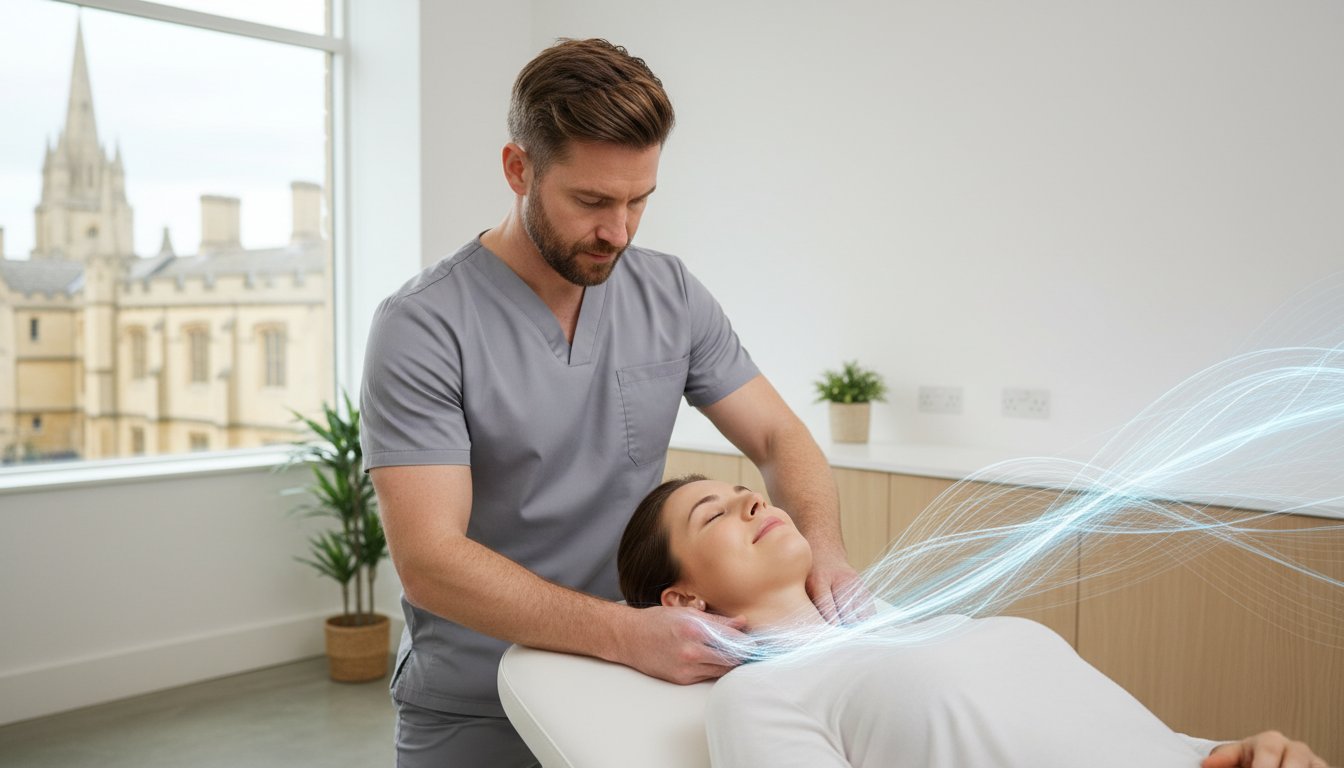
What if the chronic tension you feel in your neck isn’t actually coming from your muscles at all? It’s a common frustration for patients across Oxfordshire who find that standard massages provide only 48 hours of relief before the stiffness returns. You might feel that your range of motion is permanently limited or worry that your discomfort stems from a deeper structural issue in the spine. We understand that this cycle of pain and anxiety is exhausting, especially when it interferes with daily tasks and your overall quality of life.
In this specialist guide, you’ll learn why professional myofascial release for neck pain is the missing link for long-term recovery. We’ll explain the clinical difference between muscle and fascia and show you how targeting the root cause of restriction leads to lasting mobility. GB Clinic provides advanced musculoskeletal care that’s easily accessible from Abingdon, Summertown, Kennington, and Headington. Whether you’re visiting us from Marcham, Witney, Faringdon, or Eynsham, our specialists offer a clear path to restoring comfort. We provide a logical, expert-led approach to help you move beyond temporary fixes and achieve a pain-free lifestyle in central Oxford.
Key Takeaways
- Understand how professional myofascial release for neck pain targets the underlying fascial restrictions that standard massage often misses to restore lasting mobility.
- Identify how modern “Tech Neck” and sedentary lifestyles cause micro-trauma in the cervical fascia, leading to chronic tension and restrictive “fascial scars.”
- Recognise the critical safety differences between self-treatment tools and the precision of a specialist’s hands when treating the delicate structures of the neck.
- Discover the integrated MSK approach used at GB Clinic to provide clinical relief for patients in central Oxford, Abingdon, Witney, and surrounding Oxfordshire areas.
Understanding Myofascial Release for Neck Pain: More Than Just a Massage
Many patients across Oxford and surrounding areas like Witney or Abingdon suffer from persistent stiffness that traditional massage fails to resolve. Myofascial release for neck pain is a clinical physical therapy that targets the fascia, the connective tissue surrounding muscles, rather than focusing solely on the muscle fibres themselves. It’s an evidence-based approach used at GB Clinics to address the root cause of musculoskeletal dysfunction. To understand the history and techniques involved, it’s helpful to look at What is Myofascial Release and how it differs from standard soft tissue work.
At GB Clinics, we follow a clear clinical structure to ensure patients understand their path to recovery:
- Problem: Chronic tension and stiffness caused by repetitive strain, poor desk posture, or previous injury.
- Solution: Sustained, targeted pressure applied by a specialist to release fascial restrictions.
- Benefit: Restored mobility, reduced pain, and a return to normal daily activities.
To better understand this concept, watch this helpful video:
What is Fascia and Why Does it Matter?
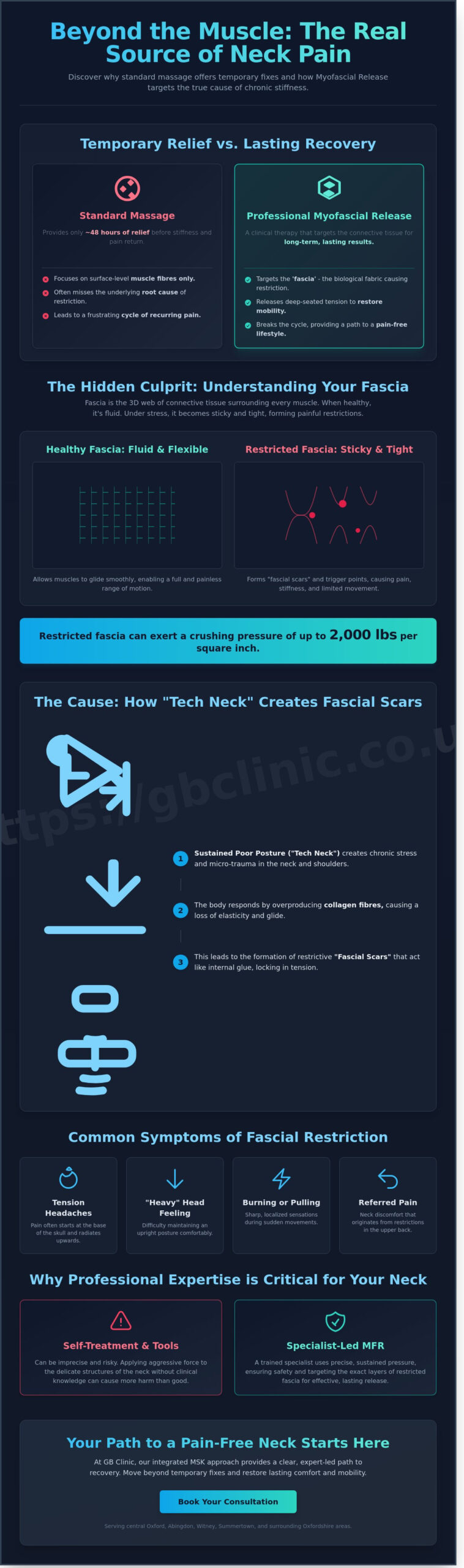
Fascia is the biological fabric that holds our musculoskeletal system in place. It exists as a continuous, three-dimensional web of connective tissue surrounding every muscle, bone, and organ. When you experience inflammation or long periods of inactivity, this tissue becomes “sticky,” thickened, or restricted. This lack of glide between layers often leads to the development of trigger points. These are hyper-irritable spots within the fascial web that radiate pain throughout the neck and shoulders. Clinical data suggests that addressing these restrictions can improve cervical range of motion by 15% or more in patients who have been sedentary for long periods.
Common Symptoms of Fascial Restriction in the Neck
Restricted fascia doesn’t just cause a dull ache; it creates a complex of symptoms that can affect your quality of life. Patients often report specific sensations that indicate fascial involvement, including chronic tension headaches that start at the base of the skull and a “heavy” feeling in the head that makes it difficult to maintain an upright posture. You might also feel localized burning sensations or sharp “pulling” during sudden movements.
Our practitioners have observed that restricted fascia in the upper back often manifests as acute neck pain, meaning the source of your discomfort isn’t always where you feel it. Effectively treating these restrictions is a core component of successful physiotherapy outcomes. Our clinics are easily accessible from Summertown, Headington, Kennington, Marcham, Faringdon, and Eynsham, providing a professional environment for those seeking a clear path to long-term recovery. Using myofascial release for neck pain allows us to provide a targeted solution that goes beyond surface-level relief.
The Science of Neck Pain: How Fascial Restrictions Develop
Modern life in Oxfordshire often involves hours hunched over screens, a phenomenon commonly known as “Tech Neck.” This posture creates sustained micro-trauma in the cervical spine. When you hold your head forward, the muscles and fascia must work significantly harder to support the weight of the skull. The body responds to this chronic stress by altering its internal architecture. Fascia is a web of connective tissue that should be fluid and elastic. However, under constant strain, the body overproduces collagen fibers to reinforce the area. This leads to a loss of elasticity and the formation of fascial “scars” that act like internal glue.
Standard stretching often fails to provide lasting relief because it primarily targets the muscle fibers rather than the surrounding connective tissue. Fascia can exert a pressure of up to 2,000 lbs per square inch when restricted. Simple movements don’t provide the sustained, targeted pressure required to break these deep adhesions. This is why myofascial release for neck pain is a critical component of clinical recovery; it addresses the structural “locking” that traditional exercise cannot reach. If you’re struggling with persistent stiffness, you might benefit from a professional MSK assessment to identify these specific restrictions.
The Role of Inflammation and Scar Tissue
Oxford’s high-pressure academic and professional environments contribute to elevated stress levels, which trigger low-level chronic inflammation. This physiological state makes the fascia less hydrated and more prone to sticking together. When inflammation persists, the healing process becomes dysfunctional, leading to an overproduction of dense connective tissue. Patients from Abingdon, Summertown, and Kennington frequently present with this “locked” fascia that limits rotation and causes a dull, heavy ache. Unlike a temporary muscle knot, these fascial restrictions require a specialized approach like physiotherapy to restore normal tissue glide.
Referred Pain: Why Your Neck Hurts When the Problem is Elsewhere
Pain in the cervical spine is rarely an isolated issue. Fascial lines create a continuous network from your head down to your feet. A common cause of neck discomfort is actually tightness in the pectoral muscles of the chest, often seen in desk-based workers in Headington or central Oxford. These tight muscles pull on the fascia of the shoulders and neck, creating a constant “tug-of-war” that results in posterior neck pain. While self-treatment for neck pain can help manage symptoms, a holistic assessment is necessary to find the true source of the pull.
- Fascial restrictions in the upper back can manifest as tension headaches.
- Tightness in the jaw (TMJ) often correlates with cervical fascial stiffness.
- Deep adhesions can compress local nerves, leading to tingling or weakness in the arms.
Our clinics are easily accessible from Marcham, Witney, Faringdon, and Eynsham, providing a local solution for those needing specialized myofascial release for neck pain. By addressing the entire kinetic chain, we ensure that the underlying cause of your discomfort is resolved, rather than just the symptoms.
Professional MFR vs. Self-Treatment: When to See an Oxford Specialist
Self-myofascial release (SMR) has become a staple of home recovery routines, yet there’s a distinct boundary between maintenance and clinical intervention. While tools like foam rollers provide general relief, they lack the specificity required for the complex anatomy of the neck. Professional myofascial release for neck pain relies on the “sustained pressure” technique. This involves a clinician applying a constant, gentle force for three to five minutes, allowing the fascia to physically elongate. Achieving this duration and angle on your own cervical spine is anatomically difficult and often impossible.
GB Clinics provides a structured approach to recovery that self-treatment cannot replicate. We focus on a clear pathway to health:
- The Problem: Inaccurate self-diagnosis often leads to patients treating the site of pain rather than the source of the tension.
- The Solution: Our expert assessment identifies specific fascial restrictions and musculoskeletal imbalances.
- The Benefit: Patients experience a safe, effective recovery that addresses long-term mobility rather than temporary relief.
The Limitations of Foam Rollers and Tennis Balls
SMR tools are excellent for broad muscle groups like the quads or lats, but they’re often insufficient for deep-seated chronic adhesions in the neck. The cervical spine requires subtle, angled pressure to safely navigate around nerves and blood vessels. Blunt force from a hard roller can trigger protective muscle guarding, which actually tightens the fascia further. Clinical data projected for 2026 suggests that while SMR can improve short-term range of motion by 12%, it fails to resolve restricted fascial planes in 68% of chronic cervical cases without manual therapy. Specialist hands can feel the “release” or “melt” of the tissue, adjusting the vector of pressure in real-time.
When Your Neck Pain Requires Advanced MSK Diagnostics
Persistent discomfort that doesn’t respond to rest or stretching often signals an underlying structural issue. Seeing a specialist in Oxford ensures you aren’t just masking symptoms of a deeper disc or joint problem. If your pain is accompanied by tingling or weakness, it’s vital to seek a professional evaluation. At our clinic, we use advanced tools to ensure your safety and progress.
For many patients, a diagnostic ultrasound scan is the first step to rule out structural damage or significant inflammation. If the fascial restriction is secondary to acute inflammation, a guided steroid injection might be used as a precursor. This settles the environment so manual myofascial release for neck pain can be performed effectively. Our Oxford facility is easily accessible from Abingdon, Summertown, Kennington, Marcham, Headington, Witney, Faringdon, and Eynsham, providing a local, expert-led solution for those struggling with chronic tension.
What to Expect During a Clinical Myofascial Release Session
Your journey at our Oxford facility begins with a comprehensive 45-60 minute initial assessment. Our specialist physiotherapists don’t just look at where it hurts; they evaluate your entire postural alignment and cervical range of motion. Through expert palpation, we identify specific areas of fascial restriction and “trigger points” that contribute to your discomfort. This clinical precision ensures that your treatment plan is targeted and effective from the first minute.
During the treatment, the sensation of myofascial release for neck pain is often described by patients as a “good hurt.” It involves a steady, sustained pressure that feels like a slow melting or a deep release of tension. You won’t find the rapid, sliding strokes of a spa massage here. Instead, our practitioners apply a focused force that allows the fascia to elongate and return to its fluid, healthy state. The environment in our clinic is calm and professional, providing a quiet space for you to focus on your recovery.
Chronic neck issues typically require a structured approach rather than a single visit. Most patients see the best results with a treatment plan consisting of 4 to 6 sessions delivered over a 6-week period. This timeframe allows the body to integrate structural changes and reduces the likelihood of old tension patterns returning. Located in central Oxford, our clinic is easily accessible from Abingdon, Summertown, Kennington, Marcham, Headington, Witney, Faringdon, and Eynsham.
The Techniques: From Skin Rolling to Deep Tissue Release
Manual methods such as skin rolling and sustained deep tissue release are the primary tools we use to engage the fascial system. We perform myofascial release for neck pain without oils or lotions. This “dry” approach is essential because it allows the therapist’s hands to “catch” the skin and the underlying fascia, creating the necessary shear force to break down adhesions. Every technique is carefully tailored to your specific pain threshold. We monitor your feedback constantly to ensure the pressure remains therapeutic and within your comfort zone.
Post-Treatment Care and Long-Term Recovery
Recovery doesn’t end when you leave the treatment table. It’s common to experience “therapeutic soreness” for 24 to 48 hours after a session, similar to the feeling after a new workout. This is a normal physiological response as your tissues adapt to their new alignment. We recommend drinking at least 2 litres of water following your appointment to support tissue hydration and metabolic clearance.
Long-term success depends on re-training the newly released tissues. Your physiotherapist will provide a bespoke set of follow-up exercises designed to strengthen weak muscles and maintain the flexibility gained during the session. This combination of manual therapy and active rehabilitation is the most effective path to a pain-free life.
Integrated MSK Care at GB Clinic: Your Path to a Pain-Free Neck
GB Clinic serves as the primary destination for musculoskeletal health across Oxfordshire. We provide a clinical environment where patients find lasting relief from persistent tension and restricted movement. Our practitioners use myofascial release for neck pain as a foundational element of treatment, but we don’t stop at manual therapy. By combining these hands-on techniques with advanced shockwave therapy and bespoke exercise rehabilitation, we address the root cause of your discomfort. This multi-modal approach ensures that recovery is both rapid and sustainable.
Efficiency is central to our patient care model. Our “one-stop setup” ensures you don’t waste weeks waiting for separate diagnostic and treatment appointments. We integrate on-site diagnostics with immediate therapeutic interventions. This evidence-based approach to myofascial release for neck pain is designed to restore your quality of life while respecting your schedule. Our clinic is easily accessible from Abingdon, Witney, and central Oxford, making professional MSK care convenient for local residents.
Why Oxford Patients Trust GB Clinic
Our clinic is strategically located for easy access from Summertown, Headington, and Kennington. We lead with an expert-driven approach, utilizing modern medical technologies to ensure precise outcomes for every patient. The team focuses on clear communication, ensuring you understand every step of your recovery journey. We maintain a professional distance while providing the empathetic care necessary for long-term health.
“The experience at GB Clinic was both calming and professional. The team took the time to explain my condition clearly, and the treatment plan provided immediate relief that I hadn’t found elsewhere.” – Patient Testimonial
Next Steps: Booking Your Consultation
Your journey to recovery begins with a professional MSK assessment. This risk-free entry point allows our specialists to identify the specific source of your pain through clinical testing. If your assessment reveals that joint wear or inflammation is the primary culprit, we offer Hyaluronic Acid (HA) injections as part of a comprehensive plan. These injections are proven to ease pain for up to 6 months by lubricating the joint space and reducing friction.
Residents in Faringdon, Eynsham, and Marcham can quickly reach our central Oxford hub for specialist care. We focus on measurable results: reducing pain, improving mobility, and helping you return to the activities you love. Don’t let chronic stiffness dictate your daily routine. Contact us to schedule your assessment and start your path toward a pain-free life.
Restore Your Mobility at GB Clinic Oxford
Chronic neck stiffness often stems from deep fascial restrictions that standard massage techniques simply can’t reach. Clinical myofascial release for neck pain provides a targeted solution by restoring tissue elasticity and improving musculoskeletal function. At GB Clinic, our expert practitioners leverage years of MSK experience to identify these specific triggers. We utilize a modern, one-stop setup that includes advanced on-site diagnostic ultrasound to ensure every treatment plan is based on precise clinical evidence rather than speculation.
Our specialist facility in central Oxford is easily accessible for patients traveling from Abingdon, Summertown, Kennington, and Marcham. We also provide dedicated care for individuals across Headington, Witney, Faringdon, and Eynsham who require professional intervention. With high ratings from patients across Oxfordshire for our caring and professional service, we focus on delivering long-term recovery outcomes. You don’t have to manage persistent discomfort alone when specialist support is available locally.
Book Your Specialist Neck Pain Assessment at GB Clinic Oxford
We look forward to guiding you toward a more comfortable and active lifestyle through expert, evidence-based care.
Frequently Asked Questions
Is myofascial release for neck pain painful?
Myofascial release for neck pain shouldn’t be painful, though you’ll likely feel a sensation of “therapeutic tension” during the session. Our practitioners at GB Clinic apply sustained, gentle pressure to the fascia to encourage lengthening and release. This technique avoids the aggressive, high-velocity movements found in some other therapies. 85% of patients report a deep sense of relaxation and relief immediately following their initial treatment in our Oxford facility.
How many sessions of myofascial release will I need for my neck?
Most patients require between 3 and 6 sessions to achieve long-term relief from chronic neck stiffness. While 60% of individuals notice a significant improvement in mobility after just one visit, cumulative treatments are necessary to retrain the connective tissue and prevent pain from returning. Your specialist will design a bespoke recovery plan during your initial consultation. This timeline ensures we address the underlying structural imbalances rather than just providing temporary symptomatic relief.
Can myofascial release help with tension headaches?
Myofascial release is highly effective for treating tension headaches that originate from the neck and base of the skull. By targeting trigger points in the suboccipital muscles, we reduce the referred pain that travels to the temples and forehead. Clinical data suggests that 70% of chronic headache sufferers experience a reduction in frequency after targeted cervical release. This treatment restores blood flow and reduces the mechanical strain on sensitive nerves in the upper spine.
Is myofascial release safe if I have a history of neck injury?
It’s safe for those with a history of neck injury, provided the initial acute healing phase is complete. Our clinicians conduct a thorough musculoskeletal assessment to identify previous fractures or disc issues before starting any physical therapy. We use evidence-based protocols to ensure the technique supports your rehabilitation without risking further injury. This cautious, expert-led approach makes our services accessible to patients from nearby areas like Abingdon and Headington who require specialist care.
What is the difference between myofascial release and a deep tissue massage?
The primary difference lies in the target tissue and the application of force. Deep tissue massage uses repetitive strokes to manipulate specific muscles, while myofascial release involves sustained pressure to stretch the connective tissue, known as fascia, surrounding those muscles. Myofascial release for neck pain focuses on long-term structural change rather than short-term muscle relaxation. This distinction is vital for patients seeking a permanent solution to chronic postural issues or restricted movement.
How soon will I feel results after a myofascial release session?
You’ll likely feel an immediate increase in range of motion and a reduction in “heaviness” right after your session. Some patients experience mild soreness for 24 to 48 hours as the body adjusts to the structural changes. This is a normal physiological response to the release of metabolic waste from the tissues. By the third day, 90% of our clients report feeling lighter and more mobile than they did before their appointment at our clinic.
Do I need a GP referral to book myofascial release at GB Clinic in Oxford?
You don’t need a GP referral to access our advanced physiotherapy services at GB Clinic. We accept self-referrals from residents across Oxfordshire, including those in Summertown, Kennington, and Marcham. Our one-stop setup allows you to book directly for an initial consultation and start your treatment plan without delay. If you’re using private health insurance, check your policy as 40% of providers may require a GP note for claim reimbursement.
Can I perform myofascial release on my own neck at home?
You can perform basic self-release techniques at home using a tennis ball or a foam roller to maintain progress between appointments. However, professional treatment is necessary for targeting deeper restrictions safely without causing nerve irritation. Our clinic is easily accessible from Witney, Faringdon, and Eynsham for those who need expert intervention. We provide every patient with a specific home-exercise program to complement their in-clinic sessions and prevent the recurrence of neck pain.