
Last Tuesday, a local walker in Summertown had to cut their journey short because a sharp, stabbing sensation made every step a challenge. If you’re experiencing similar discomfort, you aren’t alone; musculoskeletal issues affect 1 in 4 adults in the UK every year. Understanding the pain on top of foot causes and treatment is the first step toward reclaiming your mobility. Whether you’re struggling to navigate the historic streets of Central Oxford or finding it impossible to keep up with your Saturday morning run in Witney, the uncertainty of when to seek professional help can be overwhelming.
We understand that residents across Abingdon, Headington, and Didcot need fast, reliable answers without the wait. At GB Clinics, we provide a clear path to recovery for patients in Kennington, Marcham, and Farmoor, offering a one-stop setup for diagnostic imaging and expert care. This guide outlines how you can access advanced, non-surgical relief that lasts. We’ll cover specific conditions and the modern therapies available in our Eynsham, Faringdon, and West Oxford locations to ensure you get back to your pain-free life quickly.
Key Takeaways
- Identify how everyday factors, such as ill-fitting footwear and the uneven terrain of Central Oxford or the Cotswolds, contribute to localized foot strain.
- Understand the full spectrum of pain on top of foot causes and treatment options, ranging from mechanical injuries to complex neurological issues.
- Learn why professional diagnostics are essential to differentiate between simple tendonitis and stress fractures for a faster, more accurate recovery.
- Discover a tiered approach to healing that moves from conservative physiotherapy to advanced, modern therapies designed to restore long-term mobility.
- Access expert, evidence-based care conveniently located for residents across Oxfordshire, including those in Abingdon, Witney, Summertown, and Eynsham.
Common Causes of Pain on the Top of the Foot: Why Your Foot Hurts
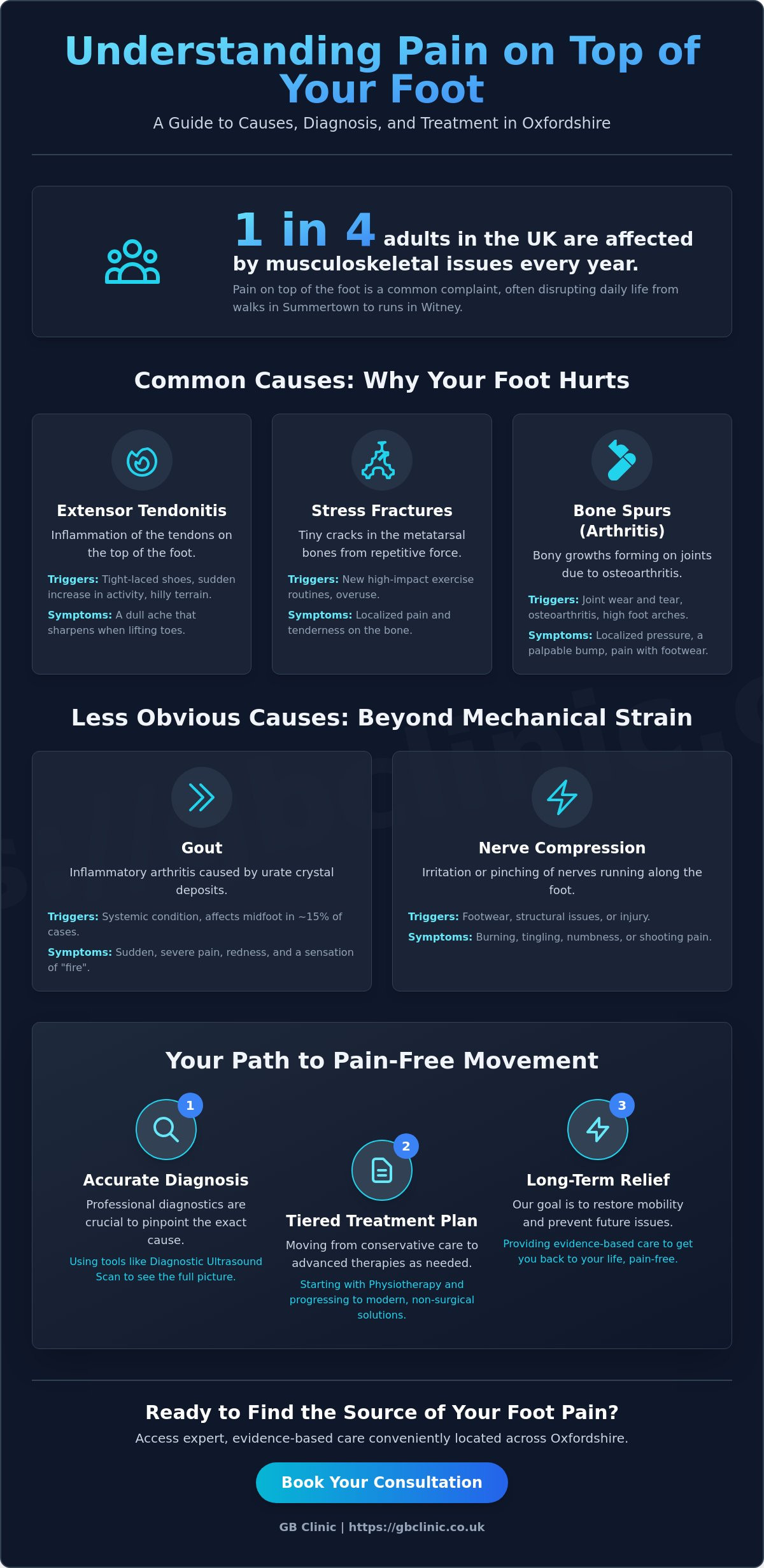
Many residents across Oxfordshire, from Summertown to Kennington, experience discomfort on the dorsal surface of the foot. Understanding pain on top of foot causes and treatment starts with identifying whether the issue is inflammatory or mechanical. Sudden increases in walking distance around the Cotswolds or wearing tight-fitting shoes for work in West Oxford often trigger these symptoms. While some issues resolve with rest, others require professional intervention to prevent long-term mobility issues.
To better understand what might be happening with your foot, watch this helpful video:
The local environment plays a significant role in foot health. The uneven cobblestones in Central Oxford place unique demands on foot mechanics, forcing the midfoot to stabilize constantly. This repetitive micro-trauma can lead to structural strain. Distinguishing between inflammatory pain, which often feels worse after rest, and mechanical pain, which intensifies during activity, is the first step in a clinical assessment. You should seek a physiotherapy consultation if you notice red flags such as inability to bear weight, visible deformity, or localized heat and redness that doesn’t subside within 48 hours.
Overuse Injuries and Extensor Tendonitis
Extensor tendonitis is a frequent diagnosis for active individuals in Headington and Abingdon. This condition involves inflammation of the tendons that pull the foot upward. It’s often caused by shoes that are tied too tightly or a sudden change in running volume on the hilly terrains of Farmoor or Eynsham. Patients typically report a dull ache that becomes sharp when lifting the toes. For those interested in the clinical background, understanding tendinopathy helps explain how these collagen fibres break down under repetitive strain. At GB Clinics, we often use a diagnostic ultrasound scan to visualize the extent of tendon thickening and guide our recovery plans.
Structural Issues: Stress Fractures and Bone Spurs
Structural pain often stems from bone-related issues like metatarsal stress fractures. These are small cracks that develop over time, common in residents from Marcham or Didcot who have recently started high-impact exercise programmes. Bone spurs, or osteophytes, are another common cause. These bony projections often form on the top of the foot joints due to osteoarthritis, creating localized pressure against footwear. Your foot shape also dictates your risk profile. Individuals with high arches often experience more pressure on the midfoot bones, while those with flat feet in Witney or Faringdon may suffer from midfoot collapse. These mechanical imbalances require precise identification to ensure the correct pain on top of foot causes and treatment path is followed for long-term relief.
From Gout to Nerve Compression: Less Obvious Causes of Foot Pain
Residents across West Oxford and Abingdon often find that persistent discomfort isn’t just a result of a physical knock or a sports injury. When exploring pain on top of foot causes and treatment, we must consider systemic triggers and neurological pathways that mimic mechanical injuries. While structural issues are common, many patients from Didcot to Witney experience discomfort rooted in systemic inflammation or nerve irritation. Identifying these less obvious causes is the first step toward a targeted recovery plan.
Gout and Inflammatory Arthritis
Gout is frequently associated with the base of the big toe, but it affects the midfoot joints in approximately 15% of clinical cases. This condition occurs when urate crystals deposit in the joint, leading to sudden, debilitating flare-ups. Patients in Faringdon or Eynsham often describe a sensation of “fire” in the foot. This inflammatory arthritis presents with intense heat, visible redness, and extreme sensitivity; even the weight of a bedsheet can be unbearable. Differentiating between standard osteoarthritis and these inflammatory episodes is vital for effective management. For a detailed breakdown of specific conditions causing top-of-foot pain, clinical data suggests looking for rapid-onset swelling that peaks within 24 hours. Lifestyle factors, such as high-purine diets or dehydration, can influence these flare-ups in patients from Kennington and Marcham.
Nerve Entrapment and Peripheral Neuropathy
Neurological issues often present as “stabbing” or “electric” sensations rather than a dull ache. Sinus Tarsi Syndrome affects the small channel between the heel and ankle bone, leading to localized pressure on the upper foot. We also frequently see Common Peroneal Nerve dysfunction in patients across Central Oxford and Summertown. This is often caused by tight-fitting professional footwear or repetitive crossing of the legs during long office hours. The result is tingling, numbness, or even “foot drop,” where lifting the front of the foot becomes difficult. To accurately identify these nerve pathways, our specialists often use a diagnostic ultrasound scan to visualize soft tissue compression in real-time. This advanced imaging allows us to see exactly where a nerve is being pinched, ensuring the treatment is precise.
Sometimes, the problem isn’t in the foot at all. Referred pain from the lower back or ankle can manifest as a sharp sensation on the dorsal surface of the foot. When nerve irritation is the primary driver, a guided steroid injection can provide relief by reducing inflammation around the nerve sheath, often easing pain for up to 6 months. If you’re struggling to identify the source of your discomfort, you can book a physiotherapy assessment with our Headington or Farmoor teams to receive a clear diagnosis and professional recovery path.
Diagnostics in Oxfordshire: How We Identify the Source of Your Pain
Relying on a “wait and see” approach for persistent foot discomfort often leads to chronic injury cycles. While minor strains might resolve with rest, pain on top of foot causes and treatment are rarely straightforward. A physical examination alone cannot reliably distinguish between extensor tendonitis and a metatarsal stress fracture. Both conditions present with similar swelling and localized tenderness. Without precise data, you risk treating a bone injury as a muscle strain, which can lead to a complete fracture and months of inactivity.
Residents in Witney, Didcot, and Faringdon benefit from our “one-stop” diagnostic setup. This model eliminates the frustration of multiple appointments across different sites. We combine clinical expertise with immediate imaging to provide a clear diagnosis in a single visit. This efficiency is vital for patients traveling from Abingdon, Summertown, or Headington who need answers without the delay of long waiting lists. Precise imaging leads to faster, more effective treatment plans by removing the guesswork from your recovery.
The Power of Diagnostic Ultrasound Scans
Ultrasound is the gold standard for visualizing soft tissue. It provides a non-invasive, real-time look at your foot’s internal structures. Unlike an X-ray, which primarily shows bone, a diagnostic ultrasound scan allows our specialists to see inflammation, fluid buildup, or tears in the tendons as they move. This dynamic assessment ensures we identify the exact source of your discomfort. It’s a safe, painless process that gives you immediate clarity on the health of your ligaments and tendons.
Comprehensive MSK Assessment
A specialist MSK physiotherapy consultation at our Oxford clinic goes beyond the localized pain. We evaluate your gait and biomechanics to understand how your walk affects foot pressure. We discuss your medical history and activity levels in towns like Kennington and Marcham to pinpoint environmental factors. Whether you’re commuting from Central Oxford or West Oxford, or walking the trails in Farmoor and Eynsham, our assessment covers your entire lifestyle. We look for muscular imbalances that contribute to pain on top of foot causes and treatment strategies. This holistic view ensures your recovery plan targets the root cause, not just the symptoms, helping you return to a pain-free life faster.
Treatment Options for Top-of-Foot Pain: From Physio to Advanced Injections
Effective recovery requires a tiered approach tailored to your specific diagnosis. Whether you’re visiting us from Central Oxford or Headington, our clinicians focus on identifying the root cause before implementing a structured treatment plan. For mild cases, conservative management is the first line of defence. This typically involves rest, ice application for 15 minutes every 3 to 4 hours, and footwear modifications to reduce pressure on the dorsal aspect of the foot. When these initial steps don’t provide relief, we move to clinical interventions designed to restore function and bridge the gap between persistent discomfort and full recovery.
Specialist Physiotherapy and Rehabilitation
Our practitioners use manual therapy to restore joint mobility and reduce muscle tension in the midfoot. This is particularly effective for patients in Summertown or Kennington suffering from joint stiffness or restricted movement. We also employ myofascial release techniques to alleviate pressure on the extensor tendons. Exercise rehabilitation remains a core component of our strategy. We focus on strengthening the intrinsic muscles of the foot to provide the long-term support needed to prevent the recurrence of pain on top of foot causes and treatment issues. Patients from Marcham and Didcot often find that targeted loading programmes resolve symptoms within 6 to 8 weeks.
Advanced Therapies: Shockwave and Specialist Injections
For chronic conditions that resist standard care, we offer advanced medical interventions at our Oxfordshire facilities. Extracorporeal shockwave therapy (ESWT) stimulates healing in chronic tendon issues by increasing blood flow and metabolic activity in the affected area. Most patients require 3 to 5 sessions to see a 70% to 80% reduction in pain levels.
- Hyaluronic Acid: If you have arthritic changes in the midfoot, Hyaluronic Acid injections act as a lubricant to improve joint glide and reduce discomfort for up to 6 months.
- Steroid Injections: For acute, severe inflammation, a guided steroid injection can rapidly calm the area, often providing relief within 48 hours.
- Shockwave Therapy: A non-invasive option for persistent tendonitis that hasn’t responded to rest or basic exercises.
These procedures are available to patients across West Oxford, Farmoor, and Eynsham, ensuring high-level care is accessible locally. If you live in Witney or Faringdon, our specialist team provides the diagnostic precision needed to choose the right intervention for your specific foot structure. We aim to move you from acute pain to a maintenance phase where you can return to daily activities without restriction.
Take the first step toward a pain-free life by booking a specialist physiotherapy consultation at one of our Oxfordshire locations today.
Expert Foot Care Across Oxfordshire: Your Path to Pain-Free Movement
Accessing world-class MSK care shouldn’t require a journey to London. GB Clinic brings advanced diagnostics and specialist treatments directly to the heart of the county. Whether you’re dealing with a suspected stress fracture or acute tendonitis, understanding the specific pain on top of foot causes and treatment options is the first step toward recovery. We serve residents across the entire region, from the historic streets of Central Oxford to the growing communities in Didcot and Witney. Our clinicians provide evidence-based care that focuses on long-term outcomes rather than temporary fixes.
Our commitment to Oxfordshire residents is reflected in our clinical excellence and local presence. We’ve established a reassuring, professional environment where your specific recovery goals take priority. Patients from Abingdon, Eynsham, and Farmoor benefit from our expert-led approach, which combines clinical precision with a deep understanding of podiatric health. We don’t just treat symptoms; we identify the underlying biomechanical issues to prevent future recurrence.
Accessible Care for the Oxfordshire Community
We’ve designed our services to be highly accessible for those living in West Oxford, Headington, and Summertown. Our “one-stop” setup is specifically built to minimize travel and eliminate the delays often found in traditional healthcare pathways. This efficiency means you can often receive a diagnosis and discuss a treatment plan within a single visit. For residents in Kennington or Marcham who aren’t sure about their next step, we offer a free personal physiotherapy consultation with zero commitment. This session allows you to discuss your symptoms with an expert and gain clarity on the best path forward.
Booking Your Consultation at GB Clinic
Securing an appointment at our professional Oxfordshire facility is a simple, direct process. Patients from Faringdon and surrounding areas can book online or via telephone to find a time that fits their busy schedule. To ensure a thorough assessment during your first session, please bring the footwear you use most frequently and a list of any current medications. If you’ve previously undergone a diagnostic ultrasound scan or other imaging, bringing those reports will help our team build a complete clinical picture.
Our primary goal is to restore your mobility and help you return to a pain-free life. We take pride in being a trusted partner for the Oxfordshire community, ensuring every patient receives a clear, professional path to recovery. By focusing on the specific pain on top of foot causes and treatment strategies tailored to your needs, we help you get back to the activities you love without delay.
Restore Your Mobility with Specialist Foot Care in Oxfordshire
Identifying the specific pain on top of foot causes and treatment options is the first step toward lasting relief. Whether your symptoms point to tendon inflammation or complex nerve compression, accurate diagnosis is vital. At GB Clinics, we use advanced diagnostic ultrasound on-site to pinpoint the source of your discomfort during your initial visit. This ensures you receive a targeted recovery plan without the typical delays associated with external hospital referrals.
Our expert MSK clinicians provide modern therapies for residents throughout the region. We’ve established convenient clinics to serve patients in Abingdon, Summertown, Kennington, Marcham, and Headington. We’re also the local choice for those living in Farmoor, Eynsham, Didcot, Witney, Faringdon, and across Central and West Oxford. With years of specialist experience, our team focuses on evidence-based outcomes to help you return to pain-free movement quickly.
Book your specialist foot assessment in Oxfordshire today and start your journey toward long-term recovery. It’s time to stop managing the symptoms and start treating the underlying cause.
Frequently Asked Questions
What does tendonitis feel like on the top of the foot?
Extensor tendonitis typically feels like a dull, aching sensation that sharpens when you pull your toes upward or walk on uneven ground. You might notice visible swelling or a “crunching” sensation, known as crepitus, when moving the affected tendons. Our specialists in Summertown and Central Oxford frequently treat this condition using ultrasound-guided injections to reduce inflammation. This targeted approach ensures a faster return to daily activities for our Oxfordshire patients.
Can tight shoes cause permanent damage to the top of my foot?
Chronic pressure from tight footwear can lead to nerve compression or the development of bone spurs, which may require surgical intervention if left unaddressed. Approximately 15% of foot ailments we see are linked to repetitive mechanical stress from ill-fitting shoes. Patients in Witney and Headington often find relief through conservative management and gait analysis. We focus on restoring foot function before structural changes become irreversible.
How do I know if the pain on top of my foot is a stress fracture?
A stress fracture usually manifests as sharp, localized pain that intensifies during exercise and subsides significantly with rest. Identifying pain on top of foot causes and treatment options early is vital, as 20% of these injuries occur in the metatarsal bones. We provide diagnostic scans at our Abingdon and Didcot clinics to confirm the diagnosis. Once confirmed, we implement a structured recovery plan to prevent further bone damage.
Is it safe to walk with pain on the top of my foot?
Walking through sharp or worsening pain isn’t recommended as it can turn a minor strain into a more serious tendon tear or fracture. If your discomfort changes your natural walking style, you risk developing secondary issues in your knees or hips. Our clinical teams in Kennington and Farmoor help patients identify the source of their discomfort. We provide evidence-based advice to ensure you don’t exacerbate the injury while staying active.
How can I stop the stabbing pain on the top of my foot?
Immediate relief for stabbing pain involves following the RICE protocol and switching to shoes with more volume, followed by a professional assessment if symptoms persist beyond 72 hours. Stabbing sensations often indicate nerve entrapment or acute inflammation. We offer advanced therapies like Shockwave Therapy at our Faringdon and Marcham locations. These modern treatments are proven to reduce pain and accelerate the body’s natural healing response.
Can plantar fasciitis cause pain on the top of the foot?
Plantar fasciitis primarily affects the heel, but it can cause secondary pain on top of foot causes and treatment needs due to altered gait patterns. When you change how you walk to avoid heel pain, you put extra strain on the dorsal tendons. Our practitioners in West Oxford and Eynsham specialize in holistic foot assessments. We look at the entire foot structure to ensure we’re treating the root cause rather than just the symptoms.
What are the best exercises for top-of-foot pain relief?
Targeted stretching of the calf muscles and gentle toe-extension exercises help reduce the tension placed on the extensor tendons. Strengthening the intrinsic muscles of the foot also improves overall stability and reduces the risk of future injury. We provide tailored exercise programs for residents across Oxfordshire to support long-term recovery. These routines are designed to be simple yet effective, focusing on improving mobility and comfort during movement.
When should I see a specialist in Oxford for my foot pain?
You should book a consultation if your foot pain lasts longer than 14 days or if you experience numbness and tingling. Early intervention prevents chronic conditions and reduces the total recovery time. GB Clinics offers a one-stop setup for patients in Central Oxford and surrounding areas like Abingdon. We provide a free personal physiotherapy consultation with zero commitment to help you start your journey toward a pain-free life.