
Did you know that an estimated 15% to 30% of patients with chronic lower back pain are actually suffering from sacroiliac joint dysfunction? If you find it debilitating to walk or stand for long periods, it’s easy to feel overwhelmed by conflicting diagnoses and the fear that surgery is your only option. We understand the physical and mental toll this uncertainty takes on your daily life. Our clinics provide specialist physiotherapy for sacroiliac joint pain, offering a clear and evidence-based path to recovery for residents across Oxfordshire.
By focusing on a stability first mechanical approach, we help you achieve an accurate diagnosis and lasting relief without invasive procedures. Whether you’re seeking care near Central Oxford, West Oxford, Summertown, or Headington, our expert-led treatments are designed to reduce inflammation and restore your natural movement. We ensure our services are easily accessible for those living in Abingdon, Kennington, Marcham, and Farmoor. Patients traveling from Eynsham, Didcot, Witney, and Faringdon also find our locations a convenient choice for professional musculoskeletal support. This guide explores how a personalized recovery plan can resolve your symptoms and prevent future recurrence.
Key Takeaways
- Learn why sacroiliac joint pain is frequently mistaken for lumbar disc issues and how clinical provocation tests provide the diagnostic clarity you need.
- Discover how specialist physiotherapy for sacroiliac joint pain uses targeted manual therapy to resolve mechanical blocks and restore normal joint gliding.
- Understand the “Stability First” framework that combines precision diagnostics with a personalized recovery plan to ensure long-term mobility and prevent recurrence.
- Find expert musculoskeletal care at clinics across Oxfordshire, offering convenient access for residents in Abingdon, Summertown, Headington, and Didcot.
- Explore advanced non-surgical options for chronic cases, including shockwave therapy and ultrasound-guided injections, to accelerate your return to an active lifestyle.
What is Sacroiliac Joint Pain and Why is it Often Misdiagnosed?
The sacroiliac (SI) joint serves as the critical bridge between your spine and your pelvis. It’s a stable, low-motion joint designed to act as a primary shock absorber for the upper body. When this mechanical link fails to distribute weight effectively, the result is often debilitating discomfort. For many residents seeking physiotherapy for sacroiliac joint pain in Central Oxford or Headington, the journey often begins with frustration due to a lack of clear clinical answers.
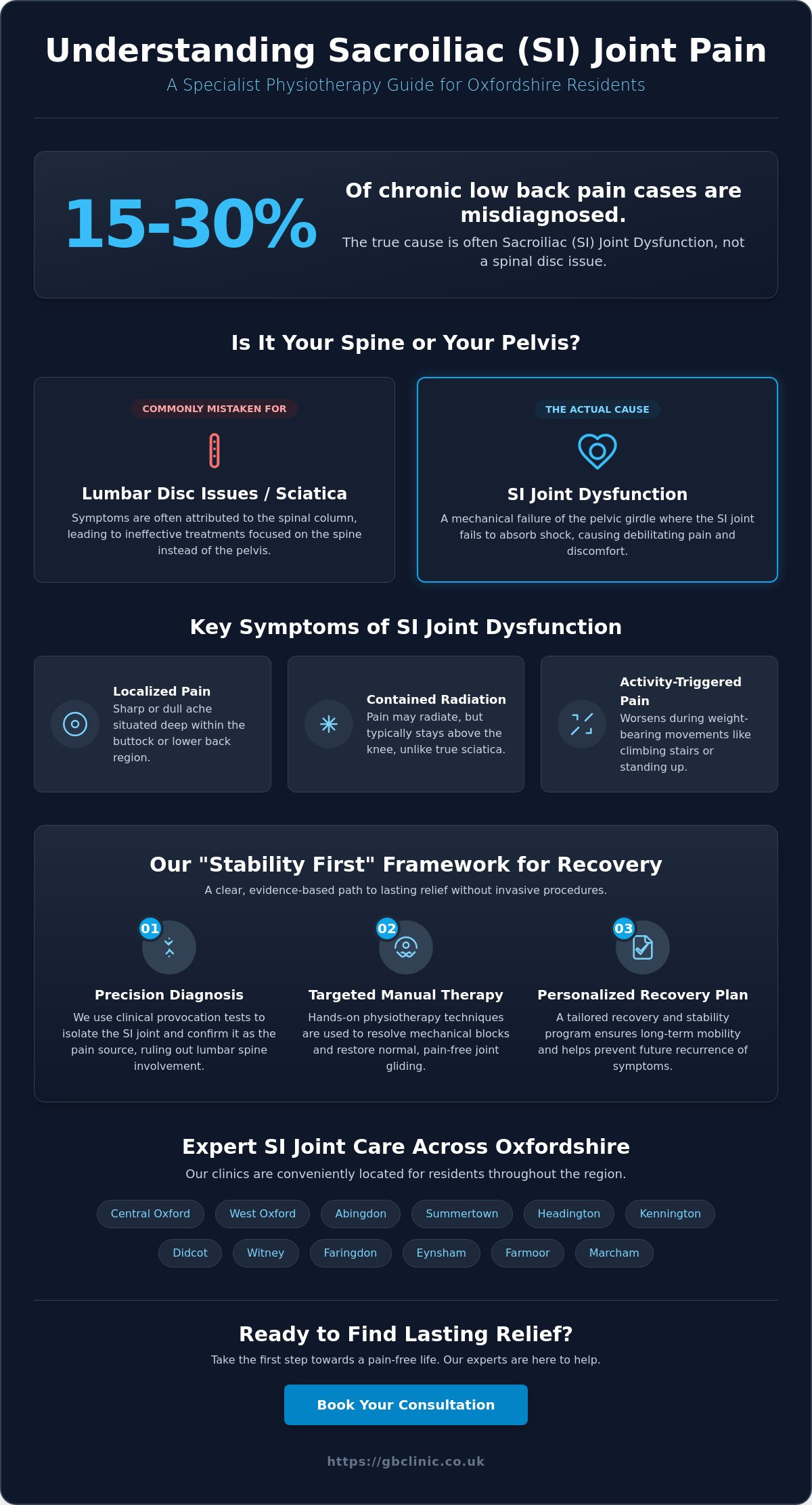
Sacroiliac joint dysfunction is frequently misdiagnosed because its symptoms closely mimic other conditions. Research indicates that the SI joint is the actual source of pain in 15% to 30% of chronic low back pain cases. Patients from Abingdon to Summertown often arrive at our clinics fearing they have a lumbar disc herniation or true sciatica. However, while a disc issue involves the spinal column, SI joint dysfunction is a mechanical failure of the pelvic girdle itself.
To better understand this concept, watch this helpful video:
The problem with a misdiagnosis is that it leads to ineffective treatments focused on the spine rather than the pelvis. Our solution involves a precise musculoskeletal assessment to isolate the joint and confirm the mechanical block. The benefit of this early intervention is a faster return to mobility and the avoidance of unnecessary, invasive spinal procedures. We provide this specialist care across Oxfordshire, making it easy for those in Kennington, Marcham, or Farmoor to access expert relief.
Common Symptoms of SI Joint Dysfunction
Recognizing the specific patterns of SI joint pain is the first step toward recovery. Unlike many spinal issues, this pain is typically localized to the lower pelvic region. Common indicators include:
- Sharp or dull pain situated deep within the buttock or lower back.
- Radiating discomfort that typically stays above the knee, which helps distinguish it from true sciatica.
- Increased pain during weight-bearing movements, such as climbing stairs or standing up from a chair in your home in Didcot or Witney.
Sacroiliitis vs. Mechanical Dysfunction
It’s vital to distinguish between sacroiliitis, which is an inflammatory condition, and mechanical dysfunction, which involves joint malalignment. Inflammatory cases often require medical management for the underlying cause, whereas mechanical issues respond exceptionally well to targeted manual therapy. Hormonal shifts, particularly during pregnancy, can increase ligament laxity and lead to pelvic girdle pain. Whether your pain is caused by sudden trauma or repetitive strain, residents in Eynsham, Faringdon, and West Oxford can rely on our clinical expertise to identify the exact nature of the condition.
How Physiotherapy Diagnoses SI Joint Pain with Precision
Achieving a successful outcome starts with a precise clinical picture. Many patients from Abingdon or Summertown arrive with vague lower back pain, but a comprehensive musculoskeletal (MSK) assessment is essential to rule out lumbar spine involvement. We use clinical provocation tests, which are specific movements designed to “stress” the sacroiliac joint. If these tests reproduce your familiar pain while spinal movements do not, we can confirm the joint as the primary source. This rigorous approach to the Diagnosis and Treatment of SI Joint Dysfunction ensures that your recovery plan targets the correct anatomical structure from day one.
Establishing a baseline is vital for measuring your progress. We evaluate pelvic symmetry and range of motion to understand how the mechanical failure impacts your daily life. For residents in Headington or Central Oxford, this means we don’t just look at where it hurts; we look at how your entire pelvis functions as a unit. By identifying these imbalances early, physiotherapy for sacroiliac joint pain becomes a data-driven process rather than guesswork. For those in Farmoor, Eynsham, or West Oxford, understanding these mechanical nuances is the first step toward lasting relief.
The Role of MSK Ultrasound in SI Joint Care
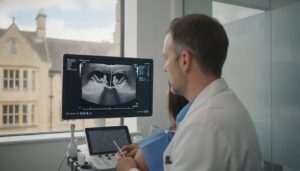
Visualising the joint structures provides a level of certainty that a physical exam alone cannot offer. By integrating a diagnostic ultrasound scan, our specialists can identify fluid build-up, ligament thickening, or structural changes in real-time. This is particularly beneficial for complex cases in Kennington or Marcham where symptoms have persisted despite previous treatments. Ultrasound-guided assessment significantly reduces diagnostic error by providing clear evidence of inflammation or structural strain within the sacroiliac ligaments.
Pelvic Girdle Assessment
A thorough evaluation must extend beyond the joint itself to the surrounding support structures. We check for functional leg length discrepancies, which often cause uneven loading across the SI joints. Our specialists also analyse core and gluteal muscle recruitment patterns to see if your body is compensating for the instability. For those travelling from Witney, Didcot, or Faringdon, we also assess footwear and gait patterns. These factors directly influence pelvic stability and can be the missing link in chronic cases. If you’re struggling with persistent discomfort, you can book a specialist assessment to begin your path to a pain-free life.
Effective Physiotherapy Treatments for Sacroiliac Relief
Successful recovery from sacroiliac dysfunction requires a transition from passive pain relief to active stability. While many patients try home stretches, these often fail to resolve the underlying mechanical block. This is where specialist physiotherapy provides a clear advantage. Targeted manual manipulation resolves joint stiffness that generic exercises cannot reach. By restoring the joint’s natural gliding motion, we create the necessary environment for long-term healing. This expert approach is a primary reason why residents in Abingdon, Marcham, and Kennington choose our clinics for their recovery.
We also focus on the soft tissue structures that often complicate the clinical picture. Muscles like the piriformis and iliopsoas frequently “guard” the SI joint when it’s dysfunctional, leading to secondary discomfort. We use myofascial release techniques to alleviate this protective tension and improve overall pelvic mobility. In more complex or chronic cases where high pain levels prevent you from starting active movements, we may suggest ultrasound-guided steroid injections. These serve as a therapeutic bridge, cooling down local inflammation so that physiotherapy for sacroiliac joint pain can proceed without delay. This integrated care is easily accessible for those living in Farmoor, Eynsham, or West Oxford.
Manual Therapy and Joint Mobilisation
Manual intervention is the cornerstone of mechanical realignment. Our practitioners use gentle oscillatory techniques to reduce joint stiffness, particularly in cases of hypomobility. We also employ muscle energy techniques (MET) to correct pelvic tilts. These methods use your own muscle contractions to guide the joint back into its optimal position. It’s essential to “re-set” the joint’s alignment before beginning a heavy strengthening programme. This level of clinical precision helps patients in Summertown, Headington, and Central Oxford return to their daily routines faster.
Exercise Rehabilitation for Long-Term Stability
Once we restore joint alignment, the focus shifts to achieving “force closure” through muscle strengthening. This involves building a robust support system around the pelvis to prevent the recurrence of pain. We target the following key muscle groups:
- Transversus Abdominis: The deep core muscle that acts as a natural corset for the pelvis.
- Multifidus: Small, powerful muscles that provide segmental stability to the lower spine.
- Gluteus Maximus: The primary driver of pelvic stability during walking and climbing.
Developing muscle endurance is vital for residents in Didcot, Witney, and Faringdon who need to maintain stability throughout a busy day. This transition from clinical treatment to active rehabilitation ensures that your pelvis can handle the loads of daily life without failing again.
Accessing SI Joint Physiotherapy in Oxfordshire
Consistency is the cornerstone of mechanical recovery. For those seeking physiotherapy for sacroiliac joint pain, having a specialist clinic nearby isn’t just a matter of convenience; it’s a clinical necessity. Effective rehabilitation requires regular, face-to-face manual therapy and precise adjustments to your exercise programme. We’ve positioned our services to be the primary choice for residents across the county, ensuring that professional musculoskeletal care is never out of reach. By providing regional authority and high service quality, we help you avoid the delays often associated with broader healthcare systems.
Serving Towns Across Oxfordshire
Our clinics are strategically located to serve the diverse communities of Oxfordshire. We understand that travel can be difficult when you’re experiencing debilitating pelvic pain, so we focus on ease of access. Residents in Abingdon, Didcot, and Marcham benefit from our proximity to the A34, making the journey for specialist treatment straightforward. Similarly, patients from Kennington find our locations easy to reach for their ongoing rehabilitation sessions. This local proximity ensures you can maintain the frequency of treatment necessary for a successful outcome.
We also provide expert care for those in the western reaches of the county. Individuals living in Witney, Eynsham, and Faringdon can access our advanced diagnostic tools and therapeutic interventions without the need for long-distance travel. Our reach extends to Farmoor as well, ensuring that high-quality musculoskeletal support is available regardless of your specific location. For those within the city, we serve central and north Oxford communities, including Summertown and Headington, providing a modern clinical environment for your recovery. Whether you’re coming from the city centre or a surrounding village, our focus remains on providing a smooth, confidence-building experience.
Your First Appointment: A Path to Recovery
Your journey begins with a comprehensive initial consultation. We don’t believe in delays; our goal is to provide a clear path forward from your very first visit. During this session, we conduct a detailed discussion of your symptoms and medical history. This professional dialogue helps us understand the impact of the pain on your daily life, whether you’re working in Central Oxford or commuting from West Oxford. We maintain a professional distance while ensuring you feel heard and respected throughout the process.
Following the discussion, we perform a thorough physical examination. This isn’t a generic check-up; it’s a targeted assessment designed to confirm the joint as the source of your discomfort. We then provide a clear, written treatment plan that outlines:
- A precise diagnosis based on clinical findings and, if necessary, diagnostic imaging.
- The specific interventions required, such as manual therapy or exercise rehabilitation.
- Realistic recovery timelines so you know exactly what to expect from your treatment.
Our approach is patient-focused and efficient. We aim to build your confidence through clinical excellence and interpersonal warmth. If you’re ready to move past the confusion of conflicting diagnoses, you can book your initial sacroiliac assessment today and start your recovery with a trusted local specialist.
Advanced Recovery Options at GB Clinic
Complex sacroiliac issues often require more than just movement; they require structural reinforcement. For individuals in Didcot or Witney who haven’t seen results from basic stretching, we offer an integrated care model that combines manual therapy with advanced regenerative options. We’ve established GB Clinic as a leading Oxfordshire centre for non-surgical musculoskeletal recovery by addressing the root cause of instability rather than just the symptoms. When chronic pain persists, it’s often because the underlying ligaments need more than just exercise to regain their integrity.
One of our specialized interventions is Prolotherapy for lower back pain. This treatment is particularly effective for patients in Abingdon or Kennington who suffer from ligament laxity, a condition where the “straps” holding the joint together have become overstretched. By encouraging the body’s natural healing response, Prolotherapy helps stabilize these structures, providing a firmer foundation for your exercise rehabilitation. This dual approach ensures that physiotherapy for sacroiliac joint pain is both effective and durable, specifically for those whose joints feel “unstable” during daily tasks.
Beyond Standard Physiotherapy
In cases where joint wear or age-related changes are present, we may integrate Hyaluronic Acid injections to improve lubrication and reduce friction within the joint. This is a common requirement for our more active patients in Marcham and Headington who wish to maintain a high level of physical performance. We also utilize Shockwave therapy to treat persistent enthesopathy or tendon issues around the pelvis. This technology is highly effective for residents in Farmoor and Eynsham who are dealing with chronic soft tissue pain that resists traditional massage. By merging clinical excellence with modern technology, we offer a comprehensive solution for even the most stubborn pelvic girdle conditions.
Commitment to Evidence-Based Outcomes
Our protocols are never static. We use specific clinical data and patient feedback to refine our SI joint treatments constantly. This commitment to improvement ensures that whether you’re visiting us from Faringdon or Central Oxford, you receive care that is at the forefront of musculoskeletal medicine. We focus entirely on your return to full mobility and a comfortable, pain-free lifestyle. For those in West Oxford and Summertown, our clinics represent a trustworthy path back to the activities you love. We invite you to experience this patient-focused care firsthand. Book your initial SI joint assessment at GB Clinic Oxford today to begin your journey toward lasting physical restoration.
Take the First Step Toward Pelvic Stability and Lasting Relief
Effective recovery from sacroiliac dysfunction relies on moving past generic advice and embracing a precision-led approach. We’ve explored how specialist physiotherapy for sacroiliac joint pain combines advanced diagnostic ultrasound with targeted manual therapy to resolve mechanical failures that exercises alone cannot reach. By identifying the exact source of your discomfort, we provide a clear, non-surgical path to restored mobility for residents throughout Oxfordshire.
Our team of expert MSK clinicians specializes in complex pelvic girdle pain, utilizing on-site diagnostic ultrasound for immediate and accurate results. We’re highly rated by patients across Abingdon, Witney, and the wider region for our professional demeanor and clinical excellence. Whether you’re traveling from Summertown, Headington, Didcot, or Faringdon, our modern facilities are easily accessible. We also serve communities in Kennington, Marcham, Farmoor, and Eynsham, ensuring that those in Central Oxford and West Oxford have a convenient local choice for specialist care.
Book a Specialist SI Joint Assessment in Oxford
You don’t have to live with the uncertainty of chronic pelvic pain. We’re here to help you regain your movement and return to a comfortable, active lifestyle.
Frequently Asked Questions
How many physiotherapy sessions will I need for SI joint pain?
Most patients require between four and six sessions to achieve significant mechanical improvement and lasting relief. The exact number depends on whether your condition is acute or chronic. During your initial assessment in Headington or Central Oxford, we provide a clear treatment plan with specific timelines. This structured approach ensures that residents from Abingdon and Marcham receive efficient care without unnecessary delays in their recovery process.
Can physiotherapy help SI joint pain during pregnancy?
Specialist physiotherapy for sacroiliac joint pain is highly effective for managing pelvic girdle discomfort during and after pregnancy. Hormonal changes increase ligament laxity, which often leads to joint instability. Our clinicians provide gentle manual therapy and support strategies to stabilize the pelvis safely. This service is a vital resource for expectant mothers in Kennington and Didcot who need to maintain their mobility and comfort throughout each trimester.
Is it better to rest or keep moving with sacroiliac dysfunction?
Controlled, pain-free movement is generally superior to total bed rest for sacroiliac dysfunction. Prolonged inactivity can lead to muscle stiffness and further weakness in the stabilizing gluteal muscles. We guide patients in Witney and Eynsham through specific, low-impact activities that maintain joint mobility without causing further irritation. Finding the correct balance between activity and recovery is essential for residents in Farmoor seeking a return to their normal routines.
What is the difference between a steroid injection and physiotherapy for the SI joint?
A steroid injection is a medical intervention designed to reduce acute inflammation and provide rapid symptomatic relief. In contrast, physiotherapy addresses the underlying mechanical cause of the dysfunction through manual therapy and exercise rehabilitation. Many patients in West Oxford and Summertown use an injection as a therapeutic bridge. This allows them to engage more effectively in the physical restoration process required for long-term stability.
Can a misaligned SI joint cause leg pain or numbness?
A dysfunctional sacroiliac joint can certainly cause referred pain into the buttock and down the leg, often mimicking sciatica. While numbness is less common than with a disc herniation, the mechanical strain can irritate surrounding nerves. Our diagnostic process helps patients in Faringdon and across Oxfordshire distinguish between spinal nerve root compression and pelvic joint referral. This clarity is vital for ensuring you receive the correct treatment for your specific symptoms.
How do I know if my pain is coming from my hip or my SI joint?
Hip pain is typically felt in the groin or the side of the hip, whereas SI joint pain is localized to the lower back and buttock. We use clinical provocation tests and on-site diagnostic ultrasound in Headington to differentiate between these structures. Accurate identification of the pain source ensures that your treatment plan targets the correct joint, preventing the frustration of ineffective interventions for residents in Central Oxford.
What exercises should I avoid if I have SI joint pain?
You should generally avoid activities that involve asymmetrical loading, such as deep lunges or heavy single-leg presses, during the acute phase of injury. These movements can put excessive shear force through a vulnerable joint and increase inflammation. Our specialists advise patients in Summertown on how to modify their gym routines or daily activities. This protective approach prevents flare-ups while you work through your personalized recovery plan in West Oxford.
Is SI joint pain permanent or can it be fully cured with physiotherapy?
Sacroiliac joint pain is not a permanent condition and can be successfully resolved with the correct combination of manual therapy and stability training. Most patients achieve full functional restoration and return to their previous activity levels. By following a structured prevention plan, residents in Abingdon, Didcot, and Witney can maintain pelvic health and avoid future recurrence. Our goal is to provide a permanent solution through clinical excellence and patient education.