Imagine waking up to find your finger firmly locked into your palm, resisting every effort to straighten it until it finally snaps open with a sharp, painful pop. If you’re struggling with the daily frustration of a clicking thumb or pain that makes typing and gripping nearly impossible, you aren’t alone. Seeking a professional steroid injection for trigger finger is often the most effective way to address this inflammation without resorting to invasive surgery. We understand how these symptoms disrupt your life, from your morning routine in Abingdon or Summertown to your professional work in Central Oxford.
This guide provides a clear path to recovery, highlighting how specialist clinical interventions can eliminate discomfort and restore your hand’s natural fluid movement. You’ll discover the advantages of precision-guided treatments and how easy it is to access our expertise from surrounding areas like Headington, Kennington, and Marcham. Whether you’re based in Witney, Didcot, or Faringdon, we’ve mapped out the essential treatment options available across West Oxford and beyond. We’ll cover everything from diagnostic ultrasound benefits to the recovery process in Eynsham and Farmoor, ensuring you have the information needed to regain your mobility.
Key Takeaways
- Understand how a targeted steroid injection for trigger finger can quickly resolve the underlying inflammation causing your finger to click or lock.
- Explore the benefits of ultrasound-guided precision, which ensures the treatment is delivered exactly where it’s needed for optimal results.
- Compare clinical injections with conservative therapies and learn how specialist hand rehabilitation can support your return to full range of motion.
- Find out how to access expert hand and wrist care from convenient clinic locations across Oxfordshire, including Summertown, Didcot, and Faringdon.
- Walk through the specialist assessment process, which combines clinical expertise with real-time diagnostic imaging for a clear path to recovery.
Understanding Trigger Finger and the Role of Steroid Injections
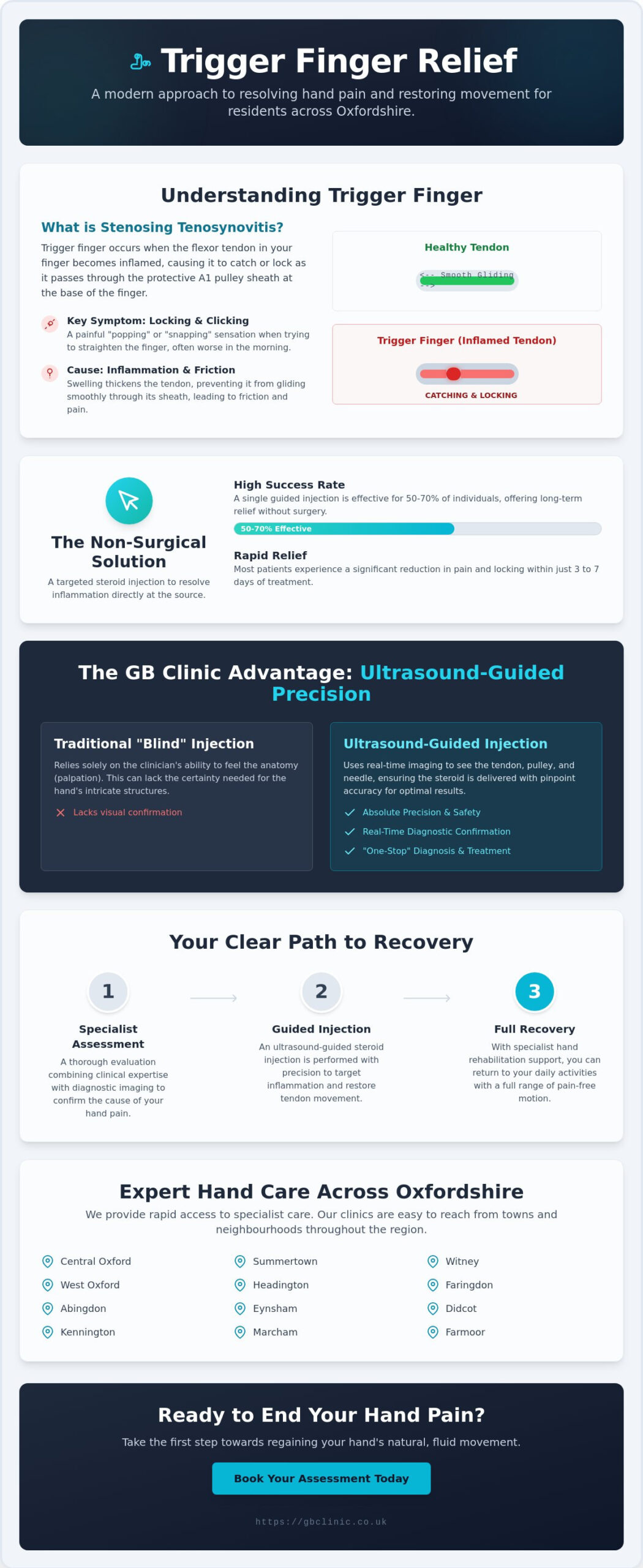
Trigger finger, medically known as stenosing tenosynovitis, occurs when the tendon that bends your finger or thumb becomes inflamed and struggles to glide through its protective sheath. This friction results in a painful “locking” or “catching” sensation that can make everyday tasks difficult. If you’re wondering What is Trigger Finger?, it’s essentially a mechanical mismatch between the tendon and the tunnel it passes through. For residents in Abingdon or Summertown experiencing these symptoms, a professional assessment is the first step toward reclaiming hand function.
To better understand how this procedure targets the affected area, watch this helpful video demonstration:
What is Stenosing Tenosynovitis?
The hand relies on a complex system of flexor tendons and pulleys to function. The A1 pulley, located at the base of the finger, is the most common site for issues. When the tendon sheath thickens due to repetitive strain or underlying conditions, it prevents smooth gliding. This progression often starts with a mild clicking but can lead to a finger that stays permanently bent. Patients from Headington to Kennington often report that these symptoms are most severe in the morning. Rapid diagnosis is essential to prevent the condition from worsening and affecting your ability to work or exercise.
How Steroid Injections Provide Relief
A steroid injection for trigger finger delivers a concentrated dose of corticosteroid directly into the tendon sheath. This powerful anti-inflammatory agent reduces the swelling of both the sheath and the tendon, restoring the space needed for movement. Most patients notice a reduction in “popping” and pain within 3 to 7 days of the procedure. Research indicates that a single guided steroid injection is effective for 50 to 70 percent of individuals, particularly those without underlying conditions like diabetes. It’s a reliable, non-surgical solution that focuses on long-term symptom resolution.
We provide rapid access to these treatments for individuals across Oxfordshire. Whether you’re coming from Marcham, Farmoor, or Eynsham, our specialists offer a clear path to recovery. We serve the wider region, including Didcot, Witney, and Faringdon, ensuring that expert hand care is accessible to those in Central Oxford and West Oxford. By addressing the inflammation early, you can often restore full range of motion and avoid the need for invasive hand surgery.
The Advantages of Ultrasound-Guided Steroid Injections
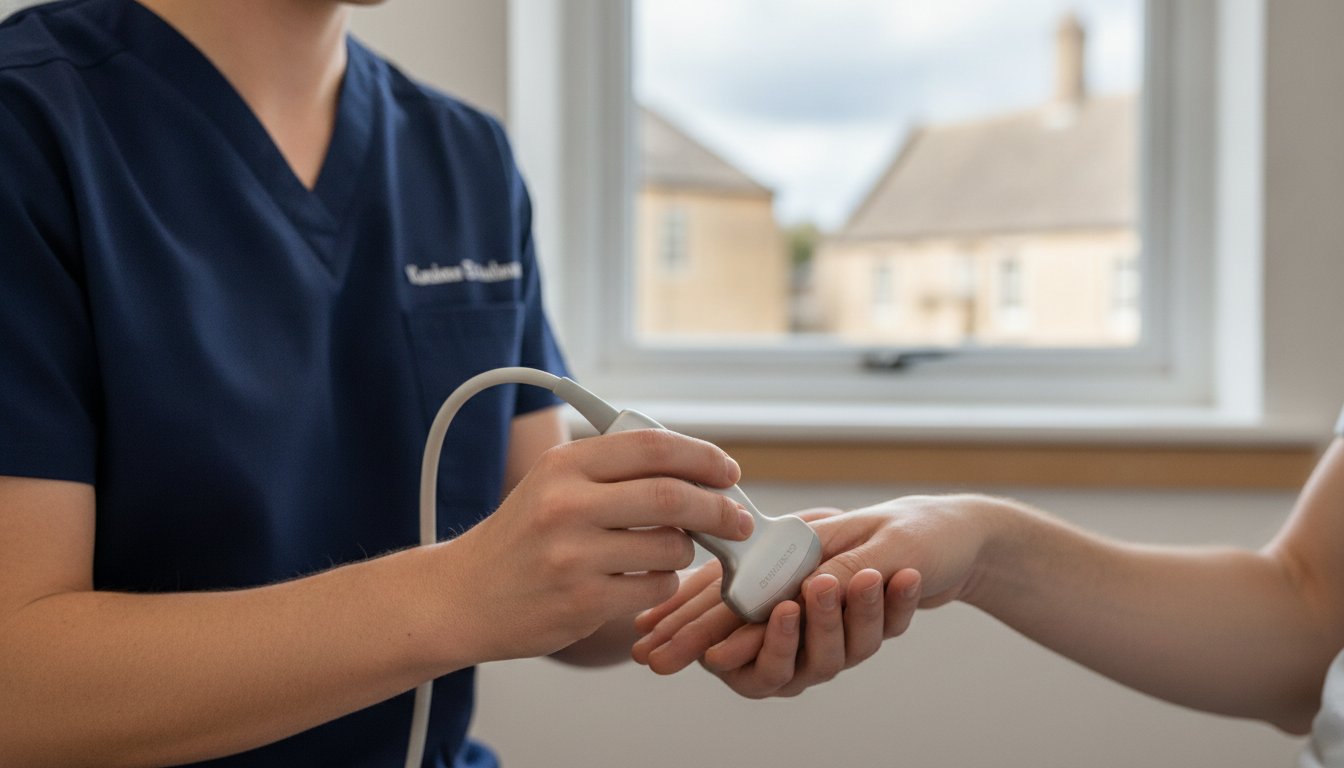
Precision is paramount when treating the intricate structures of the hand and wrist. The space within the tendon sheath is remarkably small, meaning even a millimetre of deviation can affect the outcome of your treatment. Traditional “blind” injections rely on a clinician’s ability to feel the anatomy through the skin, a method known as palpation. While this has been a standard approach for years, it lacks the visual certainty provided by modern technology. By using diagnostic ultrasound scans, we can see the exact state of the A1 pulley and the underlying tendon before the needle ever touches the skin. This ensures the steroid injection for trigger finger is delivered with absolute accuracy.
According to this expert guide to trigger finger, a clear diagnosis is the foundation of effective care. Ultrasound allows us to confirm the diagnosis in real-time, ruling out other causes of hand pain such as small cysts or joint arthritis. For patients travelling from Headington, Summertown, or Abingdon, this “one-stop” approach means you receive a definitive diagnosis and targeted treatment in a single visit. It’s a modern, efficient way to manage musculoskeletal health without the delays often found in traditional care pathways.
Accuracy and Success Rates
The primary benefit of a guided approach is the “right first time” delivery of medication. Clinical studies have shown that ultrasound-guided injections for trigger finger can achieve relief in up to 90 percent of cases, a significant improvement over unguided methods. We can visually confirm the corticosteroid spreading within the narrow space of the tendon sheath, ensuring the anti-inflammatory reaches the entire area of constriction. This precision reduces the likelihood of needing repeat procedures and provides more predictable, long-lasting relief for our patients.
Safety and Minimising Complications
Safety is significantly enhanced when we can see the needle’s path in real-time. This visibility allows our clinicians to carefully avoid nearby nerves and blood vessels, which are particularly dense in the palm. It also prevents the risk of an intratendinous injection, where the steroid is accidentally placed inside the tendon itself, which could lead to weakness or injury. Furthermore, by ensuring the medication stays within the sheath, we minimise the risk of local side effects like skin depigmentation or tissue thinning.
Our specialists provide this high level of care to residents across the region, making it easy for those in Kennington, Marcham, and Farmoor to access advanced hand treatments. If you’re based in Eynsham, Didcot, or Witney, you don’t need to travel far for expert intervention. We also serve the communities of Faringdon, Central Oxford, and West Oxford with the same commitment to clinical excellence. If you’re ready to resolve your hand pain, you can book an assessment with our specialist team to discuss your options.
Comparing Steroid Injections to Alternative Treatments
When hand pain first appears, many people reach for over-the-counter anti-inflammatories or a generic finger splint. While these conservative methods can manage minor irritation, they often lack the potency required for established stenosing tenosynovitis. A professional steroid injection for trigger finger provides a localized solution that systemic medications simply cannot match. For residents in Headington and Farmoor, choosing between long-term bracing and a single clinical intervention is a common decision point in their recovery journey.
Steroids vs. Splinting and NSAIDs
Oral anti-inflammatories must travel through the entire digestive system and bloodstream, often failing to reach the poorly vascularised tendon sheath in high enough concentrations. Night splinting can prevent the finger from curling during sleep, but it does little to resolve the mechanical thickening of the A1 pulley system. In moderate to severe cases, months of bracing may lead to secondary joint stiffness without fixing the underlying inflammation. An injection offers a superior cost-benefit advantage by addressing the swelling at its source, often saving patients from months of restricted hand use and repetitive bracing. It’s a direct intervention designed for those who need to return to their normal routines in Abingdon or Summertown without delay.
Injections vs. Surgical Release
Surgery is often presented as a final solution, yet it involves a theatre-based environment, incisions, and weeks of post-operative wound care. In contrast, a steroid injection for trigger finger is a 10-minute outpatient procedure. There’s no need for stitches or significant time off work. Most patients return to their daily activities almost immediately, avoiding the risks of infection or permanent scarring associated with invasive hand surgery. While surgery carries a longer recovery timeline, a guided injection is minimally invasive and serves as a logical first step for most patients seeking rapid relief.
Beyond the procedure itself, specialist physiotherapy plays a vital role in maintaining long-term hand health. Exercises focused on tendon gliding can prevent recurrence and ensure the finger remains mobile and strong. Our clinics are strategically located for easy access from Kennington, Marcham, and Eynsham, providing a comprehensive non-surgical alternative. We proudly serve the wider Oxfordshire community, including Didcot, Witney, and Faringdon, ensuring that individuals in Central Oxford and West Oxford have access to expert MSK care without the need for hospital-based surgical referrals.
What to Expect: Your Trigger Finger Treatment Journey
Your path to recovery is structured to be both efficient and reassuring. It starts with a comprehensive MSK assessment in Oxfordshire, where we review your medical history and clinical symptoms. We then use real-time ultrasound imaging to precisely locate the inflammation within the tendon sheath. This diagnostic step confirms that a steroid injection for trigger finger is the most appropriate intervention for your specific case, ensuring we address the root cause of your discomfort.
During the procedure, you’ll be positioned comfortably with your hand supported. We often apply a local anaesthetic to numb the area, ensuring the experience is as painless as possible. The clinician then uses ultrasound guidance to deliver the corticosteroid directly into the A1 pulley space. This entire process usually takes less than 15 minutes, allowing you to return home to Abingdon, Summertown, or Headington shortly after your appointment concludes.
Following the procedure, we provide clear guidance on managing the initial recovery phase. You might experience a temporary “steroid flare,” which is a brief increase in discomfort that typically subsides within 48 hours. We’ll also discuss how to integrate your recovery with specialist physiotherapy to maintain your results. This holistic approach ensures that once the steroid injection for trigger finger reduces the inflammation, you have the strength and mobility to prevent the issue from returning.
Preparing for Your Appointment
Loose-fitting sleeves are helpful for your appointment so we can easily access your hand and wrist. Please bring a list of any current medications, particularly blood thinners, so our team can ensure the highest safety standards are met. If you’re travelling from Eynsham, Central Oxford, or West Oxford, our clinics are easily accessible with local parking and transport links. We aim to make your visit as stress-free as possible, whether you’re coming from Kennington, Marcham, or Farmoor.
Aftercare and Recovery Tips
The first 48 hours are critical for maximizing steroid uptake within the tendon sheath. We advise resting the hand and avoiding repetitive gripping or heavy lifting during this short window. If a flare occurs, a simple cold pack can provide relief. You can usually resume normal daily tasks within a few days, but we recommend waiting 10 to 14 days before returning to heavy gym work or intense manual labour. This careful, evidence-based approach is why patients from Didcot, Witney, and Faringdon trust us for their hand care.
Book your specialist trigger finger assessment today to begin your journey toward pain-free movement.
Expert Hand and Wrist Care at GB Clinic Oxford
GB Clinic stands as a premier destination for those seeking a steroid injection for trigger finger in the Oxfordshire region. Our team of specialist MSK clinicians is dedicated to providing high-level care for residents in Didcot, Witney, and Faringdon. We understand that hand pain is more than a minor inconvenience; it’s a significant barrier to your professional and personal life. By offering rapid access to diagnostic ultrasound and clinical treatment in a single visit, we ensure you don’t have to endure weeks of discomfort while waiting for a specialist consultation.
Our approach is built on modern, evidence-based medicine. We combine the immediate anti-inflammatory benefits of guided steroid injections with tailored physiotherapy programs. This synergy is designed to restore the natural gliding of your tendons while strengthening the supporting structures of the hand. Patients from Abingdon, Summertown, and Kennington benefit from this dual-focus strategy, which aims for a permanent return to a comfortable, mobile state without the need for surgical intervention.
Why Choose a Specialist MSK Clinic in Oxfordshire?
Choosing a specialist clinic allows you to bypass the lengthy wait times often found in traditional healthcare pathways. We use advanced diagnostic tools to provide an immediate answer to your symptoms. For residents in Marcham, Headington, and Farmoor, this means a faster transition from pain to recovery. Our expertise in high-resolution ultrasound ensures that every steroid injection for trigger finger is delivered with maximum precision, which minimizes risks and maximizes the duration of relief. We’ve designed our services to be the most accessible and efficient option for individuals across West Oxford and the surrounding neighborhoods.
Booking Your Assessment
We make the process of starting your treatment as simple as possible. You can book an assessment directly with our specialist team, and in many instances, a GP referral isn’t required to get started. We believe in transparent clinical care, which is why we provide a clear breakdown of your treatment plan and all associated costs during your initial visit. If you’re living or working in Eynsham or Central Oxford, our clinic offers a professional, modern environment focused entirely on your recovery. Our goal is to help you regain your full range of motion and finally eliminate the “clicking” or “popping” that holds you back from your daily activities.
Restore Your Hand Function and Mobility
A precision-guided steroid injection for trigger finger offers a reliable, non-surgical pathway to ending the discomfort of locking and clicking joints. By prioritising accuracy through expert-led ultrasound procedures, we ensure the treatment reaches the exact site of inflammation, providing faster and more predictable results than traditional methods. As a CQC registered private MSK clinic, we’re dedicated to high standards of care with no wait lists for Oxfordshire residents, allowing you to move from diagnosis to relief without unnecessary delays.
Our clinics are conveniently positioned to serve the entire region. Whether you are based in Abingdon, Summertown, or Headington, or travelling from Kennington, Marcham, and Farmoor, expert help is within easy reach. We also provide comprehensive care for those in Eynsham, Didcot, and Witney, as well as Faringdon, Central Oxford, and West Oxford. You don’t have to manage hand pain alone or settle for restricted movement in your daily life. Book Your Specialist Trigger Finger Assessment at GB Clinic today and take the first step toward reclaiming your active, pain-free lifestyle. We look forward to helping you achieve a full recovery.
Frequently Asked Questions
How long does a steroid injection for trigger finger last?
A steroid injection for trigger finger generally provides relief for several months, with many patients remaining symptom-free for a year or longer. The duration depends on the severity of the initial inflammation and your daily hand activity levels. It’s a treatment that offers a significant window of comfort for residents in Abingdon or Summertown. It allows for a return to normal tasks without the immediate threat of the finger locking again or causing daily pain.
Is the injection painful, and do you use local anaesthetic?
Most patients describe the procedure as a quick, stinging sensation rather than intense pain. We use a local anaesthetic to numb the area at the base of the finger before delivering the corticosteroid. This ensures the experience is as comfortable as possible for individuals visiting us from Headington or Kennington. The use of ultrasound guidance further reduces discomfort by ensuring the needle path is precise and efficient.
How many steroid injections can I have in the same finger?
We generally recommend a maximum of two injections in the same finger to avoid weakening the tendon or surrounding tissues. If a second injection does not resolve the issue, we may discuss alternative pathways or specialist hand rehabilitation. Our clinicians in Central Oxford and West Oxford carefully monitor your response to each treatment to ensure the highest safety standards. This careful approach prevents long-term damage to the A1 pulley system.
Can I drive home after a trigger finger steroid injection?
You can typically drive yourself home after a steroid injection for trigger finger, provided you feel comfortable and have full control of your vehicle. The local anaesthetic might cause temporary numbness in the finger, but this should not prevent you from safely navigating back to Marcham or Farmoor. However, we recommend a short period of rest immediately after the injection to ensure you feel steady and ready for the drive across Oxfordshire.
What are the success rates for trigger finger injections at GB Clinic?
Clinical data indicates a success rate of 50 to 70 percent for standard injections, but this increases to approximately 90 percent when using ultrasound guidance. This precision ensures the medication is delivered exactly into the tendon sheath, where it can be most effective. This high level of accuracy is why many patients from Didcot and Witney choose our specialist guided services to resolve their symptoms effectively the first time.
Are there any side effects I should be aware of?
Potential side effects include a temporary steroid flare of increased pain for 24 to 48 hours, as well as minor bruising at the injection site. In some cases, patients may notice slight skin thinning or depigmentation around the area. These risks are significantly minimized through our use of real-time imaging, providing reassurance for our patients in Eynsham and Faringdon who are seeking a safe, clinical intervention.
Will my trigger finger come back after the injection?
While many patients experience permanent relief, the condition can occasionally return, particularly if the underlying cause of strain isn’t addressed. Recurrence is more common in individuals with diabetes or rheumatoid arthritis. To support lasting results, we often integrate the injection with specific exercises. This comprehensive approach helps residents across the region maintain their mobility and prevent the return of the popping sensation.
How soon can I return to work in Oxford after the procedure?
Most people return to light office duties or desk work in Central Oxford immediately after their appointment. However, if your role involves heavy lifting or repetitive gripping, we recommend a rest period of 10 to 14 days. This allows the steroid to fully settle and begin reducing the inflammation. Our team provides tailored advice to ensure your return to work is safe and doesn’t compromise your recovery.