
Recent NHS data from 2024 reveals that over 850,000 patients are currently waiting for orthopaedic procedures, with many facing delays of up to 18 months for a total knee replacement. It’s understandable if you’re hesitant about the prospect of major surgery and the gruelling recovery period that follows. You likely want to regain your independence without the risks of general anaesthetic or an extended hospital stay. If chronic pain is making it difficult to walk around Oxford city centre or enjoy the greenery in Headington and Summertown, you’re not alone in seeking a faster, less invasive route to relief.
At GB Clinics, we agree that surgery should be a last resort rather than the only option. We promise to show you the latest non-surgical alternatives to knee replacement surgery UK that can effectively manage your pain and restore joint function. This 2026 guide provides a clear overview of seven advanced clinical treatments, including ultrasound-guided injections and modern physiotherapy, that are easily accessible from Abingdon, Kennington, Marcham, Witney, Faringdon, and Eynsham. We’ll explain how these evidence-based solutions help you return to low-impact exercise like cycling or walking, allowing you to bypass the surgical theatre and focus on a pain-free recovery.
Key Takeaways
- Explore the latest non-invasive alternatives to knee replacement surgery UK that aim to delay or entirely avoid the need for major surgical intervention.
- Understand the role of advanced injection therapies, including Hyaluronic Acid, in restoring joint lubrication and providing targeted, long-lasting pain relief.
- Discover how technology-led solutions like Shockwave Therapy and offloader braces can break the cycle of chronic pain and significantly improve daily mobility.
- Learn why a multimodal approach—combining clinical treatments with tailored physiotherapy—is the most effective strategy for long-term musculoskeletal recovery and joint stability.
- Identify how to access expert MSK care at GB Clinic, which is easily accessible for patients from central Oxford, Abingdon, Witney, and across Oxfordshire.
Why Alternatives to Knee Replacement Surgery are Rising in the UK
In 2026, the demand for non-invasive musculoskeletal (MSK) care across Great Britain has reached an all-time high. Patients are increasingly cautious about Total Knee Replacement (TKR). While TKR remains a standard procedure, many now view it as a final option rather than a first step. This shift is partly driven by NHS elective surgery wait times, which currently exceed 18 months in many trusts. Consequently, more patients seek private physiotherapy and advanced clinical treatments to maintain their quality of life. GB Clinics provides these essential alternatives to knee replacement surgery UK wide, offering a bridge between initial pain and major surgery. Our facilities are easily accessible from Abingdon, Summertown, Kennington, Marcham, Headington, Witney, Faringdon, Eynsham, and central Oxford.
Non-surgical care encompasses a spectrum of treatments. These range from biomechanical adjustments and weight management to biological interventions like Hyaluronic Acid injections. These treatments focus on preserving the natural joint and restoring function without the risks associated with an operating theatre. Our clinical approach focuses on evidence-based results that help patients return to daily activities quickly.
The Reality of Knee Replacement Recovery
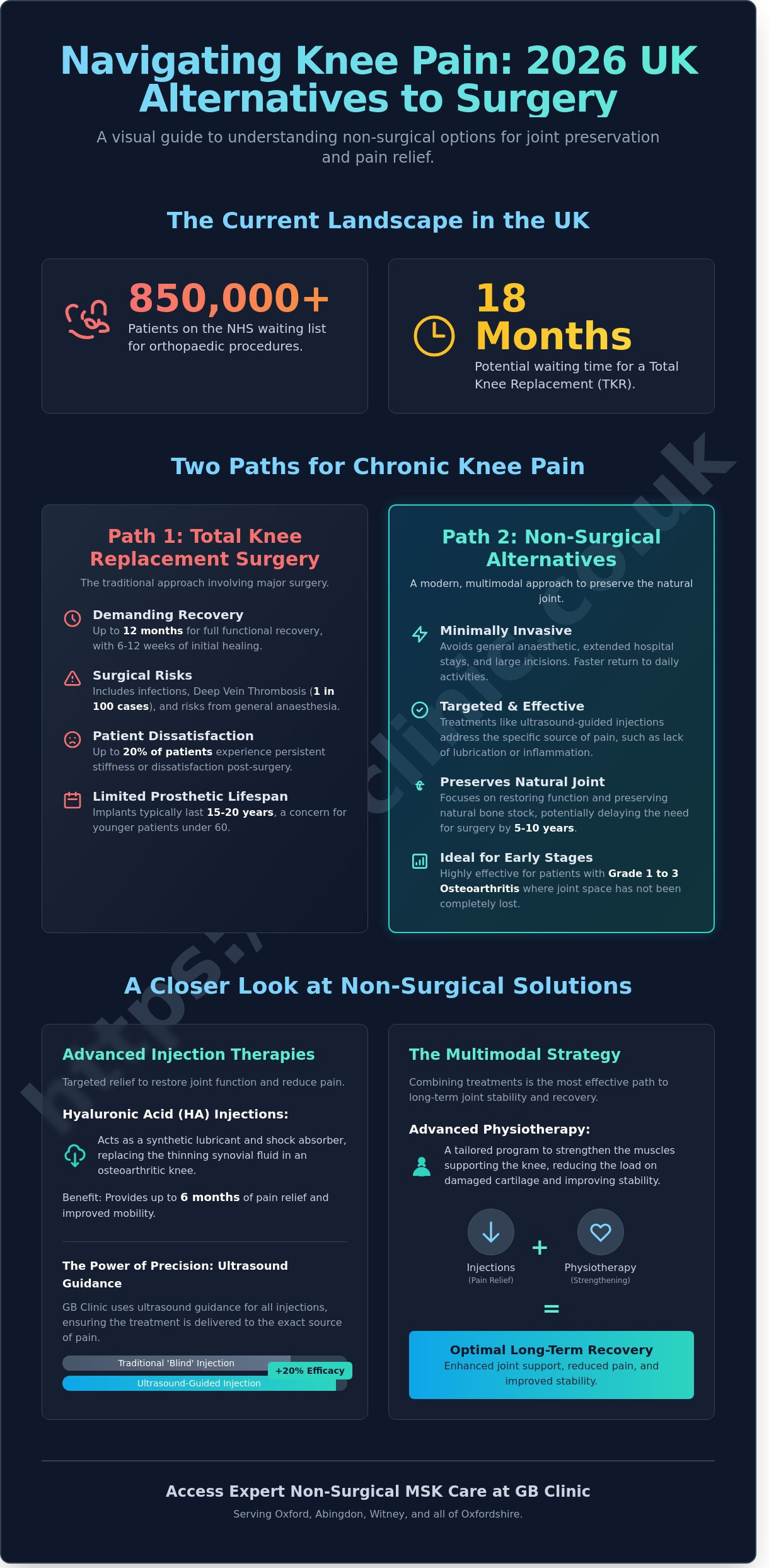
A typical recovery from TKR is demanding. Initial healing takes 6 to 12 weeks, but full functional recovery often requires 12 months of intensive rehabilitation. Clinical data suggests that up to 20% of patients experience persistent stiffness or dissatisfaction post-surgery. Common complications include:
- Deep vein thrombosis (DVT) occurring in approximately 1 in 100 cases.
- Post-operative infections that may require revision surgery.
- Chronic pain despite a successful structural replacement.
Younger patients, particularly those under 60, often choose to delay surgery. They want to avoid the 15 to 20 year lifespan limit of prosthetic joints. By opting for conservative management, they preserve their natural bone stock for as long as possible.
When to Consider Non-Surgical Routes
Conservative management excels for patients with Grade 1 to 3 Osteoarthritis. At this stage, the joint space is narrowed but not completely lost. Early intervention can buy 5 to 10 years of joint longevity. We focus on a clear structure of care:
- Problem: Reduced joint lubrication and friction. Solution: Targeted injections. Benefit: Improved mobility and up to 6 months of pain relief.
- Problem: Muscle atrophy and instability. Solution: Advanced physiotherapy. Benefit: Enhanced joint support and reduced load on the cartilage.
Pain levels and functional mobility are the primary drivers for decision making. If you can still perform daily tasks but experience flare-ups, non-surgical routes are often the most appropriate choice. This proactive approach ensures that if a replacement is needed years later, you’re in better physical condition for the procedure.
Advanced Injection Therapies: Lubrication and Biological Repair
Many patients seeking alternatives to knee replacement surgery UK are turning to advanced injectable treatments to manage osteoarthritis and chronic joint pain. These therapies provide a vital mid-point between traditional physiotherapy and major surgical intervention. At GB Clinics, we prioritise accuracy above all else. We don’t perform ‘blind’ injections based on physical landmarks alone. Instead, our specialists use ultrasound-guided precision to ensure the medication reaches the exact site of inflammation or cartilage wear. This level of accuracy increases clinical efficacy by up to 20% compared to traditional injection methods.
Hyaluronic Acid: The Lubrication Strategy
Hyaluronic Acid (HA) acts as a synthetic version of the body’s natural synovial fluid. In a healthy knee, this fluid absorbs shock and allows the joint to glide without friction. Osteoarthritis thins this fluid, leading to painful bone-on-bone contact. By administering Hyaluronic Acid Injections at GB Clinic, we restore this protective layer. Modern HA formulations, such as Ostenil Plus or Monovisc, are engineered to resist breakdown within the joint. Patients typically report significant pain reduction and improved mobility for up to 6 months, providing a reliable window for active rehabilitation.
Corticosteroids vs. PRP: Choosing the Right Tool
The choice between corticosteroids and Platelet-Rich Plasma (PRP) depends on the patient’s specific symptoms and long-term goals. Steroids are the gold standard for rapid inflammation control. They’re highly effective for acute flare-ups where swelling prevents daily movement. However, their effects are usually temporary, lasting between 4 and 12 weeks.
PRP and Prolotherapy represent the shift toward regenerative musculoskeletal medicine in the UK. We extract a small sample of the patient’s blood, concentrate the platelets, and reinject them into the knee joint. This process uses the body’s own growth factors to stimulate repair mechanisms. While PRP involves a higher initial cost, often ranging from £450 to £750 per session in the UK, it offers biological benefits without the tissue-weakening risks associated with repeated steroid use. Recovery times are minimal, with most patients returning to light activity within 48 hours.
Our specialist centres are easily accessible from Abingdon, Summertown, and Kennington, as well as Marcham, Headington, and Witney. Patients visiting from Faringdon, Eynsham, or central Oxford can often access these advanced treatments in a single appointment setup. If you’re unsure which injection strategy is right for your recovery, you can book a free personal physiotherapy consultation to discuss your options with an expert.
Mechanical and Technology-Led Alternatives to Surgery
Modern orthopaedic care in 2026 has moved beyond the binary choice of either basic exercise or total joint replacement. Sophisticated mechanical interventions now provide a middle ground for patients who require more than just lifestyle changes but wish to avoid the operating theatre. These technologies focus on correcting the mechanical environment of the knee joint. For patients exploring alternatives to knee replacement surgery UK clinics now offer advanced solutions that are easily accessible from central Oxford, Summertown, and Kennington.
Shockwave Therapy for Knee Conditions
Extracorporeal Shockwave Therapy (ESWT) uses high-energy acoustic waves to treat chronic musculoskeletal conditions. These waves penetrate deep into the soft tissue to stimulate neovascularisation, a process where new blood vessels form to improve nutrient delivery to damaged areas. This is particularly effective for secondary issues like patellar tendonitis or “jumper’s knee,” which often mimic or exacerbate intra-articular joint pain. Clinical data from 2025 indicates that ESWT has an 80% success rate in reducing pain levels for patients with chronic tendon pathologies.
At our facilities, which serve residents from Marcham and Abingdon, we use ESWT to break the cycle of chronic inflammation. By triggering a controlled micro-trauma, the body initiates a natural healing response that breaks down calcific deposits and desensitises pain receptors. For a deeper look at this technology, read our Complete Guide to Shockwave Therapy.
Innovative Bracing and Offloading
Unloader braces represent a significant shift in non-surgical management for unicompartmental osteoarthritis. These devices apply a gentle corrective force to shift the weight-bearing load from the damaged side of the knee to the healthier compartment. Research suggests that consistent use of a high-quality unloader brace can reduce pain by up to 40% during physical activity, allowing patients to remain active while delaying the need for a partial knee replacement.
- Mechanical Alignment: Braces physically create space in the joint, reducing bone-on-bone friction.
- Increased Mobility: Modern carbon-fibre designs are lightweight and fit under standard clothing, supporting patients in Witney and Faringdon who wish to maintain an active lifestyle.
- Neuromuscular Training: Wearing a brace can improve proprioception, helping the brain better coordinate knee movements.
These technology-led approaches bridge the gap between simple physiotherapy and invasive surgery. By combining electrotherapy, such as Interferential Therapy (IFC) to manage swelling, with mechanical offloading, we provide a comprehensive recovery path. Our clinics in Headington and Eynsham specialise in these integrated programmes, ensuring that every patient receives a data-driven alternative to the traditional surgical route.
The Multimodal Approach: Combining Injections with Physiotherapy
While a single injection can act as a powerful reset button for joint pain, it’s rarely enough for long-term success on its own. Clinical data indicates that patients who combine injectable therapies with structured rehabilitation see a 40% greater improvement in mobility compared to those who rely on injections alone. This integrated strategy represents one of the most effective alternatives to knee replacement surgery UK patients can choose to maintain an active lifestyle without major theatre time.
The core of this approach is strengthening the ‘living brace’ of the knee. By focusing on the quadriceps and hamstrings, we create a muscular support system that absorbs impact and stabilises the joint. This reduces the mechanical stress on the damaged cartilage. At GB Clinics, we use gait analysis to identify biomechanical faults, such as over-pronation or hip weakness, that accelerate knee wear. Correcting these faults can reduce the load on the medial knee joint by up to 15%, significantly slowing the progression of osteoarthritis.
Because foot mechanics directly influence knee alignment, addressing underlying foot health is often a necessary step in comprehensive musculoskeletal recovery; for example, you can learn more about Illinois Podiatry Specialists and their clinical approach to managing complex foot conditions.
There’s a vital synergy between Hyaluronic Acid and manual therapy. The injection provides the lubrication needed to reduce friction, which creates a window of opportunity. During this period, a physiotherapist can work on joint range of motion that was previously restricted by pain. This combination ensures the joint isn’t just less painful, but also more functional.
For those located in Milton Keynes, Northampton, or Towcester, you can explore Physiotherapy through RED Physiotherapy to access specialist clinical support that complements these advanced treatments.
Specialist Physiotherapy for Knee Health
Our specialist team focuses on targeted muscle strengthening to reduce the load on the medial knee joint. We don’t believe in generic exercise sheets. Instead, we provide bespoke rehabilitation plans tailored to the specific needs of patients in Oxford and surrounding areas. Our Private Physiotherapy Services are easily accessible for individuals living in Abingdon, Summertown, and Kennington. We help you build the strength required to return to gardening, walking, or sport without the need for invasive surgery.
Diagnostic Accuracy: The Role of Ultrasound
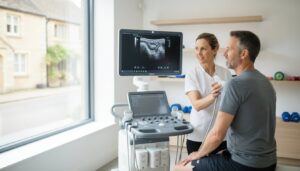
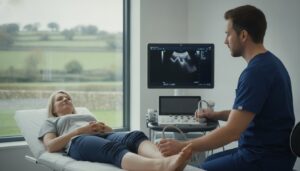
An accurate diagnosis is the essential first step in avoiding unnecessary surgery. Without knowing the exact state of the soft tissues and cartilage, treatment is often speculative. MSK ultrasound is a non-ionising, real-time diagnostic tool for knee pathology. This technology allows our clinicians to see the joint in motion, identifying issues that static scans might miss. For patients in Marcham, Headington, and Witney, our Diagnostic Ultrasound Scans in Oxford provide immediate clarity. This precision ensures that every injection is delivered to the exact site of pathology, maximising the chances of a successful outcome for those seeking alternatives to knee replacement surgery UK.
If you’re based in Faringdon, Eynsham, or central Oxford, you can start your recovery journey today with a free personal physiotherapy consultation at our clinic.
Accessing Non-Surgical Knee Care in Oxford and the UK
Finding effective alternatives to knee replacement surgery UK residents can trust shouldn’t involve long journeys to London or months spent on a waiting list. GB Clinic serves as a specialist centre for advanced non-surgical musculoskeletal (MSK) treatments in Oxfordshire. We provide a professional, expert-led environment where patients receive a clear path to recovery without the need for invasive theatre procedures.
Our “One-Stop” clinical setup is designed for efficiency and patient comfort. We’ve eliminated the need for multiple appointments at different locations by housing everything you need under one roof. This includes:
- Rapid Diagnosis: We use diagnostic ultrasound scans to identify the precise cause of joint pain.
- Expert Treatment: We offer advanced therapies like Hyaluronic Acid injections to restore lubrication and guided steroid injections to reduce inflammation.
- Specialist Rehab: Our physiotherapy programmes focus on long-term strength and mobility.
This integrated approach ensures your clinician manages your entire journey, from the initial scan to your final rehabilitation session. It’s a model that prioritises clinical excellence and saves you significant time.
Local Care for Oxfordshire Residents
We’ve positioned our clinic to be easily accessible from central Oxford, Summertown, and Headington. By choosing local expert care, you avoid the travel stress and high costs associated with London-based private clinics. Our services are tailored for those living in Abingdon, Witney, Eynsham, and Faringdon, as well as neighbouring communities like Kennington and Marcham. We offer a zero commitment initial consultation. This allows you to explore your options and gain peace of mind without any immediate financial pressure or obligation to proceed.
Taking the Next Step Toward Pain-Free Living
Your first visit to GB Clinic is about clarity. We don’t believe in vague recovery timelines. Instead, we focus on developing your personal Knee Preservation Plan for 2026. We’ll assess your current range of motion, review your medical history, and provide an honest appraisal of which alternatives to knee replacement surgery UK guidelines currently support for your specific condition.
Whether you’re struggling with osteoarthritis or a chronic tendon injury, our goal is to restore your function and help you return to the activities you love. We’ve helped hundreds of patients avoid the operating table through precise, evidence-based interventions. The process is calm, clinical, and entirely focused on your comfort.
Ready to explore your options? Book your free personal physiotherapy consultation today to start your journey toward a pain-free future.
Taking Control of Your Knee Health Today
The medical landscape in 2026 offers more hope than ever for those suffering from chronic joint pain. You’ve seen that modern alternatives to knee replacement surgery UK wide now include high-precision biological injections and advanced mechanical therapies. Data shows that a multimodal approach can help 80% of patients manage their symptoms effectively without the need for an operating theatre. we focus on evidence-based results that restore your mobility and reduce inflammation using ultrasound-guided techniques for millimetre precision.
GB Clinics operates an expert-led MSK facility that’s easily accessible from Abingdon, Witney, and Headington. We also regularly support patients from Summertown, Kennington, Marcham, Faringdon, and Eynsham. You don’t have to navigate persistent pain alone or wait for months on a surgical list. Our clinicians provide a clear path to recovery in a professional, clinical environment designed for your comfort and long-term health.
It’s time to discover which non-surgical option is right for your specific condition. Book your FREE personal physiotherapy consultation in Oxford today to take advantage of our zero-commitment consultations. We’re here to help you return to the activities you love with confidence and ease.
Frequently Asked Questions
Is there a permanent alternative to knee replacement in the UK?
No non-surgical treatment offers a permanent biological cure for advanced osteoarthritis, but Arthrosamid provides a long-lasting solution that persists for several years. This non-biodegradable hydrogel integrates into the synovial tissue to reduce stiffness and pain. It’s a viable long-term option for many patients at our clinic. We offer these advanced alternatives to knee replacement surgery UK residents can access easily from nearby Abingdon and central Oxford.
How long can I delay knee surgery with Hyaluronic Acid injections?
Hyaluronic Acid injections typically allow patients to delay surgery by 6 to 12 months per treatment cycle. Clinical data from 2023 indicates that consistent use of these viscosupplementation injections can postpone total knee replacement by an average of 2.6 years. This timeline depends on your activity levels and the severity of joint wear. Patients visiting us from Summertown or Kennington often find this window provides enough time to strengthen the joint through targeted physiotherapy.
Are non-surgical knee treatments covered by private health insurance?
Most major UK private health insurers, including BUPA, AXA Health, and Vitality, cover non-surgical musculoskeletal treatments. Coverage usually includes initial consultations and certain ultrasound-guided injections. You’ll need a GP referral or a direct authorisation code from your provider before your appointment. Our Oxford facility is a recognised provider for these insurers, making it accessible for patients in Headington and Marcham seeking private care without long NHS waiting lists.
Can exercise alone fix a ‘bone-on-bone’ knee condition?
Exercise cannot regrow cartilage in a bone-on-bone condition, but it’s proven to reduce pain by 25% through improved muscle support. Strengthening the quadriceps and hamstrings takes the mechanical load off the joint surface. The GLA:D programme, a gold-standard exercise protocol, has helped 30,000 patients worldwide manage symptoms effectively. Even if your X-ray shows severe wear, bespoke rehabilitation can restore mobility and comfort without immediate surgery.
What is the most successful non-surgical treatment for knee osteoarthritis?
Arthrosamid is currently the most successful non-surgical treatment for long-term symptom management, showing a 70% success rate in clinical trials over three years. It works differently from traditional lubricants by becoming a permanent part of the joint lining. For those seeking alternatives to knee replacement surgery UK wide, this treatment offers the highest durability. We provide this service to patients across Oxfordshire, including those travelling from Witney and Faringdon for specialist care.
Is Arthrosamid better than standard Hyaluronic Acid injections?
Arthrosamid offers significantly longer-lasting results than standard Hyaluronic Acid injections because it isn’t absorbed by the body. While Hyaluronic Acid (HA) provides relief for 6 to 12 months, a single Arthrosamid injection has shown sustained pain reduction in 80% of patients for over three years. HA is excellent for mild to moderate cases. Arthrosamid is often more effective for those with more advanced degeneration who want a one-stop setup.
How do I know if I am too far gone for non-surgical alternatives?
You’re likely too far gone for non-surgical options if you have a Kellgren-Lawrence Grade 4 diagnosis or severe joint deformity that prevents basic movement. If your pain persists throughout the night and doesn’t respond to high-dose anti-inflammatories, surgery might be the only path. We use diagnostic ultrasound and X-ray reviews to assess your suitability. Residents in Eynsham can book a consultation to determine if their joint still has enough functional space for injectable therapies.
What are the costs of private non-surgical knee treatments in Oxford?
Private non-surgical knee treatments in Oxford typically range from £250 for standard steroid injections to £2,500 for advanced Arthrosamid therapy. A single dose of high-molecular-weight Hyaluronic Acid usually costs between £350 and £500. These prices include the specialist’s fee and the use of ultrasound guidance for precision. We maintain a transparent pricing structure for all patients from Abingdon, Witney, and the surrounding areas to ensure there are no hidden costs during recovery.