Resting an injury might feel like the safest choice, but for many, complete inactivity is actually the primary barrier to a full recovery. You’ve likely experienced the frustration of persistent pain that lingers despite weeks of rest or the confusion of not knowing which movements are truly safe. This is why clinical exercise rehabilitation is essential for those in Central Oxford or Summertown who want to move beyond temporary relief and avoid the cycle of re-injury.
This article demonstrates how structured movement transforms your recovery into long-term functional strength. At GB Clinic, we provide a clear, professionally managed roadmap designed to bridge the gap between initial clinical treatment and a pain-free return to activity. Whether you are seeking expert care near Headington, Abingdon, or Witney, our approach focuses on evidence-based methods that build resilience.
We will examine how tailored programs serve residents across Oxfordshire, from Didcot and Kennington to Faringdon and Marcham. You’ll learn why local accessibility in areas like West Oxford, Farmoor, and Eynsham is vital for maintaining the consistency required for a successful, lasting recovery.
Key Takeaways
- Understand why clinical exercise rehabilitation is a precision-based medical intervention designed to restore specific functional deficits rather than just providing general fitness.
- Discover the four-stage recovery roadmap that moves you from initial pain management to controlled loading and lasting resilience.
- Understand how combining movement with advanced MSK treatments like Hyaluronic Acid injections and diagnostic ultrasound provides a superior path to recovery for patients in Headington, Summertown, and Central Oxford.
- Identify the accessible clinical options for residents in Abingdon, Witney, Didcot, and Kennington seeking expert-led physiotherapy and functional restoration.
- Explore how our structured approach supports a pain-free return to activity for individuals in Faringdon, Marcham, Farmoor, Eynsham, and West Oxford.
What is Exercise Rehabilitation and Why is it Essential for Recovery?
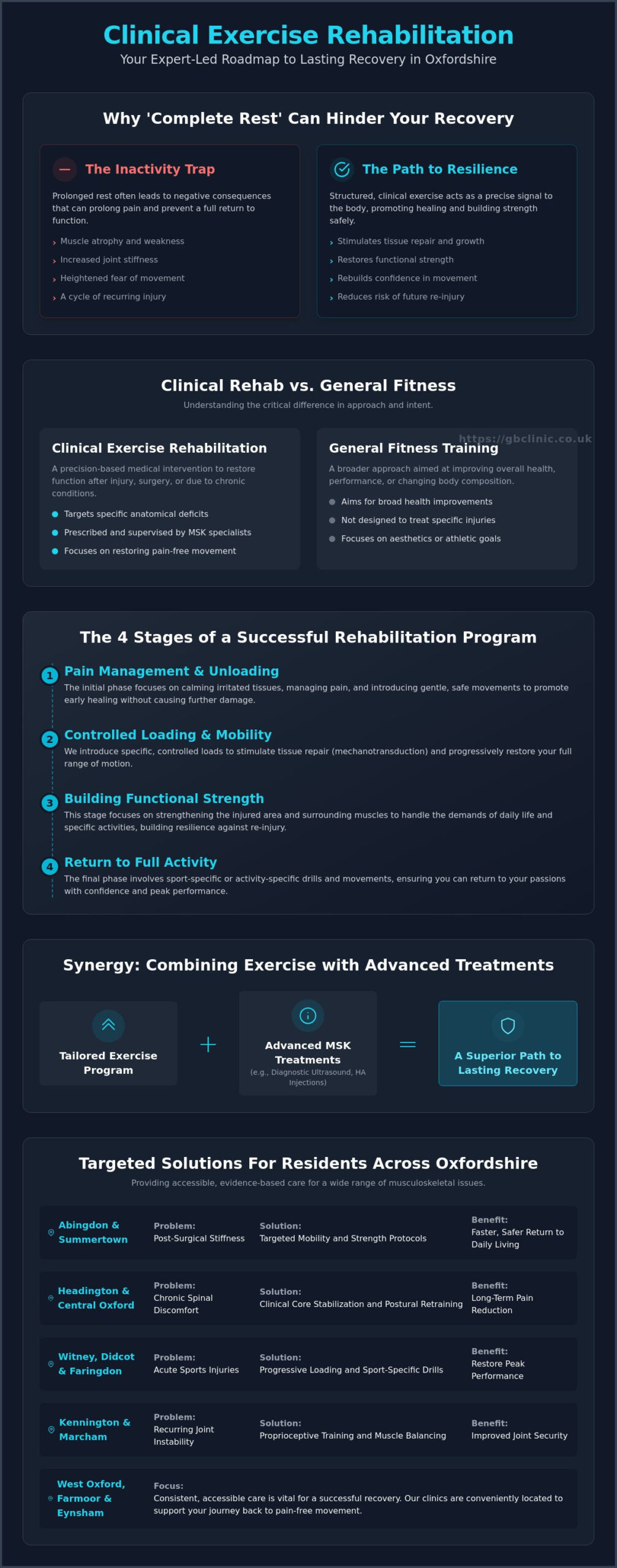
Exercise rehabilitation is a structured, clinical process that uses movement as a primary intervention to restore physical function. While many people confuse this with general fitness training, the two differ significantly in intent and execution. Fitness training focuses on broad improvements in health or aesthetics, whereas clinical rehabilitation is a precision-based approach. It targets specific anatomical weaknesses or neurological deficits identified during a physiotherapy assessment. This specialized discipline is an essential component of modern physical therapy, ensuring that patients don’t just feel better temporarily but actually regain their pre-injury capabilities.
To better understand how a professional protocol is developed, watch this helpful video:
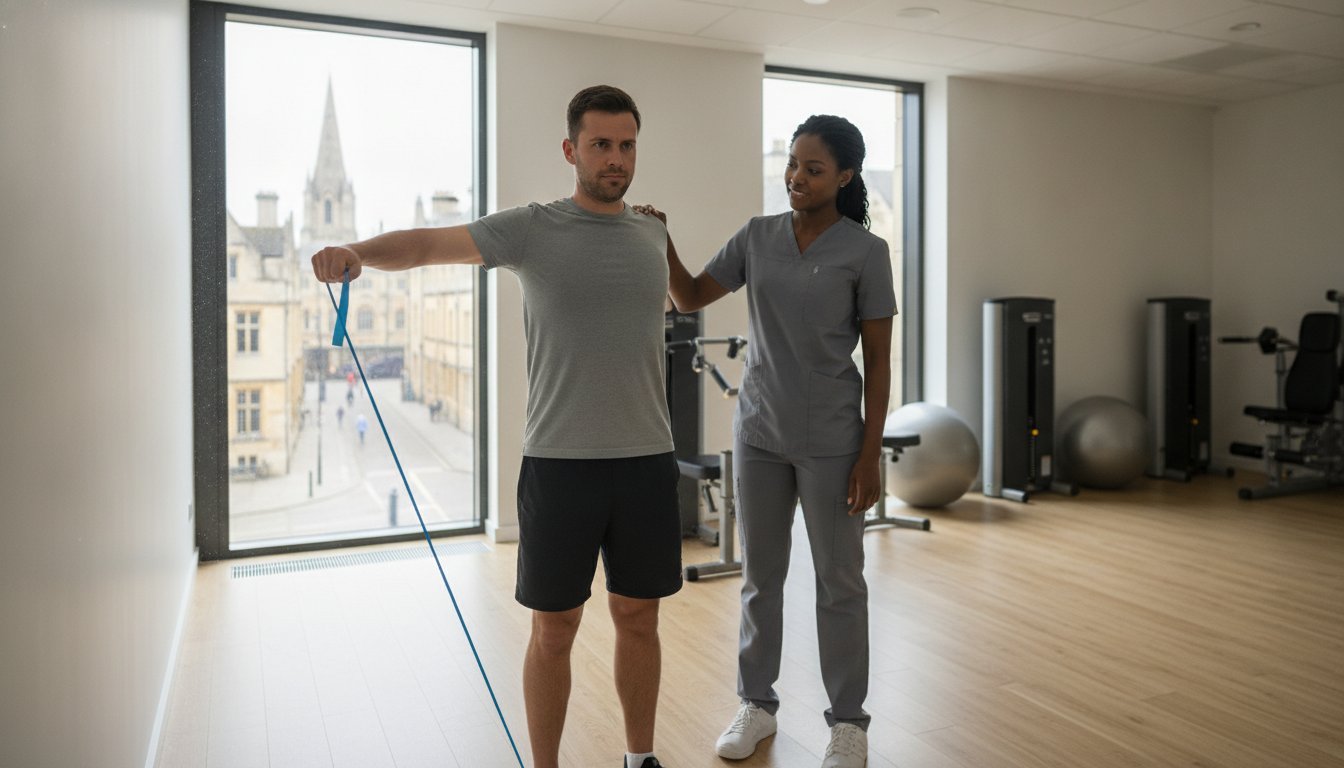
A common misconception is that total rest is the best cure for an injury. In reality, prolonged inactivity often leads to muscle atrophy, joint stiffness, and a heightened fear of movement. MSK specialists dose exercise much like a physician prescribes medicine. We identify the exact amount of mechanical load your tissues can handle to stimulate repair without causing further damage. This tailored approach is what makes the recovery process effective for residents across Oxfordshire, providing a clear path back to a mobile, active life.
The Biological Mechanism of Movement-Based Healing
Healing occurs through a process called mechanotransduction, which is the physiological mechanism where cells convert mechanical loads into biochemical signals to promote cellular repair and structural strengthening. By applying progressive loading, we strengthen tendons, ligaments, and muscle fibers. There’s also a vital neurological element; exercise rehabilitation retrains the brain to trust the injured limb again, reducing the protective guarding that often causes secondary pain or compensatory movements.
Common Conditions Treated with Exercise Rehab in Oxford
Our clinics are conveniently located for residents throughout the region, ensuring that expert care is accessible from West Oxford, Farmoor, and Eynsham. We address a wide range of musculoskeletal issues using evidence-based protocols:
- Problem: Post-surgical joint stiffness in Abingdon and Summertown. Solution: Targeted mobility and strength protocols. Benefit: A faster, safer return to independent daily living.
- Problem: Chronic spinal discomfort for Headington and Central Oxford residents. Solution: Clinical core stabilization and postural retraining. Benefit: Long-term reduction in pain and improved sitting tolerance.
- Problem: Acute sports injuries for active individuals in Witney, Didcot, and Faringdon. Solution: Progressive loading and sport-specific drills. Benefit: Restoration of peak performance and reduced risk of re-injury.
- Problem: Recurring joint instability for those in Kennington and Marcham. Solution: Proprioceptive training and muscle balancing. Benefit: Improved joint security and confidence during movement.
The 4 Stages of a Successful Exercise Rehabilitation Program
Recovery is rarely a linear process, but it is always a logical one. Within the clinical framework of Physical Medicine and Rehabilitation, we view recovery as a series of progressive milestones. This structured approach ensures that your body is never asked to perform a task it isn’t physiologically ready for. By following a phased roadmap, exercise rehabilitation moves you from initial protection to full functional restoration.
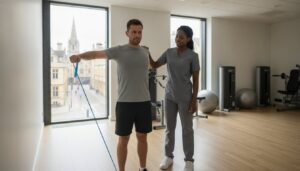
- Phase 1: Pain Management and Mobility Restoration. The priority is to calm the nervous system and restore basic joint range of motion. We use gentle, non-provocative movements to reduce inflammation and prevent stiffness.
- Phase 2: Introduction of Controlled Loading and Isometric Strength. Once pain is stable, we introduce isometrics, where muscles contract without moving the joint. This builds foundational strength without stressing sensitive tissues.
- Phase 3: Functional Strengthening and Proprioception. We transition to dynamic movements that mimic daily life. This phase focuses on balance (proprioception) to ensure your joints remain stable during activity.
- Phase 4: Activity-Specific Performance Training. The final stage involves high-intensity loading tailored to your specific goals, whether that’s returning to competitive sport or gardening without discomfort.
From Initial Assessment to Full Function
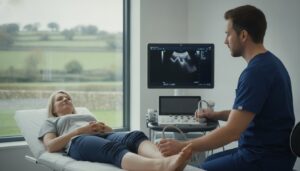
Precision is the cornerstone of effective care. We often begin with a diagnostic ultrasound scan to visualize the internal structures and identify the exact starting point for your journey. This level of detail allows us to tailor programs specifically for patients in Kennington, Marcham, and West Oxford. Rather than relying on subjective feelings, we monitor progress using clinical markers such as force production and movement symmetry. This ensures you only progress when your tissues have reached the necessary healing benchmarks.
Avoiding the ‘Boom and Bust’ Cycle
Many individuals in Headington, Central Oxford, or Abingdon struggle with the ‘boom and bust’ cycle, where they do too much on a good day and suffer a setback the next. Professional guidance is essential to break this pattern and prevent re-injury. We apply the principle of optimal loading, which is the clinical practice of applying the precise amount of mechanical stress required to stimulate tissue repair while avoiding the risk of structural failure. For residents in Didcot, Witney, Faringdon, Summertown, Farmoor, and Eynsham, our clinicians provide the oversight needed to maintain steady progress. If you’re looking for a structured path forward, you can book an assessment at our Oxford clinic to begin your recovery.
- Problem: Recurrent flare-ups during home exercise. Solution: Clinical supervision and load management. Benefit: Consistent, pain-free progression toward recovery goals.
Synergy: Combining Exercise Rehab with Advanced MSK Treatments
Advanced clinical treatments like injections and shockwave therapy are powerful tools for managing pain, but they’re rarely permanent fixes on their own. For residents in Central Oxford and Headington, we view these interventions as the foundation for long-term recovery rather than the finish line. The most successful outcomes occur when we use medical treatments to reduce acute symptoms, creating a window of opportunity where exercise rehabilitation can effectively rebuild functional strength and structural resilience.
Rehabilitating After Hyaluronic Acid or Steroid Injections
Injections serve a specific clinical purpose within a broader recovery roadmap. A guided steroid injection is highly effective at dampening acute inflammation, while Hyaluronic Acid injections provide essential lubrication for osteoarthritic joints. However, without follow-up movement, the underlying mechanical issues often remain. We encourage patients from Summertown, Abingdon, and Didcot to utilize the ‘pain-free window’ immediately following an injection to engage in structured loading that might have been too painful previously.
- Problem: Joint stiffness and muscle inhibition following an arthritic flare-up.
- Solution: Targeted movement protocols to distribute synovial fluid and Hyaluronic Acid throughout the joint capsule.
- Benefit: Improved joint longevity and a significant reduction in the frequency of future injections.
Shockwave Therapy and Exercise: A Two-Pronged Attack
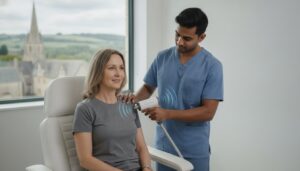
Shockwave therapy is an excellent choice for chronic tendon issues, such as plantar fasciitis or Achilles tendonitis, which frequently affect active individuals in Witney, Faringdon, and West Oxford. The treatment works by sending acoustic waves into the tissue to break down calcification and stimulate a pro-inflammatory healing response. While the shockwave initiates the repair, exercise rehabilitation ensures the new tissue is strong and aligned correctly. This combination is particularly beneficial for our patients in Eynsham and Farmoor, where we see high success rates in treating long-standing foot and ankle pain.
Our evidence-based approach for residents in Kennington and Marcham integrates these modalities to accelerate the remodeling process. By combining the mechanical stimulation of Shockwave Therapy with the progressive loading of a tailored rehab program, we create a comprehensive recovery environment. This ensures that the structural improvements made during clinical sessions translate into real-world mobility and lasting relief from physical discomfort.
The GB Clinic Approach to MSK Physiotherapy in Oxford
GB Clinic provides a high-tier clinical alternative to the general advice often found in public health settings or student-led university clinics. Our physiotherapy in Oxford is led by senior MSK specialists who prioritize measurable outcomes over generic exercise sheets. We understand that residents in Abingdon, Witney, and Didcot require efficient, expert care that respects their time and physical goals. By maintaining a professional medical environment, we ensure that every exercise rehabilitation program is rooted in contemporary clinical evidence and delivered with interpersonal warmth.
Our practice is designed to bridge the gap between advanced medical interventions and functional life. We don’t just treat symptoms; we identify the underlying mechanical drivers of your discomfort. This focus on long-term restoration makes us the preferred choice for those seeking a serious medical entity for their recovery. Whether you are traveling from Faringdon or Kennington, you can expect a streamlined journey that prioritizes your return to a comfortable, mobile state without unnecessary delays.
Personalised Care for the Oxfordshire Community
For individuals in Summertown and Headington, our process begins with a comprehensive assessment that looks beyond the immediate site of pain. We use a structured model to ensure you have full clarity on your recovery roadmap. This transparent approach removes the guesswork often associated with physical recovery. Choosing private MSK care at GB Clinic allows patients from Marcham to bypass long waiting lists and access specialist interventions. Our clinicians focus on your specific objectives, whether that’s returning to high-level sport or simply walking without pain.
- Problem: Confusion over which movements are safe after an injury.
- Solution: A professionally managed roadmap tailored to your specific anatomical needs.
- Benefit: Confidence in movement and a clear path toward lasting functional strength.
Advanced Diagnostics and Targeted Rehab
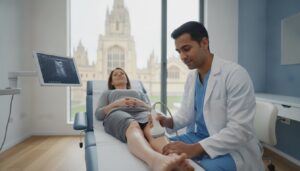
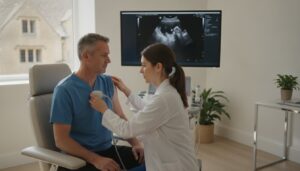
A defining feature of our practice is the seamless integration of diagnostic ultrasound into the rehabilitation process. This technology allows us to visualize tendon health, muscle tears, or joint inflammation in real-time. For our patients in West Oxford, Central Oxford, and Eynsham, this means rehab plans are linked directly to anatomical findings rather than clinical assumptions. The use of ultrasound-guided diagnostics ensures that rehab planning is exceptionally accurate, targeting the specific stage of tissue healing with medical precision.
This diagnostic clarity is especially vital for complex cases in Farmoor, where previous treatments may have failed to provide relief. By seeing the injury clearly, we can dose movement effectively to stimulate repair and track structural changes over time. This modern approach ensures your exercise rehabilitation is as efficient as possible. If you are ready to move past temporary fixes, you can schedule your specialist MSK assessment today to receive a personalized recovery plan.
Getting Started: Your Path to Pain-Free Movement
Persistent physical discomfort often feels like an unavoidable part of life, but it doesn’t have to be. Taking the first step toward recovery requires moving from passive rest to active, clinical intervention. At GB Clinic, we make this transition straightforward by providing a clear entry point into professional exercise rehabilitation. Our goal is to replace uncertainty with a structured plan that restores your confidence in your body’s ability to move without pain.
Booking your initial MSK assessment is the primary action in this journey. During your first session, you’ll receive a comprehensive evaluation that may include advanced diagnostics if necessary. We don’t just provide a list of movements; we explain the clinical reasoning behind every intervention. This ensures that patients from Kennington, Marcham, and Abingdon understand exactly how their program targets their specific injury. Consistency is the most critical factor in tissue remodeling, and our local expert support provides the accountability needed for lasting results.
Easy Access from Across the Region
We’ve positioned our services to be the convenient choice for the entire Oxfordshire community. For those driving from Faringdon or Didcot, our clinic is easily accessible, ensuring that travel time isn’t a barrier to high-quality care. We also offer clinical hours designed to accommodate the busy schedules of professionals working in Central Oxford, Summertown, and Headington. Our patient-first approach removes the friction from starting your rehab, providing a modern, efficient environment for residents in West Oxford, Witney, Farmoor, and Eynsham.
The Long-Term Benefits of Professional Rehab
The value of a clinical exercise rehabilitation program extends far beyond immediate pain relief. By addressing underlying biomechanical issues, we significantly reduce the risk of future injury. This process involves optimizing movement patterns to ensure your joints and muscles work in harmony, which is essential for returning to the sports and hobbies you love. Whether you want to return to competitive athletics or enjoy pain-free walks through the Oxfordshire countryside, we provide the expert-led path to get you there.
- Problem: Fear of re-injury during daily activities or sport.
- Solution: A professionally managed strength and conditioning roadmap.
- Benefit: Restoration of peak physical function and long-term joint health.
You don’t have to manage chronic pain alone. Our team is ready to provide the evidence-based care you need to regain your mobility and move with confidence once again. Book your consultation at GB Clinic today to begin your recovery with a specialist you can trust.
Secure Your Long-Term Functional Recovery
Choosing a clinical path to recovery ensures that your return to movement is both safe and sustainable. Effective exercise rehabilitation is the vital link between initial pain relief and the restoration of full physical capacity. By moving through structured stages of loading and functional training, you can transition from temporary comfort to a state of resilient strength. Our expert-led MSK specialists provide the professional oversight needed to navigate this process with confidence, utilizing advanced tools such as ultrasound-guided injections to maximize your outcomes.
We remain committed to providing accessible, high-quality care for the entire Oxfordshire community. Whether you are seeking support in Abingdon, Witney, Didcot, or Faringdon, our clinics offer a convenient local choice for specialist recovery. Residents in Summertown, Headington, Kennington, and Marcham can benefit from a clear recovery roadmap that prioritizes their specific goals. Individuals from West Oxford, Central Oxford, Farmoor, and Eynsham no longer need to accept persistent discomfort as a permanent condition. Taking the first step is simple; you can Book Your Initial MSK Assessment at GB Clinic to begin your journey toward a pain-free, active life. We look forward to helping you regain the confidence to move freely again.
Frequently Asked Questions
What is the difference between exercise rehabilitation and regular physiotherapy?
Exercise rehabilitation is a specialized subset of physiotherapy that focuses specifically on movement-based restoration rather than just manual therapy or passive pain relief. While regular physiotherapy might prioritize the initial reduction of inflammation, rehabilitation is the phase where you build the strength and resilience needed to prevent re-injury. We provide this targeted care for patients in Headington and Summertown who need to move from passive treatment to active recovery.
How long does a typical exercise rehabilitation program take to see results?
Most patients begin to see significant functional improvements within six to twelve weeks of starting a structured exercise rehabilitation program. This timeline aligns with the biological reality of tissue remodeling and muscle adaptation. Residents in Abingdon and Witney often find that while pain reduces early on, the full restoration of strength and athletic performance requires a consistent commitment to their clinical roadmap.
Is exercise rehabilitation safe if I have a severe injury or have just had surgery?
Clinical movement is highly safe and often recommended immediately following surgery or a severe injury when managed by an MSK specialist. We use objective data and diagnostic tools to ensure that every movement is within the safe limits of your healing tissues. This professional oversight is essential for patients in West Oxford and Central Oxford who want to avoid the complications associated with prolonged inactivity.
Do I need a GP referral to start exercise rehab at GB Clinic in Oxford?
You don’t need a GP referral to access our specialist services in Oxford. As a private clinical entity, we accept direct bookings from individuals seeking expert MSK care. This allows residents in Didcot and Faringdon to bypass traditional waiting lists and begin their recovery process without delay. We maintain clear communication with your medical team if you wish for us to share your progress.
Can exercise rehabilitation help with chronic conditions like osteoarthritis?
Controlled movement is one of the most effective treatments for managing chronic musculoskeletal conditions such as osteoarthritis. It helps to distribute joint lubricant and strengthen the supporting muscles, which reduces the load on sensitive joint surfaces. We help patients in Kennington and Marcham regain their mobility and manage long-term discomfort through these evidence-based, movement-centered protocols.
What happens if an exercise in my rehab program causes pain?
If an exercise causes sharp or increasing pain, you should stop the movement immediately and inform your clinician. We expect some mild discomfort during certain phases of loading, but we always prioritize your safety and comfort. For our patients in Farmoor and Eynsham, we use these feedback markers to adjust the “dose” of your program, ensuring it remains effective without being provocative.
How often will I need to attend the clinic for my rehabilitation sessions?
Most individuals attend the clinic once every one to two weeks for supervised sessions, supplemented by a prescribed home program. This frequency allows us to monitor your progress and update your exercises as your strength improves. We ensure that our clinical hours are convenient for professionals across Oxfordshire, including those commuting from Summertown or Central Oxford.
Is exercise rehabilitation covered by private health insurance in the UK?
Many private health insurance providers in the UK cover exercise rehabilitation when it is delivered as part of a physiotherapy treatment plan. You should contact your specific provider to confirm the details of your policy and any authorization requirements. We support patients from across the region, including Abingdon and Witney, in accessing their benefits for specialist MSK care.