
Did you know that clinical data from The Robert Jones and Agnes Hunt Orthopaedic Hospital indicates that up to 80% of patients with Greater Trochanteric Pain Syndrome experience improvement with focused shockwave therapy, while only 15% see similar results from steroid injections? If you’re struggling with persistent hip pain that makes lying on your side at night feel impossible, you’ve likely reached the limits of the traditional “wait and see” approach. Accessing specialist shockwave therapy for trochanteric bursitis represents a modern, non-surgical bridge between chronic discomfort and a return to the activities you love.
We understand how frustrating it is when simple tasks like climbing stairs or walking the dog become painful hurdles. This guide explores how advanced shockwave therapy provides a targeted, evidence-based solution for stubborn hip pain. You’ll discover the clinical roadmap to recovery and learn how to access expert care throughout Oxfordshire. Our specialist clinics are conveniently located for residents in Central Oxford, Summertown, and Headington, as well as West Oxford, Kennington, and Farmoor. We provide accessible care for those in Abingdon, Marcham, and Didcot, with easy travel links for patients coming from Witney, Faringdon, and Eynsham. Long-term relief and improved mobility are closer than you think.
Key Takeaways
- Understand that modern clinical research classifies trochanteric bursitis under Greater Trochanteric Pain Syndrome (GTPS), focusing on gluteal tendon health rather than simple inflammation.
- Discover how shockwave therapy for trochanteric bursitis provides a non-invasive, regenerative alternative to surgery by stimulating your body’s natural repair mechanisms.
- Compare the long-term functional outcomes of acoustic therapy against traditional corticosteroid and Hyaluronic Acid injections to find the most suitable treatment for your recovery.
- Learn why specialist load management and targeted gluteal rehabilitation are vital for maintaining pain-free mobility and preventing symptom recurrence after your clinical sessions.
- Access expert care at our clinics across Oxfordshire, which are easily reachable for residents in Central and West Oxford, Headington, Summertown, Kennington, Farmoor, Abingdon, Marcham, Eynsham, Witney, Faringdon, and Didcot.
Understanding Trochanteric Bursitis and the Role of Shockwave Therapy
The medical community has transitioned away from the term ‘trochanteric bursitis’ in favour of Greater Trochanteric Pain Syndrome (GTPS). This shift reflects a more accurate Understanding Trochanteric Bursitis as a condition often involving the gluteal tendons rather than just the bursa. While the bursa may be irritated, the primary source of pain is frequently degeneration or small tears where the tendons attach to the greater trochanter, the bony part of your outer hip. For those seeking shockwave therapy for trochanteric bursitis in Central Oxford or Headington, identifying this distinction is the first step toward effective, long term relief.
Traditional treatments such as rest and ice often fail because they don’t address the underlying lack of blood flow in chronic tendon injuries. When pain persists for months, the body’s natural healing response has often stalled. Extracorporeal Shockwave Therapy (ESWT) acts as a regenerative catalyst, using mechanical energy to re-start the repair process. Our clinics are strategically placed to serve residents in Abingdon, Marcham, and Didcot, providing a modern alternative to invasive procedures.
To better understand how this condition presents and how specialist treatment can help, watch this helpful video:
Why is it so painful to lie on your side?
The lateral hip is highly sensitive to compression. When you lie on the affected side, the greater trochanter presses against the mattress, squeezing the tendons and bursa. This mechanical pressure is why many patients from Summertown and Kennington report disrupted sleep. A diagnostic ultrasound can provide a clear view of the soft tissues, confirming the diagnosis for individuals in Farmoor, Eynsham, and Witney who are tired of the ‘wait and see’ approach.
The Science of ESWT: How Sound Waves Heal
Shockwave therapy delivers high energy acoustic pulses into the hip tissues. These are not electrical shocks; they are physical sound waves that create targeted micro-trauma to stimulate a biological response. This triggers neovascularisation, forming new blood vessels to improve nutrient delivery to the damaged area. By re-starting the healing process, shockwave therapy for trochanteric bursitis helps resolve stagnant injuries that have failed to improve with standard physiotherapy alone. We make this advanced care accessible for patients from Faringdon to West Oxford, ensuring a local, professional path to recovery.
The Shockwave Therapy Process: A Step-by-Step Patient Guide
Understanding the clinical journey is essential for building confidence in your recovery. Residents from Abingdon to Summertown often ask exactly how the treatment is administered during their visits. The process at GB Clinic follows a precise, evidence-based protocol to ensure maximum efficacy for every patient. By following a structured pathway, we ensure that shockwave therapy for trochanteric bursitis is delivered safely and effectively, targeting the specific anatomical structures causing your discomfort.
Each clinical session follows four primary stages:
- Step 1: Clinical Assessment and Mapping. Your specialist will physically palpate the lateral hip to identify the exact points of maximum tenderness. This ensures the energy is directed precisely where the gluteal tendons meet the greater trochanter.
- Step 2: Application of Coupling Gel. A medical-grade gel is applied to the skin. This medium is vital because it eliminates air between the device and your body, allowing the acoustic waves to travel into the deeper tissues without losing energy.
- Step 3: Delivery of Acoustic Waves. The practitioner uses a handheld applicator to deliver between 2,000 and 3,000 shockwaves. The intensity begins at a low level and is gradually increased based on your feedback and tolerance.
- Step 4: Post-Treatment Review. We conclude with a brief assessment of your immediate response and schedule your subsequent appointments, typically forming a course of 3 to 5 sessions.
What to expect during your first session in Oxford
If you’re visiting us from Kennington or Marcham, you’ll find a professional environment focused on your comfort. The treatment sensation is often described as a rhythmic tapping or pounding against the hip. While it may feel slightly uncomfortable, it’s not an electrical shock and requires no anaesthetic. Our specialists manage the intensity throughout the session, ensuring the treatment remains tolerable while still triggering the necessary biological response. Patients from Headington and Farmoor often find the sessions surprisingly quick, usually lasting around 15 to 20 minutes in total.
Frequency and Duration: The optimal treatment roadmap
Consistency is vital for achieving the cumulative biological effects required for tissue repair. We generally recommend an interval of 7 to 10 days between sessions. This gap allows the micro-trauma created by the shockwaves to stimulate the healing cascade without overstressing the tissue. For residents in Eynsham, Didcot, and Witney, this weekly schedule is designed to fit easily into a busy routine. We advise patients to avoid anti-inflammatory medications, such as ibuprofen, during the course. These drugs can suppress the natural inflammatory response that shockwave therapy is trying to initiate. You can learn more about our comprehensive approach to physiotherapy as part of your recovery plan. This professional oversight ensures patients from Faringdon, Central Oxford, and West Oxford receive the most effective care possible.
Comparing Shockwave to Steroid and Hyaluronic Acid Injections
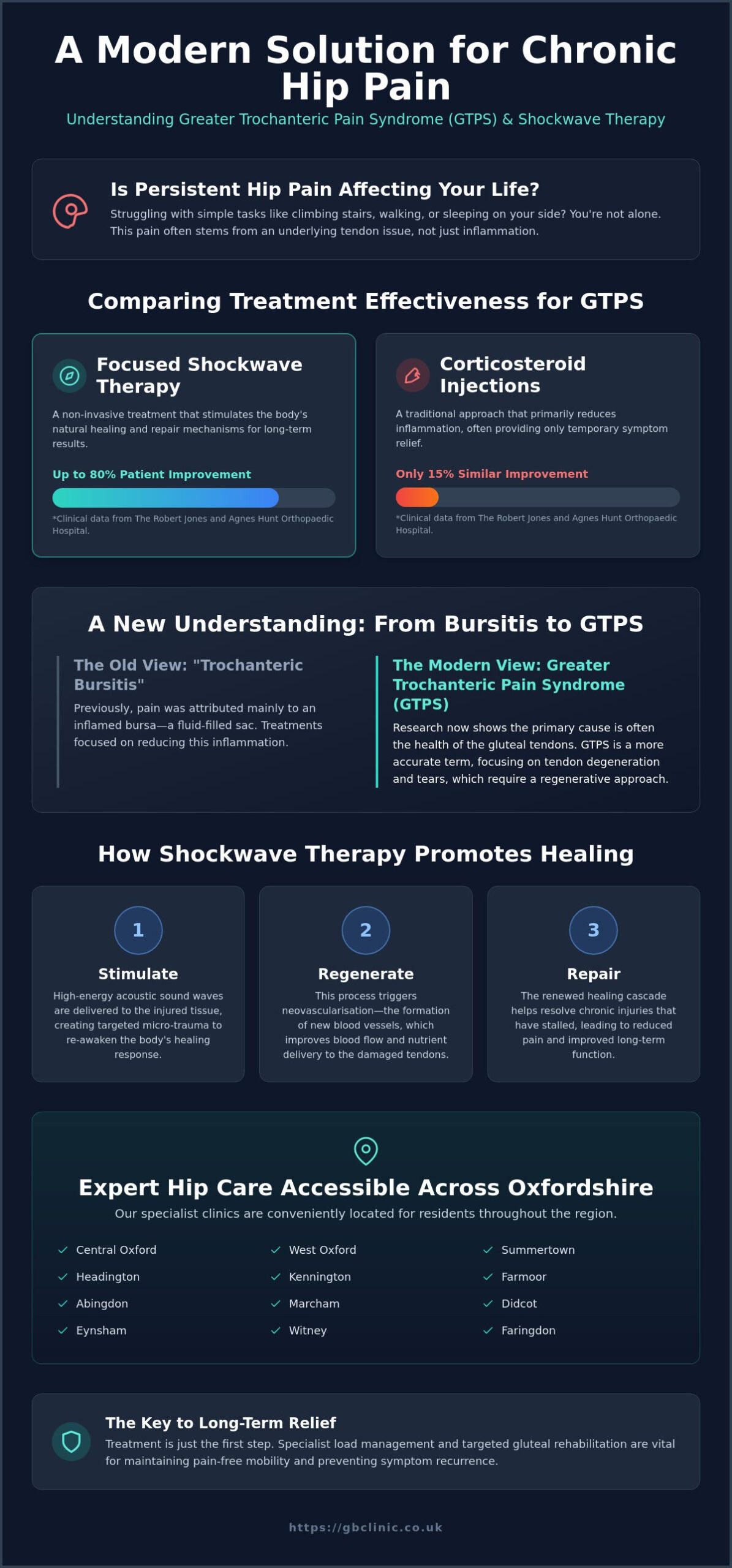
Choosing the right intervention for lateral hip pain requires a clear understanding of how different treatments interact with the body’s tissues. For many patients in Central and West Oxford, the choice often lies between traditional corticosteroid injections and shockwave therapy for trochanteric bursitis. While steroids act as a powerful anti-inflammatory to suppress pain, they are essentially suppressive rather than curative. Clinical data from The Robert Jones and Agnes Hunt Orthopaedic Hospital highlights a stark contrast in outcomes: up to 80% of patients with Greater Trochanteric Pain Syndrome experienced improvement with focused shockwave therapy, compared to only 15% of those who received steroid injections.
A common challenge for residents in Headington and Summertown is the ‘rebound effect’ associated with corticosteroids. These injections often provide rapid relief, but because they don’t repair the underlying gluteal tendinopathy, the pain frequently returns within 6 to 12 weeks. In contrast, shockwave therapy targets the regenerative capacity of the tendon itself. For those in Kennington and Farmoor seeking long-term functional restoration, acoustic therapy offers a more sustainable path by addressing the root cause of the injury.
In some cases, the hip joint itself may be contributing to the patient’s discomfort. Hyaluronic Acid injections serve a different purpose, acting as a lubricant and shock absorber within the joint capsule. This is particularly relevant for our patients in Abingdon and Marcham who may be managing both external tendon issues and internal joint wear simultaneously.
When is an ultrasound-guided injection more appropriate?
There are instances where a guided steroid injection is the most logical first step. In cases of acute, high-level inflammation where the pain is too severe to begin mechanical therapy, settling the symptoms first is essential. As our specialists often explain to patients from Eynsham and Witney: “While steroids mask inflammation, shockwave therapy addresses the underlying tendon degeneration.” Using diagnostic tools allows us to determine if a suppressive or regenerative approach is required to achieve the best result.
Combining therapies for complex hip pain
Many individuals in Faringdon and Didcot present with multi-faceted musculoskeletal conditions. It’s common to see Greater Trochanteric Pain Syndrome co-existing with hip osteoarthritis. In these complex scenarios, we may combine treatments to address both the intra-articular joint pain and the extra-articular tendon pain. This integrated approach ensures that patients across Oxfordshire receive a comprehensive recovery plan tailored to their specific anatomical needs, avoiding the delays of a one-size-fits-all strategy.
Recovery and Rehabilitation: Maximising Results in Oxfordshire
While the acoustic pulses initiate the biological response, the long-term success of shockwave therapy for trochanteric bursitis depends heavily on what happens between clinical sessions. Shockwave acts as a powerful catalyst for repair, but it works best when paired with strategic load management. A 2020 study confirmed that focused shockwave therapy combined with a structured exercise programme achieved an 86.8% success rate two months after treatment. This demonstrates that passive recovery is rarely as effective as an active, guided approach.
For our patients in Abingdon, Witney, and Central Oxford, load management involves identifying and modifying movements that aggravate the lateral hip. This doesn’t mean total rest. Instead, it’s about avoiding excessive compression. We advise against crossing your legs when sitting or standing with your weight shifted onto one hip. These small adjustments reduce the mechanical stress on the gluteal tendons, allowing the regenerative effects of the therapy to take hold without constant interruption.
Bespoke Physiotherapy Plans at GB Clinic
Integrating professional physiotherapy into your recovery roadmap is the most effective way to ensure lasting hip stability. Our specialists focus on progressive exercise rehabilitation, moving from gentle isometrics to more robust gluteal strengthening. We provide tailored home programmes for patients visiting us from Headington to Eynsham, ensuring your exercises are safe, effective, and easy to follow. This structured loading helps the new collagen fibres formed during shockwave therapy to align correctly, strengthening the hip against future recurrence.
Immediate post-treatment care
In the 48 hours following a session, patients from Summertown, Kennington, and Marcham should prioritise gentle movement over high-impact activity. It’s common to experience a minor “healing ache” or slight swelling in the treated area. This is a positive sign that the body’s inflammatory repair mechanism is active. We recommend staying well-hydrated and avoiding intense exercise like running or heavy lifting during this window. Residents in Farmoor, Didcot, and Faringdon often find that a short, level walk is perfectly appropriate. Monitoring your progress over a full 12-week cycle is essential, as the biological changes in the tendon continue long after your final appointment. If you are ready to begin your recovery journey in West Oxford or the surrounding areas, book your clinical assessment today to discuss a tailored treatment plan.
Specialist Hip Care at GB Clinic: Accessible Treatment for Oxfordshire
GB Clinic stands as the premier destination for shockwave therapy in Oxford. We offer a clinical environment where modern technology meets empathetic, patient-focused care. Our team of musculoskeletal specialists is dedicated to providing an efficient path to recovery, particularly for those who’ve found little relief through traditional “wait and see” methods. By choosing shockwave therapy for trochanteric bursitis at our facility, you’re opting for a treatment delivered by experts who specialise in soft tissue restoration and long term functional health.
Accessibility is a core priority for our practice. We’ve designed our service to be the convenient, local choice for residents in Summertown, Kennington, and Marcham. We recognize that chronic hip pain can make driving or sitting for long periods uncomfortable, so we ensure our clinic remains easy to reach for the wider Oxfordshire community. Those commuting from Didcot or Faringdon find our location straightforward to access, allowing them to integrate their recovery into a normal working day without the stress of long distance travel.
Serving the wider Oxfordshire community
Our clinical reach extends across the region, providing specialist interventions for patients from Headington, Farmoor, and West Oxford. We believe that residents shouldn’t have to travel to major metropolitan hubs to find advanced regenerative treatments. Whether you’re based in Central Oxford or living in the surroundings of Eynsham, our doors are open to provide the care you need. The ease of booking and our streamlined assessment process mean that individuals from Abingdon and Witney can begin their rehabilitation journey without unnecessary delays or administrative hurdles.
Why choose a Musculoskeletal Specialist?
Achieving the best results requires the guidance of the best musculoskeletal specialist in Oxford. Our practitioners use high end ESWT devices, such as the Swiss Dolorclast system, to ensure the energy is delivered with clinical precision. This level of technology, combined with our deep understanding of gluteal tendinopathy, sets us apart as a serious medical entity focused on evidence based outcomes. We don’t just treat symptoms; we work to restore your physical comfort and return you to a mobile, active state. Take the first step toward pain-free movement today by scheduling your initial assessment with our specialist team.
Begin Your Path to Pain-Free Mobility in Oxfordshire
Achieving long term relief from persistent hip pain requires a transition from suppressive treatments to regenerative clinical solutions. By understanding the modern classification of Greater Trochanteric Pain Syndrome and implementing a structured recovery plan, you can move beyond the limitations of chronic discomfort. Accessing specialist shockwave therapy for trochanteric bursitis provides the biological catalyst needed to resolve stubborn tendon issues that have failed to respond to traditional rest or medication. Our clinics offer professional MSK care that’s easily reachable for residents in Central Oxford, Summertown, and Headington. Whether you’re visiting from West Oxford, Kennington, or Farmoor, our specialists provide the expertise needed for a successful recovery. We also serve the communities of Abingdon, Marcham, and Eynsham, with convenient access for those in Didcot, Witney, and Faringdon.
Our specialist MSK practitioners utilize advanced Swiss Dolorclast Shockwave technology to ensure the highest standards of care. We offer complimentary initial assessment options to help you understand your treatment roadmap without obligation. It’s time to restore your mobility and return to the activities you love. Book Your Initial Hip Assessment at GB Clinic and take the first step toward a more comfortable, active lifestyle today.
Frequently Asked Questions
Is shockwave therapy for trochanteric bursitis painful?
Shockwave therapy for trochanteric bursitis is generally described as uncomfortable rather than painful. You’ll feel a rhythmic tapping sensation as the acoustic waves enter the hip tissue. Our specialists at the Oxford clinic adjust the intensity to your tolerance level throughout the session. Most patients from Summertown or Headington find the 15 minute procedure perfectly manageable without any need for local anaesthetic or sedation.
How many sessions of shockwave therapy will I need for hip pain?
Most patients require a course of 3 to 5 sessions to achieve optimal results. These are typically spaced 7 to 10 days apart to allow the biological repair process to begin. Residents visiting from Abingdon and Marcham often notice cumulative improvements after the second or third session. Consistency is essential for ensuring the gluteal tendons respond effectively to the mechanical energy delivered during the course.
Can I drive home after a shockwave therapy session at your Oxford clinic?
You can certainly drive yourself home immediately after your appointment. Because the treatment is non-invasive and doesn’t involve medications that cause drowsiness, there’s no restriction on operating a vehicle. This makes the service highly convenient for individuals commuting from Didcot or Faringdon. You can return to your normal daily activities in Central Oxford or West Oxford right away without any recovery downtime.
What is the success rate of shockwave therapy for Greater Trochanteric Pain Syndrome?
Clinical research shows a success rate of up to 80% for Greater Trochanteric Pain Syndrome when using focused shockwave therapy. This is significantly higher than the 15% success rate observed with traditional steroid injections in studies at The Robert Jones and Agnes Hunt Orthopaedic Hospital. For patients in Kennington seeking long term recovery, this treatment represents a highly effective, evidence based choice for resolving chronic lateral hip pain.
Are there any side effects of shockwave therapy on the hip?
Side effects are generally mild and temporary, consisting of local skin redness or minor swelling. You might experience a minor “healing ache” in the treated area for 24 to 48 hours. This is a normal part of the body’s inflammatory response to the therapy. Patients from Farmoor and Eynsham are advised to avoid high impact activities during this short window to allow the hip tissues to settle comfortably.
Does health insurance cover shockwave therapy for bursitis in the UK?
Many major UK private health insurance providers cover shockwave therapy for chronic musculoskeletal conditions that haven’t responded to initial conservative care. Policies vary, so it’s essential to confirm your level of cover with your insurer before starting treatment. Our administrative team assists patients from Central Oxford in navigating this process. If your condition is refractory and has lasted over 12 weeks, insurance approval is typically more straightforward.
How soon will I feel the benefits of shockwave treatment?
Some patients experience an immediate reduction in pain due to the analgesic effect of the acoustic waves on the nerve endings. However, the full biological benefits of shockwave therapy for trochanteric bursitis typically emerge over 8 to 12 weeks. This is the time required for new blood vessel formation and collagen repair to occur. Residents in Witney should expect gradual, lasting functional improvements during this recovery period.
Who should not have shockwave therapy for hip pain?
Shockwave therapy is not suitable for individuals who are pregnant, have a pacemaker, or suffer from active blood clotting disorders. You should also wait at least six weeks if you’ve recently had a steroid injection in the same area. Our specialists conduct a thorough screening for every patient to ensure the treatment is safe and appropriate for your specific health profile before proceeding with the therapy.