
What if the sharp, stabbing pain you feel every time you stand up from your desk isn’t a permanent disability, but a condition that 90% of patients resolve through conservative care? If you live in Summertown, Headington, or Central Oxford, you likely find yourself dreading the daily commute or an afternoon in the office because sitting has become an endurance test. This persistent discomfort often leads to significant anxiety about potential fractures, yet specialist coccygeal tenderness physiotherapy offers a proven, non-surgical route to recovery.
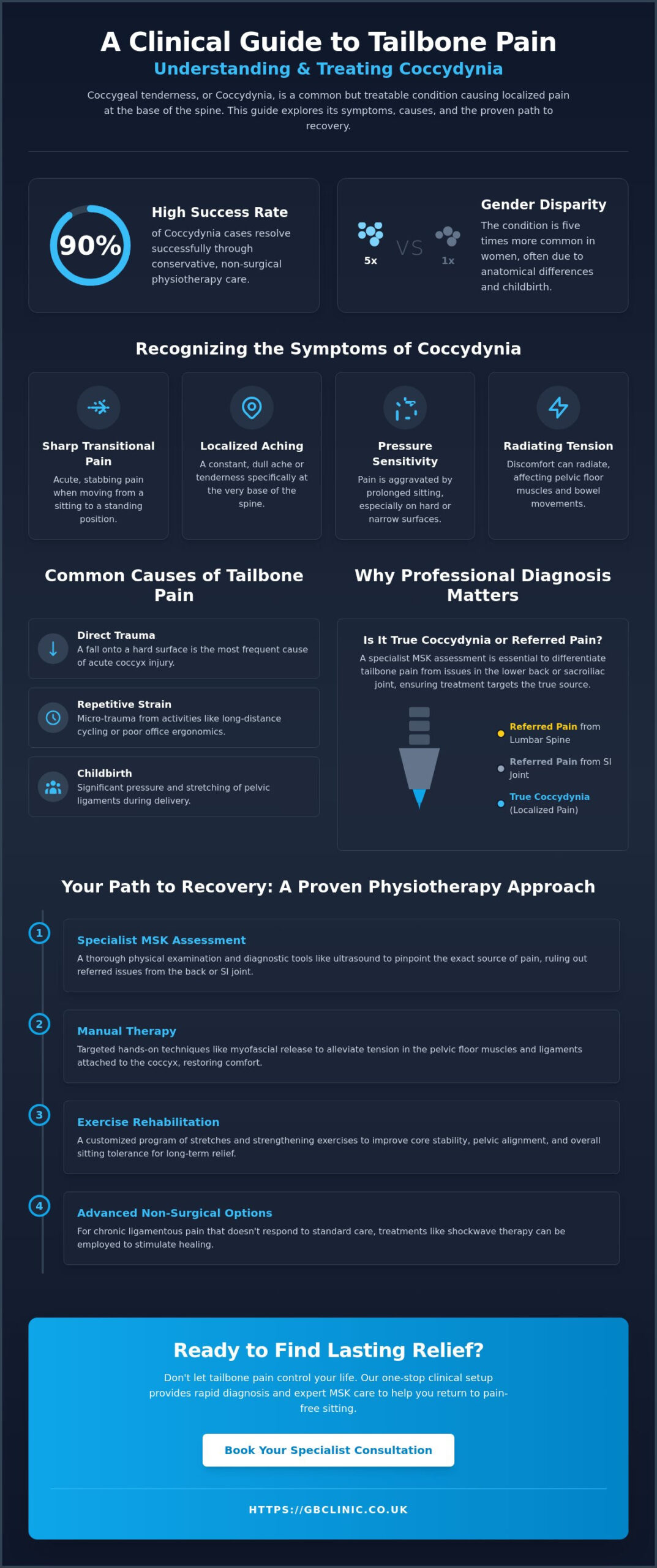
At GB Clinic, we understand that coccygeal pain, which is five times more common in women, requires more than just a doughnut cushion for relief. We promise to provide you with a clear diagnosis and a clinical path toward pain-free sitting through expert MSK care. Whether you are visiting us from Abingdon, Witney, Faringdon, or Didcot, our clinicians use advanced manual therapy and diagnostic tools to restore your quality of life. This guide previews how targeted interventions like myofascial release and exercise rehabilitation help residents across Kennington, Marcham, Farmoor, Eynsham, and West Oxford return to their normal routines without the need for invasive surgery.
Key Takeaways
- Understand the clinical symptoms of coccydynia, including localized dull aches and sharp pain during transitions from sitting to standing.
- Learn why a specialist MSK assessment is essential to differentiate true tailbone pain from referred issues in the lower back or sacroiliac joint.
- Discover how coccygeal tenderness physiotherapy uses manual therapy and exercise rehabilitation to restore comfort and improve sitting tolerance.
- Explore advanced non-surgical options like shockwave therapy for chronic ligamentous pain that doesn’t respond to standard conservative care.
- Access a professional one-stop clinical setup for rapid diagnosis and treatment, conveniently located for residents across Abingdon, Witney, and Oxfordshire.
What is Coccygeal Tenderness? Understanding Coccydynia
Coccydynia refers to localized pain and tenderness at the very base of your spine. For many patients in Summertown, Headington, or Central Oxford, this condition manifests as a persistent, nagging discomfort that makes basic tasks like working at a desk or driving a car feel impossible. By Understanding Coccydynia, you can begin to see that this isn’t just general back pain; it’s a specific musculoskeletal issue requiring targeted coccygeal tenderness physiotherapy to address underlying inflammation or instability. While the symptoms are often debilitating, approximately 90% of cases respond well to non-surgical, conservative management.
Symptoms range from a constant dull ache to sharp, stabbing sensations during movement or even bowel movements. One of the most telling signs of this condition is the “sitting-to-standing” trigger. This transition often causes an acute flare of pain as the pelvic ligaments and muscles shift and pull on the tailbone. While acute trauma from a fall is a frequent cause, many residents in Didcot and Witney suffer from chronic postural tenderness that develops over months of repetitive strain or poor ergonomic setups in home offices.
To visualize how these symptoms can be managed through movement, watch this helpful video demonstrating relief techniques:
Anatomy of the Coccyx
The coccyx consists of three to five fused segments at the terminal end of your spinal column. While it may seem like a minor structure, it plays a vital role as a weight-bearing support when you sit. It forms one point of a tripod along with your ischial tuberosities (sit-bones). Because the tailbone serves as an attachment point for various pelvic floor muscles and ligaments, any dysfunction here can lead to tension that radiates throughout the pelvic region. Patients in Eynsham and Farmoor often find that resolving this muscular tension is the key to long-term recovery.
Common Causes of Tailbone Pain
Direct trauma is the most frequent culprit for tailbone issues. This often involves a fall onto a hard surface or repetitive micro-trauma from activities like long-distance cycling. For women in Abingdon or Kennington, childbirth is another significant factor; the significant pressure and stretching of the pelvic ligaments during delivery can lead to coccygeal instability. In some cases, the cause is idiopathic, meaning the tenderness develops without a clear injury. Whether your pain stems from a specific incident in Marcham or a gradual onset in Faringdon or West Oxford, professional coccygeal tenderness physiotherapy provides a structured, evidence-based path to relief.
Diagnosing Tailbone Pain: Why Professional Assessment Matters
A physical examination is the essential first step in resolving tailbone pain. Many patients in Headington or Central Oxford initially mistake lower back stiffness for coccydynia. However, a specialist evaluation distinguishes between these two. It rules out referred pain from the lumbar spine or the sacroiliac joint. This differentiation is critical for professional assessment and treatment, ensuring the intervention targets the actual source of discomfort. Through precise palpation, a clinician identifies specific ligamentous tension or muscular trigger points that often accompany the condition.
Residents in Abingdon, Kennington, or Marcham shouldn’t rely on guesswork. Expert coccygeal tenderness physiotherapy begins with a thorough assessment of the pelvic region. This process identifies whether the pain is localized to the bone or caused by surrounding soft tissue dysfunction. If you are struggling with persistent discomfort, you can book a specialist consultation to receive a definitive diagnosis and a clear path to recovery.
The Role of Diagnostic Ultrasound
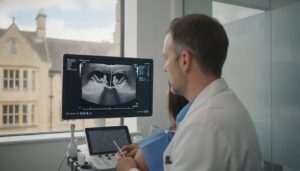
While many providers rely solely on physical touch, we utilize diagnostic ultrasound scans to provide a clearer picture. This technology allows us to visualize soft tissue inflammation in real-time. It is particularly effective for several clinical purposes:
- Identifying bursitis or fluid accumulation around the coccyx.
- Detecting abnormal mobility in the coccygeal segments during movement.
- Visualizing ligamentous thickening or chronic strain.
Ultrasound is a safer, non-invasive alternative to repeated X-rays. It involves no radiation and provides immediate results. For patients in Didcot, Witney, and Faringdon, this means a faster route to an accurate care plan without unnecessary delays or hospital referrals.
Identifying Postural Triggers
Diagnosis also involves looking at how you move. “Slumping” in office chairs is a common trigger for patients in Farmoor and Eynsham. This posture places undue pressure directly on the tailbone rather than the sit-bones. We assess the “dynamic” movement of the coccyx as you transition between sitting and standing. Often, tight hamstrings pull on the pelvis, which increases coccygeal strain. Identifying these mechanical links is a core part of coccygeal tenderness physiotherapy. This comprehensive approach ensures we address the root cause of the pain rather than just the symptoms. Residents in West Oxford and Summertown benefit from this detailed mechanical analysis, which forms the foundation of a successful recovery.
Physiotherapy Management: Manual Therapy and Rehabilitation
Effective recovery from coccydynia requires more than just resting; it demands a proactive approach to tissue health and joint mechanics. Our private MSK physiotherapy in Oxford provides a tailored clinical pathway designed to break the “fear-avoidance” cycle. Many residents in Summertown or Headington find themselves avoiding sitting altogether, which leads to secondary stiffness in the hips and lower back. By addressing the physical triggers early, coccygeal tenderness physiotherapy helps patients regain confidence in their daily movements, whether they are commuting from Didcot or working in Central Oxford.
Clinical evidence suggests that Physiotherapy for tailbone pain is most successful when it combines manual techniques with progressive loading. Unlike generic exercise sheets that focus solely on stretching, our expert-led approach targets the specific anatomical drivers of your discomfort. Consistency in these rehabilitation programmes is vital for long-term recovery, as it allows the ligaments and muscles around the coccyx to adapt and strengthen. Patients visiting from Abingdon, Kennington, or Marcham benefit from a structured plan that transitions from pain relief to functional restoration.
Manual Therapy and Myofascial Release
We use targeted manual therapy to address the soft tissue components of coccydynia. This includes myofascial release of the levator ani and gluteal muscles, which often become hypertonic in response to chronic pain. Mobilisation of the coccygeal segments helps restore normal joint mechanics, reducing the sharp “pinch” felt during sitting-to-standing transitions. Additionally, therapeutic massage is utilized to decrease localized inflammation and desensitize the area for patients in Witney, Faringdon, or West Oxford.
Pelvic Floor and Core Strengthening
Strengthening is only one part of the equation; for many in Farmoor or Eynsham, pelvic floor relaxation is the clinical priority. A chronically tight pelvic floor can pull the tailbone out of alignment, causing persistent tenderness. Our rehabilitation programmes focus on several key areas:
- Building core stability to offload the lower spine and pelvis.
- Specific stretches for the piriformis and iliopsoas muscles to reduce pelvic torque.
- Instruction on diaphragmatic breathing to naturally relax the pelvic base.
This comprehensive strategy ensures the tailbone remains supported and mobile. Residents across Oxfordshire receive bespoke exercise plans that are easy to follow and highly effective for preventing future flare-ups.
Advanced Treatments for Chronic Coccygeal Tenderness
Most patients achieve significant relief through manual therapy and exercise. However, a small percentage of cases involve persistent inflammation that requires more intensive intervention. When standard coccygeal tenderness physiotherapy provides incomplete results, we transition to advanced musculoskeletal (MSK) therapies. These modern options focus on breaking the cycle of chronic pain by addressing tissue pathology at a cellular level. Residents in Headington, Summertown, and Central Oxford no longer need to rely solely on passive rest; instead, they can access clinical solutions designed to accelerate the body’s natural healing response.
Our approach combines the precision of diagnostic imaging with the latest non-surgical treatments. If you’ve struggled with tailbone pain for more than 12 weeks, it’s likely that the surrounding ligaments have entered a state of chronic irritation. For those living in Abingdon, Kennington, or Marcham, our clinic provides a “one-stop” setup where we can assess, scan, and treat these stubborn conditions in a single location. If your symptoms haven’t improved with standard care, consult our specialist team today for an advanced assessment.
Guided Steroid and HA Injections
We offer guided steroid injections to manage acute neuralgic pain and severe localized inflammation. These injections are performed under real-time ultrasound guidance to ensure the medication reaches the exact point of tenderness with millimetre precision. For patients in Didcot or Witney who require a different approach, Hyaluronic Acid (HA) injections provide a unique alternative. HA acts as a biological lubricant and cushion, which is particularly beneficial when the pain is caused by friction or lack of soft tissue padding. During the procedure, you’ll feel a small pinprick, followed by a sensation of pressure; most patients return to light activities within 48 hours.
Extracorporeal Shockwave Therapy (ESWT)
For chronic ligamentous strain, shockwave therapy is an exceptionally effective non-invasive option. ESWT delivers high-energy acoustic pulses to the affected area, which stimulates blood flow and triggers cellular repair in “stubborn” tissues. It’s an ideal choice for residents in Faringdon, Farmoor, or Eynsham who want to avoid injections or more invasive procedures. A typical treatment course involves several key steps:
- An initial 30-minute clinical assessment to confirm suitability.
- A series of 3 to 5 sessions, usually spaced one week apart.
- Integration with corrective coccygeal tenderness physiotherapy to maintain the gains achieved during therapy.
This combined strategy ensures that we don’t just mask the pain but actually repair the underlying structures. Patients from West Oxford and across the region find this modern therapy provides the breakthrough they need to return to pain-free sitting.
Specialist MSK Care in Oxfordshire: Your Path to Recovery
GB Clinic represents the leading choice for residents across Oxfordshire seeking specialized intervention for tailbone pain. Our one-stop approach means you can move from a diagnostic scan to advanced treatment in a single clinical environment. This efficiency is vital for those suffering from chronic coccydynia, as it eliminates the need for multiple referrals and long waiting times. By providing expert-led coccygeal tenderness physiotherapy, we ensure that every patient receives a clear, evidence-based path to recovery. Our focus remains on achieving long-term results through modern therapies and precise clinical assessment.
We recognize that persistent pain creates significant lifestyle limitations. Sitting for work or driving shouldn’t be an endurance test. By choosing a specialist MSK provider, you access a level of expertise that goes beyond general practice. Whether your symptoms require manual therapy, shockwave therapy, or ultrasound-guided injections, our team is equipped to deliver these services with professional distance and empathetic care. Coccygeal tenderness physiotherapy at our clinic is designed to restore your quality of life efficiently and effectively.
Local Access for Oxfordshire Residents
Convenience is a core part of our patient-focused service. Patients in Witney, Didcot, and Headington find our clinical facilities easily accessible for regular appointments. We also serve the communities of Eynsham, Farmoor, and Kennington, offering modern MSK solutions close to home. Excellent travel links ensure that individuals traveling from Marcham, Faringdon, and West Oxford can reach us without the stress of navigating complex city-center traffic. Whether you’re based in Central Oxford or commuting from Abingdon or Summertown, our clinics are positioned to provide convenient, high-quality care for the entire region.
The GB Clinic Difference
We maintain a professional, expert-led environment where patient outcomes are the primary focus. Every treatment is tailored to your specific musculoskeletal needs, ensuring that your recovery plan is as unique as your symptoms. Our clinic projects an image of modern excellence, utilizing advanced diagnostic tools to remove the guesswork from your treatment. We offer a free personal physiotherapy consultation with zero commitment, allowing you to discuss your symptoms with a specialist before starting your journey. Take the first step toward long-term relief and book your specialist physiotherapy assessment in Oxford today.
Restore Your Comfort with Specialist Tailbone Care
Recovering from coccydynia is a measured process that begins with precision diagnostics. You’ve seen that effective coccygeal tenderness physiotherapy combines manual techniques with advanced options like shockwave therapy to address chronic ligamentous strain. By identifying the specific mechanical triggers of your pain, we provide a clear path to long-term recovery. Our clinical approach focuses on restoring function so you can sit, stand, and move without the constant dread of discomfort.
Our clinics offer a professional, one-stop setup for residents across Oxfordshire. Whether you’re traveling from Abingdon, Witney, or Didcot, or you live in Summertown, Headington, or Central Oxford, expert care is always within reach. We also proudly serve patients from Kennington, Marcham, Farmoor, Eynsham, Faringdon, and West Oxford. With our expert-led MSK diagnostics and advanced therapies, you don’t have to tolerate the anxiety of persistent pain. Take the first step toward sitting comfortably again. You can Book Your Specialist Physiotherapy Consultation in Oxford today and take advantage of our zero-commitment initial assessment. Your journey to a pain-free life starts with a specialist plan tailored to your needs.
Frequently Asked Questions
Can a physiotherapist actually fix a sore coccyx?
A specialist can resolve most tailbone issues through a structured clinical pathway. Conservative management is successful in 90% of cases. Residents in Summertown and Headington benefit from manual therapy and myofascial release that targets the pelvic floor muscles. This approach restores normal joint mechanics and reduces localized sensitivity through evidence-based rehabilitation.
Is it normal for tailbone pain to last for several months?
It’s common for untreated coccydynia to persist for several months, but pain lasting longer than 12 weeks is classified as chronic. This often happens when the initial inflammation leads to a cycle of muscle guarding and ligamentous strain. Early coccygeal tenderness physiotherapy for patients in Abingdon and Didcot prevents these long-term complications by addressing the mechanical root cause immediately.
What is the best cushion for coccygeal tenderness?
A wedge-shaped cushion with a posterior cutout is generally the most effective choice for reducing pressure. This design ensures that the coccyx “floats” rather than bearing weight during sitting. For those working in Central Oxford or West Oxford, using this ergonomic support alongside rehabilitation helps maintain the gains achieved during clinical sessions.
How many physiotherapy sessions will I need for coccydynia?
Most patients require between 3 and 6 sessions to achieve significant, long-lasting relief. Your specific timeline depends on whether the condition is acute or chronic. At our clinics serving Witney and Faringdon, we begin with a comprehensive assessment to establish a clear recovery path. We then monitor your progress every 14 days to ensure the treatment is effective.
Can tailbone pain be caused by problems in my lower back?
Referred pain from the lumbar spine or sacroiliac joint is a frequent cause of tailbone discomfort. Approximately 15% of patients presenting with coccygeal symptoms actually have an issue originating in the L5/S1 spinal segments. Our diagnostic process for residents in Kennington and Marcham includes ruling out these referred sources to ensure your treatment targets the correct area.
Is shockwave therapy painful when used on the tailbone area?
Shockwave therapy involves a localized tapping sensation that most patients find mildly uncomfortable but well-tolerated. The intensity is always adjusted to your specific tolerance levels. For patients in Eynsham and Farmoor, this non-invasive treatment stimulates blood flow and cellular repair without the need for downtime or medications.
When should I consider a guided injection for my tailbone pain?
You should consider a guided injection if your symptoms haven’t improved after 6 to 12 weeks of consistent manual therapy. We use ultrasound guidance to ensure maximum precision when delivering anti-inflammatory medication. This is a common step for stubborn cases in Oxfordshire where chronic inflammation prevents the successful completion of exercise rehabilitation.
Does childbirth always cause permanent tailbone damage?
Childbirth does not typically cause permanent damage, although it is a factor in many cases due to the 5x higher prevalence of coccydynia in women. Most postpartum pain stems from ligamentous stretching or temporary joint hypermobility during delivery. Specialized coccygeal tenderness physiotherapy helps new mothers in the region restore pelvic stability and return to pain-free daily activities.