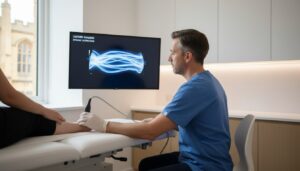
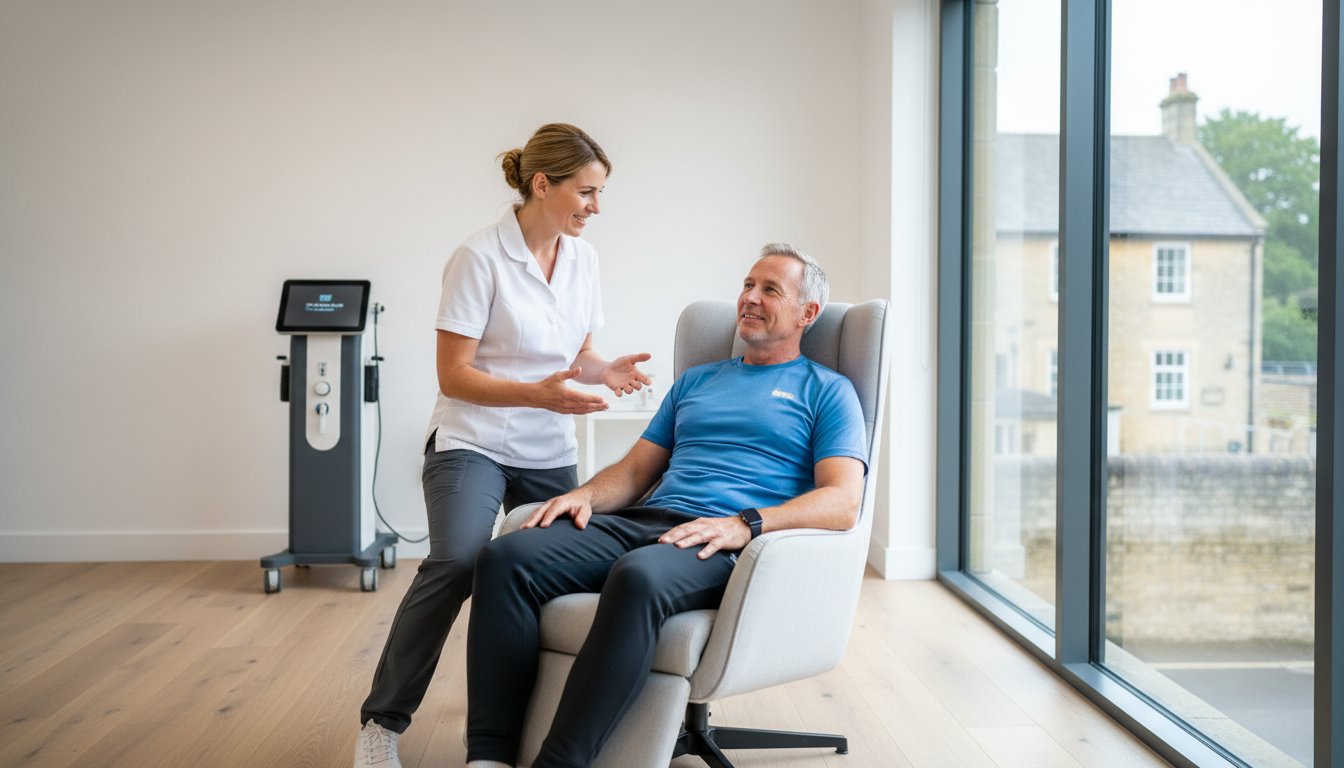
Accepting that “controlled micro-trauma” is the catalyst for healing can feel counterintuitive when you’re already in pain. It’s completely normal to feel apprehensive when researching the risks and side effects of shockwave therapy, especially if you’re worried about procedural discomfort or rare complications. You want a clear path to recovery without the guesswork. At GB Clinic, we prioritize patient safety by adhering to the latest 2026 NICE HealthTech guidance for conditions like plantar fasciitis and Achilles tendinopathy.
This article explains what to expect during your sessions and helps you understand if you’re a suitable candidate for this evidence-based treatment. We’ll outline common reactions that indicate your body is responding well and identify specific contraindications, such as pregnancy or cardiac pacemakers. Whether you’re visiting us from Abingdon, Summertown, or Headington, our goal is to provide the clinical clarity you need. Our specialist services are easily accessible for residents across Kennington, Marcham, Farmoor, and Eynsham. We also provide dedicated care for patients in Didcot, Witney, Faringdon, and both Central and West Oxford, ensuring expert musculoskeletal support is always local and convenient.
Key Takeaways
- Learn how shockwave therapy uses NICE-approved technology to stimulate natural healing through controlled micro-trauma, offering a non-invasive path to recovery.
- Understand the common risks and side effects of shockwave therapy, such as temporary redness or mild discomfort, and why these reactions are a normal part of the therapeutic process.
- Identify key contraindications, including pregnancy and blood clotting disorders, to determine if you’re a suitable candidate for this modern musculoskeletal treatment.
- Discover how patients in Abingdon, Summertown, Headington, and Witney benefit from our expert-led safety protocols and state-of-the-art diagnostic ultrasound scans.
- Access professional care at our clinics conveniently located for residents in Kennington, Marcham, Farmoor, Eynsham, Didcot, Faringdon, Central Oxford, and West Oxford.
Is Shockwave Therapy Safe? Understanding the Clinical Safety Profile
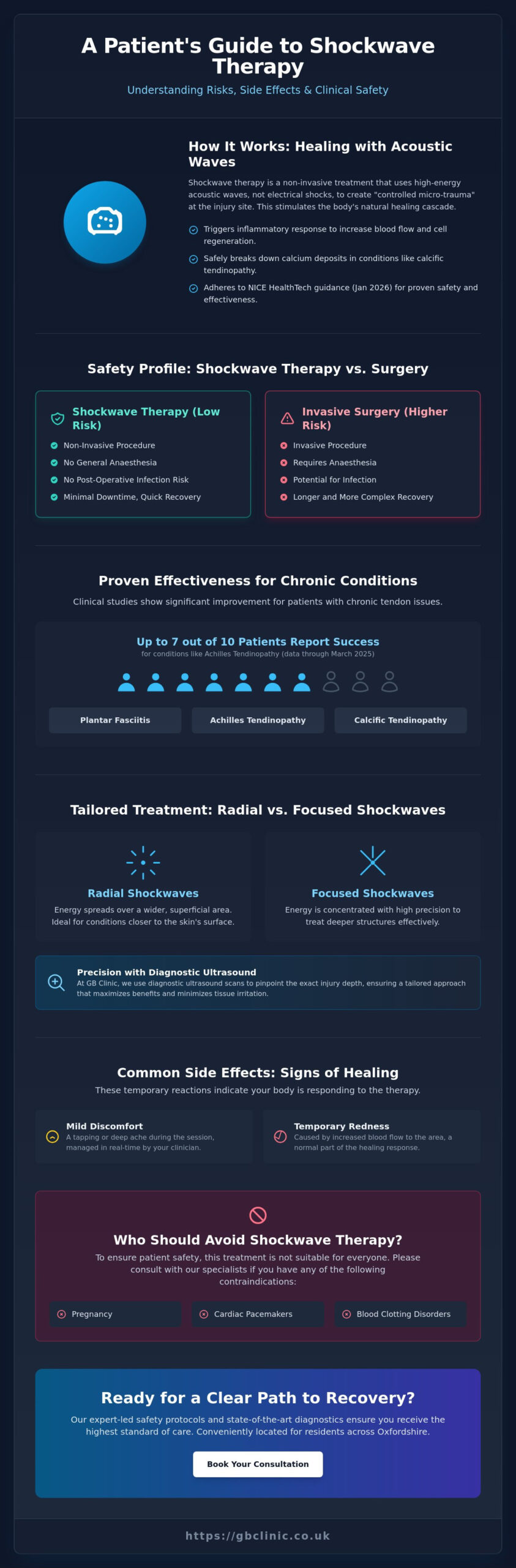
Shockwave therapy, or Extracorporeal shockwave therapy (ESWT), is a non-invasive treatment option that has gained significant traction in musculoskeletal medicine. It adheres to the January 2026 NICE HealthTech guidance for several chronic tendon conditions, such as plantar fasciitis and Achilles tendinopathy. Patients often approach us with questions about the risks and side effects of shockwave therapy; however, clinical data consistently demonstrates an excellent safety profile. Unlike surgery, there are no risks associated with general anaesthesia or post-operative infections. ESWT is considered a low-risk alternative to surgery, with a complication rate significantly lower than invasive procedures.
Residents across Oxfordshire, including those in Abingdon, Summertown, and Headington, can access this evidence-based care without the long recovery times associated with more invasive methods. Whether you’re traveling from Didcot, Witney, or Faringdon, our goal is to provide a safe environment where you can focus on healing. The treatment is designed to be efficient and targeted, ensuring you can return to your daily routine as quickly as possible.
To better understand this concept, watch this helpful video:
How Shockwaves Interact with Human Tissue
A common misconception is that shockwave therapy involves electrical shocks. In reality, it utilizes high-energy acoustic waves. These waves travel through the skin to create “controlled micro-trauma” at the site of injury. This process triggers the body’s natural inflammatory response, which increases blood flow and stimulates tissue regeneration. For patients with calcific tendinopathy, a phenomenon called cavitation helps break down calcium deposits safely. This targeted approach ensures that only the affected musculoskeletal structures are treated. Studies published through March 2025 show that 5 to 7 out of 10 patients report significant effectiveness for conditions like Achilles tendinopathy. Our clinic in Kennington, Marcham, and Farmoor utilizes these precise mechanisms to ensure patient safety remains the priority.
The Distinction Between Radial and Focused Shockwaves
Understanding the technology behind the treatment is essential for managing the risks and side effects of shockwave therapy. Radial shockwaves are the most common type used in physiotherapy. They spread energy over a wider, more superficial area, making them ideal for conditions near the skin’s surface. In contrast, focused shockwaves reach deeper structures with higher precision. GB Clinic selects specific equipment based on patient tolerance and the depth of the injury. This tailored approach is available to patients from Eynsham, Central Oxford, and West Oxford, ensuring that energy levels are always adjusted to maintain comfort while maximizing therapeutic benefits. By utilizing an advanced diagnostic ultrasound scan, we can pinpoint the exact depth required, which minimizes the potential for unnecessary tissue irritation.
Common Side Effects: What to Expect During and After Treatment
While the clinical profile of this procedure is excellent, patients should expect a range of physiological responses as the body initiates its healing process. Understanding the risks and side effects of shockwave therapy helps distinguish between a standard therapeutic reaction and a rare complication. During the session, you may experience mild discomfort. This sensation is often described as a repetitive tapping or a deep ache. Our clinicians, serving patients from Abingdon to Summertown, are trained to adjust the energy levels in real-time to ensure the treatment remains tolerable while still being effective for shockwave treatment for musculoskeletal care.
Immediately following your appointment, you might notice the following localized reactions:
- Erythema: Redness and slight swelling around the treated area, which typically subsides within 24 hours.
- Petechiae: Small red or purple spots caused by minor capillary activity, which are harmless and fade quickly.
- Localized Bruising: This can appear within 24 hours of treatment, especially in areas with less soft tissue coverage.
- Dull Ache: A temporary increase in sensitivity or a “heavy” feeling in the joint that may last between 2 and 4 days.
If you’re visiting us from Kennington, Marcham, or Headington, we ensure you leave with a clear understanding of these sensations. If you’re concerned about how your body might react, you can speak with our team during a professional musculoskeletal assessment to discuss your specific history.
Normal Reactions vs. Unusual Complications
The first 48 hours after treatment represent a critical inflammatory window. It’s vital to understand that a temporary increase in pain is often a positive indicator. It suggests the acoustic waves have successfully triggered the biological repair mechanisms necessary for long-term recovery. However, patients from Farmoor, Eynsham, and Didcot should contact the clinic if they experience skin breakdown, severe numbness, or pain that prevents sleep beyond the initial 72-hour period. These instances are exceptionally rare but require clinical review.
Managing Post-Treatment Sensations at Home
Recovery management is straightforward but requires specific adherence to clinical advice. You must avoid anti-inflammatory medications (NSAIDs) such as ibuprofen or aspirin for at least 48 hours after your session. These drugs can interfere with the very inflammation the therapy is trying to create. If discomfort persists, simple paracetamol is a safer alternative. We also advise patients in Witney, Faringdon, and Central Oxford to modify their activity levels. Rest is vital for the first 24 hours to allow the treated tissue to stabilize. Avoiding high-impact exercise for 2 days ensures the best possible outcome for those in West Oxford seeking a return to pain-free movement.
Contraindications: Who Should Avoid Shockwave Therapy?
While shockwave therapy is a highly effective tool for tissue regeneration, it isn’t suitable for every patient. Safety is the primary focus of our practice at GB Clinic. We conduct a rigorous screening process for every individual, whether you’re traveling from Abingdon, Summertown, or Kennington. Understanding the risks and side effects of shockwave therapy requires us to identify specific medical conditions where the treatment could be counterproductive or harmful. Our clinicians ensure that residents from Marcham, Headington, and Farmoor receive a treatment plan that aligns with their unique health profile.
The following conditions are primary reasons to avoid or delay treatment:
- Pregnancy: We do not treat pregnant patients due to a lack of clinical safety data regarding the impact of acoustic waves on fetal development.
- Blood Clotting Disorders: If you have a history of thrombosis or hemophilia, the mechanical energy of the shockwaves carries a high risk of significant bruising or internal bleeding.
- Active Infection or Tumours: Increased blood flow is a benefit of shockwave therapy, but it can inadvertently spread pathogens or malignant cells if an infection or tumour is present in the treatment area.
- Recent Steroid Injections: Timing is critical. You must wait at least 6 weeks following a corticosteroid injection before starting ESWT to protect the integrity of the tendon.
Absolute vs. Relative Contraindications
Absolute contraindications are non-negotiable safety boundaries. These include pregnancy, the presence of a cardiac pacemaker, and treating areas directly over the lungs or open growth plates in children. Relative contraindications require a more nuanced clinical assessment. For example, patients in Eynsham or Didcot taking anticoagulants like Warfarin or Rivaroxaban may still be candidates, but they require careful monitoring. We often perform a diagnostic ultrasound scan prior to treatment. This ensures an accurate diagnosis and confirms that the targeted tissue is in a suitable state for acoustic energy.
The 6-Week Rule for Corticosteroid Injections
Steroids are effective at reducing acute inflammation, but they can temporarily weaken tendon fibers. Applying shockwave therapy too soon after an injection could potentially lead to tissue damage. We strictly enforce a 6-week waiting period to ensure your safety. Interestingly, there’s a much more natural synergy with Hyaluronic Acid injections, which focus on joint lubrication rather than suppressing the inflammatory healing response. Our clinics in Witney, Faringdon, Central Oxford, and West Oxford prioritize this long-term recovery perspective, ensuring your treatment schedule is optimized for the best possible clinical outcome.
Minimising Risks: Safety Standards at Our Oxford Clinic
Patient safety isn’t accidental; it’s the result of rigorous clinical protocols and expert oversight. At GB Clinics, we mitigate the risks and side effects of shockwave therapy by ensuring every treatment is delivered by specialists highly trained in musculoskeletal (MSK) diagnostics. Our facilities are strategically located to be easily accessible for patients in Abingdon, Witney, and Central Oxford, ensuring that professional follow-up care is always within reach. We don’t just apply a machine to a painful area. We provide a structured clinical pathway designed for long-term recovery.
Our approach utilizes state-of-the-art technology with fully adjustable energy levels. This allows our clinicians to fine-tune the intensity of the acoustic waves based on your specific tissue density and pain tolerance. For residents in Marcham and Farmoor, this means a safer experience that avoids the trauma of over-treatment. To further enhance these results, we integrate advanced physiotherapy into our recovery plans. This combination ensures that while the shockwave therapy stimulates healing, your rehabilitation exercises provide the strength needed to prevent future injury.
The Importance of a Specialist MSK Assessment
A “one-size-fits-all” approach to energy dosing is often where unnecessary side effects occur. We serve residents from Headington to Eynsham and West Oxford with expert clinical oversight that starts before the first shockwave is even delivered. By using diagnostic ultrasound, we can visualize the exact site of the pathology. This precision ensures that high-energy waves are targeted only at the damaged tendon or calcification, sparing the surrounding healthy tissue. This level of detail is a core standard of our Oxford-based services, ensuring that your path to becoming pain-free is both efficient and safe.
Our Commitment to Patient Education in Oxfordshire
We believe that an informed patient is a safer patient. We provide clear pre-treatment checklists for individuals visiting us from Didcot and Faringdon, ensuring they’re prepared for the physiological response of the therapy. Patients from Summertown and Kennington receive consistent, evidence-based care that adheres to the latest 2026 safety regulations for medical devices. We offer a personal consultation to discuss your individual risk profile and answer any questions about the procedure without any pressure. To begin your recovery with a clinician-led safety assessment, book your initial consultation today.
Risk vs. Reward: Shockwave Compared to Other Treatments
Extracorporeal Shockwave Therapy (ESWT) offers a distinct advantage when weighed against more invasive medical alternatives. For patients in Abingdon and Summertown, the choice between conservative therapy and surgical intervention is often a matter of balancing recovery time against long-term efficacy. Surgery carries inherent risks, including post-operative infection, permanent scarring, and potential reactions to general anaesthesia. In contrast, shockwave therapy is entirely non-invasive, allowing for immediate weight-bearing and a rapid return to daily activities. While surgery requires weeks of downtime, ESWT side effects typically resolve within 72 hours.
Another frequent comparison involves the use of guided steroid injections. While corticosteroids are highly effective at suppressing acute inflammation and providing rapid relief, they don’t necessarily address the underlying tissue degeneration. In some cases, repeated steroid use can even weaken the tendon structure. Shockwave therapy takes a different approach by promoting biological healing through increased collagen production and improved blood flow. Data from May 2026 indicates that ESWT has a lower recurrence rate for refractory plantar fasciitis than rest alone, providing residents in Kennington and Headington with a more durable solution for chronic pain.
When is Shockwave the Safest Choice?
ESWT is often the safest choice for chronic musculoskeletal conditions that have persisted for longer than 3 to 6 months. It’s particularly effective when traditional manual therapy or exercise programs haven’t delivered the desired results. Because the procedure doesn’t involve medication or incisions, it’s an ideal option for elderly patients or individuals from Marcham and Farmoor who might not be suitable candidates for surgery. This low-risk profile allows patients in Eynsham and Didcot to pursue clinical recovery without the systemic risks associated with pharmaceutical interventions. We’ve found that 5 to 7 out of 10 patients see significant improvement in mobility and pain reduction following a full course of treatment.
Making the Decision for Your Recovery
The risk-to-benefit ratio for shockwave therapy is exceptionally low for the vast majority of musculoskeletal ailments. Most patients experience only minor, temporary sensations that are a natural part of the body’s repair cycle. If you’re ready to move beyond the limitations of chronic pain, our clinics offer a professional and evidence-based environment for your treatment. Residents in Witney and Faringdon can easily access our specialist services. You can book a comprehensive assessment at our West Oxford or Central Oxford locations to discuss your individual risk profile. Our clinicians will help you decide if shockwave therapy is the most effective local choice for your specific path to long-term recovery.
Empowering Your Recovery with Clinical Precision
Choosing a treatment path requires a clear understanding of safety and efficacy. We’ve explored how shockwave therapy offers a non-invasive alternative to surgery, with a clinical profile that minimizes the risks and side effects of shockwave therapy. By using NICE-approved technology and specialized MSK diagnostics, we ensure your healing process is both controlled and effective. Our expert clinicians are committed to delivering evidence-based care to patients across Oxfordshire, from Abingdon and Summertown to Headington and Didcot.
Whether you’re visiting us from Kennington, Marcham, Farmoor, or Eynsham, our local clinics provide the expertise you need close to home. We also serve residents in Witney, Faringdon, Central Oxford, and West Oxford, offering a seamless journey from diagnosis to long-term recovery. Book your expert Shockwave Therapy consultation in Oxford today. We provide zero-commitment consultations to ensure you feel confident in your decision. It’s time to restore your mobility and return to the activities you love.
Frequently Asked Questions
Does shockwave therapy cause permanent nerve damage?
Shockwave therapy does not cause permanent nerve damage when administered by trained musculoskeletal specialists. The acoustic waves target specific soft tissues and don’t have the thermal properties required to damage nerve fibers. Patients in Abingdon and Summertown can feel confident as the procedure is non-invasive and surface-focused. We use precise diagnostic tools to ensure energy is directed only where it’s needed. This localized approach prevents any systemic risks to your nervous system.
Will I be able to drive home after my shockwave session in Oxford?
You can safely drive home immediately after your session because the treatment doesn’t involve any sedation or local anaesthesia. Most patients from Kennington and Marcham return to their normal daily routines right after leaving our clinic. While you might feel a slight dull ache in the treated area, it doesn’t impair your ability to operate a vehicle or concentrate. This convenience makes it a preferred choice for busy individuals working in Central Oxford.
Can shockwave therapy make my tendonitis worse?
Shockwave therapy won’t make your condition worse in the long term, though a temporary increase in pain is a normal physiological response. This reaction indicates that the controlled micro-trauma has successfully triggered the body’s inflammatory healing process. Residents in Headington and Farmoor should expect this sensitivity to peak within 24 hours before subsiding. Our clinicians monitor your progress across each session to ensure the treatment effectively addresses the underlying pathology without causing distress.
Is it normal to see bruising after a shockwave treatment?
It is entirely normal to see localized bruising or small red spots, known as petechiae, within 24 hours of your appointment. These are common risks and side effects of shockwave therapy and are generally harmless. Patients in Eynsham and Didcot typically find that these marks fade within 3 to 5 days. This reaction occurs because acoustic energy interacts with small blood vessels near the skin surface. It doesn’t indicate any underlying tissue damage or long-term complications.
How many sessions can I safely have before needing a break?
A standard course typically consists of 3 to 6 sessions, spaced 5 to 10 days apart to allow for tissue recovery. We don’t recommend indefinite treatment; if improvement isn’t noted after 6 sessions, we re-evaluate your diagnosis using our diagnostic ultrasound services. Patients in Witney and Faringdon benefit from this structured approach, which prevents over-stimulation of the tissues. This measured rhythm ensures the best possible environment for successful musculoskeletal repair and long-term recovery.
Can I have shockwave therapy if I am taking blood thinners?
You may be eligible for treatment while taking blood thinners, but it requires a specialized clinical assessment. Anticoagulants like Warfarin increase the risk of significant bruising, which is a factor when assessing the risks and side effects of shockwave therapy. Our team in West Oxford reviews your history to ensure the benefits outweigh potential localized reactions. We prioritize safety by adjusting energy levels to minimize trauma to the treated area while still achieving therapeutic results.
What happens if the treatment is too painful during the session?
Your clinician will immediately lower the energy intensity if you find the sensations too uncomfortable. We use modern equipment with fully adjustable settings, allowing us to find a level that is therapeutic yet tolerable. Patients from Central Oxford often find they can tolerate higher energy levels as the sessions progress and the tissue begins to heal. Communication is vital, and we encourage you to provide feedback throughout the entire 5 to 10 minute procedure.
Is shockwave therapy safe for children with growing bones?
Shockwave therapy is not recommended for children who still have open growth plates in the treatment area. The high-energy acoustic waves could potentially interfere with bone development, making it an absolute contraindication for younger patients. We strictly adhere to this safety standard across all our Oxfordshire locations to protect the health of our younger community members. Our specialists always perform a thorough physical screening to confirm skeletal maturity before proceeding with advanced musculoskeletal therapies.