
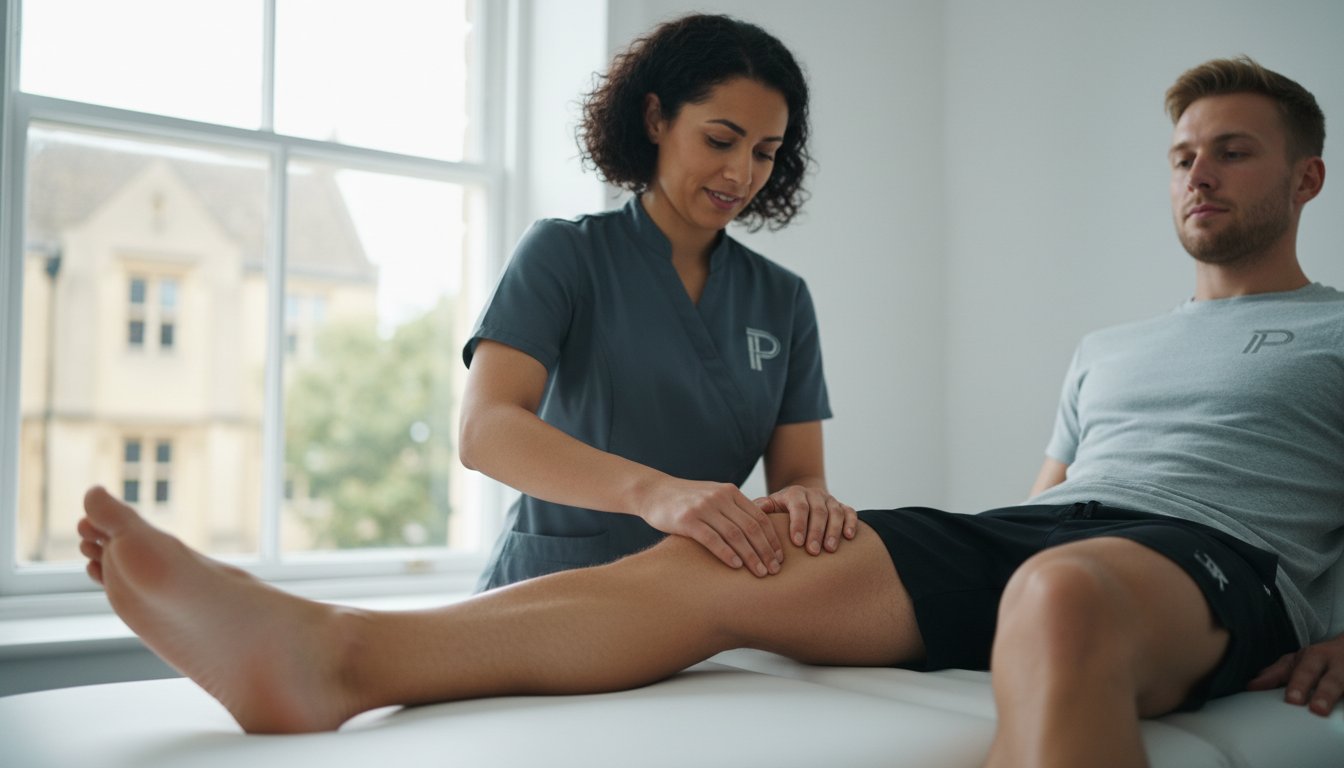
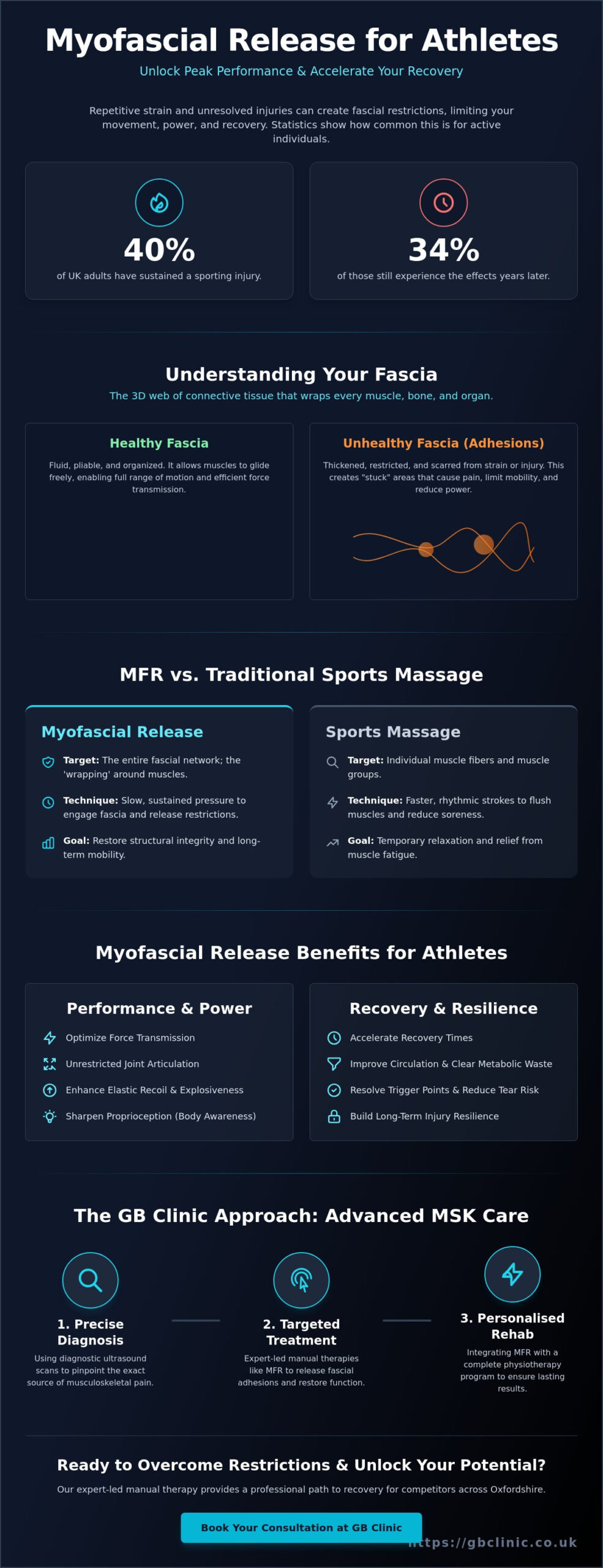
A 2022 survey by Podium Analytics found that 40% of people in the UK have sustained a sporting injury, with 34% of those still experiencing the effects years later. You’ve likely dealt with persistent muscle tightness that traditional stretching won’t fix, or noticed your power output dropping during intense training. It’s frustrating when recovery times between sessions start to slow down because of fascial restrictions that limit your natural movement and performance.
Learning about the myofascial release benefits for athletes is a vital step toward optimizing your training and building long-term injury resilience. At GB Clinic, our expert-led manual therapy provides a professional path to recovery for competitors across Oxfordshire. Whether you’re training in Central Oxford, West Oxford, Abingdon, or Witney, we offer targeted care to increase your range of motion. This article explains how athletes in Summertown, Headington, Didcot, and Faringdon can access advanced MSK services, while also highlighting the convenient support available for residents in Kennington, Marcham, Farmoor, and Eynsham.
Key Takeaways
- Discover the myofascial release benefits for athletes, including how addressing fascial adhesions can resolve persistent muscle tightness and restore lost power output.
- Learn how healthy connective tissue improves force transmission and allows joints to reach their full potential for enhanced athletic performance.
- Understand how manual therapy accelerates recovery by improving circulation to clear metabolic waste and reducing the risk of acute tears through trigger point removal.
- See how GB Clinic uses diagnostic ultrasound scans to identify the exact source of musculoskeletal pain before starting a personalised rehabilitation program.
- Access professional MSK services at convenient locations across Oxfordshire, including Abingdon, Summertown, and Central Oxford, to maintain long-term injury resilience.
What is Myofascial Release for Athletes?
Myofascial Release (MFR) is a specialised manual therapy that targets the fascia, the tough, three-dimensional web of connective tissue surrounding your muscles, bones, and organs. For athletes training in Central Oxford or Summertown, repetitive physical strain often causes this tissue to develop adhesions. These “stuck” areas create restrictive scars that limit range of motion and lead to persistent discomfort. Understanding What is Myofascial Release helps clarify why this clinical approach is different from a standard rub-down. It focuses on the structural integrity of the body rather than just temporary relaxation.
The primary goal is to apply sustained pressure and movement to elongate the fascia. This process breaks down restrictive scars and restores fluidity to the whole body. At GB Clinic, we see many patients from Abingdon and Headington who find that this structural alignment is the key to unlocking their full physical potential. One of the major myofascial release benefits for athletes is the restoration of proper movement patterns that have been compromised by years of intense training sessions.
To better understand the relationship between soft tissue health and athletic performance, watch this helpful video:
Understanding the Fascial System
Think of your fascia as a biological fabric that transmits force across your entire musculoskeletal system. When you’re overtraining or dehydrated, this fabric can undergo “thickening,” making it feel like your muscles are trapped in a suit that’s too small. This is particularly noticeable along myofascial lines, which are functional chains connecting your body from your toes to your head. For a runner in Witney or Didcot, a restriction in the foot’s fascia can cause tension in the lower back. Our team at GB Clinic often uses a diagnostic ultrasound scan to visualize these tissues and ensure we’re targeting the correct area of restriction for residents in Kennington and Marcham.
MFR vs. Traditional Sports Massage
While standard sports massage focuses on individual muscle fibres, MFR focuses on the “wrapping” of those fibres. Standard techniques often use fast, rhythmic strokes, but MFR requires slower, sustained pressure to bypass the muscle’s protective stretch reflex. This makes it significantly more effective for chronic, deep-seated tightness that stretching doesn’t fix. Athletes from Faringdon, Eynsham, and West Oxford often choose this clinical approach when they need a long-term solution. By integrating MFR into a broader physiotherapy plan, we help individuals in Farmoor achieve lasting mobility and improved performance.
Key Myofascial Release Benefits for Performance and Power
Athletes often view performance through the narrow lens of muscle strength, but the mechanical properties of the fascial system are equally critical. One of the primary myofascial release benefits for athletes is the optimization of force transmission. Healthy fascia acts like a high-tension spring. It stores energy during the eccentric phase of movement and releases it explosively. When this tissue is unrestrained, your joints reach their full potential. This ensures that every watt of power generated by your muscles translates into movement rather than being absorbed by internal friction. This reduction in biological drag makes your movements more energy-efficient. It allows you to maintain a higher intensity for longer durations without premature fatigue.
Key mechanical advantages of healthy fascia include:
- Unrestricted joint articulation: Allows for deeper squats and fuller throwing motions.
- Enhanced elastic recoil: Increases the “snap” in your movements.
- Reduced internal resistance: Muscles don’t have to fight against tight connective tissue.
- Sharpened proprioception: Better “body awareness” through stimulated nerve endings.
Unlocking Explosive Power and Speed
Fascial elasticity is a cornerstone of the stretch-shortening cycle, which is vital for sprinting and jumping. If the fascia is thickened or adhered, this elastic recoil is dampened. For a footballer in Abingdon or a rugby player in Witney, this translates to a slower first step or a lower vertical jump. Myofascial release optimizes the kinetic chain for athletes by ensuring that tension is distributed evenly across the entire fascial web. This structural balance is essential for maintaining agility and speed during rapid lateral movements. Scientific reviews on Accelerating Athletic Recovery highlight how manual interventions support these physiological adaptations, helping athletes in Central Oxford and West Oxford stay at the top of their game.
Improving Flexibility and Joint Mechanics
Restrictions in the fascia surrounding the hips or shoulders often force the body to adopt compensatory patterns. If your hip fascia is tight, your lower back may overwork to compensate, which eventually leads to secondary injuries. This is a common issue we see in patients from Summertown and Headington. Understanding the myofascial release benefits for athletes is key for those in Didcot or Faringdon seeking to improve joint mechanics and long-term resilience. By addressing these restrictions, we restore natural movement and improve your body’s internal GPS. Releasing the fascia, which is incredibly rich in nerve endings, sharpens your form. For a detailed movement assessment, our private msk physiotherapy Oxford service provides comprehensive gait and movement analysis.
Athletes across Kennington, Marcham, and Farmoor can benefit from these targeted interventions. Whether you’re a weekend warrior in Eynsham or a serious competitor, improving your fascial health is a strategic move for your career. If you’re struggling with restricted movement, you can book a free personal physiotherapy consultation at one of our Oxfordshire clinics to identify your specific restrictions and start your recovery journey.
Accelerating Athletic Recovery and Injury Prevention
Recovery is a physiological necessity, not a luxury. One of the primary myofascial release benefits for athletes is the acceleration of metabolic clearance. By improving local circulation and lymphatic drainage, MFR helps the body remove the chemical byproducts of intense exercise more efficiently. This process is essential for reducing the severity of Delayed Onset Muscle Soreness (DOMS). Athletes in Central Oxford or Headington often find that this clinical intervention allows them to return to high-intensity training 24 to 48 hours sooner than with passive rest alone.
Beyond waste removal, MFR builds long-term injury resilience. It identifies and resolves “trigger points” before they force the body into dangerous compensatory patterns. When one area of fascia is restricted, other joints must overwork, which often leads to acute tears. For those in Abingdon or Witney, MFR is a vital tool for managing chronic issues like shin splints. By elongating the fascial sheath around the lower leg, we reduce the traction on the bone that causes inflammation. This clinical approach provides a level of Myofascial Release Benefits for Performance that goes far beyond surface-level massage.
The psychological impact of MFR is equally important for total body health. The slow, methodical pressure used in our clinics across Oxfordshire triggers the parasympathetic nervous system. This shift out of a “fight or flight” state is crucial for systemic recovery. It helps lower cortisol levels and prepares the body for deep, restorative sleep after the stress of competition.
Preventing Common Overuse Injuries
Overuse conditions often stem from fascial imbalances that traditional stretching cannot fix. For runners in Summertown or Didcot, IT band syndrome is frequently a result of fascial tension in the hips. Releasing these tissues restores proper tracking of the knee. Similarly, our experts address medial knee soreness by looking at the fascial connections between the adductors and the joint capsule. For weightlifters in West Oxford or Kennington, releasing the posterior chain fascia is a proven way to alleviate lower back strain and improve lifting mechanics.
Post-Event Recovery Protocols
We recommend scheduling clinical MFR sessions 24 to 72 hours after intense competition or high-volume training blocks. This timing ensures the body has moved past the initial acute inflammatory phase, making the tissue more receptive to deep work. While self-rolling is popular in Marcham, Farmoor, and Eynsham, it can’t replicate the precision of professional manual therapy. Our clinicians use specific vectors of pressure to reach deep-seated adhesions that rollers simply skip over. This professional oversight ensures your recovery protocol is safe, effective, and tailored to your specific sport.
Specialist Myofascial Release Across Oxfordshire
Athletes often struggle to find clinical-grade manual therapy outside the environment of professional sports clubs. While elite teams have dedicated staff for soft tissue maintenance, many local competitors are left with generic high-street options that lack medical depth. GB Clinic bridges this gap by providing professional MSK services that prioritize the specific myofascial release benefits for athletes. Our clinics are strategically positioned as central hubs in Central Oxford, West Oxford, and Summertown, making expert care accessible to those living and working in the heart of the city. We provide a professional environment where your athletic goals are met with clinical expertise.
We understand that training schedules are demanding. Therefore, our locations are designed for convenient reach from surrounding towns. Residents in Abingdon, Didcot, and Witney can access advanced diagnostic and therapeutic tools without the need for long-distance travel. This “one-stop” setup integrates manual therapy with exercise rehabilitation, ensuring you spend less time commuting and more time focusing on your training. Our goal is to provide a clear, evidence-based path to recovery that fits seamlessly into your athletic lifestyle, regardless of your competitive level.
Serving the Oxfordshire Athletic Community
Our practitioners are located near major training hubs in Headington and Kennington, serving a diverse range of sportspeople from university rowers to club runners. We also provide a vital service for athletes residing in Eynsham, Farmoor, and Marcham, where specialized MSK care may be less readily available. It’s common for dedicated individuals from Faringdon and Didcot to travel to our facilities because we integrate diagnostic ultrasound with hands-on manual therapy. This precision ensures that any fascial restriction is identified and treated accurately, preventing the guesswork often found in less specialized settings.
Why Local Expertise Matters
Choosing a clinician who understands the local athletic landscape provides a distinct advantage. Whether you’re preparing for the Oxford Half Marathon or competing in local rugby leagues, our team recognizes the specific physical demands and common injury patterns associated with these events. As a leading physiotherapy clinic near me for high-performance individuals, we focus on evidence-based outcomes. We encourage local athletes to seek a professional clinical assessment rather than relying on generic massage. A targeted approach to fascial health, combined with our modern therapies, can be the deciding factor in your longevity as a sportsperson. It’s about building a body that is resilient enough to handle the rigours of your specific sport.
If you’re ready to optimize your recovery and performance, book your professional consultation at GB Clinics today to see how our specialist myofascial release can enhance your athletic journey.
The GB Clinic Approach: Integrating MFR with Advanced MSK Care
GB Clinic treats myofascial release as a clinical necessity rather than an isolated service. Our expert physiotherapists deliver MFR as part of a structured, evidence-based recovery plan. One of the major myofascial release benefits for athletes at our facility is the integration of high-level diagnostics. We don’t guess where your restrictions are; we use diagnostic ultrasound scans to visualize the fascia and identify the exact source of musculoskeletal dysfunction before treatment begins. This precision is vital for those who’ve experienced persistent tightness that other treatments failed to resolve.
For stubborn connective tissue issues, we offer advanced synergy by combining MFR with Shockwave Therapy. This non-surgical approach is particularly effective for chronic adhesions that require more than manual pressure alone to break down. By stimulating the body’s natural healing response, we can address deep-seated restrictions that hinder your athletic output. Our clinicians focus on providing a clear path to recovery that is both efficient and patient-focused.
A One-Stop Shop for Athletic Recovery
Our clinical philosophy follows a clear Problem/Solution/Benefit model to ensure your journey is logical and results-oriented:
- Problem: Chronic fascial restriction leading to reduced power, limited range of motion, and persistent pain.
- Solution: Targeted myofascial release integrated with physiotherapy and evidence-based exercise rehabilitation.
- Benefit: Long-term recovery, improved mobility, and a faster return to peak performance.
Having these diagnostic tools and multiple treatment modalities under one roof in Central Oxford provides a significant advantage. Whether you’re training in Abingdon, Witney, or Didcot, our setup eliminates the need for multiple referrals. It saves you time and ensures a cohesive recovery journey where every specialist is on the same page regarding your care.
Book Your Athletic Assessment Today
The transformation from restricted, painful movement to optimized performance begins with a professional assessment. We invite athletes from Summertown, Kennington, and Marcham to experience the expert-led care that Oxfordshire competitors trust. Our teams in Headington, Farmoor, and Eynsham are dedicated to restoring your mobility and enhancing your resilience against future injury. We understand the local landscape and the demands of your specific sport.
If you’re based in Faringdon or West Oxford, you can access our specialist services with ease. We offer a free personal physiotherapy consultation with zero commitment. This risk-free entry point allows our clinicians to determine the best path forward for your specific needs without any initial financial pressure. Start your journey toward pain-free movement and elite output by contacting us today. Our goal is to ensure you feel informed about your care and reassured about the positive results you can expect.
Optimize Your Athletic Potential with Clinical Myofascial Release
Prioritizing your fascial health is a strategic investment in your athletic career. By addressing structural restrictions and improving fluid dynamics within the connective tissue, you can unlock significant gains in power and efficiency. The myofascial release benefits for athletes include a measurable increase in range of motion and a substantial reduction in post-training recovery times. These evidence-based outcomes allow you to maintain a higher training volume while minimizing the risk of compensatory injuries.
At GB Clinics, we’ve been trusted by local Oxfordshire athletes since 2014 to deliver high-quality musculoskeletal care. Our expert MSK clinicians use advanced diagnostic ultrasound on-site to ensure every treatment is targeted and effective. Whether you’re based in Central Oxford, West Oxford, or Summertown, our clinics provide professional accessibility for residents across Abingdon, Didcot, and Witney. We also serve competitors in Headington, Kennington, Marcham, Farmoor, Eynsham, and Faringdon who seek a clinical path to recovery. Book your specialist physiotherapy assessment at GB Clinic Oxford today to experience the difference that expert-led manual therapy makes. We look forward to helping you return to sport with confidence and resilience.
Frequently Asked Questions
How often should an athlete get myofascial release?
Most athletes benefit from a clinical session every 14 to 28 days to maintain fascial health during regular training. If you’re preparing for a specific competition in Abingdon or Witney, your clinician might recommend more frequent appointments to manage the increased physical load. This regular maintenance prevents minor adhesions from developing into chronic restrictions that could eventually limit your power output or lead to injury.
Is myofascial release painful for someone with high muscle density?
Myofascial release should feel like a deep, therapeutic intensity rather than sharp or unbearable pain. Our expert clinicians at GB Clinics are skilled at adjusting pressure to match your specific tissue density and pain tolerance. We use a slow, sustained technique that allows the fascia to yield without triggering a protective muscle contraction. This ensures the treatment remains effective and reassuring for athletes across Central Oxford and West Oxford.
Can I perform myofascial release on myself with a foam roller?
You can use a foam roller for daily maintenance, but it cannot replicate the precision or depth of professional manual therapy. A roller provides broad compression, while a clinician uses specific angles and vectors to release deep-seated adhesions. Athletes in Summertown and Marcham often find that while rolling offers temporary relief, professional intervention is necessary to resolve the persistent fascial “snags” that hinder athletic performance.
How long does it take to see benefits from MFR in my training?
Many athletes notice an immediate improvement in their range of motion after just one session, though structural changes typically require three to six appointments. The myofascial release benefits for athletes become more apparent as the connective tissue system regains its natural elasticity over time. Residents in Didcot and Faringdon often report that their movement feels more fluid and their recovery times decrease significantly after the first month of consistent treatment.
What should I wear to a myofascial release session at GB Clinic?
We recommend wearing loose-fitting shorts and a t-shirt or a sports bra so your clinician can easily access the treatment area. This attire allows us to move your limbs through various ranges of motion and observe your structural alignment during the session. Whether you’re visiting our Headington or Kennington clinics, being in comfortable athletic wear ensures we can perform the manual therapy effectively while maintaining your comfort throughout the assessment.
Are there any athletes who should avoid myofascial release?
Athletes with acute fractures, active skin infections, or a history of blood clots should avoid myofascial release until they receive medical clearance. We also take extra precautions with individuals who have advanced osteoporosis or certain circulatory issues. Our professional team in Farmoor and Eynsham always performs a comprehensive initial screening to ensure that every treatment is safe and appropriate for your specific musculoskeletal health status.
Can myofascial release help with old, chronic sports injuries?
Myofascial release is an excellent tool for resolving old sports injuries by breaking down mature scar tissue and long-standing fascial adhesions. These old restrictions often cause the body to adopt compensatory movement patterns that eventually lead to pain in other joints. By restoring fluidity to these tissues, athletes in Kennington and Marcham can finally address the root cause of mobility issues that haven’t responded to traditional stretching or general massage.
What is the difference between MFR and a standard sports massage?
The main difference lies in the target tissue; MFR focuses on the connective tissue wrapping while standard massage targets the muscle fibers themselves. Standard massage uses faster, rhythmic strokes to improve circulation. Conversely, the myofascial release benefits for athletes are achieved through slow, sustained pressure that elongates the fascia. This clinical approach is specifically designed to resolve the structural restrictions that limit joint mechanics and overall athletic power.