What if the key to resolving your chronic elbow pain isn’t more rest, but a targeted biological “reset”? If you’re struggling with a sharp ache when gripping or lifting, you’ve likely found that traditional recovery methods often move at a frustratingly slow pace. Many patients experience a cycle of temporary relief followed by recurring discomfort that limits their ability to perform at work or enjoy sports. For residents seeking shockwave therapy for tennis elbow Oxford, there’s a modern, evidence-based path to recovery that avoids the risks of surgery. This clinical approach is now easily accessible for patients across the region, from Central Oxford and Summertown to West Oxford and Headington.
In this guide, you’ll discover how extracorporeal shockwave therapy (ESWT) stimulates natural healing to repair damaged tendon tissue. We’ll explain the biological process that helps patients in Abingdon, Didcot, and Witney return to their active lifestyles. Whether you’re based in Faringdon, Eynsham, or Marcham, understanding this advanced technology is the first step toward lasting pain reduction. We’ll also cover why those in Farmoor and Kennington are choosing this specialist intervention to bridge the gap between conservative care and invasive procedures, ensuring a smooth path back to full function.
Key Takeaways
- Learn why chronic lateral epicondylitis requires a biological “reset” and how mechanotransduction restarts the body’s natural healing process.
- Explore the clinical advantages of choosing shockwave therapy for tennis elbow Oxford over more invasive treatments like steroid injections or surgery.
- Understand the importance of specialist MSK assessments and diagnostic ultrasound in creating a precise, evidence-based recovery plan.
- Discover how convenient clinical care is accessible to patients across Oxfordshire, including those in Abingdon, Didcot, Witney, and Headington.
- See how a structured course of 3–6 sessions helps individuals from Summertown to Faringdon achieve significant pain reduction and a return to full function.
Understanding Tennis Elbow and Why Conventional Rest Often Fails
Lateral epicondylitis is effectively a failed healing response of the elbow tendons, where the body’s natural repair mechanisms have stalled. It often starts as a sharp pain on the outside of the elbow that lingers long after a weekend of gardening in Headington or a tennis match in Summertown. For many, the initial instinct is to rest, apply ice, and wait for the discomfort to subside. However, for patients seeking shockwave therapy for tennis elbow Oxford, the reality is often more complex than simple swelling. The common extensor tendon has a notoriously poor blood supply, which means once it reaches a certain level of wear, the body struggles to deliver the nutrients required for repair.
To better understand this concept, watch this helpful video:
Conventional rest often fails because, after about 12 weeks, the condition transitions from an acute inflammatory state to a chronic degenerative state. This is why standard treatments that worked in the first fortnight may no longer provide relief for residents in Central Oxford or West Oxford. When the tendon enters this phase, the lack of blood flow prevents the tissue from regenerating, leading to persistent weakness and pain during daily activities.
The Shift from Tendonitis to Tendinosis
It’s vital to distinguish between tendonitis and tendinosis. Tendonitis is an acute, inflammatory condition. Tendinosis, however, is the chronic degradation of collagen within the tendon without significant inflammation. Extracorporeal shockwave therapy is specifically designed to address this chronic state by triggering a new healing cycle. While a steroid injection might offer temporary relief from pain, it doesn’t always address the underlying tissue degradation. A correct diagnosis is the foundation of recovery, ensuring that patients from Kennington or Farmoor aren’t just masking symptoms but actually repairing the structural integrity of the tendon.
When to Consider Advanced Intervention
If you’ve surpassed the three month threshold and still struggle with simple tasks like turning a doorknob in Abingdon or lifting a kettle in Didcot, your recovery has likely stalled. Persistent elbow pain significantly impacts grip strength, making daily life in Witney or Eynsham increasingly difficult. Standard physiotherapy is an excellent starting point, but some cases require a technological boost to restart the biological healing process. Signs that you may need advanced shockwave therapy for tennis elbow Oxford include pain that hasn’t improved despite 12 weeks of rest, difficulty performing repetitive tasks at work in Marcham or Faringdon, and the failure of traditional manual therapy to provide lasting relief.
How Shockwave Therapy Works for Elbow Tendon Repair
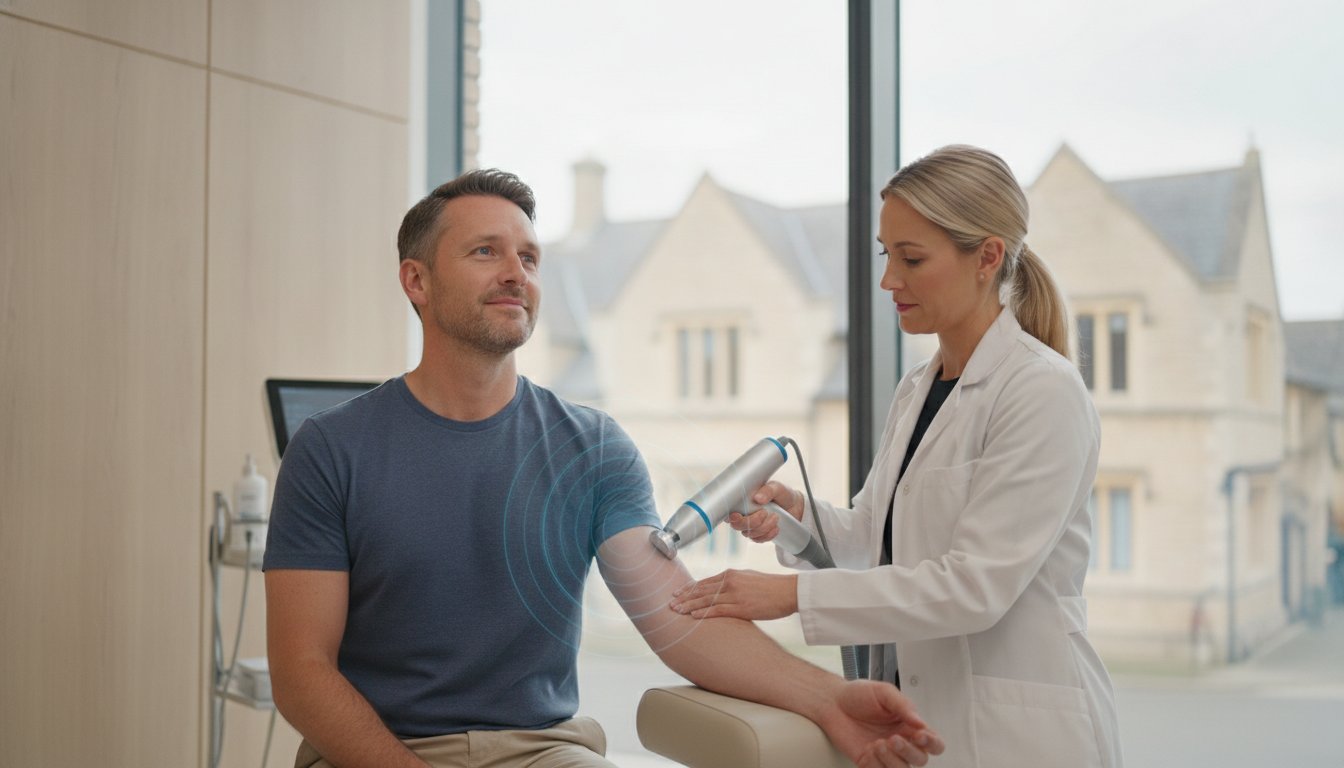
The core mechanism behind shockwave therapy for tennis elbow Oxford is a process known as mechanotransduction. This occurs when high energy acoustic waves are directed into the damaged common extensor tendon. These waves convert mechanical energy into cellular signals, effectively “waking up” cells that have become dormant in a chronic, degenerative state. For patients in Central Oxford or West Oxford who have found no relief from standard rest, this technology provides the necessary stimulus to initiate repair where the body has previously failed.
When these sound waves penetrate the tissue, they create controlled micro-trauma. This isn’t harmful; instead, it’s a strategic intervention designed to restart the body’s natural inflammatory response. This process leads to neovascularisation, which is the formation of new blood vessels within the tendon. Because tendons naturally have a poor blood supply, this increased circulation is vital for delivering the oxygen and nutrients needed for long term healing. While a Cochrane review of shockwave therapy highlights the need for continued high quality research across all clinical applications, many practitioners find it highly effective for chronic tendon pathologies that haven’t responded to other conservative measures.
Beyond structural repair, the therapy helps with immediate symptom management. The acoustic pulses reduce the concentration of “Substance P,” a neurotransmitter responsible for transmitting pain signals to the brain. This depletion often results in a rapid reduction of discomfort for residents in Headington or Summertown, making daily tasks more manageable even before the full biological repair is complete.
The Biological Reset: Fibroblasts and Collagen
Shockwaves specifically target fibroblasts, the cells responsible for maintaining the structural integrity of our tendons. By stimulating these cells, the treatment encourages the production of new collagen. During the healing process, the body converts disorganized, weaker collagen type III into mature, high tensile collagen type I. This transition is what gives the tendon its strength back, allowing patients from Abingdon, Didcot, and Witney to return to activities that require a firm grip. Most patients begin to see this biological repair take hold within a few weeks of their first session.
Precision Mapping with Diagnostic Ultrasound
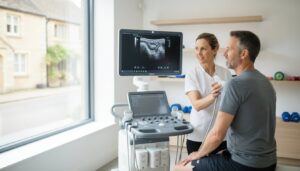
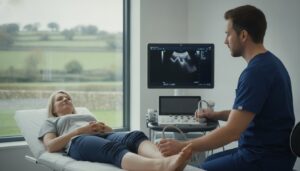
Success in treating lateral epicondylitis depends heavily on accuracy. Utilizing diagnostic ultrasound allows us to visualize the exact site of pathology within the common extensor tendon. This ensures that the shockwaves are delivered precisely where they are needed, rather than being applied blindly. For individuals in Kennington, Marcham, or Farmoor, this level of precision significantly increases the likelihood of a positive outcome. If you are struggling with persistent pain, you may find that consulting a specialist to discuss your imaging results is the most efficient way to start your recovery. This targeted approach is especially beneficial for those in Eynsham or Faringdon who need a clear, evidence-based path back to full function.
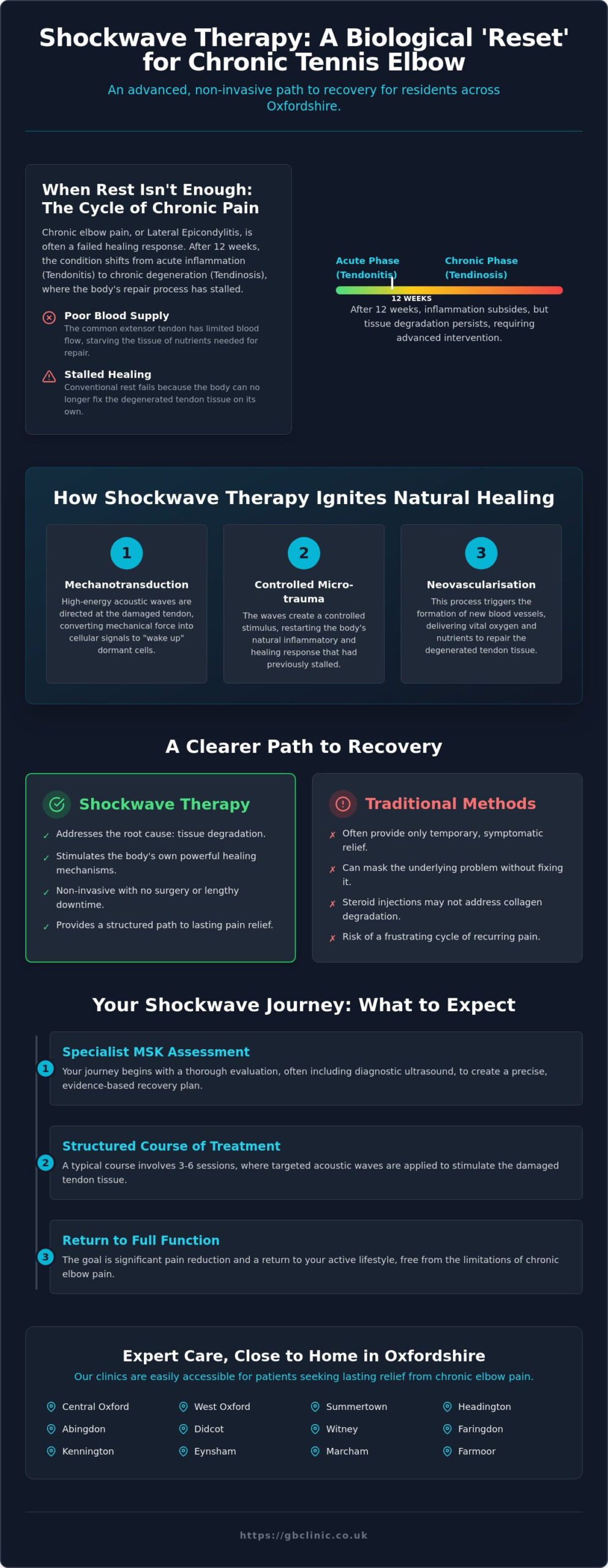
Shockwave Therapy vs. Traditional Treatments for Tennis Elbow
Comparing clinical outcomes reveals that while traditional methods often focus on symptom management, shockwave therapy for tennis elbow Oxford addresses the structural integrity of the tendon. The National Institute for Health and Care Excellence (NICE) confirms the safety of extracorporeal shockwave therapy for refractory cases. This guidance provides a reliable framework for patients in Central Oxford and Headington who haven’t found success with standard conservative care. While some traditional approaches rely on masking pain, this advanced technology aims to resolve the underlying pathology that causes discomfort during simple tasks like gripping a bag or using a computer mouse.
For busy professionals in West Oxford or Farmoor, the choice between different interventions often comes down to efficiency and long term results. Statistics from 2025 indicate that success rates for chronic tennis elbow treated with shockwave therapy range between 70% and 95%. This data is particularly relevant when compared to the higher recurrence rates often seen with more passive treatments. Choosing an evidence-based clinical path ensures that residents from Summertown to Kennington can make informed decisions about their recovery without relying on outdated protocols.
Shockwave vs. Steroid Injections
Many individuals initially consider cortisone for rapid relief. Research suggests that while injections may offer faster initial pain reduction, shockwave therapy is superior over a longer duration with significantly lower rates of re-injury. Repeated use of steroids carries a risk of weakening the tendon tissue over time. In contrast, guided steroid injections are typically reserved for managing acute inflammatory flares, whereas shockwave therapy serves as a regenerative tool. This makes it the preferred choice for those in Abingdon or Didcot seeking a permanent return to functional strength rather than a temporary pause in pain.
The Non-Surgical Advantage
Surgery is now widely considered a last resort for lateral epicondylitis due to the extensive rehabilitation required. Recovery from a surgical procedure can take months and involves risks such as scarring or infection. Shockwave therapy offers a non-invasive alternative with zero downtime. Patients in Witney, Eynsham, or Marcham can attend a session and immediately return to their daily routines. This cost-effectiveness is a major benefit, as it prevents long term work absence and avoids the complications of invasive theatre. For residents in Faringdon, this means a faster transition from chronic pain back to the sports and activities they enjoy.
Your Shockwave Journey in Oxford: What to Expect
The clinical pathway for shockwave therapy for tennis elbow Oxford begins with a meticulous assessment to ensure you are a suitable candidate for this advanced intervention. Our process is structured to provide clarity and build confidence from your first visit. We focus on a clear, step-by-step progression that moves you from diagnostic certainty to functional restoration. Each stage of the journey is led by specialists who understand the nuances of chronic tendon pathology.
- Step 1: Specialist Assessment. Every journey starts with a comprehensive MSK review. We utilize diagnostic ultrasound to visualize the common extensor tendon, identifying any degenerative changes or micro-tears that require targeting.
- Step 2: Tailored Treatment Planning. Based on the imaging results, we design a course of 3 to 6 weekly sessions. This frequency is essential for maintaining the biological momentum of tissue repair.
- Step 3: The Procedure. We apply a coupling gel to the skin to facilitate the transmission of acoustic waves. The probe is then moved over the affected area, delivering precise impulses to the tendon.
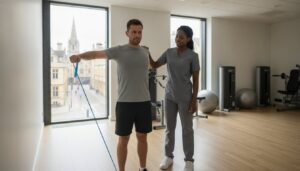
- Step 4: Progressive Rehabilitation. Recovery doesn’t end with the shockwaves. We provide a structured loading program, often involving physiotherapy, to strengthen the elbow and prevent future recurrence.
Accessibility for Oxfordshire Residents
Our clinic is strategically positioned to serve the entire regional community. Residents in Central Oxford and Summertown find our facility easily reachable for their weekly appointments. We provide a convenient local option for those living in Headington and West Oxford, ensuring that specialist care is never far from home. For patients traveling from Abingdon, Didcot, or Witney, the commute is straightforward via major arterial routes. We also welcome individuals from Kennington, Marcham, and Farmoor who are seeking a professional alternative to surgical options. Those based in Eynsham and Faringdon can access our expert-led services without the long wait times often associated with larger hospital environments.
Managing the Treatment Experience
A common concern for many is whether the procedure is painful. Most patients describe the sensation as a rhythmic, deep tapping. While it can be slightly uncomfortable, it is rarely described as sharp pain. We always start at a lower intensity and gradually increase the energy levels to match your tolerance. This ensures the treatment is effective while remaining manageable. After your session, it is vital to avoid anti-inflammatory medications like ibuprofen for at least 48 hours. These drugs can suppress the natural healing response that the shockwaves are designed to stimulate. If you’re ready to begin your path to a pain-free lifestyle, you can book your initial MSK assessment online to discuss your specific needs.
Expert Shockwave Therapy at GB Clinic Oxford
GB Clinic stands as the premier destination for shockwave therapy in Oxford, offering a modern alternative to invasive surgical procedures. Our clinical environment is designed to foster trust through transparency and specialist expertise. We recognize that chronic elbow pain affects every aspect of daily life, from professional duties in Central Oxford to active weekends in West Oxford. By prioritizing evidence-based protocols, we ensure that every patient receives a treatment plan tailored to their specific anatomical needs and functional goals.
Our commitment to excellence extends beyond the treatment room. We support individuals from across Oxfordshire, providing a professional hub for those who have found little success with conventional rest. Whether you’re commuting from Headington or traveling from the surrounding villages, our team is dedicated to delivering results that last. We focus on the complete recovery cycle, combining advanced technology with a deep understanding of musculoskeletal health to bridge the gap between injury and peak performance.
Integrated MSK Care
For optimal outcomes, we often integrate shockwave therapy with expert physiotherapy. This dual approach ensures that while the shockwaves stimulate biological repair, the surrounding muscles are strengthened to support the joint. We emphasize progressive loading, a method that gradually increases the stress on the tendon to build resilience and prevent tennis elbow from returning. This patient-focused strategy involves active listening and precise diagnostic work, ensuring we address the root cause of your discomfort rather than just the symptoms. It’s this comprehensive care that helps our patients return to their routines with confidence and renewed strength.
Start Your Recovery Today
Beginning your journey toward a pain-free life is straightforward. We offer initial assessments at our Oxford facility, providing a clear path forward for residents in Abingdon, Summertown, and Kennington. Our transparent approach means you’ll understand every step of the process, from the first diagnostic scan to the final rehabilitation session. We are proud to serve local communities in Marcham, Farmoor, and Eynsham, offering a convenient clinical choice for those who value expert-led care.
If you live in Didcot, Witney, or Faringdon, you can access our specialist services without the delays often found in larger medical systems. We invite you to experience a modern, professional environment focused entirely on your physical restoration. Contact GB Clinic to book your shockwave therapy assessment and take the first step toward reclaiming your mobility.
Restore Your Functional Strength with Advanced Clinical Care
Chronic tendon pain often requires more than simple rest once it reaches a degenerative state. By utilizing shockwave therapy for tennis elbow Oxford, you can restart the body’s natural healing processes and avoid the risks associated with surgery. Our modern Oxford clinic provides a streamlined path to recovery, combining on-site diagnostic ultrasound with the expertise of specialist MSK physiotherapists. This evidence-based approach ensures that your treatment is precise, targeted, and focused on long term results.
This expert-led service is conveniently accessible for residents across the region. Whether you’re based in Summertown, Headington, or Central Oxford, or commuting from towns like Abingdon, Didcot, and Witney, professional care is within easy reach. We also support patients from West Oxford, Kennington, Marcham, Farmoor, Eynsham, and Faringdon who are seeking a clinical solution for persistent discomfort. Our focus is on helping you return to your workplace or sport without the delays of traditional recovery methods.
Book Your Specialist Elbow Assessment at GB Clinic Oxford
Chronic pain doesn’t have to be a permanent obstacle. With the right intervention and a dedicated recovery plan, you can return to the activities you love with renewed confidence and full mobility.
Frequently Asked Questions
How many sessions of shockwave therapy will I need for tennis elbow?
Most patients require between 3 and 6 sessions of shockwave therapy for tennis elbow Oxford to achieve optimal results. we usually schedule these appointments one week apart to allow the biological healing process to progress. This structured approach is highly convenient for those working in Central Oxford or Headington who need a predictable recovery timeline. Each session is relatively short, making it easy to fit into a busy schedule.
Is shockwave therapy painful for elbow conditions?
The procedure is generally well tolerated and is often described as a rhythmic tapping sensation rather than sharp pain. While there may be some mild discomfort during the application, our specialists can adjust the intensity levels to ensure your comfort. Most individuals in West Oxford and Summertown find the sensation perfectly manageable throughout the 10 to 20 minute session.
How quickly will I see results after starting shockwave therapy?
Many individuals experience an immediate reduction in pain due to the modulation of pain signals, though full tissue repair takes longer. Significant functional improvements are typically observed within three to four weeks after the initial session. For residents in Abingdon and Didcot, this means a gradual return to daily tasks as the tendon structure strengthens and collagen matures.
Can I drive home after a shockwave therapy session in Oxford?
You can drive home immediately following your appointment as the treatment is non-invasive and requires no anesthesia. There’s no downtime involved, which is ideal for patients traveling from Witney or Eynsham. You can return to your routine right away, though we recommend avoiding heavy lifting for 48 hours to protect the treated area during the initial healing phase.
Are there any side effects of shockwave therapy for tennis elbow?
Side effects are generally minor and temporary, including slight redness, swelling, or localized bruising. These symptoms usually resolve within a few days without the need for additional intervention. This low risk profile makes it a popular choice for individuals in Kennington and Farmoor who want to avoid the complications often associated with more invasive surgical procedures.
Is shockwave therapy covered by private health insurance in the UK?
Most major UK private health insurers cover shockwave therapy, provided it’s recommended by a specialist as part of an evidence based care plan. Because NICE guidance confirms the safety of the procedure, many providers recognize its value for chronic conditions. We recommend that patients in Marcham and Faringdon contact their insurance provider directly to confirm the specifics of their policy coverage.
What is the success rate of shockwave therapy for lateral epicondylitis?
Success rates for chronic cases are reported to be between 70% and 95% according to data from 2025. This high level of effectiveness is why shockwave therapy for tennis elbow Oxford is considered a leading non-surgical intervention. The treatment is particularly successful for chronic lateral epicondylitis that hasn’t responded to at least three months of traditional conservative management.
Can shockwave therapy be used if I have already had a steroid injection?
It’s possible to have shockwave therapy after a steroid injection, but a waiting period is usually necessary. We typically recommend waiting at least six to twelve weeks after an injection to ensure the steroid has fully localized and the tissue is ready for regenerative stimulus. A specialist assessment is the best way to determine the correct timing for your specific recovery journey.