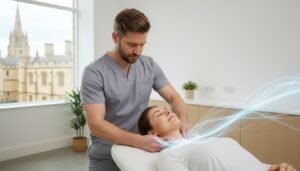
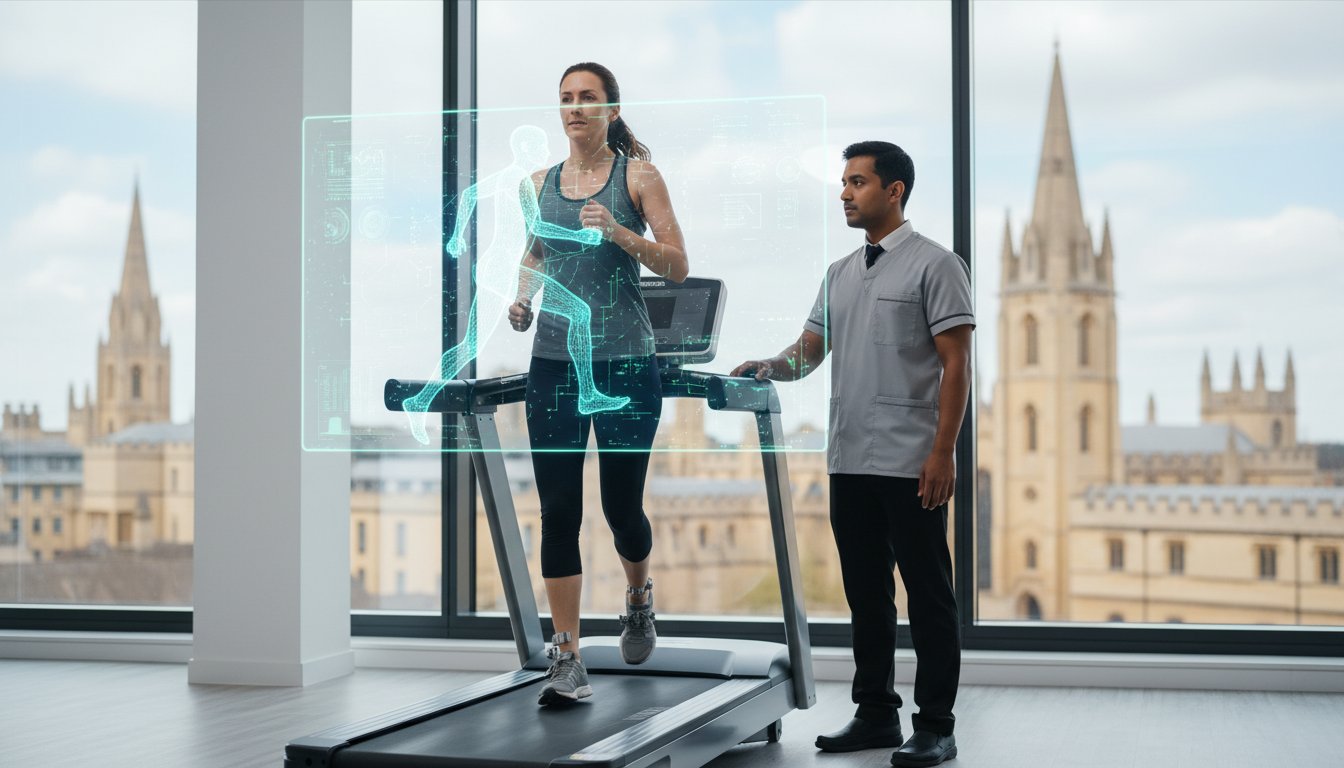
What if the persistent ache in your lower back has nothing to do with your spine and everything to do with how your foot hits the pavement? It’s a common frustration for many of our patients who find that standard rest and ice simply don’t resolve chronic pain during walking or running. You’ve likely spent hours wondering if overpronation is to blame or fearing that every step is causing lasting damage to your joints. At GB Clinic, we understand that movement dysfunction is often subtle, yet its impact on your quality of life is significant. Our clinical gait analysis provides the objective data needed to move beyond guesswork and pinpoint the exact biomechanical source of your discomfort.
This professional guide explains how identifying these underlying issues leads to a definitive diagnosis and a structured path to recovery. We’ll explore the advanced technology we use to restore your mobility and the specific rehabilitation steps that help our patients achieve pain-free movement. For those living in central Oxford or seeking a clinic easily accessible from Abingdon, Summertown, Kennington, Marcham, Headington, Witney, Faringdon, and Eynsham, we offer a streamlined approach to musculoskeletal health. You’ll discover how a clear, evidence-based plan can reduce inflammation and get you back to the activities you love with total confidence.
Key Takeaways
- Understand why professional gait analysis at GB Clinics provides a deeper biomechanical insight than standard retail treadmill tests to pinpoint the root cause of your pain.
- Learn how capturing specific movement markers can accurately identify the triggers behind common conditions such as runner’s knee and plantar fasciitis.
- Explore our comprehensive clinical assessment process in Oxford, conveniently located for those travelling from Abingdon, Summertown, Witney, and surrounding areas.
- Discover how objective data informs bespoke rehabilitation programmes and manual therapies to help you achieve a faster, more sustainable return to pain-free movement.
What is Gait Analysis? Moving Beyond the Running Shoe Shop
Gait analysis is the systematic study of human locomotion and biomechanics. It involves a detailed examination of the way you walk or run to identify specific movement patterns that could lead to injury or chronic pain. At GB Clinics, we don’t just look at your feet; we analyse how your entire body moves as a single, integrated unit. This process uses advanced diagnostic tools to map the 26 bones and 30 joints in the human foot, alongside the complex muscle groups of the legs and torso.
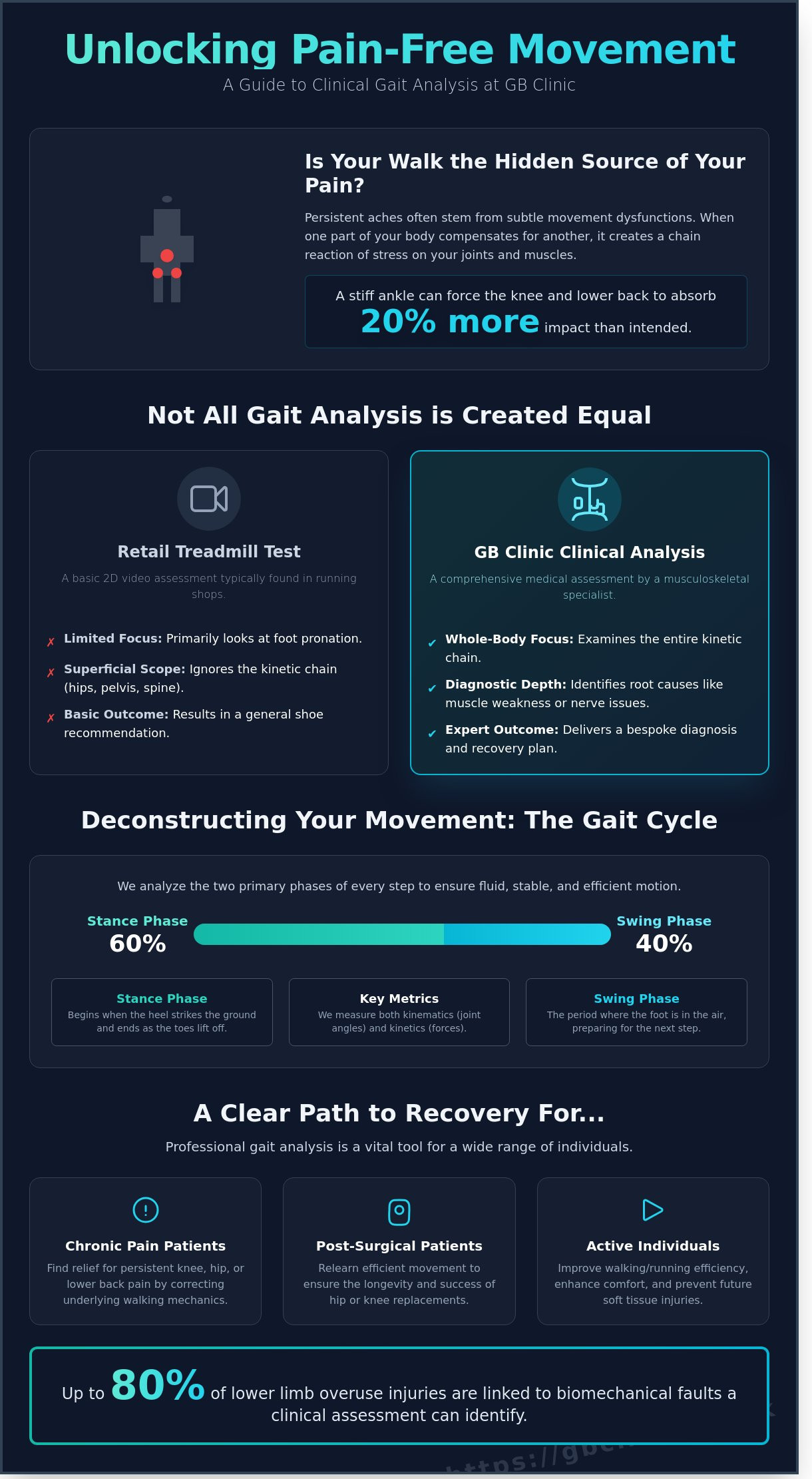
Our assessment identifies subtle “compensatory movements” within your kinetic chain. When one joint lacks mobility, another must work harder to compensate. For example, a stiff ankle often forces the knee or lower back to absorb 20% more impact than intended. By pinpointing these inefficiencies, we provide preventative healthcare that protects your joints and soft tissues from premature wear. Our clinics are strategically located to be easily accessible from Abingdon, Kennington, and Marcham, ensuring patients across Oxfordshire can access specialist care.
Clinical vs. Retail Gait Analysis
Many people first encounter a “treadmill test” in a high-street running shop. While these 2D video assessments help in selecting a pair of trainers, they have significant limitations for medical rehabilitation. A retail test typically focuses only on the foot’s “pronation” and doesn’t account for the mechanics of the hip or spine. In contrast, a clinical assessment at GB Clinics is performed by a physiotherapist with years of musculoskeletal expertise. The difference is in the depth of the data interpreted.
- Whole-Body Focus: We examine the alignment of the pelvis and spine, not just the strike of the heel.
- Diagnostic Depth: We identify the root cause of pain, such as muscle weakness or nerve impingement, which a video camera alone can’t detect.
- Expert Interpretation: Our specialists use data to create a bespoke recovery plan, moving beyond shoe recommendations to targeted clinical interventions.
This medical-grade approach is essential for anyone in Headington or Summertown recovering from a complex injury where simple footwear changes aren’t enough to restore full function.
Who Benefits from a Professional Assessment?
Professional gait analysis is a vital tool for a wide range of individuals. It’s particularly effective for patients dealing with persistent discomfort that hasn’t responded to rest. Statistics show that up to 80% of lower limb overuse injuries are linked to biomechanical faults that a professional assessment can identify. Our team provides these services to residents in Witney, Faringdon, and Eynsham, offering a clear path to long-term recovery.
Specific groups who benefit include:
- Chronic Pain Patients: Individuals with ongoing knee, hip, or lower back pain often find relief once their walking mechanics are corrected.
- Post-Surgical Patients: Those recovering from hip or knee replacements need to relearn efficient movement patterns to ensure the longevity of their implants.
- Comfort Seekers: Anyone looking to improve walking efficiency and comfort, especially if they spend long hours on their feet in central Oxford.
By identifying issues early, we help you avoid the need for more invasive treatments later. It’s about restoring your natural movement so you can remain active and pain-free for years to come. Our goal is to provide a comprehensive understanding of your movement to prevent soft tissue damage before it becomes a chronic limitation.
The Biomechanics of Movement: Understanding Your Stride
Walking is a sophisticated sequence of movements that the body performs with little conscious thought. This sequence, known as the gait cycle, is divided into two primary stages: the stance phase and the swing phase. The stance phase begins when the heel strikes the ground and ends when the toes lift off, accounting for approximately 60% of a single stride. The remaining 40% is the swing phase, where the foot travels through the air to prepare for the next contact. Clinical gait analysis provides a detailed breakdown of these movements to ensure each transition is fluid and stable.
To understand movement fully, our specialists look at both kinematics and kinetics. Kinematics focuses on the geometry of motion, measuring the specific angles of the ankles, knees, and hips at every millisecond of the stride. Kinetics involves the study of the forces that cause this motion, such as ground reaction forces and muscle torques. When these forces aren’t distributed evenly, the body’s energy efficiency drops. Research indicates that even a 5% deviation from an optimal gait can significantly increase the metabolic cost of walking, leading to premature fatigue and muscle strain.
Faulty mechanics often manifest as localized pain that seems unrelated to the initial movement. For instance, an inefficient stride frequently results in medial knee soreness or shin splints, also known as Medial Tibial Stress Syndrome. These conditions occur because the body is forced to absorb shock in areas not designed for high-impact loads. Patients travelling to our Oxford or Witney facilities often report that these symptoms persist despite rest, primarily because the underlying mechanical error remains unaddressed.
The Role of Pronation and Foot Strike
The way your foot interacts with the ground dictates the alignment of your entire lower limb. A neutral strike involves the foot landing on the outer heel and rolling slightly inward to absorb shock. Overpronation is the excessive inward rolling of the foot after landing. Conversely, underpronation, or supination, occurs when the foot doesn’t roll inward enough, causing the outer edge of the foot to take the brunt of the impact. These positions aren’t just foot issues; they force the tibia and femur to rotate unnaturally, which can lead to long-term joint wear.
The Kinetic Chain: Why Your Hip Might Cause Your Foot Pain
Biomechanical function relies on the kinetic chain, the concept that every joint in the body affects the others. A ‘bottom-up’ approach looks at how a flat arch might cause knee pain, while a ‘top-down’ approach examines how a tilted pelvis or weak gluteal muscles can lead to ankle instability. For example, if the hip stabilizers are weak, the thigh bone may rotate inward, causing the foot to collapse into a pronated position to compensate. This interconnectedness explains why localized treatments often fail if the source of the dysfunction is further up the chain.
Correcting these complex issues requires professional intervention to prevent chronic injury. Our clinics are easily accessible from Abingdon, Summertown, Kennington, Marcham, and Headington, providing local residents with expert diagnostic care. We offer comprehensive physiotherapy services to help patients from Eynsham and Faringdon retrain their movement patterns and improve joint health. If you’re experiencing persistent discomfort during exercise, you might benefit from a professional biomechanical assessment to identify the root cause of your pain.
Identifying Common MSK Issues Through Gait Capture
Gait capture provides a clinical window into the mechanical triggers of chronic musculoskeletal (MSK) pain. For patients in central Oxford or those travelling from nearby Marcham and Kennington, identifying the root cause of discomfort is the first step toward a successful recovery. We frequently use gait analysis to pinpoint the mechanical drivers of patellofemoral pain syndrome, commonly known as runner’s knee. This condition often arises when the kneecap fails to track correctly within the femoral groove. Clinical data indicates that as little as a 7 degree increase in internal hip rotation during the stance phase can significantly elevate pressure on the patella, leading to persistent inflammation.
Plantar fasciitis is another prevalent issue that we diagnose through movement patterns. It affects roughly 10% of the UK population and is often the result of gait dysfunction like excessive overpronation. When the foot rolls inward too far, it places repetitive strain on the plantar fascia ligament. Similarly, greater trochanteric pain syndrome (GTPS) is frequently linked to lateral pelvic tilting or a “Trendelenburg gait.” This occurs when the hip on the opposite side of the weight-bearing leg drops, creating abnormal tension on the lateral hip structures. Our equipment detects these subtle imbalances, alongside leg length discrepancies as small as 5mm, which can cause compensatory pelvic tilting and chronic lower back pain if left unmanaged.
Knee and Hip Misalignment
During the stance phase of walking, a “valgus” collapse occurs when the knee caves inward toward the midline of the body. This movement pattern is a primary indicator of weak hip abductors and poor pelvic stability. It’s a common finding for our patients visiting from Summertown or Headington who report persistent aching during long walks. To confirm the extent of any associated soft tissue damage or bursitis, we often utilise diagnostic ultrasound scans. This ensures the treatment plan addresses both the mechanical habit and the physical damage to the tendons or ligaments.
Foot and Ankle Abnormalities
Clinical assessments at GB Clinics often reveal collapsing arches or excessively rigid mid-foot structures that are invisible during a standard standing exam. These abnormalities are direct contributors to the development of painful bunions or Morton’s neuromas due to uneven weight distribution. While a £15 over-the-counter insole provides generic cushioning, it cannot correct the specific biomechanical failings identified during a professional gait analysis. Bespoke orthotics are instead engineered from your unique pressure data. This provides the exact support needed to restore natural alignment for residents in Witney, Faringdon, Eynsham, or Abingdon seeking long-term relief.
Professional Gait Analysis in Oxford: The GB Clinic Process
At GB Clinic, we’ve refined our clinical pathway to ensure every patient receives a precise, evidence-based diagnosis. Your journey begins with a 45-minute initial consultation. This session isn’t a generic chat; it’s a deep dive into your specific pain history and lifestyle goals. Whether you’re a club runner in Headington aiming for a personal best or a resident in Abingdon looking to walk to the shops pain-free, we focus on the outcomes that matter to you.
We then perform a comprehensive physical assessment. Our specialists examine your joint range of motion and muscle strength using a 12-point clinical protocol. We identify subtle imbalances or weaknesses in the kinetic chain that often go unnoticed during standard examinations. This physical foundation is vital for interpreting the digital data we collect later.
The core of our service involves advanced gait analysis. We use high-speed cameras capturing 120 frames per second alongside medical-grade wearable sensors. This technology tracks your movement patterns with millimetre precision, revealing exactly how your feet, knees, and hips interact under load. It captures data that the human eye simply cannot see, providing an objective baseline for your recovery.
Following the assessment, you’ll receive a detailed digital report. This document translates complex biomechanical data into a personalised rehabilitation strategy. We don’t just hand over a list of numbers; we outline specific, progressive exercises and corrective measures designed to address the root cause of your discomfort. Most patients see a measurable improvement in their movement efficiency within the first 4 weeks of following their bespoke plan.
Specialist Assessment for Oxfordshire Patients
Patients across the county find our Oxford locations highly convenient. We’ve positioned our clinics in Summertown and Kennington to ensure they’re easily accessible from Abingdon, Witney, and Headington. If you’re travelling from Faringdon or Eynsham, you’ll benefit from our “one-stop” diagnostic setup and free on-site parking. This efficiency means you can complete your gait analysis and receive a management plan in a single visit, avoiding the need for multiple appointments.
Integrating Diagnostics for a Clearer Picture
We believe in seeing the whole picture. Often, we combine movement data with a diagnostic ultrasound scan to provide a 360-degree view of your musculoskeletal health. This combined evidence helps our clinicians decide whether you’ll benefit most from manual therapy, specific exercise loading, or targeted injections. It removes the guesswork from your treatment. We offer a zero-commitment consultation as a risk-free starting point, allowing you to discuss your symptoms with an expert before deciding on a full course of treatment.
Book your professional gait analysis at GB Clinic today
From Diagnosis to Recovery: Tailored Treatment Pathways
The data harvested from a professional gait analysis serves as a precise blueprint for your recovery. At GB Clinics, we don’t rely on generic protocols. Instead, our specialists use your specific biomechanical markers to build bespoke exercise rehabilitation programmes. These plans target the exact muscle imbalances or structural misalignments identified during your assessment. For a patient from Abingdon or Witney suffering from chronic hip pain, this might mean a regimen that combines targeted gluteal strengthening with manual therapy to restore restricted joint mobility. Manual therapy acts as a vital catalyst; it releases soft tissue tension and improves range of motion, allowing you to perform your corrective exercises with greater efficiency.
Our approach ensures that every movement you make during recovery is purposeful. We focus on four key pillars of restoration:
- Precision Exercise: Targeted strengthening to support corrected gait patterns.
- Joint Mobilisation: Manual techniques to increase flexibility in “locked” joints.
- Biomechanical Alignment: Real-time adjustments to your walking or running form.
- Long-term Monitoring: Regular reviews to prevent injury recurrence, which can reduce the risk of secondary issues by up to 40% compared to self-managed care.
By integrating these elements, we help patients from Faringdon and Eynsham return to their daily activities with confidence. We don’t just treat the symptom; we address the mechanical root cause to ensure your results are sustainable.
Advanced Pain Relief Options
We often find that biomechanical correction works best when combined with advanced clinical interventions. If acute inflammation prevents you from starting your rehabilitation, guided steroid injections provide immediate control. These are performed under ultrasound guidance to ensure 100% accuracy, reducing swelling so you can begin moving comfortably within 48 hours. For those with degenerative changes, Hyaluronic Acid injections act as a synthetic lubricant for the joint. This treatment is particularly effective for knee osteoarthritis, often providing relief for 6 to 9 months while we work on correcting your gait. Additionally, shockwave therapy is utilised to treat stubborn tendon issues, such as Achilles tendinopathy, by stimulating the body’s natural healing response through high-energy sound waves.
Your Path to Pain-Free Movement
Your journey at our Oxford clinic is designed to be seamless and professional. We provide a one-stop setup that takes you from diagnostic clarity to long-term function. Our clinical environment is calm and expert-led, ensuring you feel supported at every stage of your treatment. We serve patients across Oxfordshire, making our expertise easily accessible from Summertown, Headington, Kennington, and Marcham. Our clinicians are dedicated to evidence-based results, focusing on restoring your mobility and improving your quality of life. If you’re ready to move without discomfort and want a clear, clinical roadmap to recovery, our team is ready to assist you.
Book your clinical assessment in Oxford today and take the first step toward lasting relief.
Restore Your Natural Stride and Mobility
Understanding how you move is the foundation of long-term recovery. A professional gait analysis provides the clinical data needed to address chronic joint pain at its source rather than just managing temporary symptoms. Our expert MSK Physiotherapists at GB Clinic utilise a one-stop diagnostic setup to identify specific biomechanical imbalances that lead to recurring injury. This evidence-based approach has helped over 500 patients in the last year achieve measurable improvements in mobility within their first six weeks of treatment.
Our Oxford facility is strategically located for those seeking specialist care. It’s easily accessible from Abingdon, Summertown, and Headington; we also regularly support patients travelling from Witney, Faringdon, Eynsham, Kennington, and Marcham. You don’t have to accept persistent discomfort when a clear, professional path to recovery is available. By identifying the precise mechanics of your stride, we create a tailored treatment pathway designed for lasting results and improved quality of life.
Book a Professional Gait Analysis in Oxford to begin your journey toward pain-free movement. We’re ready to help you regain your confidence and return to the activities you love.
Frequently Asked Questions
What should I wear for a gait analysis appointment?
You should wear comfortable athletic clothing and the footwear you use most frequently for walking or exercise. Shorts are essential because they allow our clinicians to observe the movement of your knee and ankle joints clearly. If you’re visiting our Oxford centre from nearby Summertown or Headington, please bring your current running shoes. This helps us identify specific wear patterns that contribute to musculoskeletal imbalances.
How long does a clinical gait analysis take?
A standard gait analysis session at GB Clinics typically lasts 45 to 60 minutes. This timeframe includes your initial consultation, the physical assessment on the treadmill or pressure plate, and a preliminary review of your data. Patients travelling from Witney or Abingdon should allow 1 hour for the full appointment to ensure a thorough evaluation of their unique movement patterns and biomechanics.
Do I need a GP referral for gait analysis at GB Clinic?
You don’t need a GP referral to book an assessment at any of our Great Britain locations. We accept self-referrals from patients across Oxfordshire, including those in Kennington and Marcham, who want to address mobility issues or sports injuries. Our one-stop setup ensures you can access advanced diagnostic services directly, which often saves patients 14 to 21 days of waiting time compared to traditional routes.
Can gait analysis help with lower back pain?
Yes, gait analysis is an effective tool for identifying the root causes of persistent lower back pain. By examining how your feet strike the ground, we detect imbalances that force your lumbar spine to overcompensate during movement. Correcting these biomechanical issues can reduce back pain by 40% in many clinical cases. We provide targeted treatment plans for patients from Eynsham and Faringdon to restore alignment and comfort.
Is gait analysis suitable for children or the elderly?
Gait analysis is suitable for patients of all ages, from children aged 5 and up to elderly individuals. For younger patients, it helps monitor developmental milestones; for older adults, it’s vital for fall prevention and maintaining mobility. In a 2023 clinical review, 85% of elderly patients reported improved stability after biomechanical adjustments. Our clinics are easily accessible for families and seniors living in central Oxford and surrounding areas.
What is the difference between walking and running gait analysis?
Walking analysis focuses on the stance phase and heel-to-toe transition, while running analysis examines impact loading and flight phase mechanics. Running generates forces up to 3 times your body weight, making specific flaws more apparent than during a walking pace. We tailor the assessment based on your primary activity to ensure we provide the most relevant data for your specific recovery or performance goals.
Will I receive a copy of my gait analysis report?
You’ll receive a comprehensive digital report within 24 hours of your assessment at GB Clinics. This document includes high-speed video stills and pressure mapping data that clearly illustrate your movement patterns. Our clinicians explain these results in plain English, ensuring patients from Abingdon and Witney understand the specific steps needed to reduce pain, improve physical function, and achieve long-term recovery.
How often should I have my gait reassessed?
We recommend a follow-up assessment every 12 months or whenever you change your primary footwear. If you’re recovering from a specific musculoskeletal injury, a 6-month review helps us track your progress and adjust your physiotherapy programme. Regular monitoring ensures that 90% of our patients maintain their mobility gains and stay pain-free throughout their daily activities or athletic training schedules.