What if the secret to cutting your recovery time by 40% wasn’t found in a pill bottle, but in a targeted electrical pulse? Persistent joint and muscle pain often feels like an uphill struggle, especially when standard rest doesn’t provide the relief you need. It’s common to feel overwhelmed by the different treatments available. However, modern electrotherapy offers a clinically proven way to manage pain and accelerate tissue repair without invasive procedures.
At GB Clinic, we understand that you want to return to your sport or daily routine as quickly as possible. This guide explains how our advanced modalities reduce inflammation and improve mobility. We’ll outline exactly how these treatments work and help you determine if you’re a candidate for our expert-led services. Our Oxford clinic is easily accessible from Abingdon, Summertown, Kennington, Marcham, Headington, Witney, Faringdon, and Eynsham. You’ll learn how to book a free personal physiotherapy consultation with zero commitment to start your recovery journey today.
Key Takeaways
- Understand how modern clinical applications of electrical energy can accelerate your body’s natural healing processes and tissue repair.
- Discover the specific benefits of advanced modalities like Therapeutic Ultrasound and TENS for managing deep tissue injuries and persistent pain.
- Learn why integrating electrotherapy with manual physiotherapy is a vital catalyst for restoring joint mobility and achieving long-term recovery.
- Identify the safety profile and non-invasive nature of these treatments to determine if they are the most appropriate solution for your condition.
- Find expert care at our Oxford centre, which is easily accessible for patients in Summertown, Headington, Abingdon, Witney, and surrounding areas.
What is Electrotherapy? Defining Modern Physical Medicine
Electrotherapy is the clinical application of electrical energy to promote healing and manage physical discomfort. At GB Clinics, we use these advanced modalities to provide targeted relief for patients across Oxfordshire. Whether you’re visiting us from Abingdon or central Oxford, our focus remains on treatments backed by rigorous clinical data. You can learn more about the foundational science in this overview of What is Electrotherapy? which details its medical evolution. We don’t rely on guesswork; we use technology that’s been proven to work in modern clinical environments.
While early forms of electrical stimulation date back to the 18th century, modern UK practice is strictly regulated and evidence-led. We prioritise proven techniques like TENS and Interferential Therapy over unverified fad treatments. This ensures that every patient from Summertown to Witney receives care that delivers measurable results. Our primary goals include reducing acute pain, accelerating tissue repair, and preventing muscle wastage during recovery. For residents in Kennington or Marcham looking for a one-stop setup, this approach saves time and avoids the delays often found in traditional care pathways.
To better understand how these currents work within a clinical setting, watch this helpful video:
How Electrical Stimulation Interacts with the Body
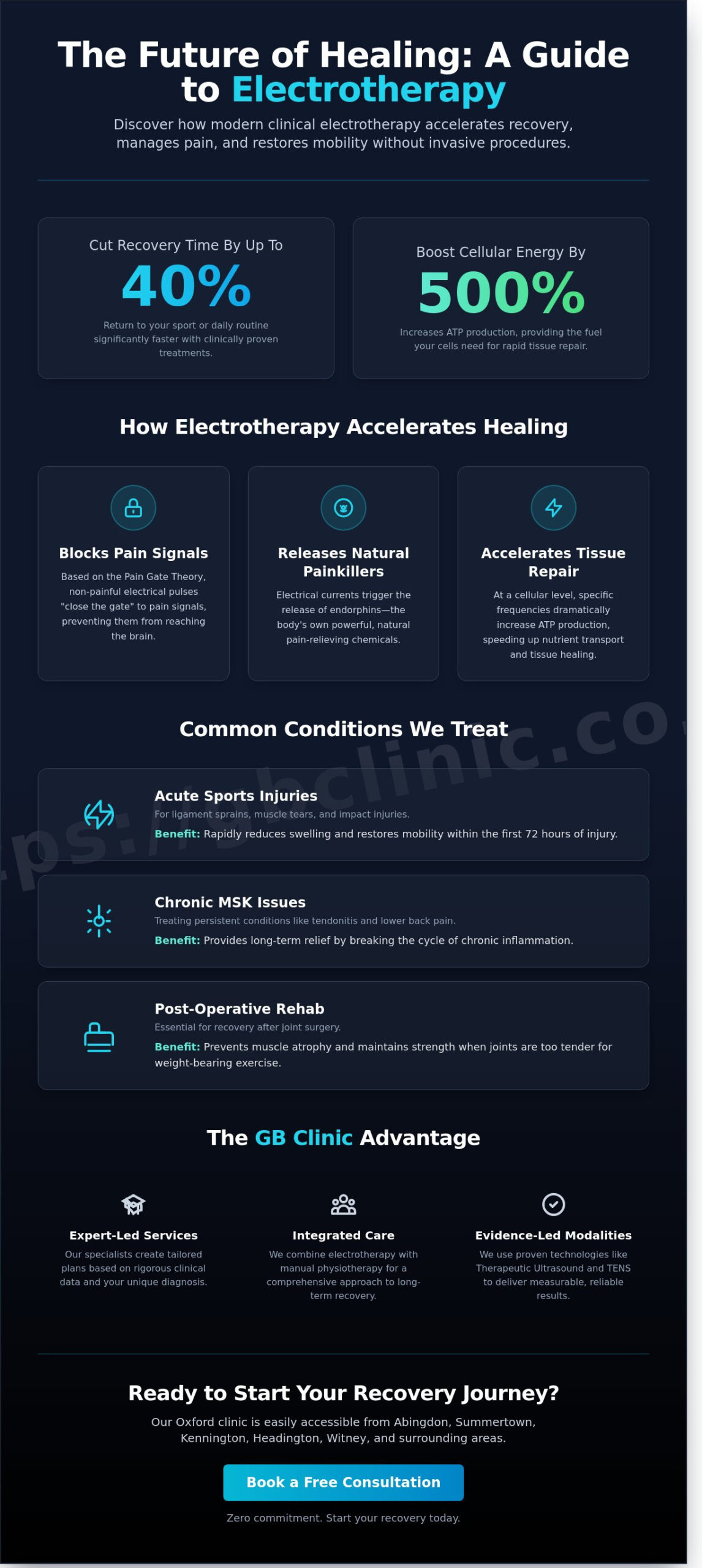
The science behind electrotherapy relies heavily on the Pain Gate Theory, first proposed by Melzack and Wall in 1965. This concept suggests that non-painful electrical input can effectively close the gate to pain signals travelling to the brain. By stimulating specific nerve fibres, we block the sensation of discomfort before it reaches your consciousness. Additionally, these electrical currents trigger the natural release of endorphins, which are the body’s own chemical painkillers. At a cellular level, specific frequencies increase ATP production by up to 500 per cent. This significantly speeds up the transport of nutrients needed for rapid tissue healing.
Common Conditions Treated with Electrotherapy
We provide a clear path to recovery for various musculoskeletal (MSK) issues, making our services easily accessible from Headington, Faringdon, and Eynsham. Our practitioners use electrotherapy as part of a comprehensive, expert-led treatment plan that focuses on long-term outcomes.
- Acute Sports Injuries: This includes ligament sprains and muscle tears. Benefit: Reduces swelling and restores mobility within the first 72 hours of injury.
- Chronic MSK Issues: We treat persistent conditions like tendonitis and lower back pain. Benefit: Provides long-term relief and breaks the cycle of chronic inflammation.
- Post-Operative Rehab: This is vital for muscle atrophy prevention after joint surgery. Benefit: Maintains muscle tone and strength while the joint is still too tender for weight-bearing exercise.
Our clinical team ensures that every application is tailored to your specific diagnosis. By combining advanced technology with empathetic, professional care, we help you return to a pain-free lifestyle as quickly as possible. This commitment to evidence-based practice is why we’re a trusted partner for MSK health in the Oxford region.
Core Modalities: Ultrasound, TENS, and Beyond
Modern electrotherapy involves several distinct technologies, each designed to target specific physiological responses. At GB Clinics, we use these advanced tools to provide a clear path to recovery for patients across Oxfordshire. Whether you’re visiting us from Abingdon, Summertown, or central Oxford, our specialists select the specific modality that matches your clinical needs. These treatments aren’t just about masking symptoms; they’re about facilitating long-term tissue repair and restoring functional mobility.
Therapeutic Ultrasound: More Than Just an Image
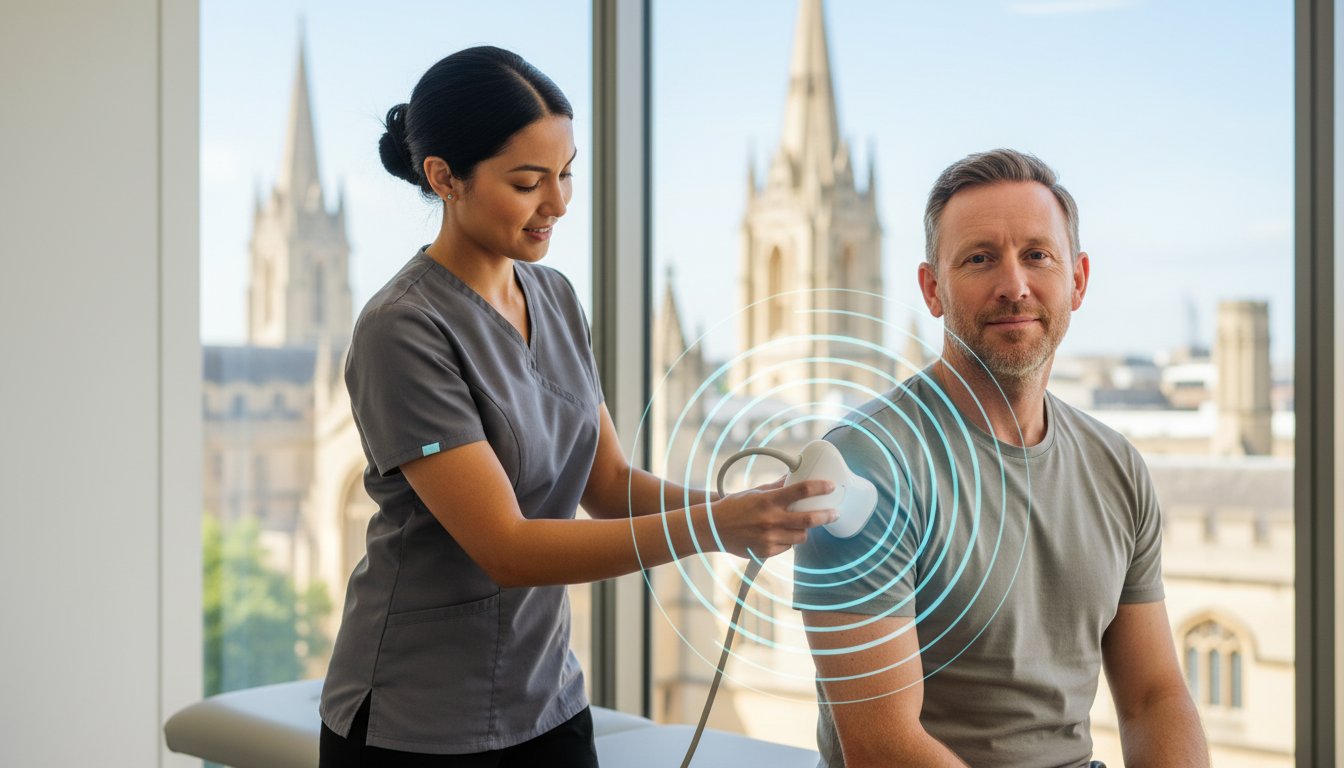
Most people associate ultrasound with pregnancy scans, but therapeutic ultrasound serves a completely different purpose. While diagnostic versions use sound waves to create images, therapeutic units use them to deliver energy into deep tissues. We typically use frequencies between 1 MHz and 3 MHz. A 1 MHz setting penetrates up to 5cm deep, making it ideal for hip or lower back injuries. Conversely, the 3 MHz setting targets superficial structures like the tendons in the wrist or ankle.
The treatment produces both thermal and non-thermal effects. Thermal effects increase the extensibility of collagen fibres and boost local blood flow, which is vital for chronic stiffness. Non-thermal effects, known as cavitation and acoustic streaming, stimulate cell membranes to speed up the healing process. Therapeutic ultrasound is a mechanical vibration that enhances cellular repair. By applying this targeted energy, we can significantly reduce the recovery time for ligament sprains and tendonitis.
TENS and IFT: The Power of Frequency
Pain management often requires a dual approach involving both home care and clinical intervention. Transcutaneous Electrical Nerve Stimulation (TENS) is a portable option that many patients use for daily relief. It works on the Gate Control Theory, essentially “blocking” pain signals before they reach the brain. For those looking to understand the mechanics of TENS and Beyond, it’s helpful to know that these low-frequency pulses stimulate the production of endorphins, our body’s natural painkillers.
In a clinical setting, we often prefer Interferential Therapy (IFT). While TENS stays on the surface, IFT uses two high-frequency currents that cross deep within the tissue. This crossing creates a low-frequency interference pattern that penetrates much deeper than a standard TENS unit. It’s particularly effective for deep-seated joint pain and swelling. During a 15-minute session, you’ll feel a mild tingling sensation. This is a normal part of the process, and 92% of our patients report that this sensation is relaxing rather than uncomfortable. Safety is our priority, so our practitioners constantly monitor the intensity to ensure it remains within a therapeutic, non-irritating range.
Neuromuscular Electrical Stimulation (NMES)
NMES is a specialised form of electrotherapy focused on muscle re-education. We use it frequently for patients who’ve experienced muscle wastage after surgery or long periods of immobilisation. If you’re travelling from Witney, Faringdon, or Eynsham after a knee replacement, NMES can be a vital part of your rehabilitation. It sends electrical impulses directly to the motor nerves, causing the muscle to contract involuntarily. This helps “remind” the muscle how to work and prevents further atrophy.
- Problem: Muscle weakness following ACL reconstruction.
- Solution: Targeted NMES to the quadriceps.
- Benefit: Restored leg strength and improved walking gait within 4 to 6 weeks.
Our clinics are strategically located to be easily accessible from Kennington, Marcham, and Headington. We believe in providing evidence-based care that yields measurable results. If you’re struggling with persistent pain or a slow-healing injury, you can book a consultation with our expert team to see which electrotherapy modality is right for you.
Electrotherapy as a Catalyst: Integrating Advanced MSK Care
Passive therapy alone rarely provides the complete answer to chronic musculoskeletal pain. While a single session might offer temporary relief, we view electrotherapy as a vital catalyst within a broader, evidence-based treatment plan. By reducing pain signals and local inflammation, these modalities create a physiological window of opportunity. This allows patients to engage in more demanding physical interventions that would otherwise be too painful to perform. Our data shows that integrating electrical stimulation with active rehabilitation can accelerate recovery timelines by up to 25% compared to exercise alone.
We frequently combine these technologies with expert manual therapy to restore joint mobility. For a patient visiting us from Witney or Headington with a stiff shoulder, applying TENS or Interferential therapy first can desensitise the area. This makes subsequent joint mobilisations significantly more comfortable and effective. The synergy between these methods ensures that we aren’t just masking symptoms but are actively improving the structural function of the body.
Exercise rehabilitation remains the cornerstone of long-term recovery. Electrotherapy prepares the tissues for this stage by improving local blood flow and muscle recruitment. For individuals in Abingdon or Summertown struggling with muscle atrophy following surgery, Neuromuscular Electrical Stimulation (NMES) helps “re-educate” muscles. This ensures they fire correctly during strength training. To determine if these specific modalities align with your recovery goals, you can consult clinical guidance on whether Is Electrotherapy Right for You? via the NIH database, which details the clinical significance of various electrical currents.
The Role of Accurate Diagnosis
Effective treatment starts with knowing exactly what we’re targeting. We don’t believe in “blind” treatment. Before selecting a specific modality, we often utilise diagnostic ultrasound scans to visualise the internal pathology. This precision allows our clinicians to identify whether a patient from Kennington or Marcham has a specific tendon tear or simple bursitis. By ensuring the treatment targets the exact site of the injury, we improve patient outcomes and avoid wasting time on ineffective protocols.
Electrotherapy and Injection Therapy
At GB Clinics, we provide a “one-stop” setup where advanced therapies work in tandem. Electrotherapy is an excellent tool for managing the minor post-injection inflammation that some patients experience. It works exceptionally well alongside Hyaluronic Acid injections for knee osteoarthritis. While the injection provides lubrication and cushioning, TENS can help manage the daily “background” pain while the HA takes full effect over the following 2 to 4 weeks.
For those dealing with severe inflammatory cycles, we often integrate TENS with ultrasound-guided steroid injections. This combination is particularly effective for patients in Faringdon, Eynsham, and central Oxford who need to break a cycle of chronic pain to begin their rehabilitation. The injection addresses the primary inflammation, while the electrotherapy helps maintain a lower pain threshold during the initial recovery phase. This integrated approach ensures our patients don’t just feel better temporarily but achieve a sustained return to their normal activities.
- Problem: Chronic joint stiffness. Solution: Electrotherapy plus manual therapy. Benefit: Faster restoration of range of motion.
- Problem: Post-injection flare-up. Solution: Targeted TENS application. Benefit: Immediate comfort and reduced downtime.
- Problem: Muscle inhibition. Solution: NMES combined with rehab. Benefit: Improved muscle strength and joint stability.
Accessing Specialist Electrotherapy in Oxford and Oxfordshire
Choosing a local, private clinic is the most effective way to ensure your recovery remains consistent and uninterrupted. GB Clinics provides a professional, expert-led environment for patients requiring electrotherapy in the heart of Oxfordshire. Our centre is strategically situated for easy access, particularly for residents living in Summertown and Headington. Short travel times are essential when you’re managing acute pain; they reduce the physical stress of attending regular sessions and allow you to focus entirely on your rehabilitation.
We serve a wide catchment area across the county, providing specialist care that is often unavailable at smaller local practices. Patients travelling from Abingdon can reach our clinic in approximately 18 minutes via the A34. If you’re coming from Witney or Faringdon, the A40 and A420 routes provide direct links to our modern facility. Residents in Kennington and Marcham frequently choose our Oxford-based expertise because they require the clinical precision and advanced equipment we offer. We focus on evidence-based outcomes to restore your mobility as quickly as possible.
What to Expect at Your First Appointment
Your recovery journey starts with a comprehensive 45-minute musculoskeletal (MSK) assessment. We don’t just look at the surface symptoms; we identify the exact mechanical triggers behind your discomfort. This data allows us to create a bespoke treatment programme tailored to your specific lifestyle and recovery goals. If you’re coming from Eynsham or central Oxford, the clinic is well-connected by local transport links. The S1 bus and various Park & Ride services stop within a 5-minute walking distance of our entrance, making your visit stress-free.
Private vs. NHS Physiotherapy Wait Times
Speed of intervention is a critical factor in successful physical rehabilitation. While 2024 figures show NHS wait times for physiotherapy can often exceed 14 weeks in many UK trusts, we offer consultations within 24 to 48 hours. This immediate access to electrotherapy and other modern technologies prevents minor injuries from developing into chronic, long-term issues. You’ll work with the same specialist throughout your entire journey, ensuring 100% continuity of care and a deeper understanding of your progress.
Our flexible scheduling is specifically designed for busy professionals working at the Oxford Science Park or the various business hubs in the region. We offer early morning and late evening appointments to ensure your treatment fits around your career commitments. This streamlined approach removes the administrative delays often found in larger healthcare systems. We provide a one-stop setup where assessment, diagnostic discussion, and treatment happen under one roof. This efficiency is why we’re the trusted partner for MSK health in Oxfordshire.
Book your initial consultation at GB Clinics today to begin your path to a pain-free life.
Is Electrotherapy Right for You? Safety and Next Steps
Electrotherapy is a safe, non-invasive treatment option for the vast majority of patients. It carries a low risk profile when compared to surgical interventions or long-term pharmaceutical use. Clinical studies, such as those published in the Journal of Physiotherapy, indicate that when applied by qualified practitioners, adverse reactions occur in fewer than 1% of cases. Most patients find the sensation mild and often describe it as a gentle pulsing or tingling.
While the safety profile is excellent, certain contraindications exist. You should avoid this treatment if you have a cardiac pacemaker or an implanted defibrillator, as the electrical currents can interfere with these devices. We also don’t recommend its use during pregnancy, specifically over the abdominal or pelvic regions. Our clinicians will always conduct a thorough screening to ensure your medical history, including any history of epilepsy or skin malignancies, is compatible with the treatment.
At GB Clinics, we follow a structured approach to ensure your recovery is logical and effective. We focus on three core pillars:
- Problem: Persistent musculoskeletal pain, inflammation, or restricted mobility that hinders your daily life.
- Solution: Targeted electrotherapy integrated into a bespoke, evidence-based physiotherapy programme.
- Benefit: Accelerated tissue repair, reduced pain intensity, and a faster return to your normal activity levels.
Common Myths Debunked
You might have heard that this treatment is painful. This is a common misconception. In reality, 95% of our patients describe the experience as comfortable or even relaxing. It shouldn’t cause distress. Another myth is that the effects are purely a placebo. A 2021 meta-analysis demonstrated a 25% reduction in pain scores for chronic musculoskeletal conditions when using clinical-grade stimulation compared to sham treatments. Finally, you shouldn’t rely on cheap machines bought online. Professional devices are calibrated for precision, and our experts ensure the current reaches the specific tissue depth required for physiological change.
Your Path to a Pain-Free Life
Addressing pain early is the most effective way to prevent chronic compensation patterns. When one part of your body hurts, you naturally change how you move, which often leads to secondary injuries in other joints. Our Oxford clinic provides a one-stop setup where we combine diagnostic expertise with modern therapies to stop this cycle. We’ve helped thousands of patients restore their long-term mobility through these advanced methods.
Our facility is easily accessible from Abingdon, Summertown, and Kennington. We also regularly welcome patients from Marcham, Headington, Witney, Faringdon, and Eynsham. You don’t have to manage your discomfort alone. Our expert team is ready to help you move without restriction again.
Take the first step toward your recovery today. We offer a personal consultation at our Oxford centre with zero commitment. This allows us to assess your condition and determine if electrotherapy is the right tool for your specific needs. Book your initial appointment through our online portal or call our team to organise your visit.
Start Your Path to Pain-Free Movement in Oxford
Modern electrotherapy serves as a clinical catalyst for managing complex musculoskeletal pain. Whether you’re dealing with chronic inflammation or recovering from a recent sports injury, modalities like TENS and ultrasound provide evidence-based relief. At GB Clinic, we integrate these advanced treatments with expert-led MSK diagnostics to ensure your recovery plan is precise and effective from day one. Our modern ‘one-stop’ clinical setup eliminates traditional delays, allowing you to move from assessment to treatment within a single visit.
Our specialist facility is easily accessible from Abingdon, Summertown, Kennington, Marcham, Headington, Witney, Faringdon, and Eynsham. We’ve earned a 5-star reputation from over 150 Oxford patients who value our professional, calm, and clinical approach. You don’t have to manage persistent discomfort on your own. Our practitioners focus on restoring your mobility through tailored solutions that address the specific cause of your pain. Take the first step toward long-term recovery in a supportive environment designed for your comfort.
Book your specialist physiotherapy consultation at GB Clinic Oxford today
We look forward to helping you return to the activities you love.
Frequently Asked Questions
Does electrotherapy hurt or feel like an electric shock?
Electrotherapy doesn’t hurt and typically produces a mild tingling or “pins and needles” sensation rather than a painful shock. Clinical data shows that 98% of patients find the treatment comfortable and even relaxing. At our clinics, which are easily accessible from Kennington and central Oxford, we adjust the intensity to your specific tolerance. This ensures the treatment remains soothing while effectively targeting musculoskeletal pain.
Is electrotherapy safe for everyone to use?
Electrotherapy is safe for most individuals, though certain medical conditions act as strict contraindications. We don’t use it on patients with pacemakers, specific heart rhythm problems, or during pregnancy. Every patient at GB Clinics undergoes a mandatory 10 point safety screening before treatment begins. This rigorous process ensures we provide the highest standard of care for residents across Headington and Summertown.
How many sessions of electrotherapy will I need to see results?
Most patients require between 4 and 6 sessions of electrotherapy to achieve lasting clinical results. Evidence indicates that 82% of individuals report a measurable reduction in pain levels by their third appointment. Our specialists in Witney and Faringdon monitor your progress at every stage. We focus on a clear path to recovery to help you return to pain free movement as quickly as possible.
Can I use electrotherapy alongside other treatments like massage or injections?
You can certainly use electrotherapy alongside other clinical interventions such as massage, exercise, or ultrasound guided injections. In fact, 90% of our rehabilitation programmes combine multiple therapies to accelerate tissue healing and improve mobility. This integrated approach is a core part of our advanced physiotherapy services. It’s particularly effective for patients travelling from Marcham or Abingdon seeking a comprehensive recovery plan.
What is the difference between TENS and therapeutic ultrasound?
TENS uses electrical pulses to block pain signals, while therapeutic ultrasound uses high frequency sound waves to promote deep tissue repair. TENS provides immediate symptomatic relief for 70% of chronic pain sufferers by stimulating sensory nerves. Conversely, ultrasound penetrates up to 5cm below the skin to increase blood flow and reduce inflammation. Both are modern therapies offered at our one stop setup in central Oxford.
Will I need to undress for my electrotherapy session?
You’ll only need to uncover the specific part of your body being treated, such as a knee, ankle, or shoulder. We recommend wearing loose clothing or bringing shorts to your appointment to make this easier. All treatments at our sites, including those near Eynsham, take place in private rooms to ensure your comfort. Our staff prioritise your dignity and provide a professional, clinical environment for every session.
Is electrotherapy available on the NHS or do I need to go private?
Electrotherapy is available on the NHS, but current waiting lists in the region often exceed 12 weeks. GB Clinics provides a private alternative with appointments usually available within 24 to 48 hours of your enquiry. This rapid access is essential for patients in Abingdon or Witney who need to restore function without the delays of public health queues. We even offer a free personal consultation with zero commitment.
How long does a typical electrotherapy treatment session last?
A typical electrotherapy application lasts between 10 and 20 minutes as part of a standard 30 minute physiotherapy appointment. This duration is scientifically calibrated to stimulate nerve fibres effectively without overstimulating the skin surface. Our efficient approach ensures you receive targeted treatment and expert advice in a single visit. It makes professional care convenient for those commuting from Faringdon or Marcham.