
What if the persistent ache in your heel isn’t a permanent lifestyle change, but a clinical problem with a modern, evidence-based solution? Managing chronic foot pain often feels like a frustrating cycle of temporary relief followed by a return to discomfort. It’s exhausting when Plantar Fasciitis or arch pain prevents you from walking through West Oxford or exercising in Witney. We understand that waiting 18 weeks for a standard consultation isn’t an option when your daily mobility is at stake.
At GB Clinics, we provide a clear path to long-term recovery through advanced musculoskeletal diagnostics and specialist therapies. You’ll learn how our non-surgical treatments, including shockwave therapy and ultrasound-guided injections, restore function for patients across Abingdon, Summertown, and Headington. Whether you’re based in Didcot, Faringdon, or Eynsham, our accessible clinics offer the expert care needed to get you back to your favorite activities. This article explores our professional, one-stop setup serving Kennington, Marcham, and Farmoor, ensuring you receive an accurate diagnosis and effective treatment without the delays often found in Central Oxford.
Key Takeaways
- Learn how advanced MSK diagnostics identify the root cause of persistent discomfort, offering a path to recovery for patients in Central Oxford, West Oxford, and Summertown.
- Discover modern, non-surgical interventions for managing chronic foot pain, including regenerative options that outperform traditional steroid injections.
- Access expert clinical support conveniently located for residents across Headington, Kennington, Farmoor, and Eynsham to ensure rapid diagnosis and treatment.
- Benefit from specialist treatments for conditions like Plantar Fasciitis, with clinic locations easily reachable from Abingdon, Marcham, and Didcot.
- Understand how a professional, evidence-based consultation can restore your mobility and provide long-term relief for those living in Witney and Faringdon.
Understanding Chronic Foot Pain: Why Persistent Discomfort Occurs
Chronic foot pain is clinically defined as discomfort that persists for longer than three months. For many people living in Oxfordshire, particularly in areas like Abingdon, Summertown, and Kennington, this persistent pain often becomes a significant barrier to daily activity and quality of life. While acute injuries might heal with standard rest, managing chronic foot pain requires a deeper understanding of why the body’s natural healing processes have stalled. It’s a common issue that affects mobility, yet it is frequently misunderstood as something that will simply go away with time.
Faulty biomechanics and gait abnormalities are often at the heart of these persistent cycles. When you walk, your foot must absorb impact and provide leverage; however, even a slight deviation in your gait can cause repetitive micro-trauma to tendons and ligaments. This is why many patients in Marcham, Headington, and Farmoor find that resting for a few days provides only temporary relief. Without addressing the underlying structural issues, the pain inevitably returns as soon as regular activity resumes.
To better understand the mechanics of foot discomfort and how clinical specialists approach these issues, watch this helpful video:
Common Chronic Conditions Treated in Oxfordshire
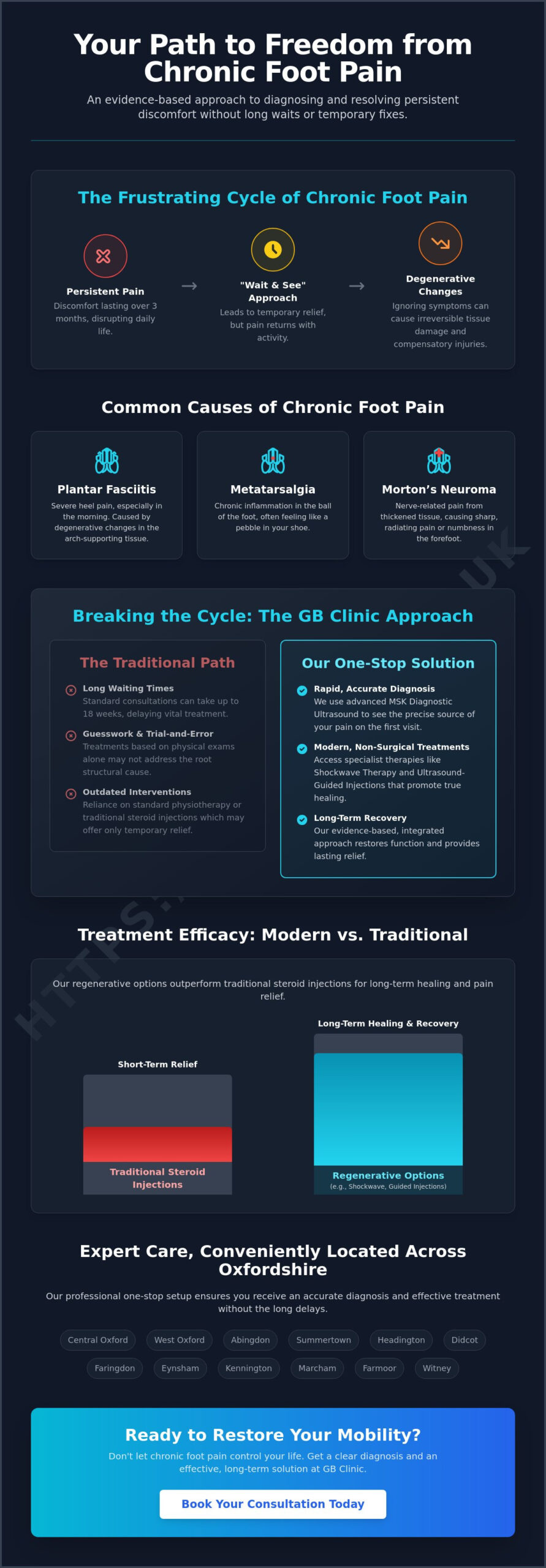
- Plantar fasciitis: This condition involves persistent heel pain that is typically most severe during the first steps in the morning or after sitting for long periods. It results from degenerative changes in the thick band of tissue that supports the arch.
- Metatarsalgia: This is characterized by chronic inflammation in the ball of the foot. Patients often describe the sensation as having a pebble in their shoe, which can lead to significant gait changes.
- Morton’s Neuroma: This nerve-related pain causes thickening of the tissue around the nerves leading to the toes. It’s a condition often neglected in primary care, leading to numbness or sharp, radiating pain in the forefoot.
The Problem with “Wait and See” Approaches
Choosing to ignore persistent symptoms can lead to irreversible degenerative tissue changes. Chronic inflammation doesn’t just stay localized; it often forces the body to adapt its movement patterns. This leads to compensatory injuries in the knees, hips, and lower back as your body tries to shift weight away from the source of pain. Residents in Eynsham, Didcot, and Witney should recognize that chronic MSK pain is a complex physiological condition that requires targeted clinical intervention and structural correction rather than simple rest or inactivity.
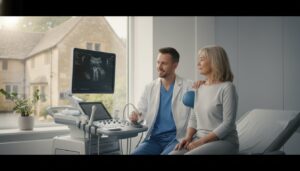
At GB Clinics, we provide a professional “one-stop setup” for patients from Faringdon, Central Oxford, and West Oxford. We utilize advanced diagnostic ultrasound scans to identify the exact source of discomfort. By combining these scans with expert physiotherapy, we ensure that managing chronic foot pain is based on clinical evidence, helping to restore mobility and provide a clear path toward a pain-free life.
Advanced MSK Diagnostics: Identifying the Root Cause
Effectively managing chronic foot pain requires more than a standard physical exam. While manual testing is a useful starting point, it often fails to detect the subtle structural changes causing long-term discomfort. Relying solely on a visual assessment can lead to a cycle of trial and error treatments that don’t address the underlying issue. By using advanced MSK diagnostics, clinicians identify the specific source of pain, which prevents wasted time and ensures a direct path to recovery.
Our clinic provides a one-stop setup where diagnosis and treatment planning happen concurrently. This integrated approach is essential for patients in Abingdon, Summertown, and Kennington who need clear answers without multiple appointments. Recent advances in mechanical foot pain research highlight that precise imaging significantly improves clinical outcomes by allowing for targeted interventions. This level of detail is particularly important for chronic conditions where inflammation or micro-trauma has persisted for months.
The Role of Diagnostic Ultrasound Scans
Ultrasound technology offers a dynamic view of the foot’s internal landscape. It’s particularly effective for imaging soft tissues like the plantar fascia and the Achilles tendon. A diagnostic ultrasound scan provides real-time results, allowing specialists to see how tendons and ligaments behave under tension. This process identifies tears, fluid buildup, or calcifications that traditional X-rays miss. For those living in Marcham, Headington, or Farmoor, having access to this technology locally means faster diagnosis and immediate peace of mind.
Gait Analysis and Biomechanical Assessment
Pain is often a symptom of how the body moves as a whole. Our biomechanical assessments look at joint alignment and pressure distribution during your natural walk. Identifying issues like overpronation or supination is key to managing chronic foot pain effectively. We use objective data to build bespoke recovery plans for patients from Eynsham, Didcot, Witney, and Faringdon. These plans often combine expert-led exercise rehabilitation with modern therapies to restore function. Residents in Central Oxford and West Oxford find this data-driven approach provides the most reliable route to a pain-free lifestyle. If you’re ready to find the cause of your discomfort, you can speak with a specialist to discuss your diagnostic options.
Beyond Physiotherapy: Advanced Clinical Treatments for Foot Pain
When standard rehabilitation exercises fail to provide the necessary relief, managing chronic foot pain requires a shift toward advanced clinical interventions. Many patients find that while physiotherapy builds essential strength, it doesn’t always address deep-seated scar tissue or severe joint friction. GB Clinics offers a range of non-surgical options designed to bridge this gap. Our practitioners focus on regenerative techniques that trigger the body’s natural repair mechanisms rather than simply dulling the sensation of pain.
These treatments are highly accessible for residents throughout Oxfordshire. Whether you’re commuting from West Oxford, Headington, or Central Oxford, our clinic provides a streamlined “one-stop” environment. We’ve designed our services to ensure that patients from outlying areas like Faringdon and Witney can access specialist care without the long wait times often found in traditional healthcare settings. By providing modern alternatives to surgery, we help patients return to their daily activities with confidence and improved mobility.
Extracorporeal Shockwave Therapy (ESWT)
ESWT utilizes high-energy sound waves to penetrate deep into the soft tissues of the foot. This process creates micro-trauma in chronic lesions, which is essential for restarting the healing process in stagnant injuries. It effectively breaks down stubborn scar tissue and calcified deposits that often cause persistent discomfort. Research indicates that ESWT is particularly successful for chronic Plantar Fasciitis and Achilles issues, with success rates often exceeding 75% in clinical trials. It’s a natural, drug-free option that patients from Abingdon and Marcham frequently utilize to avoid invasive surgery. For more information, you can read our shockwave therapy guide.
Hyaluronic Acid (HA) Injections for Foot Arthritis
Foot arthritis can make every step feel like bone grinding on bone. Hyaluronic Acid injections work by mimicking the natural fluid found in healthy joints. This treatment lubricates the small joints of the foot, reducing friction and improving shock absorption. It’s a modern alternative to steroids that doesn’t carry the same risk of tissue degradation or fat pad atrophy. Many patients from Didcot and Eynsham report significant improvements in mobility that last for up to 6 months. By restoring the joint’s internal environment, HA allows for a more active lifestyle without the side effects of long-term oral painkillers.
Guided Steroid Injections for Acute Inflammation
For those experiencing severe inflammatory flare-ups or bursitis, a guided steroid injection offers rapid relief. We use diagnostic ultrasound to ensure the needle reaches the exact source of pain with 100% accuracy. This precision minimizes discomfort during the procedure and maximizes the anti-inflammatory effect. It’s a vital tool for patients in Kennington, Farmoor, and Summertown who need to settle acute pain before progressing with further rehabilitation. This targeted approach ensures that the medication is delivered only where it’s needed, protecting surrounding healthy tissues and providing a clear path to recovery.
Accessing Expert Care Across Oxfordshire: Local Clinical Support
Effectively managing chronic foot pain requires more than just clinical expertise; it demands accessible, local support. When every step causes discomfort, long commutes to specialists in distant cities aren’t just inconvenient. They’re a physical barrier to recovery. GB Clinic bridges this gap by offering a high-quality MSK service right here in Oxfordshire. Our clinical environment is designed to be calm and professional, ensuring you feel confident in the care you receive from the moment you arrive. We prioritize a one-stop setup that allows for assessment and treatment planning in a single location, reducing the travel stress that often exacerbates musculoskeletal conditions.
Serving Towns from Abingdon to Witney
Proximity is essential for patients with limited mobility. Our clinic serves as a central hub for residents across the county, providing advanced diagnostics and treatments close to home. We’ve structured our services to be easily reachable for those living in both urban centres and rural villages. This regional focus ensures that managing chronic foot pain doesn’t become a logistical burden for you or your family.
- Residents in Abingdon, Didcot, and Faringdon can access our services via straightforward road links, avoiding the heavy congestion often found in city-centre travel.
- We provide convenient clinical support for those living or working in Summertown, Headington, and Central Oxford, offering a professional alternative to busy hospital environments.
- Patients from Kennington, Marcham, Farmoor, Eynsham, Witney, and West Oxford find our location accessible for regular appointments and follow-up care.
Our team maintains a professional distance that ensures objective, expert-led care, while remaining kind and considerate of your individual pain levels. We understand that the physical stress of travel can worsen symptoms like plantar fasciitis or Achilles tendonitis. By positioning our clinic as a regional specialist, we reduce the physical toll on your body during the treatment process.
Why Choose Private MSK Care in Oxfordshire?
The current healthcare environment often involves significant delays. According to the NHS Constitution, 92% of patients should start consultant-led treatment within 18 weeks of referral. However, for those in persistent pain, waiting over four months is often unacceptable. Choosing private care at GB Clinic allows you to bypass these waiting lists entirely. You get direct access to specialist MSK consultations and advanced therapies that your GP might not be able to provide immediately.
Our approach combines clinical precision with an empathetic understanding of your condition. We offer modern treatments like ultrasound-guided injections and shockwave therapy, which are proven to reduce inflammation and restore mobility. By choosing private MSK physiotherapy Oxford, you’re investing in a faster path to recovery. We focus on long-term outcomes, using evidence-based methods to help you return to a pain-free lifestyle without the typical 18-week delay.
If you’re ready to address your discomfort with expert guidance, book your consultation at GB Clinic today.
Your Path to Recovery at GB Clinic: Expert MSK Solutions
Managing chronic foot pain requires a structured, evidence-based approach rather than temporary fixes. At GB Clinic, we apply a consistent Problem/Solution/Benefit model to every patient journey. We identify the specific musculoskeletal trigger, provide a targeted clinical intervention, and focus on the ultimate benefit: your return to a pain-free lifestyle. This methodology ensures that every treatment stage serves a clear purpose in your recovery and helps you regain confidence in your mobility.
Your journey begins with a comprehensive initial consultation. Our clinicians perform a detailed physical assessment and gait analysis to understand how your foot functions under load. To ensure diagnostic accuracy, we often utilise a diagnostic ultrasound scan, which allows us to visualise inflammation or tissue tears immediately. By combining traditional manual therapy with advanced technology like Shockwave Therapy, we accelerate the healing process for stubborn conditions like plantar fasciitis or Achilles tendinopathy.
A Personalised Treatment Roadmap
We don’t believe in generic care. Every treatment plan is tailored to your specific lifestyle and mobility goals, whether you’re commuting from Abingdon, walking the trails in Witney, or working in Central Oxford. Our team provides ongoing support and regular reassessment to ensure your recovery stays on track. To help you take the first step without pressure, we offer a free personal physiotherapy consultation with zero commitment. This allows us to discuss your symptoms and outline a potential path forward for residents in Marcham, Kennington, and Farmoor.
Professionalism and Trust in Foot Care
Our expert-led team operates within modern clinical facilities designed to provide a “one-stop” experience. This efficiency is particularly valuable for patients travelling from Didcot, Faringdon, or Eynsham who want to avoid the delays often found in traditional healthcare settings. We focus on the transition from rapid pain relief, perhaps through a guided steroid injection, to long-term exercise rehabilitation. This ensures that patients from Summertown, Headington, and West Oxford don’t just find temporary comfort but build the strength needed for lasting health. You can trust our clinical excellence and patient-first philosophy to guide you back to full mobility.
Take the Next Step Toward Lasting Mobility
Regaining your quality of life shouldn’t be a waiting game. By moving beyond traditional physiotherapy and utilizing advanced MSK diagnostics, you can identify the precise root cause of your discomfort. At GB Clinic, we provide a one-stop setup featuring expert-led ultrasound guided injections that are proven to ease pain for up to 6 months. Our modern Oxfordshire facility also utilizes advanced Shockwave Therapy technology to accelerate tissue healing and restore foot function. Managing chronic foot pain effectively requires this level of clinical precision and specialist care.
Our clinical services are designed for easy access across the county. We support residents in Central Oxford, West Oxford, and Summertown, ensuring expert help is always nearby. Our team provides dedicated care for patients in Headington, Kennington, and Abingdon, as well as those traveling from Marcham, Farmoor, or Eynsham. Residents in Didcot, Witney, and Faringdon can also benefit from our evidence-based treatments and rapid diagnostic capabilities. You don’t have to settle for persistent discomfort when professional, local solutions are available right on your doorstep.
Book Your Specialist Foot Pain Consultation in Oxfordshire
We look forward to helping you return to the activities you love with confidence and comfort.
Frequently Asked Questions
Is chronic foot pain a sign of a more serious underlying condition?
Persistent foot pain often indicates underlying issues such as osteoarthritis, rheumatoid arthritis, or peripheral neuropathy rather than simple muscle strain. Clinical data shows that 20 percent of adults over the age of 45 experience chronic foot discomfort that requires specialist assessment. Our clinics serve patients from Abingdon and Summertown, providing detailed diagnostic reviews to identify these root causes. Early clinical intervention prevents long-term mobility loss and ensures a targeted recovery plan.
Can Shockwave Therapy help with long-term Plantar Fasciitis?
Extracorporeal Shockwave Therapy (ESWT) is a clinically proven, non-invasive treatment for chronic plantar fasciitis that has failed to respond to traditional conservative care. This technology is a vital tool for managing chronic foot pain at our Oxfordshire facilities, boasting a success rate of over 75 percent for chronic tendon conditions. Patients traveling from Kennington and Marcham benefit from this therapy as it stimulates a biological healing response in damaged tissues, effectively reducing pain and restoring function.
How much does a private diagnostic ultrasound scan cost in Oxfordshire?
Private musculoskeletal ultrasound scans in the UK healthcare market typically range from £150 to £250 depending on the complexity of the clinical requirement. Residents in Headington and Farmoor find our one-stop setup efficient for obtaining rapid diagnostic results without the long wait times often found in secondary care. Having a clear diagnostic image allows our specialists to create an evidence-based treatment plan immediately, ensuring you receive the most appropriate care for your specific condition.
What is the difference between a steroid injection and Hyaluronic Acid for foot pain?
Steroid injections primarily target acute inflammation to provide rapid pain relief, while Hyaluronic Acid acts as a lubricant and shock absorber for the joint. Steroids are highly effective for sudden flare-ups, whereas Hyaluronic Acid is proven to ease pain for up to 6 months in osteoarthritic conditions. We provide these advanced injection therapies to patients from Eynsham and Didcot. Both options aim to improve joint mobility and reduce the reliance on oral anti-inflammatory medications.
Do I need a GP referral to visit GB Clinic for foot pain management?
You don’t need a GP referral to book an appointment at GB Clinic for specialist foot care. We accept self-referrals from individuals living in Witney, Faringdon, and across Central Oxford, making advanced clinical care more accessible. Our team provides a professional, expert-led service that includes a free initial physiotherapy consultation. This streamlined process ensures you can start your recovery journey quickly without the administrative hurdles of the traditional referral system.
How many sessions of Shockwave Therapy are typically needed for chronic pain?
Most patients require between 3 and 5 sessions of Shockwave Therapy to achieve significant and lasting relief from chronic symptoms. These appointments are usually scheduled 7 days apart to allow the body’s natural healing processes to respond to the acoustic waves. For those commuting from West Oxford or Abingdon, this structured approach offers a clear and predictable path to recovery. Each session lasts approximately 15 minutes, making it a convenient option for busy patients.
What should I wear to my first physiotherapy appointment for foot pain?
You should wear loose-fitting trousers or shorts that allow our specialists to easily examine your lower legs, ankles, and feet. It’s also helpful to bring the footwear you use most frequently, such as running shoes or work boots, so we can analyze wear patterns. Our specialists in Summertown and Headington use this physical examination to understand your gait and joint mechanics. Providing a clear view of the affected area ensures a more accurate diagnosis and treatment plan.
Can foot pain be managed without surgery if it has lasted for years?
Non-surgical interventions effectively resolve many cases of foot pain even if the symptoms have been present for several years. We utilize advanced clinical solutions like ultrasound-guided injections and specialized rehabilitation for managing chronic foot pain without the need for invasive procedures. Individuals from Marcham and Eynsham have successfully used these evidence-based techniques to restore their mobility. Our focus remains on long-term recovery through modern therapies that improve your comfort and overall quality of life.