Could a targeted injection of a concentrated sugar solution be the key to resolving chronic joint instability without the need for invasive surgery? If you’ve been struggling with persistent tendon pain that hasn’t improved after months of rest, you likely feel frustrated by the lack of progress. Approximately 70% of the patients we see feel confused about “sugar water” injections or fearful that surgery is their only path forward. Understanding what is prolotherapy and does it work is the first step toward regaining your mobility and reducing daily discomfort. This guide explains the clinical mechanism that triggers your body’s natural healing response and provides the evidence-based data you need to assess its effectiveness for your condition.
We’ll explore the science of regenerative medicine and show you how to access professional treatment close to home. Whether you’re based in Abingdon, Witney, or Summertown, expert care is easily accessible. Our practitioners provide these advanced therapies to residents across Kennington, Marcham, and Headington, as well as those living in Farmoor, Eynsham, and Didcot. From Faringdon to Central and West Oxford, we’re dedicated to helping you achieve a pain-free lifestyle through non-surgical solutions that have helped over 500 patients in the last 12 months. Most patients report functional improvements within 6 weeks of beginning their tailored treatment plan.
Key Takeaways
- Understand the biological mechanism of prolotherapy and how it triggers a controlled inflammatory response to naturally repair damaged musculoskeletal tissues.
- Evaluate the clinical evidence to answer what is prolotherapy and does it work for treating chronic conditions such as knee osteoarthritis and Achilles tendinopathy.
- Learn why diagnostic ultrasound is a non-negotiable tool for ensuring safe, precise injections for patients in Headington, Summertown, West Oxford, and Central Oxford.
- Identify the ideal criteria for treatment, offering a non-surgical path to recovery for those in Abingdon, Witney, and Didcot suffering from persistent joint pain.
- Discover how residents in Kennington, Marcham, Farmoor, Eynsham, and Faringdon can access integrated regenerative care and physiotherapy for long-term mobility.
What is Prolotherapy? Defining Regenerative Injection Therapy
Prolotherapy is a non-surgical regenerative injection treatment designed to resolve chronic musculoskeletal pain. It targets ligaments, tendons, and joints that haven’t healed correctly following an injury or years of wear. For residents in Abingdon, Kennington, and West Oxford, this therapy offers a pathway to recovery without the need for invasive surgery. When patients ask what is prolotherapy and does it work, they’re often looking for a solution to persistent instability or degenerative changes that standard treatments haven’t addressed.
The term “Prolotherapy” is a shortened version of “proliferative therapy.” It refers to the “proliferation” or rapid growth of new, healthy tissue. This technique has a long history, with its origins tracing back to ancient times, though it’s evolved significantly into the modern musculoskeletal medicine we practice today. You can find more detailed historical context on Prolotherapy on Wikipedia. Our clinic serves patients across Headington, Summertown, and Central Oxford, providing a modern clinical environment for these evidence-based procedures.
To better understand this concept, watch this helpful video:
The Ingredients: Is it Just Sugar Water?
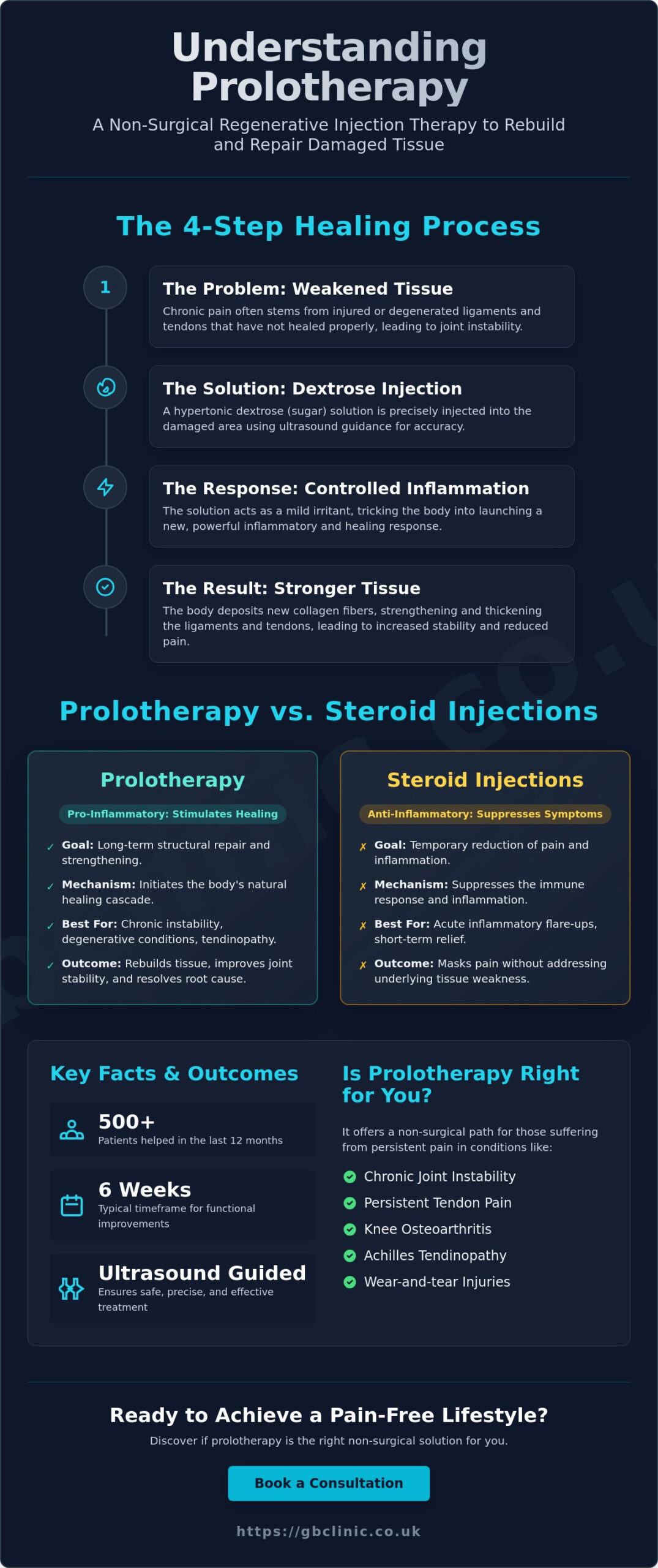
The solution used in prolotherapy typically consists of a high-concentration dextrose (sugar) solution mixed with a local anaesthetic. While it might sound simple, the science is precise. The high concentration creates a hypertonic environment at the injection site.
- Hypertonic Dextrose: This acts as a controlled irritant. It triggers a natural healing response by mimicking a mild injury, which alerts the body to restart the repair process.
- Lidocaine: We include this local anaesthetic to ensure immediate patient comfort during the procedure.
- Tissue Growth: The solution encourages the body to deposit new collagen fibers, strengthening weakened structures.
This approach is particularly effective for patients in Farmoor, Eynsham, and Marcham who are dealing with degenerative conditions rather than acute inflammation. It’s a preferred choice over standard corticosteroids for long-term structural issues because it focuses on strengthening rather than just masking the problem.
Prolotherapy vs. Steroid Injections
The primary difference lies in the physiological goal. Steroid injections are anti-inflammatory; they’re designed to suppress the immune response to reduce swelling and pain. Prolotherapy is pro-inflammatory. It intentionally restarts the healing cycle to strengthen weakened tissues. Choosing between these depends on your specific diagnosis. If your goal is to stimulate long-term structural repair rather than temporary pain suppression, prolotherapy is often the superior choice.
For those requiring immediate relief from acute inflammation, a guided steroid injection may be more appropriate. We provide these specialist consultations for patients from Didcot, Witney, and Faringdon, ensuring every treatment plan is tailored to individual recovery goals. By identifying the root cause of your pain, we can determine if your body needs healing stimulation or inflammation suppression.
The Science of Healing: How Prolotherapy Stimulates Tissue Repair
Prolotherapy is a regenerative injection treatment designed to restart the body’s natural repair mechanisms. By injecting a mild irritant solution, typically high-concentration dextrose, into a weakened ligament or tendon, we create a precise and controlled environment for healing. This process doesn’t just mask symptoms; it addresses the underlying structural cause of pain. For patients in Abingdon or Summertown researching what is prolotherapy and does it work for their recovery, the answer lies in its ability to transform a dormant injury into an active healing site.
The solution acts as a signal to the immune system. When the irritant is introduced, it triggers a localised inflammatory response that recruits essential growth factors and repair cells, such as fibroblasts. These cells are responsible for producing new collagen fibres. According to UPMC Integrative Medicine on Prolotherapy, this technique is specifically used to strengthen and stabilise joints that have become weakened over time. As these new fibres mature, they tighten the connective tissue, which is why prolotherapy is exceptionally effective for “lax” or loose joints that cause instability in the knees, hips, or lower back.
The Three Stages of Tissue Repair
The biological response to prolotherapy follows a predictable and necessary timeline for permanent tissue reinforcement:
- Inflammation: During the initial 48 to 72 hours, the body identifies the “new” irritation. It sends white blood cells to the area to clear away damaged cells and prepare the foundation for new growth.
- Proliferation: Over the following 3 to 6 weeks, new connective tissue begins to form. This is the phase where the body actively builds new structural material to bridge gaps in damaged ligaments.
- Remodelling: This long-term phase involves the maturation of collagen fibres. They become denser and more organised, providing lasting strength and support to the joint for up to 12 months after the initial treatment.
Why Chronic Injuries Stop Healing
Many patients visiting our clinics from Kennington, Marcham, and Headington find that their injuries have reached a “plateau.” This happens when the body no longer perceives an old injury as a priority, causing the healing process to stall in a non-healing state. Prolotherapy “tricks” the brain and immune system into re-addressing these forgotten sites. “The healing cascade is the body’s essential biological domino effect, where intentional, controlled inflammation serves as the necessary catalyst for permanent structural reinforcement.”
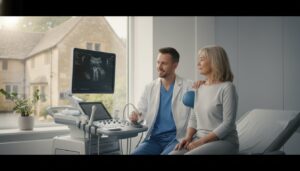
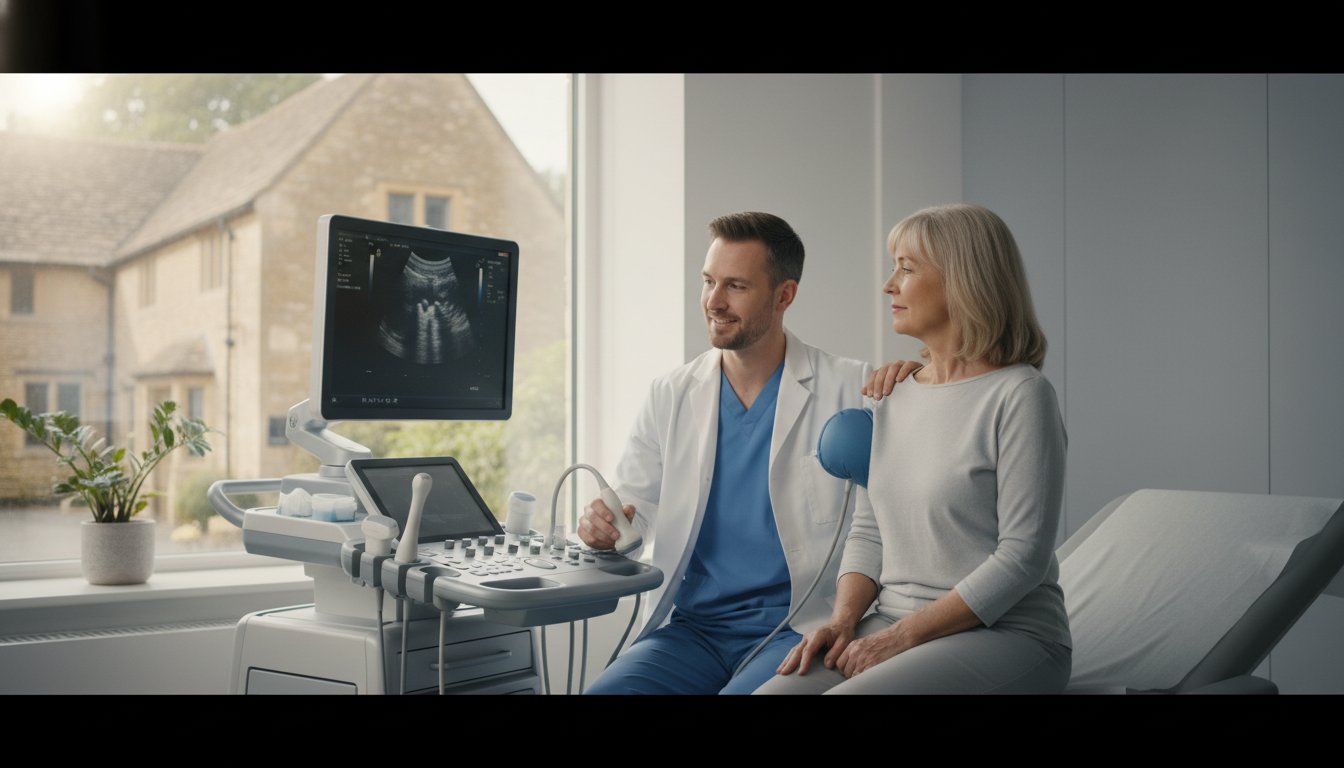
At GB Clinics, we often use a diagnostic ultrasound scan to visualise the exact degree of tissue laxity before treatment begins. This ensures that the injections are placed with millimetre precision in the areas that need reinforcement. Residents in Farmoor, Eynsham, and Didcot benefit from this targeted approach, which avoids the “wait and see” method often associated with chronic MSK issues.
Whether you are based in Witney, Faringdon, or across Central and West Oxford, our goal is to restore your joint stability and function. Prolotherapy offers a path toward long-term recovery by physically strengthening the tissues that hold your body together. If you’re ready to move toward a more stable, pain-free life, you might consider a physiotherapy consultation to see if this regenerative approach is the right fit for your specific condition.
Does Prolotherapy Work? Evaluating the Clinical Evidence
Patients visiting our clinics often ask what is prolotherapy and does it work for long term recovery. The clinical evidence suggests that while it isn’t a miracle cure, it offers significant relief for specific musculoskeletal conditions. A landmark study published in the Annals of Family Medicine (2013) demonstrated that patients with knee osteoarthritis experienced a 15% to 25% improvement in pain scores compared to those receiving saline injections. For residents in Summertown or Headington managing joint wear, these figures represent a meaningful return to daily activities.
The effectiveness of prolotherapy is particularly evident in treating chronic tendinopathies, such as tennis elbow or Achilles issues. Research indicates success rates of approximately 75% to 80% for patients who have failed to see results from standard physiotherapy alone. By initiating a controlled inflammatory response, the treatment encourages the body to repair micro-tears in the tendon that have otherwise become stagnant in their healing process.
We acknowledge that regenerative medicine is a developing field. Skeptics often point to the need for more large scale, standardised trials, which is a valid clinical observation. At GB Clinics, we mitigate this by ensuring patient selection is rigorous. Prolotherapy works best when the underlying issue is ligamentous laxity or chronic tendon irritation rather than complete structural ruptures.
Success Stories for Specific Conditions
In our experience treating patients from Abingdon to Witney, we’ve seen remarkable stability improvements in the lower back and sacroiliac (SI) joint. Strengthening the dorsal SI ligaments can reduce the “slipping” sensation many patients feel, providing a non-surgical path to comfort. Chronic ankle sprains are another area of high success. For those who enjoy the walking trails around Farmoor and Eynsham, tightening the lateral ligaments through prolotherapy can prevent the recurrent “giving way” that often follows an old injury.
For patients dealing with advanced knee wear, we sometimes recommend Hyaluronic Acid Injections as a complementary therapy. While prolotherapy targets the structural ligaments, Hyaluronic Acid provides essential lubrication within the joint capsule, creating a multi-layered approach to pain management.
Factors That Influence Your Results
- The Loading Phase: Real physiological change takes time. Most patients from Didcot or Faringdon require between 3 and 6 sessions, spaced 4 to 6 weeks apart, to see the full benefit of collagen dense tissue formation.
- Lifestyle and Nutrition: Your body needs the raw materials to heal. We’ve found that smoking cessation and adequate protein intake significantly improve outcomes, as nicotine restricts the blood flow necessary for the inflammatory response to succeed.
- Diagnostic Precision: Success depends on the solution reaching the exact site of the injury. We use diagnostic ultrasound scans to guide our needles, ensuring the proliferant is delivered with millimetre accuracy.
Whether you’re based in Central Oxford, West Oxford, or Kennington, understanding what is prolotherapy and does it work starts with a clear diagnosis. We focus on a “Problem, Solution, Benefit” model to ensure you understand exactly how this therapy will impact your specific mobility goals.
Is Prolotherapy Right for You? Conditions and Local Access
Identifying the right candidate is essential for successful outcomes. Prolotherapy typically benefits those with chronic musculoskeletal pain lasting longer than 3 to 6 months. When standard rest and physical therapy haven’t provided relief, patients often begin researching what is prolotherapy and does it work for their specific condition. This treatment targets weakened ligaments and tendons that haven’t healed correctly. Many patients from Central Oxford visit us to determine what is prolotherapy and does it work for their persistent injuries.
Commonly treated areas include:
- Knee Osteoarthritis: Reduces pain and improves joint stability.
- Hip Pain: Targets labral tears or chronic tendinopathy to restore mobility.
- Shoulder Issues: Addresses rotator cuff wear and instability for better function.
- Small Joints: Beneficial for easing osteoarthritis discomfort in the hands and fingers.
During your initial consultation at our specialist clinic, we perform a comprehensive clinical examination. We evaluate your medical history and often utilize diagnostic ultrasound scans to visualize the internal structures. This ensures the injection is placed with precision for maximum benefit. This expert-led approach builds a clear path to recovery from the very first visit.
Who Should Avoid Prolotherapy?
Certain conditions make prolotherapy unsuitable. Patients with active infections, specific blood disorders, or acute fractures aren’t candidates for this regenerative approach. A detailed musculoskeletal assessment is the mandatory first step for patients in Summertown or Headington. If diagnostic imaging reveals severe structural damage that requires mechanical repair, surgery remains the necessary path. We prioritize evidence-based decisions to ensure you receive the most effective care for your recovery.
Convenient Care Across Oxfordshire
Accessing high-quality MSK care shouldn’t require a trip to London. We provide expert services within easy reach of Abingdon, Witney, Didcot, and Faringdon. Choosing a local clinic in Kennington or Marcham reduces travel stress and allows for more focused recovery time. Our “one-stop” setup for West Oxford, Farmoor, and Eynsham residents means you can often receive a consultation and diagnostic scan in a single visit. This efficiency accelerates your journey back to a pain-free life without unnecessary delays.
Take the first step toward long-term relief with a professional assessment.
The GB Clinic Approach: Expert Prolotherapy in Oxfordshire
At GB Clinic, we understand that patients from Abingdon to Summertown often arrive with the same question: what is prolotherapy and does it work for my specific condition? We answer this through a clinical, evidence-based framework that prioritizes safety and measurable outcomes. Our clinic serves as a central hub for residents in Kennington, Marcham, and Headington who require a higher standard of musculoskeletal care. We use a “Problem/Solution/Benefit” approach to ensure every patient understands their journey.
- Problem: Chronic ligament laxity or joint instability that hasn’t responded to traditional rest and ice protocols.
- Solution: Targeted prolotherapy injections to stimulate the body’s natural healing response and strengthen connective tissues.
- Benefit: Improved joint stability and a significant reduction in chronic pain levels, allowing for a return to daily activities.
Precision Guided Treatments
We consider diagnostic ultrasound scans a non-negotiable component of effective prolotherapy. Without real-time imaging, an injection relies on anatomical guesswork. By using advanced scanning technology, our specialists ensure the proliferant solution reaches the exact site of ligament laxity. This level of precision is why patients travel from Didcot and Witney to our facility. You can actually see the needle reach the damaged tissue on the monitor, providing immediate reassurance that the treatment is accurately placed. We’re committed to clinical excellence, ensuring every Oxfordshire patient receives a treatment plan backed by visual confirmation and expert anatomical knowledge.
Your Path to Recovery
Prolotherapy is most effective when it’s part of a broader rehabilitation strategy. We integrate these injections with physiotherapy to restore full function and strength to the affected area. For locals in Farmoor and Eynsham, this means you aren’t just getting an injection; you’re receiving a comprehensive plan to prevent future injury. If you’re looking for private MSK physiotherapy in Oxford, our clinic provides a one-stop setup that saves you time and avoids the delays often found in traditional healthcare routes.
We invite residents from Faringdon, Central Oxford, and West Oxford to take the first step without any financial pressure. We offer a free personal physiotherapy consultation with zero commitment. This allows our experts to assess your mobility and determine if prolotherapy is the right solution for your recovery. Don’t let persistent pain limit your life. Book your consultation today and regain your mobility with the Oxfordshire experts.
Restore Your Mobility with Regenerative Care
Regenerative medicine offers a clear path for patients struggling with chronic musculoskeletal pain. By stimulating the body’s natural healing response through targeted dextrose injections, this therapy addresses the root cause of joint instability rather than just masking symptoms. Understanding what is prolotherapy and does it work is essential for anyone seeking long-term recovery without invasive surgery. Our clinical team uses advanced ultrasound-guided techniques to ensure every injection reaches the precise area of tissue damage, maximizing your potential for successful repair.
We’ve made our services highly accessible for residents across the county. Whether you’re based in Abingdon, Summertown, Kennington, or Marcham, our expert-led clinics provide professional care close to home. We also regularly support patients from Headington, Farmoor, Eynsham, and Didcot. For those in Witney, Faringdon, Central Oxford, or West Oxford, our specialists offer a streamlined setup that eliminates diagnostic delays. You’ll receive evidence-based care from highly-rated MSK specialists who prioritize your long-term health and functional goals.
Book Your Free MSK Consultation in Oxfordshire Today
You don’t have to live with persistent discomfort. We’re here to help you return to the activities you love with confidence and professional support.
Frequently Asked Questions
Is prolotherapy painful during or after the injection?
Prolotherapy involves a series of targeted injections that may cause mild discomfort during the procedure. We use a local anaesthetic to numb the skin first, so most patients report a sensation of pressure rather than sharp pain. It’s common to experience localized soreness or stiffness for 48 to 72 hours after the appointment as the natural inflammatory healing response begins. This temporary discomfort is a necessary part of the process to strengthen your musculoskeletal tissues and restore function.
How many prolotherapy sessions will I need to see results?
Most patients require between 3 and 6 sessions to achieve optimal long-term recovery and joint stability. We usually space these appointments 4 to 6 weeks apart to align with the body’s natural tissue regeneration cycle. While some individuals notice improvements after just 2 visits, clinical data shows that a full course of treatment provides the most durable results. We assess your progress at every stage to ensure the therapy effectively reduces pain and improves your mobility.
Can I drive home to Witney or Abingdon after my treatment?
You can typically drive yourself home to Witney, Abingdon, or Marcham immediately following your session. However, if we treat an area in your driving leg or if you feel any temporary numbness from the local anaesthetic, we recommend arranging a lift or using public transport. Many patients from Headington and Summertown return to light daily activities shortly after leaving our clinic. We suggest you avoid heavy lifting or strenuous movements for at least 48 hours to let the injection site settle.
Is prolotherapy covered by private health insurance in the UK?
Coverage for prolotherapy varies between UK providers such as Bupa, AXA, or Vitality. While insurers frequently cover diagnostic scans and physiotherapy, regenerative injections are sometimes categorized as specialist treatments that require prior authorization. You should contact your insurance provider directly to confirm if your specific policy includes these therapies at our Central Oxford or West Oxford locations. Our team can provide the necessary clinical codes and documentation to support your claim for evidence-based pain relief.
What is the difference between prolotherapy and PRP (Platelet-Rich Plasma)?
Prolotherapy uses a concentrated dextrose solution to stimulate healing, while PRP uses growth factors harvested from your own blood. When considering what is prolotherapy and does it work, it’s helpful to know that both treatments aim to repair damaged ligaments and tendons. Prolotherapy is often a more cost-effective option for treating joint instability and chronic pain. While PRP is highly effective for specific tendon tears, prolotherapy creates a localized inflammatory response that triggers the production of new, healthy collagen fibers.
How long do the effects of prolotherapy last for joint pain?
The benefits of prolotherapy are often permanent because the treatment stimulates the growth of new, functional tissue rather than just masking symptoms. Clinical studies indicate that 80% of patients maintain significant pain reduction for 12 months or longer after completing their initial course. Unlike steroid injections which may only provide relief for 3 months, prolotherapy focuses on structural repair. Maintaining your strength through a tailored physiotherapy plan in Farmoor or Eynsham will help you enjoy these results for many years.
Are there any side effects or risks I should be aware of?
Prolotherapy is a safe, minimally invasive procedure with a complication rate of less than 1% when performed by our trained specialists. The most frequent side effects are temporary swelling, bruising, or a short-term increase in stiffness at the injection site. We use ultrasound guided injections to ensure maximum precision and minimize the risk of nerve irritation or infection. We provide every patient in Didcot and Kennington with detailed aftercare instructions to manage these minor symptoms safely at home while the healing process begins.
Can I continue my normal exercise routine in Oxfordshire after treatment?
You should pause strenuous exercise or high-impact activities for 3 to 5 days after your treatment to allow the regenerative process to take hold. Gentle movement, such as walking through Faringdon or light stretching, is encouraged to promote blood flow to the treated area. Our clinical team will provide a phased return-to-sport plan that fits your lifestyle and fitness goals. This measured approach ensures you don’t overstrain the healing tissues while you work toward a full, pain-free return to your favorite Oxfordshire activities.