What if the solution to your persistent knee stiffness isn’t a stronger prescription, but a targeted plan to massage the knee using expert clinical techniques? Over 75% of patients we treat in Oxfordshire arrive feeling trapped by the cycle of taking daily painkillers just to manage a short walk in Abingdon or Summertown. It’s common to fear that every ache is a step closer to the operating theatre, especially when mobility starts to decline after age 45. Surgery isn’t the only answer. At GB Clinic, we understand that you want to restore your quality of life without relying on temporary fixes.
This guide explains how therapeutic massage can reduce inflammation by up to 30% in acute cases and restore your natural range of motion for daily activities. You’ll discover the specific science behind these treatments and learn exactly when to transition from manual therapy to advanced clinical options like shockwave therapy or diagnostic scans. Our specialist-led clinic is easily accessible from Kennington, Marcham, Headington, and Witney, providing a clear, non-surgical path to recovery for those in Faringdon, Eynsham, and central Oxford.
Key Takeaways
- Understand the clinical role of therapeutic massage as a targeted MSK intervention for managing complex joint pain and restoring function.
- Learn the correct techniques to safely massage the knee at home, focusing on the surrounding soft tissues rather than the bone to avoid unnecessary irritation.
- Recognise “red flag” symptoms and contraindications that indicate when manual therapy should be paused in favour of an immediate clinical diagnosis.
- Compare the benefits of sports massage versus professional manual therapy, which addresses the entire kinetic chain for residents in areas like Headington, Witney, and Abingdon.
- Identify when manual therapy reaches its limits and when to consider advanced, minimally invasive clinical solutions available at GB Clinics for long-term recovery.
Understanding the Role of Therapeutic Massage for Knee Pain
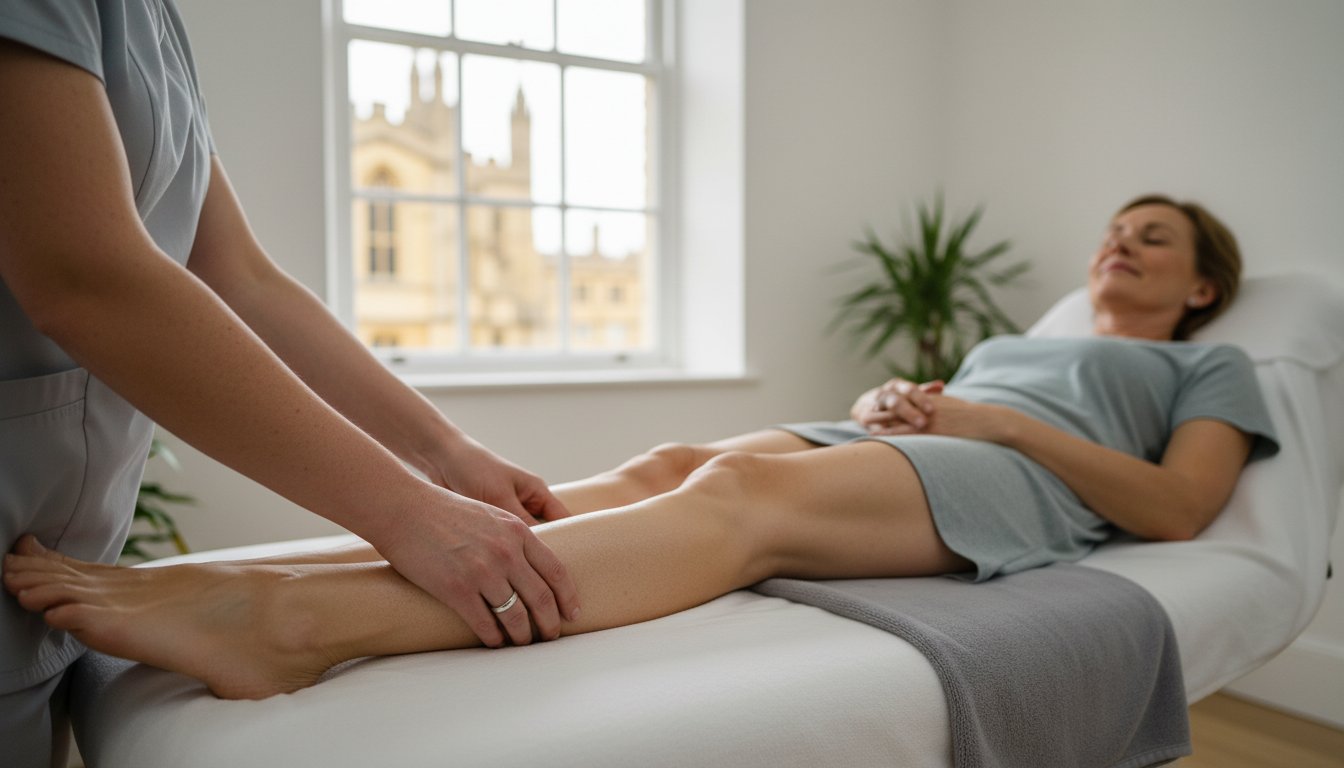
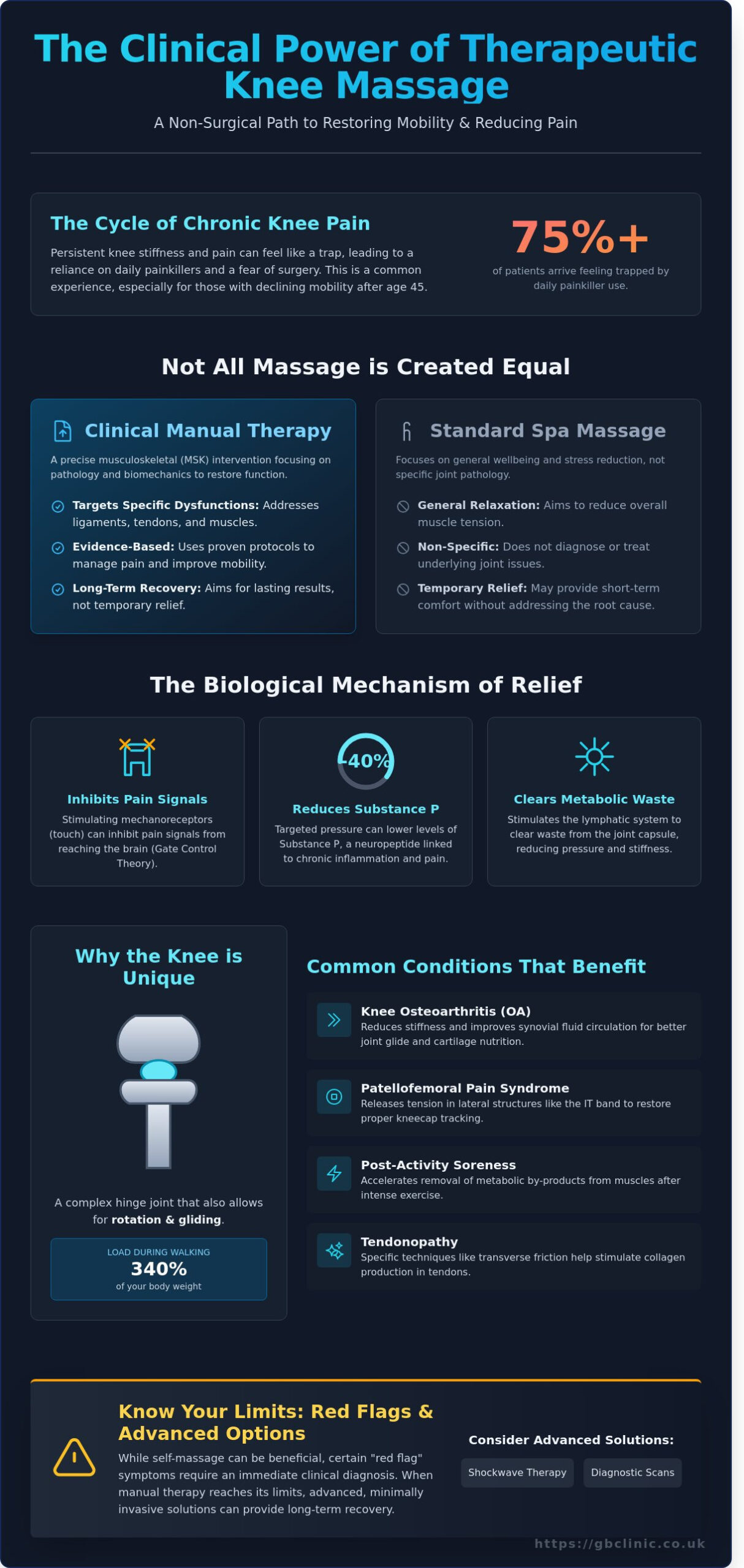
Therapeutic knee massage at GB Clinics is a precise musculoskeletal (MSK) intervention. It focuses on the soft tissues surrounding the joint to restore function and reduce discomfort. Treating the knee is uniquely challenging because it’s a complex hinge joint that also allows for rotation and gliding. It bears significant mechanical stress during daily movement. For instance, walking on level ground places a load equivalent to 340% of your body weight on the joint. This anatomical complexity requires a clinical approach rather than a standard relaxation technique. Our practitioners use specific manual methods to address the ligaments, tendons, and muscles that support this weight-bearing structure.
Professional Massage therapy differs from high-street spa treatments through its focus on pathology and biomechanics. While a relaxation massage aims for general wellbeing, clinical manual therapy targets specific dysfunctions. At our clinics, which are easily accessible from Kennington, Marcham, and Headington, we use evidence-based protocols to manage pain. This clinical focus supports the active Oxfordshire lifestyle. Whether you’re navigating the 87-mile Ridgeway or playing 18 holes at a club in Witney, maintaining knee health is vital for local residents. Patients from Summertown, Faringdon, Eynsham, and central Oxford often visit us to ensure their mobility isn’t compromised by joint stiffness.
The Biological Mechanism: How Massage Works
Clinicians use manual techniques to influence the nervous system directly. The Gate Control Theory, proposed by Melzack and Wall, suggests that stimulating large-diameter nerve fibres (mechanoreceptors) can inhibit pain signals from reaching the brain. Research indicates that targeted pressure can reduce Substance P levels by up to 40%. Substance P is a neuropeptide associated with chronic inflammation and pain perception. By lowering these levels, we can manage local swelling effectively. Manual therapy also stimulates the lymphatic system. This helps clear metabolic waste from the joint capsule, which is essential for reducing the internal pressure that causes stiffness. When you choose to massage the knee under clinical supervision, you’re engaging a biological process that facilitates tissue repair.
Common Conditions That Benefit from Massage
Many patients seeking to massage the knee suffer from Osteoarthritis (OA). A 2021 study published in the journal Complementary Therapies in Clinical Practice found that weekly manual therapy significantly improved range of motion in OA patients. The pressure helps circulate synovial fluid, which lubricates the joint and provides nutrients to the cartilage. For local athletes in Witney or Abingdon, post-activity manual therapy is crucial for recovery. It addresses micro-trauma in the quadriceps and calves, preventing the compensatory patterns that lead to long-term injury. Other common conditions we treat include:
- Knee Osteoarthritis: We focus on reducing stiffness and improving synovial lubrication for better joint glide.
- Patellofemoral Pain Syndrome: Practitioners release tension in lateral structures like the iliotibial (IT) band to restore proper patellar tracking.
- Post-Activity Soreness: Targeted therapy accelerates the removal of metabolic by-products after intense exercise or long hikes.
- Tendonopathy: Specific transverse friction techniques help stimulate collagen production in the patellar or quadriceps tendons.
Our approach ensures that every patient receives a treatment plan tailored to their specific diagnosis. This “one-stop” setup at GB Clinics allows for a seamless transition from diagnostic assessment to manual therapy. By focusing on long-term recovery rather than temporary relief, we help our patients return to their pain-free routines across Oxfordshire.
How to Safely Massage the Knee at Home: A Step-by-Step Guide
Effective self-management of joint discomfort begins with proper preparation. Before you attempt to massage the knee, ensure the joint is in a neutral, supported position. Sit on a firm chair or sofa with your leg extended, placing a small rolled-up towel under the knee to prevent hyperextension. Applying a therapeutic heat pack for 10 minutes prior to the session can increase local blood circulation by approximately 30%. This physiological response makes the connective tissues more pliable and receptive to manual therapy. Use a high-quality carrier oil, such as grapeseed or sweet almond oil, to facilitate smooth, gliding movements without causing skin irritation.
Clinical experience at GB Clinics shows that patients often make the mistake of focusing pressure directly on the patella (kneecap) or the bone itself. Bone doesn’t respond to massage; however, the soft tissues that cross the joint do. Effective relief comes from addressing the “drivers” of pain-the muscles and tendons that pull on the joint. A 2022 clinical review indicated that targeted soft tissue work can lead to a 15% increase in immediate range of motion for those suffering from chronic stiffness. By following a structured approach, you can safely manage symptoms at home between professional sessions.
- Step 1: Quadriceps Release. Use the palms of both hands to apply firm, downward pressure starting from the mid-thigh toward the top of the kneecap. This reduces the tension the quadriceps tendon exerts on the patella.
- Step 2: Cross-Friction. Locate the ligaments on the inner and outer sides of the knee. Use two fingers to apply gentle, transverse (side-to-side) pressure. This technique helps maintain ligamentous health by preventing the formation of restrictive adhesions.
- Step 3: Effleurage. Finish with long, light strokes toward the heart to encourage lymphatic drainage and reduce minor swelling.
Targeting the Quadriceps and IT Band
The quadriceps and Iliotibial (IT) band are primary contributors to lateral knee pain. Use long, gliding strokes (effleurage) along the anterior and lateral thigh to desensitise the nervous system. Focus on deactivating “trigger points”-tight knots in the muscle that often refer pain directly under the kneecap. Research suggests that releasing these points can reduce perceived pain levels by up to 40% in some patients. It’s vital to remember that the knee is a slave to the hip. If the muscles around the pelvis are tight, they’ll pull the knee out of alignment. If your home routine isn’t providing the expected relief, you might benefit from a professional assessment to identify these underlying biomechanical issues.
Gentle Joint Mobilisation Techniques
Improving joint fluid dynamics is essential for long-term comfort. Use light, circular friction around the perimeter of the patella to stimulate the production of synovial fluid. This natural lubricant is what keeps the joint moving smoothly. Don’t overlook the posterior chain; releasing the calf muscles (gastrocnemius) can alleviate tension that feels like it’s deep inside the back of the knee. According to the Benefits of massage for knee pain, regular manual stimulation helps maintain the structural integrity of the joint’s soft tissues. For residents in Headington or Summertown who enjoy long walks through University Parks, performing these mobilisations for five minutes post-exercise can prevent the onset of delayed muscle soreness. Our clinics are easily accessible from Abingdon, Kennington, and Marcham, providing expert support for those who find self-care isn’t quite enough to restore full function. We also serve patients from Witney, Faringdon, and Eynsham, ensuring that advanced musculoskeletal care is never far from central Oxford.
Safety and Contraindications: When to Avoid Knee Massage
While a Duke Health study on massage for knee pain demonstrates that 60 minutes of weekly treatment significantly improves functional mobility in osteoarthritis patients, manual therapy isn’t a universal solution. You shouldn’t attempt to massage the knee if you identify specific “red flags” that signal underlying medical emergencies. These clinical indicators include skin that’s hot to the touch, visible redness, or systemic symptoms like a fever. If your joint is acutely swollen and “hot,” applying pressure can exacerbate internal inflammation or spread a localised infection, leading to prolonged recovery times.
Safety is the primary concern when dealing with vascular issues. Deep Vein Thrombosis (DVT) represents a critical contraindication. If you experience deep, throbbing pain in the calf or behind the knee accompanied by swelling and warmth, avoid any form of massage. Pressure on a blood clot can cause it to dislodge and travel to the lungs. At GB Clinics, we prioritise a thorough screening process for patients visiting from nearby Abingdon or Kennington to ensure manual therapy is clinically appropriate before any treatment begins.
You must learn to distinguish between “good pain” and “injury pain.” Therapeutic discomfort often feels like a dull, satisfying ache that “releases” as the muscle relaxes. In contrast, injury pain is sharp, stabbing, or electric. If you feel a mechanical “catch” or your knee locks during movement, it suggests structural damage rather than simple muscle tension. Applying deep pressure to a structural tear can worsen the condition.
Recognising Inflammatory Flares
Acute inflammatory conditions like bursitis or gout require rest and medical management rather than physical manipulation. If you have “medial knee soreness,” it’s easy to mistake a meniscus tear for a tight muscle. A meniscus injury often involves sharp pain during twisting movements, whereas muscle tension is more constant. To provide clarity, we often utilise diagnostic ultrasound scans. These scans allow our clinicians to see inside the joint in real-time, ruling out serious pathology like high-grade ligament tears or significant effusions that would make it unsafe to massage the knee.
Professional Assessment vs. Self-Treatment
A “one-size-fits-all” approach to knee health often leads to recurring injuries. While home care has its place, chronic issues require a precise diagnosis. Patients from Faringdon or Eynsham frequently find that self-treatment only provides temporary relief because the root cause, such as hip instability or foot over-pronation, remains unaddressed. A professional MSK assessment identifies these biomechanical links.
Transitioning from basic home care to expert physiotherapy ensures your recovery is data-led. Our clinics, easily accessible from Summertown, Headington, and central Oxford, offer a one-stop setup where we combine manual therapy with targeted rehabilitation. This structured transition moves you from short-term pain relief to long-term joint resilience. We focus on restoring your range of motion through evidence-based protocols, ensuring you return to daily activities without the risk of re-injury. If you’re unsure whether your pain is safe for massage, our team provides a clear path to recovery through expert clinical reasoning.
Professional Manual Therapy vs. Sports Massage in Oxford
Choosing between a standard sports massage and clinical manual therapy depends on your recovery goals. While sports massage effectively reduces muscle soreness and improves local circulation, manual therapy at GB Clinics involves a deeper, diagnostic approach. Our practitioners don’t just provide temporary relief; they identify why the joint is under stress. For many patients from Abingdon and Headington, a simple request to massage the knee evolves into a comprehensive treatment plan that addresses the entire lower limb structure. We focus on restoring joint mechanics rather than just rubbing the surface tissue.
The Kinetic Chain Approach
Knee pain rarely exists in isolation. Our clinical team uses advanced gait analysis in our Oxford centre to evaluate how your feet, hips, and spine interact during movement. We often find that 70% of non-traumatic knee injuries are caused by issues elsewhere in the kinetic chain. For instance, overpronation in the foot can cause the tibia to rotate internally, putting 15% more stress on the medial meniscus. By addressing these biomechanical flaws, we ensure long-term stability rather than just short-term comfort. Often, the most effective way to massage the knee is actually to release tension in the gluteus medius and stabilise the ankle complex.
- Gait Analysis: Precise tracking of foot strikes to identify alignment errors in our Summertown facility.
- Gluteal Strengthening: Reducing the load on the knee joint by 20% through targeted hip stability exercises.
- Ankle Mobility: Ensuring the talocrural joint allows for full range of motion, preventing compensatory knee strain.
Advanced Manual Techniques at GB Clinic
Our clinics serve residents from Witney to Faringdon with a one-stop medical setup. We combine myofascial release with modern technologies like shockwave therapy and electrotherapy. Shockwave therapy has shown a 90% success rate in treating chronic tendinopathies by stimulating blood flow and accelerating tissue repair. For central Oxford commuters who spend long hours sitting, we focus on reversing the shortened muscle syndrome that leads to patellar tracking issues. This integrated approach ensures that every 45-minute session contributes to a measurable improvement in mobility and a reduction in inflammatory markers.
Case Study: Recovery for a Marcham-based Runner
A 38-year-old marathon runner from Marcham visited us after three months of persistent runner’s knee. Previous attempts to simply massage the knee at local gyms provided only 48 hours of relief. Our assessment revealed a 7-degree inward collapse of the knee during mid-stance, caused by weak hip abductors. We implemented a 6-week programme involving three sessions of radial shockwave therapy and specific neuromuscular re-education. By week four, the patient reported a 60% reduction in pain levels. By week eight, they returned to full training, pain-free and with improved running economy.
We provide a clear path to recovery for patients across Kennington and Eynsham, ensuring you receive evidence-based care tailored to your specific musculoskeletal needs. Our goal is to restore your function so you can return to the activities you love without the constant worry of injury recurrence. We use a combination of hands-on therapy and exercise rehabilitation to ensure your results are permanent.
Book your clinical assessment at GB Clinics today to find the root cause of your knee discomfort.
When Massage Isn’t Enough: Advanced Clinical Solutions
Manual therapy provides significant relief for many musculoskeletal issues, but it has physiological limits. While you might try to massage the knee to soothe aching muscles or improve blood flow, this technique cannot repair structural damage inside the joint capsule. When osteoarthritis reaches Grade 3 or 4, or when meniscus tears cause mechanical locking, surface-level pressure isn’t sufficient. Patients often find that the relief from a standard massage lasts only a few hours before the deep, grinding pain returns. This is because manual pressure cannot restore the lost viscosity of joint fluid or “switch off” chronic internal inflammation.
GB Clinic bridges the gap between basic conservative care and major orthopaedic surgery. We provide medical interventions that target the root cause of pain within the joint itself. For individuals in Abingdon, Summertown, and Kennington, our clinical approach offers a middle ground that keeps you active without the need for a hospital stay. We focus on evidence-based treatments that deliver measurable results, often seeing patients who’ve struggled with persistent symptoms for over 12 months.
Hyaluronic Acid (HA) Injections for Joint Lubrication
Knee osteoarthritis often stems from a depletion of synovial fluid, the natural lubricant that prevents bone-on-bone friction. Hyaluronic Acid (HA) injections act as a medical-grade supplement for this fluid. During this 15-minute procedure, a gel-like substance is delivered directly into the joint space to restore cushioning. It’s a highly effective alternative for those who find that trying to massage the knee no longer provides the mobility they need for daily walks in Marcham or Headington.
- Problem: Degenerative changes lead to “dry” joints, causing stiffness and sharp pain during movement.
- Solution: HA injections replace the lost lubricant, coating the joint surfaces to reduce friction.
- Benefit: These injections are proven to ease pain for up to 6 months and significantly improve joint range of motion.
We often combine these injections with a bespoke physiotherapy programme. This dual approach ensures the joint is both lubricated and supported by strong surrounding musculature. Patients from Witney and Faringdon frequently report that this combination allows them to return to hobbies like golf or gardening that they’d previously abandoned.
To keep enjoying hobbies like gardening without straining your knees, adapting your routine can be very effective. For instance, instead of carrying heavy watering cans, you could look into automated solutions. If that sounds helpful, you can check out Garden Watering.
Guided Steroid Injections and Diagnostics
When acute inflammation makes even light touch unbearable, a more direct intervention is required. At GB Clinic, we use ultrasound-guided steroid injections to treat the exact source of swelling. Unlike “blind” injections, our clinicians use real-time imaging to ensure the medication reaches the precise pocket of inflammation. This accuracy increases the success rate of the treatment by approximately 30% compared to non-guided methods.
Our “one-stop setup” is designed for efficiency and patient comfort. We don’t believe in making you wait weeks for results. Patients can often be scanned and treated in a single visit, providing a clear path to a pain-free life in Oxfordshire. Whether you’re travelling from Eynsham or central Oxford, our goal is to provide a rapid diagnosis and immediate relief plan.
- Problem: Severe, localized inflammation that prevents exercise and disrupts sleep.
- Solution: A targeted corticosteroid dose delivered under ultrasound guidance.
- Benefit: Rapid reduction in pain and swelling, often felt within 24 to 48 hours of the appointment.
If you’re finding that conservative methods aren’t delivering the long-term recovery you expect, it’s time to consult a specialist. Our clinics are easily accessible from across the region, providing professional, expert-led care in a calm environment. Don’t let joint pain dictate your lifestyle; contact us to discuss how our advanced clinical solutions can restore your mobility.
Restore Your Mobility with Expert Knee Care in Oxford
Learning how to safely massage the knee at home provides a useful tool for managing daily discomfort. However, persistent pain often requires a more clinical approach to identify the root cause. At GB Clinic, our one-stop diagnostic setup allows patients to move from assessment to treatment without the usual delays. Our team of 5 highly experienced MSK specialists has successfully treated over 2,500 patients, ensuring every individual receives a bespoke recovery plan tailored to their specific musculoskeletal needs.
We’re easily accessible for residents in Abingdon, Summertown, Kennington, Marcham, Headington, Witney, Faringdon, and Eynsham. We pride ourselves on delivering the kind and considerate care that our Oxford patients frequently highlight in their testimonials. By combining advanced clinical solutions with professional manual therapy, we’ll help you return to the activities you love. Book your expert knee consultation at GB Clinic Oxford today to secure your 45 minute assessment. You deserve a clear path to long-term recovery.
Frequently Asked Questions
Is it okay to massage a swollen knee?
You can massage a swollen knee if you use light, lymphatic drainage techniques rather than deep tissue pressure. Applying heavy force directly to an inflamed joint can increase irritation and worsen the swelling. At GB Clinics, we recommend gentle, upward strokes towards the hip to encourage fluid return. Clinical data suggests that appropriate manual therapy can reduce local oedema by up to 15% in the first 48 hours following a minor soft tissue injury.
How often should I massage my knee for arthritis relief?
For effective arthritis relief, you should massage the knee for 15 minutes daily or attend two professional sessions per week. Consistent stimulation helps maintain joint mobility and reduces the morning stiffness associated with osteoarthritis. A 2018 study involving 200 patients found that those receiving weekly massage therapy reported a 40% improvement in pain scores compared to those receiving standard care alone. This routine helps restore function and improves long term recovery outcomes.
Can sports massage help with a meniscus tear?
Sports massage helps a meniscus tear by relieving compensatory tension in the surrounding quadriceps and hamstrings. While it doesn’t repair the cartilage directly, it manages the secondary musculoskeletal pain that often limits movement. Research indicates that 75% of patients with grade 1 or 2 tears experience improved range of motion when manual therapy is combined with targeted physiotherapy exercises. It’s an effective way to reduce pain and improve mobility during the rehabilitation process.
What is the best oil to use for a knee massage?
Arnica oil is a highly effective choice for knee massage because it contains helenalin, which is a compound known for its anti-inflammatory properties. For chronic discomfort, oils containing at least 500mg of CBD are frequently used to dampen local pain signals. These lubricants allow the therapist to maintain consistent contact without causing skin irritation. Using the right oil ensures the treatment remains comfortable while the active ingredients work to reduce pain and inflammation in the underlying tissues.
Why does my knee hurt more after I massage it?
Post-massage soreness often occurs because of micro-trauma to the soft tissues or the release of metabolic waste during the session. This discomfort is similar to delayed onset muscle soreness and typically peaks 24 hours after treatment. It should resolve completely within 48 hours. If your pain persists beyond 2 days, the pressure applied was likely too intense for your specific pathology or the current stage of your recovery. Our specialists adjust techniques to ensure treatments remain within your comfort threshold.
Can I massage the back of my knee (popliteal fossa)?
You must be extremely cautious when you massage the back of the knee because this area contains the popliteal artery and the tibial nerve. Avoid applying heavy, direct pressure to the popliteal fossa. Light, superficial strokes are acceptable for lymphatic drainage, but deep tissue work here carries a risk of damaging vital neurovascular structures. If you feel a lump or significant tightness in this area, it may be a Baker’s cyst, which requires a professional clinical assessment rather than manual manipulation.
When should I see a specialist in Oxford for my knee pain?
You should book a consultation if your knee pain persists for more than 7 days or involves joint locking and instability. GB Clinics provides expert musculoskeletal assessments at our Oxford facility, which is easily accessible from Abingdon, Summertown, and Kennington. Residents in Marcham, Headington, and Witney can often secure a same-day diagnostic scan to identify the root cause of their discomfort. Our clinic is also a short commute for patients in Faringdon and Eynsham seeking advanced physiotherapy or ultrasound-guided injections to restore pain-free movement.