
Did you know that an estimated 1 in 5 women experience pelvic girdle pain during pregnancy? While this condition is common, the sharp discomfort in your hips or pubic area shouldn’t be dismissed as an inevitable part of your journey. Specialist physiotherapy for pelvic girdle pain offers a clinical, evidence-based approach to restoring your mobility and confidence. Whether you’re struggling to turn in bed at night or feeling anxious about how your body will cope during labour, targeted musculoskeletal care provides a clear path toward physical restoration.
It’s exhausting when simple tasks like climbing the stairs or walking through Central Oxford become painful hurdles. We understand that you need more than just general advice; you require a precise diagnosis to rule out other issues and practical strategies for daily movement. This guide explores how expert-led treatments, including manual therapy and exercise rehabilitation, can reduce symptoms and help you regain your quality of life.
Accessing high-quality care is straightforward for residents across Oxfordshire. Our clinics are conveniently located for those in Abingdon, Summertown, and Kennington, as well as Marcham, Headington, and Farmoor. We also provide specialist support to individuals from Eynsham, Didcot, Witney, and Faringdon, ensuring that professional recovery is accessible for everyone in West Oxford and the surrounding areas.
Key Takeaways
- Identify the specific joint stiffness and uneven movements causing discomfort in the pubic area and sacroiliac joints.
- Explore how clinical physiotherapy for pelvic girdle pain utilizes manual therapy and exercise rehabilitation to strengthen the pelvic container.
- Learn why an early specialist MSK assessment is essential for a faster return to mobility compared to standard maternal care.
- Discover practical movement strategies to protect your pelvis while navigating daily life in Headington, Summertown, or Central Oxford.
- Understand how residents in Abingdon, Witney, Didcot, and across Oxfordshire can access integrated diagnostic tools and expert-led recovery plans.
What is Pelvic Girdle Pain? Understanding the Symptoms
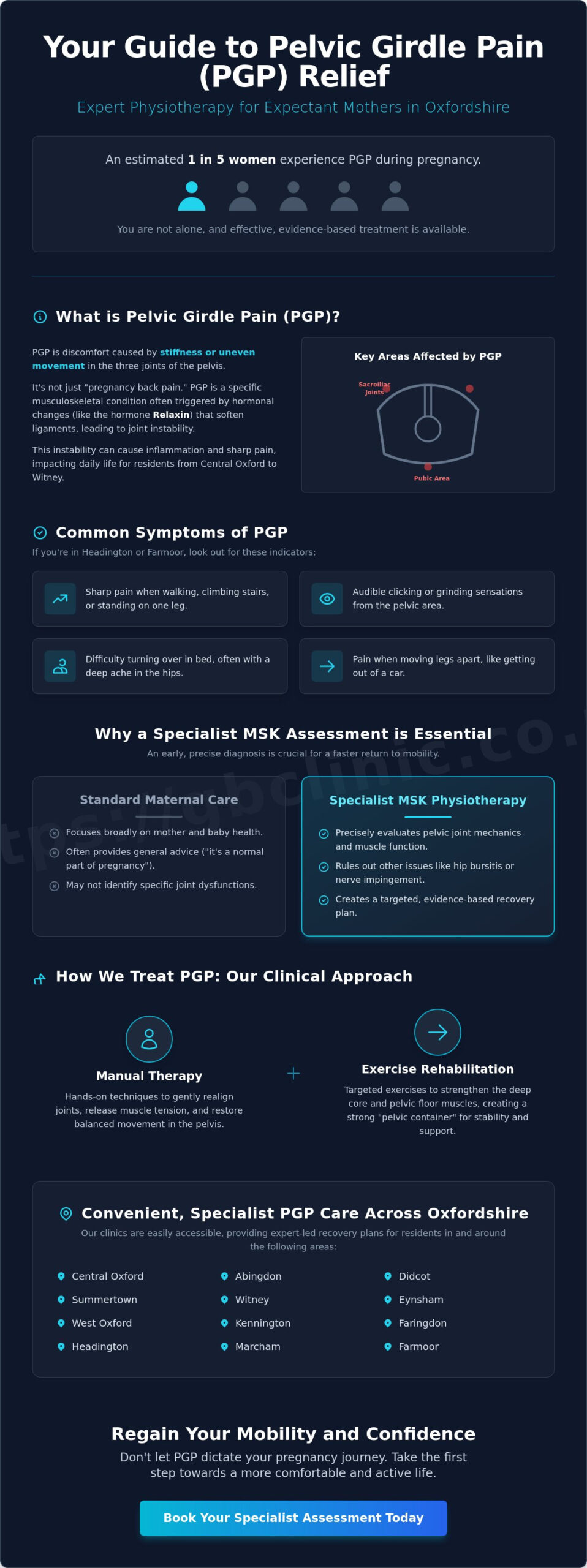
Pelvic Girdle Pain (PGP) describes a range of uncomfortable symptoms caused by joint stiffness or uneven movement within the pelvic ring. It isn’t a singular injury but rather a collection of musculoskeletal imbalances that often arise during or after pregnancy. For residents in Central Oxford and Summertown, seeking specialist musculoskeletal physiotherapy for pelvic girdle pain is a vital step in managing these symptoms before they impact daily quality of life. Unlike standard lower back pain, PGP specifically targets the pubic bone, the groin, the hips, and the sacroiliac joints located at the back of the pelvis.
To better understand the mechanics of the pelvic floor and how it relates to joint stability, watch this helpful video from the Oxford University Hospitals NHS Foundation Trust:
The onset of PGP is often linked to the hormone relaxin, which softens ligaments to prepare the body for birth. While this is a natural process, it can lead to joint instability when combined with postural shifts and muscle weakness. This instability causes the joints to move unevenly, resulting in inflammation and sharp, localized pain. Understanding this distinction is crucial because standard treatments for general back pain don’t always address the specific mechanical issues of the pelvic girdle.
Recognising the Signs of PGP
Symptoms can vary in intensity, but they typically interfere with movements that involve weight-shifting or leg separation. If you live in Headington, West Oxford, or Farmoor and find that daily activities are becoming difficult, look for these common indicators:
- Sharp pain when walking, climbing stairs, or standing on one leg to get dressed.
- Audible clicking or grinding sensations in the pelvic area during movement.
- Discomfort during sexual intercourse or when moving your legs apart, such as getting out of a car.
- Difficulty turning in bed, often accompanied by a deep ache in the hips.
Who is Most at Risk?
While PGP can affect anyone, certain factors increase the likelihood of developing symptoms. Our clinicians frequently support patients from Abingdon, Didcot, and Witney who present with specific risk profiles. You may be more susceptible if you have a history of lower back or pelvic joint issues from a previous pregnancy or a past injury to the pelvis. Physically demanding occupations that require heavy lifting or a high BMI can also place additional strain on the pelvic ring. Early intervention through private MSK physiotherapy is highly recommended for residents in Kennington, Marcham, Eynsham, and Faringdon. Specialist physiotherapy for pelvic girdle pain ensures that these mechanical issues are addressed early, preventing the symptoms from becoming chronic or limiting your mobility after birth.
Specialist MSK Diagnosis for Pelvic Pain in Oxfordshire
Early diagnosis is the cornerstone of effective recovery. While many patients are told that discomfort is a normal part of pregnancy, a specialist musculoskeletal (MSK) assessment provides the clarity needed to prevent symptoms from becoming chronic. For women in Abingdon, Witney, and Central Oxford, accessing specialist physiotherapy for pelvic girdle pain means moving beyond general advice to a targeted clinical plan. A standard midwife check-up focuses on the health of the mother and baby, but an MSK specialist specifically evaluates the mechanical function of the pelvic joints and surrounding tissues. This distinction is vital for identifying whether the pain is purely hormonal or driven by a specific joint dysfunction.
Our diagnostic process is designed to rule out other potential causes of pain that can mimic PGP. Conditions such as hip bursitis, lumbar disc issues, or nerve impingement often present with similar symptoms. By isolating the exact source of the dysfunction, we ensure that your treatment is precise. This level of detail is especially beneficial for residents in Summertown, Kennington, and Headington who require a definitive answer to their physical limitations. We look at the pelvic ring as a functional unit, examining how the sacroiliac joints interact with the pubic symphysis under load. This allows us to pinpoint exactly where the stiffness or instability is occurring.
The Role of Diagnostic Ultrasound
A significant advantage of our clinical approach is the inclusion of a diagnostic ultrasound scan. This technology allows us to assess soft tissue health and identify joint inflammation with high precision. It’s a non-invasive and safe method for monitoring pelvic stability during pregnancy. By visualizing the MSK structures, our clinicians can create tailored treatment plans that address specific areas of inflammation or muscle strain. This objective data helps patients in Marcham, Farmoor, and Eynsham feel confident that their recovery is based on clear clinical evidence rather than guesswork.
Clinical Assessment at GB Clinic
The physical examination is thorough and patient-focused. We evaluate pelvic joint mobility, muscle strength, and global movement patterns. We also review your medical history and pregnancy progress to understand how your body is adapting to its changing center of gravity. Identifying specific triggers, like pain when walking or turning in bed, allows us to provide immediate strategies for relief. Whether you’re traveling from Didcot, Faringdon, or West Oxford, our goal is to provide a comprehensive diagnosis that sets the stage for successful rehabilitation. If you’re ready to gain clarity on your symptoms, a specialist MSK assessment at GB Clinic is the first step toward restoring your mobility.
How Physiotherapy Treats Pelvic Girdle Pain Effectively
Effective treatment involves more than just managing symptoms; it requires a systematic approach to mechanical restoration. Specialist physiotherapy for pelvic girdle pain focuses on realigning the pelvic ring while balancing the soft tissues that support it. This clinical path is available for residents throughout Oxfordshire, ensuring that patients from Abingdon to Didcot, as well as those in Marcham and Summertown, receive the same high standard of musculoskeletal care. Our goal is to move beyond temporary relief, focusing instead on physical restoration that lasts throughout your pregnancy and into the postnatal period. Restoration takes time. We provide a clear, evidence-based roadmap for your recovery.
Manual Therapy and Myofascial Release
Hands-on techniques are essential for restoring sacroiliac joint (SIJ) function. Our clinicians use expert mobilisations to improve joint alignment, which directly reduces the muscle guarding that causes clicking or grinding sensations. For individuals in Kennington, Farmoor, and Witney, these sessions are a cornerstone of recovery. Manual therapy works. We also integrate myofascial release to address tension in the inner thighs and lower back. This targeted work relieves excessive pressure on the pubic symphysis, allowing for more fluid movement during daily activities. By relaxing overactive muscles, we create a window of opportunity for effective strengthening.
Exercise Rehabilitation and Pelvic Stability
Strengthening the “pelvic container” is vital for maintaining stability as your body changes. This involves activating the pelvic floor, deep abdominals, and glutes to provide a robust support system for the pelvic ring. We develop bespoke exercise rehabilitation programmes that are safe for every stage of pregnancy. These plans help you adapt to a shifting centre of gravity, making it easier to stay active in Eynsham, Faringdon, or Central Oxford without triggering sharp pain. Stability is key. Postural correction is also integrated to ensure you’re moving efficiently and protecting your joints during weight-bearing tasks.
Advanced Interventions for Persistent Pain
Sometimes, standard methods need to be supplemented with advanced clinical tools. For persistent postpartum discomfort, shockwave therapy offers a modern solution for chronic pelvic pain by stimulating the body’s natural healing response. We also provide expert guidance on the use of pelvic support belts, ensuring they’re applied correctly to provide maximum stability during high-activity periods. In instances of severe inflammation that prevents progress in rehabilitation, guided steroid injections may be used to settle symptoms. This comprehensive approach ensures that residents in Headington and West Oxford have access to the full spectrum of MSK care. Expert care matters.
Practical Self-Management: A How-To for Daily Relief
While specialist musculoskeletal care is essential for long-term recovery, the way you move during the day significantly impacts your pain levels. Managing Pelvic Girdle Pain (PGP) requires a conscious effort to reduce asymmetrical loading on the pelvic ring. For residents in Didcot, Witney, or Marcham balancing busy home lives, these small adjustments are crucial. Integrating these strategies into your routine ensures that the benefits of your physiotherapy for pelvic girdle pain are maintained between clinical appointments. Consistent protection of the joints allows inflammation to settle and promotes faster physical restoration.
Step-by-Step Guide to Pain-Free Movement
Daily activities that were once automatic often become triggers for sharp discomfort. Modifying these movements is a practical way to manage mechanical stress. If you’re travelling around Central Oxford or Summertown, follow these clinical recommendations for safer mobility:
- Getting in and out of the car: Sit on the seat first with your legs outside, then swivel your whole body while keeping your knees together. This avoids the twisting motion that irritates the sacroiliac joints.
- Dressing: Always sit down to put on trousers, socks, or shoes. Standing on one leg places the entire weight of your body on a single side of the pelvis, which can trigger immediate pain.
- Climbing stairs: Take the stairs one at a time. Lead with your less painful leg when going up and your more painful leg when coming down. This “up with the good, down with the bad” approach is highly effective for residents in multi-storey homes in Headington or West Oxford.
Sleeping and Resting Strategies
Rest is a vital component of recovery, yet PGP often makes sleep difficult during the third trimester. Achieving a neutral pelvic position at night reduces the deep ache often felt in the hips. Use a firm pillow between your knees and ankles to keep your hips parallel. This prevents the top leg from pulling the pelvis into a twisted position. When turning in bed, keep your knees glued together and perform a gentle glute squeeze to stabilise the joints before you move. Many of our patients in Farmoor, Eynsham, and Kennington find that using silk sheets or nightwear reduces friction, making these turns much smoother and less painful. Effective physiotherapy for pelvic girdle pain always includes these practical lifestyle modifications to ensure 24-hour joint protection.
Managing household tasks also requires a strategic approach. Avoid carrying heavy laundry baskets or lifting toddlers on one hip, as this creates significant pelvic shearing. If you live in Abingdon or Faringdon and find that daily chores are becoming unmanageable, it’s time to seek a formal clinical plan. You can book a specialist MSK assessment to receive a tailored rehabilitation programme designed for your specific needs.
Why Choose GB Clinic for Pelvic Girdle Pain in Oxfordshire?
Choosing the right clinical environment is a decisive factor in your recovery journey. At GB Clinic, we provide expert-led musculoskeletal care that serves the entire Oxfordshire region with a focus on clinical excellence. Our integrated approach combines private MSK physiotherapy with advanced diagnostic tools, ensuring that your path to restoration is both efficient and evidence-based. We’ve designed our practice to be a calm, professional space where patients feel confident in the care they receive. Residents in Summertown, Headington, and Kennington find our facilities provide the specialized attention required to manage the complexities of pelvic instability. We prioritize your comfort and rapid recovery through every stage of treatment.
Local Accessibility Across Oxfordshire
We recognize that when you’re experiencing physical discomfort, travel should be as stress-free as possible. Our clinics are strategically located to provide a convenient local choice for residents across the county. We’ve ensured that our services are easy to reach for those in the following areas:
- Central and West Oxford: Easy access for those living or working in the city heart, Farmoor, and West Oxford.
- Southern Oxfordshire: Straightforward travel for patients in Abingdon, Kennington, and Marcham.
- Eastern and Northern Districts: High-quality care for individuals in Headington and Summertown.
- Western Towns: Dedicated clinical support for those travelling from Witney, Eynsham, and Faringdon.
- South Oxfordshire: Reliable specialist access for residents based in Didcot.
We provide flexible appointment times to accommodate the busy schedules of parents. Ample parking and fully accessible facilities ensure that limited mobility is never a barrier to receiving expert care. Our goal is to remove delays, allowing you to start your recovery without unnecessary administrative or travel hurdles.
Commitment to Evidence-Based Recovery
Our clinical team is dedicated to utilizing the latest research in pelvic health to deliver superior outcomes. We don’t believe in a one-size-fits-all approach. Instead, we create personalized treatment plans that evolve as your pregnancy progresses or as you enter the postnatal phase. This ensures that your physiotherapy for pelvic girdle pain remains effective even as your body’s mechanical needs change. Clear communication is central to our philosophy. We explain every diagnostic finding and treatment intervention in plain language, empowering you to take an active role in your recovery. By choosing a modern specialist at the forefront of the field, you’re ensuring that your health is managed with the highest level of professional competence. We’re here to guide you back to a mobile, pain-free state with care and clinical precision.
Restore Your Mobility and Confidence in Oxfordshire
Recovery from pregnancy-related discomfort is achievable with the right clinical support. By prioritizing an early MSK diagnosis and utilizing specialist physiotherapy for pelvic girdle pain, you can address the mechanical imbalances that limit your daily life. Our approach combines advanced diagnostic ultrasound with evidence-based manual therapy and exercise rehabilitation to ensure a return to comfortable, stable movement. This integrated path to restoration is designed to support you throughout your pregnancy and well into the postnatal period.
Residents across the region, from Abingdon and Didcot to Witney and Faringdon, have easy access to our specialist care. Whether you’re based in Summertown, Headington, or Central Oxford, or travelling from Eynsham, Marcham, or Farmoor, our clinics are the convenient local choice. We also serve those in Kennington and West Oxford with expert guidance and on-site diagnostics. Book your expert pelvic pain assessment at GB Clinic Oxford today and join the many patients across Oxfordshire who trust our specialist MSK clinicians. You don’t have to navigate this journey in pain; professional recovery is within reach.
Frequently Asked Questions
Is physiotherapy for pelvic girdle pain safe during pregnancy?
Physiotherapy for pelvic girdle pain is completely safe and highly recommended during all stages of pregnancy. Our specialist clinicians use gentle manual therapy and tailored exercise rehabilitation to support your body’s changing mechanics. Residents in Headington and Summertown can access these non-invasive treatments to manage symptoms without any risk to the baby. It’s a clinical approach focused on joint stability and safe physical restoration.
How many sessions of physiotherapy will I need for PGP?
The number of sessions required depends on the severity of your symptoms and how your body responds to clinical intervention. Most patients from Witney or Abingdon see significant progress within four to six sessions. We’ll develop a personalized plan during your initial assessment to ensure your recovery is efficient. This targeted approach helps you avoid unnecessary delays in returning to a mobile, comfortable state.
Will pelvic girdle pain go away immediately after I give birth?
Pelvic girdle pain often improves after birth, but it doesn’t always disappear immediately. Research suggests that around 1 in 10 women experience ongoing symptoms post-delivery. We provide postnatal support for residents in Didcot and Kennington to ensure joint alignment is fully restored. Early intervention after birth is key to preventing long-term musculoskeletal issues or chronic discomfort.
Can I have a natural vaginal birth if I have PGP?
You can absolutely have a natural vaginal birth even if you’re experiencing PGP. Most women with this condition deliver successfully without surgical intervention. Our clinicians provide advice on comfortable birthing positions that minimize stress on the pelvic ring. This preparation helps reduce anxiety for patients in Central Oxford and West Oxford as they approach their due date.
Do I need a GP referral to see a private physiotherapist in Oxford?
You don’t need a GP referral to access private care at our clinics. Residents in Eynsham and Marcham can book a specialist MSK assessment directly to begin their recovery journey. This self-referral process ensures you receive an expert diagnosis and treatment quickly. It’s a streamlined path designed to prioritize patient access and effective symptom reduction.
Is PGP the same as sciatica or lower back pain?
PGP is distinct from sciatica or standard lower back pain because it specifically involves the joints of the pelvic ring. While the symptoms can overlap, PGP focuses on the pubic symphysis and sacroiliac joints. We use diagnostic tools to rule out disc issues or nerve impingement. This precision is vital for patients in Farmoor seeking an accurate clinical diagnosis.
How quickly can I expect to see results from treatment?
Many patients experience a reduction in sharp pain immediately following their first manual therapy session. While full restoration takes time, you’ll likely feel more stable and mobile within the first two weeks of treatment. Our practitioners focus on providing practical strategies that offer relief for daily movements. This efficient care is a primary reason families in Faringdon choose our specialized services.
Can PGP return in future pregnancies and how can I prevent it?
PGP can return in subsequent pregnancies, but proactive management significantly reduces this risk. Strengthening your pelvic container through targeted exercise rehabilitation before conceiving again is a highly effective preventative measure. We help patients across Oxfordshire build long-term pelvic stability. This forward-thinking care ensures your body is robust and prepared for the physical demands of future pregnancies.