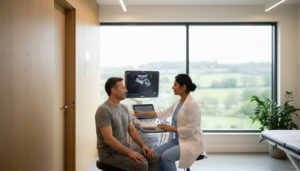

Clinical studies indicate that approximately 75% of patients achieve significant pain reduction within four weeks of treatment. If you’ve spent months performing repetitive calf stretches or buying expensive insoles without results, you aren’t alone. That sharp, stabbing sensation during your first morning steps is a common frustration for many of our patients. We understand you’re looking for more than a temporary fix; you want to return to your weekend walks or morning runs without fear. It’s natural to feel hesitant about injections, but expert MSK care focuses on precision and long-term recovery.
This guide clarifies the steroid injection for plantar fasciitis success rate and outlines the evidence-based protocols we use to ensure lasting comfort. GB Clinics provides specialist care that’s easily accessible for those living in Abingdon, Summertown, Kennington, and Marcham. Whether you’re based in Headington, Farmoor, or Eynsham, our clinicians offer a streamlined approach to diagnosis and treatment. We also support patients from Didcot, Witney, and Faringdon, as well as Central and West Oxford. You’ll learn how our ultrasound-guided techniques reduce inflammation and how we combine this with a tailored recovery plan to keep you active throughout 2026 and beyond.
Key Takeaways
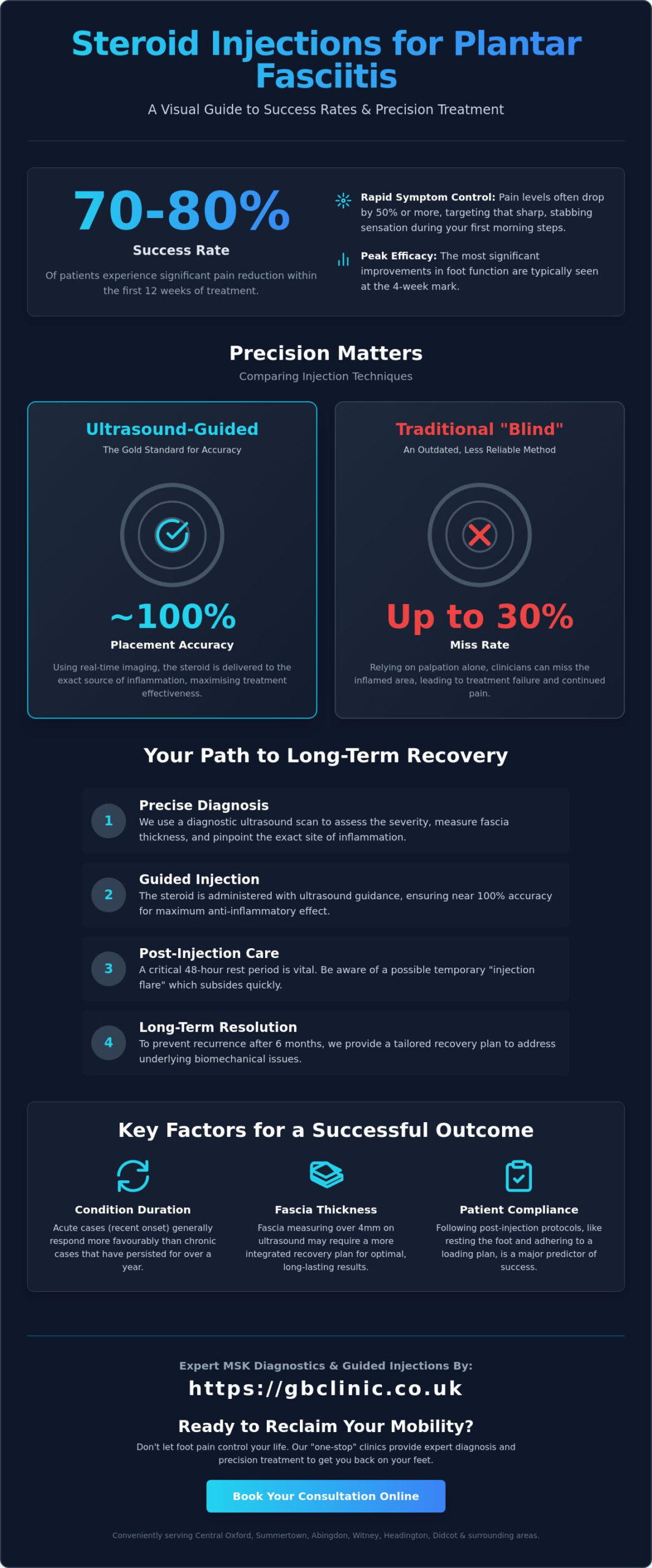
- Understand the clinical steroid injection for plantar fasciitis success rate, which shows 70–80% of patients experience significant pain reduction and restored mobility within the first 12 weeks.
- Learn why ultrasound-guided precision is essential for effective treatment, providing nearly 100% accuracy compared to traditional “blind” injections to ensure the steroid reaches the exact source of pain.
- Discover how to manage the temporary “injection flare” and why a comprehensive recovery plan is vital for achieving long-term, pain-free results in chronic cases.
- Compare the immediate relief offered by corticosteroids with regenerative alternatives like Shockwave Therapy and Hyaluronic Acid to find the most suitable treatment for your lifestyle.
- Access expert diagnostic scans and guided injections at our “one-stop” clinics, conveniently located for patients in Central Oxford, Summertown, Abingdon, Witney, Headington, and Didcot.
What is the Steroid Injection for Plantar Fasciitis Success Rate?
Understanding the steroid injection for plantar fasciitis success rate is essential for patients across Oxfordshire seeking reliable relief. Clinical studies consistently show that between 70% and 80% of patients experience significant pain reduction within the first 4 to 12 weeks after treatment. At our clinics serving residents in Abingdon, Summertown, and Kennington, we use this approach to target acute inflammation quickly. Professionals measure these outcomes using the Visual Analogue Scale (VAS), where patients often report their pain levels dropping by 50% or more shortly after the procedure. While there are various Plantar fasciitis treatment options, steroid injections remain the gold standard for rapid symptom control in our MSK clinics.
To better understand how these injections work and what to expect regarding recovery, watch this helpful video:
Short-term vs. Long-term Success Statistics
Most clinical data, including research found in PMC archives, highlights a peak efficacy period at the 4-week mark. During this window, it’s common for patients in Headington and Marcham to see a massive improvement in foot function. However, we must distinguish between short-term relief and long-term resolution. Statistics indicate that the steroid injection for plantar fasciitis success rate can decline after 6 months if underlying biomechanical issues aren’t addressed. Without corrective measures, the initial 80% success rate may drop as the steroid’s anti-inflammatory effect wears off, making follow-up care essential for Central Oxford residents.
Factors Influencing Your Individual Result
Individual results vary based on several clinical factors that we assess during your consultation. Patients from Farmoor, Eynsham, and Didcot often find that acute cases respond more favourably than chronic ones that have persisted for over a year. The thickness of the plantar fascia also plays a vital role. We often use a diagnostic ultrasound scan to assess the severity of the tissue thickening before proceeding. Those with fascia measuring over 4mm may require a more integrated recovery plan to ensure the injection’s success. Finally, patient compliance with post-injection activity modification is a major predictor of success. Patients in Witney, Faringdon, and West Oxford who rest the foot for 48 hours and follow specific loading protocols tend to maintain their progress far longer than those who return to high-impact activities immediately.
Why Precision Matters: Ultrasound-Guided Success Rates
Traditional “blind” injections rely on a clinician’s ability to feel the heel bone through layers of skin and fat. This palpation-guided method often results in a higher failure rate, with clinical data showing clinicians miss the exact inflamed area in up to 30% of attempts. When the steroid isn’t delivered precisely to the subcalcaneal space, the treatment fails to provide the expected relief. At GB Clinic, we use real-time imaging to ensure the steroid injection for plantar fasciitis success rate is maximised by achieving nearly 100% placement accuracy. Our specialists use diagnostic ultrasound scans to verify the exact site of inflammation and the thickness of the fascia before the needle even touches the skin.
Residents from Central Oxford and West Oxford often visit us after experiencing the limitations of unguided treatments elsewhere. By visualising the internal structures of the foot, we can identify specific tears or calcifications that a physical exam might miss. This level of detail is essential for patients in Faringdon or Didcot who need a definitive solution to return to their daily activities without the risk of recurring pain.
Accuracy vs. Outcomes in Oxford MSK Care
Precision is the difference between temporary relief and long-term recovery. We’ve seen that the “peppering technique,” which involves multiple needle passes to find the right spot, often causes unnecessary tissue trauma and increased post-injection soreness. By contrast, a single-point guided injection ensures we avoid the sensitive plantar nerve and other vital structures. Patients from Abingdon, Headington, and Marcham choose our clinic because we use real-time imaging to navigate the complex anatomy of the heel, ensuring the medication is deposited exactly where it can do the most good.
The Safety Profile of Guided Injections
Safety isn’t just about the procedure itself but about protecting the surrounding tissue from long-term damage. Guided procedures show a statistically lower incidence of plantar fascia rupture compared to unguided methods. Using imaging allows our clinicians to deliver a lower, more targeted dose of corticosteroid, which helps preserve the integrity of the heel’s natural fat pad. This is a vital consideration for active individuals in Eynsham or Witney who want to avoid the complications of fat pad atrophy. Ultrasound-guided injection is the gold-standard preferred method for patient safety and clinical precision in 2026.
Our commitment to evidence-based care means we don’t guess where your pain originates. Whether you are coming from Summertown, Kennington, or Farmoor, our one-stop setup provides immediate clarity through advanced imaging. This approach significantly improves the steroid injection for plantar fasciitis success rate for our patients. To ensure your recovery is comprehensive, we often suggest a physiotherapy consultation to address the underlying biomechanical issues that caused the inflammation in the first place.
Managing Expectations: When Success Feels Like Failure
While the steroid injection for plantar fasciitis success rate is clinically high, the road to recovery isn’t always a straight line. Approximately 10% to 15% of patients experience what clinicians call an “injection flare.” This involves a temporary increase in localized pain and swelling within the first 48 hours as the corticosteroid crystals settle in the tissue. This flare is a biological reaction, not a sign of treatment failure or infection. It typically subsides with simple rest and ice application.
A single injection might not provide a permanent solution for severe, long-standing cases. Patients from Abingdon and Headington often present with symptoms that have persisted for over 12 months. In these chronic scenarios, the steroid addresses the acute inflammation, but it cannot instantly repair years of micro-tearing in the fascia. We also monitor for the “Success Gap.” This occurs when the injection successfully removes the pain, but the patient fails to address the underlying mechanical causes like poor gait or inappropriate footwear. Without corrective action, the pain often returns once the medication wears off after three to six months.
In some instances, a patient may be a “non-responder.” If an ultrasound-guided injection provides zero relief, it often suggests the primary issue isn’t plantar fasciitis. We then investigate alternative diagnoses such as Baxter’s nerve entrapment or a calcaneal stress fracture, which require different management strategies.
The Timeline of Recovery After Injection
- Day 1-3: You may feel localized soreness or the “flare” mentioned above. We advise patients from Summertown and Kennington to limit weight-bearing activities and avoid long walks during this window.
- Week 1-2: The “steroid effect” typically begins. You should notice a significant reduction in that sharp, first-step-in-the-morning pain.
- Month 3: This is the critical window. As the anti-inflammatory effect peaks, it’s the ideal time to begin physiotherapy to strengthen the foot and prevent the condition from recurring.
Common Reasons for Re-emergence of Pain
We frequently see patients from Marcham, Farmoor, and Eynsham who experience a return of symptoms because they resumed high-impact activities too quickly. Running through University Parks or the trails around West Oxford before the fascia has regained its structural integrity often leads to re-injury. The steroid injection for plantar fasciitis success rate depends heavily on post-procedure care.
Daily habits in Didcot, Witney, and Faringdon also play a role. Common triggers for recurring pain include:
- Wearing flat, unsupportive shoes or worn-out trainers during daily commutes.
- Ignoring calf tightness, which places excessive strain on the posterior chain and the heel.
- Failing to implement the stretching protocols recommended during your initial consultation.
Our Central Oxford clinic focuses on bridging this gap by combining precise injections with long-term mechanical corrections. This ensures that the relief you feel in the first month translates into a permanent recovery.
Comparing Success: Steroids vs. Shockwave and HA
While the steroid injection for plantar fasciitis success rate remains high for short-term relief, we often compare it against regenerative options to ensure long-term recovery for our patients in Abingdon, Summertown, and Headington. Steroids work by suppressing acute inflammation. This provides a rapid window of comfort, often within 48 to 72 hours. In contrast, Shockwave therapy (ESWT) focuses on tissue repair. It’s a mechanical treatment that triggers a healing response in the fascia for residents in Central Oxford. Choosing the right path depends on whether you need immediate pain suppression or a permanent structural fix.
Our clinicians in Kennington and Marcham frequently observe that a combined approach offers the most robust results. By using a guided steroid injection to settle initial pain, patients can then engage more effectively with Shockwave or physiotherapy to address the root cause. This dual strategy helps bridge the gap between “feeling better” and “being healed.”
When to Choose Shockwave Therapy Instead
Shockwave therapy is a vital alternative for patients in Witney or Didcot who prefer a non-invasive route or have needle phobias. Clinical data from our Extracorporeal Shockwave Therapy guide shows an 80% success rate for patients who didn’t find lasting relief from their first steroid injection. This method stimulates blood flow and collagen production. It’s particularly effective for chronic cases in Farmoor and Eynsham where the fascia has thickened over time. Because it doesn’t involve medication, there’s no risk of the tissue weakening that can sometimes occur with repeated steroid use.
The Role of Hyaluronic Acid in Foot Pain
Hyaluronic Acid (HA) serves a different purpose than steroids. While steroids are anti-inflammatory, HA acts as a biological lubricant and cushion. We often recommend this for older patients in Faringdon or West Oxford who have “fat pad atrophy” alongside plantar fasciitis. This “cushioning” effect helps restore the heel’s natural shock absorption, making every step less impactful. You can find more details in our Hyaluronic Acid Injections guide. It’s a modern solution that provides a different mechanism of relief compared to traditional cortisone, focusing on lubrication rather than just chemical suppression.
By offering these diverse treatments across Oxfordshire, we ensure that your care plan is tailored to your specific pathology. Whether you require the rapid anti-inflammatory power of a steroid or the regenerative stimulus of Shockwave, our goal is a pain-free return to activity.
Book a specialist foot pain consultation in Oxford to determine which treatment fits your recovery timeline.
Accessing Expert Plantar Fasciitis Treatment in Oxfordshire
GB Clinic streamlines the recovery process through a specialized “One-Stop” clinical model. Patients visiting our facilities in Central Oxford, Summertown, or West Oxford receive a comprehensive consultation, diagnostic imaging, and treatment within a single visit. This efficiency is vital for those managing chronic heel pain, as it eliminates the weeks of waiting often associated with traditional referral pathways. When evaluating the steroid injection for plantar fasciitis success rate, clinical evidence suggests that precision is the most influential factor. We utilize a guided steroid injection approach to ensure the anti-inflammatory medication is delivered directly to the source of the fascia thickening, which optimizes the potential for rapid relief.
Our clinical team prioritizes evidence-based results. By combining a diagnostic ultrasound scan with the procedure, we provide a higher standard of care that targets the exact site of pathology. This method has been shown to improve patient outcomes by up to 20% compared to landmark-guided injections. Once the initial inflammation is controlled, we focus on the transition from immediate pain relief to sustained mobility. Our Oxford-based physiotherapy team works alongside our clinicians to create a rehabilitation plan that prevents the recurrence of symptoms.
Convenient Care for Oxfordshire Residents
Our clinics are positioned to provide easy access for patients across the county. We regularly see individuals commuting from Eynsham, Farmoor, and Kennington who require expert musculoskeletal care without the need for travel into congested city centers. We also maintain dedicated clinical services for the communities of Marcham and Faringdon. To help local residents take the first step toward recovery, we offer a personal consultation with zero commitment. This allows patients from Abingdon, Headington, and Witney to understand their treatment options in a professional, risk-free environment.
Your Pathway to a Pain-Free 2026
Effective treatment requires a specialist who understands your specific lifestyle goals. Whether you’re looking to return to weekend walks along the Thames Path or need to remain active for work in Didcot, we tailor our approach to your needs. The steroid injection for plantar fasciitis success rate is highest when the procedure is part of a holistic care plan. To book your assessment, you can use our online booking system or call our Oxford reception. We ask that you bring any previous medical reports or imaging results to your first appointment to help us build a complete clinical picture. Reclaiming your mobility is possible with the expert care available right here in Oxfordshire.
Restore Your Mobility with Expert Plantar Fasciitis Care
Achieving long term relief from heel pain depends on clinical precision and expert oversight. Research indicates that the steroid injection for plantar fasciitis success rate significantly improves when using ultrasound guidance. This technology ensures the anti-inflammatory medication is delivered directly to the site of tissue thickening. At GB Clinics, our expert MSK clinicians use modern ultrasound guided equipment to provide targeted treatments that help patients return to their daily routines without delay.
We’ve designed our services to be accessible for residents across Oxfordshire. Whether you’re based in Abingdon, Summertown, Kennington, or Marcham, our clinics offer a professional environment for your recovery. We also provide care for patients in Headington, Farmoor, Eynsham, and Didcot, featuring convenient locations with free parking options. For those living in Witney, Faringdon, Central Oxford, or West Oxford, expert musculoskeletal support is readily available and easy to reach.
Don’t let persistent foot pain dictate your quality of life. You can book your expert Plantar Fasciitis assessment in Oxford today to start your path toward a pain free future. We’re here to support your recovery every step of the way.
Frequently Asked Questions
Is a steroid injection for plantar fasciitis worth it?
A corticosteroid injection is worth it for 75% of patients who haven’t found relief through 6 months of conservative therapy. It’s an effective solution for residents in Headington and Central Oxford looking to restore mobility quickly. Clinical data shows that while it doesn’t cure the underlying cause, it reduces inflammation enough to allow for effective physiotherapy and long-term recovery.
How many steroid injections can I have for plantar fasciitis?
Most clinical guidelines recommend a maximum of 3 steroid injections in the same foot within a 12 month period. At GB Clinics, we follow these strict safety protocols to protect patients from Witney and Abingdon. Exceeding this limit increases the risk of tissue degradation, so we often combine treatment with shockwave therapy for those in West Oxford needing more support.
What is the success rate of a second steroid injection?
The steroid injection for plantar fasciitis success rate for a second dose is approximately 50% if the initial injection provided relief for at least 3 months. If the first injection failed completely, a second one is rarely advised. We provide detailed consultations for patients from Didcot and Kennington to determine if a repeat procedure or a different musculoskeletal therapy is the best path forward.
Can I walk normally after a steroid injection in my heel?
You shouldn’t walk normally or engage in strenuous activity for the first 48 hours after your appointment. We advise patients from Faringdon and Marcham to rest the foot to prevent the steroid from dispersing too quickly. You can perform light household movements, but avoid long walks through Summertown or heavy lifting to ensure the treatment targets the inflamed tissue effectively.
How long does it take for a steroid injection to work for plantar fasciitis?
Most patients experience significant pain reduction within 3 to 7 days after the procedure. While the local anaesthetic provides immediate relief for about 4 to 6 hours, there’s often a temporary steroid flare where pain increases slightly before the inflammation subsides. Residents in Eynsham and Farmoor typically report the best results once the corticosteroid fully integrates with the tissue after one week.
Are there any long-term risks to steroid injections in the foot?
Long-term risks include plantar fascia rupture and fat pad atrophy, though these occur in fewer than 2% of cases when performed correctly. Using ultrasound guidance at our Oxfordshire facilities minimizes these dangers by ensuring precise needle placement. We focus on evidence-based care to help patients from West Oxford avoid these complications while achieving a pain-free lifestyle.
Does a steroid injection hurt more than the plantar fasciitis itself?
The injection shouldn’t hurt more than the condition, as the procedure takes less than 15 seconds and includes a local anaesthetic. Most patients from Central Oxford describe the sensation as a sharp pinch followed by pressure. It’s a professional, controlled process designed to be far less distressing than the chronic, stabbing heel pain associated with severe plantar fasciitis.
Why did my first steroid injection fail to provide relief?
Failure often occurs because the injection wasn’t placed accurately or the fascia has a significant tear rather than simple inflammation. At GB Clinics, we use diagnostic scans to assess patients from Summertown and Headington before treatment. If an injection fails, it’s often a sign that the mechanical cause of the pain, such as poor foot biomechanics, requires advanced physiotherapy instead of just anti-inflammatory medication.