

Your choice of clothing is more than just a matter of comfort; it is a vital diagnostic tool that allows your clinician to observe movement patterns often hidden by restrictive fabrics. Many patients across Oxfordshire, from Abingdon to Summertown, feel a sense of uncertainty when deciding what to wear to a physiotherapy appointment. It is natural to feel anxious about undressing or being unprepared for a physical assessment, especially when you are already dealing with the stress of physical discomfort.
We understand these concerns and prioritize your dignity and confidence throughout the recovery process. Whether you are visiting our clinics from Kennington, Marcham, or Headington, this guide will explain exactly how to dress to ensure your therapist can perform a thorough assessment and provide effective treatments like manual therapy or exercise rehabilitation. You will learn how to choose attire that allows for clear visibility of the injury site without sacrificing your personal comfort.
By following these practical recommendations, patients in Farmoor, Eynsham, and Didcot can arrive at their sessions feeling prepared and focused on their results. We will break down the ideal clothing for specific conditions and explain how the right gear supports advanced clinical tools such as diagnostic ultrasound scans and shockwave therapy. Residents in Witney, Faringdon, and Central or West Oxford will find the clarity they need to make every minute of their appointment count toward a full return to mobility.
Key Takeaways
- Understand how clothing functions as a diagnostic tool by allowing clinicians to observe joint alignment and muscle activation patterns effectively.
- Learn exactly what to wear to a physiotherapy appointment to ensure your therapist has clear access to the treatment area while maintaining your dignity.
- Prepare for advanced clinical procedures like Shockwave Therapy or specialist joint injections by selecting fabrics that allow for direct skin contact or sterile access.
- Discover how patients from Farmoor, Eynsham, and Faringdon can optimize their sessions and avoid assessment delays by arriving in appropriate attire.
- Benefit from convenient access to expert care across Oxfordshire, with clinics easily reachable for residents in Kennington, Marcham, and West Oxford.
Why Your Choice of Clothing Matters for Clinical Assessment
Effective physiotherapy begins with a clear visual baseline. When you decide what to wear to a physiotherapy appointment, you’re choosing the lens through which your clinician views your recovery. For residents in Abingdon, Summertown, and Headington, understanding that clothing is a diagnostic tool can significantly improve the quality of your first session. We rely on seeing how your body moves in real time to create an evidence-based treatment plan that addresses the specific mechanics of your injury.
Restrictive clothing often creates a barrier to an accurate diagnosis. It can hide compensatory patterns where one muscle group overworks to protect another. If you’re coming from Kennington or Marcham, wearing loose, athletic attire allows our specialists to perform physiotherapy assessments with precision. This ensures that treatments such as myofascial release or manual therapy are applied exactly where they’re needed most, rather than being hindered by thick seams or heavy fabrics.
To better understand why your choice of attire is so important for your first session, watch this helpful video:
Visualising Movement Patterns
Clinicians look for specific physical indicators that are invisible through thick layers. Muscle atrophy, which is the thinning of muscle tissue, or localized inflammation can only be accurately assessed when the skin and muscle contours are visible. During posture analysis, we must observe the spine to see how it responds to movement. Clinical accessibility is the ability for a therapist to palpate a joint or tissue directly without fabric interference. This clarity is essential for patients in Farmoor and Eynsham who want to avoid wasted appointments and get straight to the root of their discomfort.
Modesty and Professional Standards
Professionalism and patient comfort are the cornerstones of our practice. We understand that some patients in Didcot, Witney, and Faringdon may feel apprehensive about physical assessments. Every GB Clinic location follows rigorous clinical standards to protect your privacy. We utilize towels and clinical drapes to ensure you’re only as exposed as necessary for the treatment to be effective. For those with specific personal or religious requirements, you’re welcome to request a therapist of a particular gender. We provide this flexibility to our clients in Central Oxford and West Oxford to ensure every individual feels respected and confident throughout their recovery journey.
The Golden Rules: Comfort, Movement, and Access
Successful clinical outcomes depend on your ability to move freely during physical tests. When considering what to wear to a physiotherapy appointment, your priority should be non-restrictive fabrics that facilitate a full range of motion. For patients visiting our clinics from Abingdon or Summertown, we recommend lightweight, breathable materials like organic cotton or modern moisture-wicking sports fabrics. These materials allow your clinician to observe joint mechanics accurately without the interference of heavy textures or rigid structures.
Thick seams and heavy denim are common obstacles in a clinical setting. These fabrics are often too rigid for manual therapy or myofascial release, as they prevent the therapist from feeling the underlying tissue tension or assessing muscle tone. If you’re traveling from Kennington or Marcham, choosing flexible attire ensures that your session is spent on effective treatment rather than struggling with restrictive clothing. Layering is also a practical strategy for patients. It allows you to maintain a comfortable temperature during the initial consultation while providing easy access to the treatment area when the physical assessment begins.
What to Avoid
Jeans and formal trousers are the most frequent mistakes patients make when attending a session. These garments lack the necessary stretch for diagnostic movements and often cannot be rolled up sufficiently to expose the knee or hip joints. Similarly, while compression gear is a popular trend in 2026, overly tight sleeves can be problematic if they restrict blood flow or prevent direct skin contact during an assessment. We also advise residents in Headington and Farmoor to remove excessive jewellery or heavy belts before their appointment. These items can snag on equipment or interfere with the application of clinical tools like electrotherapy and shockwave therapy devices.
Footwear Considerations
Your choice of shoes is just as important as your clothing. Clean trainers are the gold standard for most musculoskeletal assessments. They provide the stability needed for balance exercises and allow for an accurate gait analysis, which is essential for identifying the root cause of lower limb pain. Patients from Eynsham, Didcot, and Witney should ensure their footwear is supportive and comfortable. There are instances, particularly during a foot or ankle exam, where you’ll be asked to remove your shoes to allow for a detailed assessment of the small joints and arches. If you’re looking for professional support, you can speak with our team to ensure you’re fully prepared for your first visit. Our clinics remain easily accessible for residents in Faringdon, Central Oxford, and West Oxford, providing a local solution for comprehensive physical recovery.
Body-Part Specific Guidance for Your Appointment
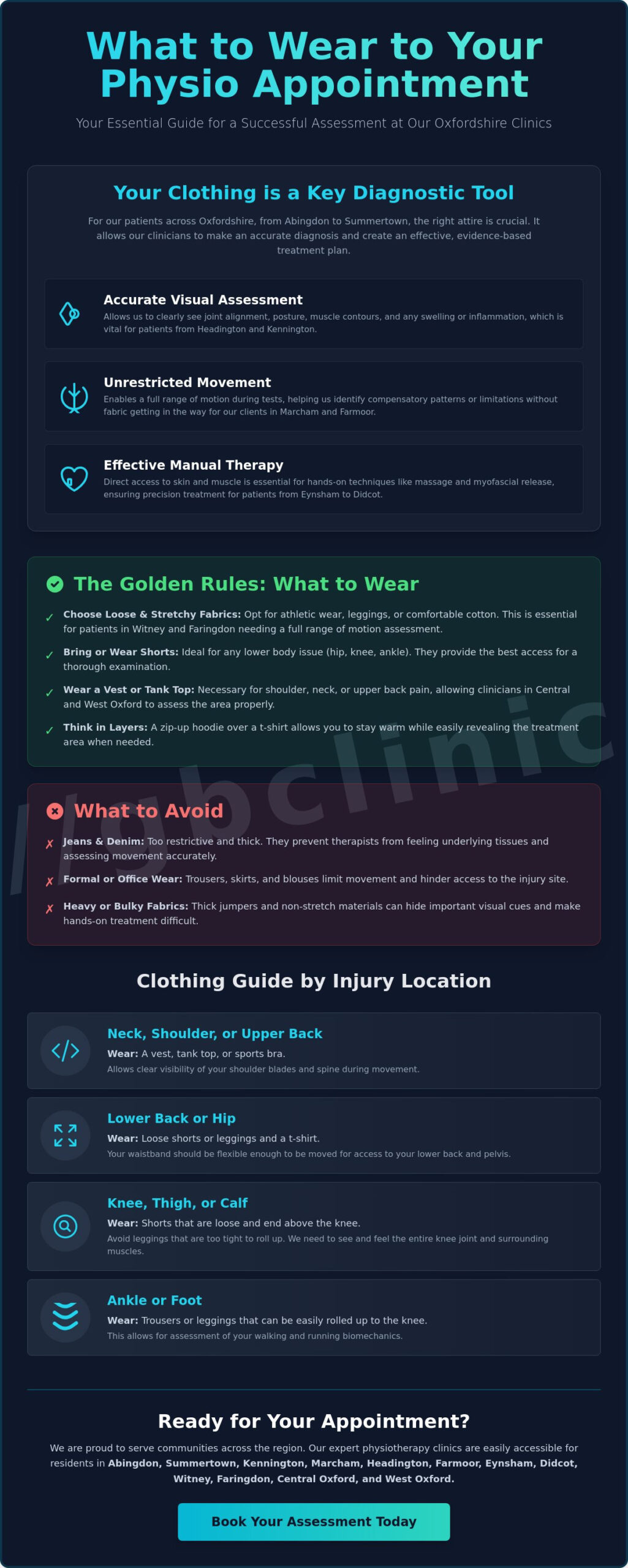
The specific location of your physical discomfort dictates the most effective attire for your session. When considering what to wear to a physiotherapy appointment, you must account for the anatomical region that requires assessment. For instance, a spinal assessment requires the clinician to observe the entire length of the back to identify postural deviations or vertebral misalignments. Patients visiting our clinics from Abingdon, Summertown, or Kennington should prioritize clothing that can be easily adjusted to expose the relevant musculoskeletal structures without causing discomfort.
If you’re traveling directly from a professional environment in Central Oxford or Headington, we recommend bringing a spare set of athletic clothes. Changing into appropriate gear ensures that the therapist can perform a thorough evaluation without the limitations of office wear. This preparation is particularly important for residents in Marcham who are seeking evidence-based solutions for complex or chronic conditions. Arriving prepared helps avoid delays and ensures your appointment time is used effectively for clinical restoration.
Neck, Shoulders, and Arms
Effective assessment of the upper extremities relies on the clinician’s ability to observe the movement of the scapula and the alignment of the cervical spine. For women, strappy tops or racerback vests are ideal as they allow for unobstructed shoulder blade observation. Men should consider loose-fitting t-shirts with wide necklines that can be moved to facilitate neck work. This level of access is vital for patients undergoing specialist shoulder injection and rehabilitation. Clear visibility ensures that the intervention is targeted accurately, reducing symptoms and restoring functional mobility for individuals in Farmoor and Eynsham.
Hips, Knees, and Lower Limbs
Lower body treatments require a different approach to clinical attire. While leggings are common in modern activewear, they are often too restrictive for a detailed knee assessment because they cannot be rolled up past the joint. Loose-fitting shorts are superior for evaluating conditions like shin splints or performing ankle stability tests. Knowing exactly what to wear to a physiotherapy appointment for lower limb issues allows for a more efficient diagnostic process. For residents in Didcot, Witney, and Faringdon, dressing in shorts is also essential for managing Greater Trochanteric Pain Syndrome (GTPS). This condition requires direct access to the lateral hip for palpation and therapeutic interventions. Whether you’re in West Oxford or the surrounding regions, choosing the right clothing ensures your therapist can see the injury clearly and provide a smooth path to recovery.
Dressing for Advanced Treatments: Injections and Shockwave
Advanced clinical procedures like Hyaluronic Acid (HA) injections require specific logistical preparation. When you consider what to wear to a physiotherapy appointment for these treatments, the focus shifts from movement to sterile accessibility. Clinicians in our Oxfordshire hubs, including those in Abingdon and Summertown, need a clear, unobstructed area to ensure the procedure is performed safely and efficiently. If the treatment area is restricted by tight clothing, it can compromise the sterile field necessary for a successful injection.
Ultrasound diagnostics and shockwave therapy also demand skin-to-applicator contact. Conductive gel is used during a diagnostic ultrasound scan to visualize the internal structures of the joint. If you’re visiting from Kennington or Marcham, wearing clothes that you don’t mind getting a small amount of gel on is advisable, although our staff always clean the area thoroughly post-treatment. Choosing the right attire ensures that the diagnostic process isn’t interrupted by constant clothing adjustments.
Preparing for Joint Injections
For specialist knee arthritis joint injections, loose-fitting trousers that can be pulled well above the thigh are essential. If the clothing is too tight, it can compress the injection site or interfere with the sterile field. We recommend patients from Headington and Farmoor wear dark-coloured clothing. This is a practical choice to avoid visible staining from antiseptic solutions or conductive gels used during the procedure. It’s a simple step that helps you feel more relaxed and focused on the clinical benefits of the treatment.
Attire for Shockwave Therapy (ESWT)
Extracorporeal shockwave therapy cannot be performed through clothing because the acoustic energy requires a direct interface with the skin. ESWT is a non-invasive but direct-contact therapy that uses a handheld device to deliver pressure waves to the injured tissue. For sessions targeting plantar fasciitis or Achilles tendonitis, patients from Eynsham and Didcot should wear shorts or trousers that easily expose the foot and lower leg. This ensures the treatment is delivered at maximum efficacy without the energy-dampening effects of fabric layers.
Post-treatment comfort is equally important for your recovery journey. After receiving a steroid or HA injection, the joint may feel slightly heavy or sensitive for a short period. Residents in Witney and Faringdon should choose soft, non-compressive clothing for their journey home to avoid irritating the site. If you’re ready to explore these advanced options, you can book an assessment at our local clinic today. Our specialists in Central Oxford and West Oxford are equipped with the latest diagnostic tools to ensure your path to recovery is as smooth as possible.
Final Logistics for Your Oxfordshire Clinic Visit
GB Clinic provides accessible, expert-led care to residents throughout the county. Whether you’re visiting us from Abingdon, Summertown, or Central Oxford, our facilities are positioned to minimize your travel time and ensure a seamless experience. We recommend that you arrive 10 minutes before your scheduled time if you need to change into your clinical gear. This small window of preparation ensures the full duration of your session is dedicated to assessment and treatment rather than administrative logistics.
Understanding what to wear to a physiotherapy appointment is the first step, but being prepared with the right information is equally important. Patients coming from Headington, Didcot, or Witney should bring a list of any current medications and copies of previous diagnostic ultrasound scans or other imaging reports. These documents provide essential context for your clinician, allowing for a more precise diagnosis and a safer, more effective treatment plan. This comprehensive approach helps us avoid delays and focuses on your physical restoration from the very first minute.
Easy Reach from Across the County
Our clinics are designed for maximum convenience, serving those traveling from Kennington, Marcham, or Farmoor. We understand that local accessibility is a priority for our patients. For those in West Oxford and Eynsham, we provide clear information regarding parking and public transport links to make your arrival as stress-free as possible. Our commitment to regional authority means that residents in Faringdon and the surrounding rural neighborhoods can access high-quality, evidence-based care without the need for excessive travel into the city center.
Checklist for Your First Session
To ensure your initial consultation is as productive as possible, we’ve compiled a summary checklist of what you’ll need. Arriving prepared allows our specialists to focus entirely on your recovery and the reduction of your symptoms. Use the following list as a guide for your visit:
- Clinical Attire: Bring loose-fitting shorts for lower limb issues or a vest/strappy top for neck and shoulder assessments.
- Footwear: Wear clean, supportive trainers to allow for accurate gait and movement analysis.
- Medical Records: Have your medical history, medication list, and any relevant scan results ready for review.
- Administrative Details: Ensure you have your insurance details or authorization codes if you’re using private cover.
Securing your private MSK physiotherapy in Oxford is a straightforward process. Our professional, expert-led environment is dedicated to providing a clear path to recovery for every patient. We prioritize your comfort and confidence, ensuring that each intervention is tailored to your specific needs and functional goals. From your first assessment to your final rehabilitation session, you can expect a clinical experience that is both efficient and genuinely caring.
Start Your Path to Physical Restoration
Choosing the right attire transforms your initial assessment from a simple consultation into a precise diagnostic event. By prioritizing clinical accessibility and a full range of motion, you allow your therapist to identify the mechanical root of your pain without the interference of restrictive fabrics. This preparation is essential for those seeking advanced interventions such as specialist ultrasound-guided injections or Advanced Shockwave Therapy. When you understand exactly what to wear to a physiotherapy appointment, you can arrive with confidence and focus entirely on your recovery.
We provide expert-led clinical care across Oxfordshire, ensuring convenient access for residents in Abingdon, Summertown, and Kennington. Whether you’re traveling from Headington, Didcot, or Witney, our team is dedicated to providing a clear path back to mobility. Patients in Marcham, Farmoor, Eynsham, and Faringdon can trust our evidence-based approach to deliver lasting results. Our clinics remain the local choice for comprehensive care in Central Oxford and West Oxford.
Don’t let physical discomfort limit your daily life. Book your expert MSK assessment in Oxford today and take the first step toward a comfortable, active future. We look forward to supporting your journey to recovery with professional excellence and attentive care.
Frequently Asked Questions
Do I have to undress for my physiotherapy appointment?
Full undressing is almost never required during a session. Our clinicians only need to see the specific anatomical area causing you discomfort to perform a thorough assessment. We utilize clinical drapes and towels to ensure your modesty is protected at all times. Patients from Abingdon and Summertown can feel confident that our professional standards prioritize their privacy and dignity throughout every physical examination.
Can I wear leggings to my physio session?
Leggings are often unsuitable for lower limb assessments because they are too restrictive and cannot be rolled up past the knee. For a detailed examination of the knee or hip, loose-fitting shorts are the superior choice. This allows residents in Kennington and Marcham to receive a more accurate diagnosis, as the therapist can observe muscle activation and joint alignment without fabric interference.
Should I bring my own shorts or does the clinic provide them?
We strongly recommend that you bring your own shorts and a vest top to ensure your personal comfort. While some clinics may have limited spare garments, wearing your own athletic gear is more hygienic and allows for a better fit during exercise rehabilitation. For those traveling from Headington or Farmoor, having your own kit ready ensures there are no delays to your appointment start time.
What should I wear if I am coming straight from my office in Central Oxford?
If you’re traveling from a professional environment in Central Oxford or West Oxford, it’s best to bring a dedicated change of clothes. When deciding what to wear to a physiotherapy appointment, remember that formal trousers or skirts limit the clinician’s ability to assess your movement. Arriving ten minutes early gives you sufficient time to change into your shorts and t-shirt before your session begins.
Do I need different clothes for a shockwave therapy session?
Shockwave therapy requires direct skin contact because the acoustic waves cannot effectively penetrate through clothing layers. If you’re seeking treatment for conditions like Achilles tendonitis or plantar fasciitis in Eynsham or Didcot, you should wear clothing that easily exposes the foot and lower leg. This ensures the treatment is delivered at the correct intensity to promote effective tissue healing and symptom reduction.
What footwear is best for a gait analysis or foot assessment?
Clean trainers are the most appropriate footwear for a gait analysis or lower limb assessment. They provide the necessary stability for balance tests and allow the clinician to see how your foot interacts with a supportive sole. Patients from Witney and Faringdon should bring the shoes they wear most frequently for exercise, as this provides valuable data regarding wear patterns and structural support.
Can I request a female physiotherapist if I am uncomfortable undressing?
You are always welcome to request a female physiotherapist if it makes you feel more comfortable during your assessment. We understand that some individuals have personal or religious preferences regarding physical contact and clinical exposure. This request can be made at the time of booking to ensure your session is conducted in an environment where you feel fully at ease and respected.
Is it okay to wear compression socks to the appointment?
While compression socks provide vascular benefits, they can be challenging to remove and may hide localized swelling or skin changes. It’s better to wear standard socks that can be easily taken off for a foot or ankle exam. Providing our clinicians with a clear view of the skin and joint structure is vital for an accurate diagnosis and an effective, evidence-based treatment plan.