
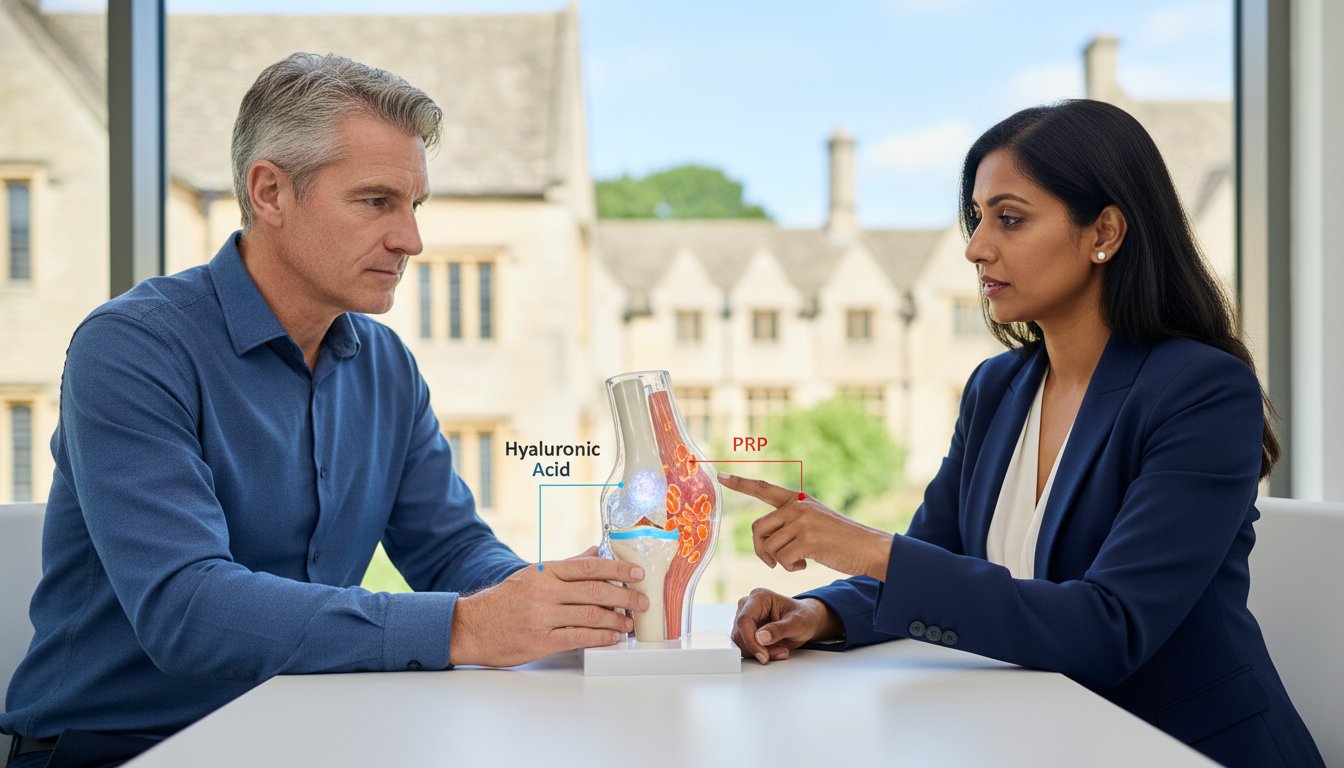
The lubricant that once provided relief for your knee arthritis may not be the same solution that restores your joint’s function long-term. When comparing PRP vs hyaluronic acid for knee pain, many patients in Oxfordshire find themselves choosing between immediate cushioning and biological repair. With a 45% lifetime risk of developing symptomatic knee osteoarthritis, you’ve likely experienced the frustration of temporary results from standard painkillers or the persistent stiffness that makes walking through Central Oxford or Headington a challenge. It’s common to feel that a total knee replacement is the only remaining option when daily activities in Abingdon or Witney become increasingly painful.
We understand that you’re seeking a professional, evidence-based path to recovery that prioritizes long-term mobility. This article clarifies the clinical differences between these two non-surgical interventions to help you identify which treatment aligns with your specific recovery goals. We’ll examine how lubrication versus regeneration affects joint health for residents across Summertown, Kennington, and Marcham. Our clinics provide accessible care for patients in Farmoor and Eynsham, ensuring you can make informed decisions to reduce pain and delay surgery. Whether you’re located in Didcot, Faringdon, or West Oxford, we’re the convenient local choice for returning to a comfortable, active lifestyle without the need for invasive procedures.
Key Takeaways
- Compare the biological mechanisms of lubrication versus regeneration to understand how each treatment addresses the underlying causes of joint stiffness.
- Evaluate the clinical evidence for PRP vs hyaluronic acid for knee pain regarding the speed of relief and the long-term durability of the results.
- Learn how specialist-led diagnostics and advanced injections help patients in Abingdon, Witney, and Didcot delay or avoid the need for major surgery.
- Discover how accessible care for residents in Summertown, Headington, and Central Oxford simplifies the process of achieving lasting physical restoration.
- Identify a clear path to recovery with clinic locations convenient for those in Kennington, Marcham, Farmoor, Eynsham, Faringdon, and West Oxford.
Understanding Non-Surgical Options for Knee Pain Relief
Residents across Oxfordshire, from the busy streets of Central Oxford to the quiet neighborhoods of Marcham and Kennington, often face a difficult decision when managing joint stiffness. Knee osteoarthritis isn’t just about aging; it’s a structural change where the protective cartilage thins and the joint’s natural lubrication disappears. When considering PRP vs hyaluronic acid for knee pain, it’s helpful to view them as two distinct tools. One focuses on mechanical cushioning, while the other targets biological restoration.
Choosing between these options is a pivotal step for those in Headington or Farmoor who find that simple walking has become a chore. While traditional steroid injections provide rapid anti-inflammatory effects, they don’t address the underlying mechanical or biological environment of the joint. In contrast, modern injection therapies offer a path toward preserving the joint without the need for invasive surgical operations. These treatments provide a bridge for patients in Abingdon and Summertown who aren’t ready for surgery but need more than just temporary painkillers.
To better understand how these treatments interact with joint biology, watch this helpful comparison:
The Biological Impact of Knee Osteoarthritis
Knee osteoarthritis involves a cycle of inflammation and degradation. As we age, the body produces less synovial fluid, which acts as the joint’s natural shock absorber. This “wear and tear” process leads to increased friction between bones, causing the persistent aching felt by many in Eynsham and Witney. The lifetime risk of developing symptomatic knee osteoarthritis is approximately 45%, a statistic that highlights the prevalence of this condition. This isn’t just a surface-level problem; the loss of cartilage integrity signals the body to produce inflammatory markers. These markers further break down joint tissues, creating a feedback loop of pain and stiffness that limits your daily movement.
When to Consider Injection Therapy
Many patients in Didcot or Faringdon initially attempt to manage discomfort with rest or basic physiotherapy. However, when these conservative measures fail to restore mobility, injection therapy becomes a logical next step. Early intervention is key to long-term joint preservation. By introducing Hyaluronic Acid (HA) or Platelet-Rich Plasma (PRP), we can alter the joint environment and break the cycle of discomfort.
For residents in West Oxford, the goal is often returning to daily activities like gardening or walking without the shadow of persistent pain. We focus on providing a clear path to recovery that avoids the delays often found in traditional healthcare routes. These non-surgical options are designed to reduce symptoms while improving the overall functional quality of the knee joint, allowing you to maintain an active lifestyle for years to come.
Hyaluronic Acid Injections: The Joint Lubricant Approach
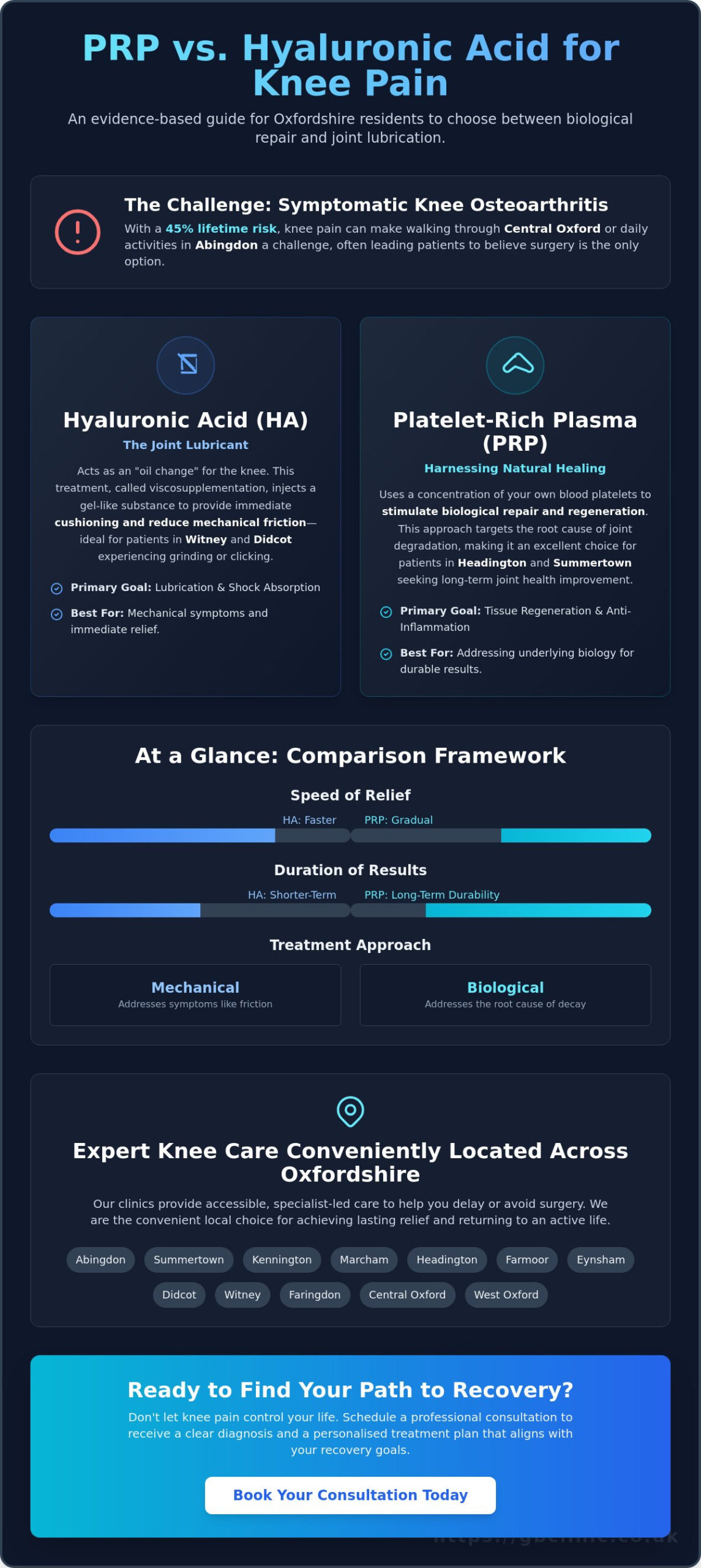
Hyaluronic acid (HA) is a naturally occurring substance found in high concentrations within healthy joint fluid. It acts as the body’s built-in lubricant and shock absorber. For patients in Abingdon or Summertown dealing with the mechanical grinding of arthritis, these injections provide what clinicians call “viscosupplementation.” This process effectively acts as an oil change for the knee. It replaces thin, inflammatory fluid with a thick, protective gel. When evaluating PRP vs hyaluronic acid for knee pain, HA stands out for its immediate mechanical impact on joint glide and comfort.
This treatment is ideal for individuals in Kennington and Marcham who experience moderate mechanical symptoms. If you notice clicking, grinding, or a persistent “stiff” feeling after sitting, lubrication may be the most direct path to relief. By restoring the joint’s natural environment, we help patients return to their daily routines across Headington and Central Oxford without the constant distraction of physical discomfort.
How Viscosupplementation Works
The HA gel works by restoring the viscosity of the synovial fluid. This reduces the mechanical stress placed on the remaining cartilage during weight-bearing activities. By coating the joint surfaces, the injection minimizes friction and dampens the impact of every step. You can find more detail on the specific clinical procedure on our page for hyaluronic acid injections. This approach is particularly beneficial for those in Farmoor and Eynsham who find that their knee “catches” during normal movement. Expert analysis from Mayo Clinic suggests that while regenerative options are gaining traction, viscosupplementation remains a reliable cornerstone for mechanical symptom management.
Benefits and Expected Outcomes
Most patients notice an improvement in joint “glide” shortly after the treatment series. This physical restoration often leads to a significant reduction in the need for daily anti-inflammatory medications. Relief typically lasts between 6 to 12 months, depending on the specific formulation used and your activity levels in Witney or Didcot. It’s worth noting that HA is often the preferred choice for older patients with advanced “bone-on-bone” symptoms who require immediate mechanical cushioning rather than long-term tissue signaling.
Accessibility is a priority for our Oxfordshire clinics. We ensure that residents from Faringdon and West Oxford can access specialist care without the stress of long travel times or hospital delays. If you’re struggling with persistent stiffness, a specialist knee assessment can help determine if a lubricant approach is the right choice for your specific stage of joint wear.
Platelet-Rich Plasma (PRP): Harnessing Natural Healing
Platelet-Rich Plasma (PRP) represents a significant shift from mechanical lubrication to biological restoration. Unlike external gels, PRP is an autologous treatment, meaning the therapeutic serum is derived entirely from your own blood. This eliminates the risk of allergic reactions and utilizes your body’s innate healing capacity. When analyzing PRP vs hyaluronic acid for knee pain, many younger or more active patients in Abingdon, Witney, and Didcot find that PRP provides a more robust response for mild-to-moderate joint degeneration. It’s a modern approach that focuses on the underlying MSK tissue health rather than just surface-level friction.
The process is straightforward and conducted in a calm, clinical environment. It begins with a simple blood draw, similar to a routine test. We then use a specialized centrifuge to spin the blood at high speeds, which isolates and concentrates the platelets. These platelets are the “first responders” of the blood, packed with growth factors that signal the body to repair damaged tissues. For residents in Kennington and Marcham, this offers a sophisticated alternative to standard pain management. It’s an efficient, patient-focused procedure designed for those who want to maintain an active lifestyle without the need for invasive surgical operations.
The Regenerative Mechanism of PRP
The growth factors found in PRP do more than just mask discomfort. At a cellular level, they work to reduce chronic inflammation and modulate the joint environment more comprehensively than Hyaluronic Acid. While HA provides an immediate cushioning effect, the results of PRP are often cumulative. Patients in Summertown and Headington typically notice a gradual improvement in mobility over several weeks as the tissue repair process takes hold. This long-term approach aims for physical restoration, making it a preferred choice for individuals who haven’t found lasting relief from daily anti-inflammatory medications.
Precision via Ultrasound Guidance
For the concentrated serum to be effective, it must be delivered precisely into the joint capsule or the specific area of damage. We prioritize accuracy by using diagnostic ultrasound scans to guide every injection. This ensures the concentrated platelets reach the exact site of wear, which is crucial for patients in Farmoor and Eynsham seeking the most effective results. Guidance also minimizes discomfort during the procedure, providing a smoother experience for individuals from Faringdon and West Oxford. By combining advanced diagnostics with regenerative medicine, we offer a clear, professional path to recovery for those across Central Oxford who are ready to move beyond persistent knee stiffness and return to the activities they love.
PRP vs Hyaluronic Acid: The Comparison Framework
Deciding between these treatments requires a clear understanding of your recovery timeline. Hyaluronic acid offers faster mechanical relief, acting almost immediately to reduce friction within the joint. Patients in Central Oxford often choose this when they need to return to daily walking quickly. PRP takes longer to show biological effects, with improvements typically appearing after several weeks as the tissue signals for repair. However, clinical studies suggest that the relief from PRP may be more durable at the 12-month mark. When evaluating PRP vs hyaluronic acid for knee pain, the choice often depends on whether you prioritize immediate comfort or long-term structural support.
Some patients benefit from a “dual-acting” approach. Emerging research suggests that combining hyaluronic acid and PRP provides synergistic benefits. The HA provides the immediate lubrication, while the PRP signals for tissue repair. This combination can be particularly effective for residents in Headington or Summertown who have persistent symptoms that haven’t responded to single-agent treatments. This approach addresses both the mechanical and biological aspects of joint wear simultaneously, offering a comprehensive path to physical restoration.
Head-to-Head: Which Should You Choose?
Patient suitability is generally determined by the severity of the osteoarthritis, categorized from Grade 1 to Grade 4. For Grade 1 or 2 OA, where the cartilage is still relatively intact, the regenerative potential of PRP is often the preferred choice for active individuals in Witney, Abingdon, and Didcot. For Grade 3 or 4 OA, where “bone-on-bone” contact is more prevalent, the mechanical cushioning of HA is frequently more effective. While HA is often the initial choice due to its established track record and immediate effect, the value-to-relief ratio of PRP often becomes more apparent after the six-month mark when its durable benefits continue to persist. Your age and activity levels also play a role; younger patients often have a more robust biological response to PRP, while older patients in Kennington or Marcham may find the lubricating properties of HA more reliable for daily comfort.
Recovery and Post-Injection Care
Both treatments involve minimal downtime. You can usually return to light activities immediately, though we recommend avoiding strenuous exercise for a few days to allow the serum to settle. To maximize the benefits of any injection, following a structured physiotherapy programme is essential. This helps strengthen the muscles supporting the knee, reducing the overall load on the joint. In cases of acute inflammation or severe flares, a guided steroid injection might be recommended as a short-term alternative to settle the joint before beginning long-term therapy.
Our clinics are conveniently located for residents across Farmoor, Eynsham, Faringdon, and West Oxford, ensuring you don’t have to travel far for specialist care. If you’re unsure which pathway is right for you, we recommend booking a specialist knee assessment to review your diagnostic scans and lifestyle goals.
Expert Knee Pain Treatment in Oxfordshire
GB Clinic provides a specialist-led environment for advanced knee pain diagnostics and care right in the heart of Oxfordshire. For those weighing the benefits of PRP vs hyaluronic acid for knee pain, having access to local experts who understand the nuances of these treatments is essential. Our clinics are strategically positioned to be easily accessible for residents in Summertown, Headington, and Central Oxford. We also serve the wider community, including Abingdon, Witney, and Didcot, ensuring that high-quality MSK care is never far from home. This regional focus allows us to provide a level of interpersonal warmth and attentiveness that is often missing in larger hospital settings.
Every injection we perform is handled by MSK experts using high-resolution ultrasound guidance. This technology allows us to visualize the joint structures in real-time, ensuring maximum safety and precision. By choosing a private, specialist-led clinic, you bypass the long waiting lists often associated with traditional healthcare routes. This efficiency is vital for patients who want to address their pain before it leads to further joint degradation or the need for invasive surgical operations. We prioritize a clear path to recovery, focusing on evidence-based treatments that offer a return to a comfortable, mobile state.
Convenient Access Across the Region
Our goal is to be the convenient, local choice for individuals throughout the county. We’ve ensured that our locations have easy travel routes from Eynsham, Farmoor, and West Oxford. We offer a range of appointment times to accommodate patients traveling from Faringdon, Marcham, and Kennington. Choosing a local clinic means you can receive advanced treatments like PRP or HA injections without the stress of a long commute. This proximity is particularly beneficial for those who may experience temporary stiffness immediately following a procedure and prefer a short journey home.
Your Path to Recovery at GB Clinic
Your journey begins with a comprehensive initial assessment. During this session, we review your clinical history and may utilize a diagnostic ultrasound scan to precisely identify the stage of your knee arthritis. This evidence-based approach ensures that the treatment plan we create is tailored to your specific anatomical needs and lifestyle goals. We don’t believe in a one-size-fits-all solution; instead, we focus on the intervention that will provide the most durable relief for your specific condition.
We’re committed to non-surgical MSK care that restores function and improves quality of life. Long-term joint health often requires a multi-faceted approach. For more information on how to manage your condition after your treatment, you can read our Oxford MSK Physiotherapy guide. Whether you’re looking to return to walking through the parks of Summertown or want to stay active in Bicester, we provide the expertise needed to help you move comfortably again. By focusing on physical restoration and symptom reduction, we help you stay mobile and independent.
Take the First Step Toward Lasting Knee Relief
Choosing between PRP vs hyaluronic acid for knee pain is a significant decision that moves you closer to physical restoration and away from the limitations of joint stiffness. While hyaluronic acid provides immediate mechanical lubrication for smoother movement, PRP offers a biological approach focused on long-term durability. Both treatments serve as effective alternatives to invasive surgical operations, allowing you to maintain an active lifestyle without the need for daily painkillers.
We provide accessible care for residents across Oxfordshire, ensuring expert treatment is within reach for those in Abingdon, Summertown, Kennington, and Marcham. Whether you’re located in Headington, Farmoor, Eynsham, or Didcot, our specialist-led clinics offer a clear path to recovery without the delays of a waiting list. Patients in Witney, Faringdon, Central Oxford, and West Oxford benefit from precision, ultrasound-guided injections delivered by experienced MSK specialists in a calm, clinical environment.
Don’t let persistent discomfort dictate your daily routine. Book your expert knee assessment at GB Clinic today to discover the most effective non-surgical treatment for your needs. We’re here to help you return to the activities you love with confidence and ease.
Frequently Asked Questions
Is PRP or Hyaluronic Acid better for severe knee arthritis?
Hyaluronic acid is often more effective for severe, late-stage knee arthritis due to its mechanical lubricating properties. While PRP focuses on biological repair, severe cases with significant cartilage loss benefit more from the cushioning effect of HA gel. Patients in Abingdon and Witney often find this mechanical support essential for managing “bone-on-bone” discomfort during their daily activities.
How long do the results of a PRP injection last compared to HA?
Clinical studies suggest that PRP may offer more durable relief at the 12-month mark compared to hyaluronic acid. HA typically provides relief for 6 to 12 months depending on the specific formulation and the patient’s activity level. For residents in Summertown and Headington seeking long-term joint preservation, the regenerative signaling of PRP often results in sustained functional improvement over a longer period.
Can I walk immediately after receiving a knee injection?
You can walk immediately after receiving either injection, as there’s minimal downtime involved in these non-surgical procedures. We recommend avoiding high-impact exercise or heavy lifting for approximately 48 hours to allow the joint environment to settle. This convenience makes the treatment an efficient choice for busy individuals in Central Oxford and West Oxford who need to return to their routines quickly.
Are these injections available on the NHS in Oxfordshire?
Access to these injections on the NHS in Oxfordshire varies, with hyaluronic acid sometimes available for specific clinical needs while PRP is rarely covered. Many patients in Didcot and Faringdon choose private care to avoid long waiting lists and ensure they receive specialist-led, ultrasound-guided treatment. It’s best to check current local commissioning guidelines or speak with your GP regarding the latest availability.
What are the side effects of PRP and Hyaluronic Acid injections?
Common side effects include temporary localized pain, swelling, or stiffness at the injection site for a few days following the procedure. Because PRP is derived from your own blood, there’s no risk of an allergic reaction to the serum itself. Our specialists in Kennington and Marcham use precision guidance to minimize discomfort and ensure the highest safety standards during every clinical intervention.
How many PRP injections are typically needed for knee pain?
A typical course of treatment involves one to three injections, depending on the severity of your condition and your individual biological response. When comparing PRP vs hyaluronic acid for knee pain, the frequency is determined during your initial specialist assessment. Patients from Farmoor and Eynsham receive a tailored plan designed to maximize the regenerative or lubricating benefits for their specific joint health.
Can PRP and Hyaluronic Acid be used together?
PRP and hyaluronic acid can be used together to provide both immediate mechanical lubrication and long-term biological repair. Recent research suggests this dual approach may offer synergistic benefits, addressing multiple aspects of joint wear simultaneously. This combined therapy is a sophisticated option for individuals in West Oxford who haven’t found sufficient relief from single-agent injections or basic physiotherapy.
How much do private knee injections cost at an Oxford clinic?
The cost of private knee injections at an Oxford clinic depends on the type of substance used and whether a single injection or a series is required. We provide transparent information regarding our clinical fees during your specialist consultation or initial assessment. Residents across Oxfordshire find that the value of rapid access to expert-led care provides a clear path to recovery without the delays of traditional routes.