

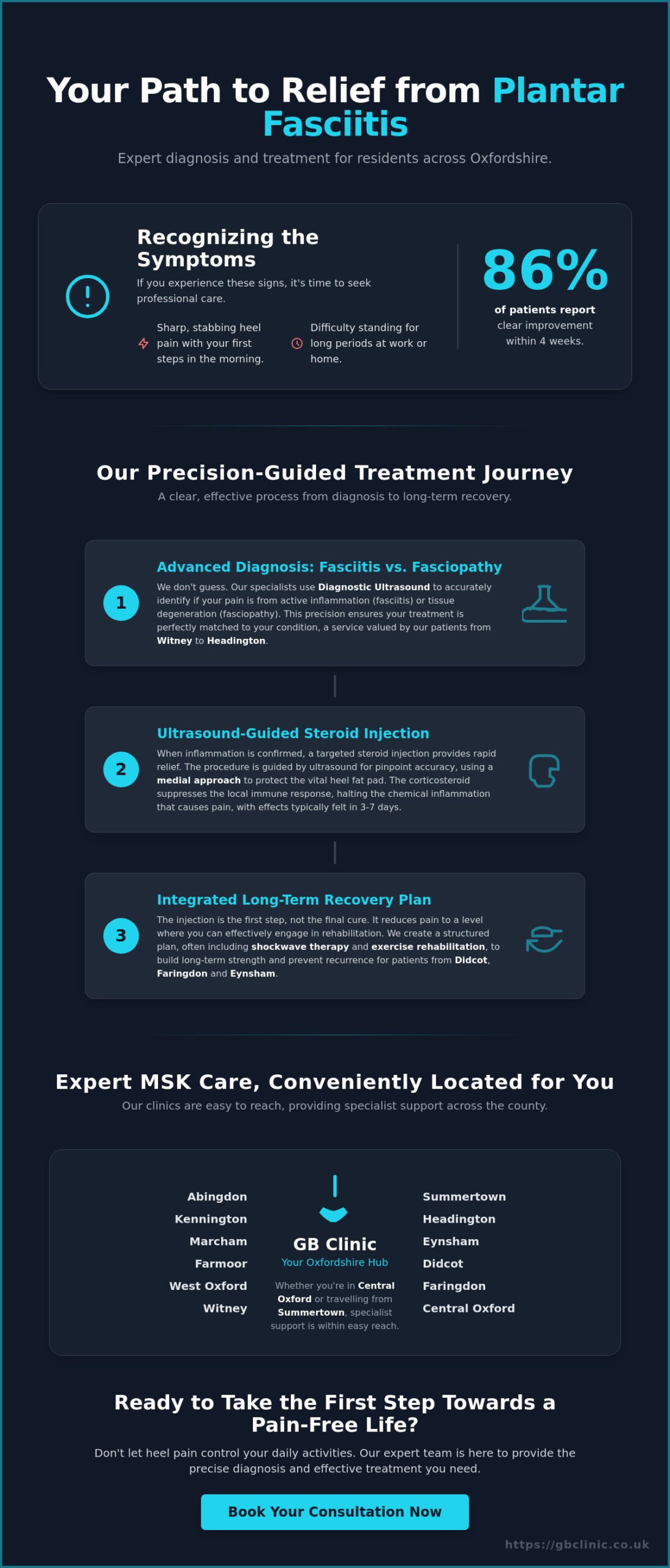
Research indicates that 86% of patients report a clear improvement in symptoms within just four weeks of receiving a targeted clinical intervention. If you’re struggling with a sharp, stabbing sensation during your first steps every morning or find it difficult to stand for long periods at work, you’ve likely realized that standard rest isn’t enough. Plantar fasciitis injections using steroid offer a precise method to halt chronic inflammation when traditional physiotherapy progress feels frustratingly slow.
We recognize that patients across Oxfordshire require expert care that’s both effective and easy to reach. Whether you’re located in Abingdon, Summertown, or Headington, accessing specialist MSK support shouldn’t be a hurdle to your recovery. This guide explains how you can find rapid relief through professional diagnostics and treatment near Kennington, Marcham, and Farmoor. You’ll learn about the role of ultrasound guided precision in Eynsham and Didcot, and how we help residents in Witney, Faringdon, and Central or West Oxford transition from acute pain to a structured, long term recovery plan.
Key Takeaways
- Identify the clinical symptoms of plantar fasciitis and understand how this thick band of tissue supports your foot arch.
- Learn how plantar fasciitis injections using steroid provide rapid relief by suppressing local immune responses and reducing painful swelling.
- Understand the role of ultrasound guided precision and the medial approach in protecting the heel fat pad during your treatment.
- Compare the fast acting benefits of steroids with advanced recovery tools like shockwave therapy and exercise rehabilitation for long term health.
- Access expert MSK care conveniently from Abingdon, Summertown, Witney, and Didcot; our clinics serve patients from Faringdon to Headington and across Oxfordshire.
Understanding Plantar Fasciitis and the Role of Steroid Injections
The plantar fascia is a robust, thick band of connective tissue that stretches across the sole of the foot, acting as a primary support for the arch. When this tissue becomes overloaded through repetitive strain or sudden increases in activity, it leads to a condition commonly known as Understanding Plantar Fasciitis. Patients in Central Oxford and West Oxford often describe the hallmark symptom as a sharp, piercing pain in the heel during their first steps in the morning. This discomfort usually eases after a few minutes of walking as the tissue warms up, but it often returns after long periods of standing at work or upon rising from a seated position.
To better understand the clinical considerations for treating this condition with precision, please view this expert overview:
Most individuals initially manage this discomfort with ice, rest, and basic stretching. However, many reach a “conservative ceiling” where these standard methods no longer provide progress, leaving them stuck in a cycle of chronic pain. For these recalcitrant cases, plantar fasciitis injections using steroid serve as a targeted anti-inflammatory intervention. By delivering potent medication directly to the site of irritation, we can significantly reduce the chemical inflammation that prevents the tissue from healing naturally. This approach is particularly useful when the pain has become a barrier to daily mobility.
When Is an Injection the Right Choice?
Clinical intervention becomes necessary when symptoms persist for more than 6 to 12 weeks despite consistent physiotherapy. If you live in Abingdon or Summertown and find that pain levels are so high they prevent you from performing essential rehabilitative exercises, an injection may be the logical next step. We look for specific clinical indicators before proceeding:
- Persistent morning pain that doesn’t resolve with initial stretching.
- An inability to stand or walk for required durations at work or during daily errands.
- Clinical confirmation of inflammation through physical assessment or diagnostic imaging.
This ensures that the treatment is both appropriate and timely for your specific recovery needs.
Fasciitis vs. Fasciopathy: Why It Matters
Understanding the difference between active inflammation (fasciitis) and tissue degeneration (fasciopathy) is vital for successful treatment. While steroids are highly effective during the acute inflammatory phase, chronic pain often stems from microscopic tears and tissue breakdown. Our specialists in Headington and Witney use a diagnostic ultrasound scan to distinguish between these states. This precision allows us to determine if plantar fasciitis injections using steroid are the best tool or if regenerative options are required for residents in Didcot, Faringdon, or Eynsham. Patients traveling from Kennington, Marcham, or Farmoor benefit from this clear clinical diagnosis. It’s an approach that ensures the treatment plan matches the actual condition of the tissue rather than relying on guesswork.
The Procedure: How Steroid Injections Provide Relief
The process of administering plantar fasciitis injections using steroid involves a sophisticated chemical mechanism designed to interrupt the cycle of chronic pain. Corticosteroids work by suppressing the local immune response, specifically targeting the inflammatory mediators that cause persistent heel discomfort. When administered by a specialist, the medication is often blended with a local anaesthetic. This provides immediate, temporary numbness, offering a brief window of comfort before the steroid begins its work. Most patients in Central Oxford, West Oxford, and Summertown notice the primary anti-inflammatory effects taking hold within three to seven days following the procedure.
To ensure long term foot health, our practitioners utilize a medial approach. This specific entry point is chosen to bypass and protect the heel fat pad, which is the natural cushioning under your bone. Preserving this tissue is essential for residents in Headington and Kennington who spend long hours on their feet. If you’re seeking specialist non-surgical treatments, understanding these technical nuances helps build confidence in the clinical process. It’s an approach that prioritizes both immediate relief and the preservation of your foot’s natural anatomy.
The Advantage of Ultrasound-Guided Injections
Many traditional settings rely on “blind” or landmark-based injections, where the clinician feels for bony structures to guide the needle. In contrast, guided steroid injections at our facilities use real-time ultrasound imaging. This technology allows the specialist to visualize the needle tip as it approaches the plantar fascia. For patients traveling from Abingdon, Marcham, or Farmoor, this means superior accuracy and ensures the medication reaches the exact site of irritation. Real-time imaging also significantly enhances safety by allowing the clinician to avoid nerves and blood vessels. This level of precision is a standard of care we provide for individuals in Eynsham and Didcot.
Safety, Risks, and Clinical Considerations
Safety is our primary focus. While some individuals worry about potential complications like fat pad thinning or fascia rupture, these risks are minimized when the procedure is performed by experienced MSK specialists. Corticosteroid safety is exceptionally high when administered with proper technique and appropriate frequency. We carefully screen all patients from Witney and Faringdon for contraindications, such as:
- Active localized or systemic infections.
- Specific allergies to corticosteroids or local anaesthetics.
- Uncontrolled diabetes, which may require coordination with your GP.
By addressing these clinical factors, we provide a clear and safe path toward restoration using plantar fasciitis injections using steroid when appropriate. If you’re ready to discuss your options, our team is available to help you start your recovery journey today.
Comparing Steroids with Advanced MSK Alternatives
Steroid injections are a powerful component of a modern MSK recovery framework, but they’re most effective when viewed as one of several advanced tools for heel pain. We often categorize these interventions based on their primary function: rapid symptom suppression versus long term tissue regeneration. The primary advantage of plantar fasciitis injections using steroid is their fast acting nature. By quickly dampening chemical inflammation, they “open a window” for patients in Central Oxford and West Oxford who were previously too symptomatic to engage in active physiotherapy or rehabilitative exercises. This transition from acute pain to functional movement is essential for a full recovery.
Residents in Abingdon, Kennington, and Marcham often find that a multi-modality approach provides the most reliable results in chronic cases. Instead of relying on a single treatment, our specialists coordinate different therapies to address both the immediate discomfort and the underlying mechanical causes of the condition. This clinical strategy ensures that once the pain is reduced, we have a clear plan to prevent its return through targeted loading and structural support.
Steroids vs. Shockwave Therapy
Shockwave therapy offers a non-invasive alternative that stimulates the body’s natural healing response through mechanical sound waves rather than needles. While steroids provide a rapid reduction in pain, shockwave therapy has a cumulative effect that builds over several sessions. For patients in Witney or Didcot who have experienced symptoms for many months, shockwave may be prioritized if the tissue has moved past the inflammatory stage into a degenerative state. We often recommend steroids for those in acute distress who need immediate relief, whereas shockwave is ideal for those seeking to trigger a restorative biological response in the fascia tissue.
The Role of Hyaluronic Acid in Foot Health
Hyaluronic Acid (HA) injections represent another sophisticated option for foot health, focusing on lubrication and tissue maintenance. While plantar fasciitis injections using steroid are designed to stop an overactive immune response, HA helps to support the structural integrity of the surrounding soft tissues. This can be a preferred choice for patients in Headington, Summertown, or Eynsham who require a gentler intervention for long term comfort. Our specialists in Faringdon and Farmoor use a diagnostic ultrasound scan to determine which substance will be most beneficial. The decision between steroids and HA is always evidence led, ensuring the chosen therapy aligns with the specific stage of your recovery.
Accessing Specialist Care in Oxfordshire: Your Patient Journey
Residents across Central Oxford and West Oxford don’t have to wait for months to address debilitating heel pain. Our specialist MSK facility provides a streamlined path to recovery where you can access expert clinical assessments without the need for a prior GP referral. This direct access model is particularly beneficial for those in Abingdon, Summertown, and Headington who require a timely diagnosis and an immediate plan of action. By choosing a dedicated MSK clinic, you’re stepping into an environment focused entirely on physical restoration and evidence-based treatments.
We’ve designed our patient journey to be as efficient as it is thorough. Whether you’re visiting from Marcham or Kennington, you’ll find that our clinical team prioritizes a clear understanding of your condition before any intervention. We combine advanced diagnostic tools with a professional, empathetic approach to ensure you feel confident in the care you receive. This focus on precision and patient comfort is what makes our clinic the preferred choice for plantar fasciitis injections using steroid in the region.
Preparing for Your Injection Appointment
If you’re traveling from Witney, Didcot, or Faringdon, it’s helpful to plan your journey in advance. While the procedure itself is relatively quick, we recommend arranging transport so you don’t have to drive long distances immediately afterward. Preparation on the day is straightforward but essential for a smooth clinical experience:
- Wear loose, comfortable clothing that allows easy access to your foot and ankle.
- Bring a list of any current medications, especially if you’re managing systemic health issues like diabetes.
- Disclose any previous treatments, such as shockwave therapy or prior injections, during your diagnostic ultrasound scan.
Providing this information helps our specialists tailor the procedure to your specific medical profile, ensuring both safety and efficacy.
Post-Injection Care and Local Support
Recovery begins the moment you leave the clinic. A mandatory 48-hour rest period is essential after receiving plantar fasciitis injections using steroid to ensure the medication remains localized within the target tissue. This initial period of reduced activity prevents the steroid from dispersing too quickly, which maximizes the anti-inflammatory benefit. Patients in Eynsham, Farmoor, and Kennington should monitor their symptoms closely during the first few days.
It’s common to experience a “steroid flare,” which is a temporary increase in localized discomfort that usually subsides within 24 hours. Once this initial phase passes, you can begin a structured return to movement. We often coordinate follow-up physiotherapy to help you transition from pain relief to long-term strengthening. If you’re ready to take the first step toward a pain-free lifestyle, you can book your specialist assessment with our Oxfordshire team today.
Why Choose GB Clinic for Your Plantar Fasciitis Treatment?
GB Clinic stands as the regional authority for advanced musculoskeletal care. Our team consists of expert led MSK specialists who prioritize precision and evidence based outcomes above all else. When considering plantar fasciitis injections using steroid, the quality of delivery is just as important as the medication itself. We use our extensive experience in ultrasound guided procedures to ensure that every patient from Abingdon, Summertown, and Headington receives targeted treatment that addresses the specific source of their heel pain. This level of accuracy is essential for achieving the rapid relief our patients expect.
We understand that residents in Didcot, Witney, and Faringdon value clinical efficiency. Our approach doesn’t just offer temporary relief; it integrates a diagnostic ultrasound scan into the initial assessment to provide a clear clinical picture before any intervention. This comprehensive method ensures that patients from Kennington, Marcham, and Farmoor receive a tailored plan designed to return them to pain free activity as quickly as possible. By choosing a dedicated specialist facility, you’re opting for protocols that are grounded in the latest clinical research.
Integrated MSK Excellence in Oxford
The synergy between our diagnostic tools and therapeutic interventions sets us apart from generalist providers. By performing assessments and treatments in a single specialist environment, we help patients from Eynsham and surrounding towns avoid the typical delays associated with general medical routes. We don’t offer surgical operations, but we provide the advanced non-surgical alternatives that often make surgery unnecessary. Our commitment to clinical quality is reflected in our patient feedback, where individuals frequently highlight the professional demeanor and attentiveness of our practitioners. This level of care ensures that residents in Central Oxford and West Oxford feel both heard and expertly managed throughout their recovery journey.
Our clinical environment is designed to support your recovery through:
- Precision delivery of medication via real time ultrasound guidance.
- Specialist MSK oversight that considers your entire biomechanical profile.
- Direct access to advanced therapies without the need for a GP referral.
- A clear transition from pain relief to active exercise rehabilitation.
Booking Your Initial Assessment
Starting your path to relief is a straightforward process. We’ve simplified access for residents across Oxfordshire, ensuring that whether you’re in Marcham or Summertown, you can secure a specialist review without a GP referral. Our clinics are designed to be the convenient, local choice for those who are frustrated by slow progress and want a definitive solution. We focus on providing a clear, evidence based path that moves you away from discomfort and back toward full mobility.
A specialist clinical environment is essential for managing complex foot pain correctly. If you’re ready to move past the sharp morning pain and return to your active lifestyle, our team is here to guide you. You can book your initial assessment online or contact our team to discuss how plantar fasciitis injections using steroid can be integrated into your personalized recovery plan.
Step Toward a Pain-Free Future in Oxfordshire
Restoring your mobility starts with a clear clinical diagnosis and a precise treatment plan. By utilizing ultrasound guided accuracy, our specialist MSK physiotherapists ensure that plantar fasciitis injections using steroid are delivered exactly where they’re needed to resolve chronic inflammation. This targeted approach provides the rapid relief required to transition into effective rehabilitation and long term foot health.
We’ve made accessing expert care straightforward for residents throughout the region. Whether you’re located in Central Oxford, West Oxford, or Summertown, our clinics offer the convenience of local, professional support. Our services are easily reachable for patients in Abingdon, Headington, and Kennington; we also provide dedicated care for those in Marcham, Farmoor, and Eynsham. If you’re traveling from Didcot, Witney, or Faringdon, you’ll find a clinical environment focused on efficiency and attentive care. You don’t have to manage heel pain alone. Book Your Specialist MSK Assessment in Oxford Today and begin your journey back to a comfortable, active lifestyle. We look forward to helping you regain your full range of movement.
Frequently Asked Questions
How long does a steroid injection for plantar fasciitis last?
Steroid injections provide short term pain relief that typically lasts between three to six months. This duration provides patients in Central Oxford and West Oxford a vital window of reduced symptoms to engage in rehabilitative exercises. The exact length of relief depends on the severity of the initial inflammation and how well you adhere to post procedure activity modifications during the first few weeks.
Is the injection into the heel painful?
Most patients experience only mild, temporary discomfort because we mix the corticosteroid with a local anaesthetic. Our specialists in Summertown and Headington use a medial entry point to avoid the most sensitive areas of the sole. While you might feel a brief stinging sensation as the needle enters, the numbing agent takes effect almost immediately to ensure the process remains professional and manageable.
How many steroid injections can I have for heel pain?
We generally limit plantar fasciitis injections using steroid to two or three per year in the same area. Repeated applications can lead to the weakening of the connective tissue or thinning of the protective fat pad under the heel. If relief isn’t sustained after the second dose, our clinics in Abingdon and Witney will explore alternative MSK therapies such as shockwave therapy or exercise rehabilitation.
Can I drive home after a plantar fascia steroid injection?
You should avoid driving for several hours after the procedure and ideally arrange for someone to collect you from the clinic. The local anaesthetic can temporarily reduce the sensation in your foot, which might affect your ability to operate pedals safely. Residents traveling from Didcot, Faringdon, or Eynsham should plan their transport in advance to ensure a safe and stress free return home.
What are the risks of fat pad atrophy with steroid injections?
Fat pad atrophy is a rare risk where the natural cushioning under the heel bone thins due to the medication. Our practitioners in Kennington and Marcham mitigate this by using ultrasound guidance to ensure plantar fasciitis injections using steroid are placed with millimetre precision. This accuracy prevents the steroid from affecting the superficial fat layers, preserving the natural shock absorption of your foot.
How soon can I return to running after the procedure?
You must rest the foot completely for at least 48 hours before gradually reintroducing light weight bearing activities. High impact sports like running should be avoided for approximately two weeks to prevent potential injury to the weakened fascia. We recommend that patients in Farmoor and West Oxford consult with our specialist physiotherapists to create a structured return to sport plan that protects the healing tissue.
Are steroid injections covered by private health insurance in the UK?
Most private health insurance providers in the UK cover corticosteroid injections when they are clinically indicated as part of an MSK treatment plan. We recommend that you contact your insurer before your appointment at our Oxford facilities to confirm your level of cover and any required authorizations. Our administrative team can provide the necessary clinical codes to help streamline this process for your claim.
What happens if a steroid injection does not work for my foot pain?
If an injection doesn’t resolve your symptoms, we perform a detailed diagnostic review to identify if the pain stems from chronic degeneration rather than active inflammation. Our specialists in Marcham and Eynsham can then offer advanced alternatives such as shockwave therapy or hyaluronic acid injections. These treatments focus on stimulating a regenerative response and supporting the structural integrity of the foot arch when steroids aren’t sufficient.