

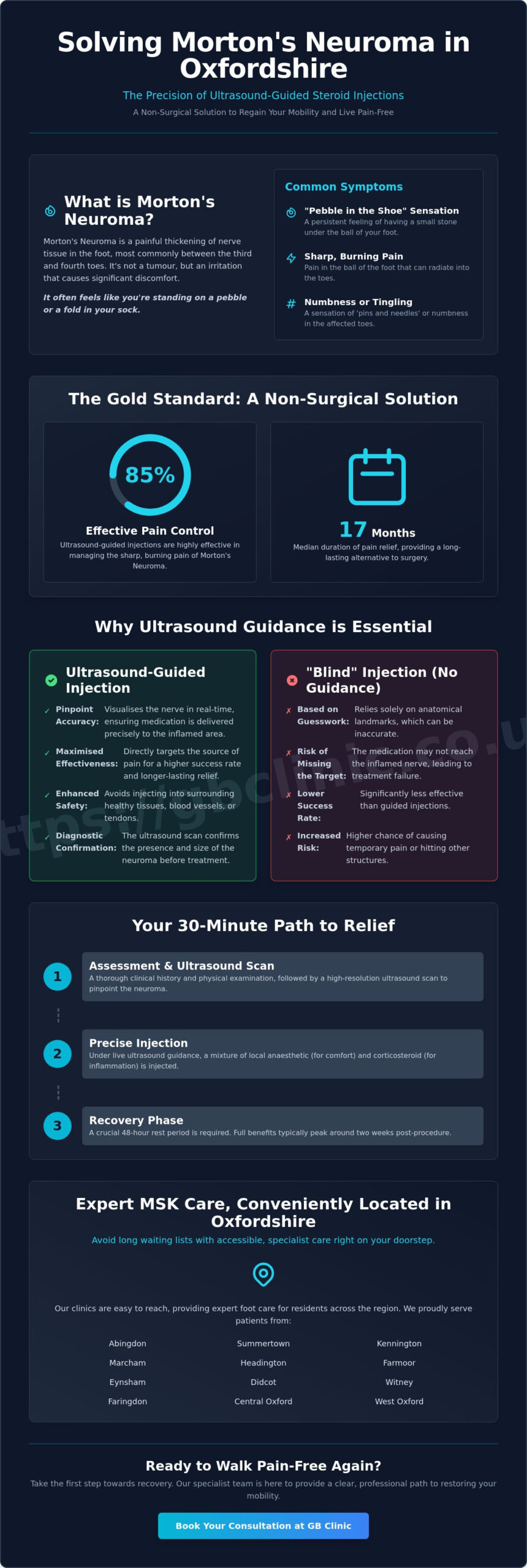
Did you know that ultrasound-guided steroid injections are 85% effective in controlling the sharp, burning pain of Morton’s neuroma? For many patients, this precision-led approach provides a median duration of pain relief lasting 17 months, offering a vital alternative to invasive surgery. If you’re struggling with the persistent sensation of a pebble in your shoe or numbness in your toes, a steroid injection for Morton’s neuroma can be the clinical bridge to regaining your mobility. We understand the frustration of long NHS waiting lists and the need for a clear, professional path to recovery right here in Oxfordshire.
We recognize that physical discomfort impacts every part of your daily life, from a morning walk in Headington to a commute through Central Oxford. This guide details how ultrasound technology improves injection accuracy, ensuring medication reaches the precise site of nerve irritation. You’ll learn about the treatment process and how we support patients across Abingdon, Summertown, Kennington, and Marcham. Our clinics are also conveniently accessible for residents in Farmoor, Eynsham, Didcot, Witney, Faringdon, and West Oxford. This ensures expert foot care and specialist diagnostics are always a local, accessible choice for the regional community.
Key Takeaways
- Learn why ultrasound guidance is essential for identifying nerve thickening and ensuring the precise delivery of medication to the affected area.
- Discover how a steroid injection for Morton’s neuroma can resolve the “pebble in the shoe” sensation and restore pain-free movement without surgery.
- Understand the clinical recovery process, including the necessary 48 hour rest phase and how to manage common side effects like steroid flare.
- Find out how to access expert care quickly from locations such as Didcot, Witney, and Faringdon to avoid long specialist waiting lists.
- Explore the benefits of combining local anaesthetic with corticosteroid treatment for a comfortable, efficient 30 minute clinical experience in Oxfordshire.
Understanding Morton’s Neuroma and the Role of Corticosteroid Injections
Morton’s neuroma isn’t actually a tumor, despite what the name might suggest. It’s a benign but painful thickening of the fibrous tissue that surrounds the interdigital nerve, most commonly found between the third and fourth metatarsal heads. For residents across Abingdon and Central Oxford, this condition often presents as a persistent sensation of having a small stone or pebble trapped inside your shoe. This discomfort is frequently triggered by wearing narrow footwear or high heels, which compress the forefoot and irritate the nerve. By Understanding Morton’s Neuroma, patients can recognize that the primary goal of treatment is to alleviate this mechanical pressure and chemical inflammation.
A steroid injection for Morton’s neuroma serves as a powerful non-surgical intervention. These corticosteroids act as potent anti-inflammatory agents that target the site of nerve irritation directly. Instead of managing pain through oral medications, which have systemic effects, a localized injection delivers relief where it’s needed most. This approach aims to resolve symptoms effectively, helping patients in areas like Summertown, Headington, and West Oxford avoid the need for invasive surgical operations. To better understand this clinical concept, watch this helpful video:
Common Symptoms and When to Seek Specialist Intervention
Recognizing the early signs is crucial for effective recovery. Many patients report a sharp, burning pain in the ball of the foot, often accompanied by tingling or numbness that radiates into the third and fourth toes. During a clinical assessment at our Oxfordshire facilities, specialists may look for ‘Mulder’s Click’; a diagnostic sign where compressing the metatarsals produces a palpable click and pain. Seeking early intervention in Kennington or Marcham is vital. It prevents chronic changes to your gait, which can lead to secondary issues in the knees or hips. Our clinics serve patients from Witney to Faringdon, ensuring specialist care is never far away.
How Steroids Work to Calm Nerve Inflammation
The mechanism behind a steroid injection for Morton’s neuroma involves reducing the chemical mediators of inflammation that cause the nerve to swell. By shrinking the inflamed nerve sheath, the injection decreases the mechanical pressure within the narrow metatarsal space. This process restores the nerve’s environment to a more comfortable state. Most patients start to feel the ‘steroid effect’ within a few days, though the full benefit typically peaks around two weeks post-procedure. For those in Farmoor, Eynsham, or Didcot, this timeline offers a predictable path back to mobility. You can learn more about our guided steroid injection services to see how we ensure maximum precision during this process.
The Procedure: What Happens During a Steroid Injection?
A clinical visit for a steroid injection for Morton’s neuroma is designed to be efficient and patient-focused. At our Oxford facility, the entire appointment typically lasts between 20 and 30 minutes. This structured approach ensures that every patient, whether traveling from Didcot or Witney, receives comprehensive care without unnecessary delays. The environment is strictly clinical yet reassuring, positioning the clinic as a professional MSK specialist center. We prioritize a calm atmosphere to build trust and confidence as you take this step toward physical restoration.
Preparation and Initial Assessment
Before any intervention, a thorough clinical history review is essential. We examine your physical symptoms and discuss previous conservative treatments you’ve tried, such as footwear changes or orthotics. This stage is critical for identifying contraindications that might affect the procedure’s safety. For instance, we carefully screen for local skin infections or poorly managed diabetes. Patients visiting from Abingdon or Summertown often arrive with a history of long-term discomfort, so we take the time to validate those experiences through a detailed physical examination before proceeding with the steroid injection for Morton’s neuroma.
Step-by-Step Guide to the Injection Process
The procedure begins with the patient in a comfortable, reclined position to ensure the foot is stable and accessible. We prioritize clinical excellence by following a strict sterilization process, cleaning the foot thoroughly with medical-grade antiseptic. To ensure your comfort, we apply a local anaesthetic to numb either the dorsal (top) or plantar (bottom) aspect of the foot. Once the area is sufficiently desensitized, the clinician delivers the corticosteroid medication precisely into the intermetatarsal space. Key steps include:
- Site Preparation: Marking the exact entry point between the metatarsal heads.
- Numbing: Administering lidocaine or a similar agent to minimize sensation.
- Delivery: Injecting the anti-inflammatory steroid directly into the target tissue.
- Monitoring: Observing the patient for a few minutes post-injection to ensure stability.
Residents from Kennington and Marcham often appreciate the streamlined nature of our clinical protocols. Whether you’re coming from Farmoor, Eynsham, or Faringdon, our facility is easily accessible for those seeking specialist MSK care. The professional atmosphere in our Central Oxford and West Oxford locations reflects our commitment to evidence-based medicine. After the medication is administered, we apply a small protective dressing. If you’re ready to address persistent foot pain, you can view our clinical options to start your recovery journey. You might also consider a guided steroid injection for even greater precision during the delivery of the medication.
Ultrasound-Guided vs. Blind Injections: Why Precision Matters
In traditional clinical practice, many providers perform “blind” injections, which rely on manual palpation to locate the target area. However, the anatomy of the foot is complex and compact. Modern ultrasound-guided techniques have superseded these older methods, becoming the gold standard for musculoskeletal care. By using high-frequency sound waves, a specialist can visualize the neuroma in real-time. This ensures the steroid injection for Morton’s neuroma is delivered with sub-millimeter accuracy. Patients from Didcot, Witney, and Faringdon often choose this method because it significantly reduces the risk of accidental needle placement into the fat pad or adjacent tendons, which can cause local tissue thinning.
Research indicates that ultrasound-guided corticosteroid injections are 85% effective in controlling pain associated with this condition. This high success rate is directly linked to the clinician’s ability to see the needle tip as it enters the intermetatarsal space. For individuals in Abingdon or Summertown seeking a predictable path to recovery, this visual confirmation provides immense peace of mind. It transforms a standard procedure into a high-precision clinical intervention, ensuring the medication reaches the exact site of nerve irritation without affecting healthy surrounding structures.
The Benefits of Ultrasound Guidance for Foot Conditions
Accuracy is paramount when treating the small nerves of the forefoot. Utilizing diagnostic ultrasound scans allows our team to differentiate a neuroma from other conditions like intermetatarsal bursitis, which often mimics similar symptoms. This diagnostic clarity is essential for patients in Kennington and Marcham, as it ensures the treatment plan is tailored to the actual cause of the pain. Seeing the “pebble” on the screen before the injection builds patient confidence and validates the physical discomfort they’ve been experiencing during daily walks in Headington or Central Oxford.
Steroid Injections vs. Alternative Treatments
While a steroid injection for Morton’s neuroma is highly effective for immediate inflammation, long-term management might involve other modalities. For instance, Shockwave Therapy is an excellent non-surgical option for chronic tissue issues that don’t respond to anti-inflammatories alone. In cases where joint wear is also present, Hyaluronic Acid injections can provide lubrication and relief for associated metatarsophalangeal joint pain. Residents in Farmoor, Eynsham, and West Oxford benefit from this comprehensive approach. We often recommend combining these interventions with custom orthotics to prevent the recurrence of pressure on the nerve once the initial swelling has subsided.
Recovery, Risks, and Results: Life After the Injection
The success of a steroid injection for Morton’s neuroma depends heavily on the immediate post-procedure phase. We require all patients to observe a strict 48 hour rest period following their appointment. This window allows the corticosteroid to settle within the intermetatarsal space without being displaced by the mechanical pressures of walking. Whether you are returning home to Abingdon, Summertown, or Kennington, planning for two days of minimal weight-bearing activity is essential for optimal results. You should avoid any strenuous activity or long walks through Central Oxford during this initial recovery window.
Patients typically begin to notice a significant reduction in the “pebble in the shoe” sensation within 3 to 7 days. While the local anaesthetic provides immediate relief, it wears off after a few hours, and there may be a brief period of increased discomfort before the steroid’s anti-inflammatory effect peaks. Data indicates that the median duration of pain relief following an ultrasound-guided injection is 17 months. For some individuals in Marcham or Farmoor, the benefits can last even longer; one study showed that 36% of patients remained symptom-free at a follow-up of nearly five years.
Post-Injection Care and Activity Modification
Adopting appropriate footwear is the most effective way to protect your investment in recovery. We advise avoiding high heels or shoes with narrow toe boxes, as these compress the nerve and can counteract the injection’s benefits. Residents in Witney or Headington should focus on a gradual return to exercise, starting with low-impact activities before resuming high-impact sports. If you experience a “steroid flare”, which is a temporary increase in pain within the first 24 to 48 hours, applying simple ice packs for 10 to 15 minutes can effectively manage the inflammation.
Understanding the Potential Risks and Side Effects
While a steroid injection for Morton’s neuroma is a standard clinical procedure, it’s vital to understand the associated risks. Some patients may notice skin thinning or depigmentation (lightening of the skin) at the injection site. A rare but more significant risk is fat pad atrophy, where the protective cushioning on the ball of the foot thins. Our use of ultrasound guidance in West Oxford and Eynsham clinics minimizes this risk by ensuring the medication is delivered precisely into the nerve space rather than the surrounding fat. Diabetic patients from Didcot or Faringdon must monitor their blood sugar levels closely for several days, as corticosteroids can cause a temporary elevation in glucose. If you are ready to move forward with a specialist assessment, you can book your clinical consultation to discuss these factors with our expert team.
Expert MSK Care in Oxfordshire: Why Choose GB Clinic?
GB Clinic positions itself as a regional authority in musculoskeletal health, providing specialized interventions for complex foot conditions. Opting for a private steroid injection for Morton’s neuroma at our facility allows you to bypass lengthy specialist waiting lists and receive high-precision treatment at the earliest opportunity. We prioritize an evidence-based approach that combines advanced diagnostic tools with targeted therapy. This ensures that every patient from Didcot, Eynsham, or Faringdon receives a clear, efficient path to physical restoration without the frustration of clinical delays.
Our clinical philosophy centers on the individual’s journey from discomfort to mobility. We understand that chronic nerve pain isn’t just a physical symptom; it’s a barrier to your daily life. By offering rapid access to expert-led care, we help residents across Oxfordshire regain their independence and return to their normal routines.
Accessible Treatment for Oxfordshire Residents
Our facilities are strategically positioned to serve the diverse needs of the regional community. We provide expert care for individuals living or working in Central Oxford, West Oxford, and Headington. For those traveling from surrounding towns like Abingdon, Summertown, or Kennington, we ensure the clinical experience is as seamless and stress-free as possible.
- Strategic Location: Our clinics are easily reachable via major transport links for patients coming from Marcham and Farmoor.
- Patient Convenience: We offer local parking options to accommodate those driving from Witney to ensure your visit is efficient.
- Clinical Excellence: Every procedure is performed in a calm, modern environment that emphasizes interpersonal warmth and professional distance.
Your Path to Pain-Free Walking
Recovery is most effective when it is part of a holistic MSK rehabilitation plan. We advocate for an integrated model where a guided steroid injection acts as the initial catalyst for relief, often followed by specialist physiotherapy. This dual approach addresses the immediate nerve inflammation while simultaneously correcting the biomechanical factors that may have caused the tissue thickening in the first place.
A comprehensive assessment is the first step in this journey. During your consultation, we review your clinical history and utilize diagnostic findings to confirm the presence of a neuroma. This level of detail ensures that your treatment is precisely tailored to your needs. Whether your goal is to return to long-distance walking or simply to move through your day without the “pebble in the shoe” sensation, our team is dedicated to your recovery. Regaining your mobility and returning to the activities you love is a realistic outcome with the right specialist support.
Take the Next Step Toward Pain-Free Mobility in Oxfordshire
Choosing a steroid injection for Morton’s neuroma is a decisive step toward resolving chronic foot pain and avoiding invasive surgery. By prioritizing ultrasound-guided accuracy, you ensure the medication reaches the precise site of nerve irritation for maximum effectiveness. This evidence-based approach offers a clear path to recovery for residents across Central Oxford, West Oxford, and Headington who are ready to move beyond the frustration of persistent discomfort.
Our specialist MSK clinicians provide rapid access to care with no GP referral required. Whether you’re traveling from Abingdon, Summertown, or Kennington, our clinics offer the convenience of local expertise without unnecessary delays. We also serve patients from Marcham, Farmoor, Eynsham, Didcot, Witney, and Faringdon, ensuring high-quality diagnostics and treatment are always within reach. It’s time to regain your comfort and return to the activities you love. Book Your Ultrasound-Guided Steroid Injection at GB Clinic Oxford today to begin your journey toward lasting relief. Our team is dedicated to providing the professional, expert-led care you need to walk with confidence again.
Frequently Asked Questions
How long does a steroid injection for Morton’s neuroma last?
A steroid injection for Morton’s neuroma typically provides a median duration of pain relief lasting 17 months. While individual results vary, research indicates that 36% of patients remain symptom-free at a follow-up of nearly five years. This longevity makes it a highly effective option for residents in Central Oxford or Witney seeking to avoid chronic discomfort without resorting to invasive surgical procedures.
Is the steroid injection painful?
Most patients find the procedure well-tolerated because we use a local anaesthetic to numb the area first. The use of ultrasound guidance ensures the needle is placed with sub-millimeter precision, which minimizes tissue irritation. Residents in Abingdon or Summertown often report only a slight pressure sensation during the treatment rather than significant pain, allowing for a calm clinical experience and a faster return to comfort.
How many steroid injections can I have for my foot?
Clinical guidelines generally recommend no more than three steroid injections in the same anatomical site within a 12-month period. Repeated injections beyond this limit can increase the risk of local tissue thinning or fat pad atrophy. We carefully monitor the progress of our patients in Headington or Didcot to ensure that each steroid injection for Morton’s neuroma is part of a safe, evidence-based recovery plan.
Can I drive home after having a steroid injection in my foot?
It’s strongly advised that you arrange for someone else to drive you home after the procedure. The local anaesthetic used to ensure your comfort can temporarily numb the sensations in your foot, which may interfere with your ability to operate vehicle pedals safely. Whether you’re heading back to Kennington or Marcham, prioritizing your safety during the immediate post-injection period is a key part of our clinical protocol.
What are the alternatives if a steroid injection doesn’t work?
If injections don’t provide sufficient relief, we offer several effective non-surgical alternatives like Shockwave Therapy and custom orthotics. These treatments focus on biomechanical correction and tissue stimulation to manage nerve pressure. For patients in Faringdon or Eynsham, we may also recommend exercise rehabilitation or manual therapy to address the underlying causes of foot pain, ensuring a comprehensive path to recovery without the need for surgery.
Will a steroid injection cure my Morton’s neuroma permanently?
While a steroid injection is not a permanent “cure” in the biological sense, it successfully manages symptoms for 85% of patients when combined with footwear changes. The injection reduces the inflammation and size of the nerve thickening, providing long-term relief. For individuals in West Oxford, maintaining these results often involves wearing wider shoes and using orthotics to prevent the mechanical compression from returning to the intermetatarsal space.
How soon can I return to running or high-impact exercise?
You should wait at least 7 to 10 days before returning to running or other high-impact exercises. The first 48 hours require strict rest to allow the medication to settle. Following this, a gradual increase in activity helps ensure the nerve isn’t re-irritated. Patients in Farmoor can work with our team to develop a structured return-to-sport plan that protects the foot during the healing phase and ensures a safe recovery.
Do I need a GP referral to book an injection at GB Clinic in Oxford?
You don’t need a GP referral to book an assessment or treatment at our Oxfordshire facilities. We provide direct access to specialist MSK clinicians and diagnostic ultrasound scans, allowing you to bypass long waiting lists. This streamlined process ensures that residents across the region can receive a steroid injection for Morton’s neuroma promptly, focusing on rapid recovery and expert-led care in a professional environment.