

Persistent pain, stiffness, or a recurring injury can be a source of significant frustration, especially when common advice like ‘just rest it’ provides no lasting relief. Understanding when to seek a professional physiotherapist service is the first crucial step towards regaining control of your health. Many people continue to live with discomfort because they are unsure if their issue is serious enough for treatment, or they feel anxious about what the process actually involves.
However, if you’re unsure whether physiotherapy is the right first step or you’d like a broader medical opinion on your pain, a private GP can offer a quick assessment. For those considering this route, you can find out more about Private GP Consultation (15 Minutes) as an accessible option for an initial diagnosis.
This comprehensive guide is designed to provide clarity and confidence. We will explain the expert role of a physiotherapist, the wide range of musculoskeletal conditions they effectively treat, and the key signs that indicate it is time to book an appointment for your pain or injury. You will learn precisely what to expect during your initial assessment and subsequent treatment, providing you with a clear, evidence-based path towards reducing pain, improving mobility, and achieving lasting recovery.
Key Takeaways
- Learn how physiotherapy goes beyond massage to diagnose the root cause of pain and create a tailored plan for long-term recovery.
- Identify the key warning signs, such as recurring pain or a loss of mobility, that indicate it’s time to seek professional help before an issue becomes chronic.
- Discover the wide range of treatments a modern physiotherapist service utilises, from manual therapy to advanced technology, to create a recovery plan specific to your injury.
- Know what to expect during your initial consultation-from assessment to diagnosis-to help you confidently choose the right clinic and practitioner for your needs.
Understanding Physiotherapy: More Than Just Massage
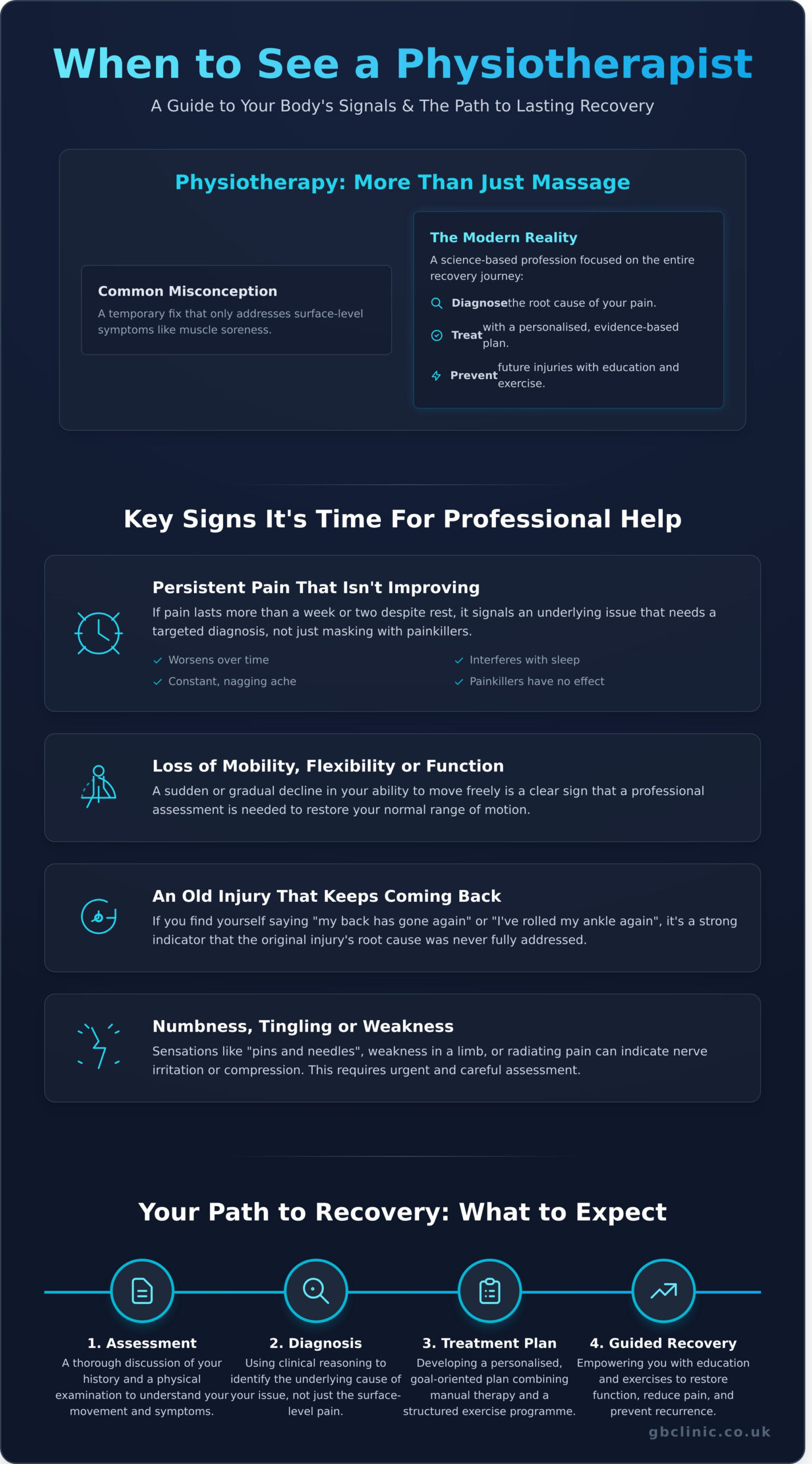
Physiotherapy is often misunderstood as simply a form of massage for aches and pains. In reality, it is a highly respected, science-based healthcare profession dedicated to restoring movement and function when someone is affected by injury, illness, or disability. The core goal of a professional physiotherapist service is to diagnose the root cause of your physical issues, provide effective treatment, and help prevent them from returning. For a detailed overview of the field, you can explore this resource on What is Physical Therapy (Physiotherapy). This modern approach is about empowering you, the patient, through education, targeted exercise, and active participation in your own recovery journey.
What Does a Physiotherapist Actually Do?
Your physiotherapist is a clinical expert in musculoskeletal health. A typical consultation and treatment pathway involves several key stages designed to get you back to your best:
- Comprehensive Assessment: A thorough discussion of your symptoms, medical history, and lifestyle, combined with a physical examination to assess your movement, strength, and stability.
- Accurate Diagnosis: Using clinical reasoning to identify the underlying cause of your pain or dysfunction, rather than just addressing the surface-level symptoms.
- Personalised Treatment Plan: Developing a clear, goal-oriented plan that includes hands-on manual therapy and a structured, progressive exercise programme tailored to you.
- Guided Recovery & Education: Providing expert guidance on specific exercises and lifestyle adjustments to restore function, reduce pain, and improve your long-term physical health.
The Core Principles of Modern Physiotherapy
Our approach is built on four key pillars to ensure the highest standard of effective, modern care:
- Patient-Centred Care: Your treatment plan is designed around your unique needs, personal recovery goals, and lifestyle demands.
- Evidence-Based Practice: We exclusively use techniques and treatments that are supported by robust scientific research and proven clinical evidence for their effectiveness.
- Holistic Approach: We assess the whole body to understand how different areas are connected, ensuring we address the source of the problem for lasting relief.
- Focus on Prevention: Our ultimate goal is to equip you with the knowledge and physical strategies to manage your condition and prevent it from recurring.
Physiotherapy vs. Other Treatments (Chiropractor, Osteopath)
While these professions often address similar musculoskeletal conditions, their primary focus and methodology differ. Understanding these distinctions can help you choose the right care:
- Physiotherapy: Focuses on restoring movement and function through evidence-based exercise, rehabilitation, manual therapy, and patient education.
- Chiropractic: Primarily concentrates on the diagnosis and treatment of neuromuscular disorders, with an emphasis on manual adjustment and manipulation of the spine.
- Osteopathy: Takes a holistic view, focusing on how the skeleton, muscles, and connective tissues function as a whole, using manual techniques to rebalance the body.
Key Signs It’s Time to See a Physiotherapist
Pain is your body’s primary signalling system, alerting you that something is not right. While minor aches often resolve on their own, persistent or specific types of discomfort require professional assessment. This guide will help you recognise the key signs that indicate it is time to seek expert help. Understanding when to see a physiotherapist is a proactive step towards long-term health, as ignoring these signals can lead to chronic conditions and significantly longer recovery periods. A physiotherapist can help decode your body’s signals and create a clear path to recovery.
Persistent Pain That Isn’t Improving
One of the most common reasons to consult a physiotherapist is pain that does not resolve with rest and time. This type of pain often indicates an underlying issue that requires targeted treatment. Look for the following indicators:
- Discomfort that lasts for more than one or two weeks despite rest.
- A constant, nagging ache that interferes with daily activities such as walking, working, or sleeping.
- Pain that progressively worsens instead of improving.
- Over-the-counter pain relief medication provides little to no effect.
Loss of Mobility, Flexibility, or Function
A sudden or gradual decline in your ability to move freely is a clear sign that a professional assessment is needed. A quality physiotherapist service is designed to diagnose the root cause of these limitations and restore function. Pay attention to:
- Difficulty performing simple, everyday tasks like reaching into a high cupboard or tying your shoelaces.
- Unusual stiffness in your joints, particularly upon waking in the morning.
- A noticeable reduction in your range of motion in key areas like the neck, back, shoulders, or knees.
- An inability to participate in sports or hobbies you previously enjoyed due to physical limitations.
Recurring Injuries and Feelings of Instability
If you find yourself dealing with the same injury repeatedly, it often points to an unresolved biomechanical issue or muscle imbalance. A physiotherapist can identify and address these underlying causes to break the cycle of injury. Key signs include:
- The same injury reoccurring, such as frequently rolling an ankle or straining your lower back.
- A sensation that a joint might ‘give way’ or feels unstable during movement.
- Consciously or unconsciously changing how you move to compensate for or avoid pain.
- This pattern strongly suggests an underlying weakness or imbalance that requires professional intervention.
A Breakdown of Common Physiotherapy Services
A physiotherapist’s toolkit is diverse and not a one-size-fits-all solution. Effective recovery hinges on a tailored treatment plan that combines the right techniques for your specific condition and goals. The core of any successful physiotherapist service involves a blend of passive treatments, where the therapist performs work on your body, and active treatments, which empower you to take control of your own rehabilitation. At GB Clinic, we utilise a full spectrum of therapies, from foundational hands-on techniques to advanced modern technologies, ensuring a comprehensive and effective path to recovery.
Foundational ‘Hands-On’ Treatments
These manual techniques are designed to reduce pain, improve mobility, and prepare your body for active rehabilitation. They are often the first step in alleviating acute symptoms and restoring initial movement.
- Manual Therapy: Involves skilled joint mobilisation and manipulation techniques to improve your range of motion and reduce stiffness in restricted joints.
- Therapeutic & Sports Massage: Focuses on releasing muscle tension, breaking down scar tissue, and improving circulation to promote healing and reduce soreness.
- Myofascial Release: A specialised technique that applies sustained pressure to the myofascial connective tissue to eliminate pain and restore motion.
Active Recovery: The Role of Exercise Rehabilitation
While hands-on treatments provide immediate relief, active recovery is the cornerstone of lasting results. This phase focuses on building strength, flexibility, and resilience to prevent future injuries. As leading authorities like the American Physical Therapy Association highlight, a key role of the physiotherapist is to guide patients in restoring function and improving mobility. This is achieved through a bespoke exercise programme designed to correct muscle imbalances, improve your body’s biomechanics, and provide clear guidance on a safe return to sport and daily activities.
Advanced Therapies for Stubborn Conditions
For chronic or complex issues that haven’t responded to conventional treatments, GB Clinic offers a suite of advanced therapeutic options. These evidence-based technologies target the root cause of persistent pain and accelerate healing.
- Shockwave Therapy: A non-invasive treatment highly effective for chronic tendon problems such as plantar fasciitis, tennis elbow, and Achilles tendinopathy.
- Electrotherapy: Uses targeted electrical energy to reduce pain signals, decrease swelling, and promote tissue repair.
- Diagnostic Ultrasound Scans: Provides a real-time, accurate diagnosis of soft tissue injuries, allowing for a highly targeted and effective treatment plan from day one.
These advanced services are often integrated with other treatments, such as Hyaluronic Acid (HA) Injections, to provide a complete, one-stop solution for pain relief and recovery.
What to Expect From Your First Physiotherapy Appointment
Stepping into a clinic for the first time can feel daunting, particularly when you are in pain. At GB Clinic, we aim to make the process clear and reassuring. Your first appointment is not just about treatment; it is a comprehensive assessment designed to understand the root cause of your discomfort. This is a collaborative session where your input is vital for developing an effective recovery strategy. To get the most from our expert physiotherapist service, come prepared to discuss your symptoms, medical history, and what you hope to achieve.
The Initial Assessment: A Thorough Examination
This first session is dedicated to forming a precise clinical diagnosis. The assessment is typically divided into two key parts:
- Subjective Assessment: A detailed conversation with your physiotherapist about your pain, its history, how it affects your daily life, and your overall health. This helps us understand the full context of your condition.
- Objective Assessment: A physical examination where your therapist will observe your posture and how you move. They will conduct specific tests to measure your joint range of motion, muscle strength, and flexibility. This also involves palpation, where the therapist uses their hands to feel the affected area to identify specific points of tenderness or tension.
Creating Your Personalised Treatment Plan
Following the assessment, your physiotherapist will explain their findings in clear, understandable terms, avoiding complex jargon. They will discuss your diagnosis and outline a proposed treatment plan tailored specifically to you. This plan will include a potential timeline for recovery and, most importantly, will be built around your personal goals. Whether your aim is to return to sport or simply walk without pain, we work with you to set realistic, meaningful objectives. This is the ideal time to ask any questions you have about your condition or the proposed treatments.
Your Role in the Recovery Process
Effective recovery is a partnership. While you will likely receive some initial hands-on treatment or specific advice during your first visit, a crucial part of our physiotherapist service involves empowering you to manage your condition. You will be given a home exercise program-usually one to three key exercises designed to begin the process of restoring movement and reducing pain. Consistency with these exercises is one of the most important factors in achieving a successful, long-term outcome.
Ready to understand the cause of your pain and start on a clear path to recovery? Book your initial assessment at GB Clinic.
Choosing the Right Physiotherapy Service for You
Once you have decided to seek professional help for your pain, the next crucial step is selecting the right clinic. Not all physiotherapy providers are the same, and finding the best fit can significantly influence the speed and success of your recovery. It is important to look beyond convenience and location to find a clinic that aligns with your specific condition and long-term health goals.
Qualifications and Specialisations to Look For
A credible physiotherapist service is built on expertise and trust. When researching your options, ensure you verify the following key credentials:
- Professional Registration: All physiotherapists must be registered with the Health and Care Professions Council (HCPC). This is a legal requirement in the UK and guarantees they meet national standards for training and professionalism.
- Clinical Specialisms: Look for a clinic with specialists in musculoskeletal (MSK) conditions, as they possess advanced knowledge in treating issues related to muscles, bones, joints, and nerves.
- Relevant Experience: Check that the therapists have proven experience in treating your specific injury or condition, whether it’s a sports injury, chronic back pain, or post-operative rehabilitation.
- Patient Testimonials: Reputable clinics will have reviews that provide genuine insight into the patient experience and treatment outcomes.
The Advantage of a ‘One-Stop’ Clinic
An integrated clinic that offers a comprehensive range of services under one roof provides a more efficient and effective treatment journey. Having access to in-house diagnostics, such as ultrasound scans, eliminates long waits for external referrals and allows for a precise diagnosis from day one. Furthermore, clinics equipped with advanced treatments like Shockwave Therapy or ultrasound-guided injections can offer a complete care pathway. This seamless approach ensures clear communication between the diagnostic and treatment stages, resulting in a cohesive plan tailored to you.
Why a Personalised, Patient-Focused Approach Matters
Effective recovery moves beyond ‘one-size-fits-all’ protocols. Your treatment plan should be as unique as your condition. A patient-focused therapist will take the time to understand your personal recovery goals, listen to your concerns, and adapt your plan as you progress. The focus should not only be on treatment but also on education, empowering you with the knowledge and tools to manage your condition and prevent future issues. A good physiotherapist acts as a dedicated partner in your recovery, guiding you towards a pain-free and active life. By prioritising these factors, you can find a physiotherapist service that provides the expert, personalised care necessary for lasting relief.
To learn more about our comprehensive, patient-focused approach to musculoskeletal health, visit GB Clinic today.
Begin Your Journey to Recovery with Expert Physiotherapy
Understanding physiotherapy is the first step towards taking control of your musculoskeletal health. As we’ve explored, this specialised medical field provides targeted, evidence-based treatments to address the root cause of pain and restore function. Recognising the signs that you need professional help and knowing what to expect empowers you to make informed decisions about your care. Choosing the right physiotherapist service is paramount for achieving a successful and lasting recovery.
At GB Clinics in Oxford, our expert team of HCPC-registered MSK specialists provides a ‘one-stop’ service for accurate diagnosis and effective treatment. We utilise advanced therapies, including Shockwave and Ultrasound-Guided Injections, to create a bespoke recovery plan tailored to your specific needs. If you are ready to address your pain and improve your mobility, we invite you to take the decisive next step.
Book Your Personalised Physiotherapy Assessment in Oxford today and start your journey back to a pain-free, active life. Your recovery is within reach.
Frequently Asked Questions
Do I need a GP referral to see a physiotherapist in the UK?
You do not need a GP referral to access a private physiotherapist service in the UK. This allows you to book an appointment directly and receive treatment without delay. For NHS physiotherapy, a referral from your GP is typically required, which may involve a waiting period. Opting for private care ensures you can be assessed and start your recovery journey much faster, addressing pain and mobility issues promptly.
How many physiotherapy sessions will I need to get better?
The number of sessions required is entirely dependent on your individual condition, its severity, and your personal recovery goals. Following a comprehensive initial assessment, your physiotherapist will create a bespoke treatment plan. This plan will include a professional estimate of the number of sessions needed to reduce your pain, restore function, and help you achieve long-term recovery. Progress is reviewed at every appointment to ensure optimal results.
Is physiotherapy treatment supposed to be painful?
Physiotherapy aims to alleviate pain, not cause it. However, some treatments designed to restore movement and function may cause temporary, mild discomfort, often described as a “good ache.” Our expert physiotherapists are trained to work within your comfort levels and will communicate with you throughout the session. You should never experience sharp or intolerable pain, and your treatment will be adjusted to ensure it remains both effective and manageable.
What is the difference between private physiotherapy and using the NHS?
The primary differences are speed of access and session availability. The NHS provides excellent care but often has long waiting lists. A private physiotherapist service offers immediate appointments, greater flexibility with scheduling, and typically longer one-to-one session times. This allows for a more in-depth assessment and a focused, uninterrupted treatment plan tailored to your needs, accelerating your path to becoming pain-free and improving your mobility.
Can physiotherapy help with long-term chronic conditions like arthritis?
Yes, physiotherapy is highly effective in managing the symptoms of chronic conditions such as osteoarthritis. While it cannot cure the condition, it can significantly reduce pain, improve joint mobility, and increase muscle strength to better support the affected joints. Your physiotherapist will provide a tailored exercise programme and expert advice on activity modification and self-management strategies to improve your quality of life and maintain your independence.
What should I wear to my physiotherapy appointment?
We advise wearing loose, comfortable clothing that allows for easy movement and enables the physiotherapist to access the area requiring treatment. For example, if you have a knee or hip issue, a pair of shorts is ideal. For a shoulder or neck problem, a vest or t-shirt is recommended. This ensures your therapist can conduct a thorough physical assessment and provide effective hands-on treatment without restriction.