
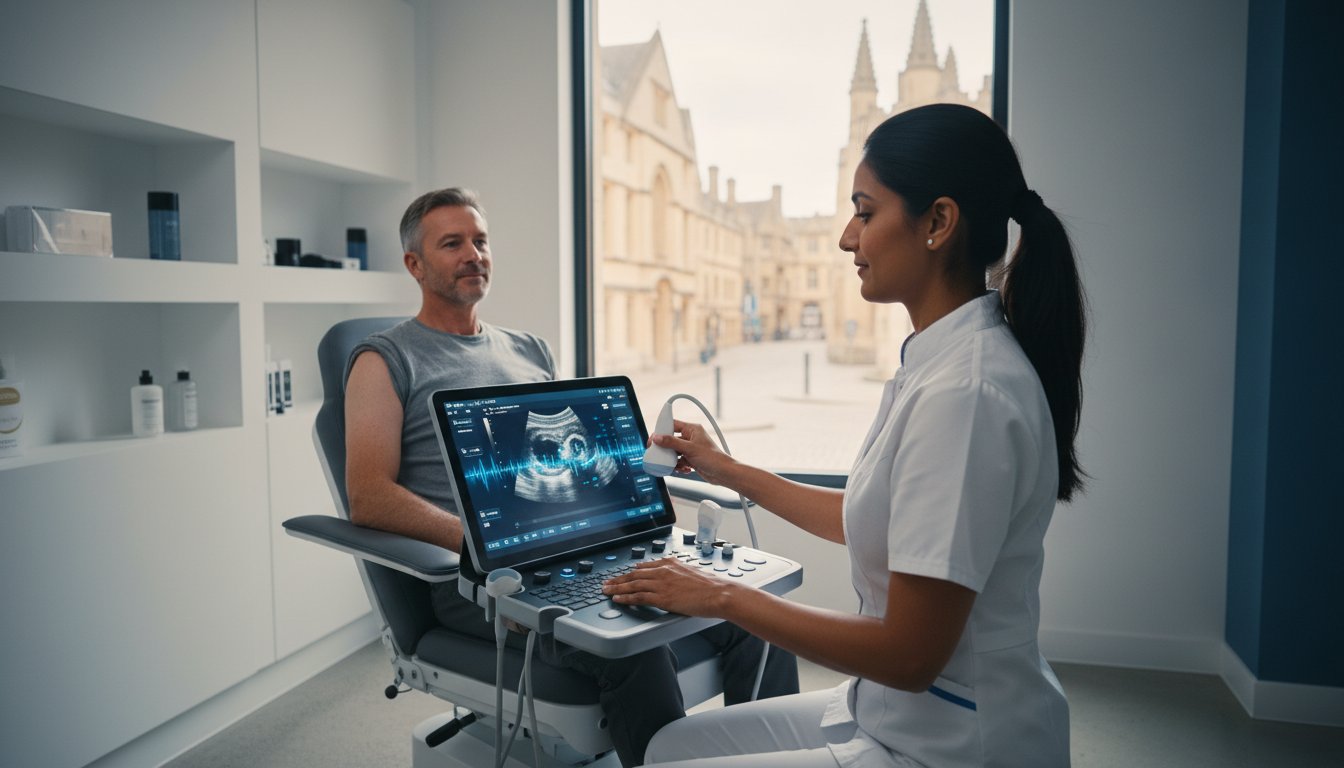
Persistent musculoskeletal pain can be a debilitating experience, disrupting daily life and making simple activities a challenge. When traditional therapies fail to deliver lasting relief, it is common to feel frustrated with slow progress and uncertain about the next steps. For many, this leads to the difficult question of whether invasive surgery is the only remaining option. However, modern, advanced physiotherapy provides a powerful alternative, combining deep clinical expertise with state-of-the-art technology to resolve chronic conditions effectively.
This article will explore how our high-tech approach works to your benefit. We will explain how sophisticated diagnostic tools lead to a clear and accurate clinical diagnosis, removing uncertainty. You will discover how innovative treatments are used to target the source of your pain, delivering rapid reduction in discomfort, restoring mobility, and helping you return to the activities you love without the need for a surgical procedure.
Key Takeaways
- Generic exercise programmes can fall short for persistent pain. Learn how advanced physiotherapy uses a technology-led approach for more targeted and effective results.
- An accurate diagnosis is crucial for successful treatment. Discover how diagnostic ultrasound provides immediate, visual clarity on the source of your pain, leading to a precise recovery plan.
- Certain chronic conditions like tendon pain can be stimulated to heal. Explore how non-invasive treatments like Shockwave Therapy actively promote your body’s natural tissue repair processes.
- Lasting pain relief requires a comprehensive strategy. Understand why combining modern injections with a structured rehabilitation programme is essential for achieving long-term recovery.
What is Advanced Physiotherapy and How Does it Differ?
Advanced physiotherapy is a specialised branch of musculoskeletal (MSK) care that moves beyond traditional methods to address complex and persistent conditions. It combines advanced clinical reasoning with technology-led interventions to target the underlying biological cause of pain, rather than only managing the symptoms. While many people are familiar with the basics of What is Physiotherapy, this modern approach is designed for those instances where generic exercise programs and standard treatments have failed to provide long-term relief, particularly for chronic pain and degenerative conditions.
To better understand how this approach is being integrated into modern healthcare, the following video from the NHS provides a helpful overview:
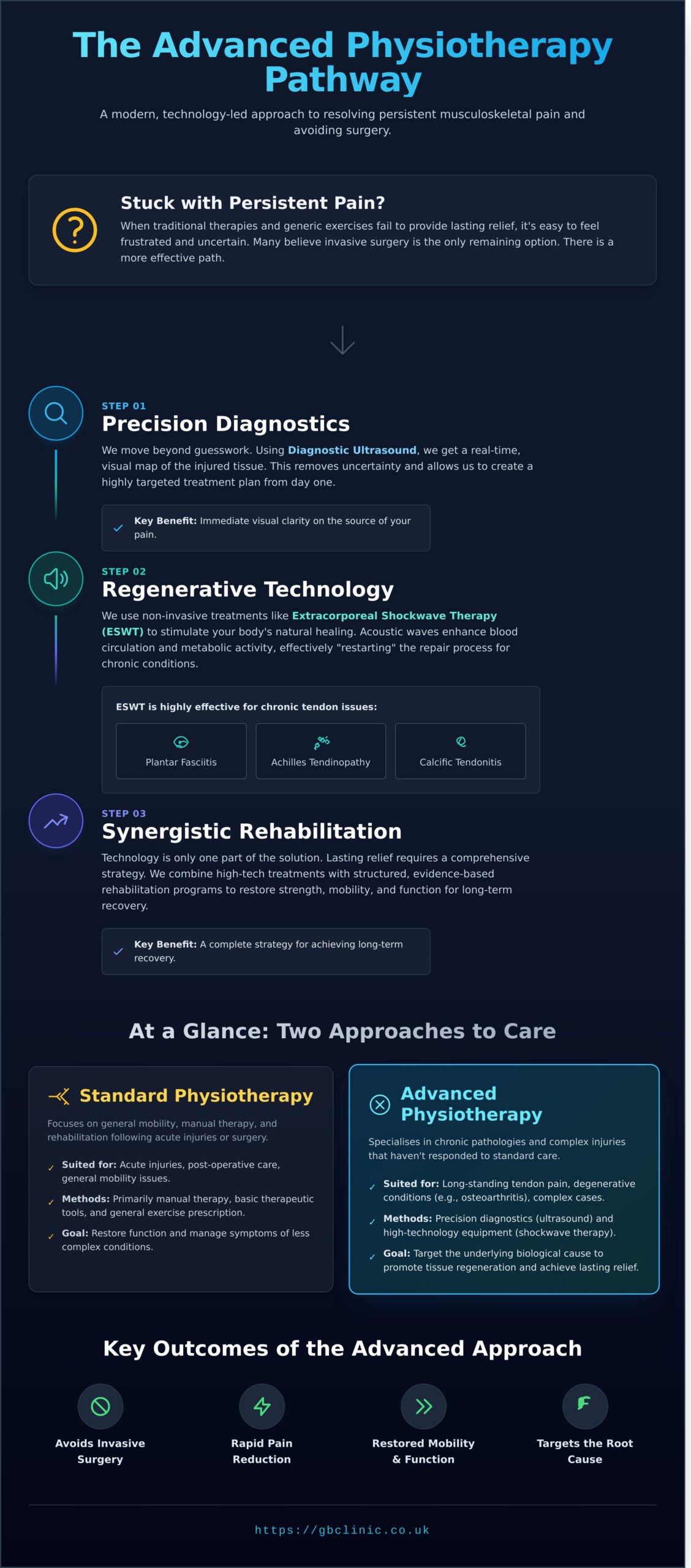
The core pillars of this approach are precision diagnostics, regenerative technology, and highly targeted rehabilitation. By identifying the exact source of the issue, we can apply modern therapies that stimulate the body’s natural healing processes, leading to more effective and lasting recovery.
The Clinical Evolution of MSK Care
Modern physiotherapy has evolved significantly from simple heat packs and basic stretches. The profession now relies on evidence-based practice to select the most effective treatment for a specific diagnosis. This means integrating advanced modalities like Extracorporeal Shockwave Therapy (ESWT) or therapeutic laser where clinical evidence shows a clear benefit. Administering these treatments requires a specialist clinical background to ensure an accurate diagnosis is made and the technology is applied safely and effectively for optimal results.
Advanced vs. Standard Physiotherapy: A Comparison
Understanding the distinction is key to choosing the right care pathway. While both are valuable, they are suited for different types of conditions.
- Standard Physiotherapy: Primarily focuses on general mobility, manual therapy, and rehabilitation following acute injuries or surgery. It utilises basic therapeutic tools and exercise prescription to restore function.
- Advanced Physiotherapy: Specialises in chronic pathologies (like long-standing tendon pain), injuries that have not responded to standard care, and degenerative conditions such as osteoarthritis. It employs high-technology equipment, such as high-energy shockwave units and diagnostic ultrasound, to promote tissue regeneration and reduce pain.
High-Tech Interventions: Shockwave Therapy and Beyond
Modern physiotherapy extends beyond manual techniques, incorporating evidence-based technology to accelerate healing and manage pain. At the forefront of these innovations are treatments like Extracorporeal Shockwave Therapy (ESWT) and advanced electrotherapy. These modalities are not replacements for traditional care but powerful tools that enhance it, offering a clear path to recovery for conditions that have failed to respond to other treatments. The biological mechanism is targeted and effective; for instance, ESWT uses acoustic waves to stimulate metabolic activity, enhance blood circulation, and break down scar tissue. This process effectively “resets” the chronic inflammatory cycle, prompting the body’s natural healing response.
Shockwave Therapy for Chronic Tendon Issues
ESWT has become a gold standard for treating persistent tendon-related pain, often providing the missing link for patients in Oxford struggling with chronic conditions. Its high success rates are supported by a growing body of clinical research, with strong evidence for shockwave therapy in treating stubborn musculoskeletal issues. It is particularly effective for:
- Plantar Fasciitis: Reducing heel pain and restoring comfortable walking.
- Achilles Tendinopathy: Targeting pain and dysfunction in the Achilles tendon.
- Calcific Shoulder Tendonitis: Breaking down calcium deposits to improve range of motion.
During a session, which typically lasts 10-15 minutes, you will feel a series of strong pulses at the treatment site. While some discomfort is normal, the intensity is adjusted for your tolerance. Afterwards, you can return to most daily activities immediately, with specific guidance provided by your physiotherapist.
Electrotherapy and Modern Modalities
Electrotherapy modalities like Transcutaneous Electrical Nerve Stimulation (TENS) and Electrical Muscle Stimulation (EMS) are key components of a comprehensive recovery plan. TENS works by sending gentle electrical impulses to interrupt pain signals sent to the brain (known as pain gate control), providing immediate relief for acute pain. EMS, on the other hand, causes targeted muscle contractions to reduce swelling, prevent muscle atrophy, and re-educate neuromuscular pathways after injury.
When integrated with manual therapy, these technologies help accelerate the healing timeline. They are ideal for patients needing targeted pain management or specific muscle re-activation, complementing hands-on treatment to restore function faster. The strategic use of such tools within an advanced physiotherapy programme is often instrumental in helping patients avoid the need for surgical intervention, offering a non-invasive and highly effective alternative.
The Diagnostic Edge: Ultrasound-Guided Precision
For complex musculoskeletal conditions, traditional “blind” clinical testing-relying on physical manipulation and patient feedback alone-can be inconclusive. An accurate diagnosis is the foundation of any successful treatment plan, and modern technology provides the clarity needed to move forward with confidence. This diagnostic precision is a cornerstone of advanced physiotherapy, removing guesswork and enabling highly targeted care from the very first appointment.
The use of point-of-care diagnostic ultrasound scans offers immediate insight into the underlying cause of your pain. Unlike waiting weeks for a hospital referral, this technology allows our clinicians to visualise soft tissues in real-time. We can identify subtle yet significant issues that standard physical tests might miss, such as hidden tendon tears, localised inflammation, or early degenerative changes, providing you with a clear diagnosis during your consultation.
Visualizing the Problem in Real-Time
One of the most significant advantages of diagnostic ultrasound is its dynamic capability; we can watch how your tendons, muscles, and ligaments move as you perform specific actions. This provides invaluable information that a static image from an MRI cannot. When compared to an MRI, diagnostic ultrasound offers several key benefits:
- Immediate Feedback: Scans are performed and interpreted during your appointment, eliminating delays.
- Dynamic Assessment: We can assess the tissue under stress and through movement, revealing issues not visible at rest.
- Cost-Effectiveness: Ultrasound scans are considerably more affordable than private MRI scans, which can cost upwards of £350.
- Patient Confidence: Seeing the source of your pain on screen helps you understand your condition and builds confidence in the proposed treatment plan.
Ultrasound-Guided Injections
Diagnostic accuracy directly enhances treatment effectiveness, particularly for therapeutic injections. The traditional method of landmark-based injections relies on the clinician’s anatomical knowledge to estimate the correct needle position. Ultrasound guidance transforms this into a precise, evidence-based procedure.
By visualising the needle in real-time, we ensure that therapeutic agents like corticosteroids or hyaluronic acid are delivered directly to the site of pathology. This pinpoint accuracy not only maximises the treatment’s efficacy but is also critical for ensuring other modern interventions, such as shockwave therapy, are applied to the precise location of tissue damage. This guided approach significantly improves the safety profile of the procedure, reduces patient discomfort, and avoids damage to surrounding healthy tissue.
Synergistic Treatments: Combining Injections with Rehab
In modern musculoskeletal care, the most effective outcomes are often achieved not with a single treatment, but through a carefully integrated plan. A common misconception is that an injection is a “quick fix” that replaces the need for rehabilitation. At GB Clinic, we view therapeutic injections as a powerful catalyst for recovery, creating the ideal conditions for successful physiotherapy to restore long-term function.
This approach moves beyond temporary relief to build lasting resilience. For instance, a guided steroid injection can significantly reduce acute inflammation in a tendon or joint. This creates a crucial “window of opportunity” where pain is controlled, allowing you to engage in targeted strengthening and mobility exercises that were previously too painful to perform. The injection is not the end of the treatment; it is the beginning of effective rehabilitation.
Regenerative and Lubricating Injections
Our advanced physiotherapy services incorporate a range of injections designed to address the root cause of joint and tissue problems. For osteoarthritic joints, Hyaluronic Acid (HA) injections act as a lubricant and shock absorber, providing long-term cushion and comfort, particularly in the knee and hip. Other regenerative options like Platelet-Rich Plasma (PRP) and Prolotherapy leverage the body’s own healing factors to repair damaged tissues. An injection is often recommended when inflammation and pain are significant barriers to making progress with manual therapy alone.
The Integrated Rehabilitation Pathway
Following an injection, our focus shifts immediately to a structured rehabilitation programme. This pathway ensures the benefits of the injection are maximised for long-term recovery. Key components include:
- Tailored Exercise Rehabilitation: We design a specific exercise plan to build strength and control around the newly “quieted” joint or tendon without causing aggravation.
- Manual Therapy: Techniques such as myofascial release are used to restore normal movement patterns and tissue mobility while the injection manages the underlying inflammation.
- Long-Term Load Management: We provide expert guidance on how to safely return to your daily activities and sport, teaching you how to manage load and prevent the recurrence of pain.
This integrated model is central to the GB Clinic philosophy. By combining the right injection with a bespoke physiotherapy plan, we create a clear path from pain to performance. To find out if this approach is right for you, explore our comprehensive musculoskeletal services.
Why Choose GB Clinic for Advanced Physiotherapy in Oxford?
GB Clinic is Oxfordshire’s one-stop setup for musculoskeletal (MSK) health. Situated in the heart of Oxford, our expert-led clinical environment is designed to provide a clear and effective path to recovery. We combine state-of-the-art diagnostic tools with the latest therapeutic techniques, ensuring every patient receives the highest standard of care. Our clinical standard is simple: to be kind, considerate, and professional at every stage of your journey.
Choosing the right clinic for advanced physiotherapy is a critical step towards long-term recovery. At GB Clinic, we provide the expertise, technology, and patient-focused care needed to achieve lasting results.
Our Specialist Oxford MSK Team
Our team is comprised of senior practitioners with extensive clinical experience in diagnosing and treating complex MSK conditions. We take a collaborative approach, with specialists working together to develop comprehensive treatment plans. A deep commitment to continuous professional development ensures we remain at the forefront of modern, evidence-based therapies, delivering effective and sustainable outcomes for our patients.
A Patient-Centered Journey to Recovery
Our “one-stop” philosophy streamlines your path to recovery. By integrating diagnostics and treatment under one roof, we provide a seamless and efficient experience that avoids unnecessary delays. This approach ensures:
- Accurate Diagnosis: We utilise advanced tools like diagnostic ultrasound to pinpoint the root cause of your pain.
- Integrated Treatment: Your personalised treatment plan is delivered by a collaborative team in one convenient location.
- Faster Results: By avoiding long waiting lists for separate scans or consultations, your recovery can begin sooner.
It’s a process trusted by Oxford residents: “The entire team was incredibly professional and calming. My treatment plan was explained clearly, and the results have been life-changing. I can’t recommend them enough.” – Sarah, Headington
We believe that access to expert advice should be simple and without pressure. That is why we offer a no-obligation consultation to discuss your concerns and explore how our services can help you. To take the first step towards a pain-free life, book your initial assessment with our Oxford team today.
Your Path to Recovery with Advanced Physiotherapy in Oxford
Persistent pain no longer requires a conventional approach. The future of effective recovery lies in advanced physiotherapy, which leverages high-tech diagnostics like ultrasound for pinpoint accuracy and innovative treatments such as Shockwave Therapy to accelerate healing. At GB Clinic, our integrated, one-stop setup ensures you receive a precise diagnosis and a tailored treatment plan without delay, putting you on the fastest route back to health.
As Oxford’s trusted MSK specialist, our 5-star patient testimonials reflect our commitment to exceptional, patient-focused care. If you are ready to move beyond persistent pain and restore your quality of life, we invite you to take the next step. Book Your Free Personal Physiotherapy Consultation in Oxford to discuss your condition with our experts, with no commitment required. Your journey towards improved mobility and lasting relief starts here.
Frequently Asked Questions About Advanced Physiotherapy
What exactly is advanced physiotherapy compared to regular physio?
Standard physiotherapy primarily uses manual therapy and exercise-based rehabilitation. Advanced physiotherapy integrates these effective techniques with modern medical technology for enhanced diagnosis and treatment. This includes using diagnostic ultrasound to pinpoint the exact source of pain, and employing treatments like shockwave therapy or ultrasound-guided injections. This approach allows for a more precise, targeted, and often faster path to recovery for complex musculoskeletal conditions.
Is advanced physiotherapy more expensive than standard sessions?
The cost of an initial assessment is comparable to a standard physiotherapy appointment. Specific advanced treatments, such as shockwave therapy or specialised injections, will have an additional cost. We believe in complete transparency, so a full breakdown of any recommended treatment plan and associated fees will be provided for your approval after your initial consultation. This ensures you can make a fully informed decision about your care.
Can advanced physiotherapy help if I have already had surgery?
Yes, post-surgical rehabilitation is a key area where our services provide significant benefits. Following surgery, we can use diagnostic ultrasound to precisely monitor tissue healing and tailor your recovery plan. Advanced modalities can help to manage scar tissue, reduce inflammation, and safely rebuild strength and mobility. Our goal is to optimise your surgical outcome and facilitate a complete and efficient return to your daily activities.
Do I need a GP referral to book advanced physiotherapy at GB Clinic?
No, you do not need a referral from your GP to book an appointment with us. We operate a self-referral system, which allows you to access our expert assessment and treatment services directly and without delay. If our clinicians determine that you would benefit from a consultation with your GP or another specialist, they will provide you with that professional advice during your appointment.
How many sessions of shockwave therapy are typically required?
The number of shockwave therapy sessions needed is determined by the specific condition, its chronicity, and the patient’s individual response. For many common tendinopathies, such as tennis elbow or plantar fasciitis, a course of 3 to 5 sessions is typically recommended to achieve significant pain relief and stimulate tissue healing. Your physiotherapist will outline a precise, personalised treatment schedule after your initial assessment.
Are the advanced injections like Hyaluronic Acid painful?
Patient comfort is our priority. To minimise discomfort, a local anaesthetic is administered to numb the area before the procedure. While you may experience a sensation of pressure, the injection itself is generally very well tolerated. Our clinicians are highly skilled in performing these procedures using ultrasound guidance for maximum precision and safety, ensuring the experience is as comfortable as possible for you.
What should I bring to my first advanced physiotherapy assessment?
For your initial consultation, please wear loose, comfortable clothing that allows the clinician to easily examine the affected area (for example, shorts for a knee or hip problem). It is also very helpful to bring any relevant medical documentation you may have, such as referral letters, hospital reports, or the results of any previous imaging like X-rays or MRI scans.
Is advanced physiotherapy covered by private health insurance?
Most major UK private health insurers provide cover for physiotherapy. However, the extent of coverage for specific advanced treatments like injections or shockwave therapy can vary between policies. We are recognised by all major insurers, but we strongly advise that you contact your provider before starting treatment to confirm your level of cover and to obtain any necessary pre-authorisation.