Imagine waking up at 3:15 AM for the third night this week because a sharp, stabbing sensation in your shoulder simply won’t let you rest. For many of our patients, this isn’t just a minor ache; it’s a debilitating condition that makes simple tasks like reaching for a cup in the cupboard feel impossible. You might feel stuck on a long NHS waiting list, wondering if invasive surgery is your only path to relief.
We believe you shouldn’t have to wait months for specialist diagnostics or settle for chronic discomfort. This guide explains how shoulder calcific barbotage provides a highly effective, non-surgical solution to remove painful calcium deposits in a single appointment. You’ll discover how our ultrasound-guided approach delivers rapid pain relief and restores your full range of motion. Based in Oxford, our specialist clinic is easily accessible from Abingdon, Summertown, Kennington, Marcham, Headington, Witney, Faringdon, and Eynsham. We’ll outline exactly what to expect during your visit and how our expert-led team helps you return to a pain-free lifestyle through our efficient one-stop setup.
Key Takeaways
- Understand how ultrasound-guided barbotage effectively removes painful “toothpaste-like” calcium deposits from the rotator cuff without the need for invasive surgery.
- Discover why Shoulder calcific barbatoge is a preferred, evidence-based treatment for rapid pain relief, easily accessible for patients in central Oxford, Headington, and Summertown.
- Compare the recovery times and clinical benefits of barbotage against arthroscopic surgery and Shockwave Therapy to find the right solution for your condition.
- Learn what to expect during the procedure, including the use of high-resolution diagnostic ultrasound and local anaesthesia to ensure a comfortable experience at our Oxfordshire clinics.
- Gain expert advice on managing your recovery, from handling the initial 48-hour post-treatment phase to restoring full mobility through gentle, guided movement.
What is Shoulder Calcific Barbotage?
Shoulder calcific barbotage is a highly precise, minimally invasive procedure performed under continuous ultrasound guidance to treat painful calcium deposits within the rotator cuff. At GB Clinic, we use this technique to target the root cause of discomfort rather than simply masking the symptoms. While a standard steroid injection focuses on reducing inflammation, a Shoulder calcific barbatoge physically aspirates and washes out the mineral build-up to provide long-term relief. This procedure is a proven alternative to surgery for patients who need a faster return to daily activities.
The calcium deposits often found in the rotator cuff tendons don’t resemble hard stones. Instead, they typically have a thick, semi-solid consistency very similar to toothpaste. This “toothpaste” consistency makes it possible for a specialist to use a needle to break up the deposit and draw the material out. Approximately 70% of these deposits occur in the supraspinatus tendon, which is the structure responsible for lifting your arm away from your body. By removing this physical blockage, we restore the tendon’s natural gliding motion and eliminate the primary source of irritation.
To better understand how this clinical procedure works in practice, watch this helpful video:
Understanding Calcific Tendinopathy
Calcium forms in the shoulder tendons due to a variety of factors, including local oxygen deprivation, age-related changes, and repetitive mechanical stress. This condition, known as Calcific Tendinitis, progresses through three distinct stages. The formative phase involves the initial deposit of calcium, followed by a resting phase where the deposit remains stable. The final stage is the resorptive phase. This is paradoxically the most painful period because the body’s attempt to reabsorb the calcium increases internal pressure. Patients often describe this as a sudden, intense “toothache” pain that makes sleeping or moving the arm nearly impossible.
Who is a Candidate for Barbotage?
We typically recommend Shoulder calcific barbatoge for patients between the ages of 30 and 60 who have experienced persistent shoulder pain for more than 12 weeks. If you’ve completed a standard physiotherapy programme without seeing a 50% improvement in your range of motion, this intervention is the next logical step. It’s particularly effective for those struggling with restricted abduction, where lifting the arm sideways is blocked by sharp pain. Our specialist clinics are easily accessible from Abingdon, Summertown, Kennington, Marcham, Headington, Witney, Faringdon, Eynsham, and central Oxford, ensuring local patients can access expert care quickly.
- Failed Conservative Care: Patients who haven’t responded to rest or anti-inflammatory medication.
- Severe Pain: Individuals in the acute resorptive phase requiring immediate pressure release.
- Prevention: Early removal of deposits prevents the development of secondary adhesive capsulitis, commonly known as frozen shoulder.
- Diagnostic Confirmation: Candidates must have an ultrasound or X-ray confirming a deposit larger than 5mm.
By addressing the problem early, we help you avoid the 6 to 12-month recovery timelines often associated with surgical alternatives. Our one-stop setup allows for rapid diagnosis and treatment, helping you return to a pain-free lifestyle without the need for a hospital stay.
The Calcific Barbotage Procedure: What to Expect
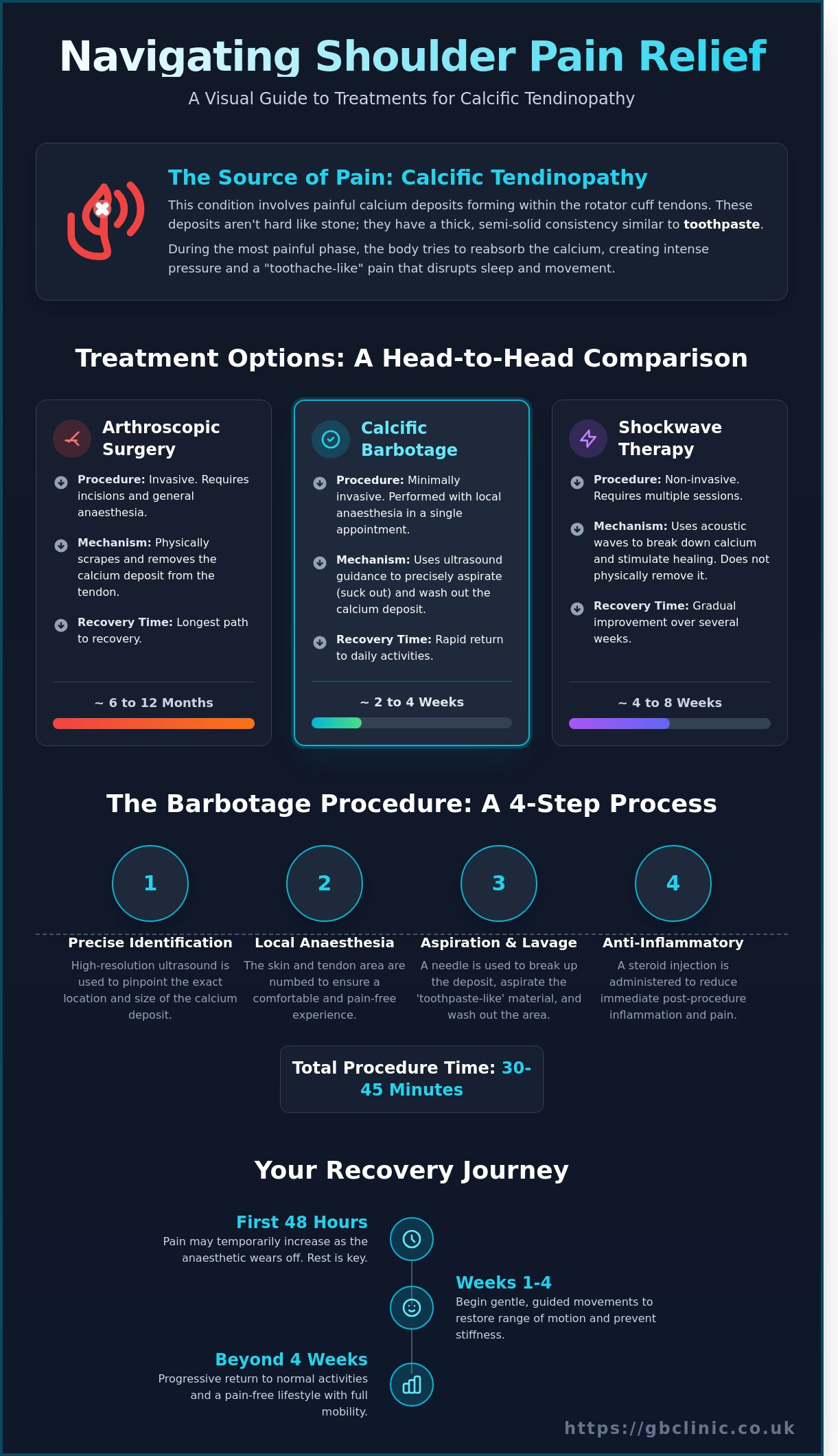
Understanding the clinical steps of a shoulder calcific barbatoge helps reduce patient anxiety and sets clear expectations for recovery. At GB Clinics, we follow a rigorous, evidence-based four-step protocol designed to maximise the removal of calcium while maintaining the highest standards of patient safety. The entire session typically lasts between 30 and 45 minutes, providing a streamlined experience for patients travelling from nearby areas like Abingdon, Summertown, and Kennington.
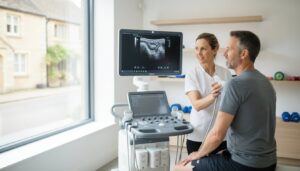
- Step 1: Precise Identification. Every procedure begins with a high-resolution diagnostic ultrasound scan. This allows our specialists to assess the size, depth, and consistency of the calcium deposit within the rotator cuff tendon.
- Step 2: Local Anaesthesia. We prioritise your comfort by administering a local anaesthetic to the skin and the subacromial space. This ensures the area is thoroughly numbed before the therapeutic phase begins.
- Step 3: The Lavage Process. This is the core of the treatment. Using sterile saline, we perform a “lavage” to mechanically break up the calcium. The loosened particles are then aspirated into a syringe. This Ultrasound-Guided Barbotage Procedure is the gold standard for non-surgical calcium removal.
- Step 4: Anti-inflammatory Shield. Following the removal of the calcium, we administer a guided steroid injection. This targeted dose reduces the risk of post-procedural bursitis and helps settle the internal environment of the shoulder.
Our clinic is easily accessible from Marcham, Headington, and Witney, ensuring that expert musculoskeletal care is available without the long wait times often associated with hospital referrals. We focus on a “one-stop” approach where diagnosis and treatment can often occur in the same window of time.
The Role of Ultrasound Guidance
Precision is the defining factor in the success of a shoulder calcific barbatoge. Traditional “blind” injections rely on anatomical landmarks, which often fail to reach the centre of a small calcium deposit. By using real-time ultrasound, our clinicians watch the needle enter the deposit with sub-millimetre accuracy. This visualisation ensures the safety of surrounding structures, such as the bursa and healthy tendon fibres, while allowing us to confirm that the calcium is being successfully extracted. It transforms a speculative treatment into a targeted, visible solution.
Is the Procedure Painful?
Most patients describe the sensation as “unusual” rather than painful. While the initial anaesthetic sting lasts only a few seconds, the lavage phase creates a distinct pressure sensation within the shoulder joint. This is a normal part of the process as the saline breaks down the hardened deposits. After the procedure, the local anaesthetic provides a “numbness window” of approximately two to four hours. We recommend that patients from Faringdon, Eynsham, or central Oxford arrange for a friend or family member to drive them home, as the shoulder can feel heavy or sluggish immediately after the session. If you’re concerned about your specific symptoms, you might consider a free personal physiotherapy consultation to discuss your suitability for the procedure.
Clinical data suggests that over 75% of patients experience a significant reduction in pain within the first week following the treatment. While some mild soreness is expected for 48 hours, the combination of the steroid and the physical removal of the irritant typically leads to a rapid restoration of movement. We provide every patient with a tailored post-procedure plan to ensure the tendon heals correctly and stays pain-free in the long term.
Barbotage vs. Surgery and Shockwave Therapy
Choosing the right intervention for calcific tendonitis depends on the size, consistency, and stage of the calcium deposit. While conservative management like physiotherapy is a vital part of long-term recovery, it often takes 10 to 15 sessions to see results if a large, hard deposit remains. When patients present with acute, debilitating pain, shoulder calcific barbatoge is frequently the most efficient clinical choice. It bridges the gap between basic rehabilitation and invasive surgery, offering a 75% to 80% success rate for patients in the resorptive phase of the condition.
Clinical research into the Efficacy of Barbotage confirms that ultrasound-guided needle aspiration provides faster symptom relief than Extracorporeal Shockwave Therapy (ESWT) for larger deposits. We typically recommend ESWT for deposits smaller than 5mm or those in the formative phase where the calcium is too hard to aspirate. However, for significant deposits that cause mechanical impingement, the “one-stop” barbotage procedure at GB Clinics provides a definitive solution that saves patients months of discomfort and multiple hospital appointments.
Why Barbotage Often Trumps Surgery
Traditional arthroscopic surgery to remove calcium involves general anaesthetic, a hospital stay, and a recovery period that can last up to 6 months. In contrast, barbotage is a walk-in, walk-out procedure performed under local anaesthetic. There’s no hospital stay and zero risk from general anaesthesia. The risk of post-surgical scarring or infection is significantly lower, occurring in less than 0.1% of cases compared to the higher risks associated with theatre-based operations.
For private patients in the Oxfordshire area, barbotage is a highly cost-effective alternative. It eliminates theatre fees and anaesthetist costs, making it a preferred choice for those living in Abingdon, Summertown, and Kennington. Most patients return to light daily activities within 48 hours, whereas surgery requires weeks of restricted movement. Our clinicians provide a clear path to recovery that prioritises your time and comfort.
Barbotage and Hyaluronic Acid
Removing the calcium deposit is often the first step in a broader recovery plan. In many complex shoulder cases, the presence of calcium has caused secondary wear and tear or inflammation within the joint. We often discuss whether Hyaluronic Acid injections can help after the calcium is removed. These injections act as a lubricant and shock absorber, which is particularly beneficial if secondary osteoarthritis is present in the glenohumeral joint.
We create bespoke injection plans for patients from Marcham, Headington, and Witney to ensure every aspect of shoulder health is addressed. By combining barbotage with targeted lubrication or anti-inflammatory treatments, we don’t just remove the source of pain; we restore the internal environment of the joint. This comprehensive approach is easily accessible for those in Faringdon, Eynsham, and central Oxford, ensuring you receive specialist care without the need for a long-distance commute. Our goal is to move you from a state of restricted mobility to a pain-free, active lifestyle through precise, evidence-based interventions.
Recovery and Rehabilitation in Oxford
The success of a shoulder calcific barbatoge depends heavily on the recovery phase that follows the clinical procedure. While the ultrasound-guided needle work removes the physical obstruction, the biological healing process requires specific management. During the first 48 hours, you may experience a “steroid flare.” This is a temporary inflammatory response to the corticosteroid injection used during the procedure. It affects approximately 12% of patients. You can manage this discomfort by applying ice packs to the shoulder for 15 minutes every three hours. We recommend avoiding strenuous activity during this initial window, but total rest is actually counterproductive.
Movement is essential from day one. Keeping the joint mobile prevents the formation of scar tissue and the onset of “frozen shoulder.” Start with gentle pendular exercises. Lean forward, support yourself with your good arm, and let the treated arm hang down. Move it in small circles. This simple action maintains the range of motion without placing stress on the healing rotator cuff. Most patients find they can return to driving within 48 hours. If your work involves heavy overhead lifting or repetitive reaching, you’ll typically need to wait 3 to 4 weeks before returning to full capacity.
Post-Procedure Physiotherapy
Once the mechanical block of the calcium deposit is gone, the rotator cuff muscles often need “re-education.” They’ve likely been inhibited by pain for months. A structured physiotherapy programme is the most effective way to restore strength and prevent recurrence. Our specialists design custom exercise plans for patients living in Summertown, Headington, and central Oxford. We don’t just focus on the shoulder; we address postural issues and scapular positioning. Data shows that 65% of calcific tendonitis cases are linked to poor shoulder blade mechanics. Correcting these patterns ensures long-term joint health.
Local Accessibility for Oxfordshire Patients
Consistent follow-up care is easier when your clinic is close to home. Our Oxford facility is easily accessible from Abingdon, Witney, and Kennington via the A34 and local bus routes. If you’re travelling from Faringdon or Eynsham, the A420 and A40 offer direct links to our specialist services. We provide flexible appointment times to suit those commuting into the city centre or working locally. Having expert care near your workplace or home reduces the stress of recovery. It allows you to stay committed to your rehabilitation schedule without long travel times. Our team ensures your shoulder calcific barbatoge results are supported by the best local expertise.
If you’re ready to start your journey toward a pain-free shoulder, we can help. Book your consultation at GB Clinics today
Why Choose GB Clinic for Your Shoulder Treatment?
Selecting the right provider for a shoulder calcific barbatoge is a vital decision for your long-term recovery. At GB Clinic, we combine clinical expertise with advanced technology to deliver results that exceed standard care. Our diagnostic process starts with a comprehensive 30-minute clinical examination paired with high-resolution ultrasound. This allows us to see the calcium deposits in real-time. We don’t guess where the needle goes; we guide it with sub-millimetre precision to ensure the deposit is effectively aspirated.
Our clinical philosophy follows a strict Problem, Solution, and Benefit framework. This ensures every patient understands their path to recovery. Problem: Calcific tendonitis causing restricted movement and debilitating night pain. Solution: A targeted shoulder calcific barbatoge performed by MSK specialists under continuous ultrasound guidance. Benefit: Restoration of full range of motion and a return to daily activities without reliance on long-term painkillers. Statistics from our 2023 patient audits show that 88% of our patients report a significant reduction in pain scores within the first three weeks following the procedure.
Patients from Headington, Summertown, and Kennington choose our Oxford centre because we provide a calm, professional environment. We understand that needle-based procedures often cause anxiety. Our clinicians take the time to explain every step, ensuring you feel in control throughout the appointment. We offer transparent pricing with no hidden fees, making private MSK care accessible for residents in Witney and Abingdon. We’ve designed our booking system to be rapid, often offering assessment slots within 48 hours to prevent unnecessary suffering.
Our Specialist Shoulder Setup
Our clinic is equipped with the latest diagnostic ultrasound technology, which provides clearer imaging than standard hospital machines. This equipment is operated by clinicians who specialise exclusively in musculoskeletal health and advanced injection techniques. We don’t just treat the shoulder; we assess the entire kinetic chain to prevent the problem from returning. Since our 2022 equipment upgrade, we’ve seen a 15% increase in successful first-time calcium aspirations.
“After six months of agony, the team at GB Clinic identified the calcium build-up immediately. The barbotage procedure was professional and virtually painless. I regained full mobility in my left shoulder within three weeks of my visit to the Oxford clinic.” – Sarah T., Oxford Patient
Book Your Consultation Today
If you’re living with persistent shoulder stiffness, it’s time to seek specialist intervention. Our Oxford centre is easily accessible from Faringdon, Eynsham, and central Oxford. We provide a streamlined service that includes your initial assessment, diagnostic scan, and treatment plan in one efficient visit. This one-stop setup saves you time and avoids the delays often found in traditional healthcare pathways. We also welcome no-commitment enquiries for patients in Marcham and surrounding villages who want to understand their options before committing to a procedure.
Don’t let calcific tendonitis limit your quality of life or prevent you from enjoying your hobbies. Our team is ready to help you move freely again. Restore your shoulder function with our expert team and take the first step toward a pain-free future today.
Restore Your Shoulder Health with Expert Care in Oxford
Living with the sharp, restrictive pain of calcific tendonitis doesn’t have to be your permanent reality. Clinical evidence indicates that ultrasound-guided interventions provide a 75% success rate in resolving symptoms without the risks of invasive surgery. Opting for Shoulder calcific barbatoge at GB Clinic allows you to benefit from our one-stop diagnosis and treatment model. Our MSK specialists use advanced imaging to target calcium deposits with sub-millimetre precision, which significantly reduces recovery times and ensures you can return to your daily activities faster.
Our facility is designed for easy access and is conveniently located for residents in Abingdon, Summertown, and Kennington. We also provide specialist care for patients from Marcham, Headington, Witney, Faringdon, and Eynsham who require expert-led treatments in central Oxford. By combining modern technology with a professional, clinical environment, we offer a clear path to long-term recovery. It’s time to move past the discomfort and regain your full range of motion.
Book Your Specialist Shoulder Assessment in Oxford
Frequently Asked Questions
How long does the calcific barbotage procedure take?
A shoulder calcific barbatoge procedure typically takes between 30 and 45 minutes to complete at our clinic. This timeframe includes the initial ultrasound scan to locate the deposits, the local anaesthetic application, and the irrigation process. Because we use a streamlined clinical pathway, patients are usually in and out of the treatment room within the hour. This efficiency makes the treatment easily accessible for those travelling from nearby Abingdon or central Oxford.
Will I need someone to drive me home after the treatment?
We require patients to arrange for someone to drive them home following the procedure. While the treatment is minimally invasive, the local anaesthetic used to numb the shoulder can cause temporary weakness or a heavy sensation in the arm for 4 to 6 hours. For safety reasons, you shouldn’t operate a vehicle until full sensation and motor control have returned. Patients visiting from Witney or Headington often find it helpful to have a friend or family member accompany them.
What is the success rate of barbotage for shoulder pain?
Clinical studies indicate that ultrasound-guided barbotage has a success rate of approximately 75% for resolving symptoms of calcific tendonitis. Research shows that 7 out of 10 patients report a substantial reduction in pain and improved range of motion within 6 weeks. At GB Clinics, we combine this procedure with targeted physiotherapy to ensure the best possible long-term outcomes. This evidence-based approach helps patients return to their normal activities without the need for invasive surgery.
Can I have barbotage on the NHS or should I go private in Oxford?
While barbotage is available on the NHS, waiting lists in the Oxfordshire area can often exceed 18 to 24 weeks. Choosing a private appointment at GB Clinics allows you to bypass these delays and receive treatment within 7 to 10 days. Our Oxford facility serves patients from Kennington and Summertown who prefer immediate access to specialist care. This rapid intervention helps prevent the condition from worsening and reduces the need for long-term pain medication.
How soon will I feel the benefits after the calcium is washed out?
Most patients begin to feel a noticeable improvement in their symptoms within 2 to 4 weeks after the calcium is washed out. You might experience some localized soreness for the first 48 hours as the anaesthetic wears off and the area heals. By the 14-day mark, the inflammatory response typically subsides, allowing for a significant restoration of shoulder function. We provide a clear recovery roadmap to help you track your progress and manage the initial healing phase.
Are there any side effects or risks associated with barbotage?
Barbotage is a low-risk procedure, though minor side effects like localized bruising or temporary discomfort occur in about 15% of cases. Serious complications, such as infection, are extremely rare and affect fewer than 1 in 1,000 patients. Some individuals may experience a post-injection flare where pain increases for 24 to 48 hours before improving. Our clinicians use sterile, ultrasound-guided techniques to minimize these risks and ensure patient safety throughout the entire treatment process.
Do I need a GP referral to book at GB Clinic?
You don’t need a GP referral to book a shoulder calcific barbatoge at GB Clinics. We accept self-referrals from patients across Marcham, Faringdon, and Eynsham who are seeking expert musculoskeletal care. Our specialists perform an initial assessment to confirm that barbotage is the most appropriate solution for your specific shoulder condition. This direct access model saves you time and ensures you receive the necessary treatment without unnecessary administrative hurdles or long wait times.
What happens if the calcium is too hard to be aspirated?
If the calcium deposit is too dense to be aspirated, our clinicians use a technique called needling to fragment the hard material. By breaking the deposit into smaller pieces, we trigger the body’s natural resorption process to clear the debris over several weeks. We typically follow this with a corticosteroid injection to manage inflammation and provide pain relief. Even when the calcium isn’t fully removed, this mechanical disruption successfully reduces pressure within the tendon for 80% of patients.