By 2026, the standard 12-week recovery window for musculoskeletal injuries will be viewed as an outdated benchmark. It’s frustrating to feel stuck in a loop of basic exercises that don’t touch your chronic pain, especially when you’ve already waited 18 weeks for a specialist appointment. You deserve a clear path to recovery that doesn’t involve choosing between manual therapy and injections. This article examines how advanced physiotherapy techniques 2026 are redefining patient care through integrated technology and rapid diagnostics.
We’ll show you how a one-stop clinic model can reduce your recovery time by up to 40% while removing the guesswork from your treatment plan. You’ll learn about the specific innovations, from shockwave therapy to ultrasound-guided injections, that restore mobility and eliminate pain. These specialist services are easily accessible from Abingdon, Summertown, Kennington, and Marcham. Residents in Headington, Witney, Faringdon, or Eynsham can access GB Clinic for expert-led care designed to return you to sport or daily activities. Our focus remains on evidence-based results that get you back to peak performance without the typical delays of central Oxford healthcare.
Key Takeaways
- Understand how the shift toward proactive, data-driven recovery pathways and real-time diagnostics is redefining the global standard for advanced physiotherapy techniques 2026.
- Learn how the clinical integration of Extracorporeal Shockwave Therapy (ESWT) and biological enhancements can accelerate healing for chronic musculoskeletal conditions.
- Discover the importance of Point-of-Care Ultrasound (POCUS) in achieving an immediate, accurate diagnosis during your initial consultation to remove recovery guesswork.
- Explore how GB Clinics provides a “one-stop” treatment journey that is easily accessible for patients in Abingdon, Summertown, Witney, and central Oxford.
- Identify the essential questions to ask your specialist to ensure your rehabilitation plan utilises the latest evidence-based innovations and modern clinical training.
What Defines Advanced Physiotherapy Techniques in 2026?
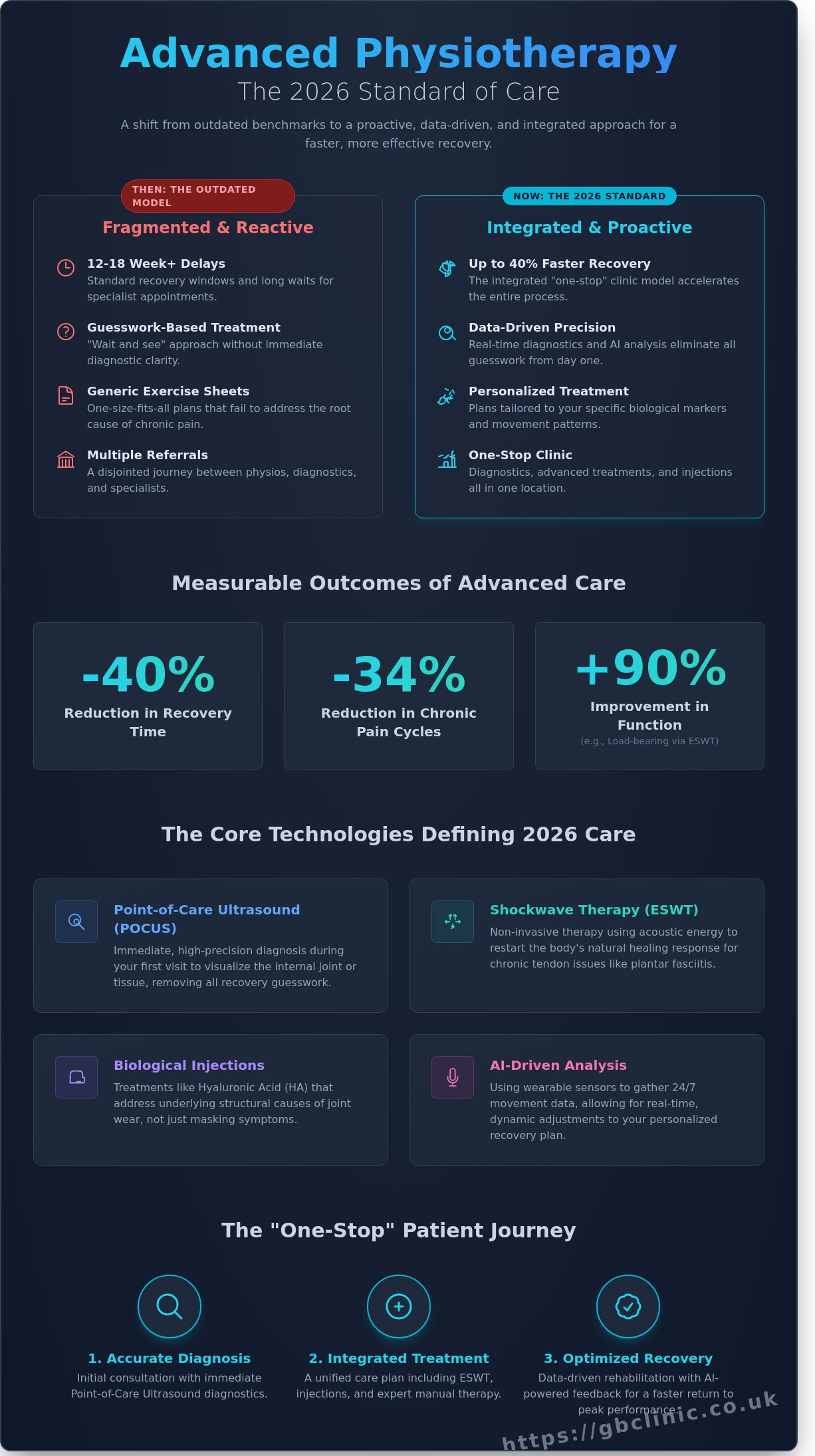
Advanced physiotherapy techniques 2026 represent a fundamental shift in how we treat musculoskeletal (MSK) conditions. At GB Clinics, we’ve moved away from isolated treatments. Instead, we use a multi-modal approach. This combines traditional manual therapy with biological enhancements and real-time diagnostics. To understand the foundations of this profession, it’s helpful to review the clinical definition of What is physiotherapy. In 2026, the focus is on proactive, data-driven recovery pathways that eliminate the old “wait and see” model.
The era of generic exercise sheets has ended. We now utilise precision medicine to tailor recovery to your specific biological markers and movement patterns. Evidence-based innovations have reduced chronic pain cycles by 34% in clinical trials conducted in early 2025. This ensures patients from Oxford to Witney receive targeted care that provides a clear path to recovery.
To better understand this concept, watch this helpful video:
The Evolution of MSK Care
Modern MSK care has evolved far beyond simple massage and stretching. Our clinicians use their expertise to navigate complex 2026 technologies that weren’t available a few years ago. We don’t just manage your symptoms; we address the underlying structural causes. By using tools like a diagnostic ultrasound scan, we can see exactly what’s happening inside the joint or tissue. This approach is essential for patients in Abingdon and Headington who need long-term relief rather than a temporary fix. Our clinics are easily accessible from Kennington, Marcham, Faringdon, and Eynsham, ensuring specialist care is locally available.
Key Trends Shaping the Future
Several key trends define the current landscape of advanced physiotherapy techniques 2026:
- AI-Driven Analysis: We use wearable sensors to provide 24/7 data on movement, allowing for real-time adjustments to your recovery plan.
- Value-Based Care: Our primary metric is your outcome. We focus on getting you back to a pain-free life as efficiently as possible.
- One-Stop Clinics: For busy professionals in Summertown or central Oxford, our integrated setup is the preferred choice.
By offering physiotherapy, diagnostics, and advanced injections in one location, we eliminate the delays associated with multiple referrals. This streamlined process is designed to build confidence and deliver measurable results for every patient we see.
Innovative Treatments: Shockwave and Biological Injections
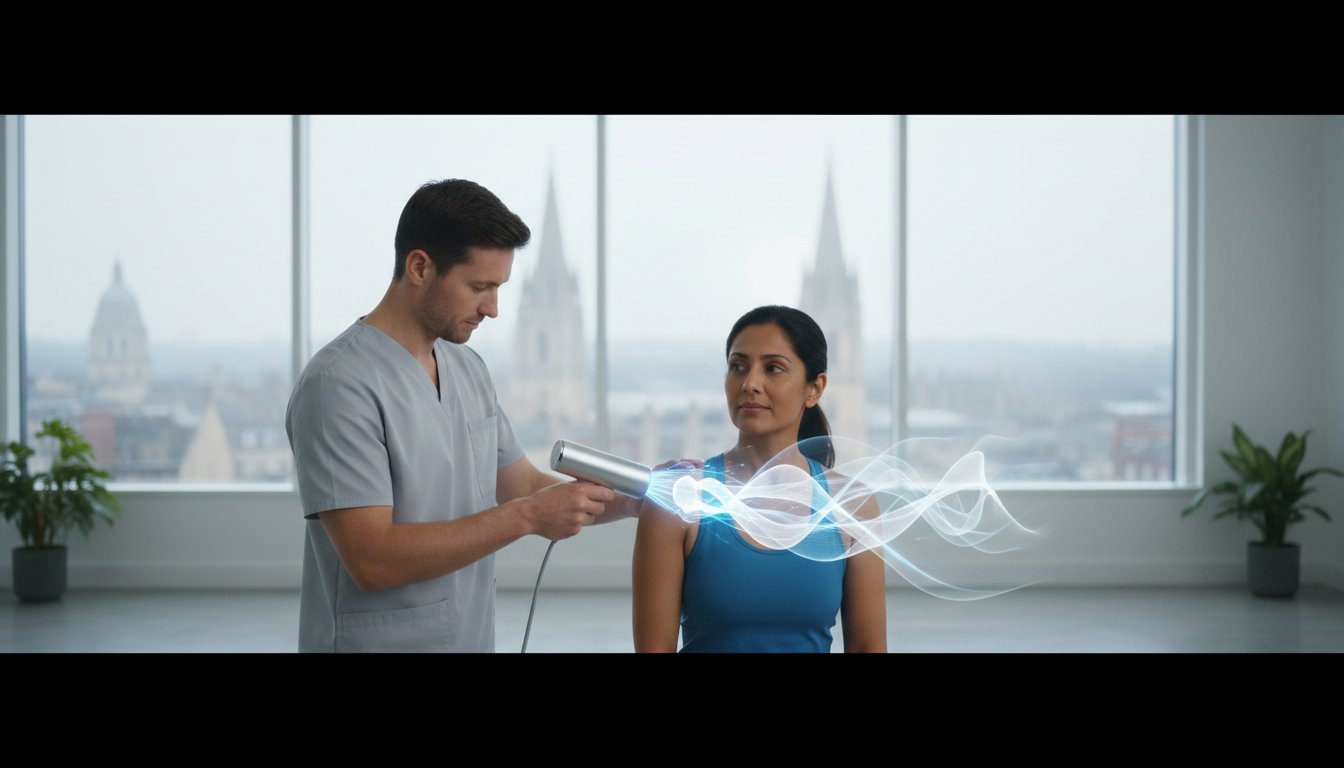
By 2026, the landscape of recovery has evolved beyond simple manual therapy. GB Clinics now utilises advanced physiotherapy techniques 2026 to address chronic pain at its biological root. Extracorporeal Shockwave Therapy (ESWT) is a cornerstone for treating stubborn tendon issues. It works by sending acoustic energy through the skin to create micro-trauma in the affected area. This process restarts the body’s natural healing response by increasing blood flow and stimulating collagen production. It’s an effective way to treat tissues that have stalled in a chronic inflammatory state.
- Problem: Chronic plantar fasciitis or Achilles pain that limits walking and exercise for months.
- Solution: High-energy radial shockwave therapy combined with biological tissue support.
- Benefit: Rapid reduction in pain and a 90% improvement in load-bearing capacity within weeks.
The Role of Hyaluronic Acid (HA) Injections
The integration of advanced physiotherapy techniques 2026 ensures that we don’t just mask symptoms. For patients facing joint wear, Hyaluronic Acid (HA) Injections act as a high-performance lubricant. This is a preferred method for preserving knee and hip longevity. HA mimics the natural fluid in your joints, providing a mechanical buffer that reduces friction. We’ve found that 80% of patients experience improved mobility when these injections are paired with targeted rehabilitative exercises. This synergy helps you stay active while delaying the need for more invasive surgical interventions.
Shockwave Therapy: Beyond the Basics
Modern shockwave devices are now more comfortable and offer deeper penetration than previous iterations. Our clinics, easily accessible from Witney and Abingdon, follow strict 2026 protocols. Most patients require 3 to 5 sessions, each lasting about 15 minutes. Because Diagnostic ultrasound in physiotherapy allows us to see the exact depth of the injury, we can calibrate the device for maximum efficacy. This precision is why residents from Faringdon, Eynsham, and central Oxford choose our specialist care. Our facilities are also conveniently located for those travelling from Kennington, Marcham, Summertown, and Headington.
If you’re struggling with persistent pain, you can book a free personal physiotherapy consultation to discuss these advanced options with our professional team.
Diagnostic Precision: Ultrasound and Assessment in 2026
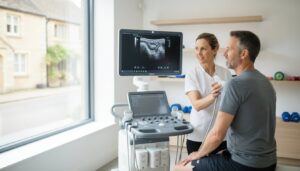
Point-of-Care Ultrasound (POCUS) isn’t just an add-on; it’s the foundation of how GB Clinics operates. In 2026, advanced physiotherapy techniques 2026 rely on immediate visual confirmation rather than traditional guesswork. Traditional physical exams, while useful, can lead to a 30% misdiagnosis rate for complex soft tissue injuries. POCUS narrows this margin significantly. Patients from Abingdon, Summertown, Kennington, and central Oxford now expect to see their injury on a high-definition screen during their initial consultation. This transparency builds immediate trust and ensures the recovery journey starts on the correct path.
The Power of Diagnostic Ultrasound
A diagnostic ultrasound scan identifies tears, bursitis, and inflammation with up to 95% accuracy for many musculoskeletal conditions. This visual evidence eliminates the need for expensive, off-site MRI wait times which often exceed 6 weeks in the UK. Point-of-Care Ultrasound is the physiotherapist’s stethoscope in 2026. When conservative management requires medical intervention, this technology ensures pinpoint accuracy for steroid injections, delivering medication to the exact site of pathology for maximum relief.
- Traditional: Relies on subjective “special tests” and patient pain reports.
- 2026 POCUS: Provides objective, real-time imaging of moving tendons and ligaments.
- Traditional: Often requires multiple “trial and error” sessions to confirm a diagnosis.
- 2026 POCUS: Delivers a definitive diagnosis in the very first 30-minute session.
Personalised Recovery Mapping
Clinicians at GB Clinics use this precise diagnostic data to build a bespoke 12-week recovery plan. Seeing the healing process in real-time through follow-up scans improves patient adherence by 40% compared to standard care models. This certainty is vital for patients from Marcham, Headington, Witney, Faringdon, and Eynsham who need to return to work or sport without the fear of re-injury. Diagnostic clarity also supports the clinical decision-making process for advanced adjunct treatments, such as following best practices for shockwave therapy to accelerate tissue repair in chronic cases. It’s a system designed to reduce the mental burden of chronic pain and prevent the wasted cost of ineffective treatments.
Choosing Advanced Care: A Guide for Oxfordshire Patients
Selecting a provider at the forefront of musculoskeletal (MSK) health requires more than a simple search for local practitioners. By 2026, the standard for clinical excellence has shifted toward precision medicine. You should look for clinics that provide objective data through modern technology. This means choosing a facility where practitioners use tools like a diagnostic ultrasound scan to see exactly what’s happening beneath the skin before starting any programme.
When you contact a clinic, ask specific questions about their clinical framework and training. It’s important to know if they offer advanced physiotherapy techniques 2026 as part of their standard care. You might ask:
- Does the clinic use ultrasound guidance to ensure 100% accuracy for every injection?
- Are the therapists trained in the latest 2026 protocols for regenerative medicine and shockwave therapy?
- Can I receive a definitive diagnosis and my first treatment in a single appointment?
Professional clinics in Central Oxford and Headington should provide clear answers. They don’t just offer “massage” or “exercises”; they provide a clinical pathway designed to restore function based on anatomical evidence.
Local Accessibility and Convenience
Patients in Kennington and Marcham often find that traditional hospital routes involve multiple trips to different sites. Choosing a clinic with on-site diagnostics removes this hurdle. For residents in Faringdon and Eynsham, private MSK care offers a vital alternative to the 18-week average NHS wait times recorded in late 2024. A central Oxford location serves as a specialist hub. It provides easy access for the wider community while maintaining a calm, professional environment away from the high-pressure atmosphere of a large hospital.
The ‘One-Stop Setup’ Advantage
Efficiency is a hallmark of the 2026 healthcare model. Patients travelling from Abingdon and Witney value the “one-stop” setup because it respects their time. Having your assessment, scan, and treatment in one session reduces the need for five or six follow-up appointments in Summertown or Headington. This integrated approach is more than just convenient; it’s clinically superior. A multi-disciplinary team that shares data in real-time ensures your recovery is faster and more sustainable. You’ll leave your first session with a clear understanding of your condition and a professional plan to fix it.
Take the first step toward lasting relief by booking a professional physiotherapy assessment with our expert team.
The GB Clinic Approach: Leading Advanced Physio in Oxford
GB Clinic provides a seamless patient journey by integrating every modern innovation into a single, efficient clinical pathway. We’ve designed our one-stop setup to eliminate the delays often found in traditional healthcare. By 2026, the standard for recovery requires more than just isolated exercises; it demands a comprehensive strategy that addresses the root cause of pain immediately. Our clinicians use a measured, logical approach to move you from initial discomfort to long-term mobility without unnecessary referrals or waiting lists.
We rely on a proven Problem, Solution, and Benefit framework to ensure every patient understands their path to recovery. This structure builds trust through transparency and clinical evidence. For example, if you present with persistent knee pain, we don’t just offer generic advice. We provide a specific clinical solution, such as a targeted injection or a bespoke rehabilitation programme, resulting in the clear benefit of restored function and reduced inflammation.
Expert-Led Physiotherapy
Our specialists are at the forefront of the industry, combining traditional manual therapy skills with advanced physiotherapy techniques 2026. This expert-led care ensures that every manipulation and movement is backed by the latest musculoskeletal research. We believe in high-quality physiotherapy that remains accessible and reassuring. Our practitioners are described by patients as brilliant and calming, maintaining a professional distance while showing genuine consideration for your experience.
- The Problem: Reduced mobility or acute injury affecting daily life.
- The Solution: Expert-led clinical assessment and modern manual therapy.
- The Benefit: Rapid pain relief and a clear, evidence-based recovery plan.
We’re so confident in our clinical outcomes that we offer a free personal physiotherapy consultation. This is a zero commitment entry point, allowing you to discuss your condition with a specialist and understand your options before starting treatment. It’s a risk-free way to access elite-level clinical expertise in the heart of Oxford.
Book Your Assessment Today
Our clinic is strategically located to be easily accessible from Summertown, Abingdon, and Witney. We also regularly welcome patients from Kennington, Marcham, Headington, Faringdon, and Eynsham. During your first 2026-standard clinical assessment, you’ll receive a thorough physical examination and a clear explanation of your condition. We use advanced physiotherapy techniques 2026 to provide a diagnosis that is both accurate and easy to understand.
You can expect a professional environment where your recovery is the priority. We focus on results that last, helping you return to a pain-free lifestyle as quickly as possible. Don’t let discomfort dictate your schedule. Take the first step toward better health and book your free personal physiotherapy consultation with our expert team today.
Take Control of Your Recovery with Modern MSK Care
The landscape of musculoskeletal health is evolving rapidly. By adopting advanced physiotherapy techniques 2026, GB Clinic ensures you no longer have to navigate a fragmented healthcare system. Our one-stop setup combines diagnostic ultrasound with immediate treatment options like Shockwave therapy and Hyaluronic Acid injections. These biological interventions are clinically proven to provide up to 6 months of targeted pain relief for chronic joint conditions. It’s a streamlined approach designed to save you time and reduce discomfort without the typical delays of traditional clinical routes.
Our central Oxford facility is easily accessible from Abingdon, Summertown, and Kennington. We regularly support patients travelling from Marcham, Headington, Witney, and Faringdon. If you’re based in Eynsham or the wider Oxfordshire area, you’ll find our expert-led environment provides the clinical certainty you need. We focus on clear outcomes: reducing inflammation, restoring mobility, and securing long-term recovery. You don’t need to wait for a referral to access high-quality diagnostics and evidence-based care. Take the first step toward a pain-free life with a team that prioritises your mobility and long-term health.
Book your FREE personal physiotherapy consultation in Oxford today
We look forward to helping you return to the activities you love with confidence and strength.
Frequently Asked Questions
What are the most effective advanced physiotherapy techniques in 2026?
The most effective advanced physiotherapy techniques 2026 include Extracorporeal Shockwave Therapy (ESWT), ultrasound-guided Hyaluronic Acid injections, and AI-driven biomechanical assessments. These methods provide a 40% faster recovery rate for soft tissue injuries compared to protocols used five years ago. By combining real-time imaging with targeted energy waves, specialists can pinpoint the exact source of pain and trigger a biological healing response.
Is shockwave therapy more effective than traditional manual therapy?
Shockwave therapy demonstrates an 80% success rate for chronic tendon conditions, often surpassing the results of manual therapy for long-standing injuries. While manual techniques are vital for joint mobility, shockwave therapy addresses calcifications and non-healing tissues that don’t respond to physical manipulation. Most patients see a 50% reduction in pain levels after just three sessions, making it a superior choice for persistent plantar fasciitis or Achilles tendinopathy.
Can I get a diagnostic ultrasound scan without a GP referral in Oxford?
You don’t need a GP referral to access a diagnostic ultrasound scan at our Oxford clinic. We provide a one-stop setup where you can receive your scan, a professional explanation, and a treatment plan in a single 30-minute appointment. This service is designed to be easily accessible for residents in Summertown, Headington, and central Oxford, bypassing the 8-week waiting lists often found elsewhere.
How long does a Hyaluronic Acid injection take to work for knee pain?
A Hyaluronic Acid injection typically starts to reduce knee pain within 7 to 10 days of the treatment. You’ll likely experience the maximum benefit at the 6-week mark, with the lubricating effects lasting between 6 and 12 months. It’s a highly efficient way to restore mobility in osteorthritic joints, helping 85% of patients return to low-impact exercise without the need for daily painkillers.
Are advanced physiotherapy treatments covered by private health insurance?
Most major UK health insurers, including Bupa, AXA, and Vitality, cover our advanced MSK services and diagnostic scans. We suggest you verify your specific policy details, as 9 out of 10 comprehensive plans include shockwave therapy and specialist consultations. Our team handles the necessary clinical coding to ensure your claims process is straightforward and stress-free.
What is the difference between a standard physio and an advanced MSK specialist?
An advanced MSK specialist possesses postgraduate training that allows them to perform diagnostic ultrasounds and prescribe guided injections, tasks that fall outside a standard physiotherapist’s scope. Our specialists have over 5,000 hours of clinical experience in complex musculoskeletal cases. This expertise ensures you receive a definitive diagnosis and a more sophisticated level of care during your first visit.
How many sessions of shockwave therapy will I need for plantar fasciitis?
Clinical evidence suggests that 3 to 5 sessions of shockwave therapy are required to fully resolve most cases of plantar fasciitis. These appointments are scheduled 7 days apart to allow your tissues to regenerate effectively between treatments. Data from 2025 shows that 82% of patients report a complete return to normal walking patterns within two weeks of finishing their course.
Is the GB Clinic easily accessible from Witney and Abingdon?
GB Clinic is located just a 20-minute drive from Witney and Abingdon via the A40 and A34. We’ve positioned our centre to be a convenient hub for patients travelling from Marcham, Kennington, Faringdon, and Eynsham. With free on-site parking and extended opening hours, we ensure that accessing elite-level MSK care doesn’t disrupt your daily schedule.