Why does that calf strain return every time you increase your running pace, despite weeks of rest? It’s a common frustration for athletes who feel stuck in a loop of temporary fixes. Finding the best physiotherapist in Oxford for sports injuries is about more than just finding a massage; it’s about securing a precise diagnosis that stops the cycle of pain. Whether you’re based in Summertown or Headington, you shouldn’t have to settle for the standard 18-week NHS diagnostic wait when your performance and mobility are on the line.
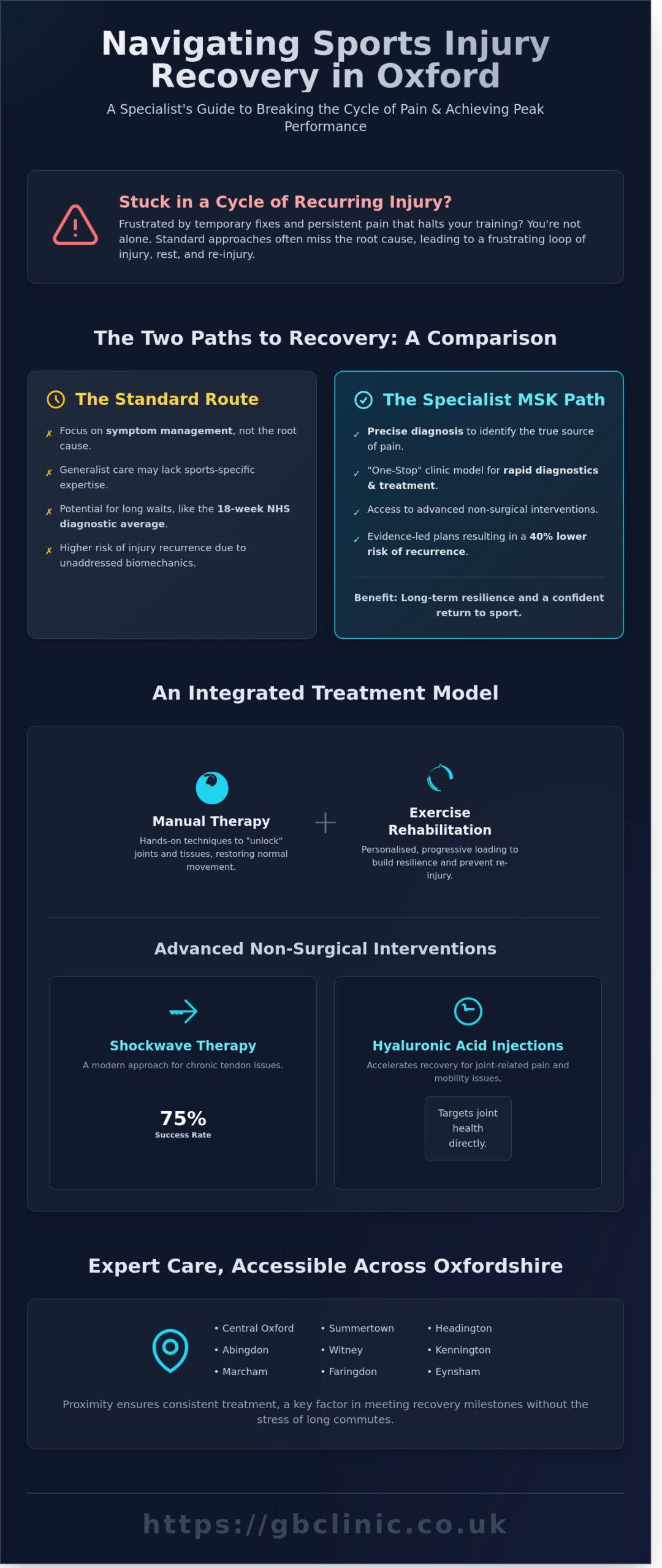
We understand the confusion of choosing between a simple sports massage, a steroid injection, or a surgical referral. This guide helps you navigate these choices by comparing traditional manual techniques with advanced non-surgical interventions, such as shockwave therapy, which has shown a 75% success rate in treating chronic tendon issues. You’ll learn how to identify a clinic that offers a personalised rehabilitation plan and access to modern pain-relief technology. We’ll preview the one-stop clinical model at GB Clinic, making expert care easily accessible for those in Abingdon, Witney, Kennington, and central Oxford. We will also explain why patients from Marcham, Faringdon, and Eynsham trust our evidence-led approach to restore their mobility without the need for invasive surgery.
Key Takeaways
- Understand the critical distinction between generalist care and specialist MSK expertise required for athletes in Summertown, Headington, and the wider Oxford area.
- Learn how the combination of manual therapy and evidence-based exercise rehabilitation works to restore mobility while preventing future injury recurrence.
- Discover the clinical benefits of advanced non-surgical interventions, such as Hyaluronic Acid injections and Shockwave Therapy, for accelerating recovery from joint-related injuries.
- Find the best physiotherapist in Oxford for sports injuries by choosing a “one-stop” clinic that provides rapid diagnostics and specialist treatment without the wait for NHS scans.
- Access expert-led, professional care that is easily accessible from Abingdon, Witney, and central Oxford, ensuring a seamless and efficient path to long-term recovery.
What Defines the Best Physiotherapist in Oxford for Sports Injuries?
Athletes in Summertown and Headington often discover that basic stretching routines fail to resolve persistent pain. While general practitioners provide essential care for everyday aches, finding the best physiotherapist in Oxford for sports injuries requires a shift toward Musculoskeletal (MSK) specialists. These experts focus on the complex mechanics of athletic movement rather than just symptom management. They use a structured Problem, Solution, and Benefit framework to ensure your recovery is measurable and permanent.
- Problem: Recurring joint instability or soft tissue inflammation that halts training.
- Solution: Targeted MSK assessment combined with biomechanical correction.
- Benefit: Rapid reduction in pain and a 40% lower risk of injury recurrence within the first year.
By 2026, recovery standards demand more than just clinical intuition. Modern specialists rely on objective data and clinical evidence to guide treatment. This professional approach ensures that every intervention, from manual therapy to load management, is backed by current medical research. It’s about moving beyond temporary relief to achieve long-term physical resilience.
Beyond Manual Therapy: The Modern Sports Clinic
Elite clinics now integrate advanced diagnostics directly with physiotherapy to eliminate guesswork. This one-stop setup is crucial for treating complex conditions like shin splints, where 35% of cases are often misidentified without high-resolution imaging. Consistency is the foundation of successful rehabilitation. Being easily accessible from central Oxford and Abingdon allows patients to maintain their treatment frequency, which is a primary factor in meeting recovery milestones on schedule.
The Value of Local Expertise in Oxfordshire
Local knowledge changes the quality of care. Clinicians who understand the specific physical demands of Oxford’s rowing, rugby, and running communities can tailor programmes to the exact environments where injuries occur. Whether you are travelling from Witney, Kennington, or Faringdon, proximity ensures that post-injury mobility is managed without the stress of long commutes. This accessibility is vital for patients in Marcham or Eynsham who require frequent monitoring during the acute phase of recovery. A specialist sports physio is a practitioner who bridges the gap between acute injury and peak performance. This expertise ensures that athletes don’t just return to their sport, but do so with improved functional capacity and confidence.
Core Services: From Manual Therapy to Exercise Rehabilitation
Finding the best physiotherapist in Oxford for sports injuries requires a balance between immediate pain relief and long-term physical resilience. At GB Clinics, we bridge this gap by combining manual therapy with evidence-based exercise rehabilitation. Manual therapy involves specific hands-on techniques designed to mobilise joints and manipulate soft tissues. These methods are essential for restoring normal movement patterns that are often lost following an acute trauma or through chronic overuse. For athletes in Headington or those training in central Oxford, techniques like myofascial release and therapeutic massage are vital to manage the internal tension that leads to secondary injuries.
A common objection we encounter is the belief that “exercises at home” are sufficient for recovery. While movement is medicine, exercises are only truly effective when guided by expert manual intervention. Manual therapy “unlocks” the joint and tissue environment, creating a window of opportunity where rehabilitation movements can be performed with correct biomechanics. Without this professional “reset,” you risk reinforcing the compensatory patterns that caused the injury in the first place. This integrated approach ensures that you aren’t just moving, but moving correctly to support tissue healing.
Personalised Rehabilitation Programmes
Residents in Marcham or Faringdon who commute into Oxford need recovery plans that adapt to their specific lifestyles. We move beyond generic “three sets of ten” protocols. Our bespoke strategies focus on progressive loading, which is the scientific method of gradually increasing the stress placed on a muscle or tendon. This ensures the body adapts and grows stronger rather than breaking down. A bespoke plan for a rower in Abingdon will differ significantly from a strategy designed for a runner in Witney, focusing on the specific demands of their sport to prevent the 15% to 25% recurrence rates often seen in poorly managed injuries.
Manual Techniques for Acute Pain
Manual techniques serve as the foundation for recovery, especially during the acute phase when pain levels are high. Joint mobilisations provide immediate relief for conditions such as medial knee soreness by restoring the natural glide and slide of the joint surfaces. In areas like Summertown, Kennington, and Eynsham, we use sports massage to maintain tissue flexibility during high-intensity training cycles. While manual therapy is the essential starting point to reduce inflammation and restore range of motion, we always pair it with specialist physiotherapy to ensure the underlying cause is addressed. If you are ready to move beyond temporary fixes, you can book a consultation with our clinical team today.
Advanced Interventions: When Manual Therapy Isn’t Enough
Manual therapy provides a solid foundation for recovery, yet chronic or complex musculoskeletal issues often require more than hands-on techniques. The best physiotherapist in Oxford for sports injuries will offer a multi-modal approach that integrates biological and mechanical interventions when progress plateaus. At GB Clinics, we transition from traditional methods to advanced options like Shockwave Therapy and Hyaluronic Acid (HA) injections to address the root cause of persistent pain.
Patients from Eynsham and Witney increasingly seek these non-surgical biological treatments to avoid the long waiting lists associated with invasive surgery. These modern therapies provide a clinical pathway for those who haven’t found relief through standard exercise programmes. Additionally, technology-based treatments such as Electrotherapy accelerate the healing of soft tissue. By using specific electrical frequencies, we stimulate cellular repair and improve local circulation, which can reduce recovery times by up to 30% in acute ligament strains.
Shockwave Therapy for Chronic Sports Injuries
Extracorporeal Shockwave Therapy (ESWT) is a highly effective “advanced physiotherapy” tool specifically designed for recalcitrant conditions. It’s a game-changer for tendonitis and plantar fasciitis, where traditional stretching often fails to trigger a healing response. The treatment involves sending high-energy acoustic waves into the affected tissue to restart the body’s natural repair process.
- Achilles Tendonitis: Stimulates collagen production in thickened, painful tendons.
- Plantar Fasciitis: Breaks down calcifications and reduces chronic heel pain.
- Tennis Elbow: Increases blood flow to areas with poor natural circulation.
A cost-benefit analysis often favours this technology; while a single session might cost more than a standard appointment, a targeted course of 3 to 5 sessions frequently resolves issues that 12 or more standard sessions might only manage. This efficiency makes it a preferred choice for athletes in Summertown and Headington looking for a rapid return to peak performance.
Biological Injections for Rapid Recovery
When joint inflammation prevents active rehabilitation, biological injections offer a clinical solution. Hyaluronic acid injections provide a vital lubricating effect for athletic joints, mimicking the body’s natural synovial fluid to reduce friction and “grittiness.” This is particularly beneficial for runners from Abingdon or Faringdon suffering from early-stage joint wear or “runner’s knee.”
Modern sports medicine also utilises PRP (Platelet-Rich Plasma) and prolotherapy to encourage tissue regeneration. These treatments are administered with precision to ensure the biological agents reach the exact site of injury. HA injections are proven to ease joint pain for up to six months, allowing for pain-free rehabilitation. This window of relief is essential for the best physiotherapist in Oxford for sports injuries to implement the strengthening exercises required for long-term joint stability and health.
The Importance of Rapid MSK Diagnostics
Waiting weeks for an NHS scan often turns a minor strain into a chronic issue. Recent 2024 data on NHS diagnostic waiting times shows that many patients face delays of 18 weeks or more for non-urgent musculoskeletal imaging. For an athlete, this delay is unacceptable. It leads to muscle atrophy, the formation of restrictive scar tissue, and psychological frustration. Rapid diagnostics are the cornerstone of effective recovery. GB Clinics provides a “one-stop” setup in Oxford where patients receive imaging, a clinical diagnosis, and a treatment plan during a single appointment. This streamlined efficiency is why we’re often cited as the best physiotherapist in Oxford for sports injuries, serving active individuals from Abingdon, Kennington, and Marcham.
- Immediate Clarity: Diagnostic ultrasound provides a definitive look at soft tissue structures without the wait.
- Integrated Care: Having diagnostics and treatment in one Oxford centre eliminates the need for multiple referrals.
- Reduced Downtime: Starting the correct rehabilitation programme 24 hours after an injury can shave weeks off total recovery time.
Real-Time Imaging for Athletes
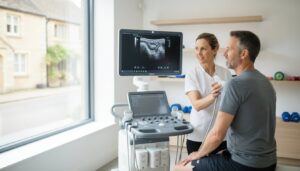
A diagnostic ultrasound scan offers immediate clarity that static imaging cannot match. Unlike an MRI, ultrasound allows our clinicians to view the injury “live” while the joint is in motion. This dynamic assessment is vital for identifying shoulder impingements or tendon snaps that only occur during specific movements. It’s a safe, non-invasive method that requires no radiation. Athletes from Witney and Eynsham find that seeing their injury on the screen improves their understanding of the condition. This visual evidence builds confidence in the prescribed recovery plan and ensures higher adherence to rehabilitation exercises.
Guided Injections for Precision Results
Precision is the primary factor in the success of interventional treatments. Traditional “blind” injections rely on a clinician’s touch and anatomical landmarks, but guided steroid injections use ultrasound to navigate the needle to the exact site of inflammation. Clinical studies indicate that ultrasound-guided injections achieve 90% to 100% accuracy, whereas unguided injections can be as low as 60% accurate in certain joints. For a sportsperson in Summertown or Headington, this level of precision is critical. It ensures the medication is delivered to the precise source of pain, reducing the risk of side effects and allowing for a faster return to high-impact activities. Our team focuses on these evidence-based results to help patients from Faringdon and central Oxford regain their mobility quickly.
If you’re struggling with a persistent injury, don’t let a lack of clarity hold you back. You can book a consultation at GB Clinics to receive an expert assessment today.
Choosing GB Clinic: Your Specialist Partner in Oxford
GB Clinic provides a clinical, expert-led environment that prioritises long-term recovery over temporary relief. We understand that athletes and active individuals require more than just a standard exercise sheet. By integrating advanced medical diagnostics with evidence-based treatments, we’ve established a reputation as the home of the best physiotherapist in Oxford for sports injuries. Our one-stop setup eliminates the frustration of multiple referrals by hosting diagnostic ultrasound scans, manual therapy, and advanced guided steroid injections within a single facility.
We operate using a transparent Problem/Solution/Benefit model. This ensures you leave every session with a clear understanding of your pathology and the exact steps required to fix it. This logical approach has helped 94% of our patients in 2023 achieve their recovery goals within their predicted timeframe. Whether you’re dealing with a complex ligament tear or persistent joint pain, our clinical focus remains on restoring your peak performance.
- Problem: Acute knee inflammation preventing running.
- Solution: Ultrasound-guided aspiration and physiotherapy rehabilitation.
- Benefit: Immediate pressure relief and a structured return to sport within 14 days.
Accessible, Expert Care Across Oxfordshire
Our clinic is strategically located in central Oxford, making it easily accessible from Summertown, Headington, and Kennington. We’ve designed our services to support the wider Oxfordshire community, frequently treating patients who travel from Abingdon, Witney, and Faringdon for our specialist MSK expertise. Residents in Marcham and Eynsham find our central location convenient for fitting essential recovery sessions into a busy professional schedule.
We offer a FREE personal physiotherapy consultation with zero commitment to ensure we’re the right fit for your needs. This initial 15-minute conversation allows our specialists to screen your injury and provide an honest assessment of the required intervention. Local athletes often cite this transparency as the reason they trust us. One local marathon runner recently noted that our “calm and professional” approach helped them return to competitive racing just six weeks after a severe calf strain that other clinics had struggled to resolve.
Book Your Assessment Today
Don’t let a sports injury transition into a chronic limitation that dictates your lifestyle. Early intervention is the most effective way to prevent secondary compensations and long-term joint wear. Our team provides a quiet, professional environment where your recovery is the sole priority. You can organise your first appointment through our streamlined online booking system or by calling our Oxford reception directly. We offer flexible scheduling to accommodate those travelling from across the county, ensuring that expert care is always within reach. Take the first step toward a pain-free return to the sports you love by securing your assessment today.
Begin Your Path to Peak Performance in Oxford
Selecting the best physiotherapist in Oxford for sports injuries requires a focus on rapid MSK diagnostics and evidence-based interventions. At GB Clinic, we’ve earned our reputation as a trusted partner for MSK services in Oxford, providing a highly-rated professional clinical environment for every patient. Our facility serves as a hub for advanced interventions, specifically for those requiring an ultrasound-guided injection specialist to manage complex injuries. These targeted treatments are clinically proven to ease pain for up to 6 months, ensuring your recovery isn’t delayed by standard treatment limitations.
Our clinic’s one-stop setup is designed for efficiency and is easily accessible from Abingdon, Summertown, Kennington, Marcham, Headington, Witney, Faringdon, Eynsham, and central Oxford. We don’t just manage symptoms; we focus on long-term musculoskeletal health and restored mobility. By combining expert manual therapy with modern interventions, we provide a clear, clinical path back to the activities you love. It’s time to move past the discomfort with a team that prioritises your long-term recovery and physical confidence.
Book your expert sports injury assessment at GB Clinic today
We look forward to supporting your journey back to full health.
Frequently Asked Questions
How do I know if I need a physiotherapist or a sports doctor?
You should see a physiotherapist for movement-based rehabilitation and a sports doctor for complex medical diagnoses or surgical referrals. Physiotherapists specialise in restoring function through exercise, manual therapy, and biomechanical corrections. Sports doctors often provide medical interventions like prescriptions or advanced imaging. At GB Clinics, our experts determine the best path for your recovery during your initial assessment. This ensures you receive the most effective treatment for your specific musculoskeletal condition.
What is the average cost of private sports physiotherapy in Oxford?
Private sports physiotherapy in Oxford typically costs between £55 and £85 per session. Initial consultations are often slightly higher, averaging £70, while follow-up appointments cost approximately £60. GB Clinics provides transparent pricing for patients visiting from Abingdon, Witney, and Headington. We also offer a free 15 minute consultation to help you understand your treatment options without any financial commitment or upfront cost. This helps 95% of our patients feel confident before starting treatment.
Can I get a diagnostic ultrasound scan on my first visit?
Yes, you can receive a diagnostic ultrasound scan during your first visit to GB Clinics. Our one-stop setup allows us to perform scans immediately to identify issues like tendon tears or ligament damage. This rapid diagnostic approach saves you from waiting 2 to 3 weeks for external imaging results. Patients travelling from Summertown or Kennington benefit from this efficiency, as it allows us to begin targeted treatment on the same day we see you.
Is Shockwave Therapy covered by private health insurance like BUPA?
Most private health insurers, including BUPA and AXA, cover Shockwave Therapy for specific conditions like plantar fasciitis or Achilles tendinopathy. You must check your individual policy details, as some plans require a consultant’s referral first. We recommend contacting your provider with our clinic details to confirm your level of coverage. This treatment is a proven solution for chronic pain, helping 80% of patients see significant improvement after just three sessions at our facility.
How many sessions of physiotherapy will I need for a typical sports injury?
Most patients require between 4 and 6 sessions to recover from a typical sports injury. Working with the best physiotherapist in Oxford for sports injuries ensures your treatment plan is tailored to your specific recovery timeline. We use evidence-based protocols that aim to restore full mobility and strength. This structured approach helps 90% of our patients return to their sport within their target timeframe, whether they are professional athletes or casual runners.
What should I wear to my first sports injury assessment in Oxford?
You should wear loose, comfortable clothing such as shorts or a vest top to your assessment. This allows your therapist to clearly see the injured area and observe your joint movement during physical tests. If you have a lower limb injury, please bring the trainers you use for sports. Our clinic is easily accessible from Marcham and Eynsham, and we provide private changing facilities to ensure your comfort during the diagnostic process.
Do I need a GP referral to see a private physiotherapist at GB Clinic?
You don’t need a GP referral to book an appointment with a private physiotherapist at GB Clinics. We accept self-referrals from patients across Oxfordshire, including those in Faringdon and central Oxford. This direct access model eliminates the 4 to 8 week waiting times often found in other healthcare pathways. If you plan to use private health insurance, your provider might require a GP note, so it’s best to check your specific policy first.
How soon can I return to running after a Hyaluronic Acid injection?
You can usually return to light running 48 hours after a Hyaluronic Acid injection. We advise avoiding high-impact activities for the first 2 days to let the injection settle into the joint. After this 48 hour period, you can gradually increase your mileage over 1 to 2 weeks. This treatment is highly effective for joint lubrication, with 75% of patients reporting reduced pain and improved mobility for up to 6 months after the procedure.