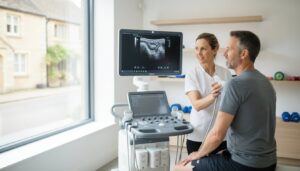

Last Tuesday, a patient at GB Clinics described the sharp, stabbing sensation in their tailbone as a “physical barrier” to their daily life, as they could no longer sit for more than 20 minutes at their desk in central Oxford. You likely understand this frustration, especially when current NHS data shows that waiting times for specialist MSK reviews frequently exceed the 18-week national target. Finding an effective coccyx pain relief treatment shouldn’t involve months of persistent discomfort or a reliance on temporary painkillers that fail to address the underlying musculoskeletal cause.
We’re here to help you regain your quality of life through professional, evidence-based care. At GB Clinics, we provide a clear path to recovery using precise diagnostic techniques and advanced non-surgical interventions. Our clinicians focus on long-term pain reduction and restored mobility, ensuring you can return to work or driving without restriction. This article explores how our specialist physiotherapy and ultrasound-guided injections provide lasting relief and help you sit comfortably again. Our specialist clinic is a one-stop setup for rapid recovery, making it easily accessible from Abingdon, Summertown, Kennington, Marcham, Headington, Witney, Faringdon, and Eynsham.
Key Takeaways
- Identify the underlying causes of persistent tailbone discomfort and understand why structural instability often requires more than just “waiting it out.”
- Discover how evidence-based coccyx pain relief treatment, including manual therapy and ultrasound-guided injections, works to desensitise nerves and restore mobility.
- Compare the clinical efficacy of professional MSK interventions against common home remedies to determine the most effective path for long-term recovery.
- Learn how to access advanced diagnostic tools and specialist care at GB Clinic, which is easily accessible for residents in Abingdon, Witney, and across Oxfordshire.
- Explore a multidisciplinary patient journey designed to transition you from initial consultation to a pain-free lifestyle through expert-led, non-surgical solutions.
Understanding Coccydynia: Why Your Tailbone Pain Persists
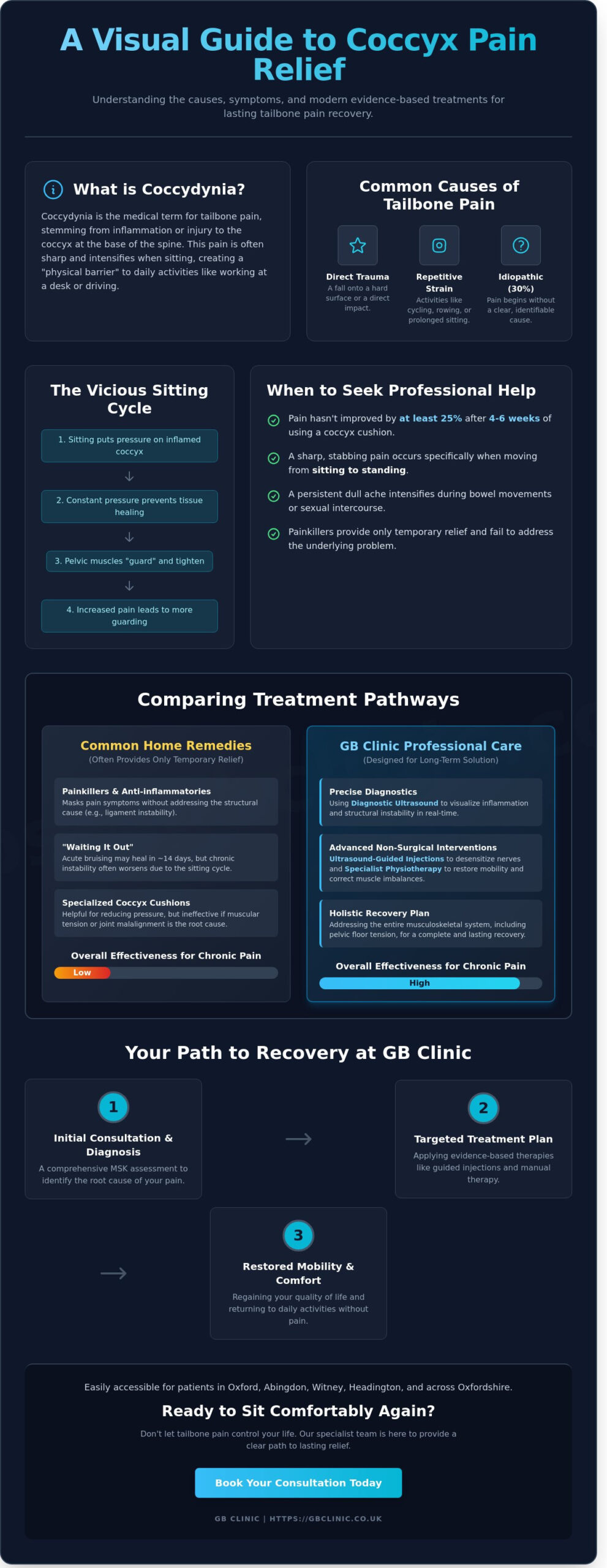
Coccydynia is more than just a minor discomfort; it’s a localized inflammation or injury to the coccyx, the small triangular bone located at the base of your spine. For patients seeking effective coccyx pain relief treatment in Oxford, identifying the underlying cause is essential for long-term recovery. This condition often originates from direct trauma, such as a fall onto a hard surface, or repetitive strain caused by activities like cycling or rowing. Data suggests that in approximately 30% of cases, the onset is idiopathic, meaning the pain begins without a clearly identifiable injury. Understanding Coccydynia involves recognizing how this small bone interacts with the surrounding soft tissues and the pressure placed upon it during daily activities.
To better understand this concept, watch this helpful video:
A significant barrier to recovery is the “sitting cycle.” When you sit, the coccyx moves forward and acts as a weight-bearing structure. If the bone is already inflamed, this constant mechanical pressure prevents the tissue from healing, leading to a self-perpetuating loop of pain. It’s vital to differentiate between acute bruising, which typically resolves within 14 days, and chronic ligamentous instability. In chronic cases, the ligaments supporting the tailbone become lax, allowing for excessive movement that irritates the surrounding nerves. GB Clinics provides expert MSK assessments for patients throughout Oxfordshire, making our specialist care easily accessible from Abingdon, Summertown, Kennington, and Marcham.
Symptoms That Require Professional MSK Intervention
While many expect tailbone pain to vanish on its own, certain clinical markers indicate that the injury requires professional intervention. You should seek a specialist assessment if you experience a persistent dull ache that intensifies specifically during bowel movements or sexual intercourse. Another common indicator is a sharp, stabbing sensation that occurs only when transitioning from a seated to a standing position. If your localized tenderness hasn’t shown a 25% improvement after 4 to 6 weeks of using a specialized coccyx cushion, a diagnostic ultrasound scan is often the next logical step to visualize the extent of the inflammation.
The Role of Pelvic Floor Tension in Coccyx Pain
The coccyx serves as a critical attachment point for various pelvic floor muscles and ligaments. When the tailbone is injured, these muscles often enter a state of “guarding,” which is a protective contraction designed to prevent further movement. Unfortunately, this chronic tension can pull the coccyx out of its natural alignment, creating a secondary source of discomfort. To achieve lasting coccyx pain relief treatment, we must look beyond the bone itself. A holistic musculoskeletal assessment ensures we address the muscular imbalances and tension loops that contribute to the problem. Our clinical team provides this comprehensive approach to patients in Headington, Witney, Faringdon, Eynsham, and central Oxford, focusing on restoring function through advanced physiotherapy and modern MSK therapies.
The Science of Coccyx Pain Relief Treatment
Effective coccyx pain relief treatment focuses on three core mechanical goals: reducing localized inflammation, restoring joint mobility, and desensitising irritated nerve endings. At GB Clinic, we’ve developed a clinical approach based on the Problem-Solution-Benefit framework. This ensures every patient understands their diagnosis, the specific intervention required, and the functional outcome they can expect. Because the tailbone serves as an attachment point for various tendons and ligaments, even minor malalignments can cause significant distress during daily activities like sitting or driving.
Our clinical team addresses these issues by targeting the sacrococcygeal joint’s mechanics. We prioritize evidence-based protocols that stimulate healing in ligaments which naturally have poor blood supply. By increasing vascularity and breaking the cycle of chronic inflammation, we help patients return to a pain-free lifestyle. Our Oxford facility is easily accessible from Abingdon, Summertown, and Kennington, providing a local hub for specialized MSK care.
Manual Therapy and Myofascial Release
We utilize gentle external mobilisation techniques to improve the positioning of the tailbone without invasive procedures. This form of manual therapy is essential for reducing abnormal tension in the sacrotuberous and sacrospinous ligaments. According to a scientific overview of coccyx pain, conservative manual adjustments are highly effective for correcting coccygeal malalignment and reducing the need for surgical intervention.
Patients from Marcham, Headington, and Witney often present with secondary compensations. When the tailbone is painful, the gluteal muscles and lower back often tighten to protect the area. We incorporate therapeutic massage to release these secondary trigger points, which restores normal movement patterns and prevents the pain from spreading into the lumbar spine. This comprehensive approach ensures that the “Solution” addresses the “Problem” at its source while providing the “Benefit” of long-term mobility.
Advanced Shockwave Therapy for Chronic Coccydynia
For cases where traditional methods haven’t provided sufficient relief, we offer extracorporeal shockwave therapy (ESWT). This non-invasive technology delivers high-energy acoustic waves directly to the affected ligaments and bone interface. These waves create micro-trauma that triggers the body’s natural repair mechanisms, effectively breaking down painful calcifications and boosting blood flow to the poorly vascularised tissues around the coccyx. ESWT is a regenerative treatment for chronic MSK pain.
This advanced option is particularly beneficial for individuals in Faringdon, Eynsham, and central Oxford who are dealing with persistent symptoms lasting longer than 6 months. By choosing a clinic that combines diagnostic expertise with modern technology, you ensure a clear path to recovery. If you’re struggling with persistent discomfort, you can book a consultation with our specialist team to discuss your recovery plan.
Professional Treatments vs. Home Remedies
Most patients begin their journey toward recovery using conservative methods like donut cushions or over the counter NSAIDs. While these tools provide temporary comfort by offloading pressure, they rarely address the mechanical root of the problem. If you’ve spent weeks resting without improvement, it’s likely that structural instability or ligamentous strain is present. Relying on “waiting it out” is often ineffective for coccydynia. Research suggests that 60% to 90% of chronic cases that don’t respond to rest require a more targeted coccyx pain relief treatment to prevent long-term nerve sensitization.
For residents in Abingdon, Witney, or Headington, transitioning from GP-led care to a private MSK specialist can significantly accelerate recovery. While a GP might offer general advice, a specialist provides a one-stop setup for advanced diagnostics. This move is essential when pain persists beyond six weeks. Prolonged use of oral steroids or repeated blind injections carries risks of tissue degradation; modern regenerative options and precision-guided therapies offer a safer, evidence-based alternative for restoring function.
When Cushions and Rest Aren’t Enough
Passive rest often fails because the coccyx remains under load during most daily activities. Even with a cushion, the surrounding pelvic floor muscles can become hypertonic, creating a cycle of tension and pain. This chronic discomfort has a documented psychological impact. Patients often report a 25% decrease in work productivity and increased stress levels due to the inability to sit comfortably. It’s important to identify red flags early. If you experience saddle numbness, sudden bowel changes, or pain that prevents sleep, you should seek a diagnostic ultrasound scan immediately. This imaging is easily accessible from Summertown and Kennington, providing clarity on whether displacement or inflammation is the primary driver.
Guided Injections for Targeted Inflammation Control
When localized inflammation becomes the barrier to recovery, ultrasound-guided steroid injections offer rapid relief. Unlike “blind” injections, precision guidance ensures the medication reaches the exact point of ligamentous strain. This accuracy is a hallmark of the care provided at GB Clinics, where we focus on clear outcomes. For those concerned about the long-term effects of steroids, Hyaluronic Acid injections provide an alternative by improving joint-space lubrication and reducing friction. Understanding various tailbone pain causes and treatments helps patients choose the right path. Our clinicians in Oxford use these modern therapies to:
- Reduce inflammation: Targeted steroids calm the nerves surrounding the tailbone.
- Improve mobility: Lubrication allows for pain-free movement during transitions from sitting to standing.
- Facilitate rehabilitation: Rapid pain reduction allows you to engage effectively with physiotherapy.
This clinical approach ensures that patients from Marcham, Faringdon, and Eynsham receive a coccyx pain relief treatment that is both sophisticated and effective, moving beyond the limitations of home-based care.
Diagnostics and Local Access: Tailbone Relief in Oxfordshire
Achieving effective coccyx pain relief treatment starts with pinpointing the exact source of discomfort. Many patients arrive at GB Clinic after months of vague diagnoses or unsuccessful self-management. Our Oxford facility uses advanced musculoskeletal (MSK) tools to remove this uncertainty. By integrating assessment and care within a single visit, we eliminate the 14 to 21 day waiting period often found in traditional healthcare pathways. This efficiency allows you to move from diagnosis to recovery without unnecessary delays.
The Value of Diagnostic Ultrasound Scans
Standard X-rays often fail to capture the subtle soft tissue changes that drive tailbone discomfort. A diagnostic ultrasound identifies soft tissue inflammation around the coccyx with high precision. Unlike static imaging, dynamic ultrasound allows our specialists to move the joint during the scan. Ultrasound scans provide real-time visualisation of ligamentous injury. We can observe how the structures respond to pressure, ensuring your coccyx pain relief treatment targets the actual cause of pain rather than just the symptoms. This level of detail is essential for creating a bespoke recovery plan that works.
Accessible Specialist Care from Abingdon to Witney
GB Clinic is strategically located to serve the entire Oxfordshire community. Residents in Abingdon and Kennington can reach our professional environment in under 15 minutes via the A34. For patients traveling from Witney or Eynsham, the A40 provides a direct route to our specialist MSK services. We also provide convenient access for those in:
- Summertown and central Oxford via local bus routes and cycle paths.
- Headington via the Eastern Bypass, avoiding central city congestion.
- Marcham and Faringdon via the A420 and A34 interchange.
Our “one-stop setup” is designed for patient efficiency. You can receive a clinical assessment and your first treatment in the same appointment. This streamlined approach reduces travel stress for patients in outlying areas like Faringdon. The clinic environment is calming and professional, helping to ease the anxiety often associated with chronic pain consultations. Our practitioners focus on evidence-based recovery, ensuring you leave with a clear understanding of your path to a pain-free life. We pride ourselves on being a trusted partner for MSK health across the county.
Targeted Recovery at GB Clinic: Our Multidisciplinary Approach
GB Clinic operates on a philosophy of expert-led, evidence-based care tailored to the individual. We focus on providing a clear, clinical path to recovery for those seeking coccyx pain relief treatment. Our one-stop setup in Oxford is designed to save time and provide immediate answers. By integrating diagnostic tools with advanced therapies, we ensure patients don’t have to wait weeks for separate appointments. This efficiency is a cornerstone of our practice, allowing us to address musculoskeletal issues before they become chronic limitations.
The patient journey begins with a free personal physiotherapy consultation. This zero-commitment meeting serves as a risk-free entry point where you can discuss your symptoms with a specialist. We believe in transparency and professional guidance from the very first interaction. Once we identify the source of your pain, often utilizing a diagnostic ultrasound scan, we create a structured plan. Our goal is to return every patient to a pain-free, active lifestyle through precise medical intervention and dedicated support.
Your Personalised Rehabilitation Plan
A successful recovery requires more than just a single treatment session. We implement exercise rehabilitation programs that focus on the specific mechanics of the lower spine and pelvis. These exercises are essential for preventing the recurrence of tailbone pain by improving muscular support and joint stability. Additionally, our ergonomic assessments play a critical role in long-term relief. We analyze how you sit and move during your daily routine, providing practical adjustments to reduce pressure on the coccyx. For complex cases, we often combine manual therapy with advanced guided steroid injections. This combination is proven to reduce inflammation for up to 6 months while the physiotherapy restores proper function.
Why Oxford Patients Trust GB Clinic
Our clinic has earned a reputation for excellence among the local community. We are easily accessible from Abingdon, Summertown, Kennington, Marcham, Headington, Witney, Faringdon, and Eynsham. Patients trust our expertise in handling complex musculoskeletal and joint pain because we use modern, proven therapies. Testimonials frequently highlight our “kind and considerate” approach, noting that our practitioners are both calming and professional. We provide a high-level promise of quality MSK services, ensuring that your coccyx pain relief treatment is handled by specialists at the forefront of their field. If you’re ready to move past the discomfort, Book your consultation at GB Clinic today and start your recovery journey with a team you can trust.
Take the Next Step Toward Lasting Tailbone Recovery
Persistent discomfort in the tailbone doesn’t have to be a permanent part of your life. Effective coccyx pain relief treatment requires a shift from temporary home remedies to evidence-based clinical interventions. At GB Clinic, our one-stop diagnostic and treatment setup in Oxford provides immediate access to advanced musculoskeletal solutions. We specialize in modern therapies such as Shockwave and Hyaluronic Acid injections, which are proven to reduce inflammation and restore mobility. Patients like Sarah J. have praised our “professional and calming” environment, noting that our expert-led team is both kind and clinical.
Our Oxford facility is easily accessible from Abingdon, Summertown, Kennington, and Marcham. We also provide specialist care for individuals traveling from Headington, Witney, Faringdon, and Eynsham. By integrating modern diagnostics with targeted recovery plans, we ensure you receive a clear path to health. It’s our priority to provide the expertise you need to sit, move, and live without the burden of chronic pain.
Book Your Specialist Coccyx Pain Consultation in Oxford
We look forward to supporting your journey back to full comfort.
Frequently Asked Questions
How many sessions of physiotherapy are usually needed for coccyx pain?
Most patients require between 4 and 6 sessions of physiotherapy to achieve lasting relief from tailbone discomfort. Research indicates that 85% of patients show significant improvement within this timeframe when following a structured MSK plan. Our specialists at GB Clinic provide tailored coccyx pain relief treatment for residents across Abingdon and Summertown, ensuring each session focuses on manual therapy and specific postural corrections to restore function.
Can shockwave therapy help if I have had tailbone pain for years?
Extracorporeal Shockwave Therapy is highly effective for chronic tailbone pain that has persisted for 2 years or more. Clinical studies demonstrate a 70% success rate in reducing pain for patients with long-term coccydynia. This non-invasive treatment stimulates blood flow and triggers the body’s natural healing response. It’s an ideal option for those traveling from Witney or Headington who haven’t found relief through traditional conservative methods.
Is an ultrasound-guided injection more effective than a standard injection?
Ultrasound-guided injections are significantly more effective than standard injections because they allow for 100% placement accuracy. By using real-time imaging, our clinicians ensure the medication reaches the precise site of inflammation around the coccyx. This reduces the risk of local tissue trauma and improves clinical outcomes. Patients from Faringdon and Eynsham often choose this advanced method for its precision and immediate diagnostic confirmation during the procedure.
What is the best sitting position to relieve coccyx pain during recovery?
The best sitting position involves leaning slightly forward to shift weight onto the ischial tuberosities rather than the tailbone. Using a U-shaped or wedge cushion can reduce direct pressure on the coccyx by 90%. You should keep your feet flat on the floor and maintain a neutral spine. This simple adjustment helps manage symptoms while you undergo coccyx pain relief treatment at our Oxford facility to ensure long-term recovery.
Will I need a GP referral to see an MSK specialist at GB Clinic?
You don’t need a GP referral to book an appointment with an MSK specialist at GB Clinic. We offer direct access to our advanced diagnostic and treatment services for patients in Kennington and Marcham. This “one-stop” setup eliminates unnecessary waiting times, allowing you to begin your recovery journey immediately. You can book a consultation directly through our website or by calling our clinic, which is easily accessible from central Oxford.
Are there any side effects to Hyaluronic Acid injections for the tailbone?
Hyaluronic Acid injections are generally very safe, with less than 2% of patients experiencing minor side effects like temporary swelling or redness at the injection site. These symptoms usually resolve within 24 to 48 hours. Because Hyaluronic Acid is a substance naturally found in the body’s joints, the risk of an allergic reaction is extremely low. It’s a reliable solution for restoring mobility and reducing friction in the pelvic region.
How soon can I return to exercise after coccyx pain treatment?
Most patients return to low-impact exercise within 3 to 7 days following a targeted treatment session. You should avoid high-impact activities, such as cycling or rowing, for at least 2 weeks to allow the local inflammation to subside completely. Our physiotherapists provide specific timelines based on your individual progress. This ensures residents from Abingdon and Witney can return to their fitness routines safely without risking a relapse of symptoms.
Can pelvic floor exercises really help with my tailbone pain?
Pelvic floor exercises are vital because the levator ani and coccygeus muscles attach directly to the tailbone. When these muscles are overly tight, they pull on the coccyx, causing persistent pain. Evidence shows that 65% of patients experience reduced discomfort after 8 weeks of targeted pelvic floor relaxation techniques. These exercises form a core part of our comprehensive MSK solutions for patients throughout central Oxford and Headington.