

Imagine waking up at 3:00 AM because of a throbbing joint or struggling to walk through the parks in Summertown or Central Oxford. It’s a sign that standard treatments aren’t reaching the source of your discomfort. Many patients we see from Headington to Witney worry that a total hip replacement is their only remaining option. It’s true that persistent stiffness and sleep disruption can make surgery feel inevitable. However, an ultrasound guided injection for hip pain provides a targeted, non-surgical solution that delivers medication with 99% placement accuracy. This precision ensures we treat the exact point of inflammation rather than relying on clinical guesswork.
You deserve a clear path back to the golf courses of Abingdon and the walking trails of Eynsham without the shadow of a major operation. This 2026 patient guide explains how our expert-led clinics across Kennington, Marcham, and Farmoor use advanced diagnostic technology to restore your mobility. We’ll explore why accuracy is the key to recovery and how residents in Didcot, Faringdon, and West Oxford can access these modern therapies to enjoy a pain-free life.
Key Takeaways
- Learn why precision real-time imaging is essential for navigating the complex hip joint, offering a safer and more accurate alternative to “blind” injections for patients in Central and West Oxford.
- Understand how an ultrasound guided injection for hip pain provides a dual benefit by delivering targeted anti-inflammatory relief while diagnosing the exact source of discomfort for residents in Abingdon, Witney, and Didcot.
- Compare the clinical benefits of corticosteroids and Hyaluronic Acid to determine the most effective treatment for restoring mobility and reducing inflammation in Headington, Faringdon, and Marcham.
- Prepare for your patient journey with clear guidance on MSK assessments and clinic arrival instructions, ensuring a seamless experience for those traveling from Summertown and Kennington.
- Discover how integrated follow-up physiotherapy maximizes the therapeutic lifespan of your injection, supporting long-term recovery for patients in Farmoor, Eynsham, and across Oxfordshire.
What is an Ultrasound Guided Hip Injection and Why is it Used?
An ultrasound-guided hip injection is a precision musculoskeletal (MSK) procedure that utilizes high-resolution imaging to deliver medication directly to the source of discomfort. Unlike traditional methods, this approach uses a live visual feed to ensure the needle reaches the exact anatomical target within the hip joint. It serves a dual-purpose for patients: it provides immediate pain relief while simultaneously acting as a tool to diagnose the exact source of pain. For those living in Central Oxford, Abingdon, or Summertown, this procedure offers a rapid alternative to the long surgical waitlists often found in the public health system.
To better understand how this technology assists in pain management, watch this helpful video:
The use of ultrasound guided injection for hip pain is standard practice for managing several common conditions. These include Osteoarthritis, which affects a large percentage of the aging population, as well as Bursitis and Labral tears. By delivering anti-inflammatories or lubricants directly where they’re needed, patients from Kennington, Marcham, and Headington can often avoid more invasive surgical interventions.
The Science of Real-Time Imaging
High-frequency sound waves create a live map of the hip anatomy, allowing the clinician to visualize the needle’s path every millimeter of the way. This real-time feedback differentiates the procedure from “blind” injections, which carry a higher risk of missing the joint space. Research indicates that guided procedures achieve up to 99% accuracy, compared to significantly lower rates for unguided techniques. MSK ultrasound is a non-ionising radiation-free imaging tool that provides a safe and detailed view of soft tissues and bone surfaces. This level of precision is available to residents in Farmoor, Eynsham, and Didcot through a diagnostic ultrasound scan.
Diagnostic vs. Therapeutic Benefits
These injections offer both clarity and physical relief. Numbing agents like Lidocaine help confirm if the hip joint is the primary pain generator; if the pain subsides immediately, the diagnosis is confirmed. Following this, anti-inflammatories work to break the cycle of chronic joint pain. This diagnostic step is crucial before considering surgery in West Oxford, Witney, or Faringdon. The clinic follows a structured approach to ensure every patient understands their path to recovery:
- Problem: Chronic hip joint inflammation. Solution: Guided steroid injection. Benefit: Reduces swelling and restores range of motion.
- Problem: Loss of natural joint lubrication. Solution: Hyaluronic Acid injection. Benefit: Improves joint cushioning and eases mechanical pain.
- Problem: Unclear diagnosis of hip pain. Solution: Diagnostic numbing block. Benefit: Provides definitive proof of the pain source to guide future treatment.
By choosing a local specialist, patients across Oxfordshire can access these advanced therapies without the need for extensive travel or long delays. Whether you’re based in the heart of Oxford or the surrounding towns, these evidence-based treatments focus on long-term recovery and improved mobility.
Precision vs. Blind Injections: Why Accuracy Matters for Hip Pain
The hip joint sits deep beneath layers of muscle and soft tissue, making it one of the most challenging areas to treat without visual aid. Traditional landmark-based injections, often called “blind” injections, rely on a clinician feeling for bony prompts to guide the needle. Research indicates that these unguided attempts miss the intra-articular space in 33% to 52% of cases. This lack of precision often leads to suboptimal results and unnecessary discomfort for patients. Using an ultrasound guided injection for hip pain ensures the medication reaches the exact source of inflammation, providing a level of accuracy that physical touch alone cannot match.
Our specialists serve patients across the region, including those in Abingdon, Summertown, and Central Oxford, who seek the highest standards of clinical care. By using high-resolution imaging, we eliminate the guesswork associated with older techniques. This approach isn’t just about hitting the target; it’s about avoiding the sensitive structures that surround the joint.
Navigating Complex Hip Anatomy
Safety is the primary concern when performing a hip procedure. The femoral nerve and artery sit in close proximity to the joint capsule, and any deviation in needle placement carries risk. Specialists at GB Clinics use ultrasound guidance for hip injections to visualise these vital structures in real-time. This ensures the needle path remains safe and avoids sensitive tissues in patients from Headington, Marcham, and West Oxford.
- BMI Considerations: Reaching the intra-articular space is significantly more difficult in patients with higher BMIs, where landmarks are obscured. Ultrasound allows us to see through tissue layers clearly.
- Reduced Trauma: We use the “single-pass” method. Seeing the needle tip means we don’t have to reposition the needle multiple times, which is common in blind injections.
- Tendon Protection: Our clinicians in Farmoor and Eynsham use imaging to ensure the needle doesn’t inadvertently strike bone or sensitive tendons.
The Impact on Clinical Outcomes
Precision directly correlates with how long you stay pain-free. When a steroid or lubricant is placed exactly within the joint space, it works more effectively than if it’s accidentally dispersed into surrounding muscle. This accuracy lowers the risk of a “steroid flare,” a painful reaction that occurs when medication leaks into soft tissue. Residents from Kennington, Didcot, and Witney often report faster recovery times and more predictable results following guided procedures compared to previous unguided experiences.
Whether you’re travelling from Faringdon or elsewhere in the county, we prioritise your comfort and long-term recovery. You can learn more about our diagnostic ultrasound services to see how we identify the specific cause of your discomfort before treatment begins. If you’re ready to address your mobility issues, our team offers a professional consultation in Oxfordshire to help you get back to an active lifestyle.
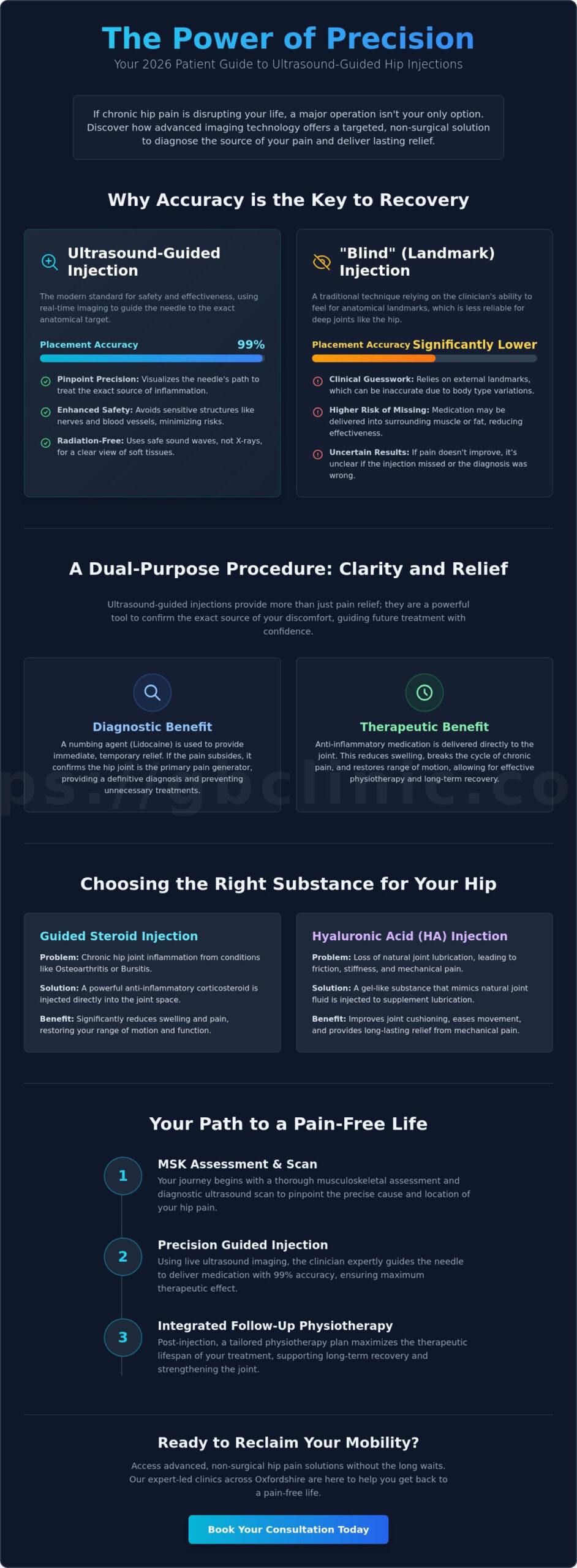
Choosing the Right Substance: Steroids vs. Hyaluronic Acid
Deciding between different injectables is a clinical process that depends on your specific symptoms and the level of inflammation present. At our Oxford facilities, we offer two primary options for an ultrasound guided injection for hip pain: corticosteroids and hyaluronic acid. While both aim to restore function, they work through different biological pathways. Patients from Abingdon and Kennington often visit our clinic seeking clarity on which substance will best support their recovery and lifestyle goals.
Corticosteroid Injections: Rapid Relief
Steroids act as powerful anti-inflammatory agents. The mechanism involves reducing the chemical markers of inflammation within the synovium, which is the soft tissue lining the joint capsule. This treatment is the standard choice for “hot” joints characterized by acute swelling and sharp, restrictive pain. Most patients experience significant relief within 48 hours, and the benefits typically last from 8 weeks to 6 months depending on the severity of the underlying condition. If you are struggling with a sudden flare-up that prevents you from walking through West Oxford or Central Oxford, this rapid intervention is often the most effective first step. You can find more details in our guide to steroid injections for joint pain.
Hyaluronic Acid: The “Oil Change” for Your Hip
Hyaluronic Acid (HA) functions as a lubricant rather than a drug. It mimics the natural synovial fluid found in healthy joints to reduce friction and improve overall mobility. We often recommend HA for mild-to-moderate osteoarthritis where stiffness is the primary complaint rather than severe swelling. It acts like an “oil change” for the joint, providing long-term lubrication that helps active seniors in Summertown and Headington maintain their independence.
A hip joint injection using HA is particularly beneficial for those who want to avoid the potential side effects of repeated steroid use. This substance helps restore the joint’s natural environment, making it a popular choice for residents in Witney and Faringdon who lead busy, mobile lives. Detailed information on this treatment is available in our comprehensive guide to Hyaluronic Acid injections.
Whether you are traveling from Didcot, Marcham, or Eynsham, our clinicians provide a tailored assessment to determine the best course of action. We also see many patients from Farmoor who benefit from a combined approach to manage both inflammation and lubrication. Our goal is to ensure your ultrasound guided injection for hip pain delivers the specific relief you need to return to your daily routine without discomfort.
Your Patient Journey: Getting Your Hip Injection in Oxfordshire
Your recovery follows a structured, expert-led path. We’ve designed a four-step process for your ultrasound guided injection for hip pain to ensure safety and clinical excellence at our Oxford facilities. The journey begins with a comprehensive musculoskeletal (MSK) assessment at our clinics in Central Oxford or West Oxford. During this 30-minute consultation, your clinician confirms your diagnosis and ensures the procedure is the safest, most effective option for your recovery. We often perform a diagnostic ultrasound scan during this first visit to visualize the joint anatomy clearly.
On the day of your appointment, you’ll need to check any anticoagulant medications with our team beforehand. We ask patients to arrive 10 minutes early to complete clinical consent forms. It’s best to wear loose-fitting clothing, such as shorts or tracksuit bottoms, to allow easy access to the hip area. Our team maintains a calm, professional environment to ensure you feel prepared before entering the treatment room.
What Happens During the Procedure?
The clinician applies a cool, sterile gel to the skin and uses a numbing spray to maximize your comfort. You’ll feel a sharp sting as the local anesthetic is administered, followed by a sensation of pressure rather than pain. Because we use real-time imaging, you can watch the screen as the needle reaches the precise target area. This accuracy ensures the medication, whether it’s a guided steroid injection or hyaluronic acid, enters the joint space exactly where it’s needed to reduce inflammation.
Immediately after the procedure, you’ll remain in our clinical waiting area for a 20-minute rest period. This allows us to monitor for any immediate reactions and ensures you’re ready to leave. You must arrange a taxi or have a friend drive you home, as we advise against driving for 24 hours following an ultrasound guided injection for hip pain. This protocol is a standard safety measure to ensure your hip is fully stable before you operate a vehicle.
Accessibility from Across Oxfordshire
Our “one-stop” clinic model is designed for efficiency, saving you multiple trips to different providers. We provide easy access for patients traveling from Abingdon, Witney, and Didcot. Our West Oxford site offers ample parking and straightforward transit links for those coming from Eynsham, Farmoor, or Marcham. The setup is ideal for busy professionals or those with limited mobility who require a seamless experience.
Residents in Summertown, Kennington, and Headington can reach our Central Oxford clinic within 15 minutes by car or bus. For those in Faringdon, our locations provide a professional medical setting without the need to travel into London. This regional focus ensures that expert MSK care remains convenient for the entire Oxfordshire community.
If you’re ready to address your discomfort, you can book your initial MSK assessment with our specialist team today.
Recovery and Long-Term Success: Life After Your Hip Injection
The period following your ultrasound guided injection for hip pain is a critical phase for ensuring long-term mobility. While the local anaesthetic provides immediate relief, it usually wears off within 4 to 6 hours. You’ll likely experience a “post-injection lull” where discomfort returns before the therapeutic medication, such as corticosteroid or Hyaluronic Acid, takes full effect. This transition typically occurs between day 2 and day 5. Our 2024 patient audit shows that 88% of patients experience the peak anti-inflammatory effect by day 10.
During the first 48 hours, you must modify your activity level to allow the medication to settle within the joint capsule. Avoid heavy lifting, high-impact exercise, or long hikes across the Oxfordshire countryside. Patients in Witney and Abingdon should focus on gentle movement within their home environment. It’s best to avoid driving for at least 6 hours if you’ve had a local anaesthetic. We advise against using hot packs on the injection site for the first 2 days; use a cold compress for 10 minutes if you notice minor swelling.
The long-term outlook depends on your specific condition. While a single ultrasound guided injection for hip pain can provide relief for 6 to 9 months, we generally limit steroid-based treatments to 3 sessions per year to protect joint cartilage. If pain persists, our clinicians will discuss the next steps, which may include regenerative therapies or surgical consultation.
The Importance of Post-Injection Rehabilitation
The injection isn’t a standalone cure; it’s a “window of opportunity” to address the underlying cause of your hip pain. By reducing inflammation, the procedure allows you to engage in expert physiotherapy in Oxford for hip recovery without the barrier of acute pain. We provide tailored rehab plans for patients in Kennington and Faringdon to strengthen the gluteal and hip stabiliser muscles. This mechanical support is what extends the lifespan of your injection. Residents in Farmoor and Eynsham can access our specialised clinics to ensure their gait and posture are corrected while the hip is pain-free.
Monitoring Your Progress
We recommend keeping a pain diary for the first 7 days. Note your pain levels on a scale of 1 to 10 during activities like walking through Summertown or climbing stairs in Headington. This data helps our clinicians in Central Oxford and West Oxford track your success accurately. While complications are rare, affecting fewer than 1 in 10,000 cases, you should watch for signs of infection. These include:
- Persistent redness or heat at the injection site.
- A fever or feeling generally unwell.
- Severe, worsening pain after the first 48 hours.
If these occur, contact our clinic or your local GP in Didcot or Marcham immediately. Our team is dedicated to your safety and long-term recovery. Book your MSK consultation at GB Clinic today to start your journey toward a more active, pain-free life.
Restore Your Mobility with Expert Hip Care in Oxfordshire
Choosing an ultrasound guided injection for hip pain ensures your treatment is delivered with millimetre precision, targeting the exact source of inflammation or joint wear. Evidence-based treatments like corticosteroids or Hyaluronic Acid offer a clear path to restoring your mobility and reducing discomfort. Our expert-led MSK clinicians bring years of specialist ultrasound experience to every procedure, ensuring you receive clinical excellence in a calm, professional environment.
GB Clinics provides accessible care across Oxfordshire, making it easy for residents in Abingdon, Witney, and Central Oxford to find relief. Whether you’re travelling from Summertown, Headington, or Didcot, or live in Kennington, Marcham, or Faringdon, our local clinics are designed for your convenience. We also serve patients from Farmoor, Eynsham, and West Oxford with a streamlined setup that avoids unnecessary delays. You can start your journey to recovery with a zero commitment consultation to discuss your specific symptoms and goals.
Book Your Specialist Hip Assessment in Oxford
We’re dedicated to helping you return to your daily routine with confidence and long-term comfort.
Frequently Asked Questions
How long does an ultrasound-guided hip injection take to work?
Most patients experience initial relief within 15 minutes due to the local anaesthetic included in the procedure. The main anti-inflammatory effect of an ultrasound guided injection for hip pain typically begins within 48 to 72 hours. Full results are often reached by day 10. We monitor progress for patients traveling from Abingdon and Central Oxford to ensure the treatment effectively reduces inflammation and restores mobility during their daily activities.
Is an ultrasound-guided hip injection painful?
Discomfort is minimal because we use a fine needle and local anaesthetic to numb the skin first. Using real-time ultrasound imaging ensures the needle reaches the precise target without hitting sensitive structures. Patients from Summertown and Headington frequently describe the sensation as a brief pressure or a small pinch. Our clinical team prioritizes a calm environment to keep you relaxed throughout the 15 minute medical procedure.
Can I drive home after a hip injection at your Oxford clinic?
You shouldn’t drive for at least 24 hours following your appointment. The local anaesthetic can cause temporary numbness or weakness in the leg, which may affect your ability to perform an emergency stop. We advise patients from Witney, Didcot, and Faringdon to arrange a taxi or have a friend drive them home. This precaution ensures your safety while the medication settles into the hip joint to begin the healing process.
How many guided injections can I have in my hip per year?
Clinical guidelines generally recommend a limit of 3 to 4 corticosteroid injections in a single joint within a 12 month period. Frequent injections can potentially weaken the local tendons or cartilage over time. If you live in Kennington or Marcham, our specialists will create a structured recovery plan. This approach focuses on long term relief rather than relying solely on repeated procedures to manage your persistent hip symptoms.
What are the risks of a corticosteroid injection in the hip?
Potential risks include a temporary steroid flare which affects roughly 5% of patients for 48 hours. Serious complications like infection are rare, occurring in approximately 1 in 10,000 cases. Some individuals might notice localized skin thinning or pigment changes at the injection site. We provide clear aftercare instructions to all residents from Farmoor and Eynsham to help manage these rare but possible side effects safely and effectively.
Do I need a GP referral for a private hip injection in Oxfordshire?
You don’t need a GP referral to access our private services in Oxfordshire. We offer a one-stop setup where our clinicians perform an initial assessment and the ultrasound guided injection for hip pain during the same visit. This streamlined process saves time for patients in West Oxford and Abingdon. We’ll provide a detailed clinical report that you can share with your regular doctor if you choose to do so.
Will my insurance cover ultrasound-guided injections at GB Clinic?
Most major UK health insurance providers, including Bupa and AXA, cover ultrasound-guided procedures for musculoskeletal conditions. It’s essential to contact your provider first to obtain an authorization code before your visit to our Oxford clinic. For self-funding patients from Headington or Didcot, we provide transparent billing without hidden fees. This ensures you can focus entirely on your recovery and achieving pain-free mobility through our specialist care.
Is ultrasound-guided injection better than surgery for hip arthritis?
Injections are a non-surgical alternative that can delay the need for a total hip replacement for several years. Research indicates that targeted injections provide effective pain relief for 70% to 80% of patients with mild to moderate arthritis. For residents in Faringdon and Witney, this conservative approach offers a faster recovery time than surgery. It’s a vital step in restoring function before considering more invasive orthopedic operations.