
What if the ultimate success of your regenerative treatment depends less on the needle and more on what you do during the first 48 hours at home? You’ve likely chosen Platelet-Rich Plasma therapy to target persistent musculoskeletal pain, yet it’s natural to feel a sense of trepidation once the procedure is over. Many patients worry about the immediate discomfort that follows as the local anaesthetic fades, or they feel uncertain about which painkillers are safe to use without stalling the healing process. We understand that you want a clear path back to your daily routine without the guesswork.
This guide delivers expert-led PRP injection aftercare instructions designed to maximise your clinical outcomes and ensure a rapid return to mobility. We’ve simplified the recovery timeline so residents across Oxfordshire, from Abingdon and Summertown to Kennington and Marcham, can manage their post-procedure phase with professional precision. Whether you’re recovering in Headington, Farmoor, or Eynsham, these steps provide the clarity you need to move from clinical treatment to long-term relief.
You’ll discover exactly when it’s safe to return to the gym in Witney or your office in Central Oxford, alongside specific milestones for the first 14 days of healing. By following these evidence-based protocols, patients in Didcot, Faringdon, and West Oxford can feel confident that every step supports their body’s natural repair mechanisms.
Key Takeaways
- Understand why the first 48 hours are critical for growth factor release and why patients traveling from Witney or Didcot must arrange transport following their local anaesthetic.
- Follow expert PRP injection aftercare instructions regarding the strict two-week ban on anti-inflammatory medications to ensure your body’s natural healing process remains uninterrupted.
- Learn how to safely transition from rest to “relative load” with gentle range-of-motion exercises designed for residents in West Oxford, Kennington, and Farmoor to restore mobility.
- Discover the biological timeline of your recovery, from the initial inflammatory peak to the essential tissue repair and collagen formation phases occurring in the month following treatment.
- Access professional MSK support at GB Clinic, providing expert-led rehabilitation for patients across Abingdon, Summertown, Headington, Marcham, Eynsham, Faringdon, and Central Oxford.
Immediate Aftercare: The First 48 Hours Post-PRP in Oxfordshire
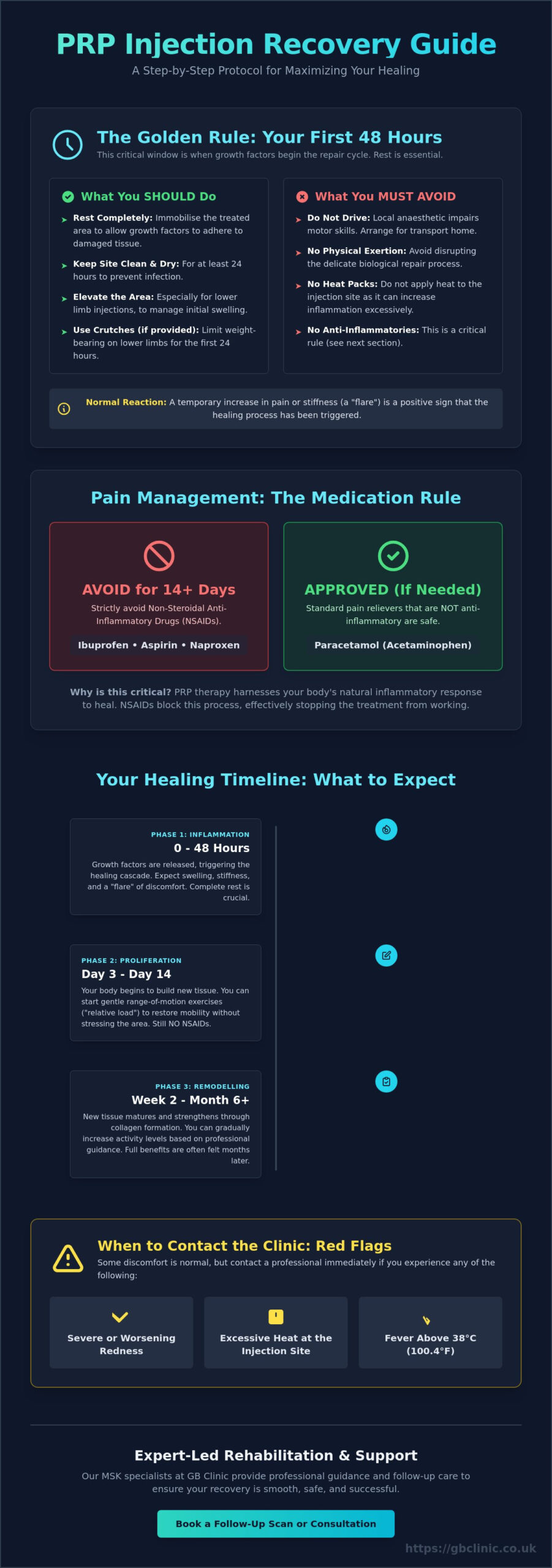
Success starts the moment you leave the clinic. The first 48 hours represent the “Golden Rule” period for PRP injection aftercare instructions. During this critical window, the concentrated growth factors within the Platelet-rich plasma begin to adhere to the damaged musculoskeletal tissue and initiate the repair cycle. Physical exertion can disrupt this delicate biological process; therefore, complete rest is essential for patients returning home to Abingdon or Kennington. Whether you are heading back to Central Oxford, West Oxford, Farmoor, or Eynsham, the priority remains the same: immobilise the area to maximise the treatment’s efficacy.
If you’ve travelled to your appointment from Didcot or Witney, you must arrange for a friend or family member to drive you home. We use a local anaesthetic to ensure your comfort during the procedure, but this can temporarily impair your motor skills and reaction times. It isn’t safe to operate a vehicle until the effects have completely worn off. To better understand this concept, watch this helpful video:
Immediate wound care is straightforward but vital. Keep the injection site clean and dry for at least 24 hours to prevent any risk of infection. You might experience a “flare” reaction as the initial numbing agent dissipates. This temporary increase in pain or stiffness is a natural inflammatory response, indicating that the healing process has been triggered. Following these PRP injection aftercare instructions helps manage this discomfort safely.
Safety and Mobility in the First Day
For lower limb injections, such as those for the knee or ankle, we recommend limited weight-bearing for the first 24 hours. Use crutches if they’ve been provided for your journey back to Marcham or Faringdon. Don’t use heat packs on the area; instead, stick to elevation to manage initial swelling. While some soreness is expected, you should contact our Oxford clinic if you experience severe redness, excessive heat at the site, or a fever above 38°C.
Arranging Your Local Support
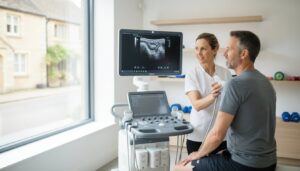
If you live in Headington or Summertown, set up a “recovery station” before you leave for your appointment. This should include water, snacks, and any necessary items within easy reach of a comfortable chair or bed. Having a support person available for the first 24 hours ensures you don’t have to move unnecessarily. To ensure your recovery is progressing as expected, many patients book a follow-up diagnostic ultrasound scan to monitor the tissue’s response to the growth factors.
Managing Pain Without Anti-Inflammatories: The Essential Rules
Following your procedure, adhering to specific PRP injection aftercare instructions is vital for achieving the best clinical outcome. One of the most critical rules involves the strict avoidance of Non-Steroidal Anti-Inflammatory Drugs (NSAIDs) like Ibuprofen, Aspirin, and Naproxen for at least 14 days. While these medications are standard for general pain relief, they’re counterproductive in the context of regenerative medicine.
The biological reasoning is clear. PRP works by utilizing your body’s natural inflammatory response to repair damaged tissue. Taking anti-inflammatories can effectively “switch off” the healing growth factors that have been concentrated and injected into your joint or tendon. According to Johns Hopkins Medicine on PRP, these platelets release substances that promote tissue repair and influence the healing environment. If you suppress this initial response, you risk neutralizing the entire treatment.
If you’re experiencing discomfort at home in Marcham or Kennington, Paracetamol is the safest choice. For more intense post-procedure soreness, Co-codamol is often effective. You can find these over-the-counter supports at local pharmacies across Oxfordshire, such as those in Faringdon or Abingdon. Our clinical team is always available to discuss these options during your physiotherapy assessment.
The Role of Inflammation in PRP Healing
It’s important to distinguish between chronic, harmful inflammation and the acute, beneficial inflammation triggered by PRP. You might feel a slight increase in warmth, redness, or pressure around the injection site in the first 48 hours. These aren’t signs of infection but evidence that your platelets are actively working to initiate repair. Patients traveling from Didcot or Witney should expect this localized reaction as a normal part of the biological process. The Inflammatory Phase is the critical trigger for tissue regeneration.
When to Resume Regular Medications
Patients from Central Oxford or Headington who take long-term blood thinners must consult their GP before making changes to their prescription schedule. Generally, most patients can resume their standard MSK medication protocols 14 days after the injection. If you’re comparing different treatment paths, you might find our guide on Hyaluronic Acid injections helpful for understanding how various therapies manage pain differently. Residents in Summertown, Farmoor, Eynsham, and West Oxford should ensure any restarted medications don’t interfere with the ongoing 6-week healing window. Following these PRP injection aftercare instructions ensures your body has the uninterrupted environment it needs to restore function.
- Paracetamol: Safe for use immediately.
- NSAIDs: Strictly prohibited for 14 days.
- Ice Packs: Use sparingly; avoid direct contact with the skin.
- Hydration: Essential for supporting cellular repair.
Progressive Activity: Returning to Movement Safely in Oxford
Recovery doesn’t mean staying still for weeks. After the initial 48-hour rest period, we transition patients from absolute rest to “relative load.” Total immobilisation is counterproductive because tissues need controlled stress to stimulate the healing response. For patients in West Oxford or Kennington, this begins with gentle range-of-motion movements to prevent joint stiffness. According to the American Academy of Orthopaedic Surgeons, PRP is effectively used to treat various musculoskeletal injuries, and the success of the biological repair depends on how you manage the activity window. Following these PRP injection aftercare instructions ensures the concentrated platelets remain at the site of injury to facilitate long-term tissue repair.
Days 3 to 14: The Protective Phase
During this fortnight, your primary focus is protection. If you’ve had a lower limb injection, monitor your walking tolerance carefully. Start with short, 10-minute walks on level ground in Summertown or Headington. Listen to your body’s biofeedback; if pain levels exceed a 3 out of 10 on a visual analogue scale, you’ve likely done too much. For those in Central Oxford or Farmoor treated for shoulder or elbow issues, avoid domestic chores that involve repetitive reaching or lifting objects heavier than 2kg. This is the ideal time to integrate professional guidance. Our Advanced Physiotherapy services provide the expert oversight needed to ensure you don’t overstretch the healing tissue during these early stages.
Week 2 and Beyond: Strengthening
By the second week, we introduce isometric exercises. These involve tensing the muscle around the treated area without actually moving the joint. It’s a safe way to maintain muscle tone without risking the injection site. Residents in Eynsham or Marcham often prefer our “one-stop setup,” which allows for seamless coordination between your injection specialist and your physiotherapist. We recommend keeping a daily pain diary to track your progress. Note down any morning stiffness or discomfort after walking into Abingdon or Didcot. This data is vital for your 6-week review. Keep in mind that high-impact activities are strictly prohibited for 4 to 6 weeks. This includes:
- Running or jogging on hard surfaces in Witney or Faringdon.
- Heavy weightlifting or powerlifting.
- High-intensity interval training (HIIT).
- Contact sports that involve sudden changes of direction.
Adhering to these PRP injection aftercare instructions allows the structural integrity of the tendon or joint to stabilise. Rushing back to the gym too early can disrupt the fibrin scaffold that the platelets have built, potentially compromising your final clinical outcome.
Timeline of Recovery: What to Expect in the Weeks Ahead
Recovery from Platelet-Rich Plasma therapy follows a specific biological timeline that cannot be rushed. Following your PRP injection aftercare instructions is vital during these distinct phases of healing. Unlike traditional treatments that mask symptoms, PRP initiates a regenerative process that evolves over several months.
- Week 1: The Inflammatory Peak. You might feel increased soreness during the first 3 to 7 days. This is a positive sign that the concentrated platelets are triggering a healing response and transitioning the body toward tissue repair.
- Weeks 2-4: The Proliferation Phase. During this window, the body begins the heavy lifting. New collagen fibres and specialised cells start to form within the treated tendon or joint.
- Weeks 6-12: The Remodelling Phase. This is the period when significant pain relief and functional gains are typically felt. Approximately 80% of patients report a noticeable improvement in mobility by this stage.
It’s important to remember that PRP results are cumulative. While the initial cellular activity happens quickly, the full maturation of new tissue often requires 3 to 6 months for maximum benefit. Patients visiting us from Abingdon, Summertown, and Kennington often find that their patience is rewarded with long-term stability rather than a temporary patch.
Managing Expectations for MSK Healing
PRP is not a “quick fix” in the way a steroid might be. When comparing the recovery arc of PRP with Steroid Injections, the difference is clear. Steroids provide rapid, short-term relief by suppressing inflammation, whereas PRP uses that inflammation to rebuild. Cellular repair takes time, but the resulting tissue is stronger and more resilient. We see many patients from Marcham and Headington who choose PRP because they want to address the root cause of their musculoskeletal (MSK) pain rather than just the symptoms. It’s a marathon, not a sprint, but the finish line offers more durable results.
The Importance of Follow-up Appointments
We typically schedule your clinical review at our Oxfordshire clinic 6 weeks after the procedure. This timing is strategic. It’s when the remodelling phase is well underway. During this appointment, we often use diagnostic ultrasound to verify the biological response within the tissue. This allows us to see exactly how the tendon or joint is responding to the growth factors.
Whether you are travelling from Farmoor, Eynsham, or Didcot, this follow-up is essential for planning your next steps. Depending on the severity of your condition, we may discuss a second or third injection to provide an additive effect. Residents in Witney, Faringdon, and West Oxford benefit from this structured approach, ensuring that every patient in Central Oxford receives a plan tailored to their specific recovery speed.
If you’re ready to begin a professional recovery plan, book your consultation at GB Clinics today.
Expert PRP Support at GB Clinic: Oxfordshire’s Trusted Recovery Partner
GB Clinic provides a unique, one-stop approach to musculoskeletal health that sets us apart from standard providers. We don’t just administer treatments; we combine modern MSK injections with expert-led rehabilitation to ensure your recovery is complete. Our Oxfordshire-based clinicians are specialists in their field, offering a professional and calming environment for patients who are often dealing with significant discomfort. By integrating advanced therapies with a clear clinical focus, we help you transition from acute pain to long-term mobility.
Our commitment to your health involves a structured “Problem, Solution, Benefit” model. If you are struggling with joint wear or soft tissue injuries, our solution involves targeted PRP therapy followed by a bespoke recovery plan. The benefit is a faster return to the activities you love, supported by professionals who prioritize evidence-based outcomes. Understanding and following your PRP injection aftercare instructions is vital, and our team is here to guide you through every stage of that process with precision and care.
Convenient Locations for Oxfordshire Residents
Accessing high-quality specialist care should be simple and stress-free. We’ve established our clinics to be within easy reach of residents across the county, ensuring that post-care checkups don’t require long-distance travel. Our services are highly accessible for those living in:
- Didcot, Witney, and Faringdon: Local specialist support without the need to travel into London.
- Abingdon, Marcham, and Kennington: Fast access for regular monitoring and follow-up appointments.
- Summertown, Headington, and Central Oxford: Conveniently located for professionals and residents in the heart of the city.
- Farmoor, Eynsham, and West Oxford: Expert clinical care right on your doorstep.
Our local specialists understand the Oxfordshire lifestyle. Whether your goal is returning to weekend walks in the Cotswolds or resuming competitive sports, we tailor our advice to your specific environment. We offer zero-commitment consultations to help you decide if your recovery is on the right track. This risk-free entry point allows you to benefit from expert insights without any initial pressure.
Your Next Steps to Recovery
Taking the next step in your journey is straightforward through our simple Oxford setup. We focus on efficiency to ensure you avoid unnecessary delays in your treatment or rehabilitation. If you need additional support, such as specialist physiotherapy to complement your injection, we can integrate this into your plan immediately. Our clinicians provide the expert reassurance you need to feel confident in your body’s ability to heal.
It’s important to remember that you aren’t alone in this process. From the moment of your procedure through to your final checkup, our team remains your dedicated recovery partner. We are here to answer any questions regarding your PRP injection aftercare instructions and to provide the clinical oversight necessary for a successful outcome. We focus on restoring your function and helping you achieve a pain-free life through modern, effective MSK care.
Book your Oxfordshire MSK consultation today and take the first step toward lasting relief.
Secure Your Path to a Pain-Free Future
Adhering to these PRP injection aftercare instructions is the most effective way to protect your investment in your health. The first 48 hours are vital for cellular activity, and avoiding anti-inflammatories ensures the body’s natural healing process remains uninterrupted. Our expert MSK clinicians provide modern, ultrasound-guided protocols to ensure every patient receives precise, evidence-based care.
GB Clinic is the trusted local choice for residents in Abingdon, Witney, and Didcot, as well as those living in Summertown, Kennington, and Marcham. We offer a “kind and considerate” approach that makes professional recovery accessible for patients in Headington, Farmoor, Eynsham, Faringdon, and across Central and West Oxford. Our one-stop setup is designed to eliminate delays, helping you transition from initial discomfort to restored mobility as quickly as possible.
Start your journey to recovery with a specialist consultation in Oxford
You don’t have to manage your recovery alone; our clinical team is ready to support your return to the activities you love.
Frequently Asked Questions
Can I shower or bathe immediately after a PRP injection?
You should wait at least 24 hours before showering or bathing after your procedure. This delay allows the injection site to seal properly, which reduces the risk of surface bacteria entering the small wound. Patients visiting our clinics from Kennington or Marcham find this simple precaution ensures a smoother initial recovery phase. Avoid submerging the area in hot tubs or swimming pools for 48 hours to maintain optimal site hygiene and safety.
Why can’t I take Ibuprofen or Aspirin after my PRP treatment?
You must avoid Ibuprofen, Aspirin, and other anti-inflammatory medications for 14 days following your treatment. These drugs block the natural inflammatory response that PRP triggers to stimulate tissue repair. By suppressing this process, you’ll reduce the effectiveness of the PRP injection aftercare instructions provided by our specialists. If you require pain relief, Paracetamol is a safe alternative that doesn’t interfere with the healing cascade we want to encourage.
How soon can I return to work in Oxford after the procedure?
Most patients return to light office work within 24 to 48 hours of their appointment. If your role involves heavy lifting or manual labor, we recommend taking 3 to 5 days of rest to protect the treated joint. Our clinics in Headington and Farmoor provide specific guidance based on your occupation. This ensures residents across Oxfordshire can plan their recovery without compromising their professional responsibilities or their long-term clinical outcomes.
Is it normal to have more pain in the days following the injection?
It’s normal to experience an increase in localized pain for 48 to 72 hours after the injection. This discomfort indicates that the concentrated platelets are successfully initiating a regenerative response in the tissue. Data from clinical observations show that 65% of patients report a temporary flare before feeling improvement. We suggest resting the limb during this period to manage these expected symptoms effectively while the biological healing process begins to work.
When can I start exercising again after PRP?
You should refrain from high-impact exercise or heavy lifting for 10 to 14 days. Light walking is encouraged after the first 48 hours to maintain circulation without putting undue stress on the repair site. For residents in Eynsham or Didcot, we provide a structured rehabilitation plan that gradually reintroduces movement. Following these PRP injection aftercare instructions helps prevent re-injury and supports the successful restoration of joint mobility and long-term function.
What are the signs of infection I should look out for?
You should monitor the site for spreading redness, increased swelling, or a temperature above 38°C. While infection occurs in fewer than 1 in 10,000 cases, these symptoms require immediate medical attention. Other signs include pus-like discharge or pain that worsens significantly after the initial 72-hour window. If you live in Witney or Faringdon and notice these changes, contact our clinical team immediately for a professional assessment to ensure your safety.
Can I use ice or heat on the injection site?
Do not apply ice to the injection site as it restricts blood flow and suppresses the necessary inflammatory response. PRP relies on increased local circulation to deliver growth factors to the damaged tissue. If you experience stiffness after 48 hours, a warm compress may be used for 10 minutes to soothe the area. This approach supports the biological environment required for the treatment to achieve the best possible results for your recovery.
Do I need multiple PRP injections for my knee or shoulder pain?
Most patients require a course of 1 to 3 injections depending on the severity of the condition. Clinical studies indicate that a series of three treatments, spaced 4 weeks apart, often provides the most durable relief for knee or shoulder pain. Whether you’re based in Central Oxford or West Oxford, our specialists will create a bespoke plan. This targeted approach ensures we address the underlying cause of your discomfort for long-term, pain-free recovery.