
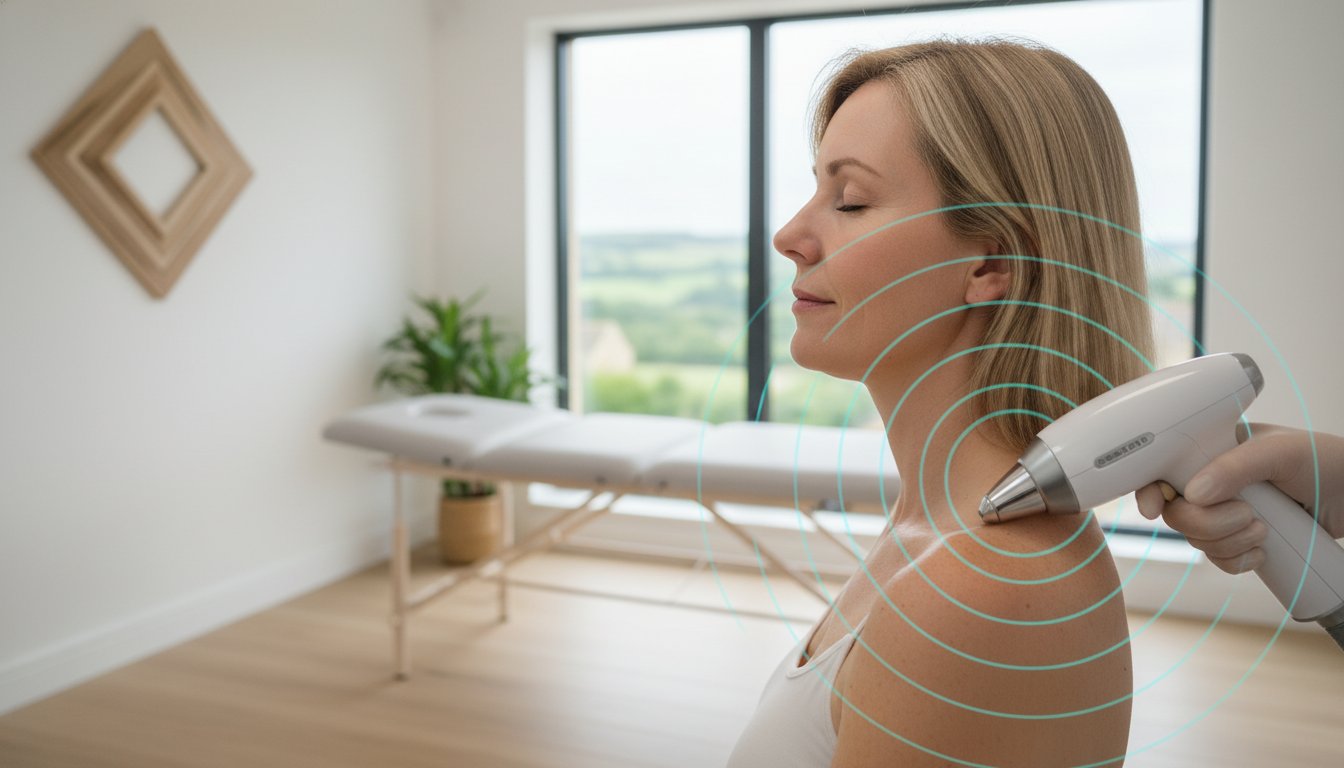
Despite its intimidating name, shockwave therapy doesn’t involve electrical shocks at all. If you’ve been living with chronic heel or joint pain, you’ve likely wondered what does shockwave therapy feel like and whether the procedure is as painful as the name suggests. It’s common to feel anxiety about clinical procedures, especially if you want to avoid needles or invasive surgery. In reality, the sensation is purely mechanical. It feels more like a focused, rhythmic tapping or an intense massage that stimulates your body’s natural healing response.
We understand that clarity is the first step toward confidence. This clinical guide provides a clear roadmap of what to expect during your session, from the initial pulses to the post-treatment recovery phase. Our clinics are the convenient choice for residents in Abingdon, Summertown, and Kennington. We also provide expert care to those living in Marcham, Headington, Farmoor, and Eynsham. If you’re seeking relief in Didcot, Witney, Faringdon, Central Oxford, or West Oxford, our team is ready to help you return to a mobile state. You’ll learn why studies show positive outcomes in approximately 70% of chronic cases and how this modern intervention offers a direct path to physical restoration.
Key Takeaways
- Differentiate between electrical shocks and the acoustic pressure waves used to treat musculoskeletal conditions in Central Oxford, West Oxford, and Headington.
- Understand exactly what does shockwave therapy feel like and why patients in Abingdon, Summertown, and Kennington describe the sensation as a productive, deep-tissue pressure.
- Compare the clinical benefits of mechanical pressure waves against traditional steroid injections for residents seeking recovery in Marcham, Farmoor, and Eynsham.
- Gain clarity on managing treatment intensity and post-session recovery, with professional care available near Didcot, Witney, and Faringdon.
Understanding the “Shock” in Shockwave Therapy
The term “shockwave” often creates an immediate sense of hesitation for patients seeking relief from chronic pain. At GB Clinic, we frequently speak with residents from Central Oxford, West Oxford, and Summertown who worry that the treatment involves painful electrical currents or invasive needles. This is a common misconception. The “shock” in shockwave therapy refers to a physical pressure wave, much like the sonic boom created by an aircraft, rather than an electrical discharge. Our expert-led approach to physiotherapy in Oxfordshire focuses on using these mechanical waves to restart the body’s natural healing process without the need for incisions or medication.
The technology behind this treatment has a long clinical history. It originally gained prominence as lithotripsy, a method used to break down kidney stones using acoustic energy. Medical professionals eventually discovered that lower energy levels could effectively treat musculoskeletal (MSK) issues, such as plantar fasciitis and Achilles tendinopathy. Understanding Shockwave Therapy requires recognizing its transition from a specialized urological tool to a versatile therapeutic modality. For those living in Abingdon, Didcot, or Witney, this means access to a proven, non-surgical intervention that targets the root cause of discomfort rather than just masking symptoms.
To better understand this concept, watch this helpful video:
Acoustic Waves vs. Electrical Shocks
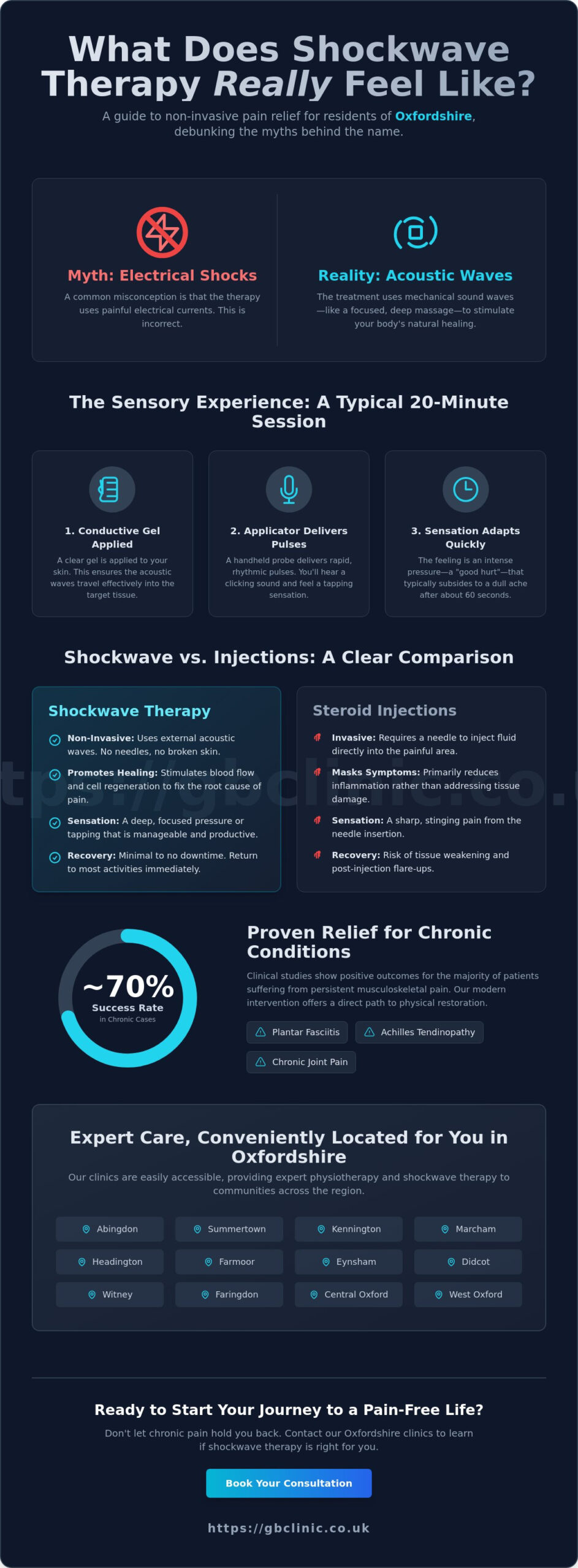
Extracorporeal Shockwave Therapy (ESWT) is a non-electrical, high-energy sound wave treatment. It works by delivering kinetic energy through a handheld probe directly to the injured tissue. Unlike electrotherapy, which uses currents to stimulate nerves, ESWT provides a mechanical stimulus that creates micro-trauma in the affected area. This process triggers increased blood flow and cellular repair. Many patients in Kennington, Marcham, and Farmoor find it reassuring that the procedure is entirely external. There are no needles involved, and the skin remains intact throughout the session.
The Sound of Healing: What You Will Hear
When asking what does shockwave therapy feel like, it’s helpful to consider the auditory experience as well as the physical sensation. The device produces a rapid, rhythmic ticking or clicking sound as the internal projectile moves within the probe. This noise is often more intimidating than the actual treatment. To ensure the waves travel effectively into your tissues, your specialist will apply a clear conductive gel to the skin. This gel eliminates air pockets and allows the acoustic energy to reach the precise depth required for healing. Residents from Headington, Eynsham, and Faringdon often report that once they become accustomed to the rhythmic sound, the anxiety surrounding the procedure quickly fades.
The Sensory Experience: Jackhammers and Deep Tissues
Understanding exactly what does shockwave therapy feel like helps alleviate the anxiety often associated with clinical procedures. Many patients describe the sensation as a targeted deep tissue massage. It isn’t a sharp or stinging pain; instead, it’s a dull, rhythmic pressure that focuses specifically on the injured tendon or fascia. While there’s a level of intensity, many chronic pain sufferers in Central Oxford and West Oxford describe it as a “hurts so good” phenomenon. This indicates the device is reaching the exact site of the pathology. Clinical data from FDA-Approved Shockwave Therapy documentation confirms that this mechanical stimulus is essential for triggering the biological repair process.
The intensity of the treatment is manageable because the brain undergoes a process of habituation. Within the first 60 seconds of a session, the initial discomfort typically subsides as your nervous system adapts to the stimulus. This “numbing” effect allows the specialist to maintain an effective energy level without causing undue distress. For those traveling from Abingdon, Summertown, or Kennington, it’s reassuring to know that the session is brief, usually lasting about 20 minutes, and the intensity is always controlled by your clinician.
Common Patient Metaphors
Because the sensation is unique, patients from Marcham, Headington, and Farmoor often use specific metaphors to describe their experience:
- The Jackhammer Effect: This refers to the rapid, rhythmic tapping on the skin surface. It feels like a small, high-frequency percussion tool.
- The Intense Pulse: This is the feeling of pressure moving deep into the muscle or tendon, signaling that the acoustic waves are reaching the target area.
- The Friction Sensation: Many compare it to a therapist’s thumb working a stubborn knot during a manual therapy session.
Why Sensation Varies by Body Part
The physical sensation depends heavily on the anatomical site being treated. Treating Plantar Fasciitis involves applying waves to a bony area with thin skin, which can feel more vibrant or “bony” compared to other regions. Conversely, treating Gluteal Tendinopathy involves a fleshier area where the sensation feels more like a deep, heavy pressure. Our specialists at the Oxfordshire clinics in Eynsham, Didcot, and Witney carefully adjust the machine’s settings based on your specific anatomy. Whether you’re visiting us from Faringdon or Central Oxford, we ensure the treatment remains within your comfort threshold while still being effective. If you’re ready to address your chronic pain, you can book a clinical assessment at our Oxfordshire clinic to determine if this modern intervention is right for you.
Shockwave vs. Injections: Comparing the Discomfort
Many patients from Abingdon and Summertown arrive at our clinics weighing the differences between various therapeutic interventions. When considering what does shockwave therapy feel like compared to traditional injections, the primary distinction lies in the nature of the stimulus. Shockwave therapy is a non-invasive, mechanical process. It involves rhythmic pressure applied to the skin surface. In contrast, injections involve the sharpness of a needle penetrating the tissue. For individuals in Kennington or Marcham who experience anxiety regarding needles, shockwave therapy serves as a preferred clinical option. It avoids the psychological and physical stress associated with invasive procedures.
One significant advantage of shockwave is the absence of a post-injection flare. Some patients receiving steroid injections may experience temporary increased pain or inflammation in the 24 to 48 hours following the procedure. Shockwave therapy typically bypasses this specific inflammatory response. Instead, it creates a localized sensation of warmth or mild aching that resolves quickly. For residents in Headington and Farmoor, this means a faster return to daily activities without the mandatory rest periods often required after joint-specific treatments.
Pressure vs. Penetration
The physical experience of these treatments differs significantly based on how they interact with your anatomy. While Hyaluronic Acid Injections are designed to penetrate the joint space to provide lubrication, shockwave therapy remains entirely on the surface. Patients from Eynsham and Didcot often report that steroid treatments can leave a heavy or full feeling within the joint for a short duration. Shockwave therapy produces a mechanical vibration that stimulates blood flow without adding volume to the joint capsule. It’s an excellent choice for those seeking a re-start for healing rather than chemical supplementation.
The Role of Ultrasound Guidance
Precision is a hallmark of modern musculoskeletal care. At our clinics serving Witney and Faringdon, we often utilize a diagnostic ultrasound scan before beginning treatment. This ensures the shockwave probe is positioned exactly over the injured tendon or ligament. When patients in Central Oxford or West Oxford can see their injury on the screen, it significantly reduces clinical anxiety. Understanding the precise location of the pathology helps clarify what does shockwave therapy feel like during the session; the sensation is most intense exactly where the tissue needs repair. This targeted approach minimizes discomfort in healthy surrounding tissues, ensuring the energy is focused where it will provide the most benefit.
Managing Intensity and Post-Session Sensations
The intensity of your session is never fixed. One of the most reassuring aspects for patients in Central Oxford and West Oxford is that they remain in total control of the machine’s output. While we have established what does shockwave therapy feel like during the initial application, the management of that sensation is a collaborative process between you and your specialist. It’s normal to feel a level of “treatment soreness” immediately afterward, but this typically fades within 24 to 48 hours. This transient discomfort is a positive indicator that the mechanical waves have successfully triggered your body’s internal repair mechanisms.
The “Start Low, Go Slow” Philosophy
At GB Clinic, our practitioners follow a strict protocol to ensure your comfort. We begin every session at a lower energy frequency to allow your nervous system to habituate to the stimulus. This is helpful for residents coming from Summertown or Headington who may be anxious about their first appointment. During the 15-minute treatment block, your clinician will maintain a constant feedback loop. They gradually increase the intensity as your tolerance builds. We don’t believe in the “no pain, no gain” mantra. Instead, we focus on finding the therapeutic “sweet spot” where the energy is high enough to be effective but low enough to remain manageable. Our physiotherapy experts are trained to read your physical cues and adjust the handheld probe accordingly.
Recovery Dos and Don’ts
The 48 hours following your session are critical for long-term success. You might experience a sensation similar to a mild bruise or a dull ache in the treated area. For those traveling home to Abingdon, Didcot, or Witney, we recommend avoiding strenuous activity during this window. However, complete rest is rarely necessary; light movement helps maintain circulation. Following these simple guidelines significantly improves your overall outcome. If you’re ready to begin your recovery journey, you can book your initial shockwave consultation today at our Oxfordshire facility.
- Avoid Ibuprofen: Do not use non-steroidal anti-inflammatory drugs (NSAIDs) as they can suppress the healing response.
- Skip the Ice: While it may seem intuitive, ice packs can “switch off” the inflammatory signals we’ve just activated.
- Stay Mobile: Gentle walking or light stretching is encouraged for patients in Kennington, Marcham, and Farmoor.
This inflammatory response is the foundation of tissue restoration. Shockwave therapy works by stimulating a controlled healing environment. By allowing this natural process to occur without chemical interference, you’re giving your body the best chance to return to a mobile, pain-free state. Whether you live in Eynsham or Faringdon, our goal is to provide a clear path to recovery through evidence-based, modern interventions.
Accessing Advanced Shockwave Therapy in Oxfordshire
Oxfordshire residents in Central Oxford and West Oxford no longer need to navigate the complexities of large hospital systems for advanced musculoskeletal care. GB Clinic offers a streamlined, expert-led environment where patient comfort and clinical outcomes are the primary focus. We are the regional specialist for Private MSK Physiotherapy, providing easy access for those traveling from Abingdon, Didcot, and Witney. Our clinicians are dedicated to transparency, ensuring every patient understands exactly what does shockwave therapy feel like before the first pulse is delivered. This professional distance, balanced with genuine care, helps build the confidence required to start your journey toward physical restoration.
Serving the Oxfordshire Community
We have designed our services to be accessible to the diverse communities across the county. Our facilities are particularly convenient for residents in Summertown, Headington, and Kennington, offering a local alternative to centralized medical hubs. We also see many patients who travel from Faringdon, Eynsham, Marcham, and Farmoor, drawn by our reputation for modern, evidence-based interventions. The experience of visiting a specialist clinic is intentionally different from a large hospital. You’ll find a calm, clinical atmosphere where appointments run on time and the focus remains entirely on your recovery. This efficiency is a hallmark of our patient-focused approach, ensuring you receive comprehensive care without the typical delays of larger institutions.
Your Next Steps to Pain-Free Movement
The recovery process starts with a thorough clinical assessment to determine the most effective path forward. If shockwave therapy is appropriate for your condition, we often integrate it into a broader plan that includes Exercise Rehabilitation. This combination is designed to maximize the longevity of your relief by pairing cellular repair with functional strength. Our specialists guide you through every stage, ensuring you feel both informed about the advanced nature of your care and reassured about the expected results. Whether you’re dealing with a long-term tendon issue or a recent joint injury, we provide the expertise needed for a return to a mobile, active lifestyle. Book your shockwave consultation at GB Clinic today to begin your personalized clinical recovery plan.
Begin Your Path to Pain-Free Movement
Understanding what does shockwave therapy feel like is the first step in overcoming the anxiety that often delays recovery. This modern, non-invasive intervention replaces the sharpness of needles with targeted acoustic energy. Our expert-led MSK specialists use diagnostic ultrasound-guided precision to ensure every session is focused exactly where it’s needed. This level of accuracy, combined with a measured approach to intensity, ensures a professional and manageable clinical experience.
We provide comprehensive care across Oxfordshire with no delays. This makes our clinics the convenient choice for residents in Abingdon, Summertown, and Kennington. We also serve those in Marcham, Headington, Farmoor, and Eynsham. Whether you’re traveling from Didcot, Witney, Faringdon, Central Oxford, or West Oxford, you’ll find a supportive environment dedicated to your physical restoration. You don’t have to let chronic discomfort dictate your lifestyle. Effective, evidence-based relief is accessible and designed with your comfort in mind.
Book Your Shockwave Therapy Consultation in Oxford
Frequently Asked Questions
Is shockwave therapy painful for everyone?
Shockwave therapy is generally described as uncomfortable but not typically painful. The sensation varies depending on the anatomical site and the specific energy levels used. Most patients in Central Oxford and West Oxford report a strong vibration or rhythmic tapping. We begin every session at a low intensity and increase it to a comfortable point. This ensures you remain in control of the procedure while achieving the necessary therapeutic stimulus for healing.
How long does a single shockwave session last?
A single shockwave session usually lasts approximately 20 minutes. This efficient duration allows residents in Abingdon and Summertown to fit treatment into a busy schedule without significant disruption. The procedure is performed in an outpatient setting and requires no anesthetic or sedation. After the clinical application of the acoustic waves, you can return to your daily routine immediately, making it a convenient option for those seeking physical restoration.
Can I drive home after my shockwave treatment in Oxford?
You can safely drive home to locations like Witney, Didcot, or Kennington immediately after your session. Because the procedure is non-invasive and doesn’t involve any medication that affects your cognitive or motor skills, there are no restrictions on driving. Many of our patients return to work or their normal activities right after leaving the clinic. This ease of access is a key benefit for individuals traveling from across Oxfordshire.
What happens if the treatment feels too intense during the session?
If the intensity feels too high, your specialist will immediately adjust the device settings to a more comfortable level. We prioritize a “start low, go slow” approach for all patients in Headington and Marcham. The feedback loop between you and the clinician is vital. We want to ensure the energy is high enough to be effective but remains within your tolerance threshold. You are never expected to endure distressing levels of discomfort.
How many sessions of shockwave therapy will I need to feel a difference?
A standard course of treatment typically requires 3 to 5 weekly sessions to achieve optimal results. While individual responses vary, many patients begin to notice a significant reduction in pain after just 2 or 3 appointments. Understanding what does shockwave therapy feel like over a full course is helpful, as the sensation often becomes more manageable as the tissue begins to heal. Consistency is essential for long-term collagen synthesis and repair.
Are there any side effects like bruising or swelling after the treatment?
Minor side effects such as redness, slight swelling, or a dull ache are common and usually resolve within 48 hours. Some patients in Eynsham and Farmoor may notice a sensation similar to a mild bruise in the treated area. These are expected signs that the body is responding to the mechanical stimulus. Serious complications are very rare, especially when the therapy is delivered by the highly skilled specialists at our modern Oxfordshire clinics.
Is shockwave therapy covered by private health insurance in the UK?
Shockwave therapy is often covered by major private health insurance providers in the UK for conditions such as chronic tendinopathies. Coverage depends on your individual policy and the specific diagnosis. We recommend contacting your insurer before your first appointment in Faringdon or Central Oxford to confirm your level of cover. Our administrative team can provide the clinical codes and documentation required to facilitate your claim process efficiently.
Why can’t I use ice packs after my shockwave session?
Avoiding ice packs is necessary because they can suppress the natural inflammatory response that shockwave therapy is designed to trigger. The treatment works by creating controlled micro-trauma to restart the healing process in chronic tissues. Applying ice or taking anti-inflammatory medication can effectively “switch off” these healing signals. For our patients in West Oxford and beyond, we advise allowing the localized warmth and inflammation to proceed naturally for 48 hours.