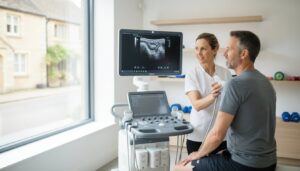

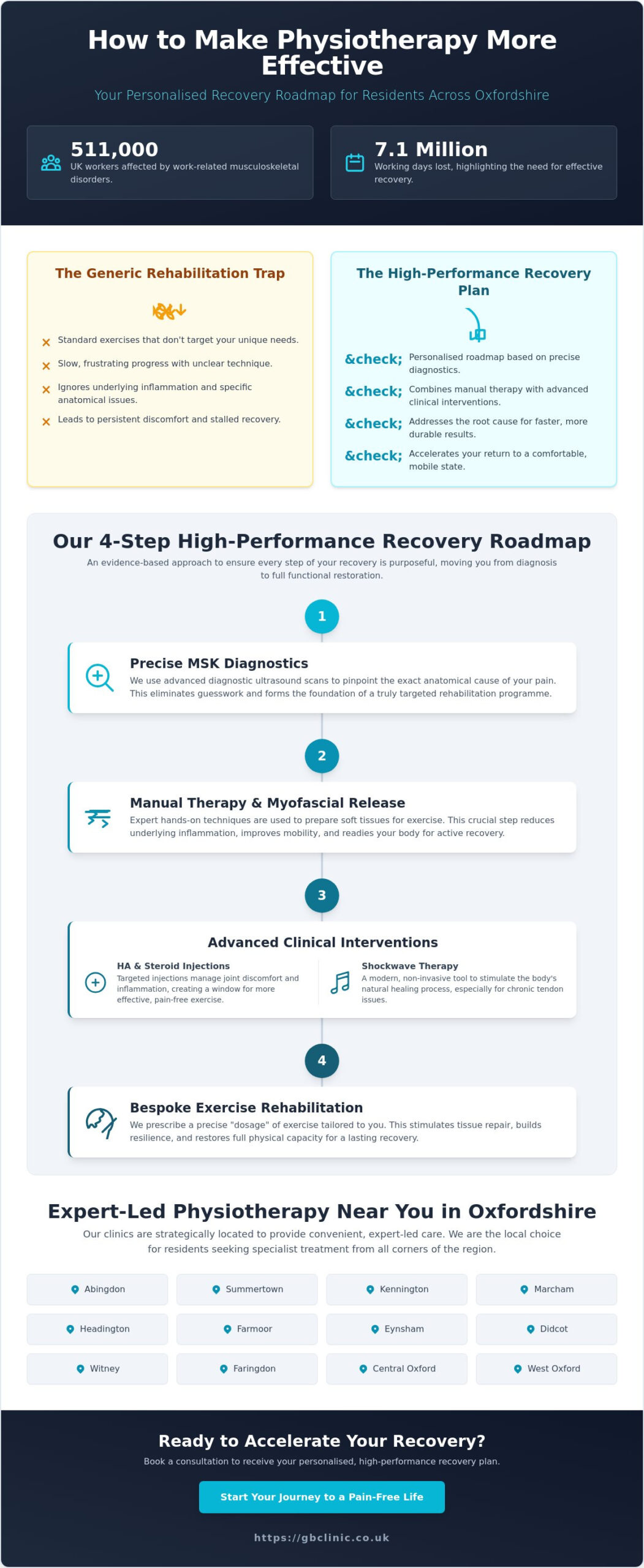
An estimated 511,000 workers suffered from work-related musculoskeletal disorders in 2024/25, resulting in 7.1 million lost working days according to the Health and Safety Executive. If you’re currently managing a persistent injury, you likely feel the frustration of slow progress and generic rehabilitation plans that don’t target your unique needs. Learning how to make physiotherapy more effective is the key to moving beyond persistent discomfort and reclaiming your mobility through a structured, evidence-based approach.
It’s understandable to feel discouraged when standard exercises don’t yield fast results or when your specific technique remains unclear. This guide provides professional strategies and advanced clinical interventions, such as shockwave therapy and hyaluronic acid injections, to transform basic care into a high-performance recovery plan. Our clinics are strategically located to serve residents in Abingdon, Summertown, Kennington, and Marcham, ensuring expert-led care is always within reach for those seeking clinical excellence.
We’ll outline a personalised recovery roadmap that includes diagnostic ultrasound scans and manual therapy to ensure every step is purposeful. For those living in Headington, Farmoor, Eynsham, or Didcot, as well as Witney, Faringdon, Central Oxford, and West Oxford, accessing these specialist interventions is straightforward. This overview explains how combining exercise rehabilitation with modern therapeutic tools can accelerate your return to a comfortable, mobile state.
Key Takeaways
- Understand how the biological timeline of tissue healing and consistent exercise adherence dictate the speed of your functional restoration.
- Discover why diagnostic ultrasound scans are vital for identifying specific anatomical concerns before beginning a targeted rehabilitation programme.
- Explore how to make physiotherapy more effective by utilising advanced clinical interventions, such as hyaluronic acid injections, to manage joint discomfort.
- Learn the role of manual therapy and myofascial release in preparing soft tissues for more intensive exercise and reducing underlying inflammation.
- Access expert-led care at professional clinics across Oxfordshire, providing convenient treatment for residents in Summertown, Headington, and Central Oxford.
Understanding the Factors that Influence Physiotherapy Outcomes
Recovery is rarely a linear path. While many believe What is Physiotherapy? is simply a series of generic exercises, the process is far more complex. To understand how to make physiotherapy more effective, one must first look at the underlying biological constraints of the human body. With 26% of adults in England reporting chronic pain in 2024 according to the Health Survey for England, the need for precise, expert-led intervention has never been higher. Residents in Abingdon and Summertown often seek help for chronic issues, yet they may find that standard routines fail to deliver the expected results because they don’t account for individual inflammatory markers.
A bespoke clinical pathway differs from standard care by addressing specific anatomical concerns identified through precise assessment. Whether you are in Kennington or Marcham, accessing a high-performance recovery plan means moving beyond simple strength training to a multi-modal approach. This involves combining manual therapy with advanced interventions to bypass the biological ceiling where inflammation often stalls progress. By tailoring the treatment to your specific needs, we ensure that your recovery remains on track without unnecessary delays.
To better understand this concept, watch this helpful video:
The Biological Foundation of MSK Recovery
Recovery follows a strict timeline that cannot be rushed without risking re-injury. The inflammatory phase typically lasts up to five days, followed by the proliferative phase where new tissue forms, and finally the remodelling phase which can last for several months. Clinical effectiveness is measured by functional restoration and the return to daily activities rather than just the temporary reduction of pain. Factors like quality sleep and balanced nutrition are essential; they provide the metabolic environment necessary for collagen synthesis during tissue repair. Without these foundations, even the most advanced clinical interventions may struggle to produce lasting results.
Identifying Barriers to Progress
Several factors can hinder recovery for patients in Headington, Farmoor, or Eynsham. Chronic stress increases cortisol levels, which is a hormone that actively inhibits the body’s natural healing mechanisms and slows down tissue regeneration. Additionally, fear-avoidance behaviour, where a patient avoids movement due to anticipated pain, often leads to muscle atrophy and joint stiffness. Knowing when to transition from passive manual therapy to active physiotherapy exercises is a critical decision made by our specialists in Didcot and Witney. This transition ensures that the patient builds the necessary strength to support the joint during the final remodelling phase.
For those in Faringdon, Central Oxford, or West Oxford, achieving faster mobility gains requires a strategy that addresses these barriers head-on. By identifying the root cause of pain through diagnostic tools and managing inflammatory markers, we ensure that your rehabilitation doesn’t just manage symptoms but restores full physical capacity. This comprehensive approach is what separates a standard rehab plan from a high-performance recovery roadmap.
Maximising Results through Patient Commitment and Communication
Success in rehabilitation is heavily dependent on the “Dosage Principle.” Just as a clinician prescribes a specific medication, they also prescribe a precise volume of exercise to stimulate tissue repair. For residents in Abingdon or Summertown, understanding how to make physiotherapy more effective starts with viewing home exercises as a non-negotiable part of the treatment plan. Consistency ensures that the tissues receive the repeated stimulus needed to adapt and strengthen. Skipping sessions or reducing the intensity often leads to a plateau in progress, extending the overall time needed for recovery.
Tracking your journey is equally vital for clinical success. We recommend maintaining a functional pain diary to record how your body responds to specific movements. This shouldn’t just record intensity on a scale of 1 to 10; it should note what activities you can now perform that were previously restricted. If you live in Kennington or Marcham, bringing these specific observations to your review allows for a more responsive adjustment of your recovery plan. Honesty regarding your exercise adherence is essential. Your specialist needs to know if a plan is too difficult to follow so they can modify it to suit your lifestyle without compromising results.
The Art of Clinical Feedback
Precision in communication accelerates the recovery process. When visiting our clinics in Headington or Farmoor, describing your pain with specific descriptors helps your specialist refine your clinical pathway. You should identify if the sensation is sharp, dull, or radiating. Reporting “good days” is just as important as detailing flare-ups, as it indicates which interventions are yielding positive results. Preparing a brief summary before your follow-up appointment in Eynsham or Didcot ensures you get the maximum value from your clinical time. Clear feedback allows us to determine how to make physiotherapy more effective by narrowing down the most impactful treatments for your condition.
Mastering Exercise Technique
Quality always supersedes quantity in exercise rehabilitation. Performing five perfect repetitions with correct alignment is significantly more beneficial than twenty sloppy ones. For those in Witney or Faringdon, using mirrors or recording video of your home sessions can help ensure you maintain the correct form. This focus builds a stronger “mind-muscle connection,” which is essential for neurological re-patterning and joint stability. If you feel your current routine isn’t producing the desired results, you can consult our team for a technical review.
Finally, consider your daily environment. Ergonomic adjustments at home or in your Central Oxford or West Oxford office can prevent postural stress from undermining your progress. Small changes to your desk height or seating position often provide the necessary relief to allow your body to heal between active rehabilitation sessions. This holistic focus on both clinical and environmental factors ensures a smoother path back to full mobility.
The Role of Manual Therapy and Accurate MSK Diagnostics
While exercise is the long-term solution for physical restoration, manual therapy serves as the essential preparation for the body. Techniques such as myofascial release and joint mobilisation address specific tissue restrictions that might otherwise limit your progress. For patients in Abingdon or Summertown, understanding how to make physiotherapy more effective involves recognising that manual intervention reduces protective muscle guarding. This creates a critical window of opportunity where movement becomes less painful, allowing for more productive and intensive rehabilitation sessions.
The synergy between passive joint mobilisation and active range-of-motion drills is what transforms a standard recovery into a high-performance plan. By manually increasing the glide of a joint, a specialist prepares the musculoskeletal system for the load-bearing exercises that follow. This dual approach ensures that you aren’t just strengthening a restricted movement pattern but are instead building power within a newly restored range of motion. For those in Kennington and Marcham, this integrated method provides a clear path toward faster mobility gains.
Beyond the Surface: Diagnostic Precision
In modern musculoskeletal medicine, guessing is not assessing. We utilise diagnostic ultrasound scans to identify the precise root cause of pain in the shoulder, elbow, wrist, hand, hip, knee, ankle, or foot. This technology allows our specialists to differentiate between complex issues like tendinopathy and simple muscle strains, which require vastly different recovery paths. For individuals in Headington and Farmoor, visualising the injury ensures the clinical approach is accurate from the first appointment. This level of precision significantly reduces the total number of sessions required by eliminating the trial-and-error phase often found in generic care plans.
Integrative Manual Techniques
Integrative techniques like therapeutic massage and myofascial release are fundamental in managing acute symptoms and preparing tissues for the stresses of rehabilitation. Choosing physiotherapy in a private setting often allows for longer, more focused manual sessions that aren’t rushed. This dedicated time is essential for addressing deep-seated tension and improving local circulation to the injured site. Residents in Eynsham, Didcot, and Witney benefit from this comprehensive focus, which often includes electrotherapy for immediate pain management during the early phases of recovery.
For those living or working in Faringdon, Central Oxford, and West Oxford, accessing these advanced diagnostic tools and manual interventions is straightforward. By combining high-resolution imaging with expert-led manual therapy, we ensure every patient receives a personalised recovery roadmap. This data-driven strategy ensures that every intervention is evidence-based and perfectly targeted to your specific anatomical needs.
Enhancing Recovery with Advanced Interventions: HA Injections and Shockwave
There are instances where traditional exercise rehabilitation reaches a biological limit, often referred to as a “rehab plateau.” This occurs when persistent joint pain or chronic tissue degradation prevents a patient from performing the necessary movements to build strength. For residents in Kennington or Marcham, understanding how to make physiotherapy more effective involves recognising when to introduce advanced clinical interventions. These tools are not replacements for exercise; they are medical “boosters” designed to restore the internal environment of a joint or tendon so that rehabilitation can continue successfully.
Our clinics serve individuals across Summertown and West Oxford by providing a multidisciplinary approach that bridges the gap between manual therapy and long-term recovery. By addressing the physiological barriers to movement, we ensure that your recovery roadmap remains efficient and focused on functional restoration. If you find your progress has stalled, you can book an assessment at our specialist clinics to explore these advanced options.
Biological Boosters for Joint Health
For patients in Abingdon and Central Oxford suffering from osteoarthritis or degenerative joint changes, Hyaluronic Acid (HA) injections offer a significant clinical advantage. HA acts as a high-viscosity lubricant and shock absorber within the joint capsule, reducing the mechanical friction that causes pain during movement. These injections are a strategic tool for enabling movement rather than just masking pain. By improving joint glide, they provide a vital “window of opportunity” for patients to engage in strengthening exercises that were previously too uncomfortable to perform.
Shockwave Therapy for Persistent Pain
When dealing with chronic conditions like plantar fasciitis or calcific tendonitis, Shockwave Therapy (ESWT) is an essential intervention. This technology uses acoustic pressure waves to create micro-trauma in non-healing tissues, effectively re-starting the body’s natural healing response and breaking down painful calcifications. Advanced physiotherapy clinics use this technology to treat what the hands cannot reach. Evidence-based success rates are highest when Shockwave is combined with specific eccentric loading exercises. This combination is particularly effective for our patients in Headington, Farmoor, and Eynsham who are struggling with long-term tendon issues.
In cases of acute, high-level inflammation that prevents any form of active therapy, guided steroid injections can provide rapid symptom control. When administered with precision, these injections settle localized inflammation quickly, allowing residents in Didcot, Witney, and Faringdon to return to their rehabilitation programmes without significant delay. By integrating these advanced interventions with targeted exercise, we ensure that every anatomical concern is addressed through the most effective clinical pathway available.
Accessing Specialist Physiotherapy Services Across Oxfordshire
Choosing the right clinic is the first step in understanding how to make physiotherapy more effective. A multidisciplinary team that offers a full spectrum of care, from manual therapy to specialist knee arthritis joint injections, ensures that your treatment is never fragmented. We provide convenient MSK care for residents in Summertown, Headington, and Central Oxford, removing the common barriers of long travel times and clinical delays. This proximity allows for the consistency required to meet the “dosage” of exercise needed for true tissue remodelling.
Patients from Witney, Didcot, and Bicester frequently travel to our facilities specifically to access our advanced diagnostic capabilities. While local general practices offer essential support, the availability of an on-site diagnostic ultrasound scan for the shoulder, hip, or ankle allows for an immediate and accurate assessment of the injury. This level of precision is what prevents the frustration of a generic rehab plan and instead provides a personalised recovery roadmap based on your unique anatomy.
A Local Network of MSK Excellence
Our network is designed to be highly accessible for those living in Kennington, Marcham, and Abingdon. We understand that effective recovery requires consistent attendance and clear communication, which is why our clinics are positioned to serve the West Oxford and Farmoor communities with ease. By choosing private MSK physiotherapy in Oxford, you gain access to local expertise that prioritises evidence-based treatments and rapid symptom relief. This regional focus ensures that high-quality care is always within reach for those seeking a return to a comfortable, mobile state.
Your Path to Recovery Starts Here
Transitioning from acute pain to high-level performance requires more than just a list of generic movements. It demands a clinic that serves Eynsham, Faringdon, and the wider Oxfordshire region with a comprehensive care model. This approach integrates advanced interventions like shockwave therapy with expert manual techniques to ensure that every biological barrier to healing is addressed. Our focus remains on functional restoration, ensuring you don’t just feel better temporarily but build the resilience needed to prevent future injury.
You can begin your journey by booking a comprehensive initial assessment with no further obligation. This session allows our specialists to evaluate your condition using modern diagnostic tools and explain exactly how to make physiotherapy more effective for your specific needs. Whether you’re managing a sports injury or long-term joint discomfort, our patient-focused approach ensures you receive a clear path to recovery without unnecessary delays. Our team is dedicated to providing the interpersonal warmth and clinical excellence required to build your confidence throughout the rehabilitation process.
Start Your Journey to Functional Restoration
Achieving a faster recovery depends on the intersection of professional clinical expertise and dedicated patient commitment. By understanding the biological phases of healing and utilizing advanced tools like diagnostic ultrasound, you can move beyond generic rehabilitation. Our specialist MSK clinicians focus on how to make physiotherapy more effective by identifying the root cause of your pain and applying targeted interventions like shockwave therapy or HA injections when progress stalls.
Residents in Abingdon, Summertown, Kennington, and Marcham have local access to these high-performance strategies. We also serve the communities of Headington, Farmoor, Eynsham, and Didcot, ensuring that expert care is never far away. Whether you are in Witney, Faringdon, Central Oxford, or West Oxford, our team is ready to help you transition from pain to performance. Book a Comprehensive Initial Assessment at GB Clinic Oxford Today. We provide advanced diagnostic ultrasound on-site and offer a complimentary initial assessment with no further obligation to help you understand your recovery options. You don’t have to manage persistent discomfort alone; a clear, evidence-based path to mobility is available today.
Frequently Asked Questions
How quickly should I see results from my physiotherapy sessions?
Results typically manifest within the first few weeks, though the biological timeline of tissue healing dictates the initial pace. For patients in Central Oxford or Summertown, we focus on measurable functional gains rather than just temporary pain relief. While every injury is unique, a structured plan usually yields noticeable improvements in mobility and strength after three to four consistent sessions when combined with a dedicated home exercise routine.
What should I do if my physiotherapy exercises are causing more pain?
You should stop any exercise that produces sharp or escalating pain and contact your clinician immediately. While some dull muscle soreness is expected during rehabilitation, persistent discomfort suggests the technique or load requires adjustment. Our specialists in Headington and Didcot prioritize safety by refining your movements to ensure you’re working within a therapeutic range that promotes healing rather than further irritation or tissue stress.
Is it better to see a private physiotherapist in Oxford than wait for the NHS?
Private care provides immediate access to specialist clinicians and on-site diagnostic ultrasound scans, which are often unavailable through standard public pathways. For residents in Witney or Abingdon, this means avoiding lengthy wait times and starting a targeted recovery plan without delay. Faster initiation of treatment is a critical factor in preventing acute injuries from becoming chronic musculoskeletal issues that require more intensive intervention later.
Can I combine manual therapy with home exercises for faster healing?
Combining manual therapy with home exercises is a highly effective strategy for accelerating your recovery. Manual techniques, such as myofascial release, reduce protective muscle guarding and improve joint glide. This creates an optimal environment for the strengthening exercises you perform at home in Kennington or Marcham, ensuring that your active rehabilitation is built on a foundation of restored mobility and reduced inflammation.
What happens if standard physiotherapy is not working for my joint pain?
If standard exercise rehabilitation plateaus, we transition to advanced clinical interventions like shockwave therapy or hyaluronic acid injections. These tools are designed to address how to make physiotherapy more effective by resolving underlying biological barriers like chronic inflammation or joint friction. Patients in West Oxford and Farmoor benefit from these modern methods when traditional movement-based therapies alone aren’t sufficient for complete functional restoration.
How many times a week should I perform my prescribed rehab exercises?
Most patients see the best results when they perform their prescribed exercises three to five times per week. Consistency is the primary driver of tissue adaptation and neurological re-patterning. Our specialists in Eynsham and Faringdon provide clear, manageable schedules that fit into your daily life, ensuring the “dosage” of movement is sufficient to stimulate repair without causing excessive fatigue or unnecessary joint stress.
Are advanced treatments like HA injections safe to use alongside physiotherapy?
Hyaluronic acid injections are entirely safe to use alongside active rehabilitation and are often recommended to facilitate pain-free movement. By lubricating the joint, these injections help you engage more fully in the exercises that build long-term stability. This integrative approach is a key part of how to make physiotherapy more effective for those managing degenerative joint conditions or persistent arthritis who need a biological boost to progress.
Do I need a GP referral to access specialist MSK services in Oxfordshire?
You don’t need a GP referral to access our specialist MSK services across Oxfordshire. Our clinics operate on a self-referral basis, allowing you to book an assessment directly and receive a diagnostic ultrasound scan or manual therapy without administrative delays. This direct access ensures that residents in any surrounding town can receive expert-led care at the moment they need it most to begin their recovery.