Gripping the handrail every time you climb the stairs isn’t an inevitable sign of aging; it’s a clinical signal that your knee requires a precise intervention rather than just temporary rest. If you’ve been struggling with managing medial knee soreness, you’ve likely felt the frustration of slow progress and conflicting advice. Whether you’re navigating the shops in Central Oxford or walking the trails in Abingdon and Witney, persistent inner knee pain makes every step a challenge. You want to know if you should be exercising or resting, but without a clear diagnosis, you’re often left in a cycle of uncertainty.
We understand that residents from Summertown to Didcot and Headington to Faringdon need accessible, expert-led care that delivers measurable results. This guide explains how professional diagnostic ultrasound and advanced clinical treatments can pinpoint the exact source of your discomfort. We’ll preview how evidence-based options like shockwave therapy, hyaluronic acid injections, and specialist rehabilitation can reduce inflammation and restore function. Our focus is to help those in Kennington, Marcham, Farmoor, Eynsham, and West Oxford return to walking, running, and daily life without the constant shadow of physical discomfort.
Key Takeaways
- Identify the specific anatomical structures involved in inner knee pain, including the medial collateral ligament (MCL) and medial meniscus.
- Differentiate between acute injuries like ligamentous sprains and degenerative conditions such as medial compartment knee osteoarthritis.
- Implement evidence-based self-care strategies for managing medial knee soreness, focusing on optimal loading and targeted muscle strengthening.
- Understand the benefits of diagnostic ultrasound in providing a precise assessment to guide advanced treatments like shockwave therapy or specialist joint injections.
- Learn how to access rapid MSK care from clinics easily reachable for residents in Headington, Didcot, Summertown, and throughout Oxfordshire.
What is Medial Knee Soreness and Why Does It Occur?
Medial knee soreness refers to discomfort localized to the inner aspect of the joint. It’s a frequent complaint for active individuals in Abingdon and Summertown who participate in local sports or enjoy walking the Oxfordshire countryside. Understanding the underlying cause is the primary step in managing medial knee soreness effectively. Triggers often include sudden twisting movements, repetitive overuse in activities like cycling, or gradual wear associated with age. Distinguishing between a sharp, acute injury and a dull, chronic ache is vital for selecting the correct clinical path, often requiring a diagnostic ultrasound scan to confirm the internal state of the tissue.
To better understand the mechanics of inner knee pain, watch this helpful video:
The Anatomy of the Inner Knee
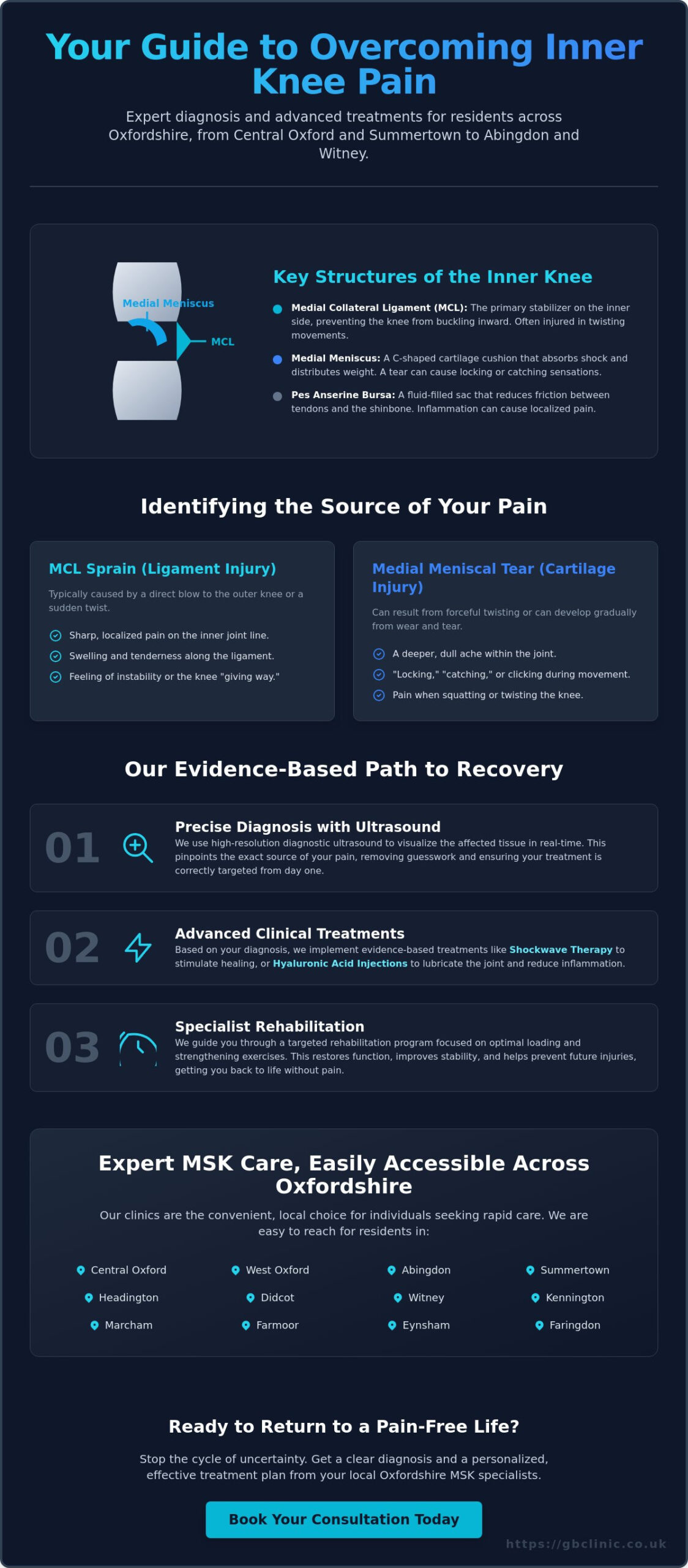
The inner knee is a complex structure reliant on several key components for stability. The Medial Collateral Ligament (MCL) acts as the primary stabilizer, preventing the joint from buckling inward under pressure. Nestled within the joint, the medial meniscus serves as a resilient, C-shaped cushion that distributes weight and absorbs shock during movement. For a deeper look at how these tissues interact, you can explore detailed information on Medial Knee Injuries. The pes anserine bursa is a fluid-filled sac that reduces friction between the tendons and the shinbone. When these structures become inflamed or damaged, even simple movements in Central Oxford or Witney can become difficult.
Who is Most at Risk of Medial Soreness?
Certain lifestyles and physical traits increase the likelihood of developing medial discomfort. Athletes in Headington or Didcot who play football or rugby are frequently at risk due to high-impact pivoting and sudden changes in direction. In older populations across Kennington and Marcham, age-related changes often lead to osteoarthritis in the medial compartment, where the protective cartilage begins to thin over time. Additionally, foot mechanics and gait patterns play a significant role in overloading the inner joint. Residents in West Oxford or Farmoor who experience flat feet or overpronation often find that these mechanical issues contribute to persistent soreness. Whether you’re dealing with a recent strain from a weekend match in Eynsham or long-term stiffness in Faringdon, identifying the exact source of pain is essential for a successful recovery.
Identifying the Source: Common Conditions Causing Inner Knee Pain
Pinpointing the exact cause of discomfort is the first step toward effective recovery. For residents in Central Oxford or West Oxford, inner knee pain often stems from several distinct clinical conditions that require specific management strategies. Managing medial knee soreness effectively is difficult without understanding whether the issue is structural, inflammatory, or degenerative. Because the symptoms of different Knee Pain Conditions often overlap, a surface-level assessment is rarely sufficient to determine the correct path forward.
MCL Sprains vs. Meniscal Injuries
Ligamentous and cartilaginous injuries are the most common acute causes of inner knee pain for active individuals in Witney and Abingdon. A Medial Collateral Ligament (MCL) sprain typically presents as sharp, localized pain on the inner side of the joint following a twisting movement or a direct blow. In contrast, a medial meniscal tear often causes a deeper ache and a signature “locking” or “catching” sensation where the knee feels stuck during certain movements. While both conditions involve the medial side, their recovery protocols differ. Clinical testing and diagnostic ultrasound are essential tools for an accurate diagnosis, providing the clarity needed to start the right treatment without the delays often found in standard care pathways.
Medial Knee Osteoarthritis
For residents in Headington or Didcot, persistent soreness that is worse in the morning often indicates medial compartment osteoarthritis. This “wear and tear” condition specifically targets the inner side of the knee joint as the protective cartilage thins over time. Symptoms include stiffness after rest and swelling that worsens after a long walk through Summertown or Kennington. If left unmanaged, this degenerative soreness can lead to a gradual loss of mobility. Early intervention using evidence-based treatments can significantly slow this progression and reduce daily discomfort.
The “Hidden” Causes: Bursitis and Plica
Sometimes the pain isn’t coming from the joint itself. Pes Anserine Bursitis involves inflammation of the small fluid sac where three tendons meet the shinbone. It’s a common cause of medial soreness in runners and walkers from Eynsham or Farmoor and is frequently mistaken for joint arthritis. Similarly, Plica syndrome involves the irritation of a fold in the joint lining, causing a clicking sensation and localized irritation. Accurate identification is essential because the treatment for bursitis differs significantly from the management of a ligament tear. If you’re struggling with persistent pain, seeking a professional MSK assessment can help you avoid unnecessary recovery delays and get you back to your activities in Marcham or Faringdon sooner.
Effective Self-Management and Rehabilitation Exercises
Early management is critical for preventing acute injuries from becoming chronic issues. For those in West Oxford or Headington, the initial phase of managing medial knee soreness focuses on controlling inflammation and protecting the tissue from further strain. While total rest was once the standard advice, modern clinical evidence suggests that a proactive approach is more effective for long-term recovery. Residents in Farmoor and Eynsham often find that modifying their daily walk is enough to keep the joint mobile without causing a flare-up. Successful rehabilitation requires a balance between necessary rest and the gradual introduction of load.
The POLICE Protocol for Acute Soreness
The POLICE protocol replaces the older RICE method by emphasizing the importance of movement. Protection involves short-term avoidance of activities that cause sharp pain, such as heavy pivoting or deep squatting. Optimal Loading is the most important step; it involves performing gentle, pain-free movements to stimulate tissue repair without causing further damage. Ice should be applied for 15-20 minutes to reduce local inflammation and provide natural pain relief. Compression and Elevation are equally important for managing swelling that often accumulates around the inner joint after a day of walking through Central Oxford or Abingdon. You can find more detail on these initial steps in this guide to Inner (medial) knee pain.
Top 3 Exercises for Medial Knee Stability
Once the initial irritation settles, the focus shifts to strengthening the muscles that support the medial compartment. Targeted exercise rehabilitation offloads the joint by building a muscular brace around the knee. These movements are designed to be low-impact and accessible for patients in Witney or Didcot.
- Straight Leg Raises: These strengthen the quadriceps without compressing the joint surfaces. This makes them ideal for those in Marcham or Faringdon dealing with early-stage arthritis.
- Clamshells: Improving hip stability reduces valgus stress, which is the inward collapse of the knee. This is essential for residents in Summertown who enjoy running or cycling.
- Terminal Knee Extensions: These build strength in the final degrees of extension. This is vital for maintaining a stable gait when walking through Kennington or other hilly areas of Oxfordshire.
Consistency is the key to seeing results. Performing these exercises two to three times a day helps maintain range of motion and prevents the joint stiffness that often follows a period of inactivity. If soreness persists despite these efforts, it may indicate a need for a more specialized clinical intervention.
When to Seek Advanced Clinical Treatment
If self-management hasn’t reduced your discomfort, it’s time for a professional MSK assessment. Managing medial knee soreness often requires looking beneath the surface to identify specific structural damage that isn’t visible during a basic physical exam. Red flags include the joint giving way, significant night pain, or an inability to bear weight while walking through Central Oxford or Headington. If you’ve been following standard GP advice with limited success, advanced clinical interventions offer a more targeted path to recovery by addressing the source of the pain directly.
The Power of Diagnostic Ultrasound
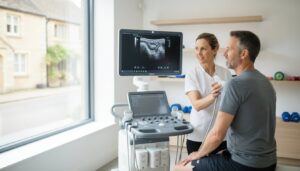
A standard physical exam can sometimes be ambiguous. A diagnostic ultrasound scan provides an immediate, clear picture of the inner joint. It identifies fluid accumulation, ligament tears, and inflammation in real-time. This technology is often superior for medial knee issues because it allows the clinician to see the tissue while it’s moving. Residents in Abingdon, Witney, and Faringdon can benefit from an instant diagnostic report, avoiding the typical 4-week wait for community physiotherapy. While 95% of MSK referrals in Oxfordshire are triaged within two working days, an immediate scan effectively ends the frustrating “wait and see” period.
Advanced Injection Therapies
When conservative measures aren’t enough, specialized injections can provide significant relief. Hyaluronic Acid (HA) Injections act as a synthetic cushion for arthritic medial joints, restoring lubrication and reducing friction. For those in Didcot or Summertown experiencing acute flares of bursitis or joint inflammation, guided steroid injections offer rapid symptom reduction. Ultrasound guidance ensures precise needle placement, maximizing the effectiveness of the treatment while minimizing discomfort for the patient.
For chronic issues like pes anserine tendonitis that haven’t responded to manual therapy or rest, Shockwave Therapy is a powerful alternative. It uses acoustic waves to stimulate healing in persistent bursa-related medial pain. This is a non-invasive option for patients in Kennington, Marcham, or Farmoor who want to avoid surgical consultations. Our clinics are also easily reachable for those in West Oxford and Eynsham seeking specialized care. If you’re ready to move beyond temporary relief, book an assessment with our specialists to discuss a comprehensive recovery plan.
Accessing Expert MSK Care in Oxfordshire
Selecting a private specialist clinic allows you to bypass the typical 6 to 12-week waiting period for standard NHS physiotherapy. While the Community MSK service in Oxfordshire has worked to reduce waiting times to approximately 4 weeks, many patients find that immediate intervention is necessary to prevent acute pain from becoming a chronic limitation. For those focused on managing medial knee soreness, timely access to advanced diagnostics is the most effective way to ensure a rapid return to activity. Our approach integrates advanced physiotherapy with modern clinical treatments, ensuring your recovery is guided by precise data rather than a “wait and see” strategy.
Local Care for Oxfordshire Residents
Accessibility is a cornerstone of our service. We recognize that traveling long distances for specialist care adds unnecessary stress to an already painful condition. Our clinics are strategically positioned to serve residents across the county, providing a convenient local choice for individuals in Headington, Didcot, and Summertown. Whether you are coming from Abingdon, Witney, or Central Oxford, you’ll find our locations easy to reach. We also ensure that patients from Kennington, Marcham, and Farmoor can access expert care without the need for travel to London. By offering these specialist services in your own community, we make it simpler for residents in Eynsham, Faringdon, and West Oxford to maintain a consistent recovery schedule.
Your First Appointment at GB Clinic
Every patient’s journey begins with a comprehensive knee assessment designed to identify the precise mechanism of your discomfort. We utilize a structured Problem, Solution, and Benefit framework to ensure clarity throughout your treatment process. This involves identifying the anatomical concern through clinical testing and diagnostic ultrasound, presenting a targeted intervention such as shockwave therapy or specialist injections, and outlining the clear functional benefits you can expect. This logical flow ensures you feel informed and confident in your path to recovery.
Your initial consultation is clinical, thorough, and patient-focused. We prioritize building a personalized recovery programme that accounts for your specific lifestyle goals, whether you’re returning to competitive sport or simply want to enjoy a walk through the Oxfordshire countryside without pain. This evidence-based approach removes the ambiguity often found in general medical advice, providing you with a predictable and efficient route to physical restoration. If you are ready to address your discomfort with professional precision, book your knee assessment at GB Clinic today.
Restore Your Mobility and Return to Action
Effective recovery begins with a precise understanding of your joint health. By identifying whether your pain stems from the MCL, a meniscal tear, or osteoarthritis, you can move away from generalized advice and toward a targeted clinical plan. Managing medial knee soreness requires this diagnostic-first approach to ensure that every intervention, from exercise rehabilitation to advanced shockwave therapy, is perfectly matched to your needs.
Our clinics provide residents across Oxfordshire with rapid access to expert care, eliminating the frustration of long waiting lists. Whether you live in Headington, Didcot, or Witney, or work in Central Oxford and West Oxford, specialist help is within reach. We also serve individuals from Abingdon, Summertown, Kennington, Marcham, Farmoor, Eynsham, and Faringdon, offering a convenient local alternative to distant specialist centers.
Take the first step toward a pain-free lifestyle today. With expert-led clinical diagnosis and specialized treatments like Hyaluronic Acid injections, you can regain the confidence to walk, run, and climb stairs without restriction. Book Your Comprehensive Knee Assessment in Oxford and start your journey back to full physical restoration. You don’t have to manage this discomfort alone.
Frequently Asked Questions
What is the most common cause of pain on the inside of the knee?
Medial compartment osteoarthritis and medial collateral ligament (MCL) sprains are the most frequent causes of inner knee discomfort. For active individuals in Headington or Witney, sudden pivoting often leads to ligamentous strain. Conversely, older residents in Summertown or Kennington may experience pain due to the gradual thinning of joint cartilage. Accurate diagnosis is essential to differentiate between these structural and degenerative issues before starting a treatment plan.
Can I walk with medial knee soreness or should I rest?
Gentle walking is generally encouraged unless it causes sharp pain or significant swelling. Managing medial knee soreness involves the principle of optimal loading, which stimulates tissue repair without overstressing the joint. Residents in Abingdon or Didcot should avoid total inactivity, as this often leads to joint stiffness and muscle weakness. If walking through Central Oxford becomes painful, it’s a sign that the joint requires a professional MSK assessment.
How do I know if my inner knee pain is a meniscus tear or an MCL sprain?
An MCL sprain typically presents as sharp, localized pain on the inner joint line, often occurring after a twisting injury. A medial meniscus tear usually causes a deeper ache and may involve mechanical symptoms like locking or catching during movement. While physical tests provide clues, a diagnostic ultrasound is the most reliable way for patients in Marcham or Farmoor to distinguish between these two distinct conditions.
Is a Hyaluronic Acid injection better than a steroid injection for knee pain?
Hyaluronic Acid injections are designed for long-term lubrication and cushioning in arthritic joints, whereas steroid injections are used to rapidly calm acute inflammation. The choice depends on whether you’re dealing with chronic wear or a sudden inflammatory flare-up. Specialists in our Oxfordshire clinics help determine which intervention is appropriate based on your specific diagnostic findings and mobility goals in Eynsham or Faringdon.
How many sessions of physiotherapy will I need for medial knee pain?
Most patients require between four and eight sessions of exercise rehabilitation to see significant functional improvement. The exact number depends on the severity of the injury and how consistently you perform your prescribed home exercises. For residents in West Oxford or Summertown, the focus is on building a stable muscular support system to prevent future recurrence and ensure a return to full daily activity.
Do I need a GP referral to see a private MSK specialist in Oxford?
You don’t need a GP referral to access private MSK services at our clinics. This allows residents in Didcot, Witney, and across Oxfordshire to bypass long waiting lists and receive a diagnosis within days. Self-referral is a streamlined way to access specialist diagnostic ultrasound and advanced treatments without unnecessary administrative delays, ensuring you start your recovery programme as quickly as possible.
Will a diagnostic ultrasound show what is wrong with my knee immediately?
A diagnostic ultrasound provides real-time images of the knee’s internal structures, allowing for an immediate assessment of ligaments, tendons, and fluid levels. Unlike other imaging methods that require a separate appointment and waiting period, ultrasound offers instant clarity during your consultation. This is particularly beneficial for patients in Headington or Abingdon who want a clear explanation of their pain source without any further delay.
Can flat feet or overpronation cause soreness on the inside of my knee?
Flat feet and overpronation significantly increase the inward stress on the knee joint, often leading to medial soreness. This mechanical misalignment forces the inner knee to absorb more weight than it is designed to handle. Patients in Kennington or Marcham who struggle with persistent discomfort often benefit from addressing their foot mechanics alongside targeted knee strengthening to reduce this repetitive and painful joint loading.