The standard advice of “just rest and stretch” often fails to address the underlying tissue damage that keeps you limping through your morning routine. You’ve likely spent weeks trying to manage that sharp, stabbing heel pain, only to find it returns every time you step out of bed. It’s frustrating to feel stuck when you’re searching for the right balance of physiotherapy vs shockwave therapy for plantar fasciitis to finally regain your mobility.
This guide clarifies the differences between these treatments to help you find the fastest path to pain-free walking. Whether you’re seeking specialist care in Abingdon, Summertown, or Central Oxford, understanding these options is the first step toward lasting recovery. We’ll provide a clear roadmap comparing traditional manual techniques with advanced clinical technology, ensuring residents from Witney to Headington can make an informed choice. You’ll discover how mechanical correction and targeted healing work together to resolve chronic symptoms. Our clinics are conveniently located for those in Kennington, Marcham, Farmoor, Eynsham, Didcot, Faringdon, and West Oxford, offering expert support within easy reach of your home or workplace.
Key Takeaways
- Understand why plantar fasciitis is typically a degenerative condition rather than simple inflammation, which is why standard rest often fails to provide relief.
- Discover how manual therapy and biomechanical assessments identify the root cause of heel pain to prevent future recurrence.
- Learn how shockwave therapy uses acoustic pulses to stimulate neovascularisation and restart the healing process in chronic tissues.
- Compare the clinical outcomes of physiotherapy vs shockwave therapy for plantar fasciitis to find the most effective treatment for your specific stage of recovery.
- Access these advanced therapies at our clinics, which serve patients from Abingdon, Summertown, Headington, Witney, Didcot, and across Oxfordshire.
Understanding Plantar Fasciitis: Why Heel Pain Becomes Chronic
Plantar fasciitis is often misunderstood as a simple case of temporary inflammation. While the “itis” suffix suggests an inflammatory response, most long-term sufferers are actually experiencing plantar fasciosis, a degenerative condition where the tissue has thickened and lost its structural integrity. Patients visiting our clinics from Summertown and Headington frequently report that while rest provides temporary relief, the sharp, stabbing pain returns immediately upon resuming activity. This cycle occurs because the body has moved past the acute healing phase into a state of chronic dysfunction. Deciding between physiotherapy vs shockwave therapy for plantar fasciitis requires a clear understanding of this tissue state.
The most characteristic symptom is the intense pain felt during those first steps out of bed. Overnight, the plantar fascia contracts and attempts to knit together micro-tears. When you stand up, this partially healed tissue is suddenly stretched under your full body weight, causing it to tear again. This repetitive cycle of damage and incomplete repair is what leads many residents in Abingdon and Didcot to seek professional intervention after home remedies fail.
To better understand this concept, watch this helpful video:
The Anatomy of the Plantar Fascia
The plantar fascia is a robust, thick band of connective tissue that spans the sole of your foot, linking your heel bone to your toes. For a comprehensive overview of plantar fasciitis, it’s helpful to view the fascia as a biological shock absorber. It maintains the longitudinal arch of the foot, providing the necessary tension to propel you forward during walking or running. When this tissue is overloaded, small micro-tears develop. Instead of healthy repair, the body often responds by producing disorganized scar tissue, which results in the characteristic thickening seen on a diagnostic ultrasound scan. Standard physiotherapy can address the early mechanical causes, but chronic cases often require a more advanced stimulus.
When Does Foot Pain Become a Chronic Issue?
Foot pain typically transitions from an acute strain to a chronic MSK condition after approximately six months. At this stage, the body enters a state of “failed healing” where the natural biological repair processes have stalled. Residents in Central Oxford and West Oxford often delay treatment due to demanding professional schedules, but this delay allows the tissue to become increasingly fibrotic. Whether you’re commuting from Witney or working in Headington, early intervention is vital. Our clinics in Kennington, Marcham, and Farmoor are easily accessible, providing a convenient choice for those in Eynsham or Faringdon who need to break the cycle of chronic pain. Choosing the right path, such as physiotherapy vs shockwave therapy for plantar fasciitis, depends on whether your condition is a fresh injury or a deep-seated chronic issue.
The Role of Traditional Physiotherapy in Managing Heel Pain
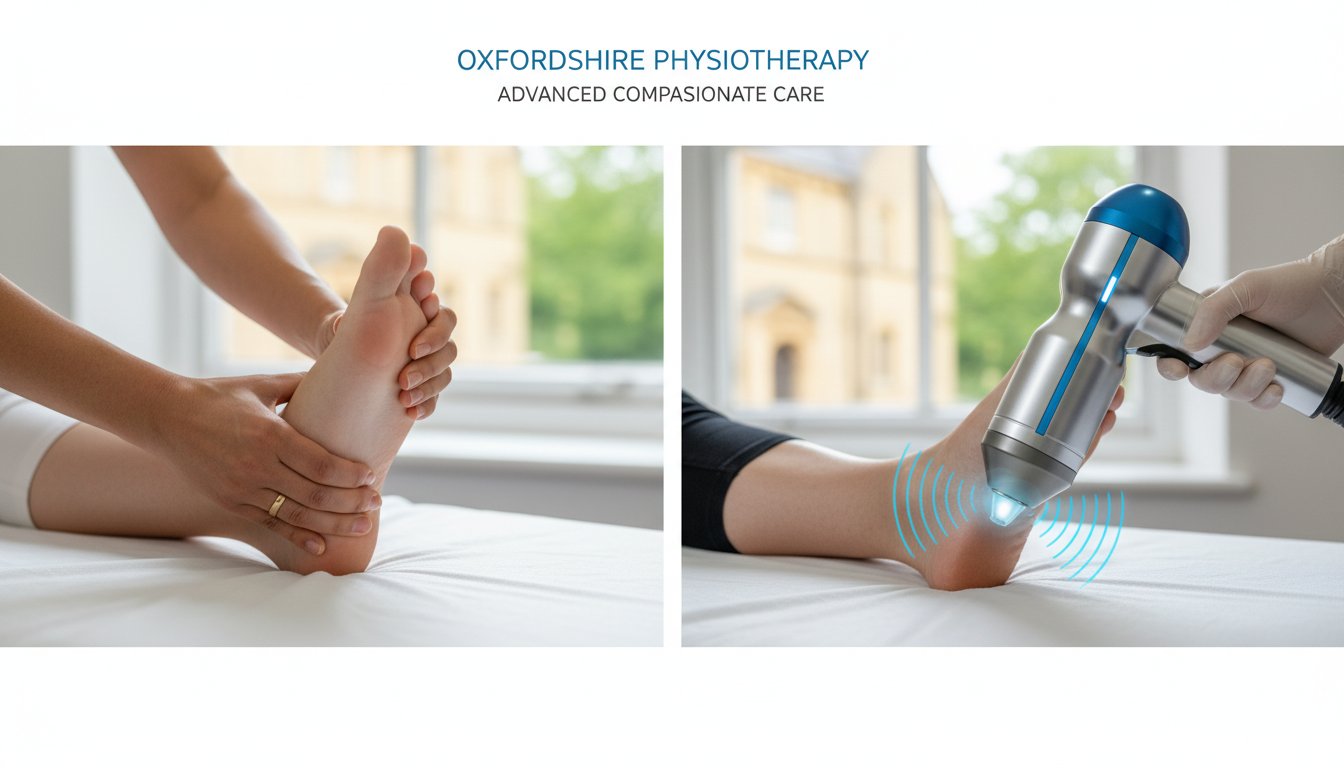
Traditional physiotherapy serves as the cornerstone for managing musculoskeletal disorders by identifying the biomechanical failures that lead to tissue overload. When patients weigh up physiotherapy vs shockwave therapy for plantar fasciitis, they often discover that standard physical therapy is essential for correcting the underlying “why” behind their pain. If your heel pain stems from a collapsed arch or restricted ankle mobility, treating the foot in isolation won’t provide a permanent solution. Our clinicians prioritize a comprehensive assessment to ensure every patient from Abingdon and Didcot receives a treatment plan tailored to their specific movement patterns.
A clinical study comparing treatments highlights that conservative management remains a highly effective first line of defense for acute cases. At GB Clinic, we offer private physiotherapy in Oxford that integrates advanced diagnostic tools with time tested manual techniques. This approach is particularly beneficial for those living in Central Oxford or commuting from Witney who need a reliable, evidence based path to recovery.
Manual Therapy and Myofascial Release
Hands on techniques are vital for restoring tissue elasticity and improving local circulation. Many patients in West Oxford and Kennington present with significant tension in the posterior chain, specifically the calf muscles and Achilles tendon. This tightness creates a constant “tug” on the plantar fascia, preventing it from healing correctly. Through targeted manual therapy and myofascial release, we can reduce this mechanical pull. These interventions help desensitise the area and prepare the foot for the more intensive loading required in later stages of rehabilitation. For residents in Summertown and Headington, this immediate reduction in tension often provides the first sign of relief from chronic stiffness.
Exercise Rehabilitation and Gait Analysis
True recovery requires more than just passive treatment. Exercise rehabilitation is necessary to encourage healthy tissue remodelling through controlled loading. We don’t just recommend generic stretches; we design progressive plans that strengthen the intrinsic foot muscles and the lower limb. This is crucial for residents in Farmoor and Eynsham who want to return to running or long walks without fear of relapse. By performing a detailed gait analysis, our specialists can identify overpronation or other gait abnormalities that contribute to heel strain. This level of detail ensures that individuals from Marcham and Faringdon receive a roadmap that addresses their unique physical demands, helping them understand the choice of physiotherapy vs shockwave therapy for plantar fasciitis based on their specific biomechanical needs. If you’re ready to start your recovery, you can book an initial assessment with our expert team today.
Shockwave Therapy (ESWT): Accelerating the Healing Process
When standard treatments stall, many patients look at the clinical evidence for physiotherapy vs shockwave therapy for plantar fasciitis. Shockwave therapy, or Extracorporeal Shockwave Therapy (ESWT), is a sophisticated medical intervention that uses high-energy acoustic pulses to treat chronic musculoskeletal conditions. Unlike surgery, it’s non-invasive and requires no downtime. It works by delivering mechanical energy directly to the site of injury, creating “therapeutic micro-trauma” in the damaged fascia. This controlled stimulus is precisely what’s needed to restart a stalled healing process in tissue that has become degenerative over time. According to the Plantar fasciitis treatment guidelines, ESWT is a valuable second-line option for those who haven’t found relief through conservative measures.
The Science of Extracorporeal Shockwave Therapy
The biological impact of ESWT goes beyond simple mechanical stimulation. The high-energy sound waves penetrate deep into the scarred tissue, breaking down disorganized collagen fibers and calcifications. A critical benefit of this process is neovascularisation, the formation of new blood vessels. This increases blood flow to an area that naturally has a poor blood supply, delivering the nutrients required for long-term repair. Additionally, the treatment overstimulates local nerve endings, which significantly reduces pain signals in the short term. For patients in Summertown or Headington who have struggled with stubborn heel pain for months, advanced shockwave therapy offers a high-tech solution to restart the body’s natural regenerative cycle.
What to Expect During a Shockwave Session
A typical session lasts between 10 and 15 minutes, making it a convenient option for those working in Central Oxford or West Oxford. During the procedure, a handheld device is used to deliver the pulses to the most painful part of the heel. You’ll feel a rapid tapping or pulsing sensation. While the treatment is intense, it’s generally well-tolerated and can be adjusted based on your comfort levels. Most clinical protocols recommend a series of 3 to 5 sessions, spaced about a week apart, to achieve the best results. We see many patients from Abingdon, Witney, and Didcot who appreciate the efficiency of this approach. It’s a safe, evidence-based method that avoids the risks associated with more invasive procedures. Residents in Kennington, Marcham, Farmoor, Eynsham, and Faringdon can easily access these specialized treatments at our Oxfordshire clinics, ensuring that advanced care is never far from home.
Physiotherapy vs Shockwave Therapy: A Direct Comparison
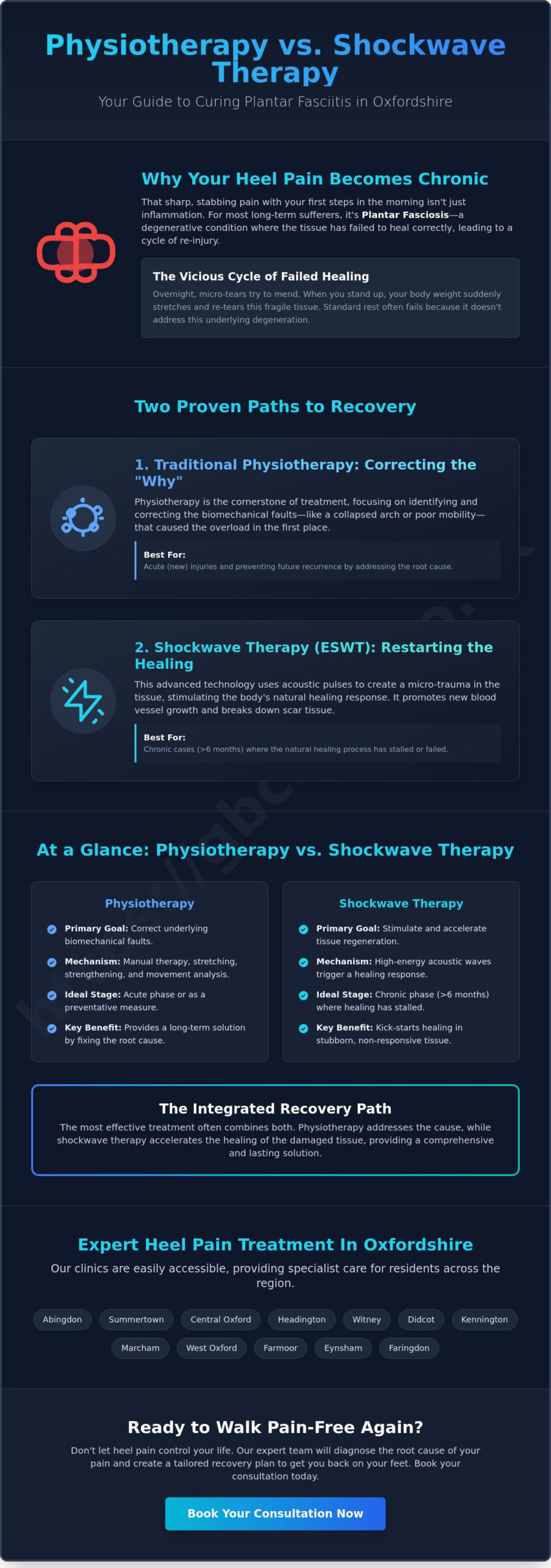
Deciding between physiotherapy vs shockwave therapy for plantar fasciitis depends largely on the duration of your symptoms and the current state of your tissue. In the initial stages of heel pain, the body is often dealing with acute mechanical overload. Physiotherapy is the primary tool during this phase because it addresses the structural causes of the injury. However, for chronic cases lasting more than six months, shockwave therapy is considered the gold standard. While physiotherapy offers a gradual path to recovery by strengthening the foot, shockwave therapy provides faster symptomatic relief by directly stimulating stalled healing processes in degenerative tissue.
From a cost benefit perspective, shockwave therapy typically requires a higher investment per session but involves fewer clinical visits. A standard course usually consists of three to five treatments. In contrast, traditional physiotherapy may require more frequent sessions over several months to achieve lasting biomechanical change. For residents in Central Oxford or West Oxford, the choice often comes down to how long the pain has persisted and how quickly they need to return to their normal activity levels.
When to Choose Physiotherapy First
Physiotherapy is the ideal starting point for new injuries or pain related to sudden changes in your training routine. It’s particularly effective for patients who also experience hip, knee, or back issues that might be altering their gait. If you’re a resident in Marcham or Farmoor looking for holistic care, a biomechanical assessment can identify if your heel pain is actually a secondary symptom of a different movement dysfunction. By focusing on manual therapy and exercise rehabilitation, we help patients in Eynsham and Faringdon build a resilient foundation that prevents the injury from recurring.
When Shockwave Therapy is the Superior Option
If you’ve spent more than three months performing daily stretches and resting without significant improvement, shockwave therapy becomes the superior choice. It serves as a biological “reset button” for the foot’s healing mechanism, making it highly effective for stubborn cases that haven’t responded to conservative management. This treatment is a vital alternative for patients in Abingdon, Summertown, and Kennington who want to avoid more invasive options like steroid injections or surgery. It’s a targeted intervention that forces the body to address chronic, fibrotic tissue that has otherwise stopped trying to repair itself. Whether you’re commuting from Witney, Headington, or Didcot, this advanced technology offers a clear path out of the chronic pain cycle. If you’re unsure which path is right for your recovery, you can consult with our specialist team to receive a clear, evidence based treatment plan.
The Integrated Recovery Path at GB Clinic Oxfordshire
At GB Clinic, we recognise that the most effective treatment plans rarely rely on a single modality. While some providers present the choice of physiotherapy vs shockwave therapy for plantar fasciitis as a binary decision, clinical experience shows that an integrated approach yields superior long-term results. We use a diagnostic ultrasound scan to precisely measure the thickness of the fascia and identify any intra-substance tears or calcifications. This objective data ensures we apply the correct intensity of treatment from the very first session. Our clinics are strategically positioned to serve residents in Didcot, Eynsham, and Faringdon, providing easy access to advanced diagnostics without the long wait times often associated with secondary care.
A thorough musculoskeletal (MSK) assessment is the vital first step. We evaluate your unique movement patterns and history to determine the optimal balance of interventions. Patients from Marcham and Farmoor benefit from this comprehensive screening, which prevents the application of high-energy treatments to conditions that might require a different clinical path. It’s about finding the specific solution that fits your anatomical needs and lifestyle goals.
Combining Shockwave with Rehabilitative Exercise
Shockwave therapy acts as a powerful catalyst for tissue change, but it works best when paired with strategic loading. By reducing pain and restarting the regenerative cycle, ESWT creates a “window of opportunity” where you can perform rehabilitative exercises that were previously too painful. We often combine these acoustic pulses with targeted manual therapy to address persistent calf tightness and joint restrictions. This multi-layered strategy is central to our commitment to evidence-based, patient-centred recovery. It ensures that residents in Kennington and Witney don’t just find temporary relief but build the resilience necessary to stay active. Our goal is to move you from a state of discomfort to one of full physical restoration.
Booking Your Assessment in Oxford
Our clinics offer convenient access for those living in Central Oxford, West Oxford, and surrounding areas like Abingdon and Summertown. During your initial MSK consultation, we’ll discuss your symptoms in detail, perform a physical examination, and outline a clear treatment roadmap. Whether you’re a runner in Headington or a professional working in the city centre, we focus on getting you back to your routine efficiently. You’ll leave your first appointment with a clear understanding of the best path forward, whether that involves physiotherapy vs shockwave therapy for plantar fasciitis or a bespoke combination of both. To begin your recovery and return to a comfortable, mobile state, you can book your plantar fasciitis assessment at GB Clinic today.
Take the First Step Toward Pain-Free Walking
Persistent heel pain doesn’t have to be a permanent limitation on your daily lifestyle. By understanding the clinical nuances of physiotherapy vs shockwave therapy for plantar fasciitis, you can move away from temporary home remedies and toward a solution that addresses both the structural causes and the biological healing of your foot. Whether you require the biomechanical foundation of manual therapy or the regenerative stimulus of advanced shockwave technology, our team provides a clear, evidence-based path to physical restoration.
Our clinics offer Convenient Oxfordshire Locations to serve patients across the region, ensuring residents in Abingdon, Summertown, Headington, and Witney have access to specialist care. We also provide easy accessibility for those living or working in Didcot, Faringdon, Eynsham, Kennington, Marcham, and Farmoor. With our Expert MSK Physiotherapists and Advanced Shockwave Technology, we offer the professional expertise needed to recover with confidence. If you’re ready to leave morning pain behind and return to running or walking in Central Oxford or West Oxford, we’re here to support your journey.
Book Your Specialist MSK Assessment in Oxford Today and discover the most effective roadmap for your recovery. We look forward to helping you regain your mobility and long-term comfort.
Frequently Asked Questions
Is shockwave therapy more effective than physiotherapy for plantar fasciitis?
Shockwave therapy is generally more effective for chronic, long-term heel pain that hasn’t responded to standard conservative care. While physiotherapy addresses the underlying biomechanical causes, shockwave therapy is specifically designed to restart the healing process in degenerative tissue. This makes it a superior choice for patients in Kennington or Marcham who’ve struggled with symptoms for over six months. We assess each individual’s tissue state to determine which clinical path provides the fastest route to recovery.
How many sessions of shockwave therapy will I need for my heel pain?
Most patients require a course of 3 to 5 sessions to achieve significant, lasting pain reduction. These treatments are typically spaced about one week apart to allow the body’s natural regenerative processes to take effect between appointments. While some individuals notice an immediate improvement in their symptoms, the full biological benefits of tissue remodelling often continue for several weeks after the final session is completed.
Can I have physiotherapy and shockwave therapy at the same time?
Combining both treatments is often the most effective approach for a complete and lasting recovery. When evaluating physiotherapy vs shockwave therapy for plantar fasciitis, it’s helpful to see them as complementary rather than mutually exclusive. Shockwave reduces local pain and restarts the healing cycle, while physiotherapy corrects the movement patterns that originally caused the strain. This integrated method is highly effective for our patients from Farmoor, Eynsham, and Faringdon.
Is shockwave therapy painful for treating plantar fasciitis?
The sensation is described as a rapid, intense tapping that can be uncomfortable but is generally well-tolerated. We always start at a lower energy level and gradually increase the intensity based on your personal comfort and feedback during the session. The treatment lasts only 10 to 15 minutes, and most patients find the temporary discomfort is a small trade-off for the significant long-term relief it provides for chronic heel pain.
I live in Didcot; is the Oxford clinic easy to reach for weekly sessions?
Our clinics are strategically located to ensure they are easily accessible for residents across the county. If you’re travelling from Didcot, Abingdon, or Witney, you’ll find our facilities are well-connected and simple to reach for your weekly appointments. We understand that consistency is vital for successful rehabilitation, so we offer flexible scheduling to accommodate those commuting into the city for their specialist MSK care.
Does health insurance cover shockwave therapy or physiotherapy in Oxford?
Most major private health insurance providers in the UK cover these clinical services when delivered by registered specialists. Coverage levels for manual therapy or advanced shockwave treatments can vary significantly between individual policies. We recommend that residents in Summertown and Headington contact their insurer directly to confirm their specific level of cover. Our team can provide the necessary clinical codes and receipts to assist with your insurance claim process.
What happens if neither physiotherapy nor shockwave therapy works?
We offer several advanced alternatives if your symptoms don’t respond to initial conservative or shockwave treatments. Our specialists can provide Hyaluronic Acid (HA) injections, PRP, or specialist steroid injections to manage persistent inflammation and pain. We use diagnostic ultrasound to monitor your progress and can adjust your treatment roadmap to ensure we’re always using the most effective tools for your specific stage of recovery.
How soon can I return to running after starting treatment at GB Clinic?
The timeline for returning to running depends on the severity of your tissue degeneration and your response to the initial treatment phase. Many patients begin a gradual, structured return to activity within four to six weeks of starting their bespoke rehabilitation plan. Whether you’re training in Central Oxford or West Oxford, our specialists will monitor your progress closely. We focus on building a resilient foot arch that can handle high-impact loads without relapse.