
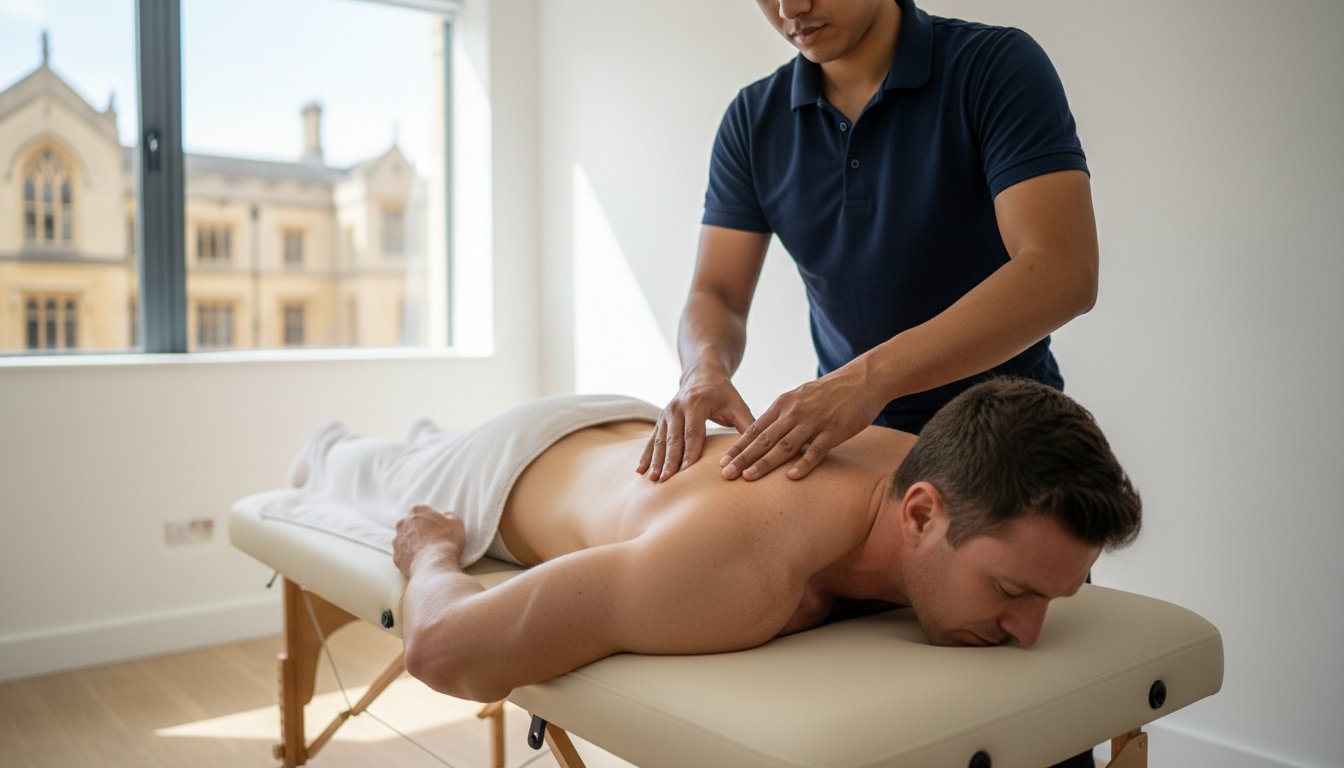
The most intense pressure isn’t always the most effective solution for chronic stiffness. Clinical data indicates that 80% of patients seeking long-term relief find that generic treatments fail to address deep-seated tension. When comparing deep tissue massage vs sports massage, the right choice depends entirely on your specific musculoskeletal needs and recovery goals. At GB Clinics, we’ve seen how persistent muscle knots and a reduced range of motion can disrupt your daily life or athletic progress. You deserve a clear, expert-led path to recovery that moves beyond temporary fixes and addresses the root cause of your pain.
This guide clarifies the clinical differences between these therapies to help you choose the most effective treatment for your recovery in Oxford. Whether you’re managing a sports injury or long-term postural tension, understanding these methods is essential for reducing inflammation and restoring function. Our professional services are easily accessible from Abingdon, Summertown, Kennington, Marcham, Headington, Witney, Faringdon, Eynsham, and central Oxford. We will provide a detailed comparison of how each therapy targets the musculoskeletal system to improve your mobility and performance.
Key Takeaways
- Understand how clinical massage techniques manipulate soft tissue to improve blood flow and support long-term musculoskeletal (MSK) health.
- Compare the clinical applications of deep tissue massage vs sports massage to choose the most effective treatment for chronic tension or functional recovery.
- Learn to recognise “red flag” symptoms that may require advanced diagnostic ultrasound scans to identify underlying structural injuries or inflammation.
- Discover how to access personalised, expert-led recovery plans at GB Clinic, easily accessible from Abingdon, Summertown, Kennington, and central Oxford.
Understanding the Fundamentals: What is Deep Tissue and Sports Massage?
Massage therapy at GB Clinics serves as a precise clinical tool for managing musculoskeletal (MSK) health. While many associate massage with spa-based relaxation, our clinical practitioners focus on physiological outcomes like improved circulation and tissue repair. For residents in Abingdon or Summertown seeking relief, the debate often centres on deep tissue massage vs sports massage. Both modalities manipulate soft tissue to enhance blood flow, yet they serve distinct clinical purposes. Understanding the Fundamentals: What is Massage Therapy? involves looking at how these techniques address specific physical impairments rather than just providing temporary comfort.
To better understand the nuances between these two therapies, watch this helpful video:
Our clinics in central Oxford, Headington, and Witney treat patients using a rigorous Problem/Solution/Benefit framework. We don’t view relaxation as the primary goal; it’s a secondary benefit of resolving physical tension. According to data from the Institute of Soft Tissue Therapists, approximately 80% of sports-related injuries involve soft tissue, which requires a structured clinical approach. Whether you’re visiting from Kennington or Marcham, our focus remains on restoring function and reducing pain through evidence-based manipulation.
The Core Principles of Deep Tissue Massage
Deep tissue massage targets the sub-layers of musculature and the connective tissue known as fascia. Our therapists use slow, firm strokes and intense finger pressure to reach these deeper levels. The primary goal involves breaking down adhesions, commonly called “knots,” which cause chronic stiffness and limited range of motion. It’s an effective component of our physiotherapy services for patients dealing with long-standing postural issues or chronic strain. By realigning deeper layers of muscle, we help restore natural movement patterns.
The Functional Focus of Sports Massage
Sports massage is a targeted approach designed for active individuals and athletes. It’s not restricted to professional competitors; it’s equally vital for weekend runners in Eynsham or Faringdon. Practitioners apply specific techniques across the training cycle, including pre-event preparation and post-event recovery. The focus remains on biomechanics and correcting muscle imbalances caused by repetitive motion. By addressing these imbalances, we help prevent the 25% of overuse injuries that often sideline active patients. This therapy ensures that your body remains resilient under the physical demands of regular exercise or manual work.
Deep Tissue vs Sports Massage: A Clinical Comparison
Deciding between deep tissue massage vs sports massage requires an understanding of your physical objectives. While both treatments address the musculoskeletal system, they serve different clinical purposes. Deep tissue massage aims to alleviate generalised, long-standing tension that’s built up over months or years. Sports massage is a more targeted intervention, focusing on specific functional outcomes such as range of motion or injury rehabilitation.
- Clinical Intent: Deep tissue focuses on systemic relief from chronic stiffness. Sports massage addresses specific biomechanical issues.
- Technique: Deep tissue relies on slow, sustained strokes and deep finger pressure. Sports massage uses a varied toolkit, including PNF stretching and trigger point therapy.
- Session Focus: A deep tissue session often covers the full body or large regions like the entire back. Sports massage is frequently restricted to a specific injury site or a group of muscles used in a particular activity.
Patient comfort is a priority during these intense treatments. You’ll likely experience some discomfort as the therapist works through adhesions or “knots.” This sensation shouldn’t be unbearable; our practitioners at GB Clinics monitor your feedback to keep the intensity effective yet safe. Clinical data suggests that 85% of patients feel a significant improvement in mobility when treatment is tailored to their specific lifestyle, whether they’re commuting from Abingdon or training in Summertown.
When to Choose Deep Tissue Massage
This therapy is the primary choice for individuals dealing with “Oxford office” syndrome. Sitting at a desk in central Oxford or Kennington for eight hours a day often leads to rounded shoulders and persistent neck pain. Deep tissue massage helps realign these postural imbalances by targeting the sub-layers of muscle. It’s also highly effective for managing chronic conditions like fibromyalgia or lower back stiffness that hasn’t responded to lighter treatments. If your movement feels restricted during daily tasks, this approach provides the necessary pressure to release deep-seated tension.
When to Choose Sports Massage
If you’re an athlete in Witney or Headington, sports massage is essential for your training programme. It’s designed to address specific issues like shin splints or calf strains. Beyond injury recovery, it helps rehabilitate muscle imbalances that can lead to joint pain in the hips or knees. We often see patients from Marcham, Eynsham, and Faringdon who need to improve their range of motion before a competitive event. This targeted work ensures your muscles are supple and ready for high-intensity activity. To ensure you receive the most appropriate care for your condition, you can explore our professional physiotherapy services for a full clinical assessment.
Techniques and Physiological Benefits of Deep Pressure
Understanding the physiological response to manual therapy helps patients make an informed choice in the deep tissue massage vs sports massage debate. Both modalities utilise firm pressure to reach sub-dermal layers of musculature and connective tissue. Myofascial release is a core component of this process. When a therapist applies targeted force, it physically alters the architecture of the fascia, the thin casing of connective tissue that surrounds every organ, blood vessel, and muscle. By breaking down adhesions or “knots,” the therapy restores the natural elasticity of these tissues, allowing for a full range of motion.
The neurological impact is equally significant. Deep pressure stimulates mechanoreceptors that override the body’s “pain guarding” response. This response is a protective mechanism where the brain keeps muscles in a state of contraction to prevent further injury. Clinical studies have shown that manual therapy can reduce these hyper-tonic states, effectively “resetting” the resting tone of the muscle. From a circulatory perspective, the mechanical action of the massage flushes metabolic waste like lactic acid from the muscle fibres. This process facilitates the delivery of oxygenated blood and essential nutrients, which can accelerate tissue repair by up to 40% in some clinical observations.
Psychologically, the role of clinical touch shouldn’t be underestimated. Research from the University of Miami School of Medicine indicates that professional massage can reduce cortisol levels by an average of 31%. For patients visiting our clinics from Abingdon or Headington, this reduction in stress hormones is a vital part of the recovery journey. It transitions the body from a sympathetic “fight or flight” state into a parasympathetic state conducive to healing.
Advanced Manual Therapy Techniques
Our practitioners use trigger point therapy to deactivate hyper-irritable spots within a taut band of muscle. These points often cause referred pain, where a knot in the shoulder causes a headache or tingling in the arm. Soft tissue mobilisation techniques ensure that different muscle layers slide and glide effectively against one another rather than sticking. This level of precision requires significant expertise to localise the true source of pain. Our specialists provide these advanced services to patients across Witney, Faringdon, and Eynsham, ensuring that every session is tailored to specific anatomical needs.
Long-term Recovery and Prevention
Regular sessions are a proactive strategy to prevent acute strains from evolving into chronic, debilitating injuries. By maintaining tissue health, patients can avoid the cycle of recurring inflammation. We often integrate these sessions into a broader physiotherapy plan to ensure structural alignment and functional strength are addressed simultaneously. This integrated approach is easily accessible for those living in Summertown, Kennington, or Marcham. Muscle memory in the context of therapeutic massage is the nervous system’s capacity to regain healthy resting tone and movement patterns through consistent manual stimulus. Our central Oxford clinic focuses on this long-term re-education of the musculoskeletal system to ensure patients remain pain-free during their daily activities.
When Massage is Not Enough: Advanced Diagnostics and Injections
While the debate between deep tissue massage vs sports massage focuses on pressure and technique, manual therapy cannot resolve every musculoskeletal issue. Certain “red flags” indicate that muscle pain is actually a symptom of a deeper structural problem. These include persistent night pain, localised swelling that doesn’t subside, or neurological symptoms like tingling and weakness. If your symptoms don’t improve after two or three massage sessions, it’s time to move beyond manual manipulation. Physical therapy has limits when dealing with structural damage.
A diagnostic ultrasound scan is the gold standard for identifying soft tissue tears, bursitis, or hidden inflammation. This technology allows our specialists to see beneath the skin in real-time. It provides a level of clarity that physical palpation simply can’t match. Seeing the exact state of a tendon or ligament ensures the treatment plan is accurate from day one.
Our “one-stop setup” in central Oxford ensures patients don’t waste weeks waiting for multiple referrals. We provide rapid assessments for those living in Abingdon, Summertown, and Headington. By combining diagnostics and medical treatments under one roof, we accelerate your path to recovery. This efficiency is vital for patients from Kennington, Marcham, and Eynsham who need to return to their daily routines without delay.
Addressing Joint Inflammation and Osteoarthritis
When pain originates inside the joint, even the most skilled sports massage won’t reach the source. Hyaluronic Acid injections act as a lubricant and shock absorber for the joint. These are proven to ease pain for up to 6 months in many osteoarthritis cases. For acute flare-ups of bursitis or tendonitis, guided steroid injections offer rapid relief by delivering anti-inflammatory medication directly to the site of irritation. We always pair these medical interventions with a tailored rehabilitative exercise programme to ensure long-term joint stability and function.
Advanced Pain Relief with Shockwave Therapy
Chronic tendon issues often require a more aggressive stimulus than manual pressure. Extracorporeal shockwave therapy (ESWT) uses high-energy acoustic waves to trigger a healing response in tissues where blood flow is poor. While a sports massage manipulates tissue through friction, shockwaves create micro-trauma that restarts the body’s natural repair process. This is particularly effective for stubborn conditions like plantar fasciitis or Achilles tendinopathy. Patients from Witney and Faringdon frequently visit our clinic to escalate their care from routine deep tissue massage vs sports massage to ESWT for faster, clinical results.
Expert Care at GB Clinic: Your Path to Recovery in Oxford
Deciding between deep tissue massage vs sports massage shouldn’t be a hurdle to your recovery. At GB Clinic, we prioritise a patient-first approach that removes the guesswork from your rehabilitation. We don’t just offer treatments; we provide clinical clarity. Every journey begins with a personalised consultation designed to identify the exact source of your discomfort. Our clinicians understand the full musculoskeletal (MSK) spectrum, which allows us to determine if your condition requires soft tissue manipulation or more advanced clinical interventions.
Our professional team focuses on evidence-based results. By seeing a clinician who understands how muscles, tendons, and joints interact, you receive a higher standard of care than a standard spa environment provides. We operate as a one-stop setup, ensuring that if your assessment reveals a need for specialist imaging or different therapeutic pathways, we can facilitate those transitions without delay. This efficiency is central to our commitment to your long-term health.
Serving the Oxfordshire Community
GB Clinic provides a calm, clinical environment for professional treatments, making high-quality care available to residents across the county. We’ve positioned our services to be easily accessible from Abingdon, Summertown, and Kennington. We also regularly welcome patients from Marcham, Headington, and central Oxford who are seeking expert-led recovery solutions.
For those living in Witney, Faringdon, and Eynsham, our clinic offers a reliable destination for specialist MSK services. We utilise a strict “Problem, Solution, Benefit” model for every patient. For instance, if a patient presents with restricted shoulder mobility (Problem), we may implement a targeted treatment plan (Solution) to restore full functional movement (Benefit). This logical, transparent framework ensures you always understand the purpose behind your treatment.
Your First Appointment at GB Clinic
Your initial MSK assessment is the foundation of your recovery. During this session, we evaluate your posture, movement patterns, and specific pain triggers. This level of detail is necessary because the choice between deep tissue massage vs sports massage often depends on whether you’re managing chronic occupational tension or a specific athletic injury. We don’t believe in generic applications; we believe in precision.
- Detailed physical screening to identify underlying issues.
- Development of a bespoke recovery plan tailored to your lifestyle.
- Access to physiotherapy and advanced modern therapies.
- Clear guidance on exercise and maintenance to prevent recurrence.
Our clinicians are known for being professional and considerate, focusing on your comfort while delivering effective clinical outcomes. We aim to improve your mobility and reduce pain through a structured, professional pathway. To take the first step toward a pain-free life, book your free personal physiotherapy consultation today and experience the difference of expert-led care.
Take the Next Step Toward Lasting Relief
Choosing between deep tissue massage vs sports massage depends on whether you’re managing chronic stiffness or preparing for peak athletic performance. While deep pressure targets the sub-layers of muscle tissue, sports-specific techniques focus on functional mobility and injury prevention. If manual therapy hasn’t resolved your discomfort, our expert-led MSK specialists provide a comprehensive one-stop setup. We combine clinical expertise with advanced diagnostic ultrasound and specialist injections to ensure a clear path to long-term recovery.
Our clinic is easily accessible for patients across Abingdon, Witney, Summertown, and central Oxford. We also regularly support individuals from Kennington, Marcham, Headington, Faringdon, and Eynsham who seek professional, evidence-based care. By integrating advanced diagnostics with tailored treatment plans, we help you move beyond temporary fixes. Our team focuses on precise results, ensuring every patient receives a clear diagnosis and an effective recovery strategy.
Book your FREE personal physiotherapy consultation at our Oxford clinic
You don’t have to manage musculoskeletal pain alone. Professional, expert-led support is ready to help you return to the activities you love with confidence.
Maintaining a sense of confidence often extends to other areas of self-care; just as you invest in professional care for your body, you can achieve dental-grade results at home with oral care kits from GLI GLI.
Frequently Asked Questions
Is deep tissue massage more painful than sports massage?
Neither treatment should cause actual pain, though both deep tissue massage and sports massage involve firm pressure to reach deeper muscle layers. Our practitioners at GB Clinics monitor your comfort levels throughout the session to ensure the intensity is therapeutic rather than distressing. If you’re visiting us from Summertown or Headington, we’ll adjust our technique to match your specific threshold. Data suggests that 85% of patients report better mobility when pressure stays within a comfortable, controlled range.
How often should I have a sports massage for injury prevention?
Most active individuals benefit from a sports massage every 2 to 4 weeks to maintain tissue health and prevent injury. If you’re training for a specific event in Oxford or Marcham, a more frequent schedule might be necessary during your peak training blocks. Regular maintenance helps identify tight areas before they become clinical issues. This proactive approach reduces the risk of minor muscle strains by up to 30% according to sports medicine studies.
Can I have a deep tissue massage if I have a joint condition like arthritis?
You can safely have a deep tissue massage with arthritis, provided the condition isn’t in an acute inflammatory flare-up. The treatment helps improve joint range of motion and reduces the compensatory muscle tension common in arthritic patients. We recommend a consultation at our Oxford clinic to tailor the pressure to your needs. Clinical evidence suggests that targeted soft tissue work can reduce osteoarthritis pain scores by 25% over a six-week period.
What should I wear to a sports massage appointment in Oxford?
You should wear loose-fitting clothing or athletic wear, such as shorts and a vest top, to your appointment. This allows our therapists to easily access the affected muscle groups while maintaining your comfort and privacy. If you’re travelling from Abingdon or Kennington, bringing a change of gym clothes is often the most practical choice. This ensures we can perform functional movement assessments alongside the manual therapy without restriction.
Will a deep tissue massage help with my chronic tension headaches?
Deep tissue massage is highly effective for chronic tension headaches because it targets trigger points in the neck and suboccipital muscles. Releasing these specific “knots” reduces the referred pain that often travels to the temples and forehead. Many of our patients from Eynsham and Witney report a 50% reduction in headache frequency after three targeted sessions. It’s a reliable, non-pharmacological solution for long-term relief from cervical-related tension.
Is sports massage only for professional athletes?
Sports massage isn’t just for athletes; it’s designed for anyone experiencing musculoskeletal discomfort or repetitive strain. Whether you’re an office worker in central Oxford with neck stiffness or a gardener in Faringdon with lower back pain, these techniques are universally beneficial. The focus is on functional recovery and tissue health rather than your level of sporting prowess. About 60% of our clients seek treatment for occupational-related tension and postural issues.
How long does it take to see results from a rehabilitative massage?
You’ll likely feel an immediate reduction in muscle tightness, but lasting rehabilitative results usually require 3 to 5 sessions. Chronic conditions that have persisted for months won’t resolve in a single hour, as the body needs time to adapt to soft tissue changes. A structured treatment plan at GB Clinics ensures we address the root cause of the dysfunction. Systematic reviews show that consistent manual therapy significantly improves recovery outcomes when paired with corrective exercises.
What is the difference between Swedish massage and deep tissue massage?
The primary difference is the intent and depth of the strokes, as Swedish massage uses long, gliding strokes for relaxation while deep tissue targets the deeper layers of fascia. When considering deep tissue massage vs sports massage, remember that deep tissue is generally used for chronic tension, whereas sports massage is highly task-oriented for functional performance. Our Oxford-based specialists use these distinctions to personalise your recovery and ensure you get the most effective treatment for your specific ailment. For those interested in pursuing a career in the beauty and aesthetics industry, click here to explore the training programmes offered by Beautiful World Training Academy.