Chronic musculoskeletal (MSK) pain can be a persistent barrier, preventing you from enjoying daily activities and the sports you love. For many in Oxford and its surrounding communities-from Abingdon and Kennington to Summertown and Headington-the frustration of slow recovery combined with the prospect of surgery or long-term medication is a significant concern. If you are seeking a modern, non-invasive solution, this expert-led guide is for you.
We will provide a comprehensive overview of shockwave treatment, also known as Extracorporeal Shockwave Therapy (ESWT), an evidence-based therapy proven to accelerate the body’s natural healing processes for tendon and joint conditions. Discover how this advanced treatment provides rapid, targeted relief for ailments like plantar fasciitis and tennis elbow, helping you return to a pain-free life. Our clinic is easily accessible for patients from Witney, Faringdon, Eynsham, and across the region.
Key Takeaways
- Understand how this non-surgical therapy stimulates your body’s own healing mechanisms to resolve chronic musculoskeletal pain.
- Discover the science behind shockwave treatment, including how it promotes new blood vessel growth to achieve high success rates for persistent conditions.
- Identify if your specific condition, from Plantar Fasciitis to Achilles Tendinopathy, is suitable for this evidence-based treatment available in Oxford.
- Learn how our specialist-led protocol combines advanced technology with expert physiotherapy to accelerate your long-term recovery.
Understanding Shockwave Treatment: A Non-Invasive Path to Pain Relief
Shockwave treatment is a highly effective, non-surgical intervention for persistent musculoskeletal (MSK) conditions that have not responded to traditional therapies. Known clinically as Extracorporeal Shockwave Therapy (ESWT), this evidence-based procedure was first pioneered to break down kidney stones (lithotripsy) and has since been adapted to successfully treat chronic orthopaedic issues. For patients seeking pain relief in Oxford and surrounding communities like Abingdon and Witney, it represents a modern solution that avoids injections or surgery, offering zero downtime and an immediate return to daily life.
To see how this technology stimulates the body’s natural healing capabilities, the video below provides a clear overview.
The Problem: Why Some Injuries Become Chronic
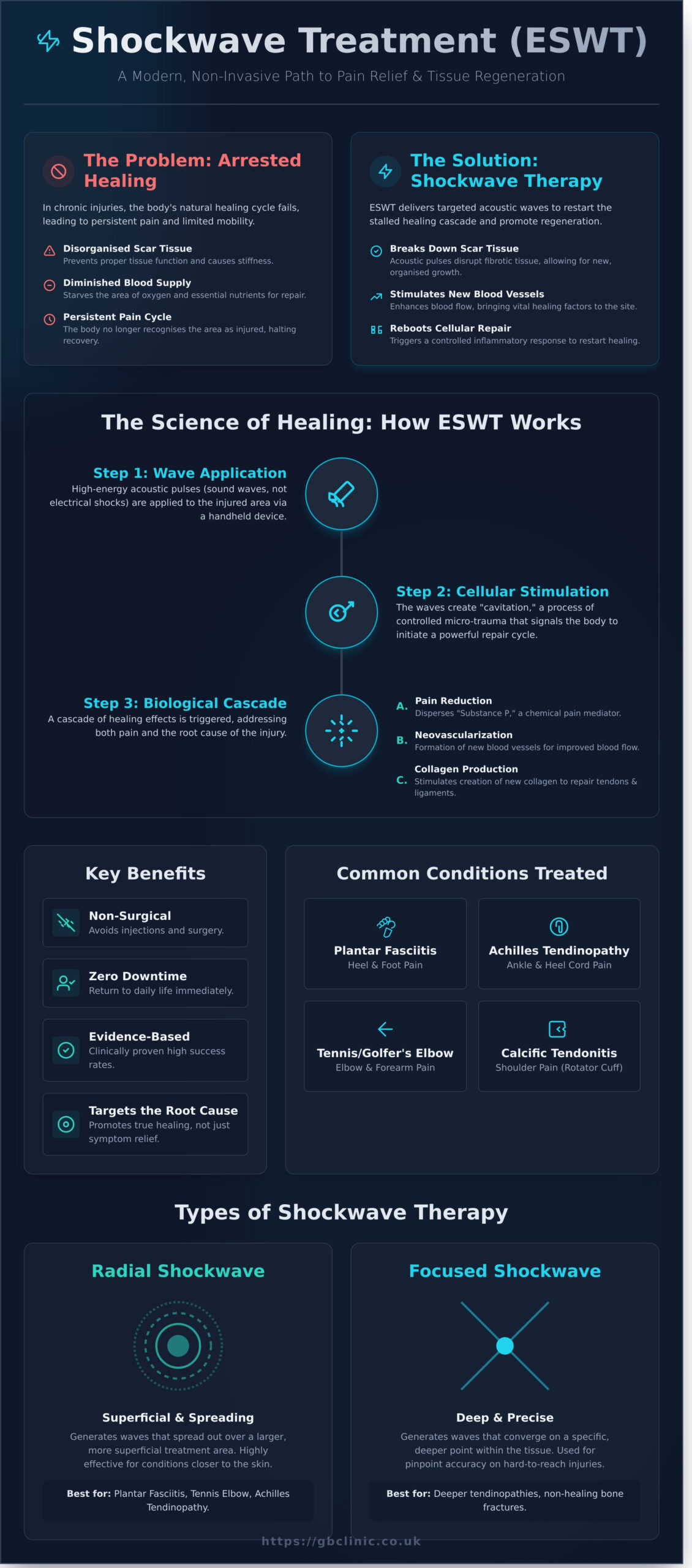
An acute injury typically triggers a natural healing cycle. However, in cases of chronic tendinopathies-such as tennis elbow or plantar fasciitis-this process can fail. The body stops recognising the area as injured, leading to a state of arrested healing. This is often characterised by the formation of disorganised scar tissue and a diminished blood supply, which prevents essential nutrients and oxygen from reaching the damaged cells. As a result, the tissue cannot fully repair itself, creating a frustrating cycle of persistent pain and limited mobility.
The Solution: What is Shockwave Treatment?
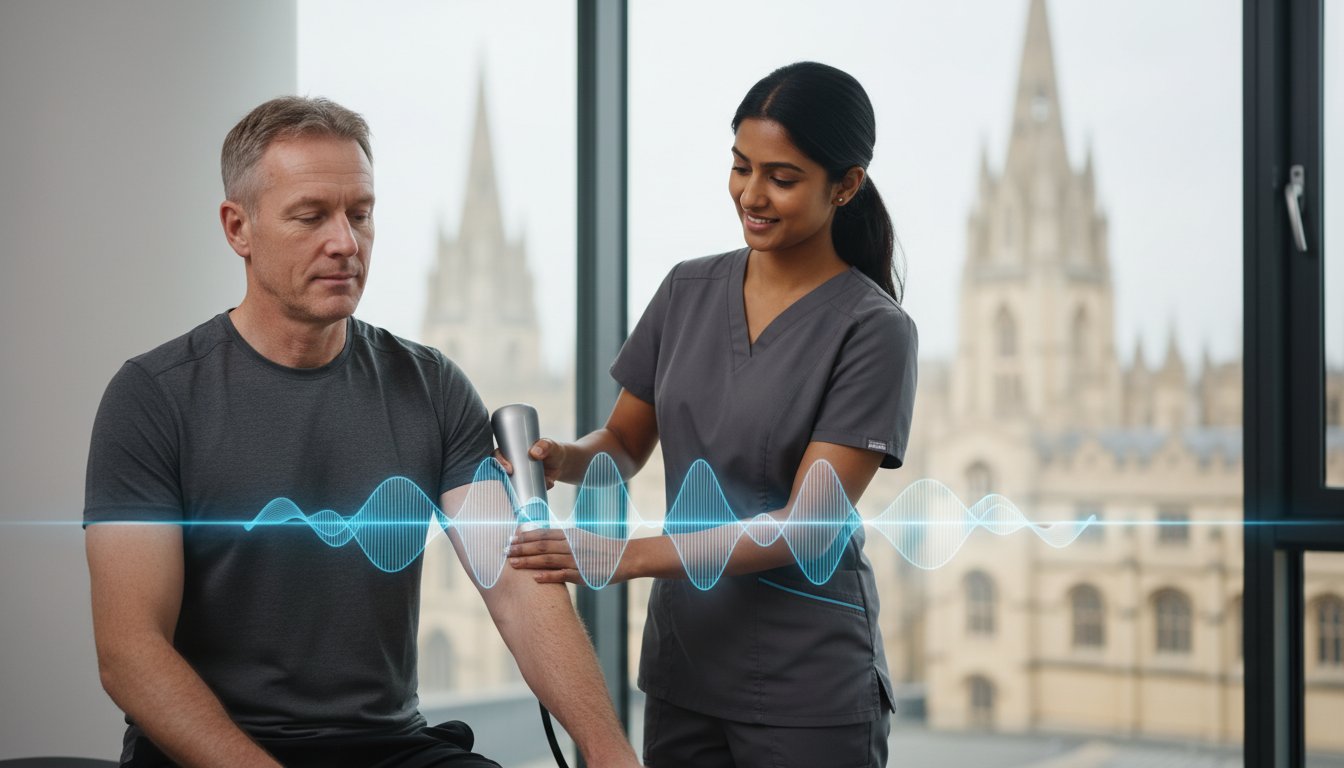
The goal of shockwave treatment is to restart this stalled healing cascade. The procedure involves delivering a series of high-energy acoustic pulses directly to the painful, targeted tissue. It is crucial to understand that these are powerful sound waves, not electrical shocks, ensuring the treatment is safe and well-tolerated. This therapy, formally documented as Extracorporeal shockwave therapy, creates a controlled inflammatory response at a cellular level. This process stimulates the formation of new blood vessels, breaks down scar tissue, and promotes tissue regeneration. At GB Clinic, we deliver this advanced therapy to patients from Summertown, Headington, Kennington, and across central Oxford, helping them achieve lasting pain relief and restore function.
The Science of Healing: How Extracorporeal Shockwave Therapy (ESWT) Works
Extracorporeal Shockwave Therapy (ESWT) is a modern, non-invasive treatment that uses high-energy acoustic waves to accelerate the body’s natural healing processes. Unlike a temporary solution, this advanced therapy targets the root cause of chronic pain by stimulating regeneration at a cellular level. The process works by creating a controlled inflammatory response in tissue that has been resistant to healing, effectively “re-booting” the repair cycle for long-term recovery.
Biological Mechanism: Stimulating Cellular Repair
The acoustic waves create a process known as cavitation, which involves microscopic tears in the affected tissue that signal the body to initiate a robust repair cycle. This controlled micro-trauma triggers a cascade of healing benefits. The waves help to disperse Substance P, a chemical mediator strongly associated with chronic pain, which provides an immediate analgesic effect post-session. More importantly, the primary goal of this shockwave treatment is to promote long-term tissue regeneration. The acoustic energy encourages neovascularization-the formation of new blood vessels-improving blood flow and oxygen to the injury. This, in turn, stimulates mast cell activity and the production of new collagen fibres, which are essential for repairing damaged tendons and ligaments. The extensive evidence for shockwave therapy supports its effectiveness in this process, highlighting its ability to restore function in persistent musculoskeletal conditions.
Radial vs. Focused Shockwave: Which Do You Need?
At GB Clinic, we determine the most appropriate type of shockwave based on your specific condition and the depth of the affected tissue. Understanding the difference is key to a successful outcome.
- Radial Shockwave Therapy: This method generates waves that spread out superficially over a larger treatment area. It is highly effective for conditions closer to the skin’s surface, such as plantar fasciitis, tennis elbow, and Achilles tendinopathy.
- Focused Shockwave Therapy: These waves are concentrated into a single, precise point, allowing them to penetrate deeper into the body. This makes focused shockwave ideal for treating deep-seated issues like hamstring origin tendinopathy, stress fractures, or joint-related conditions.
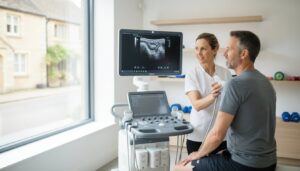
To ensure maximum effectiveness, particularly with focused shockwave, we often use diagnostic ultrasound scans to precisely identify the injury location. This level of accuracy provides a targeted and efficient treatment path for our patients, including those easily accessible from Abingdon, Kennington, and central Oxford.
Efficacy and Experience: Is Shockwave Treatment Right for You?
One of the primary concerns for patients considering this modern therapy is straightforward: does it hurt? The experience is best described as an intense, deep pulsing sensation, which can be uncomfortable but is typically well-tolerated and adjusted to your comfort level. The temporary discomfort is a small trade-off for the significant, long-term relief it provides.
For chronic conditions that have failed to respond to traditional methods like rest and ice, shockwave treatment offers a proven, proactive solution. It moves beyond passive management by actively stimulating your body’s natural healing processes. Clinical evidence, detailed in comprehensive reviews like The Science of Shockwave Therapy, shows success rates between 70-85% for conditions such as plantar fasciitis and tendinopathies. This efficacy is achieved through a planned course of 3-5 sessions, as the therapeutic effects are cumulative and build over time to restore tissue function.
What to Expect During Your Session
Your clinician will apply a layer of ultrasound gel to the target area, which helps transmit the acoustic waves effectively. A hand-held device is then moved over the skin, delivering the therapeutic pulses. Patients typically feel a manageable “tapping” or “pulsing” sensation. Each session is remarkably efficient, lasting only 15-20 minutes, making it a convenient option for busy individuals in central Oxford and those travelling from Abingdon, Witney, Summertown, or Headington.
Recovery and Side Effects: The Facts
One of the key benefits of this non-invasive treatment is the minimal downtime. Unlike surgery, you can return to your daily activities immediately. Some patients may experience minor, temporary side effects, including:
- Mild aching or soreness in the treated area
- Temporary redness or slight swelling
- Minor bruising (uncommon)
These effects typically resolve within a day or two. To ensure optimal, lasting results, shockwave is often combined with a tailored physiotherapy programme. This dual approach ensures the newly regenerated tissue is strengthened and loaded correctly, preventing re-injury and securing your path to long-term recovery.
Conditions Treated: From Plantar Fasciitis to Calcific Tendonitis
Shockwave therapy is a highly effective, non-invasive solution for a range of chronic musculoskeletal conditions that have not responded to traditional treatments. At GB Clinics, we utilise this advanced technology to stimulate the body’s natural healing processes, reduce pain, and restore function for patients across Oxfordshire.
Foot and Ankle Relief: Plantar Fasciitis and Achilles Tendinopathy
Plantar Fasciitis, a leading cause of debilitating heel pain, is one of the most common conditions we address with shockwave treatment. The focused acoustic waves work to break down scar tissue and calcifications in the plantar fascia, promoting regeneration. This is particularly beneficial for active walkers and commuters from areas like Marcham and Eynsham who need reliable, long-term relief. Similarly, for runners in Witney and Faringdon suffering from chronic Achilles Tendinopathy, this therapy accelerates tissue repair and reduces inflammation. For complex or persistent cases, we may recommend a combined approach with guided steroid injections to achieve optimal outcomes.
Upper Limb and Hip Applications
The benefits of this therapy extend well beyond the lower limbs. It provides a powerful solution for stubborn shoulder conditions, including calcific tendonitis, which can severely limit movement. By targeting these calcific deposits directly, the treatment helps to dissolve them and alleviate the “frozen” state, restoring range of motion. It is also highly effective for Greater Trochanteric Pain Syndrome (GTPS), a common cause of lateral hip pain, especially when other methods have failed. Our primary goal is to help patients from Abingdon, Headington, and central Oxford regain their mobility and return to a pain-free life.
Commonly treated conditions include:
- Plantar Fasciitis (Heel Pain)
- Achilles Tendinopathy
- Tennis and Golfer’s Elbow (Lateral and Medial Epicondylitis)
- Calcific Tendonitis of the shoulder
- Greater Trochanteric Pain Syndrome (Lateral Hip Pain)
To find out if this treatment is right for your condition, we invite you to book a consultation at our clinic, easily accessible from Summertown and Kennington. Visit our website to learn more about our advanced physiotherapy services.
Advanced MSK Care in Oxford: The GB Clinic Shockwave Protocol
At GB Clinic, we provide a comprehensive “one-stop” service for musculoskeletal (MSK) health in Oxford. Our approach is built on the expertise of specialist physiotherapists who are highly skilled in deploying advanced, evidence-based technologies to accelerate your recovery. We believe effective care goes beyond a single technique; it requires an integrated strategy tailored to your specific condition.
Our expert team combines modern therapies to achieve superior outcomes. For chronic joint and tendon conditions, we often integrate our focused shockwave treatment protocol with other advanced interventions. A powerful example is its use alongside Hyaluronic Acid (HA) injections. This dual approach tackles pain and dysfunction from two angles:
- Shockwave Therapy: Stimulates the body’s natural healing processes, promoting tissue regeneration and breaking down scar tissue.
- HA Injections: Provide lubrication and cushioning within the joint, directly reducing pain and improving mobility.
This combination allows us to manage symptoms effectively while addressing the underlying cause of degeneration. It is this commitment to advanced, patient-focused care that makes GB Clinic a trusted choice for residents in Oxford, Abingdon, and Witney seeking long-term relief.
Integrated Treatment Plans for Long-Term Recovery
We do not simply treat symptoms; we diagnose and address the root cause of your pain. Our “Problem/Solution/Benefit” methodology ensures your care is transparent and effective. We identify the underlying MSK issue, design a tailored solution that may include shockwave therapy, and deliver the clear benefit of lasting recovery. Our clinic is conveniently located and easily accessible for patients travelling from central Oxford and Headington.
Your Path to a Pain-Free Life Starts Here
Understanding your treatment options is the first step toward recovery. We invite you to a professional MSK consultation to determine if our advanced protocols are right for you. For those in Faringdon, Eynsham, and the wider Oxfordshire area, our clinic provides expert care that is easy to reach. Take the definitive step towards resolving your pain and restoring your mobility.
Book your shockwave consultation at GB Clinic today.
Take the Next Step Towards Lasting Pain Relief
Chronic musculoskeletal pain does not have to be a permanent part of your life. As we have explored, shockwave treatment is a significant, evidence-based advancement in non-invasive care, stimulating your body’s own healing mechanisms to address the root cause of conditions from plantar fasciitis to tendonitis. It offers a proven, effective path towards restoring mobility and achieving long-term relief.
At GB Clinic, our expert-led clinical team utilises advanced on-site diagnostic ultrasound to ensure a precise diagnosis and effective treatment plan. Trusted by patients across Oxfordshire, our central Oxford clinic is easily accessible for those in Abingdon, Summertown, Kennington, Headington, Witney, Eynsham, and Faringdon.
Do not let chronic pain dictate your life. Discover if our advanced MSK protocols are the right solution for you.
Book Your Free MSK Consultation at GB Clinic Oxford and begin your journey towards a pain-free future.
Frequently Asked Questions About Shockwave Treatment
Is shockwave treatment painful?
Most patients do not describe shockwave treatment as painful. Instead, they report a sensation of intense pulses or a strong tapping against the skin. The intensity is adjusted to your comfort level, and our clinicians ensure you remain comfortable throughout the short procedure. Any discomfort felt during the treatment subsides immediately once the session is complete, with many patients feeling a degree of relief straight away.
How many sessions of shockwave therapy will I need?
The number of sessions required varies depending on the condition being treated, its chronicity, and your individual response. Typically, a course of treatment involves 3 to 6 sessions, scheduled approximately one week apart. During your initial consultation at our Oxford clinic, our specialist will conduct a full assessment and recommend a personalised treatment plan tailored to achieve the best possible outcome for your recovery.
Can I go back to work immediately after shockwave treatment?
Yes, you can return to work and most normal daily activities immediately. Shockwave therapy is a non-invasive procedure that requires no downtime. We do, however, advise that you avoid any strenuous, high-impact, or provocative activities involving the treated area for at least 48 hours following your session. This allows the healing process stimulated by the treatment to begin effectively.
Is shockwave treatment covered by private health insurance?
Coverage for shockwave therapy varies significantly among UK private health insurance providers and depends on your specific policy. Major insurers like BUPA, AXA, and Vitality may offer cover for the treatment when deemed medically necessary. We strongly advise you to contact your provider directly before starting treatment to confirm your level of cover. Our administrative team can provide you with any necessary details for your enquiry.
What is the difference between radial and focused shockwave?
Radial and focused shockwave therapies differ in how they deliver energy. Radial shockwaves are pressure waves that radiate outwards to treat larger, more superficial areas, making them ideal for conditions like plantar fasciitis or tennis elbow. Focused shockwaves deliver a higher concentration of energy to a precise, deeper target. Your clinician will determine which type is most appropriate for your specific musculoskeletal condition to ensure optimal results.
How soon will I see results after my first shockwave session?
While some patients report an immediate reduction in pain after their first session, the full benefits of your shockwave treatment are cumulative. The therapy works by stimulating your body’s natural healing and regenerative processes, which takes time. Most patients notice a significant and lasting improvement in their symptoms after their second or third session, with continued progress throughout their course of treatment.
Are there any contraindications for shockwave treatment?
Yes, there are circumstances where shockwave therapy is not recommended. Key contraindications include pregnancy, being fitted with a pacemaker, having a blood clotting disorder, or having an active infection or malignant tumour in the treatment area. A thorough medical history is taken during your initial consultation to ensure the treatment is a safe and appropriate option for you before proceeding with any therapy.
What should I wear to my shockwave therapy appointment in Oxford?
We recommend wearing loose, comfortable clothing that allows for easy access to the area requiring treatment. For example, please wear shorts if we are treating your knee or Achilles tendon, or a vest top for a shoulder condition. Our clinic is conveniently located for patients travelling from across Oxfordshire, including Abingdon, Summertown, Kennington, Headington, and Witney, so ensuring you are comfortable for your journey is also advisable.