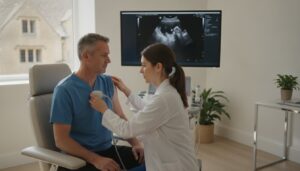

The medical landscape in 2026 has fundamentally shifted, as many specialists now caution against the long-term use of traditional steroids due to potential cartilage damage. If you’re struggling with persistent joint pain that’s keeping you from walking in the Cotswolds or staying active on the pitch, you’ve likely faced the dilemma of PRP vs cortisone shot. You want a solution that doesn’t just mask the symptoms but actually supports your body’s ability to heal.
It’s understandable to feel hesitant about treatments that might offer a quick fix at the expense of your future mobility. Whether you’re seeking care in Abingdon, Summertown, Headington, or Kennington, you deserve clarity on whether a regenerative or anti-inflammatory approach is right for you. This guide explores the critical differences between these injections to help you decide which treatment offers the most effective path to your recovery. We’ll examine the immediate relief of cortisone against the biological repair of PRP, ensuring residents from Witney, Didcot, and Faringdon to Central Oxford, West Oxford, Farmoor, Eynsham, and Marcham can access the modern, evidence-based care they need to avoid surgery and return to the activities they love.
Key Takeaways
- Understand the biological distinction between suppressing acute inflammation with steroids and stimulating long-term tissue regeneration with platelets.
- Compare the clinical performance of a PRP vs cortisone shot to see why regenerative options often provide superior functional outcomes after six months.
- Determine the most appropriate intervention for your specific condition, whether you are managing chronic osteoarthritis or a sudden inflammatory injury.
- Learn how ultrasound-guided technology ensures precision in every procedure, providing a clear path to sustained pain relief and improved mobility.
- Locate specialist clinics across Oxfordshire, making expert care easily accessible for residents in Summertown, Faringdon, Eynsham, and surrounding areas.
Navigating MSK Injections: PRP vs Cortisone for Joint and Tendon Pain
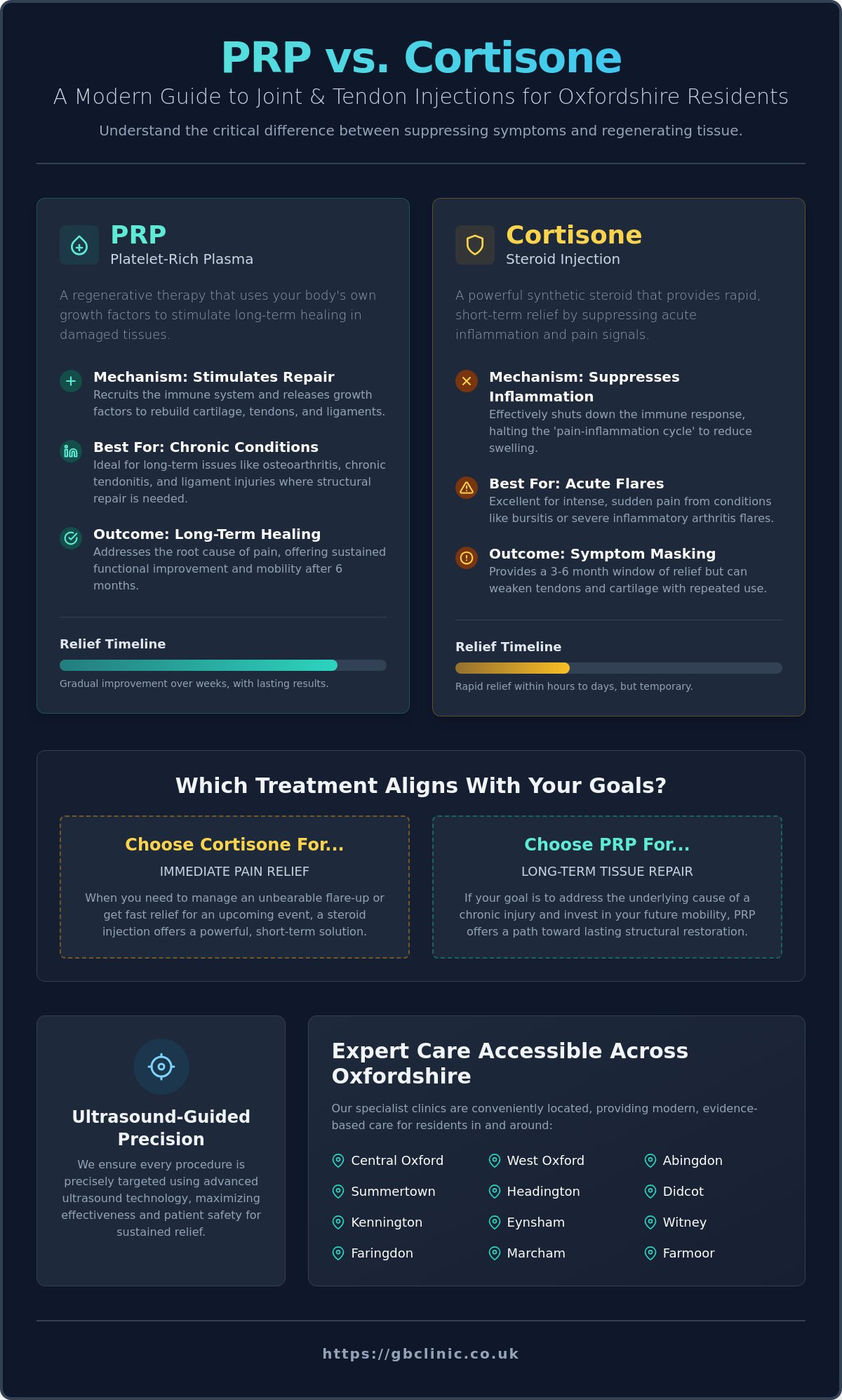
Managing persistent musculoskeletal pain requires a clear understanding of the available medical interventions. For many patients in Oxfordshire, the decision often involves choosing between a traditional steroid or a modern regenerative approach. Cortisone is a powerful synthetic corticosteroid designed to suppress acute inflammation by inhibiting the body’s inflammatory markers. It provides a rapid window of relief for those suffering from intense flares. In contrast, Platelet-Rich Plasma (PRP) is a regenerative therapy that uses your own concentrated platelets to stimulate biological healing in damaged tissues.
The choice between a PRP vs cortisone shot is not merely about cost or convenience. It is about matching the treatment to the specific stage of your injury. Patients visiting our clinics from Headington, Summertown, and Abingdon often present with a range of conditions, including osteoarthritis, chronic tendonitis, bursitis, and ligament injuries. Each of these requires a tailored strategy to ensure sustained recovery and a return to daily activities.
To better understand this concept, watch this helpful video:
The Core Philosophy: Suppressing vs. Stimulating
The primary difference lies in how these treatments interact with your immune system. Cortisone effectively shuts down the immune response to stop pain and reduce swelling within hours. While this is beneficial for acute bursitis, it doesn’t fix the underlying structural issue. PRP takes the opposite approach by recruiting the immune response. It releases growth factors that signal the body to repair damaged structures. For residents in Kennington, Marcham, and Farmoor seeking long-term mobility, this biological stimulus is often the preferred route for chronic degeneration.
Why Patient Goals Dictate the Treatment Choice
Your personal recovery timeline is a decisive factor. Short-term goals, such as achieving immediate pain relief for an upcoming event or managing an unbearable flare-up, often lean toward a guided steroid injection. However, if your long-term goal is to address the underlying cause of a chronic injury, PRP offers a path toward structural restoration. We regularly assess patients from Eynsham, West Oxford, and Central Oxford to determine the exact stage of their injury. Whether you’re commuting from Witney, Didcot, or Faringdon, a professional clinical assessment ensures you don’t just mask the problem, but actively work toward a mobile, pain-free future.
Mechanism of Action: Steroid Suppression vs. Regenerative Growth Factors
The biological impact of a PRP vs cortisone shot depends on whether the goal is to halt an overactive immune response or to harness it for repair. These two treatments work through entirely different pathways within the joint or tendon environment. For individuals in Didcot, Witney, or Faringdon, understanding these mechanisms is the first step toward choosing a path that aligns with their long-term health goals. While one suppresses the system to provide comfort, the other stimulates it to provide structural integrity.
How Cortisone Interacts with Joint Biology
Cortisone functions by initiating a biochemical cascade that inhibits prostaglandins, the compounds responsible for pain and swelling. This process is highly effective at breaking the ‘pain-inflammation cycle’ often seen in acute bursitis or severe inflammatory flares. However, it’s a catabolic treatment, meaning it breaks down substances. Research suggests that repeated steroid use can weaken tendons and accelerate cartilage degradation, a concern for active individuals in Summertown or Headington. The cortisone window is a 3-6 month period of symptomatic relief. Relief usually arrives quickly, often within 24 to 72 hours, but this window is typically temporary and does not address the underlying tissue damage.
The Science of PRP and Tissue Regeneration
PRP takes an anabolic approach, meaning it builds tissue. The process begins with a simple blood draw, followed by centrifugation to isolate a high concentration of platelets. Once injected into the site of injury, these platelets release essential growth factors, such as Platelet-Derived Growth Factor (PDGF) and Transforming Growth Factor-beta (TGF-beta). These proteins act as biological signals, recruiting local stem cells to the damaged area to begin the repair process.
The healing process follows three distinct stages:
- Inflammation: The initial 1 to 3 days where platelets trigger the body’s repair response.
- Proliferation: Lasting several weeks, where new tissue and collagen begin to form at the injury site.
- Remodelling: The final stage where the new tissue matures and strengthens, providing long-term stability.
This regenerative journey takes longer than a steroid, typically requiring 4 to 6 weeks for the initial repair to become noticeable. For those in Abingdon, Kennington, or Marcham exploring these options, you can read more about what is prolotherapy and does it work to see how other regenerative therapies compare. Safety profiles also differ significantly. A ‘steroid flare’ can cause a temporary increase in pain shortly after a cortisone injection. Conversely, PRP often causes ‘post-injection soreness’ because it intentionally triggers a brief inflammatory response to kickstart healing. Whether you are in Central Oxford, West Oxford, Farmoor, or Eynsham, a professional clinical assessment can help determine which biological mechanism will best serve your recovery needs.
The Performance Debate: Immediate Relief vs. Long-Term Repair
Clinical data often highlights a stark contrast in timing when comparing a PRP vs cortisone shot. Cortisone is the sprinter of the medical world, frequently securing a short-term win in trials due to its ability to provide rapid pain reduction. For many patients, this immediate window of comfort is vital for managing acute flares. However, when we examine long-term outcomes, the narrative shifts significantly. Data from 2026 studies on joint and tendon health shows that while steroids peak early, their effects often diminish by the three-month mark. In contrast, PRP functional scores consistently improve between 6 and 12 months as the biological repair matures.
The ‘Crossover Point’ is a critical concept for patients in Central Oxford and West Oxford to understand. This is the moment, typically around 12 to 16 weeks post-injection, where the regenerative benefits of PRP begin to surpass the declining symptomatic relief of a steroid. Chronic degenerative conditions often hit a ‘ceiling effect’ with steroids, where repeated injections provide progressively shorter periods of relief. This happens because the steroid isn’t addressing the underlying structural wear, whereas PRP works to restore the environment within the joint or tendon.
Clinical Evidence for Knee and Hip Osteoarthritis
For mild-to-moderate osteoarthritis, the choice of injection can influence how quickly you return to walking in the Cotswolds or navigating the streets of Abingdon, Kennington, and Marcham. While PRP focuses on cellular repair, some patients also benefit from hyaluronic acid injections to provide essential lubrication and shock absorption. Evidence suggests that by improving the biological health of the joint, PRP may delay the need for total joint replacement more effectively than steroids, which focus solely on inflammation suppression. This is a primary consideration for our patients visiting from Witney, Didcot, and Faringdon who prioritze long-term joint preservation.
Tendon Injuries: Why PRP is Often Superior
In weight-bearing structures, the stakes are higher. There’s a documented danger of steroid-induced tendon rupture if cortisone is used repeatedly in areas like the Achilles or patellar tendons. For active individuals in Summertown or Headington, healing a tendon is always preferable to simply numbing the pain. You can explore specific regional contexts in our guide on PRP for Achilles tendon repair. Whether you’re an athlete in Farmoor or Eynsham, choosing a regenerative path means you’re investing in the structural integrity of your body rather than just managing a symptom, which is essential for a safe and sustained return to sport.
Clinical Selection: Which Injection Is Right for Your Injury?
Deciding between a PRP vs cortisone shot requires a precise assessment of your clinical presentation. While both treatments address pain, they serve different purposes. Cortisone is the primary choice for acute bursitis or severe inflammatory flares where the pain is so intense it prevents sleep or basic movement. It’s also used as a diagnostic block to confirm if a specific structure is the source of discomfort. For residents in Abingdon, Kennington, or Marcham experiencing a sudden, sharp flare, a steroid may provide the necessary window to begin rehabilitation.
PRP is better suited for chronic tendinopathy, partial ligament tears, and early-stage osteoarthritis. If you’ve been managing a dull, persistent ache for months, your body may have stalled in its healing process. Residents in West Oxford and Central Oxford with high activity levels often prefer PRP because it addresses the structural integrity of the tissue. In some cases, a hybrid approach is possible, but we generally require a specific interval of 4 to 6 weeks between treatments to ensure the steroid’s anti-inflammatory properties don’t interfere with the regenerative growth factors of the PRP. For a deeper understanding of how platelets promote recovery in muscles, tendons, and ligaments, our detailed overview of PRP therapy for soft tissue injuries explains the latest 2026 clinical evidence and how diagnostic ultrasound guides each procedure.
Condition-Specific Recommendations
- Shoulder: Subacromial bursitis often responds well to cortisone, whereas partial rotator cuff tears are better candidates for the regenerative stimulus of PRP.
- Elbow: Lateral epicondylitis, commonly known as Tennis Elbow, has a high failure rate with steroids in the long term. We often recommend PRP for patients in Headington or Summertown who need a permanent solution for chronic elbow pain.
- Foot and Ankle: For plantar fasciitis, the medical community is shifting away from steroids due to the risk of fat pad atrophy, favoring regenerative options for patients in Farmoor and Eynsham.
The Role of Diagnostic Clarity
An accurate diagnosis is the prerequisite for any effective treatment plan. We don’t rely on guesswork. Using a diagnostic ultrasound scan, we can identify the exact source of your pain. This clarity is essential because identifying a ‘tear’ versus simple ‘inflammation’ fundamentally changes the decision. If you’re in Witney, Didcot, or Faringdon and unsure which path to take, book a clinical assessment to determine the most effective intervention for your specific injury.
Specialist Injection Therapy in Oxford: The GB Clinic Difference
Choosing between a PRP vs cortisone shot is only half the battle. The success of these treatments depends heavily on the precision of the delivery. At GB Clinic, we’ve positioned ourselves as the regional authority for non-surgical pain relief, providing residents across Oxfordshire with access to advanced, evidence-based care. Whether you’re travelling from Abingdon, Witney, Didcot, or Bicester, our focus remains on clinical excellence and ensuring every patient receives a clear path to physical restoration.
The standard ‘blind’ injection, which relies on anatomical landmarks and a practitioner’s feel, is increasingly seen as outdated in modern MSK medicine. We exclusively perform ultrasound-guided steroid injections to achieve 99% accuracy. This technology allows us to see the needle in real-time, ensuring the medication or regenerative growth factors reach the exact site of pathology. For patients in Central Oxford and Summertown, this means fewer complications and a significantly higher likelihood of sustained pain relief.
Why Accuracy Matters for PRP and Steroids
Precision is vital because the target tissues are often only millimetres wide. Injecting a steroid directly into a tendon, rather than the surrounding bursa, can lead to tissue degradation and increased risk of rupture. Ultrasound guidance prevents this by providing a clear view of the internal structures. When administering PRP, this accuracy allows us to place the concentrated platelets exactly at the site of a micro-tear. This targeted approach is the primary reason why patients from Headington and West Oxford experience superior functional outcomes compared to traditional methods.
Comprehensive Care Across Oxfordshire
Our commitment to your recovery extends beyond the injection itself. We believe in a multidisciplinary approach that integrates advanced physiotherapy with injection therapy. An injection can provide a window of relief, but physical rehabilitation ensures the underlying weakness or biomechanical issue is corrected. This comprehensive journey starts with a diagnostic scan and concludes with a bespoke rehabilitative exercise plan tailored to your lifestyle.
We’ve designed our services to be easily accessible for residents in Kennington, Marcham, and Eynsham. Our clinics provide a seamless experience where diagnostic clarity and effective treatment happen in one location. GB Clinic provides bespoke recovery plans for patients from Faringdon to Farmoor, ensuring no one in the region has to live with persistent, life-limiting pain. If you’re ready to stop the cycle of discomfort, you can book an initial MSK assessment at our Central Oxford or Summertown locations to determine the most effective path for your long-term health.
Take the First Step Toward Sustained Recovery
Choosing between a PRP vs cortisone shot is a clinical decision that should be based on your specific injury stage and long-term goals. While steroids provide a necessary window of relief for acute inflammation, regenerative options like PRP offer a biological stimulus for lasting tissue repair. Precision is the cornerstone of our practice. We use expert ultrasound-guided accuracy to ensure every treatment is delivered with 99% precision, minimizing risks and maximizing functional outcomes.
Residents across Oxfordshire, including those in Abingdon, Witney, Didcot, and Summertown, can access these specialised treatments without delay. Whether you’re in Headington, Kennington, or Faringdon, our multidisciplinary team is here to guide your journey. We also serve patients from West Oxford, Central Oxford, Farmoor, Eynsham, and Marcham with bespoke care plans designed for your unique lifestyle. Don’t let persistent pain dictate your future mobility. Book Your MSK Assessment at GB Clinic Oxford and start your path back to the activities you love.
Frequently Asked Questions
Is a PRP injection more painful than a cortisone shot?
PRP injections can involve slightly more post-procedure discomfort because they intentionally trigger a brief inflammatory response to kickstart the healing process. Cortisone shots often include a local anaesthetic, which provides immediate numbing of the area. Patients from Summertown and Headington should expect some localized soreness for 24 to 48 hours after a regenerative treatment, which is a normal sign that the body’s repair mechanism is active.
Can I drive home after receiving a PRP or cortisone injection in Oxford?
Most patients are able to drive themselves home, provided they feel comfortable and have full functional control of the treated limb. If the injection was administered into a weight-bearing joint like the knee or ankle, we often suggest having a friend or family member drive you back to Abingdon, Witney, or Didcot. This is a precautionary measure in case you experience temporary numbness or stiffness immediately following the procedure.
How many PRP sessions are typically needed compared to a single steroid shot?
A single steroid shot is frequently enough to manage an acute inflammatory flare, whereas PRP typically requires a series of one to three sessions to achieve optimal tissue repair. The exact frequency depends on the severity of the structural damage and your individual biological response. We regularly monitor patients from Kennington and Marcham to determine the most effective schedule for their specific recovery goals.
Will my insurance cover PRP therapy at an Oxfordshire clinic?
Insurance coverage for PRP is generally more limited than it is for traditional cortisone injections. While many private health providers cover steroid treatments for inflammatory conditions, regenerative therapies are sometimes classified as specialized or elective procedures. We advise patients from Farmoor and Eynsham to consult directly with their insurance provider to confirm their policy details and any potential out-of-pocket requirements before starting treatment.
How long do I need to rest after a cortisone shot before returning to sport?
You should rest the affected joint or tendon for at least 48 hours to allow the medication to settle and the initial inflammation to subside. For athletes and active individuals in Central Oxford or West Oxford, we recommend a gradual return to full activity over five to seven days. This cautious approach prevents overstressing the tissues while the steroid is working to reduce your symptoms.
Are there any long-term side effects of repeated cortisone injections in the same joint?
Repeated use of cortisone in the same area can lead to the weakening of tendons and the acceleration of cartilage thinning. This is a primary concern when choosing between a PRP vs cortisone shot for chronic conditions. Because steroids are catabolic, meaning they break down tissue, many specialists now limit their use to avoid permanent structural damage, especially in weight-bearing joints.
Can PRP therapy help if cortisone shots have already failed to provide relief?
Yes, PRP can be highly effective when steroids have failed because it utilizes a completely different biological mechanism. While cortisone only masks pain by suppressing the immune response, PRP provides the growth factors necessary to stimulate the repair of damaged structures. Many patients from Faringdon and Eynsham find that this regenerative approach offers a solution for persistent issues that anti-inflammatory treatments couldn’t resolve.
What is the cost difference between PRP and cortisone at GB Clinic?
PRP therapy involves a higher investment than a standard steroid injection due to the advanced technology and processing time required to concentrate your platelets. The cost reflects the specialized nature of a treatment that uses your own biology to promote healing. We encourage patients across Oxfordshire to weigh the long-term value of potential tissue repair against the temporary symptom relief provided by traditional anti-inflammatory options.