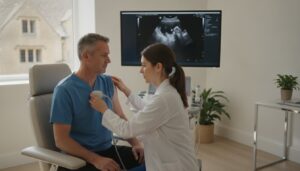
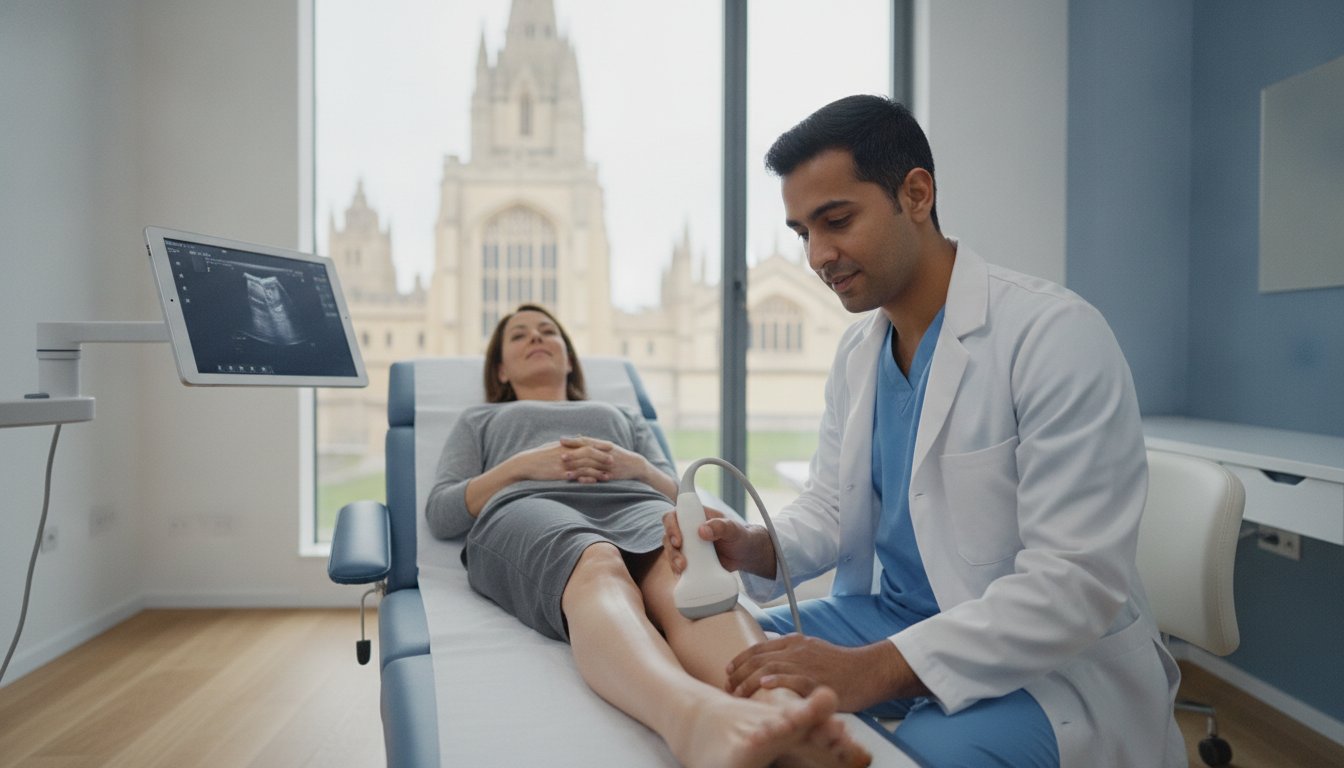
Masking chronic pain with temporary injections often feels like hitting the snooze button on an alarm that refuses to stop. You’ve likely experienced the frustration of rest and standard painkillers providing only a brief window of relief before the familiar ache in your tendons or muscles returns. It’s common to feel stuck between persistent discomfort and the daunting prospect of surgery. At GB Clinic, we understand that true recovery requires addressing the biological root of the problem. That’s why PRP therapy for soft tissue injuries has become a cornerstone of our modern clinical approach. By utilizing a concentrated dose of your own platelets, we can stimulate long term tissue repair rather than simply hiding symptoms.
In this guide, you’ll discover how the latest 2025 research confirms the effectiveness of Platelet-Rich Plasma for conditions like knee osteoarthritis and rotator cuff tears. We’ll explain how our expert led team uses diagnostic ultrasound to ensure precision in every treatment. Whether you’re based in Central Oxford, Headington, or Summertown, or commuting from Abingdon, Witney, or Didcot, expert care is easily accessible. Our clinics serve the wider region, including West Oxford, Kennington, and Farmoor, alongside Eynsham, Marcham, and Faringdon, ensuring a local solution for your recovery. You’ll learn exactly how this biological catalyst accelerates your return to sport and daily life without the downtime of invasive procedures.
Key Takeaways
- Learn how PRP therapy for soft tissue injuries uses your body’s own growth factors to accelerate the natural healing of chronic tendon and ligament damage.
- Identify which chronic conditions benefit most from regenerative medicine rather than just masking symptoms with injections that don’t address the root cause.
- Explore the clinical advantages of using diagnostic ultrasound scans for precise treatment delivery in Headington, Summertown, Central Oxford, and West Oxford.
- Understand how we isolate high-quality plasma to stimulate long-term structural repair and functional restoration for lasting relief.
- Discover how to access expert MSK care from clinics serving Abingdon, Witney, Didcot, and regional communities like Kennington, Marcham, Farmoor, Eynsham, and Faringdon.
Understanding PRP Therapy for Soft Tissue Injuries
PRP therapy for soft tissue injuries represents a significant shift in how we approach musculoskeletal recovery. Unlike traditional treatments that merely suppress inflammation, this regenerative medicine technique utilizes a concentrated dose of your own platelets to stimulate the body’s innate healing capacity. The procedure is clinical and efficient; it begins with a simple blood draw, followed by a centrifugation process that isolates high-quality plasma. Understanding Platelet-Rich Plasma (PRP) is essential for patients seeking long term tissue repair rather than temporary relief. PRP acts as a biological catalyst for collagen synthesis within damaged tendons and ligaments, providing the necessary foundation for structural restoration.
To better understand this biological process, watch this helpful video:
The Science of Healing: How Platelets Repair Tissue
Platelets are more than just clotting agents. They contain a powerhouse of growth factors that are critical for tissue regeneration, including Transforming Growth Factor-beta (TGF-beta) and Vascular Endothelial Growth Factor (VEGF). When concentrated plasma is injected into an injury site, these factors signal the body to begin the repair process. This concentration effectively stimulates stem cell migration, drawing repair cells to the specific area of damage. While whole blood contains these elements, the PRP used in our clinics is significantly more potent. It provides a concentrated environment that accelerates natural repair mechanisms far beyond the capabilities of standard blood flow.
Soft Tissue vs. Joint Pain: Where PRP Excels
PRP therapy for soft tissue injuries is particularly effective for “hypovascular” tissues. These are areas, such as the Achilles tendon or the rotator cuff, that naturally have a poor blood supply. Because blood carries the nutrients needed for healing, these tissues often struggle to repair themselves after a tear or chronic strain. PRP bypasses this limitation by delivering growth factors directly to the site of injury. We utilize diagnostic ultrasound scans to accurately identify these sites, ensuring the treatment is delivered with precision.
This advanced care is conveniently situated for patients across Oxfordshire. Residents in Abingdon, Summertown, and Kennington can access our specialist services without traveling into the city center. We also support individuals from Marcham, Headington, and Farmoor who are seeking an alternative to surgery. For those living in Eynsham, Didcot, or Witney, our clinic provides a modern, patient-focused environment. Our reach extends to Faringdon, Central Oxford, and West Oxford, ensuring that professional MSK expertise is never far from home.
Common Injuries Treated with PRP: From Tendonitis to Ligament Tears
PRP therapy for soft tissue injuries is most effective when applied to conditions that have transitioned from acute inflammation to chronic degeneration. In these cases, the body’s natural healing response has stalled. For individuals in Summertown or Headington, this often manifests as persistent tennis elbow, golfer’s elbow, or patellar tendonitis. These tendinopathies involve micro-tears and structural changes that standard rest often fails to resolve. By introducing concentrated platelets directly into the damaged area, we restart the repair cycle and encourage functional restoration.
Ligament injuries also respond well to this regenerative approach. Whether it’s chronic ankle instability for a runner in Witney or a knee ligament strain for an active resident in Faringdon, PRP helps tighten and strengthen the tissue. Athletes frequently utilize this treatment for high-grade muscle tears to shorten recovery times and ensure the new tissue is resilient. Additionally, a 2024 review of 21 trials showed that PRP is significantly more effective than shockwave therapy and corticosteroids for treating plantar fasciitis, offering a long-term solution for chronic heel pain rather than a temporary mask.
PRP for Achilles Tendon Repair and Foot Injuries
Addressing chronic Achilles degeneration requires a specialized approach because the tendon’s blood supply is naturally limited. Residents in Abingdon or Didcot seeking advanced foot care can explore the benefits of PRP for Achilles Tendon Repair. This intervention targets the underlying collagen breakdown directly. It’s a convenient option for those in Kennington or Marcham who want to avoid the lengthy downtime and risks associated with surgical alternatives.
Rotator Cuff and Shoulder Tendonitis Solutions
Partial rotator cuff tears and chronic shoulder tendonitis can be debilitating, often limiting basic daily movements. PRP offers a way to avoid surgery by stimulating tissue growth within the tear itself. A 2025 meta-analysis indicated that PRP provides superior functional outcomes at 12 and 24 weeks compared to corticosteroids for these specific injuries. Success depends on precision; understanding how PRP injections are performed with ultrasound guidance ensures the platelets reach the exact site of damage near the bursa. We often integrate this with structured physiotherapy to restore full range of motion and strength. If you’re struggling with a recurring injury in Central Oxford, West Oxford, Farmoor, or Eynsham, our team can help you determine the best clinical path forward.
PRP vs. Cortisone: Why Regenerative Therapy is Different
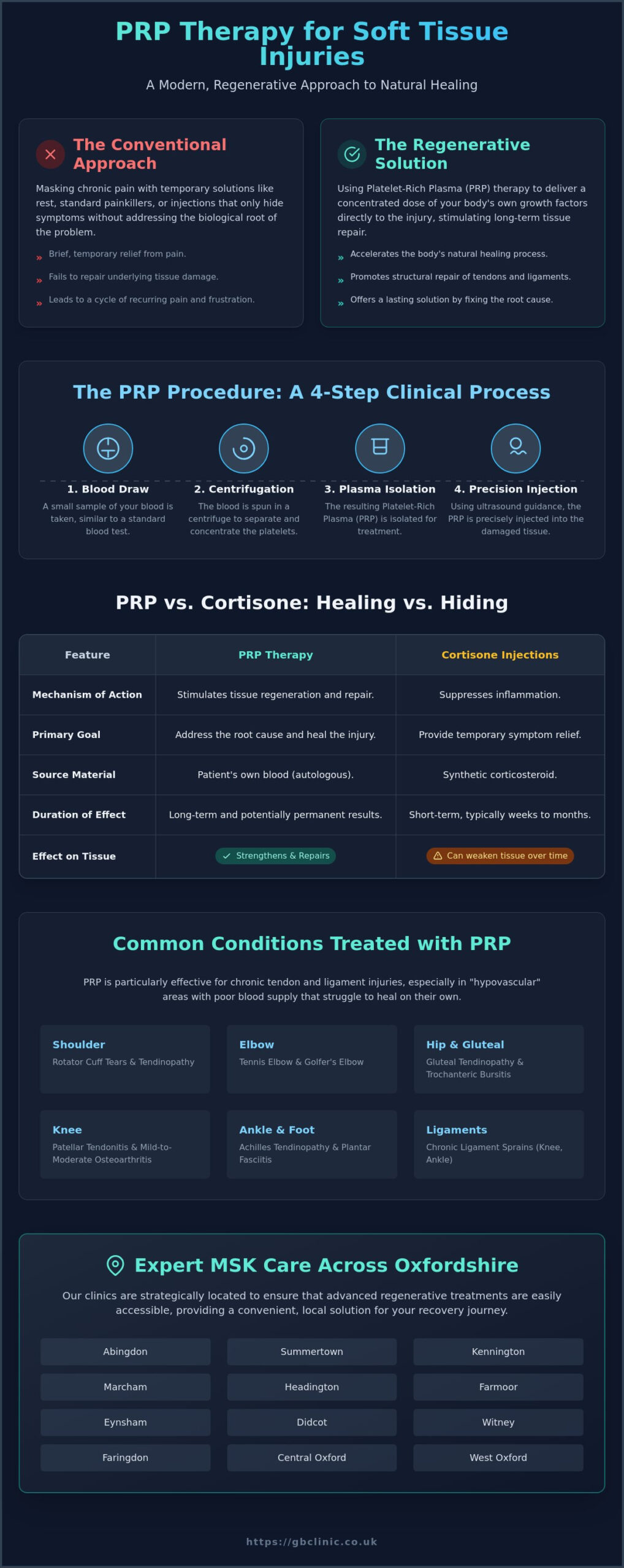
Many patients arriving at our clinics in Headington or Summertown have already tried a cortisone injection. While corticosteroids are highly effective at suppressing acute inflammation and providing rapid pain relief, they don’t address the underlying structural damage of the tissue. In fact, while cortisone is catabolic and can potentially weaken tendons over time, PRP is anabolic, meaning it actively builds and repairs the biological architecture of the injury. Choosing PRP therapy for soft tissue injuries represents a move away from temporary fixes toward a strategy of long term structural integrity.
The fundamental difference lies in the clinical objective of the treatment. A steroid shot is designed to shut down the immune response to reduce swelling and pain. In contrast, PRP uses your own platelets to restart a healing process that has stalled. This is why we often see fewer recurrences in patients who opt for regenerative paths; the tissue actually becomes stronger rather than just feeling better. For residents in Central Oxford or Witney who have experienced the “rebound” pain that often follows a steroid injection, this distinction is vital for achieving a return to activity.
The Pros and Cons of Each Approach
The primary trade-off between these treatments involves the speed of recovery versus the quality of the repair. Steroids often provide relief within 48 to 72 hours, which can be useful for acute, debilitating flares. However, the benefits of PRP typically manifest over several weeks or months as new collagen is synthesized and the tissue matures. Repeated cortisone use carries a documented risk of tendon rupture and cartilage degradation, whereas PRP utilizes your own biological material to promote healthy growth without these risks. For a more detailed comparison of these options, you can read our full analysis on the PRP vs Cortisone Shot.
When to Choose Prolotherapy Instead
In some instances, particularly when dealing with ligament laxity or joint instability in patients from Abingdon, Didcot, or Faringdon, we may recommend prolotherapy. This involves injecting a mild irritant solution to trigger a localized healing response. It’s often a targeted regenerative alternative for specific musculoskeletal concerns where the primary goal is to tighten loose ligaments. You can learn more about this method in our guide: What is Prolotherapy and Does It Work?
Our specialists at GB Clinic provide expert diagnosis for residents across Kennington, Marcham, Farmoor, Eynsham, and West Oxford. We use clinical assessment and diagnostic tools to help you decide which regenerative path aligns with your specific recovery goals. This personalized approach ensures you receive the most effective intervention for your unique condition.
The PRP Procedure: What to Expect During Your Treatment in Oxford
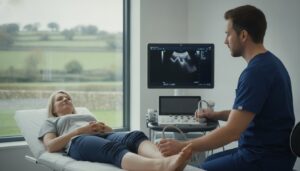
The journey toward recovery begins with a meticulous clinical assessment at our Oxfordshire facilities. For patients traveling from Summertown, Headington, or Central Oxford, the first step is an initial consultation. We utilize a diagnostic ultrasound scan to confirm the exact location and extent of the damage. This imaging is vital. It allows our specialists to visualize the internal structure of your tendons or ligaments, ensuring that PRP therapy for soft tissue injuries is the most appropriate clinical pathway for your specific condition. The process is methodical and patient-focused.
Once the injury is confirmed, the procedure involves a standard blood draw, similar to a routine blood test. This sample is placed in a centrifuge, a specialized machine that spins at high speeds to separate the platelets from other blood components. This isolation process creates a highly concentrated plasma. We then prepare this “liquid gold” for the injection phase. For residents in Abingdon, Witney, and Didcot, this entire clinical process is typically completed within a single appointment, minimizing disruption to your daily schedule.
The Importance of Ultrasound-Guided Precision
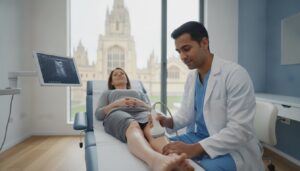
Precision is the most critical factor in the success of regenerative treatments. Many clinics perform “blind” injections based solely on anatomical landmarks, but this approach lacks the accuracy needed for optimal repair. By using real-time imaging, our specialists ensure the needle reaches the exact micro-tears within the tissue. This level of accuracy is non-negotiable for safety. It significantly reduces the risk of accidentally injecting healthy tissue or sensitive nerves. You can learn more about why this technology is essential in our guide on Ultrasound Guided Injection vs Blind Injection Accuracy. This commitment to precision is why patients from West Oxford, Farmoor, and Eynsham trust our clinical expertise.
Recovery Timeline and Exercise Rehabilitation
After the injection, you may experience a temporary increase in discomfort for the first 48 to 72 hours. This is the “inflammatory phase.” It is a beneficial part of the process, as it signals the body to begin the repair work we’ve triggered. We provide clear post-procedure instructions to manage this initial window. Long-term success depends on a gradual return to activity. We integrate the treatment with structured exercise rehabilitation to ensure the new tissue matures correctly and gains the necessary strength. Patients in Faringdon, Kennington, and Marcham typically see significant functional milestones at 4, 8, and 12 weeks. If you are ready to start this evidence-based recovery process, you can book your initial specialist assessment here.
Specialist PRP and MSK Care Across Oxfordshire
GB Clinic serves as a specialized hub for advanced musculoskeletal care, providing a modern alternative for patients who prefer a personalized clinical environment over the often crowded setting of a large hospital. When seeking PRP therapy for soft tissue injuries, geographic convenience is often as important as clinical excellence. Our facilities are strategically located to ensure that residents in Summertown, Headington, and Central Oxford can access expert care without unnecessary travel delays. We focus on evidence based treatments that prioritize your long term recovery and functional mobility.
Excellent travel links make our clinic a practical choice for those living in Witney, Eynsham, and Farmoor. We understand that chronic pain doesn’t wait for a convenient time, so we aim to provide an efficient patient journey from the first point of contact. By maintaining a professional distance while offering empathetic care, we position ourselves as a serious medical entity dedicated to effective results. Our team is committed to helping you return to your daily activities and sports through precise, expert led interventions.
Serving Towns from Abingdon to Didcot
Accessibility is a cornerstone of our service for patients across South Oxfordshire. Residents in Abingdon, Marcham, and Didcot find our clinic easy to reach for both initial assessments and follow up rehabilitation sessions. We also provide a convenient local option for those in Kennington who are looking for regenerative solutions close to home. A key advantage of our local service is the immediate availability of advanced diagnostic tools. We utilize ultrasound scans to ensure every diagnosis is accurate before any treatment begins. For individuals commuting from Faringdon or West Oxford, we offer flexible appointment times designed to fit around a busy professional or personal schedule.
Your Path to Recovery Starts with a Consultation
The first step toward resolving persistent pain is a comprehensive MSK assessment. During this initial consultation, our specialists will review your symptoms, conduct a physical examination, and use diagnostic imaging to pinpoint the structural cause of your discomfort. It’s helpful to bring any previous scans or a summary of your medical history to this appointment to ensure a thorough review. Whether you’re dealing with a chronic tendon issue or a recurring ligament strain, we provide a clear, professional path to recovery. Our goal is to move beyond temporary relief and focus on the actual restoration of your physical health. You can trust our Oxfordshire based team to deliver the high quality, expert care you need to regain pain free movement.
Begin Your Journey to Lasting Tissue Recovery
Choosing a regenerative path means moving beyond the cycle of temporary relief and addressing the structural integrity of your tendons and ligaments. PRP therapy for soft tissue injuries offers a biological solution that builds new collagen and restores function, providing a sustainable alternative to repetitive steroid shots. By combining advanced clinical knowledge with ultrasound-guided precision, we ensure every treatment is delivered with the highest level of accuracy for optimal healing.
We’ve designed our services to be highly accessible for residents across the region. Whether you’re based in Central Oxford, Headington, or Summertown, or living in West Oxford, Kennington, and Farmoor, expert care is nearby. Our clinics also support patients from Abingdon, Marcham, and Didcot, as well as those in Witney, Eynsham, and Faringdon. You can expect a professional, expert-led environment with flexible booking options to suit your schedule.
Take the first step toward a mobile, active lifestyle today. Book Your MSK Assessment at GB Clinic Oxford to receive a personalized diagnosis from our specialist team. We look forward to supporting your return to pain-free movement.
Frequently Asked Questions
Is PRP therapy for soft tissue injuries painful?
Discomfort is usually minimal and manageable during the procedure. It involves a needle for both the blood draw and the injection, which may cause a brief pinching sensation. We often use a local anesthetic to numb the area before the treatment begins. Patients from Summertown and Headington frequently report a temporary feeling of pressure during the injection itself, but this localized discomfort typically subsides within a few hours.
How many PRP injections will I need for a tendon injury?
Most patients require a series of one to three treatments to achieve optimal results. Clinical guidelines often recommend a course of three sessions spaced several weeks apart for chronic conditions. This allows the growth factors to build up and stimulate consistent repair over time. For residents in Witney or Eynsham, we determine the exact number during your initial assessment based on the severity of your specific injury.
Can I drive home after a PRP injection in Oxford?
You can generally drive home after the procedure, provided you feel comfortable and the injection site isn’t in a weight-bearing joint that feels unstable. If we are treating a lower limb injury for a patient from Central Oxford or West Oxford, we often suggest bringing a driver for added safety. This ensures you don’t place unnecessary strain on the treated area immediately after the clinical session has concluded.
Is PRP therapy covered by private health insurance in the UK?
Most private health insurance policies in the UK currently do not cover PRP therapy for soft tissue injuries. It’s usually classified as an elective regenerative treatment. However, we recommend that patients from Faringdon or Farmoor contact their specific provider to check for any recent changes in coverage. We provide clear, transparent invoices for all self-paying patients to help you manage your healthcare costs effectively.
How soon can I return to sports after PRP treatment?
A gradual return to activity is essential for long term success. While you may feel better within weeks, the new tissue needs time to mature and gain strength. Light exercise can often begin after two weeks, but high-impact sports usually require a wait of 12 weeks. We work with athletes in Abingdon and Didcot to create a structured rehabilitation plan that prevents re-injury and ensures a safe return to competition.
Are there any side effects or risks with PRP therapy?
Because the treatment uses your own blood, the risk of an allergic reaction or rejection is extremely low. The most common side effects include temporary swelling, bruising, or a localized ache at the injection site. These are standard parts of the inflammatory response we are trying to trigger for repair. Residents in Kennington and Marcham find that these symptoms typically resolve within 48 to 72 hours without further intervention.
What is the difference between PRP and a guided steroid injection?
The primary difference is the biological intent of the treatment. A steroid injection is catabolic and focuses on rapidly shutting down inflammation to relieve pain. In contrast, PRP therapy for soft tissue injuries is anabolic, meaning it aims to rebuild and repair the damaged structure. While steroids provide faster relief, PRP offers a more durable solution by focusing on tissue regeneration rather than just masking symptoms.
Do I need a GP referral to visit GB Clinic for PRP therapy?
You don’t need a GP referral to visit our clinic for an assessment. We accept self-referrals from individuals across Oxfordshire who are seeking specialized MSK care. This allows for faster access to diagnostic tools and regenerative treatments without the delays often found in traditional healthcare pathways. We ensure that every patient receives a comprehensive clinical evaluation to confirm they are a suitable candidate for the procedure before moving forward.