
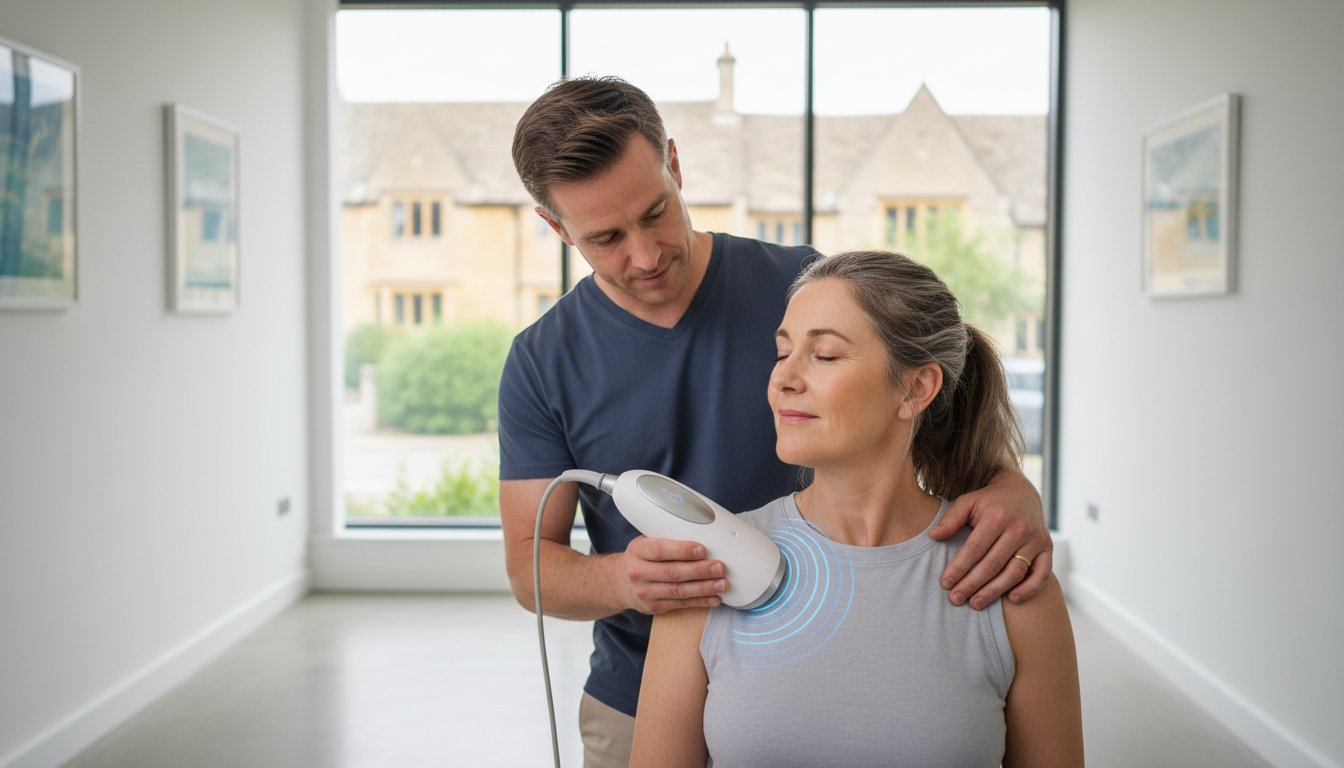
Musculoskeletal pain does not just affect your mobility; it dictates the boundaries of your daily life in Oxfordshire. For those living in Abingdon, Summertown, or Central Oxford, the search for effective, non-invasive relief often leads to questions about modern electrical stimulation. Understanding the electrotherapy for pain relief pros and cons is essential for making an informed decision about your musculoskeletal health. Many patients in West Oxford and Headington feel a combination of curiosity about technology-led recovery and concern regarding the safety of clinical-grade devices. This guide provides a professional overview of how these therapies integrate into a successful rehabilitation plan.
At GB Clinic, we are committed to providing a clear roadmap for patients across Kennington, Marcham, and Farmoor. Whether you are an active individual in Eynsham or Witney, or a resident in Didcot or Faringdon, our expertise ensures you receive evidence-based care tailored to your specific condition. We will explore the clinical benefits and potential drawbacks of various modalities, helping you feel confident in choosing the local specialist best suited to your recovery. By the end of this guide, you will have a comprehensive understanding of how to restore your function and return to a pain-free life.
Key Takeaways
- Evaluate the clinical electrotherapy for pain relief pros and cons to determine if this non-invasive approach is suitable for your recovery in Abingdon or Summertown.
- Identify key safety contraindications for electrical stimulation to ensure your treatment path in Central Oxford or West Oxford is both safe and effective.
- Distinguish between TENS, EMS, and Shockwave Therapy to understand which modern modality best supports patients in Didcot, Witney, and Faringdon.
- Learn how residents in Kennington, Marcham, and Headington can reduce their reliance on oral painkillers through targeted, evidence-based musculoskeletal care.
- Access a clear roadmap for pain-free living with specialist services conveniently located for those in Farmoor and Eynsham.
What is Electrotherapy and How Does it Work for Chronic Pain?
Electrotherapy represents a sophisticated category of non-invasive musculoskeletal treatments that utilize electrical energy to stimulate tissue repair and modulate nerve activity. For residents in Summertown and Central Oxford looking for advanced recovery, understanding What is Electrotherapy? is the first step in evaluating electrotherapy for pain relief pros and cons. At GB Clinic, we distinguish between high-output clinical devices and basic over-the-counter TENS units. Professional equipment allows our specialists to target specific nerve pathways with a precision that generic home kits cannot replicate. By utilizing varied frequencies and waveforms, we can address deep-seated tissue issues that standard battery-operated devices often fail to reach, ensuring a safer and more effective therapeutic outcome for our patients.
Clinical-grade units provide a more consistent delivery of current, which is vital for patients with high sensitivity or complex chronic conditions. This level of control is particularly important when managing the delicate balance between effective stimulation and patient comfort. To better understand this concept and the different types of stimulation available, watch this helpful video:
The Mechanism of Pain Gate Control
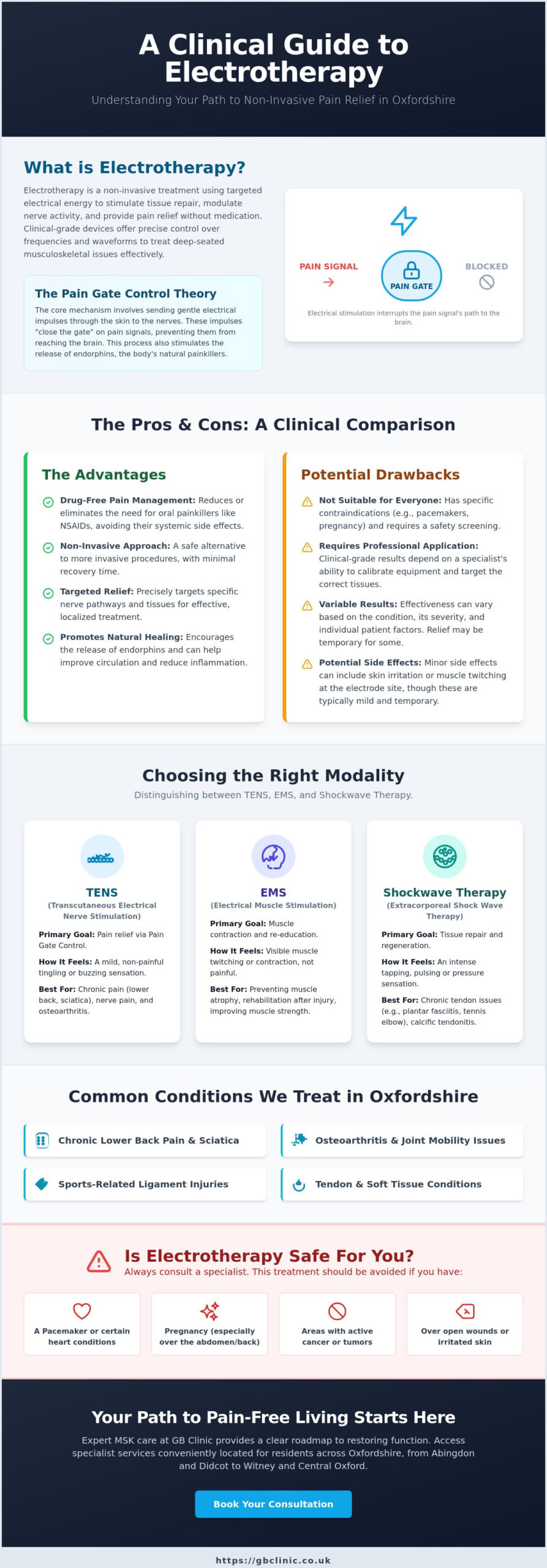
The science behind this treatment relies on the Pain Gate Control theory, where electrical impulses essentially block pain signals before they reach the central nervous system. This process also encourages the body to release endorphins, facilitating a natural, long-term approach to pain management. In MSK physiotherapy, pain gate theory refers to the use of non-painful sensory input to suppress the transmission of pain signals through the spinal cord. By integrating these modalities into a comprehensive physiotherapy plan, we help patients in West Oxford and Kennington move beyond temporary relief toward functional restoration.
Common Conditions Treated in Oxfordshire
Our practitioners apply these technologies to a variety of musculoskeletal issues affecting residents across the county. In Headington and Marston, we frequently treat chronic lower back pain and sciatica, while active individuals in Abingdon and Didcot utilize electrical stimulation for sports-related ligament injuries. For those in Witney, Faringdon, or Eynsham suffering from osteoarthritis, these treatments help reduce local inflammation and improve joint mobility. Whether you are recovering from a recent injury in Marcham or managing a long-term condition in Farmoor, our technology-led approach is designed to accelerate your return to daily activity. This versatility makes it a cornerstone of modern care for the Oxfordshire community.
The Pros and Cons of Electrotherapy: A Clinical Comparison
Balancing the benefits of modern technology with clinical reality is essential for any patient in Central Oxford or West Oxford. A thorough clinical comparison of electrotherapy reveals that its primary strength lies in its ability to modulate pain without the systemic side effects of oral medications. For many individuals in Didcot and Witney, this means a significant reduction in the use of non-steroidal anti-inflammatory drugs (NSAIDs), which can often cause gastrointestinal distress when used long-term. Understanding electrotherapy for pain relief pros and cons helps you decide if this drug-free approach fits your lifestyle and recovery goals.
Professional application at a clinic outweighs home-based kits because of the calibration and intensity of the equipment. While a basic unit might provide a mild distraction from pain, clinical-grade devices used for residents in Faringdon and Marcham target deeper physiological layers to stimulate actual healing. It’s a precise medical tool rather than a generic consumer product. If you’re unsure which modality is right for your condition, you can speak with an Oxford specialist to discuss your recovery options.
Key Advantages for MSK Recovery
The non-invasive nature of electrical stimulation makes it a safe, viable option for elderly patients in Kennington who may have contraindications for certain medications or surgery. Beyond simple pain masking, these impulses accelerate tissue repair by increasing local blood flow and reducing cellular inflammation. For active individuals in Farmoor or Eynsham, this immediate reduction in discomfort provides a critical window of opportunity. It allows you to perform your exercise rehabilitation with better form and less guarding, which is essential for restoring long-term mobility and strength.
Potential Drawbacks and Limitations
When considering electrotherapy for pain relief pros and cons, patients must understand that relief is often cumulative rather than instantaneous. For those in Headington, a single session isn’t a permanent cure; it serves as a catalyst for recovery. You’ll likely need multiple sessions to achieve lasting clinical benefits as the nervous system requires repeated “resetting” of pain thresholds. Some patients experience temporary skin irritation at electrode sites, though we prevent this by using high-quality hypoallergenic gels and rotating placement. Most importantly, electrotherapy shouldn’t be a standalone treatment. We always combine it with manual therapy to address the underlying mechanical causes of your pain, ensuring the results aren’t just temporary but lead to a full recovery.
Side Effects and Contraindications: Is Electrotherapy Safe for You?
Safety is the primary concern for any patient starting a new treatment cycle at GB Clinic. Before we begin any clinical application for residents in Abingdon or Summertown, our Chartered Physiotherapists perform a rigorous medical screening. While we have previously discussed the therapeutic mechanisms, understanding electrotherapy for pain relief pros and cons requires a deep dive into who should, and more importantly, who should not receive this treatment. For those living in Farmoor and Eynsham, having a local specialist clinic means these essential safety checks are conducted in a professional medical environment rather than through trial and error at home. Clinical safety is not just about the equipment; it’s about the expertise of the clinician applying it.
Musculoskeletal conditions account for roughly 30% of all GP consultations in England, and many patients arrive at our facility with complex medical histories. Our practitioners follow strict clinical protocols to ensure that every session is both comfortable and effective. This expert-led approach is especially important for patients in Central Oxford and Headington who may be managing multiple health concerns alongside their physical recovery. By choosing a clinical setting, you ensure that your treatment is monitored in real-time by a professional who understands the physiological interactions of electrical currents.
Absolute Contraindications
There are certain medical conditions where electrical stimulation is strictly prohibited to prevent complications. When comparing TENS vs. EMS, the safety exclusions remain identical. We do not provide electrotherapy for patients with cardiac pacemakers or implanted defibrillators, as the current can interfere with these life-saving devices. Similarly, we avoid treatment during pregnancy when the electrodes would be placed near the abdominal or lower back regions. Other absolute contraindications include:
- Active malignancy or undiagnosed tumors in the treatment area.
- Patients with epilepsy, particularly avoiding the neck and head.
- Application over open wounds, damaged skin, or acute local infections.
- Significant circulatory disorders or deep vein thrombosis (DVT).
For patients in Kennington and Marcham with metal implants or joint replacements, the therapy is often still safe. However, it requires precise electrode placement and specific frequency adjustments to avoid any thermal discomfort near the metal site.
Minimising Risks During Treatment
In our West Oxford clinic, we prioritise patient comfort by maintaining stimulation at a “sensory level.” This means you should feel a gentle, pulsing tingling rather than a sharp or painful sensation. Patients from Didcot, Witney, and Faringdon are encouraged to communicate openly during their physiotherapy sessions. If the intensity feels too high, we adjust the settings immediately. This collaborative process ensures the treatment remains within a therapeutic window that promotes healing without causing skin irritation or muscle fatigue. Our modern equipment is designed with safety cut-offs and precise digital controls, providing a level of security that generic home units simply cannot offer.
TENS vs. EMS vs. Shockwave: Choosing the Right Therapy in Oxford
Selecting the correct technology is vital for a successful recovery. At GB Clinics, our “One-Stop Setup” in Central Oxford ensures that patients from Witney and Faringdon don’t have to guess which treatment is appropriate for their condition. We use clinical evidence to weigh the electrotherapy for pain relief pros and cons against other advanced modalities. Whether you’re visiting from Summertown or West Oxford, we match the device to your specific musculoskeletal diagnosis to ensure the fastest possible return to function. This diagnostic accuracy is the foundation of our care, providing a clear path forward for those who have struggled with persistent symptoms.
Comparing Electrical Stimulation Modalities
Transcutaneous Electrical Nerve Stimulation (TENS) primarily focuses on acute pain management by modulating sensory nerves. In contrast, Electrical Muscle Stimulation (EMS) targets motor nerves to provoke muscle contractions, which is essential for treating atrophy or weakness. To ensure we apply the correct modality, we often use diagnostic ultrasound scans to visualize the internal structures of the joint or tendon. This level of precision is why residents from Headington and Kennington trust our clinical-led approach over generic home treatments. A therapist will typically transition from TENS to EMS once the initial pain is sufficiently managed and the clinical focus shifts toward active muscle strengthening and functional rehabilitation.
Advanced Alternatives for Persistent Pain
For those suffering from chronic tendon issues, Shockwave Therapy offers a powerful alternative to standard electrical stimulation by using acoustic waves to trigger a healing response in stubborn tissues. While we consider electrotherapy for pain relief pros and cons for every patient, some conditions require different intervention paths. For instance, Hyaluronic Acid Injections provide essential lubrication for arthritic joints, while steroid injections are reserved for cases of severe, debilitating inflammation.
We tailor these modern therapies for residents in Marcham and Abingdon, ensuring the treatment plan reflects their specific activity levels and recovery timelines. Patients in Didcot, Farmoor, and Eynsham benefit from this integrated model where multiple technologies are available under one roof. This efficiency avoids the delays often found in traditional care pathways. If you’re ready to move beyond temporary fixes, book a specialist MSK consultation to determine the best technology for your recovery.
Expert MSK Care at GB Clinic: Your Path to Pain-Free Living
GB Clinics stands as a trusted Oxfordshire partner for patients seeking high-quality MSK services. Our clinical philosophy uses a logical Problem/Solution/Benefit structure to ensure you understand every step of your recovery. If you’re coming from Summertown or Central Oxford, you’ll find a team dedicated to modern, evidence-based therapies. While we’ve discussed electrotherapy for pain relief pros and cons, its true power emerges when combined with other advanced treatments. For example, we often use it alongside Hyaluronic Acid (HA) Injections for knee or shoulder arthritis. The HA injection restores joint lubrication (Solution), while electrotherapy settles the surrounding nerve sensitivity (Benefit), allowing for a pain-free return to movement.
Local expertise matters for long-term recovery because it ensures consistent follow-up care and precise diagnostic monitoring. Patients from Abingdon and Headington benefit from our one-stop setup, which avoids the delays often found in fragmented healthcare pathways. We focus on outcomes that matter: restoring mobility and ensuring you can return to the activities you love without the need for surgical intervention.
A Personalised Treatment Journey
Your recovery begins with a detailed MSK assessment at our clinic. We don’t just treat symptoms; we identify the mechanical root of your discomfort. During your assessment, we’ll explain how the electrotherapy for pain relief pros and cons apply to your specific diagnosis, whether it’s a sports injury or chronic wear and tear. Residents from Kennington, Marcham, and Headington often arrive with persistent pain that hasn’t responded to traditional rest. Our specialists integrate physiotherapy with advanced modalities to create a bespoke roadmap for recovery.
Local patients frequently describe our practitioners as “brilliant” and “professional,” noting the “calming” atmosphere that builds confidence during treatment. One recent patient from Farmoor reported a 75% improvement in joint comfort within just four sessions of combined manual therapy and electrical stimulation. This evidence-based approach ensures that your treatment isn’t just a temporary fix but a step toward a durable, pain-free lifestyle.
Booking Your Consultation in Oxfordshire
Accessibility is a priority for our regional patients. We’ve established clear travel routes to our West Oxford facility, ensuring it’s a convenient choice for those in Eynsham, Didcot, Witney, and Faringdon. You shouldn’t have to endure long delays for specialist care. We offer a personal physiotherapy consultation with zero commitment to help you understand your options. This risk-free entry point underscores our patient-first approach and our confidence in the results we deliver. Whether you’re in Abingdon or the heart of Oxford, expert relief is within reach. Take the first step toward long-term recovery today and regain the mobility you deserve.
Take the Next Step Toward Your Recovery in Oxfordshire
Identifying the right treatment starts with a professional assessment. We’ve explored the electrotherapy for pain relief pros and cons, highlighting how clinical-grade stimulation provides a non-invasive bridge to restored mobility. For residents in Abingdon, Summertown, and Kennington, our HCPC Registered Physiotherapists offer the expertise needed to navigate these options safely. We use advanced diagnostic ultrasound on-site to ensure your recovery plan is based on precise clinical data rather than guesswork.
Whether you’re commuting from Didcot and Witney or live in Headington, Marcham, or Farmoor, accessing specialist care shouldn’t be a hurdle. Our clinics in Central Oxford and West Oxford support patients from Eynsham and Faringdon with a seamless, one-stop experience. We specialise in HA and Shockwave Therapy to ensure long-term results that go beyond simple symptom management. Expert care is local, accessible, and focused on your specific musculoskeletal needs.
Book Your Free MSK Consultation at GB Clinic Oxford Today and begin your journey toward a more active lifestyle. It’s time to move beyond temporary fixes and embrace a professional roadmap to full recovery.
Frequently Asked Questions
Is electrotherapy painful for the patient?
Electrotherapy shouldn’t feel painful; it typically produces a mild tingling or buzzing sensation on the skin. Our specialists in Summertown and Headington adjust the intensity to a sensory level that remains comfortable throughout the session. If you feel any sharp or unpleasant sensation, we calibrate the equipment immediately. This controlled approach ensures that patients remain relaxed while the technology works to block pain signals effectively.
How many sessions of electrotherapy will I need for chronic pain relief?
Most patients require between 6 and 10 sessions to achieve significant, long-term chronic pain relief. While some individuals in Abingdon and Marcham notice a difference after 48 hours, the clinical benefits are cumulative. We monitor your progress during every visit to ensure the therapy remains effective. This structured timeline allows the nervous system to reset its pain thresholds, supporting a more durable recovery.
Can I use electrotherapy alongside Hyaluronic Acid injections?
Yes, combining electrotherapy with Hyaluronic Acid injections is a highly effective multi-modal strategy for joint health. At our Central Oxford and West Oxford clinics, we often use this combination to address both joint lubrication and nerve sensitivity simultaneously. This approach helps maximize your recovery window, making it easier to engage in essential exercise rehabilitation. Understanding the electrotherapy for pain relief pros and cons within this integrated framework ensures a comprehensive recovery plan.
Is electrotherapy covered by private health insurance in Oxford?
Most major private health insurance providers in the UK, including Bupa, AXA, and Vitality, cover electrotherapy when delivered as part of a physiotherapy plan. Patients from Didcot and Witney should verify their specific policy details regarding musculoskeletal treatments. Since MSK complaints account for 30% of all GP consultations in England, insurers generally recognise these evidence-based therapies as vital for reducing long-term healthcare needs.
What is the difference between home TENS machines and clinical electrotherapy?
Clinical electrotherapy units provide significantly more power, precision, and waveform variety than standard over-the-counter TENS machines. For residents in Kennington and Farmoor, the primary difference is the professional calibration by an HCPC specialist. Our clinical devices target deeper tissue layers that home kits can’t reach. This medical-grade equipment ensures that your treatment is specifically tailored to the unique requirements of your musculoskeletal diagnosis.
How long do the effects of an electrotherapy session last?
The immediate pain-relieving effects of a single session typically last between 4 and 24 hours. However, as you progress through a treatment plan in Eynsham or Faringdon, these benefits become more persistent. By the end of a 6-week course, many patients report lasting improvements in mobility. We use this relief window to introduce manual therapy and strengthening exercises, which are essential for achieving a permanent, pain-free outcome.
Can I drive home to Abingdon or Witney immediately after treatment?
You can safely drive home to Abingdon or Witney immediately after your treatment session. Electrotherapy is entirely non-invasive and doesn’t involve any sedative medications or systemic side effects that impair cognitive function. Many of our patients in West Oxford fit their appointments into a lunch break or before their commute. You’ll leave the clinic feeling more comfortable and ready to resume your normal daily activities without delay.
What happens if electrotherapy doesn’t work for my specific pain?
If electrotherapy doesn’t provide the expected relief, we conduct a further diagnostic review to explore other advanced modalities. We may recommend Shockwave Therapy for tendon issues or an ultrasound-guided injection for joint inflammation. Because we provide a one-stop setup for Oxfordshire patients, we can quickly pivot your treatment plan. Evaluating electrotherapy for pain relief pros and cons is just the first step in our comprehensive musculoskeletal assessment.