
Standard exercise programmes are often the first step toward recovery, but they can sometimes reach a biological ceiling where progress simply stops. If you’ve been diligent with your rehabilitation yet still feel limited by discomfort, you are likely searching for what to do when physio doesn’t help. It’s a common frustration for patients across Abingdon, Summertown, and Central Oxford who feel they’ve hit a wall with traditional care. This plateau doesn’t mean surgery is your only remaining option; it often indicates that your body requires a more advanced clinical intervention to reset the healing process.
We recognize the anxiety that persistent pain causes, particularly when you feel dismissed by standard care pathways. You deserve a clear diagnosis and access to modern treatments that go beyond basic manual work. This article explores why standard physiotherapy might fall short and introduces evidence-based, non-surgical options like shockwave therapy, PRP, and ultrasound-guided injections. Whether you are seeking relief in Witney, Headington, or Didcot, there’s a structured path to recovery available. We’ll outline how residents in Kennington, Marcham, Farmoor, and Eynsham can access specialist care in West Oxford and Faringdon to finally achieve lasting physical restoration and a return to a mobile, comfortable life.
Key Takeaways
- Identify why an incomplete diagnosis or inadequate exercise stimulus causes progress to stall for many patients in Abingdon, Witney, and Headington.
- Understand how diagnostic ultrasound scans reveal hidden inflammation or tears, offering immediate clarity for those in Summertown, Kennington, and Marcham.
- Discover what to do when physio doesn’t help by exploring advanced interventions like Shockwave Therapy and PRP that restart the body’s natural healing mechanisms.
- Learn the “6-week rule” for seeking a second opinion, ensuring a structured path to recovery for residents in Didcot, Eynsham, and Farmoor.
- Explore the advantages of a “one-stop” diagnostic and treatment model available in Central Oxford, West Oxford, and Faringdon to achieve lasting relief without surgery.
Common Reasons Why Standard Physiotherapy Might Not Be Delivering Results
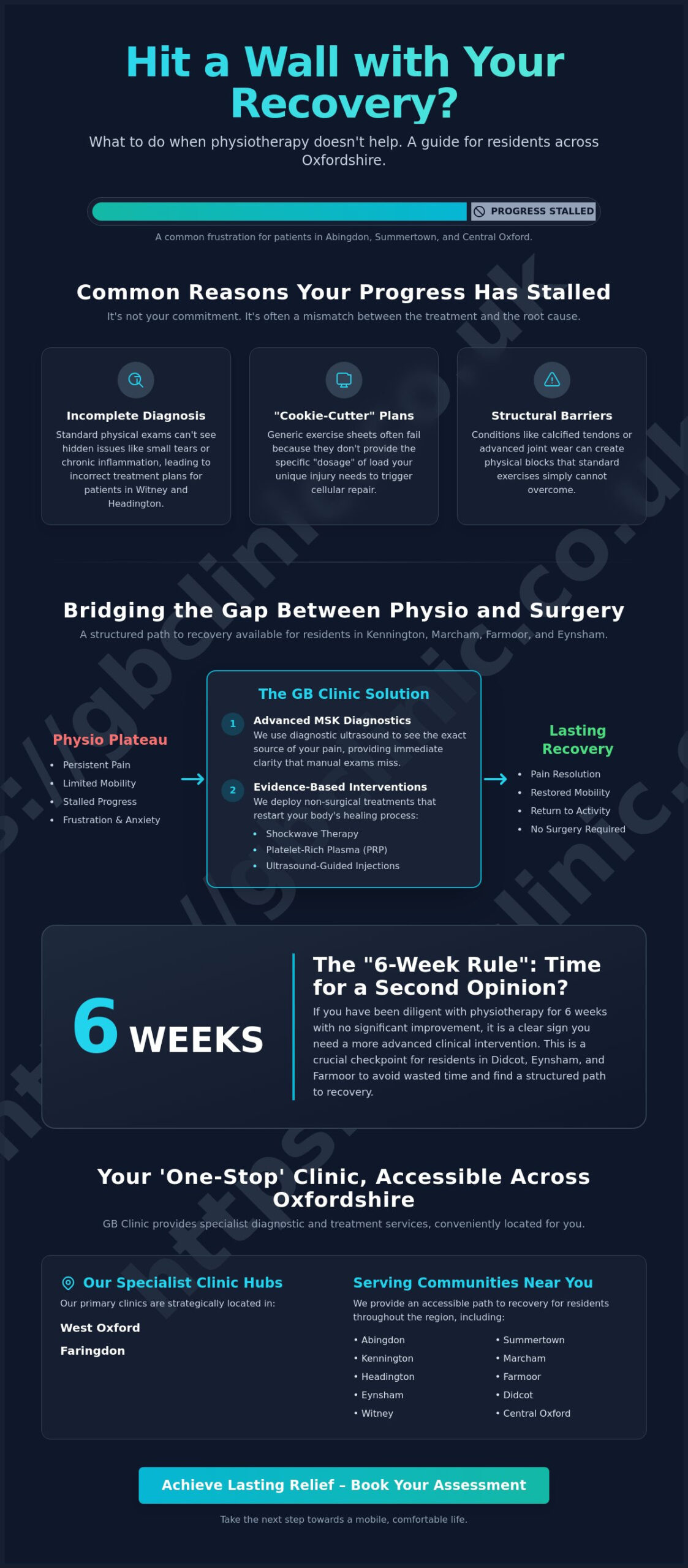
Many patients in Abingdon and Central Oxford find themselves wondering what to do when physio doesn’t help after months of diligent effort. It’s a difficult position to be in. You’ve attended every appointment in Headington or Summertown, yet the needle hasn’t moved. Often, the issue isn’t your commitment; it’s a fundamental mismatch between the treatment and the underlying pathology. Standard care often relies on a “cookie-cutter” approach, where generic exercise sheets are handed out without considering the specific biological environment of your injury.
Effective recovery requires more than just movement. It demands an accurate starting point. An incomplete initial diagnosis can lead to months of wasted effort. If a practitioner misses a small structural tear or a specific type of chronic inflammation, the exercises prescribed might actually aggravate the condition. Gaining a deeper perspective on understanding chronic pain is essential because persistent symptoms often involve complex chemical and neurological changes that mechanical stretching cannot resolve alone.
To better understand why your progress might have stalled, watch this helpful video:
Several factors typically contribute to this clinical plateau:
- Inadequate Stimulus: Tissues require a specific “dosage” of load to trigger repair. If exercises aren’t challenging enough, the body has no reason to adapt or strengthen.
- Systemic Inflammation: When the body remains in a high-inflammatory state, even the best manual therapy can fail to provide lasting relief.
- Structural Barriers: Certain conditions, such as advanced joint wear or calcified tendons, create physical blocks that standard movement patterns cannot bypass.
The Biological Ceiling of Manual Therapy
Certain tissues possess a limited blood supply, which significantly slows the natural healing process. For residents in Witney or Didcot dealing with degenerate tendons, exercise alone may not be enough to stimulate cellular repair. Recovery hygiene also plays a vital role; systemic factors like poor sleep and nutrition can undermine your physical progress. In cases of severe osteoarthritis, mechanical loading has clear limits because the joint surfaces can no longer distribute pressure effectively without causing significant pain.
When Compliance Isn’t the Problem
It’s incredibly frustrating to follow a programme perfectly and see no results. For many in Faringdon, Eynsham, or Farmoor, the “wait and see” approach common in some standard care pathways feels like lost time. Persistent pain often stems from structural changes that require a shift in strategy. If you’ve been working hard in Kennington or Marcham but your symptoms remain stagnant, it’s often a sign that you need a diagnostic ultrasound scan to see what is happening beneath the surface. Sometimes, standard physiotherapy needs to be supplemented with advanced medical interventions to break the cycle of persistent discomfort.
The Role of Advanced MSK Diagnostics: Seeing Beyond the Surface
Manual physical examinations are the bedrock of musculoskeletal care, but they have inherent limitations. A practitioner can feel for tension or test for strength, but they cannot see the internal structural integrity of a ligament or the presence of fluid within a joint capsule. For many patients in Abingdon, Summertown, and Headington, this lack of internal visibility is the primary reason for a stalled recovery. Deciding what to do when physio doesn’t help requires moving beyond surface-level assessments. Advanced diagnostics allow us to identify hidden tears, calcifications, or subtle inflammation that manual testing simply cannot detect. This transition from “guessing” to “knowing” ensures that your treatment is directed at the actual source of your pain rather than just the symptoms.
What is a Diagnostic Ultrasound Scan?
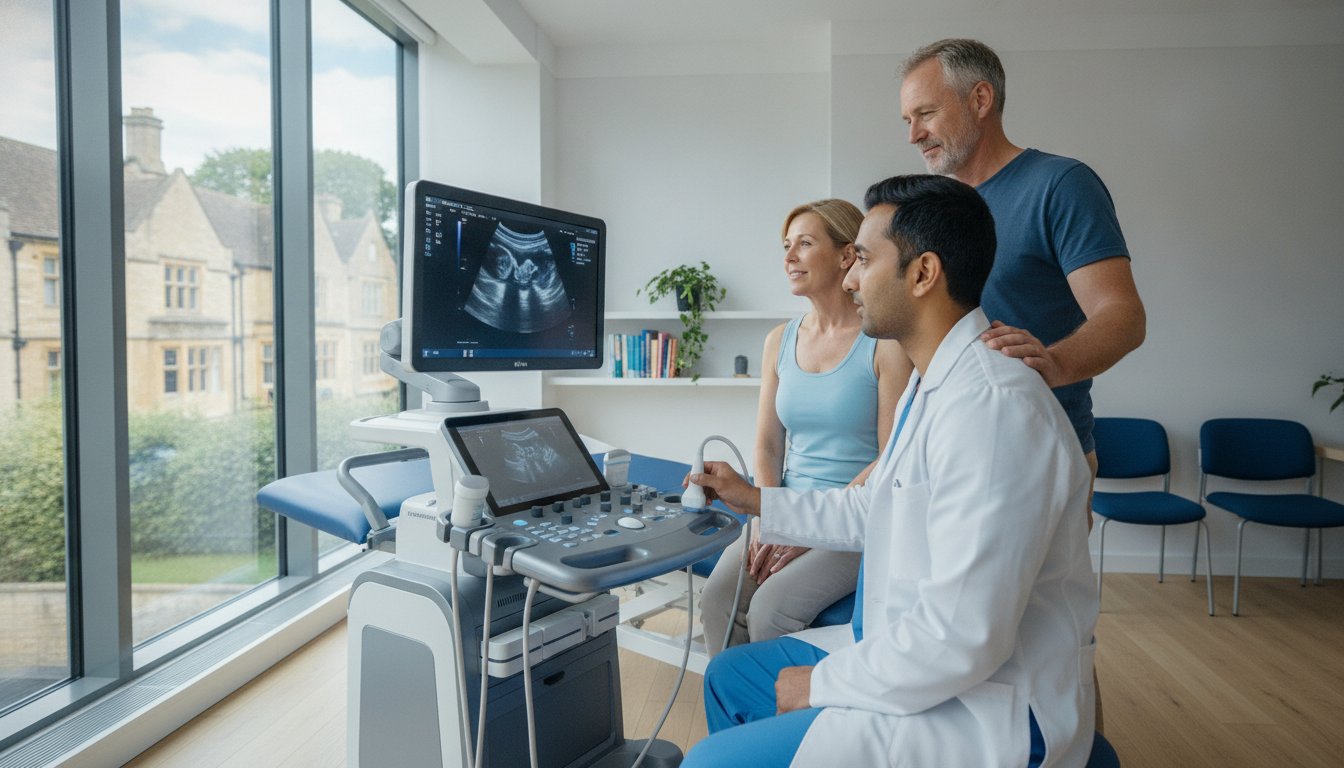
A diagnostic ultrasound scan is a non-invasive imaging tool used to visualize soft tissues, nerves, and joints in high resolution. Unlike an MRI, which requires you to remain perfectly still in a tube, ultrasound allows for dynamic testing. This means a specialist in Central Oxford or West Oxford can move your joint during the scan to see exactly when and where a tendon catches or a nerve becomes compressed. It’s a highly accessible and cost-effective alternative to MRI, providing immediate results during your appointment. Patients from Kennington and Marcham often find this real-time feedback reassuring, as they can see the pathology on the screen while the clinician explains the findings in plain language.
Research into complementary health approaches highlights that a precise diagnosis is foundational to both safety and the long-term success of any intervention. Whether you are visiting from Farmoor or Eynsham, seeing the structural state of your injury removes the ambiguity of standard care. Real-time imaging allows for a much more targeted treatment strategy, ensuring that every subsequent step in your recovery is based on objective evidence. If you are ready to gain clarity on your condition, you can view our diagnostic options to begin your journey toward lasting relief.
Refining Your Recovery Roadmap
A clear scan provides the evidence needed to rule out invasive surgery, which is a common source of anxiety for those with persistent pain. It allows for a structured strategy, helping you choose between continued physiotherapy and more advanced medical interventions like guided injections. For those living in Didcot, Witney, or Faringdon, this diagnostic data is essential for a faster return to mobility. Having an expert clinician interpret these results ensures your plan is based on structural findings rather than subjective pain reports. This level of detail is a standard requirement for anyone seeking to move past the limitations of traditional manual therapy and find a definitive path to recovery.
Advanced Alternatives: Bridging the Gap Between Physio and Surgery
When conservative management stalls, it is vital to know what to do when physio doesn’t help. Many patients in Abingdon, Kennington, and Marcham believe that if exercise programmes fail, invasive surgery is the only remaining path. However, modern medical technology provides a significant middle ground. These advanced interventions target the biological and mechanical environment of an injury, providing the specific stimulus that standard manual therapy might lack. By addressing the root cause through medical-grade treatments, we can often restart the healing process and avoid the risks associated with surgical operations.
Shockwave Therapy is a primary example of this “middle ground” approach. It uses high-energy acoustic pulses to penetrate deep into the affected tissues. For residents in Headington or Summertown suffering from chronic tendon issues, this treatment acts as a physical reset. It is particularly effective at breaking down calcified deposits in the shoulder or treating stubborn plantar fasciitis that has not responded to standard stretching. By creating controlled micro-trauma, shockwave therapy signals the body to send fresh blood and nutrients to the area, effectively restarting a stalled repair process.
Hyaluronic Acid: Lubrication for Osteoarthritis
For those in Didcot or Witney dealing with joint wear and tear, Hyaluronic Acid (HA) Injections offer a biological solution that exercise alone cannot provide. HA is a naturally occurring substance found in healthy joint fluid that provides essential cushioning and lubrication. In an arthritic joint, this fluid becomes thin and loses its protective qualities. By replenishing this lubricant, we reduce internal friction and mechanical stress on the joint surfaces. This creates a vital “window of opportunity” for rehabilitation, allowing you to perform strengthening exercises that were previously too painful. You can learn more about this process in our Hyaluronic Acid Guide, which details how these injections support long-term joint health.
Shockwave Therapy for Chronic Tendon Issues
Chronic injuries often enter a “failed healing” phase where the body’s natural repair mechanisms have simply stopped. This is a common frustration for people in Faringdon, Eynsham, or Farmoor who feel they have hit a plateau. Shockwave therapy is a modern, evidence-based alternative to surgery that addresses these stagnant injuries directly. While a guided steroid injection is excellent for controlling acute inflammation, shockwave therapy and biological lubricants focus on restoration. This structured approach ensures that patients in West Oxford and Central Oxford have access to a clear path toward recovery, moving beyond the biological ceiling of standard manual stretching and generic exercise programmes.
When to Switch Your Strategy: A Guide for Oxfordshire Residents
If you’ve been attending regular appointments in Abingdon or Summertown but haven’t seen meaningful functional improvement, it’s time to re-evaluate. Many patients follow a “wait and see” approach for too long, often due to a sense of loyalty to their current therapist or a lack of awareness regarding advanced options. The clinical “6-week rule” is a standard benchmark in musculoskeletal care. If you haven’t experienced a significant reduction in pain or an increase in mobility after six weeks of consistent effort, it’s a clear indicator of what to do when physio doesn’t help: seek a second opinion with a focus on advanced diagnostics.
A stagnant treatment plan doesn’t just affect your body; it impacts your mental well-being too. Feeling “dismissed” by standard care pathways in Central Oxford can lead to anxiety about the future of your mobility. Transitioning from a generalist approach to one that incorporates a diagnostic ultrasound scan provides the clarity needed to break this cycle. Local expertise in Oxfordshire is vital because it allows for consistent follow-up care and ensures that your recovery is managed by clinicians who understand your specific history and goals.
Signs Your Treatment Needs an Upgrade
It’s vital to recognise the physical signals that your current rehabilitation has hit a wall. If you experience any of the following, your condition likely requires a more advanced intervention:
- Persistent night pain that disrupts your sleep patterns.
- Significant morning stiffness lasting more than 30 minutes.
- A plateau in your range of motion despite regular stretching and exercises.
- Pain that returns immediately after you stop performing your prescribed movements.
A clinician who offers both manual physiotherapy and advanced medical therapies can provide a more comprehensive perspective. This dual expertise ensures that you aren’t just managing symptoms but are actively addressing the underlying structural pathology. Moving beyond a “one size fits all” programme is often the key to unlocking progress in chronic cases.
Accessing Specialist Care Across Oxfordshire
Finding high-level care shouldn’t be a logistical burden. Our clinics are strategically located to be easily accessible for residents across the region. We see many patients who travel via the excellent transport links from Headington, Didcot, and Witney. The short journey from Eynsham, Farmoor, and Kennington makes it convenient to attend regular appointments without disrupting your daily routine.
We also encourage residents in West Oxford, Marcham, and Faringdon to seek a specialised MSK review if their current plan feels stagnant. Proximity to your specialist is essential for the structured follow-up care required when using advanced treatments like shockwave therapy or HA injections. If your progress has stalled, you can book a specialised MSK review to determine the best path forward and finally secure a clear route to recovery.
Advanced Recovery at GB Clinic: Your Next Steps
When standard exercise programmes reach their limit, the next logical step is to consult a specialist who can provide a more sophisticated level of care. At GB Clinic, we bridge the gap between traditional rehabilitation and invasive surgery by offering a “one-stop” diagnostic and treatment model. This approach is specifically designed for those who are unsure what to do when physio doesn’t help and are seeking a definitive answer. Our Oxford-based specialists focus on identifying the precise biological reason for your pain, ensuring that your recovery plan is based on objective evidence rather than trial and error.
We prioritize non-surgical outcomes for every patient. By integrating high-resolution diagnostic tools with advanced therapeutic injections, we provide a clear recovery roadmap for individuals in Central Oxford and West Oxford who have previously struggled to find relief. During your first consultation, you’ll experience a thorough clinical history review followed by a physical examination. If necessary, a diagnostic ultrasound scan is performed immediately to visualize the internal state of your joints or tendons. This efficiency eliminates the long waiting times often associated with standard care pathways.
Our Integrated Approach to Pain
Our clinical philosophy centers on professional, reassuring, and expert-led care that treats the patient as an individual. We often combine Guided Steroid Injections or Hyaluronic Acid with specific rehabilitative exercises to maximize the duration of your relief. This combination addresses both the acute inflammatory symptoms and the underlying mechanical weaknesses. Our commitment to evidence-based outcomes means we only recommend interventions that have a proven track record of success for your specific condition. This structured method ensures that residents from Headington, Didcot, and Witney receive the highest standard of musculoskeletal medicine available in the region.
Booking Your Specialist Assessment
Accessing this advanced level of care is a straightforward process for patients across Oxfordshire. Whether you’re travelling from Abingdon, Marcham, or Kennington, our clinics are conveniently located with excellent transport links. We regularly welcome individuals from Farmoor and Eynsham who are seeking a fresh perspective on their persistent discomfort. Our practitioners are known for their interpersonal warmth and attentiveness, ensuring you feel heard and respected throughout your recovery journey.
You don’t need to continue struggling with a plan that isn’t delivering results. Residents in Faringdon and Summertown can easily access our modern therapeutic methods to regain their mobility and return to an active lifestyle. If you’re ready to move beyond the limitations of standard care, the first step is a comprehensive MSK review. Book your specialist assessment at GB Clinic Oxford today to discover how our advanced, non-surgical treatments can help you find lasting relief.
Securing Your Path to Long-Term Physical Restoration
Persistent pain often indicates that your body has reached a biological plateau that standard manual therapy cannot bypass. Understanding what to do when physio doesn’t help is the critical first step toward accessing specialised care. By utilizing on-site diagnostic ultrasound and advanced interventions like Hyaluronic Acid and Shockwave Therapy, we provide the specific stimulus needed to restart your recovery process. This expert-led approach avoids the delays of standard care and focuses on achieving lasting results without the need for invasive surgery.
We ensure convenient access for residents in Abingdon, Witney, and Headington. Whether you are visiting from Summertown, Kennington, or Marcham, our modern clinical services are within easy reach. We also support patients from Farmoor, Eynsham, and Didcot, offering a professional and reassuring environment for your rehabilitation. Our dedicated teams in Faringdon, Central Oxford, and West Oxford are committed to your physical restoration. Schedule your advanced MSK consultation at GB Clinic in Oxford to begin your journey toward a mobile, comfortable life. You don’t have to settle for stagnant progress; effective, evidence-based relief is available today.
Frequently Asked Questions
How long should I try physiotherapy before deciding it isn’t working?
You should generally follow a structured programme for approximately six weeks before evaluating its effectiveness. If your pain remains unchanged or your mobility hasn’t improved during this time, it’s a clear sign of what to do when physio doesn’t help. Residents in Abingdon or Witney can then transition to advanced diagnostics to identify structural barriers that standard exercises might miss.
Does failing physiotherapy mean I definitely need surgery?
Failing to improve with standard exercises does not mean surgery is your only remaining option. Many patients in Summertown and Headington find relief through non-surgical medical interventions such as shockwave therapy or PRP. These treatments provide a specific biological stimulus that manual therapy alone cannot offer, often helping you avoid invasive surgical operations and lengthy recovery times.
What is the difference between a standard physio and an advanced MSK specialist?
An advanced MSK specialist provides diagnostic clarity using on-site ultrasound and offers medical interventions beyond traditional stretching. While standard care focuses on movement, a specialist in Central Oxford or West Oxford can visualize soft tissue pathology in real time. This allows for targeted treatments like ultrasound-guided injections, which are particularly beneficial for complex cases in Kennington or Marcham.
Can I have Hyaluronic Acid injections if I have already had a steroid shot?
You can safely receive Hyaluronic Acid injections after a steroid shot, provided there is an appropriate interval between treatments. Steroids are excellent for reducing acute inflammation, while HA focuses on long-term joint lubrication and cushioning. This combined approach is frequently used for patients in Didcot and Faringdon to provide both immediate relief and sustained functional improvement.
Is Shockwave Therapy safe if I have chronic pain?
Shockwave therapy is a highly safe, non-invasive treatment for persistent musculoskeletal conditions. It is particularly effective for chronic tendon issues that haven’t responded to traditional care. For individuals in Eynsham or Farmoor, it offers an evidence-based way to restart the body’s natural healing process without the risks associated with medication or surgery.
Do I need a GP referral to see a specialist at GB Clinic in Oxford?
You don’t need a GP referral to book an assessment at our clinic. We offer direct access to all residents across Oxfordshire, ensuring you can seek expert advice without unnecessary delays. Whether you’re based in Summertown or Abingdon, you can schedule a specialised review to determine what to do when physio doesn’t help and find a clear path to recovery.
What happens if the diagnostic ultrasound shows a significant tear?
If an ultrasound scan identifies a significant tear, we will provide a clear explanation of your non-surgical and surgical options. We focus on evidence-based management, which may include specialist injections to support healing or a structured rehabilitation plan. Our priority is ensuring patients in Witney and Headington have the information needed to make an informed decision about their care.